The “R-word” has been banished…new criteria for intellectual disability

Spread the WordIn Part Two of our new blog series…Dissecting the DSM-5…What it Means for Kids and Families we’ll look at the changes in the evaluation and classification of intellectual disabilities.

The section of the DSM pertaining to intellectual disabilities was desperately in need of an upgrade. The pejorative term mental retardation no longer appears in the new criteria, bringing the criteria up to date with more inclusive language required by Federal law, and terminology used by most medical and educational professionals, advocacy groups,  and the vast majority of states.

The most important change in the new criteria involves a decrease in the emphasis upon intelligence tests in the classification of intellectual disability in favor of a severity of impairment classification based upon adaptive functioning along with intelligence testing. In the DSM-IV, scores from IQ tests were used to determine whether an individual was characterized with mild, moderate, severe or profound impairment. The new criteria are far more helpful to clinicians and families in determining the level of support kids and teens require to function in the least restrictive educational environment and achieve maximum autonomy and independence. This doesn’t represent a new development as much as it does psychiatry catching up with what already occurs in practice.

The new criteria emphasize the use of individualized, culturally appropriate, psychometrically sound measures from knowledgable informants (parents, teachers, caregivers) and the individual (to the extent possible) to assess adaptive functioning in addition to clinical evaluation.

Finally, the multiaxial diagnostic system in the DSM-IV has been eliminated…in the DSM-5, all diagnoses exist on a single axis and are given equal weight. In the DSM-IV, intellectual disabilities were considered on a separate axis (Axis II) from mental and medical disorders.

The take-home for a practice like mine is that we’re likely to be more diligent about requesting adaptive behavior ratings from schools for the kids we care for with intellectual disabilities, and we’re more likely to start administering such measures ourselves when appropriate for educational or vocational planning, and guardianship requests.

This Weekend: A look at the most controversial new diagnosis in the DSM-5…Disruptive Mood Dysregulation Disorder.

***********************************************************************************************************

Key Ministry DoorOur Key Ministry website is a resource through which church staff, volunteers, family members and caregivers can register for upcoming training events, request access to our library of downloadable ministry resources, contact our staff with training or consultation requests, access the content of any or all of our three official ministry blogs, or contribute their time, talent and treasure to the expansion of God’s Kingdom through the work of Key Ministry.

Here’s a helpful download for church staff, volunteers and caregivers on the appropriate use of “People-first” language in disability ministry.

Posted in Controversies, Hidden Disabilities, Intellectual Disabilities, Mental Health | Tagged , , , , , , | 1 Comment

ADHD…DSM-5 criteria validate what’s being done in practice

Kid Video gamesWe’re launching a new blog series today…Dissecting the DSM-5…What it Means for Kids and Families in which we’ll look at the implications of the new diagnostic criteria for mental illness for kids, families and those who serve them. In our first installment, we’ll examine more closely the implications of revisions in the diagnostic criteria for ADHD.

When most people think of ADHD, the image that often comes to mind is one of a school-age boy…angry, disrespectful, hyperactive, restless-the kind of kid who gets into fights on the playground, disrupts class, and all too frequently ends up in the principal’s office. For those of a certain age, the comic strip character Dennis the Menace embodies the perception of kids with ADHD. While accurate, kids who fit this prototypical description of ADHD are most definitely not the majority of kids we see in our practice with the disorder.

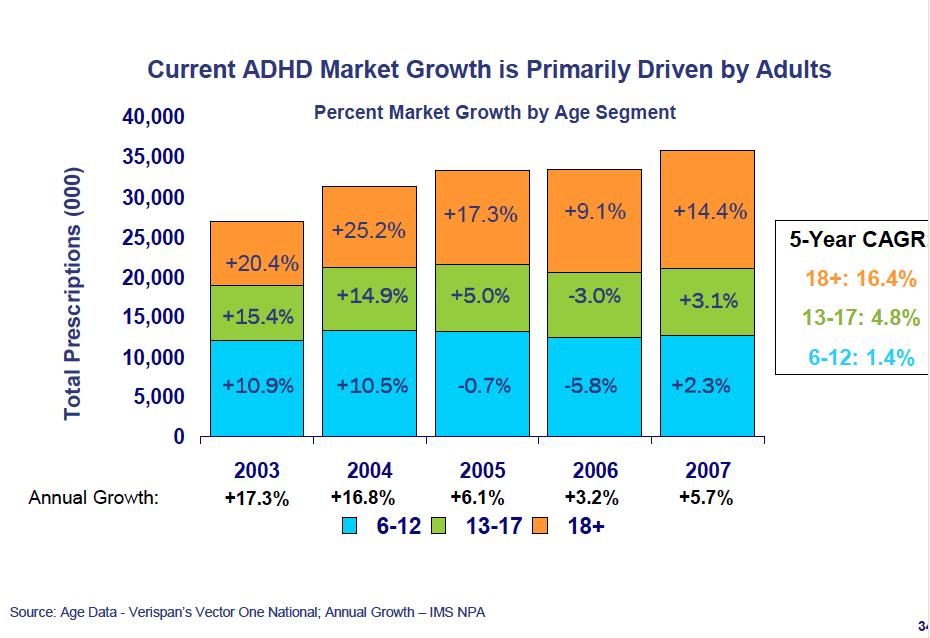
ADHD Market GrowthThe last time I ran the numbers, the mean, median and modal age of kids coming to our practice who received a first-time diagnosis of ADHD was 13. If anything, the kids we’re now most likely to see may be a little older than that. Overall, most of the increase in the volume of prescriptions for ADHD medication since the last revision of the DSM has been for teens and adults (see graphic)…a study published last year by researchers at the National Institute of Mental Health reported that the prevalence of stimulant medication use increased from 4.2% to 5.1% among 6-12 year olds in the U.S. from 1996-2008, but rose from 2.3% to 4.9% among 13-18 year-olds.

The most important revisions in the diagnostic criteria take into account the reality that symptoms of ADHD persist into adulthood for many with the disorder, and that the functional impairment associated with ADHD may not be readily apparent for many kids prior to the teen years.

One revision changes the age by which symptoms of ADHD must be present from age 7 to 12. The wording of this stipulation also changed from “some hyperactive-impulsive or inattentive symptoms that caused impairment were present before age 7 years” in the DSM-IV to “several inattentive or hyperactive-impulsive symptoms were present prior to age 12 years” in the DSM-5, without making reference to functional impairment from ADHD symptoms prior to a certain date. The reality is that bright kids (or in some instances, obsessive and conscientious kids) with ADHD often find ways to compensate for their condition in school until the external demands placed upon their organizational skills become overwhelming in middle school, high school or college. We as clinicians have recognized this for some time, but the diagnostic criteria, if adhered to rigorously in the past, would have precluded teens struggling with the condition from being correctly identified and treated.

ID-10097918The new criteria also take into account the reality that older adolescents and adults frequently outgrow some aspects of ADHD by reducing the number of symptoms of inattention and/or hyperactivity-impulsivity required for a diagnosis for persons 17 and older from six to five. The symptom criteria in the DSM-IV were written to assist clinicians in diagnosing ADHD in children. Symptom descriptions have been revised in the DSM-V to make the criteria more applicable to older adolescents and adults.

In addition, the prohibition against making a diagnosis of ADHD in persons who meet criteria for an autism spectrum disorder has been removed in the DSM-5. Quoting directly from the manual,

When criteria for both ADHD and autism spectrum disorder are met, both diagnoses should be given.”

Difficulties with inattention are very common among kids I’m asked to see with autism spectrum disorders, and some have theorized specific developmental links explaining the high prevalence of inattentive symptoms among kids with autism.

One additional observation about the DSM-5 and ADHD…The APA included this statement in the manual in response to the growing trend among some families to seek out treatment through centers that claim the diagnosis of ADHD can be made through costly neuroimaging or allergy studies…

No biological marker is diagnostic for ADHD.

Some might suggest the revisions in criteria might contribute further to significant increases in the number of children and teens receiving medication for ADHD. I’d suggest that those who are concerned about the increasing prevalence of the ADHD diagnosis need also to look at the outlandish demands for academic productivity, impossible schedules and sleep deprivation that that too many of our teens face on a daily basis before becoming excessively harsh in criticizing professionals seeking to be of help.

Photos courtesy of freedigitalphotos.net.

Thursday: The “R-word” has been banished…the new criteria for intellectual disability

***********************************************************************************************************

ADHD Series LogoKey Ministry offers a resource center on ADHD, including helpful links, video and a blog series on the impact of ADHD upon spiritual development in kids and teens. Check it out today and share the link with others caring for children and youth with ADHD.

Posted in ADHD, Key Ministry, Mental Health | Tagged , , , , , , , | Leave a comment

Upcoming Presentation…Ten Questions Parents Often Ask About Kids and Medication

Spotlight 2NOTE: The Skylight Financial Group event scheduled for this upcoming Saturday, June 15 has ben CANCELED by the organizers. Our apologies to anyone who planned to attend.

The slides we planned to use for the lecture are embedded below.

Here are the slides that would have been used for this Saturday’s presentation…

Updated June 11, 2013

Posted in Advocacy, Families, Mental Health, Training Events | Tagged , , , , , , , | Leave a comment

Mental illness is not who I am…Guest Blogger Chelsea Kowal

Chelsea KowalChelsea Kowal is a Christian and a graduate student in biomedical engineering. She has launched a blog for the purpose of increasing awareness about mental illness along with cataloging her personal journey of hope and healing through faith. She’s serving as our guest blogger for this weekend.

Mental illness is not who I am. It is not what I am either. Mental illness is something very difficult that God has brought into my life. I currently am dealing with schizoaffective disorder and Post Traumatic Stress Disorder. Some days are harder than others for those living with mental illness. Some days I can barely function, but I was and am still fearfully and wonderfully made by God. Whether or not you have mental illness, God still calls us each by our name. He knows every hair on our heads. He created each of us and He brings challenges into each of our lives. One of my challenges happens to be my mental illness.

I wish more people understood that mental illness is a physical illness. It is caused when the wiring in my brain gets overloaded. Words become jumbled into a story that may not make sense. Thoughts are all over the place. Suddenly, people are after me. But God is always there. I have felt Him even in my worst paranoid states. God always helps me through those moments. He truly never lets me go, no matter how scary my psychosis feels. As He calmed the waters in the storm on the boat with the disciples, He also calms my fears, doubts, psychosis, and paranoia.

God can use anything in His power to heal people with mental illness, including medications and therapy. People with mental illness should always be encouraged to get the help that they need in order to function. I was fortunate enough to have pastors who helped me seek the correct help. After ten hospitalizations and trying 14 different medications, I can say that I am finally functioning well and moving forward in a very positive direction. I can say that God is healing me every day. What I am dealing with is chronic mental illness and I will deal with it for the rest of my life. I have had to come to terms with the fact that I may always have to be on medications. That’s okay, because God is helping me heal through them. God can use anything to speak to us or heal us.

Sometimes having a mental illness can be a gift and a blessing. Having mental illness is not necessarily a curse. I often am amazed at the ways that I am able to express myself through art, music, writing and photography. Going outside and enjoying the sunrises and the sunsets or spending a day at the lake not only help me to alleviate the symptoms of my disorders but also allow me to grow in my relationship with God. God speaks to me through every part of His creation.

Kowal 2In some ways, my mental illness has allowed me to see the world from a new perspective, especially in nature. I recently had a God moment when I was reading a book by the lake. I had just gotten off of the phone and my anxiety was running very high. I looked up and I saw a white bird flying across the lake. Immediately, my anxiety was washed away. To me, the white bird signified the Holy Spirit.

It is okay to be angry at God. It is okay to wonder why someone has a mental illness or why you have to deal with a mental illness. God hears your frustration. He understands your frustration and anger. God understands everything that each of us deals with. Knowing that God understands and that He listens to me helps me get through the rough day.

People with mental illness need love, support, patience and understanding. I wish more people asked me questions about my mental illness. I have been ostracized in some situations because others did not understand what I was going through. People with mental illness deserve to be embraced, as does anyone. It makes a world of difference when someone reaches out to me and supports me, even through the difficult times. That is exactly what Jesus would do. Jesus reached out to the ostracized, the lonely, the misunderstood. Having a mental illness or helping someone with a mental illness means that there will be challenging days, months or even years. For me, I spent the last four months in and out of the hospital. It has been an incredibly difficult journey but God was by my side every step of the way.  I had two very serious psychotic episodes, but God has helped me through and to come out on the other side. There will be days when the world seems upside down. Through God’s strength and the encouragement and support of others, anything is possible.

Most importantly, I want people to know that truly nothing is impossible with God. I have overcome years of abuse, neglect and homelessness. I am the only person in my family not to have dealt with a drug or alcohol addiction. I lost my oldest brother to suicide. God helped me through all of those things. He helped me to rise above the obstacles. He helped me to survive. Not only survive but thrive. In May 2012, I graduated at the top of my class in college with a Bachelor’s degree in Biomedical Engineering.

My faith in God is what has carried me through my difficulties. It truly has been an integral part of my life and I could not imagine where I would be without God.

Chelsea Kowal maintains a blog called Hope Rising (www.hoperisesafterthestorm.com), about her journey of living with schizoaffective disorder and Post Traumatic Stress Disorder. She holds a Bachelors of Science degree in Biomedical Engineering and is currently going for her Master’s degree. In her free time, she enjoys reading, writing, taking photography, listening to music and being outside in nature.

***********************************************************************************************************

Key Ministry DoorOur Key Ministry website is a resource through which church staff, volunteers, family members and caregivers can register for upcoming training events, request access to our library of downloadable ministry resources, contact our staff with training or consultation requests, access the content of any or all of our three official ministry blogs, or contribute their time, talent and treasure to the expansion of God’s Kingdom through the work of Key Ministry. Check it out today!

Posted in Key Ministry, Mental Health | Tagged , , , , , , , , | 1 Comment

First impressions of the DSM-5

DSM-5For the first time in nineteen years, mental health professionals are working today with a new set of diagnostic criteria for mental illness. What does this all mean for the kids and families we serve? Throughout the month of June, we’ll examine in more depth the implications of the changes in criteria for specific disorders, including changes in criteria for:

  • ADHD
  • Autism spectrum disorders
  • Bipolar Disorder
  • Disruptive Mood Dysregulation Disorder (DMDD)
  • Intellectual Disability
  • Social Communication Disorder

With the official launch of the DSM-5 today, here are some first impressions of the new manual…

The DSM-5 represents psychiatry’s past and not its’ future. The diagnostic criteria are not (for the most part) based upon any clear understanding of the underlying pathology of the conditions described in the manual. Dr. Thomas Insel, Director of the National Institute of Mental Health (NIMH) has announced in his blog that the NIMH will be reorienting the research they fund away from DSM criteria. Quoting Dr. Insel…

The weakness is its lack of validity. Unlike our definitions of ischemic heart disease, lymphoma, or AIDS, the DSM diagnoses are based on a consensus about clusters of clinical symptoms, not any objective laboratory measure. In the rest of medicine, this would be equivalent to creating diagnostic systems based on the nature of chest pain or the quality of fever. Indeed, symptom-based diagnosis, once common in other areas of medicine, has been largely replaced in the past half century as we have understood that symptoms alone rarely indicate the best choice of treatment.

We’ll talk more about the implications of the NIMH’s decision to shift away from use of the DSM-5 in a future post.

The new diagnostic criteria still produce unacceptably high levels of disagreement on diagnosis for individual patients. In the DSM-5 field trials, the odds of two different clinicians reaching the same diagnosis with the same patient were only 28% better than chance across all diagnoses, and only 8% better than chance for DMDD. The coefficient of agreement (Kappa statistic, K) for the diagnosis of Major Depression was 0.33. To put it differently, the odds that a parent will get the same diagnosis for their child if they take them to two different mental health professionals is less than 50-50.

In the short run, the new criteria are likely to have little impact upon the quality of care kids and families receive from mental health professionals. Old habits are hard to change. In a reimbursement-driven mental health system, many clinicians don’t take the time to do diagnostic assessments in enough depth to make meaningful use of the criteria. For that matter, the US Government isn’t requiring insurers to use the new diagnostic codes until 2014. It remains to be seen whether clinicians will adopt the rating instruments for assessment/severity of specific disorders included in the DSM-5, especially primary care physicians who provide much of the mental health care for children and teens.

On the whole, the DSM-5 is a diagnostic manual developed by a very, very big committee that considered lots of factors other than the original intent of developing common criteria for accurate and consistent diagnosis and meaningful research.

***********************************************************************************************************

Key Ministry DoorOur Key Ministry website is a resource through which church staff, volunteers, family members and caregivers can register for upcoming training events, request access to our library of downloadable ministry resources, contact our staff with training or consultation requests, access the content of any or all of our three official ministry blogs, or contribute their time, talent and treasure to the expansion of God’s Kingdom through the work of Key Ministry. Check it out today!

Posted in Controversies, Mental Health | Tagged , , , , , , , , | Leave a comment

Review: Troubled Minds…A much needed catalyst for conversation

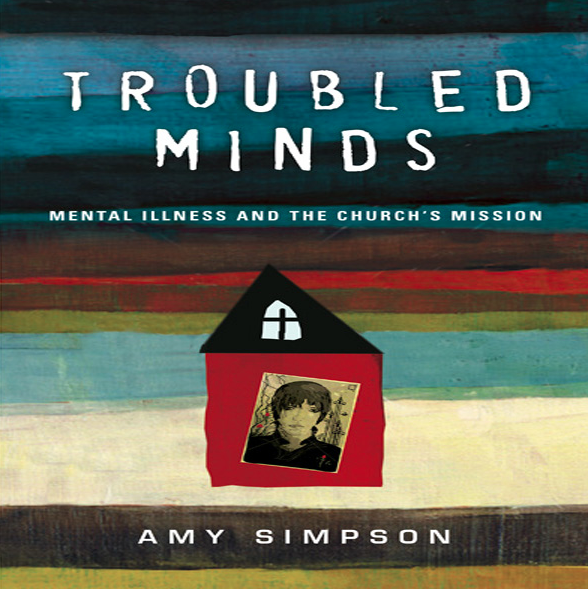
Troubled MindsTroubled Minds: Mental Health and the Church’s Mission. Authored by Amy Simpson. Foreword by Marshall Shelley. Published by InterVarsity Press. Available at Amazon.

Amy Simpson’s new book is a much needed catalyst to a long overdue discussion on the topic of how the church can share the love of Christ with persons with mental illness and their families. Her life experiences with a mother with chronic schizophrenia and a father who served as a pastor uniquely prepared her to speak into the topic.

In the book, Amy does a great job of laying out the case (with data) of why more effective ministry to people with mental health issues should be high on any church’s list of priorities. She provides clergy with language and Scriptural support to respond with sensitivity to members and attendees struggling with mental health disorders. She emphasizes the reality that the first place many people turn to in a mental health crisis is the church. More importantly, she shares dozens of practical suggestions for more effective ministry, including ideas for pastors, professionals, caregivers, and persons with mental illness to implement in churches of all denominations and organizational structures.

Amy writes from the perspective of someone who grew up inside the church from a family that stayed connected with church through her mother’s mental illness. Throughout the book, she emphasizes the need for pastors, church staff and members to do a better job of caring for persons with mental illness and their families. She did make one large assumption in the book with which I’d take issue…even though I don’t have good data to buttress my argument-just experience and observations.

If your church is typical of the US population, on any given Sunday one in four adults and one in five children sitting around you is suffering from a mental illness.

In my mind, an even greater tragedy than the treatment many persons with mental illness  have experienced in the church is the potential for mental illness to represent a significant barrier to church attendance and participation for those afflicted and their families. For example, here’s an interesting study published last year in the American Journal of Epidemiology reporting that women were 1.42 times less likely to attend church if they experienced a first episode of depression prior to the age of 18 compared to women who experienced a first episode as adults or had never been depressed.

From where I sit as a child and adolescent psychiatrist, I don’t believe that our churches are typical of the US population on any given Sunday morning in terms of the number of persons in attendance with mental illness. Nowhere close. In addition to doing a better job of caring for “our own” with mental health issues, we need to become very intentional in reaching out to those beyond our walls who desperately need to experience the love of Christ but haven’t been able to overcome the barriers posed by our attitudes or ministry environments.

No church will be able to meet every need of families impacted by mental illness, but every church can do something. Amy Simpson has demonstrated significant courage in using the platform she has earned through years of work at Christianity Today to shine a spotlight on a topic the American church desperately needs to address. Troubled Minds serves as a great conversation starter.

Disclosure: I purchased Troubled Minds with personal funds at Amazon. Key Ministry received a promotional copy of the book for a giveaway through InterVarsity Press. The winner of our promotional copy is Patti Sass from Hastings, NE. 

Amy SimpsonAmy Simpson is author of Troubled Minds: Mental Illness and the Church’s Mission (InterVarsity Press). She also serves as editor of Christianity Today’s Gifted for Leadership. You can find her at www.AmySimpsonOnline.com  and on Twitter @aresimpson.

Posted in Advocacy, Mental Health | Tagged , , , , , , , | Leave a comment

Resources for kids with disruptive behavior…Carrie Lupoli

Chief Mum 2On Tuesday, we introduced you to international educator, parenting expert and Key Ministry Board member Carrie Lupoli. Today, we’ll conclude our interview with Carrie in which she discussed resources for church staff, volunteers and parents who deal with kids with disruptive behavior, a series of books she’s writing on child development and her future role with Key Ministry.

C4EC: In addition to your role as a special educator, you’re well known across Southeast Asia as a parenting expert. Are there resources you can share with church staff, volunteers and parents struggling to maintain a positive relationship with a child with disruptive behavior?  

CL: Yes, as I write this I am getting ready for an exciting (albeit nerve wracking!) tour around South East Asia in June.  As a spokesperson on the “The Joy of Learning” for Mattel Fisher Price, I will be speaking to parents in Malaysia, Singapore, Philippines and Indonesia.  This is my third year speaking and I am humbled and in awe that people want to come and hear what I have to say!  It makes me nervous that people will enjoy the workshops and find it helpful!  One of the BEST resources I almost always recommend to families is called “123 Magic, Effective Discipline for Children Ages 2-12.”  There is a Christian version as well which I love to present to churches.  A practical, simple method for curbing behaviors while developing positive relationship with your children, I have NEVER not seen it work, when parents implement it correctly.  I had been telling parents about the program well before I had children of my own, and of course found success with it when I started with my own girls.  It was only a few years ago that I found the Christian version and I realized why it worked so well.  It is totally biblically based so of course it works!  I have even been personally trained by the author of the program itself and knowing his heart and motivation for developing this makes it even more motivating to share it with other parents.

C4EC: You’ve got a book contract? What will the book be about and when can we expect to see it?  

CL: Someone once said, “I don’t like writing but I like having written.”  Gosh, that is the case for me!  I have found I really have to be in the right mindset to get all the content out!  The books are a series of practical parenting resources that advocate parent’s knowing their children’s milestones from birth through age 5.  I find, when conducting case histories for diagnostic assessments, that parents aren’t often aware of the milestones their children should be achieving up through the 5th year of life.  Many times parents have missed clear signs or indicators and with early intervention, knowing sooner than later is always helpful.  This series of books gives parents the information on what they need to know with ideas of what to do!  I am still in the process of finalizing the content with the hope that we will see it on shelves in early 2014.

DSC_0197C4EC: We’re delighted to have you as part of our team at Key Ministry…the staff has raved about you! Any thoughts as to how God may be nudging you to use your gifts and talents to advance the cause of the ministry…and the Kingdom?  

CL: I find it incredible that God has led me, to all places, Chagrin Falls!  I knew about Key Ministry through my church in Singapore and when I realized it was based in the same town that I would be moving to, I knew that was God’s way of telling me, “I have you right where I want you.”  Our settling in process to this new life here in Ohio has been a bit of a challenge but now that we are settled in and comfortable, I am excited to see what God has in store for me next!  I know that the experiences I have had very closely parallel the mission of Key Ministry so I pray that God will direct me specifically into the areas of which he wants me to serve.  Can’t wait!

***********************************************************************************************************

Key Ministry’s mission is to help churches reach families affected by disability by providing FREE resources to pastors, volunteers, and individuals who wish to create an inclusive ministry environment. We have designed our Key Catalog to create fun opportunities for our ministry supporters to join in our mission through supporting a variety of gift options. Click here to check it out! For a sixty second summary of what Key Ministry does, watch the video below…

Posted in Families, Hidden Disabilities, Inclusion, Key Ministry, Resources | Tagged , , , , , , | 4 Comments

The “Chief Mum” joins the Key Ministry team…Interview with Carrie Lupoli

DSC_0197

Our newest addition to the Key Ministry team came to us in a manner only God could orchestrate.

Carrie Lupoli was working in Connecticut as a special educator when her husband was transferred to Singapore. After her family arrived in Asia, she co-founded Live and Learn in response to the lack of appropriate services for children with learning disabilities and other special education needs in their mainstream classrooms.

In addition to the acclaim she has earned as an international educator, Carrie has been a noted parenting expert and has served as the spokesperson for the “Power of Play” for Mattel Fisher Price. She recently signed on as the official “Chief Mum” for MumCentre.com, a family of parenting websites in Singapore, Malaysia, Philippines and Australia.

Carrie and her family relocated to Chagrin Falls last year when her husband accepted a position with a local company. The children’s pastor from the church she and her family attended in Singapore sent her an e-mail about Inclusion Fusion. She was interested in learning more about the organization in her new hometown putting on the Web Summit. Her family had started attending a local church where Stephen Burks (one of our Board members) serves as Pastor of Worship and Creative Arts. She approached Stephen looking for ideas for where she might “plug in” to use her gifts and talents to serve…and needless to say, she’s the newest member of our team.

Carrie graciously responded to some interview questions we thought would be of interest to our readers. Part Two of the interview will run on Thursday.

C4EC: As a special educator, you have lots of experience in working with kids with “hidden disabilities”…ADHD, anxiety, kids on the high end of the autism spectrum, kids with sensory processing difficulties. What are the challenges you’ve seen when the kids you serve come to church?

CL: It’s amazing that even after living in Asia, Europe and now back to the US, that certain similarities exist regarding the challenges kids have when coming to church.  One of the most challenging issues I see is when parents of typical peers quickly judge those with hidden disabilities negatively.  I have worked with both parents and teachers to try to help them understand that if one sees a child acting “differently” then others, to not automatically assume the child is a byproduct of “bad parenting” or a lack of discipline in the home.  Educating the surrounding community is pivotal because so often I observe parents who finally decide to just not attend church because of the way others make them feel about themselves and their parenting skills.  If families don’t come to church, we can’t work with the child or their teachers to develop successful learning environments.

C4EC: You launched a company while your family was living in Singapore to provide support services to families of children with special education needs. What are some of the unique challenges families face outside of the U.S. when their kids require extra assistance and support?

CL: What an eye opening experience it was for me to witness what was happening to kids with hidden disabilities around the world.  First of all, there are few, if any laws, in Asia regarding the discrimination of children with special needs. Most of the kids we support should be mainstreamed for all or most of their day, with the right support.  Unfortunately many of them weren’t being given the chance to be educated in their least restrictive environment due to willingness, services and/or trained staff.  In addition, American families who move overseas often assume, especially because they may be enrolling their children in an “American School” that services will translate and that they have the same rights that they do in America.  Unfortunately that is very far from the truth and in reality, American Schools often identify themselves as such because of their curriculum or population of student.  It doesn’t necessarily mean they are implementing best practices or laws from America.

C4EC: Are there practical ways for churches to help serve these families?

CL: Because churches often have the same challenges as schools, when it comes to developing and implementing strategies for kids with needs, the two groups can be collaborating more.  With a group like Key Ministry training churches, if a particular church has the knowledge, reaching out to the international or local schools to offer training or support would be welcomed and often needed.

C4EC: What can the church in the U.S. to support families doing mission work overseas with special education needs?  

CL: Missionary families are not any better off when it comes to support services if their children are attending schools overseas.  Some families choose to homeschool their children and with quality, online international homeschool programs like www.k12.com missionary families can obtain support. However, in their brick and mortar schools, funding can be provided for support staff that is often permitted, but rarely funded by schools.  Trained paraprofessionals can offer an incredible amount of assistance to families and schools.  Cost is often a huge factor, however, and it depends on the area where the families are living.  For example, a trained support specialist in a place like Bali, Indonesia runs about $100USD a month.  Compare that to the same kinds of service in Singapore which will cost anywhere between $3000 to $5000 USD a month for full time support.  Funding webinars on inclusive practices for willing staff in a child’s school could also be a fabulous resource for missionary families living overseas.

Next…Carrie’s suggestions for church staff, volunteers and parents for responding to kids with disruptive behavior.

***********************************************************************************************************

Key Ministry DoorOur Key Ministry website is a resource through which church staff, volunteers, family members and caregivers can register for upcoming training events, request access to our library of downloadable ministry resources, contact our staff with training or consultation requests, access the content of any or all of our three official ministry blogs, or contribute their time, talent and treasure to the expansion of God’s Kingdom through the work of Key Ministry. Check it out today!


Posted in Advocacy, Families, Key Ministry, Strategies | Tagged , , , , , , , , | Leave a comment

A Call to the Church…Guest Blogger Amy Simpson

Amy SimpsonLast Sunday, we introduced you to Amy Simpson, the well-known Christian leader and communicator who recently published her new book, Troubled Minds: Mental Health and the Church’s Mission. She shared last weekend on the topic Does Your Church Inadvertently Hurt People With Mental Illness? Today, she’ll examine whether the plight of individuals and families impacted by mental illness represents “A Call to the Church.

Missing Basic Needs

In at least a few documented cases, Nevada’s mental-health care system placed people on buses without adequate provisions or chaperones. Many churches use a similar strategy, without realizing they’re not fulfilling their responsibilities.

  • If you’re a church leader who doesn’t happen to be a qualified mental-health professional, do you recognize and acknowledge your limitations? If yes, that’s a good thing.
  • Do you refer people to professionals who can help with disorders and provide therapy and medication as necessary? This is also a good thing.
  • But do you then walk away and assume your job is done?
  • Mental-health care is incomplete without spiritual nurture and loving friendship. Does your church push people toward psychiatric care but leave them without adequate spiritual guidance and a kind friend to walk alongside them?
  • Do you provide practical help (hospital visits, meals, rides, financial assistance) to people with other health crises but ignore these basic needs in families affected by mental illness?

Psychiatrists do not provide pastoral care. Therapists don’t make sure the bills are paid and the kids get to school. Medication does not answer questions about why God feels so far away. Just because people receive medical treatment does not mean they don’t need anything more from the church.

Neglecting Support Systems

Nevada claims it is simply busing people back to their home states and first making contact with support systems at those destinations. But investigations reveal those connections are not always made and plans for follow-up care aren’t always in place. Many churches also fail to consider what they can do to strengthen the support system for people with mental illness.

  • Are you ignoring the families of people with mental illness? My own survey showed that only 56.8 percent of church leaders have reached out to the family of someone with mental illness within their congregation. Have you asked families what they need? Are you prepared to help as you can?
  • Do you consult with mental-health professionals? If people in your congregation are receiving care, you can request that they sign consent forms to allow you to collaborate with professionals and discuss the best ways for your church to support these members’ mental health. If you don’t receive that written consent, you can still discuss the best ways for you to support people with various types of mental illness.
  • As in Nevada’s state mental-health care system, in your church are people getting caught within a beauracratic system with no one really aware of or responsible for their needs? Are you relying on “trickle-down ministry,” focusing on your core leaders and expecting them to lead the next tier, and so on? Is anyone in your church likely to feel responsible for a good support system, or does everyone assume someone else will take care of it?
  • Are you willing to adapt your schedules, plans, and expectations in order to deal compassionately with people in crisis? Or do you expect everyone to follow the same process and grow within the same system?
  • Are you willing to let people with mental illness do ministry in your church? Mental illness is rarely predictable, but it is not a spiritual or relational death sentence. People affected by mental disorders don’t always fit into a tightly scripted service with high production values. It can hard to find their place in a segmented congregation. But with understanding and grace, you can give them opportunities to serve according to the gifts God has given them. Allowing people to engage in ministry when they’re functioning well, and take a break when they’re not, can provide an incredible support system.

A Call to the Church

I wrote my new book, Troubled Minds: Mental Illness and the Church’s Mission, to help the church better understand the needs of people affected by mental illness. I also wrote it to challenge the church­—that’s everyone who follows Christ—to see this as part of our mission in this life.

As I’ve said in my book, “The church should not lag; it should lead the way. We serve a God who calls us to serve “the least of these” as if we were serving him (Mt 25:40). Jesus said, “Healthy people don’t need a doctor—sick people do. I have come to call not those who think they are righteous, but those who know they are sinners” (Mk 2:17). As living temples carrying God’s presence in this world, we must allow his light to shine out from us and infiltrate the darkness that surrounds so many people and drives some of them to despair.”

Let’s embrace our calling and shine the light of Christ in the darkness.

Amy Simpson is author of Troubled Minds: Mental Illness and the Church’s Mission (InterVarsity Press). She also serves as editor of Christianity Today’s Gifted for Leadership. You can find her at www.AmySimpsonOnline.com  and on Twitter @aresimpson.

***********************************************************************************************************

Troubled MindsMental illness is the sort of thing we don’t like to talk about. It doesn’t reduce nicely to simple solutions and happy outcomes. So instead, too often we reduce people who are mentally ill to caricatures and ghosts, and simply pretend they don’t exist. They do exist, however—statistics suggest that one in four people suffer from some kind of mental illness. And then there’s their friends and family members, who bear their own scars and anxious thoughts, and who see no safe place to talk about the impact of mental illness on their lives and their loved ones. Many of these people are sitting in churches week after week, suffering in stigmatized silence. In Troubled Minds Amy Simpson, whose family knows the trauma and bewilderment of mental illness, reminds us that people with mental illness are our neighbors and our brothers and sisters in Christ, and she shows us the path to loving them well and becoming a church that loves God with whole hearts and whole souls, with the strength we have and with minds that are whole as well as minds that are troubled. Available at Amazon and Christianbook.com.

FREE GIVEAWAY! Every person who becomes a NEW e-mail subscriber to Church4EveryChild between now and May 13th is automatically entered in a drawing for a free copy of Amy’s new book, Troubled Minds: Mental Illness and the Church’s Mission. Enter your e-mail in the sidebar to your right and you’re automatically registered.


Posted in Advocacy, Families, Mental Health, Strategies | Tagged , , , , , , | Leave a comment

One mother’s journey…adoption and psychotropic medication

Ward FamilyI was contacted by one of our readers (Janet Ward) earlier this week. She had written an article on her family’s experiences after medication was recommended for their daughter in this month’s issue of Adoption Today. I thought this article would make a wonderful Mother’s Day tribute…she captures the passion with which so many mothers advocate for their kids on a daily basis. She also speaks with the acquired wisdom of a mom who has walked the walk and talked the talk and has valuable insights to share. Thanks to the folks at Adoption Today who graciously granted permission to share the article here.

Happy Mother’s Day from the staff and volunteers of Key Ministry!

Psychotropic Medications some pros and cons 

By Janet Ward

Driving our minivan up a scenic mountain road during a summer vacation, listening to my enraged 6-year-old daughter tantrum from the backseat, screaming about wanting to get another fairy doll at the country fair we had just left, my daughter becoming angrier with each passing second.

I concentrated intently on driving, hoping to safely and quickly make it back to the condo where we were staying. Suddenly, something struck me on the back of my head. She had taken off her shoe and had thrown it at me. I yelled at her to stop. She responded by throwing the next easily reachable projectile, which happened to be a book.

Much to my horror, I then heard the click of her seatbelt unbuckling. In the blink of an eye, my daughter charged me from the back of the minivan, pushing and hitting me on my head, right shoulder and arm as I struggled to keep the car under control.

That was it. That incident was the final straw that led to our decision to start my daughter on an antipsychotic medication. I didn’t know it that day, but during the next eight years, we would try 14 different psychotropic medications with her, all in an attempt to manage her wide array of symptoms related to anxiety, mood and attention.

During those years, I learned a lot about this hotly debated topic of medication for kids. I learned there are no easy answers. I learned that those who claim to have all the answers most assuredly do not. And I learned the answer that is right for one child and one family is not necessarily right for another.

In our fast-paced society, people often look for quick, easy fixes. Contrary to what many believe, putting a child on psychotropic medication is neither quick, nor easy, nor a fix. It is a serious decision with potentially serious consequences.

While there are times when medication is inarguably the best course of action, there are other times when arguably it is not. Either way, putting a child on psychotropic medication should be undertaken only after careful thought and with full awareness of the risks and costs of doing so. Here are some points for your consideration:

• Much needed relief: By the time parents consider psychotropic medications, especially the more potent antipsychotics, usually every single member of a family is suffering, not only the child. Medication can ease severe symptoms that hinder a child’s ability to function in his or her world, symptoms such as inattention, hyperactivity, anxiety, mood issues and more. By reducing, not necessarily eliminating, the intensity of symptoms, medications can stabilize a child, stabilize a family’s home life, and make concurrent therapies and/or interventions more effective. At their best, medications are essential to preventing or minimizing some kind of crisis, as in our case when safety and the ability to function in daily life were so severely compromised. When medication works as intended, the relief it provides both to the child and the entire family can range from immensely helpful to invaluable.

• Trial-and-error: Like much in life, there is no “one-size fits-all” answer to medication. Finding the right medication — or combination of medications — for any given child is a blend between art and science. No two children’s brains are the same; therefore, no two children react exactly the same to the same drug given at the same dosage, at the same time of day. Often, treatments require experimentation with dosage, time of day of administration, even the specific drugs themselves. Additionally, because children’s bodies change and grow, at times rapidly, even stable medication regimens need to be periodically re-evaluated and adjusted.

• Side effects; take ‘em seriously: We’ve all seen the small print at the bottom of magazine ads— usually so tiny it requires a magnifying glass to read. And we all tend to ignore it, thinking that such things only happen to other people. But my experience is that side effects with psychotropic medications are real, are common, and are not to be taken lightly. At various times, with various medications, my daughter experienced weight gain, weight loss, sleeplessness, excessive sleepiness, anxiety and some bizarre behaviors, such as constant coughing or smacking herself on the forehead with the palm of her hand. These side effects were pronounced, problematic enough that they had to be addressed.

Often with side effects, parents find themselves simply trading one set of behaviors to manage such as problems completing homework due to inattention for another such as having to ensure a child with zero appetite eats enough food to sustain him or herself throughout the day.

Side effects are so prevalent, there’s even a phenomenon called “symptom chasing,” in which another medication is added to the child’s regimen in order to address symptoms caused by a previous medication. When my 40-pound daughter gained a staggering 20 pounds after starting an antipsychotic, a stimulant was prescribed to reduce her appetite and help with attention. Her insatiable hunger did ease up, but the stimulant also had the side effect of increasing anxiety, which then led to the possibility of starting her on an anti-anxiety drug. We decided not to do that, but the lesson here is what started out as one psychotropic medication could easily have led to three, the second two being the result of managing side effects of the first.

Sometimes side effects are so troublesome as to warrant discontinuation of a medication, regardless of how well that medication is working. For example, after six years on a certain medication, my daughter developed side effects that threatened the health of her heart. She had to stop taking that drug, and its discontinuation was no easy task.

• Long-term consequences: As advanced as medical science is, long-term consequences of psychotropic medications on a child’s still developing brain are unknown. Medical science does know, however, that the human brain develops well into a person’s 20’s, so this is as much concern for an otherwise fully-grown teenager as it is for a younger child.

Adoption TodayWhat’s the exit strategy?

Politicians talk about having an exit strategy, a plan about how to leave a situation, either once an objective has been achieved or to minimize failure. Similarly, psychotropic medications require an exit strategy. Medication in and of itself is not a permanent solution. Medication simply squelches symptoms; it doesn’t fix anything. Your child will not magically outgrow his or her condition while on medication. Unless your idea is to have your child take medication into ripe old age,which really isn’t feasible, you need a plan. The ultimate goal is to enable your child to navigate the world successfully, on his or her own, without medication. This means that medication should be only one of several tools in your toolbox, a tool to be used in the short-term while you explore other options to effect permanent changes in the long-term.

Postscript: My daughter is now a teenager and has been medication-free for the past 18 months. She is happier and healthier than ever before, both emotionally and physically, thanks to an extreme amount of hard work and specialized treatment. For my family, psychotropic medication provided a critical tool on the road to get her to where she is today, at a time when we desperately needed it, but it was neither a simple nor problem-free tool to use. If you are contemplating psychotropic medication for your child, my advice is to make an informed decision about medication, as well as other alternatives. In this way, you can choose what is best for your child and for your entire family.

What to Do When Your Child Needs Medication

As a loving parent who wants what’s best for your child, you can be your child’s greatest ally. Here are a few tips to help you navigate through your child’s medication journey:

Find a good doctor: Prescribing psychotropic medication — wisely— is a most complicated affair. Work with the best doctor you can find, one who is highly trained in prescribing these medications, experienced with it, and who takes into account your input and concerns when making decisions.

Compliance is critical: Inconsistency in giving your child his or her medication can lead to further issues for both your child and family. Adequate dosage, timing and consistency are key to obtaining optimal results. Make sure your child takes medication exactly how and when it is prescribed. Aim for 100 percent compliance, and if you miss your mark by just a little bit, you’ll still be doing well.

Keep copious notes: One of the things about life that never changes is that life is always changing. Medication dosage, time of administration, the medication itself, even doctors — all change over time. Don’t trust these important details to your memory or to medical staff. Keep an up-to-date notebook containing all this information. Every time medication is started or adjusted, put on your Sherlock Holmes hat and keenly observe your child’s behavior. Record your observations about behavioral changes, both positive and negative, as well as notes about concurrent changes or stressors in your child’s life. Your notebook can become an invaluable tool to you and your doctor for making informed, intelligent decisions.

Be your child’s advocate: You’re an all-important link between the doctor and your child. You are the one providing most of the information that the doctor will use to make decisions. So communicate well. Describe your child’s behaviors, changes in behaviors, medication side effects, and anything else of significance.

Ask questions: If you are concerned you might forget something during an appointment, write down notes in advance. By taking an active, collaborative role during appointments, you can maximize the chance for the best possible decisions to be reached.

Janet B. Ward is the mother of three children, biological twin boys and a daughter adopted from Russia as an infant. A product of trauma while in Russia, her daughter has received 15 mental health diagnoses in 14 years.

Posted in Advocacy, Families, Mental Health, Resources | Tagged , , , , , , | 1 Comment