I’m honored to have the opportunity to join Mike Woods from Making Room on his blog talk radio program today, Tuesday, May 17th at 10:00 AM EDT. We’ll be discussing the topic of Family-Focused Special Needs Ministry. If you’re not able to join us live tomorrow, the broadcast will be archived for your listening convenience.
Some of the topics we’ll be discussing later today include:
The advantages of a family-based approach in ministry to kids with special needs.
Ideas for overcoming the barriers to church participation faced by families of kids with disabilities
Reasons why the local church should consider prioritizing outreach to and inclusion of families of kids with disabilities when allocating precious ministry resources.
To listen in, click here. To call in during the show, use the number displayed below.
Hope you can join us later today, or check out the archived broadcast at a future date.
As a child psychiatrist, the vast majority of requests I receive from a parent or colleague to evaluate a child with an autism spectrum disorder (ASD), the reason for the request involves the need to treat some other condition associated with the ASD, most notably attention problems or obsessive thinking. For the purpose of our discussion today, I’ll focus specifically on the ADHD.
Recent estimates suggest that over 30% of children with autism spectrum disorders (ASD) meet diagnostic criteria for ADHD, and another 20% of children with ASD exhibit sub-threshold ADHD symptoms.
One of the challenges we face in treating kids who have both conditions is that in my experience, kids with ASDs are more susceptible to stimulant-related side effects (irritability, emotional lability, aggression, tic exacerbation, increased stereotypies), but when they do work, stimulants are often very helpful for inattention, improving capacity for self-regulation and reducing aggressive behavior and are far more benign from a side effect standpoint than the atypical antipsychotics that carry FDA indications for kids with spectrum disorders.
Teasing out the connection between the two disorders may help us in understanding the underlying causes of each disorder and begin to point us in the direction of earlier intervention. The studies to date suggest that gene variations common to both disorders and abnormalities in the development of specific brain pathways and regions are likely explanations for the co-occurrence of the two disorders. From a functional standpoint, kids with ADHD and ASDs are more likely to have more difficulty with behavioral inhibition compared to kids with either disorder alone, and one small study demonstrated increased externalizing behavior problems, aggression, delinquent behaviors, and thought problems in the ASD+ADHD group relative to an ASD group which exhibited subthreshold externalizing problems (Matsushima et al., 2008), suggesting that ADHD symptoms exacerbated externalizing problems in ASD.
One especially interesting hypothesis explaining the co-occurrence of ADHD and ASDs involves abnormalities in the development of connectivity between different regions within the brain’s “default network”…systems that are active during introspective, task-free processes. Here’s an excellent article explaining the role default networks play in the brain and why folks are interested in the role abnormalities in the development of the default network play in contributing to the traits associated with autism. The default network also appears to play an important role in the development of executive functioning…thought to be the core difference among persons with ADHD.
The implication of all this for church staff and volunteers is to appreciate the reality that if you’ve seen one kid with autism, you’ve seen one kid with autism. Effective strategies for inclusion at church and the resources families find helpful in promoting the spiritual growth of their child aren’t “one size fits all” for kids with ADHD, autism spectrum disorders, or both.
Key Ministry has assembled a helpful resource page for church leaders and parents addressing the topic of ADHD and spiritual development. This page includes our blog series on the topic and links to helpful videos and resources for pastors, church staff, volunteers and parents. Access the resource page here.
The majority of kids seen in a practice like mine exhibit symptoms of more than one mental health disorder. This phenomena, in which kids who meet the diagnostic criteria for one condition are observed to have a higher than expected prevalence of another condition is referred to by psychiatrists as comorbidity.
The concept of comorbidity is important to understand because it helps to explain why kids who carry the same diagnosis may react very differently to environments or experiences at church, why we very much try to avoid the use of diagnostic labels when working with churches and why it is so important for ministry leaders and parents to view each child as a unique individual.
This concept, along with the propensity of mental health professionals to assign kids with a new diagnosis every time they meet enough of the symptom criteria in the DSM-5 (the diagnostic manual for mental health conditions used across professions) is viewed with a not insignificant degree of contempt by other fields in medicine. When I was an intern at Cleveland Clinic, my attending docs constantly drilled into us the importance of trying to identify one underlying cause to explain as many of the signs and symptoms we observed in a given patient as possible. The need to use multiple diagnoses may be a sign of the inadequacy of our current system of diagnosing mental health disorders, and an inadequate understanding of the root causes of many of the conditions we see.
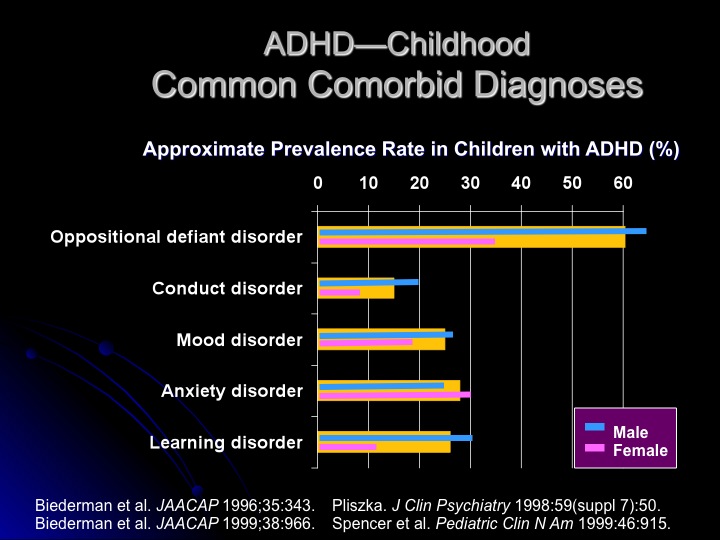
Allow me to present an example of how this notion of comorbidity complicates the way in which kids with one common condition present. Below is a slide examining rates of comorbidity of several mental health disorders among school-age kids with ADHD:
Looking at a slide like the one above leads us to ask why we might see these relationships between different conditions…here are some thoughts:
It’s possible that two conditions may share the same underlying cause. This is an interesting hypothesis that folks examining the relationship between ADHD and specific learning disabilities are exploring. By some estimates, learning disabilities may be five times more common among kids with ADHD compared to kids in the general population.
One disorder may represent a subset of symptoms associated with a given condition. For example, there’s been a fair amount of debate about the validity of the diagnosis of Oppositional Defiant Disorder (ODD), with some arguing that the symptoms described represent a subset of symptoms seen in association with ADHD.
The experience of having one condition may predispose the child to developing a second condition. For example, do the academic difficulties, disruption in peer and family relationships and difficulties with emotional/behavioral self-regulation seen in many kids with ADHD put them at greater risk of depression as teenagers?
Could there be a genetic linkage between two conditions? For example, a very high percentage of kids with juvenile-onset bipolar disorder (90%) have ADHD, but a relatively low percentage of adults with bipolar disorder (10-15%) have ADHD. Are the genes associated with juvenile-onset bipolar disorder closely linked to genes associated with ADHD?
In my next post on comorbidity, we’ll spend some time looking at patterns of comorbidity associated with other mental health conditions in kids, and how such patterns complicate the types of accommodations and supports kids are likely to require and challenge our ability to utilize the available treatments for their conditions.
Confused about all the changes in diagnostic terminology for kids with mental heath disorders? Key Ministry has a resource page summarizing our recent blog series examining the impact of the DSM-5 on kids. Click this link for summary articles describing the changes in diagnostic criteria for conditions common among children and teens, along with links to other helpful resources!
I posted some comments on CMConnect about the lessons church staff and volunteers in children’s and family ministry can learn from the way my colleagues in child psychiatry approach the families we serve in practice. Here’s a link to the full post on CM Connect…
Allow me to share an excerpt from the post. The context involves my insistence that parents have the final say on treatment decisions for their kids, because they are far more “expert” than I can ever be when it comes to knowing what’s best for their child:
I’m not the expert…You are! I’ve met your kid a couple of times-you’ve known them for their entire life and have spent more time with them than anyone else. You know more about them than I’ll ever know. You’re the expert-I’m your consultant. I’ll make you aware of the tools and resources that are out there to help your kid, but you’ll make the final decision.
Anything else would be completely disempowering to the parent and pretty soon, they’d be looking to me every time they have to make a parenting decision.
Don’t the same principles apply when it comes to spiritual development? I’m curious in the perspective of other parents, especially parents of kids with disabilities. Churches appear to give lip service to the concept of viewing parents as partners in the spiritual development of kids, but do their actions match their words?
Key Ministry’s mission is to help churches reach families affected by disability by providing FREE resources to pastors, volunteers, and individuals who wish to create an inclusive ministry environment. We have designed our Key Catalog to create fun opportunities for our ministry supporters to join in our mission through supporting a variety of gift options. Click here to check it out! For a sixty second summary of what Key Ministry does, watch the video below…
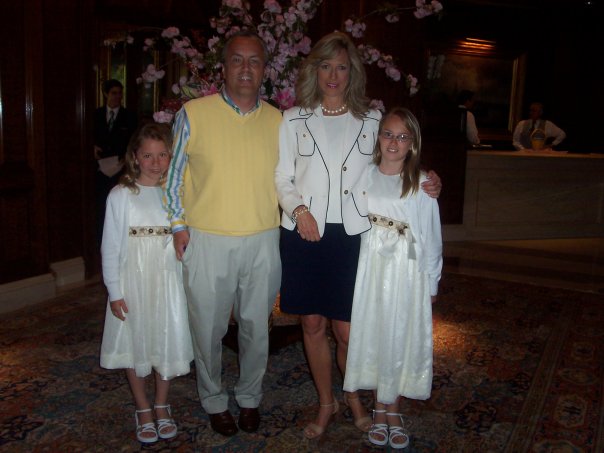
I’d like to take this opportunity to wish my mother a Happy Mother’s Day. That’s her in the center, surrounded by my two girls, Leah and Mira. She’s put up with me when I haven’t exactly been the most attentive son. I certainly wasn’t the easiest kid to raise, and I appreciate the many sacrifices she and my father made for me, along with their efforts to provide my sister and myself with a strong spiritual foundation.
My mom has three grandchildren…our two girls, and my sister’s daughter, Shannon (pictured below with my sister). Shannon’s a neat kid. She’s sixteen, is a huge fan of Keith Urban, and despite his narcissistic, self indulgent act of betrayal, remains a big fan of the player who used to wear Number 23 for the Cleveland Cavaliers.
Shannon was born 15 1/2 weeks earlier than had been expected and spent eight of her first thirteen months of life in the neonatal intensive care unit at Rainbow Babies and Children’s Hospital in Cleveland. When she was home in her early years, there was usually a nurse present at night to help monitor the equipment that helped her to breathe while her parents got some sleep. If you were to meet Shannon today, you’d notice she has a mild degree of cerebral palsy, some developmental delay and difficulty expressing herself verbally.
Shannon’s presence in our family today is a product of prayer answered through the resources of modern medicine. Nevertheless, Shannon’s birth profoundly affected two households and the relationships that would develop between my girls and my side of the family.
Understandably, my mother became very connected to Shannon and my sister as a result of what they experienced. Further complicating matters, my father died suddenly when Shannon was three months old and fighting for her life in intensive care. My sister needed lots of help and support and it was probably good that my mother was able to step into the situation and occupy her mind by helping my sister during a time of grief. Several years later, as often happens in families of kids with serious disabilities, my sister and her husband divorced, and my mother’s availability and support became even more important. For whatever reason, my sister has never been particularly receptive or interested in whatever help I had to offer…be it connecting Shannon with medical professionals, resources to ensure that Shannon was receiving the best possible educational supports, or even tickets to basketball games.
One area in which I had offered to help was in arranging for supports for Shannon’s involvement at church and Christian education. While my wife and I would consider ourselves to be evangelical Christians, my sister and my mother are Roman Catholic. When Shannon was a preschooler, I was the “Gentile” member of our region’s Catholic Charities Services Board, and the folks in the Cleveland Catholic Diocese were eager and willing to do pretty much anything to support my sister in Shannon’s religious education, had she been willing to ask. Today, Shannon regularly attends church, but to my knowledge, she’s never received any of the sacraments of the Catholic faith, despite my sister serving as a eucharistic minister in her church. Our team at Key Ministry has actually done an introductory training at her church, but for whatever reason, Shannon has never been actively involved in any of the programming offered for children and youth there.
One of the other byproducts of Shannon’s situation is that my daughters have become aware, as they have grown older, that their grandmother has a very different level of involvement with Shannon than she does with them. My girls aren’t deprived of attention from grandparents…my in-laws are very vital and active, live about an hour from us, and are around regularly for activities at school. They both love their grandmother and they’re excited when they get to see her, but they realize that their relationship is different with my mom as opposed to my wife’s parents.
So, where am I going with this? First, our family’s experience of a child with a disability has made me aware that the impact of the disability isn’t limited to the nuclear family but affects the extended family as well. Second, while we as the church can offer to do what we can to support families affected by disability, as a psychiatrist and as a brother, I can’t fully comprehend how the 24 hour a day, seven day a week experience of being responsible for a child with a significant disability colors one’s understanding and attitude toward God and experience of trying to be a part of a community of faith through the local church. We can do everything we possibly can to reach out to families of kids with disabilities who aren’t actively involved with church, but we also need to be slow to judge parents who fail to take us up on the offer until we’ve walked in their shoes.
Happy Mother’s Day to all the moms who serve so faithfully, both at home and in their local churches.
Today’s post on the challenges families face in finding the right help for their kids is the third in a week-long series about psychiatric and learning disorders in children as part of “Speak Up for Kids,” a nationwide education campaign during National Children’s Mental Health Awareness Week. Previously, we looked at the pros and cons of psychotropic medication for kids.
Parents of kids with significant mental health disorders frequently experience great frustration in negotiating the confusing maze that constitutes our system of mental health care in many communities across the U.S., along with the yet more confusing (intentionally?) system of paying for needed care. Quite frequently, pastors and ministry leaders are trusted resources to parents of children or teens in crisis, and my own professional society encourages parents who are looking for help for their kids to seek recommendations from their spiritual leaders. In honor of National Children’s Mental Health Day, I wanted to help ministry leaders better appreciate several challenges families face in finding the proper help for their kids, and offer some resources to share with parents looking to churches for help.
Several major challenges families face include:
Access to appropriate professionals with the training and experience to effectively kids. I’m a child and adolescent psychiatrist by training…after medical school, I did a three year residency in general psychiatry at Cleveland Clinic prior to two additional years of training with kids at University Hospitals of Cleveland. According to a 2009 article, there are 7418 child psychiatrists actively practicing in a country with approximately 75 million children and teens. The vast preponderance of child psychiatrists are clustered in major cities, and docs who do what I do are especially rare in areas of the South or Midwest where the church tends to have more influence in the lives of families.
Finding professionals who will see kids and know what they’re doing can be a challenge. One difference between child psychiatrists and non-physician clinicians who see kids involves the variability of training experiences and supervision prior to entering practice among the non-physicians. Child psychiatrists have a minimum of five years of training and supervision following med school. In contrast, psychologists have the option of doing a one year internship in child psychology. Counselors in our state who identify children as an area of concentration would have a minimum of 1500 supervised contact hours of treatment with kids.
Here’s one example of the challenges families face…Cognitive-Behavioral therapy has been shown to be an effective alternative to medication in the treatment of kids with anxiety disorders or depression. In a city generally accepted to be in the top 5-10 in the U.S. for medical resources, there are less than ten therapists I feel confident referring kids to with the expectation that their treatment will mirror that offered the kids who participated in the research studies.
Getting an appointment in a timely manner. Because professionals with the training and experience to work with kids are in short supply, getting an appointment with the best people (assuming you have people in your area) can take a very long time. Even in large cities such as Boston and Washington D.C. with a relatively larger supply of professionals, appointment wait times have reached crisis proportions. In areas such as rural Wisconsin, waits for an appointment can reach two years!
Finding affordable care of high quality. In Northeast Ohio, we have a three-tiered healthcare system. Kids who qualify for Medicaid can access services through our teaching hospitals and community mental health centers. In some counties the available services for kids are outstanding and far exceed anything families with private insurance can access. In other counties, services are available, but child psychiatry access is limited to very brief appointments focused entirely upon prescribing of medication and counseling provided by inexperienced trainees.
The most highly regarded clinicians in private practice (child psychiatrists, psychologists, some counselors) are able to practice without having to accept insurance payments. Waiting lists are generally shorter, but such practices are becoming fewer and fewer in number as the hours spent in uncompensated tasks (phone calls, emails, paperwork, coordinating care with other professionals, working with schools, dealing with pharmacy benefit managers) become so great that many clinicians have had to close their practices and accept salaried positions. We can’t hire child psychiatrists for our practice because we can’t compete with the salaries offered by our publicly funded mental health centers.
Middle class families who depend upon their health insurance benefits may be in the most difficult situation of all. From a psychiatry perspective, the only way a physician can earn a salary comparable with those offered by public agencies while accepting insurance is to run an “assembly-line” practice composed of seeing high volumes of patients for very brief appointments. The large teaching hospitals in our area who contract with the big insurance companies won’t hire an adequate supply of clinicians to see kids with mental health issues because it’s impossible for those clinicians to see enough kids to generate the revenue necessary to cover the costs of their salaries, benefits and overhead on the reimbursement rates they get from insurance. Parents frequently get names of clinicians who are allegedly “in-network” from insurance company websites only to find that they’re not taking new patients, they don’t see kids, their offices are closed, they don’t accept the insurance in question, or that they’re scheduling six months in advance. Appointment times may not be available outside of work or school hours.
These are just a few of the struggles experienced by the parents of the kids who are acting out in Sunday School. What can the church do?
Pastors and ministry leaders can become familiar with the resources available in their immediate communities to help kids and families in crisis. Many churches will have members and attendees who are pediatricians, psychologists or counselors who might make recommendations as to local resources for families in need. The local chapter of NAMI may be an excellent resource for church leaders in search of resources for kids and families.
One way in which a church could provide a much-needed service to families in their immediate area would be to make available advocates or consultants who would help parents seeking mental health care for their kids to connect with resources offered through other churches, community agencies, schools, private clinics and their health insurer. The church can also provide a powerful demonstration of the love of Christ by creating ministry environments in which families of kids with mental health disorders are welcomed and valued.
Post updated January 26, 2013.
Today’s Resource: Facts for Families…The AACAP developed Facts for Families to provide concise and up-to-date information on issues that affect children, teenagers, and their families. The AACAP provides this important information as a public service and the Facts for Families may be duplicated and distributed free of charge as long as the American Academy of Child and Adolescent Psychiatry is properly credited and no profit is gained from their use. Here are links to information on When to Seek Help for Your Child, Where to Find Help for Your Child and Understanding Your Mental Health Insurance.
Key Ministry’s mission is to help churches reach families affected by disability by providing FREE resources to pastors, volunteers, and individuals who wish to create an inclusive ministry environment. We have designed our Key Catalog to create fun opportunities for our ministry supporters to join in our mission through supporting a variety of gift options. Click here to check it out! For a sixty second summary of what Key Ministry does, watch the video below…
Today’s post examining the pros and cons of psychotropic medication in kids is the second in a week-long series about psychiatric and learning disorders in children as part of “Speak Up for Kids,” a nationwide education campaign during National Children’s Mental Health Awareness Week (May 1-7, 2011). Yesterday, we looked at possible causes of the current epidemic of mental illness among kids in the U.S. Tomorrow, we’ll look at the struggles families face in trying to obtain the best possible treatment for their children.
The widespread use of medication among children with mental health disorders is the ultimate “hot-button” topic in our field today. Undeniably, the use of such medications in kids has increased dramatically over the last twenty years. During our series on ADHD and spiritual development, we noted that 9% of U.S. kids between the ages of 5-17 have received at least one prescription for ADHD in their lifetimes. A recent study reported that the second, third and fourth most commonly prescribed classes of medications for children (behind asthma medication) are ADHD medications, antidepressants and antipsychotics, respectively.
The question that parents ultimately face is not so much whether doctors are too quick to prescribe medication in general, but whether medication is necessary and appropriate for their child.
I could write a book on the specifics of how these medications work, but that would be beyond the scope of this post. Instead, here are some general principles for ministry leaders and parents to consider when the topic comes up:
Medication shouldn’t be prescribed until the child has had a thorough evaluation by an appropriately-trained professional with experience in diagnosing and treating children and adolescents. You want to make sure that the physician you’re working with has taken the time to understand your child and consider all of the biological, psychological, family systems, educational, developmental and environmental factors that may be contributing to your child’s difficulties. For me, the process usually takes at least three hours and involves separate interviews with the parent and the child, review of school records, and collection of observations from parents, teachers, and when appropriate, observations from other significant adults.
When non-medical treatment interventions have been demonstrated to be at least equally effective to medication and the child is not experiencing severe functional impairment, consider non-medical approaches first. A good example of this principle would involve kids with mild to moderate anxiety symptoms or mild to moderate depression without suicidal thoughts or plans. We have reasonable studies demonstrating cognitive-behavioral therapy to be an effective alternative to medication in kids with anxiety or depression.
Consider medications that have been studied extensively in kids first prior to using newer medications not yet approved for marketing in children by the FDA. In the case of kids with ADHD, this isn’t a major concern. The first placebo-controlled trial of medication for ADHD (Benzedrine…a product very similar in chemical composition to the medication currently marketed as Adderall) was published in 1937. We have over 2,000 published clinical studies or research reports examining the safety and effectiveness of ADHD medication. Prozac and Lexapro are approved for use in adolescents with depression. Zoloft and Luvox are approved for children with anxiety and/or Obsessive-Compulsive Disorder. Risperdal, Seroquel and Abilify are approved for use in kids with bipolar disorder. We’ve progressed to the point where we have reasonable clinical data supporting the use of medication for most significant mental disorders in kids. Note: FDA approval regulates what a drug company can say in marketing a given medication, but doesn’t restrict how a physician may prescribe medication. Your physician may have a good reason for prescribing medication that’s not formally FDA-approved in kids, but this is a far less frequent occurrence now compared to five years ago.
Always make sure that you understand why a specific medication is being prescribed and what the intended benefits are of the medication. We were doing a study looking at the safety of antipsychotic medications a number of years ago and I was blown away by the number of kids who came into our clinic who were experiencing serious side effects from medication that they (or their parents) didn’t know why they were taking.
Speak to your physician about discontinuing medication when your child’s not getting better. Medication for one condition can often result in exacerbation of other conditions. In my practice, we probably stop more medication than we start. When things aren’t working, we often thoughtfully discontinue medication in order to reestablish “baseline.” Note to parents…Speak to your child’s physician first before discontinuing any medication on your own!
Bottom line…Medication in the hands of an appropriately trained physician can be one instrument God uses in responding to prayers for a child with a serious emotional or behavioral disorder. In the same way, God may use a physician who’s not necessarily a Christian to bring about healing…Christians in my field are only slightly more common than victory parades in Downtown Cleveland. God’s not limited to using Christians to help kids with issues.
Today’s post examining the causes of the epidemic of mental illness in kids kicks off a week-long series to raise awareness about psychiatric and learning disorders in children as part of “Speak Up for Kids,” a nationwide education campaign during National Children’s Mental Health Awareness Week (May 1-7, 2011). Click here for a listing of topics to be covered during this week’s series.
As a child and adolescent psychiatrist, I frequently encounter parents and skeptics who freely share their opinions that much of the reported crisis in children’s mental health is fabricated…a marketing scheme of the pharmaceutical industry, a consequence of poor parenting or misplaced priorities on the part of families.
Opinions such as these endure because anecdotal data in support of them can be relatively easy to find. There’s an argument to be made that drug company marketing in support of long-acting ADHD medications led to a spike in the number of kids being diagnosed in the early years of the last decade. I see parents who come looking for the “magic pill” to fix their child’s problems and recoil when family-based or behavioral interventions appear more appropriate. I spoke to a colleague yesterday who quit her job in a publicly-funded clinic because she was sick of parents who needed her to declare their kids sick so that they could obtain disability payments from the government. But these situations are by far the exceptions as opposed to the rule. I spend my days dealing with kids with real disabilities accompanied by well-meaning parents who more so than anything desire the best for their kids and are willing to try the strategies our practice team recommends.
In an earlier post, I shared data from a recent study examining the prevalence of mental health disorders among kids entering the first grade. Here are some of my hypotheses as to why over 20% of U.S. kids meet criteria for at least one mental disorder:
Rates of mental illness are a reflection of the struggle kids and families face in responding to the external demands placed upon them by our culture. I have a very hard time with the concept of first graders carrying planners. One of the biggest changes I’ve seen in my 25 years as a doc is the increase in the productivity expectations schools place upon kids. My youngest daughter had about the same volume of homework in the first grade that I had in the seventh grade in what was then an elite public school system in Ohio. Most kids that I see with ADHD come to my office because of problems with organizational skills and work completion. Kids getting diagnosed with the condition have genuine difficulty keeping up in school. The biggest change I’ve seen in the composition of my practice involves the number of kids struggling with anxiety. The pressures to succeed both academically and socially are unprecedented.
The general breakdown of the family…the maladaptive choices parents make in seeking to fill the emptiness in their lives have consequences for kids. This is the primary reason I quit doing community mental health eight years ago. My typical referral…Single mom comes in (five kids by four different guys, currently living with a boyfriend unrelated to any of the kids who beats her on a nightly basis in front of the children) with her seven year old who was suspended for fighting on the playground. I was far more overwhelmed by the level of spiritual poverty working in the city than the economic poverty that existed. I concluded that many of the families I was working with needed a pastor more than they needed a psychiatrist. That observation also holds true with lots of affluent families from the suburbs.
The consequences of a post-modern culture with an emphasis upon relative values and the lack of moral absolutes. I spend much of my talking to kids and teenagers who may be anxious, depressed or suicidal. Just to be clear, I’m absolutely convicted that God’s way works and the rules and standards for living in the Bible exist for our own protection. With that said, I’m probably not going to get very far making that argument with a teenager, even (in most instances) kids from Christian families. The lack of standards make things worse for kids with vulnerabilities to anxiety or impulsive behavior. What I do tell kids is that they fail to appreciate the intensity of emotions they’ll experience when sexual boundaries are crossed, they don’t yet have the necessary tools or experience to manage such intense emotions. Kids who tend to have a difficult time letting things go are often those who go on to become depressed or exhibit self-injurious behavior in response to the ups and downs of relationships. The breakdown of standards of absolute right and wrong has resulted in kids (and parents) exposed to problems and situations that they’re not equipped to deal with, not infrequently resulting in symptoms of mental illness.
The interplay of environment and genetics. We know that kids exposed to alcohol and tobacco in utero are likely to develop ADHD and experience learning disabilities. A landmark study demonstrated that exposure to tobacco smoke during the third trimester of pregnancy appears to be especially toxic for children with two identical copies of a specific gene associated with ADHD, resulting in an 8-fold greater risk of the condition.
We’ll most likely discover the existence of multiple environmental toxins associated with the increased prevalence of autism spectrum disorders. This is pure speculation on my part, but I suspect that part of the reason why it’s so hard to demonstrate a link to any given toxin is that chemicals found in the environment may activate one of many genes contributing to a single trait found in kids with autism.
Here’s what I do know:
Every kid and every family needs to know Jesus
The church is called to make disciples
As the church, we’re called to share God’s love with kids with mental illnesses and their families, REGARDLESS OF THE CAUSE.
Today’s Featured Resource: The Child Mind Institute is improving the lives of children and teens struggling with psychiatric and learning disorders by integrating the following elements:
Accessible, evidence-based clinical care for children and their families
Visionary, collaborative research engaging scientists from around the world in the discovery of more effective treatments and the exploration of new frontiers in the science of healthy brain development
Key Ministry is pleased to be participating in “Speak Up for Kids,” a nationwide education campaign during National Children’s Mental Health Awareness Week (May 1-7, 2011) to raise awareness about psychiatric and learning disorders in children.
For each day of Children’s Mental Health Awareness Week, this blog as well as Key Ministry’s blog on CMconnect will focus on a topic of interest to church staff, volunteers or parents. Possible topics include:
What’s causing the epidemic of mental illness in kids?
The links between trauma and mental illness
The pros and cons of medication for kids
Mental illness and autism
What families face in getting good help
When are mental health issues spiritual issues in kids?
How should the church respond?
Check back for or the first post of the series this Sunday.
We’re also going to be doing a couple of radio shows next week for folks around the world on the blogosphere. Katie Wetherbee and I will be recording a broadcast for The Need Project next Monday afternoon (broadcast time TBA), and I’ll be appearing live at 9:00 PM next Thursday evening, May 5 with well-known author and Family Life speaker Cindi Ferrini on the topic of Including Kids With “Issues” at Church.
In addition, I plan to video blog each day next week at the Key Ministry page on CMconnect. I’d like to answer by video questions from church staff, volunteers and parents on topics of interest involving kids and mental health…if you’d like to see your question addressed next week, post it as a comment below.
Easter is one of two days during the year when families who are “cultural Christians” are most likely to check out church. This is a good thing. After all the church is in business to share the Gospel and the minor inconvenience of having to park a little further away than usual or to find some one sitting in our customary seat are well worth it.
After you get home from church, I want to challenge you to ponder something beyond which family at church won the fashion show. (Don’t ask me how I know about that one…let he who is without sin cast the first stone.) Consider this…Who wasn’t there? Do you have friends and neighbors who couldn’t come to church because their kids have emotional, behavioral or developmental issues that make church attendance and participation nearly impossible. My guess is that you can quickly think of several families who couldn’t come to hear about the Good News of Jesus’ death and resurrection.
Jesus died and rose from the dead for everyone. That’s why the work we do at Key Ministry is so important. We think it’s completely unacceptable that there are families who can’t regularly come to church to learn about Jesus, grow in faith and ultimately, put that faith into practice by sharing His love with other people in practical ways.
That’s why we do what we do at Key Ministry.
He is Risen! Happy Easter from our entire team at Key Ministry.
Note on the picture: This is from Easter, 2007 when we were driving back from Florida and had this picture taken before visiting North Point in Atlanta. We felt really bad for taking a close-in parking spot when Easter temperatures were in the 20s and the natives were freezing.
We’re pleased that our teammate, Harmony Hensley, will be offering two presentations at this year’s Orange Conference in Atlanta. She’ll be accompanied by Katie Wetherbee. E-mail Katie (katie@keyministry.org) or call (440) 247-0083 to meet up at the conference.

 I’m honored to have the opportunity to join Mike Woods from Making Room on his blog talk radio program today, Tuesday, May 17th at 10:00 AM EDT. We’ll be discussing the topic of Family-Focused Special Needs Ministry. If you’re not able to join us live tomorrow, the broadcast will be archived for your listening convenience.






 I’d like to take this opportunity to wish my mother a Happy Mother’s Day. That’s her in the center, surrounded by my two girls, Leah and Mira. She’s put up with me when I haven’t exactly been the most attentive son. I certainly wasn’t the easiest kid to raise, and I appreciate the many sacrifices she and my father made for me, along with their efforts to provide my sister and myself with a strong spiritual foundation.





 Church4EveryChild