Same Lake, Different Boat: Steph Hubach (Part Three)

In Part Three of her guest blog series, Same Lake, Different Boat Stephanie Hubach addresses the attitudes of the church toward persons with disabilities, as well as the difficulties that arise for churches as they seek to develop inclusive ministry environments. Steph’s biography may be found here, along with Part One and Part Two of the series.

C4EC: What’s the Church’s role in leveling the playing field for persons with disabilities?

SH: When addressing disability in the Church, the goal is not to convey that people with special needs are somehow God’s special people—those who are due extraordinary rights and privileges. It is to restore fair and respectful treatment of every person as a unique individual created in the image of God, including people with disabilities.

C4EC: And when the church fails to assume this role…?

SH: The antithesis of justice is oppression. It’s a harsh word for most of us, and when we hear it, we probably think of what I call “active oppression”—the intentional holding down of another through the use of power in a way that’s immoral and inequitable. But oppression can be passive as well. It involves the holding down of another through what is not done, and it’s generally a matter of neglect, which stems from ignorance or indifference. Passive oppression is more typical of what occurs in churches. For example, when a church building has half-a-dozen steps to its front door and no alternative handicap-accessible entrance, it is literally holding down anyone who might desire to worship there but needs a ramp to enter. If a Sunday school program fails to address the Christian education needs of a child with Down syndrome, and just looks the other way, it is holding back both that child and his parents from full participation in the life of the church. When adults with appropriate spiritual gifts are never even considered a position of church leadership because they’re affected by disability, they’re being held down by their congregations.

C4EC: Is ignorance or indifference more challenging to overcome?

SH: Ignorance often results in a failure to provide for basic needs because we just don’t know the problem exists, or we don’t understand how to address a specific challenge. But yes, indifference is more complex. It’s a matter of the heart. It could be characterized as, “We know there’s a problem, but we really don’t care enough to act.”

C4EC: What difficulties arise when congregations choose to be inclusive in their practices?

In Paul’s discussion on the body of Christ in I Corinthians 12: 25, he talks about showing “equal concern for each other.” When we do that, everyone has to adapt—both those with and without diagnosable disabilities. The family of a child with developmental disabilities ought not to enter the local church with a demanding and inflexible attitude, nor should the existing congregation be unwilling to make any adaptations. Our selfish natures resist making accommodations for each other, but that is what is always required of us when we love as Jesus loves. “Win-win” congregational inclusion can be created in many and varied ways when we are simply committed to finding ways to show equal concern for each other. Sometimes, this means evaluating whether certain aspects of our congregational life are really biblical or simply part of our “church culture.” Must there be complete silence during a sermon? Do you have to sing perfectly to be in the choir? Do you have to be articulate to give a personal testimony? Working through questions like these can be a painful, but healthy, evaluation process for a congregation.

Sometimes, showing equal concern for each other means rolling up our sleeves and learning how to care for a child with autism, or spina bifida, or cerebral palsy so that their parents can enjoy an uninterrupted worship experience. Sometimes adapting means that we all learn to accept “distractions” in the Sunday morning service so that a person with developmental disabilities can do what all of us were created to do: to worship God in spirit and in truth. St. Gregory of Nyssa once said that “mercy is a voluntary sorrow which enjoins itself to the suffering of another.” When we enter into the challenges of another, whether they are disability-related challenges or not, it will always cost us something. But for it to be genuine mercy, we must willingly, actively enter into their struggle in an intentional, personal way. This is the essence of the humble, righteous, sacrificial life of love that Jesus calls us to in the Sermon on the Mount.

Sunday: The conclusion of the interview with Steph

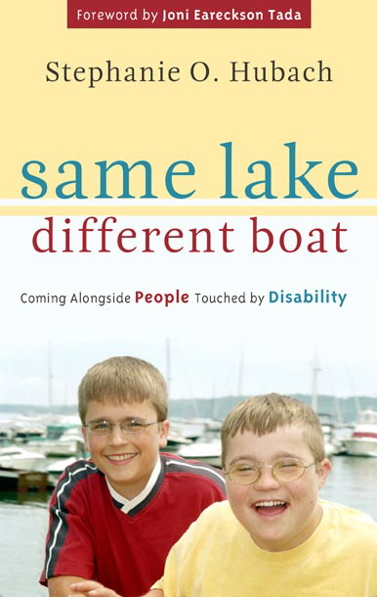
Steph’s newly released DVD series, Same Lake, Different Boat: Coming Alongside People Touched by Disability can be ordered here for the discounted price of $35.00. Her book that shares the same title as her DVD series is also available here at a discounted price of $7.50.

Posted in Inclusion, Strategies | Tagged , , , , | Leave a comment

Same Lake, Different Boat: Steph Hubach (Part Two)

Today, we look at Part Two of Stephanie Hubach’s guest blog. Steph has recently released a DVD series based upon her widely read book, Same Lake, Different Boat: Coming Alongside People Touched by Disability. Click here for Steph’s biography, along with Part One of the series. In this segment, she discusses what churches look like when doing disability ministry well, the benefits to the church from disability ministry, and her perspective on such ministry as a “justice” issue.

C4EC: What does a church look like that “gets it” in serving families touched by disabilities?

SH: A congregation that engages people with disabilities from a biblical vantage point will, as I mentioned earlier, have a respect-based relational approach to people—all people. Recognizing every person’s innate value, they will gladly find ways to make welcoming and belonging a reality for everyone in the body of Christ. In grace, that congregation will gladly make the necessary, sometimes sacrificial, accommodations to include individuals with disabling conditions. As our pastor Tom Nicholas says, “Disability ministry is not a nice thing we do. It is the gospel in action.”

These churches will also understand that disability affects not only the person who has the special need, but also the entire nuclear family unit and the covenant community in the local congregation. All will need to enter into the challenges. All will benefit from the blessings.

Disability is not an exclusively negative experience. Life isn’t just about difficulty and neither is life with a disability. Disability is just like the rest of the “stuff” of life—it reminds me of our wedding vows: “joy and sorrow, plenty and want, sickness and health.” Let me just mention herethat I tried to write the book in a way that mirrors life this way. So, in addition to sound theology, and thought-provoking challenges, I wove humorous illustrations about my sons Freddy and Timmy into many chapters to make it enjoyable to read too—not just weighty.

C4EC: What benefits do churches obtain from welcoming and including persons with disabilities?

SH: The blessings are as diverse as the people themselves. The problem is that we often tend to view people with disabilities exclusively through the lens of their disability or their limitations, and yet, this is only one aspect of who they are as a complete person. All people with disabilities have abilities too. And all Christians, including Christians with disabilities, have spiritual gifts “given for the common good (I Corinthians 12:7).” This may sound simplistic and obvious, but sadly, we tend to miss this, in part because we wrongly focus on the disability, and in part because we fail to realize that sometimes the packaging of the giftedness is simply different. We tend to either miss it, or worse—dismiss it—particularly for people with intellectual disabilities. Those with intellectual disabilities have much to teach us about faith, but usually we are not even listening. In a similar way, people with sensory disabilities or physical disabilities are sometimes overlooked for church leadership positions that they are qualified for—just because they use a wheelchair or an assistive device.

C4EC: Why do you see disability ministry as a social justice issue?

SH: We know that justice matters to God. The subject comes up more than 200 times in Scripture. Justice is the appropriate use of power to do what is morally right and fair. We read in Leviticus 19:15, “Do not pervert justice; do not show partiality to the poor or favoritism to the great but judge your neighbor fairly.” In this passage the “poor” include the disadvantaged in society. And the “great” are those with economic or social advantage. It’s important for us to note that Scripture doesn’t promote compensation of the “poor” at the expense of the “great.” It calls for the restoration of a level playing field. The goal isn’t to show partiality to anyone, but fairness to all.

Next: Part Three of the interview with Steph

Steph’s newly released DVD series, Same Lake, Different Boat: Coming Alongside People Touched by Disability can be ordered here for the discounted price of $35.00. Her book that shares the same title as her DVD series is also available here at a discounted price of $7.50.

Posted in Key Ministry, Resources, Strategies | Tagged , , , , | Leave a comment

Same Lake, Different Boat: Guest Blogger Steph Hubach

I’m grateful that Steph Hubach has graciously agreed to serve as guest blogger for this upcoming week.

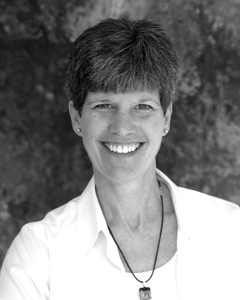
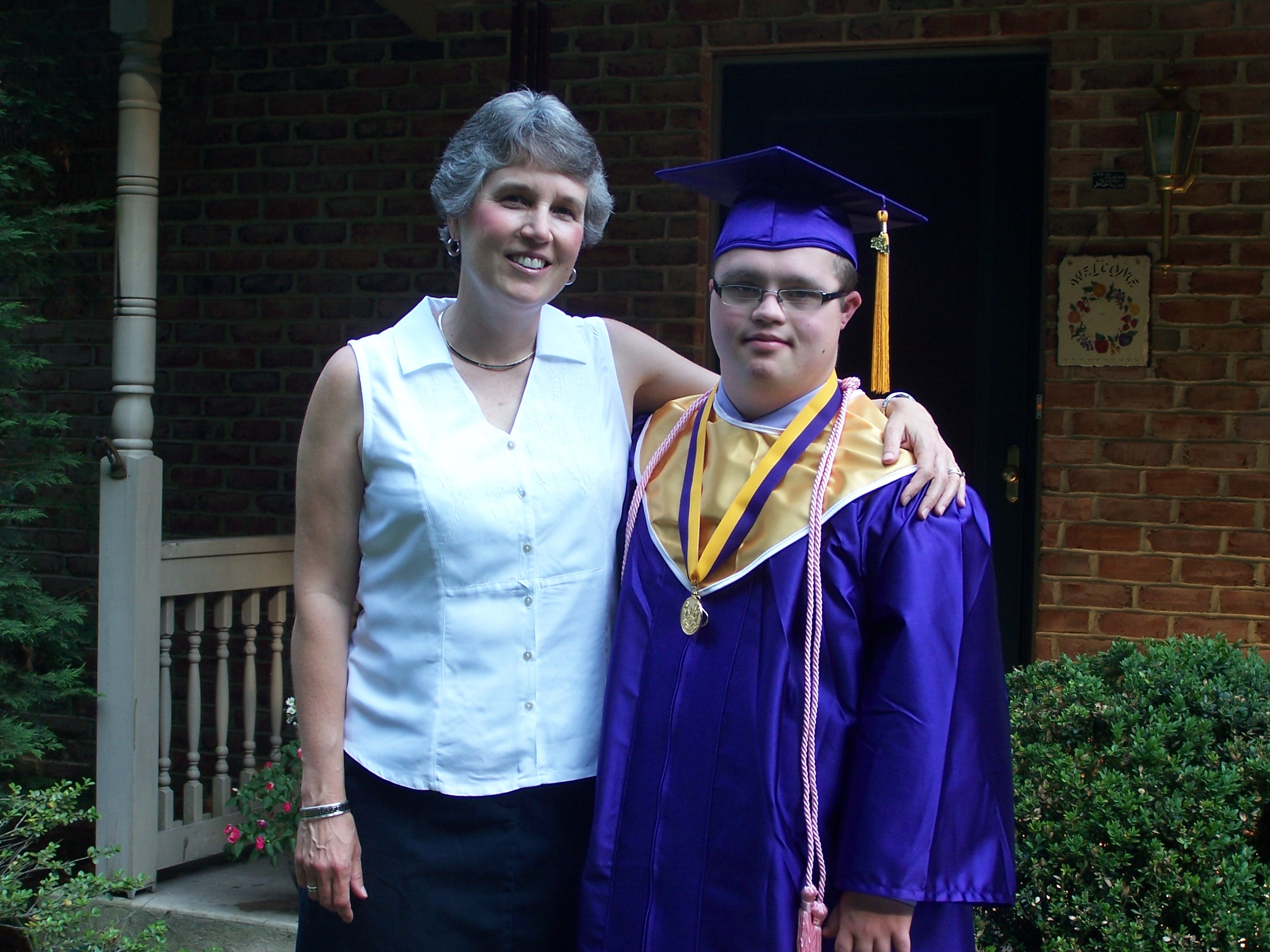
Steph has served for the past five years as the Special Needs Ministries Director for Mission to North America (MNA), an agency of the Presbyterian Church in America (PCA). Prior to assuming her current position, Steph and her husband Fred led the Special Needs Ministry at Ephrata Reformed Church in Ephrata, PA. She is a Phi Beta Kappa graduate of McDaniel College, has an M.A. in Economics from Virginia Tech University, and currently serves as an Adjunct Instructor at Covent Theological Seminary in St. Louis, Missouri. Steph and Fred have two sons, Fred (22), a recent graduate of Wheaton College, and Tim (20), a graduate of Ephrata High School who has Down’s Syndrome.

Steph has recently released a DVD series based upon her widely read book, Same Lake, Different Boat: Coming Alongside People Touched by Disability. In the DVD series, she expands upon the topics addressed in the book with new insights, applications and stories not included in the original publication, accompanied by interviews with ministry leaders, persons with disabilities and family members.

Throughout this week, she’ll share some of her thoughts and experiences that have influenced the development of her current ministry, as well as her purposes in creating her book and DVD series.

C4EC: What were you hoping to communicate through the title, Same Lake, Different Boat?

SH: When we approach someone who is dealing with circumstances different than our own—for example, a disability—I think we have a tendency to head toward one of two extremes. On the one hand, we may adhere to the American melting pot idea—that “we’re all in the same boat”—and by focusing exclusively on what we have in common, we fail to acknowledge the genuine differences between our life experiences. Or, we may follow the postmodern concept that real understanding of others is not truly possible, and we exaggerate the differences as if “we’re indifferent lakes entirely.” But as Christians, we need to practice identification that is like God’s example to us: one that’s not based solely on what we have in common, or exclusively on how we’re different, but identification that’s intentional. That’s the idea behind Same Lake, Different Boat. This approach recognizes that as human beings, we’re essentially the same but experientially different. So identifying with each other is a choice—a choice that can have tremendous blessings.

C4ECDid you write the book to encourage Christians to make the choice to enter into the lives of individuals and families touched by disability?

SH: Yes. In 1992, our youngest son, Timmy, was born with Down syndrome. Prior to that, my husband Fred and I had been closely involved with friends who had not just one but two sons born with disabling conditions. But, our eyes were opened to a whole new dimension of life when our own son was born with a disability. Suddenly, we were personally immersed in “disability world”—including all of the caseworkers, specialists, therapists, and hospitalizations that go along with that. As I became increasingly involved in various parent groups and disability advocacy organizations, I saw firsthand the depth and breadth of the challenges facing families affected by disability: spiritually, emotionally, physically, relationally, psychologically and financially. In amazement, I realized that a significant number of them were “going it alone”—in many cases unsupported by family or friends, and the vast majority were un-churched.

I began to ask myself, “Where in the world is the Church?” Having experienced firsthand the blessings of a supportive church when Timmy was born, I knew that the Church has just what families touched by disability need—the restorative power of the gospel for their lives in word and deed. As we grew in wonder of and appreciation for Timmy as a person, I also realized that families with a disabled family member have just what the Church needs—the precious image of God packaged in incredibly diverse ways that can benefit the entire body of Christ. But in order to experience this blessing, the Church has to choose to enter into the lives of individuals and families touched by disability with intentionality.

Next: Part Two of the interview with Steph

Steph’s newly released DVD series, Same Lake, Different Boat: Coming Alongside People Touched by Disability can be ordered here for the discounted price of $35.00. Her book that shares the same title as her DVD series is also available here at a discounted price of $7.50.
Posted in Inclusion, Key Ministry, Leadership, Resources | Tagged , , , , | 2 Comments

Lessons from failure…listen to Dicky Fox

I spent some time recently with a guy who served with me in a situation that is, to this day, the biggest disappointment of my adult life. I’d spent hundreds of hours bashing myself over the head about the way this situation worked out…my friend made something  ridiculously obvious to me that I’d previously considered. This was something I’d failed to do and something I constantly made excuses for not pursuing. This was advice I’d overlooked despite Katie Wetherbee (my teammate at Key Ministry) including a slide specifically addressing this point in her presentations to churches. Tom Cruise’s character addresses it by referencing the words of his mentor, Dicky Fox, in the movie Jerry Maguire:

“The key to this business is personal relationships.”

I failed because I tried to take shortcuts. I expected to walk into a situation and immediately exercise influence because of my background, experience and track record without investing the time and energy into the relationships that form the foundation of influence.

I may come back to this topic because it illustrates a challenge our crew at Key Ministry needs to help leaders overcome if they’re going to be successful in becoming champions of intentional efforts to welcome and include families with disabilities into the life of the church. We may have the best tools and resources and training and support for folks wanting to spearhead ministry in their churches, but if we don’t ourselves develop personal relationships with leaders in those churches and help encourage and support the leaders we’re equipping to develop personal relationships within the leadership structure of their churches, we’re doomed to failure.

I hope I’ve learned my lesson.

Posted in Key Ministry, Leadership | Tagged , , , , , | Leave a comment

Key Ministry’s Video Training Library

In the coming weeks, we’ll be making available videos of all training presentations offered by Key Ministry staff and Board members for Inclusion Fusion and the Children’s Ministry Websummit. This is the first step in the development of a free Disability Ministry video training library that will house the archives of presentations from past Inclusion Fusion conferences…the videos from the 2011 conference will be available online following the 2012 conference.

The videos listed below are currently available on the website (click the title of each presentation to download handouts). In the coming days, we’ll be adding videos from Dr. Cara Daily, Rhonda Martin and Libby Peterson, as well as presentations Katie Wetherbee, Harmony Hensley and myself offered during last year’s Children’s Ministry Websummit.

Dr. Steve Grcevich: Kids With “Issues”…The Mission Field Next Door

Rebecca Hamilton: Starting a Respite Outreach at Your Church

Rebecca Hamilton/Katie Wetherbee: Got the Keys? Starting Your Ministry

Harmony Hensley: Inclusive Ministry Environments

Amanda Mooney: We Know We Should…But How? Student Information FormStudent Planning Form and 9 Types of Adaptations

Katie Wetherbee: How to Advocate For Your Child at Church

Readers who registered for Inclusion Fusion this past year can access the videos on the conference website by logging in with your user name and password. Folks who would like to access the videos can click the link here for Inclusion Fusion and register.

Our partners at Pajama Conference are able to support FREE ministry training and conferences such as Inclusion Fusion through selling advertising on their websites and conference recordings. Your purchase of the videos from Inclusion Fusion will help to support the costs involved with producing Inclusion Fusion, but other valuable training events including the 2012 Children’s Ministry Web Summit and Youth Ministry Web Summit. The complete video set on nine DVDs is available here for purchase through Pajama Conference.

Posted in Key Ministry, Resources, Training Events | Tagged , , , , , , , , | Leave a comment

Disability ministry any church can do

I came across Libby Peterson’s Inclusion Fusion presentation in the process of assembling resources for a ministry leader in another city. The topic of Libby’s talk was relational-based respite care, but she presented a larger vision for relationally-based disability ministry that was truly remarkable. While I was present for the live taping of this talk (done without any editing or retakes), I didn’t fully appreciate the wisdom or power of what she had to say until I went back and watched for a second time.

Libby’s vision for disability ministry doesn’t require a large facility, dozens of volunteers, a massive infrastructure or even a highly committed church leadership team. It’s absolutely consistent with the content of Jesus’ core teaching in the Gospel. And ministry done in the manner in which she describes is incredibly powerful in sharing who Jesus is with folks very much in need of His love.

Here’s Libby’s video…this is less than twenty minutes in length and well-worth the time…

In addition to serving as Key Ministry’s Vice-President, Libby is the Director of Family Life at Bay Presbyterian Church. She serves on staff at BPC with Julie Jones, one of our former Board members who serves with incredible passion and wisdom as Director of Bay Presbyterian’s Family Ministry Center.

Allow me to use this opportunity to “brag on” one of our former Board members. Yesterday’s Cleveland paper included a feature article on the remarkable work Julie is doing, together with volunteers from Bay Presbyterian in purchasing and renovating the campus of a former Catholic church on the near West Side of the city to demonstrate God’s love to the people of an economically disadvantaged area.

Julie’s team has created a campus that will house multiple church plants, housing for disabled veterans, a school for kids of middle school age with severe learning disabilities, office space for ministries operating in the city, housing for college students doing volunteer social work and missionaries, art shows, concerts and a coffeehouse featuring a sidewalk cafe. The campus is being maintained and operated with the support of hundreds of volunteers from the church and fueled through partnerships with other like-minded Christians from multiple traditions and denominations.

We at Key Ministry owe our existence to the vision, encouragement, resources and support Bay Presbyterian has provided us from the time of our inception to this very day. I have no doubt that the passion I have for wanting to see all families connect with a caring and supportive church is grounded my involvement with Bay Presbyterian, surrounded by gifted and talented leaders such as Libby and Julie.

Bonus: Make sure you check out Libby’s post on partnering with parents from our blog series last winter on applying family ministry approaches in serving families touched by disabilities.

Posted in Families, Key Ministry, Strategies | Tagged , , , , , , , , | 1 Comment

Interview With Dr. Matthew Stanford…Part Two

On Tuesday, we introduced you to Dr. Matthew Stanford from Baylor University. Dr. Stanford discussed his research on the relationship between mental illness and faith practice in Part One of our interview. Today, he talks about Mental Health Grace Alliance (a new non-profit organization he founded) and two books he’s authored, The Biology of Sin and Grace for the Afflicted.

SG: You’ve been involved in the development of a new non-profit organization, Mental Health Grace Alliance. Can you share with our readers the mission and vision of Mental Health Grace Alliance, and some of the services and resources your organization provides?

MS: Mental Health Grace Alliance is a faith-based, non-profit organization created to promote understanding in the church and provide assistance and support to individuals living with mental illness and their families. We assist individuals and families affected by mental illness through Christ-centered counseling and support. We use a comprehensive (holistic) approach to equip individuals and families with biblical and clinical understanding and practical tools to navigate the health care system and daily life. We facilitate Christ-centered support groups, called Grace Groups, for both those living with a mental illness and their loved ones (presently in CA, FL, MA, TN, TX). We also provide training seminars and resources for churches and faith-based organizations to help leaders and professionals understand the balance between the clinical and spiritual aspects of mental illness and recovery. You can learn more at http://www.mentalhealthgracealliance.org.

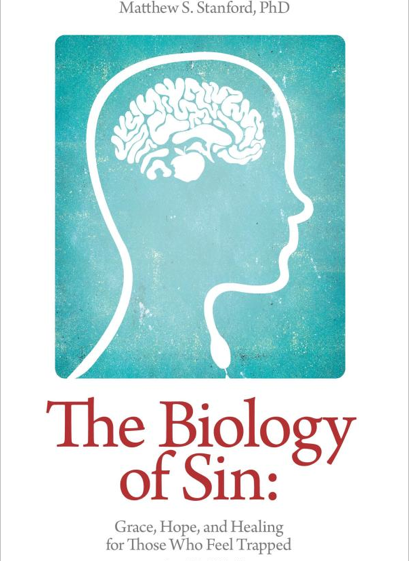
SG: In addition to your work at Baylor and through Mental Health Grace Alliance, you’ve also published two books…The Biology of Sin (available as a Kindle e-book) as well as Grace for the Afflicted: A Clinical and Biblical Perspective on Mental Illness (also available as an e-book). What are some of the key topics and questions you’ve addressed through your books?

MS: I think the key issue in all my writings is that the scientific or clinical aspects of mental health issues are not incompatible or inconsistent with a spiritual perspective. So when we are discussing medical or psychological treatments for Bipolar disorder we should also be discussing the spiritual impact on the individual and how we might effectively minister to them in their distress.

Dr. Stanford’s books, The Biology of Sin (available as a Kindle e-book) as well as Grace for the Afflicted: A Clinical and Biblical Perspective on Mental Illness are available through clicking on the links above at Amazon.com.

Posted in Hidden Disabilities, Key Ministry, Resources | Tagged , , , , , , | Leave a comment

People You Should Know: Dr. Matthew Stanford

One of my goals for this blog and for Inclusion Fusion is to expose leaders with an interest in disability ministry to other leaders with unique interests and competencies that can help us better understand the challenges we face and the needs of the kids and families we serve. One such leader is Dr. Matthew Stanford from Baylor University, who has graciously agreed to be interviewed for the blog today. Part Two will run on Thursday.

Dr. Matthew S. Stanford is professor of psychology, neuroscience, and biomedical studies at Baylor University. He serves as the graduate director for the Psychology Doctoral Program. He received his Ph.D. in Neuroscience from Baylor in 1992. After graduating from Baylor he completed a post-doctoral fellowship in the Department of Psychiatry and Behavioral Sciences at the University of Texas Medical Branch. Prior to coming to Baylor in 2003 he was a faculty member in the Department of Psychology at the University of New Orleans. Dr. Stanford’s research focuses primarily on the biological basis of impulsive and aggressive behavior. In addition, his interests include the clinical usefulness of event-related potentials in the diagnosis of psychiatric and neurological disorders. He has conducted psychophysiological research in a variety of patient populations including those with aggression, personality disorders, post-traumatic stress disorder, stroke and traumatic brain injury.

In addition to these areas of interest, Dr. Stanford was involved in the publication of a study last year, together with Dr. Diana Garland, Dean of the Department of Social Work at Baylor and Edward Rogers (lead author and former youth pastor) examining the relationship between mental illness and faith practice published in the journal Mental Health, Religion and Culture that we reviewed last July on this blog. He also serves as Director and Founder of Mental Health Grace Alliance, a faith-based, non-profit organization created to promote understanding in the church and provide assistance and support to individuals living with mental illness and their families. Part One of the interview with Dr. Stanford will run today, with Part Two to follow on Thursday.

SG: Your group at Baylor has developed an interest in studying the impact of mental illness on family involvement in churches. What led you to see this topic as a necessary and worthwhile area for research?

MS: As a person of faith and a psychologist I have often been pulled assigned by fellow believers and asked questions about mental health issues or told of negative interactions between those struggling with mental illness and the church. That led me to begin taking seriously the interaction between those with mental illness and the local church. I came to Baylor in 2003 to specifically begin a line of research in the area in an attempt gain understanding and educate the church.

SG: Last year, your group published the results of a study of nearly 6,000 participants from 24 churches representing four Protestant denominations examining the impact of mental illness in a family on church involvement and spiritual practices. What in your mind were the key findings from the study?

MS: I would say that the key finding of that study was that approximately a quarter of families in the church are struggling to care for a mentally ill loved one. Those families are in significant distress and that distress has not only affected their personal relationships and daily lives but has also disrupted their ability to practice their faith and connect with God. Sadly, these families appear virtually invisible to the congregation as a whole.

SG: Was there any data to suggest that the presence of mental illness in a child or teen has more or less impact on church involvement and spiritual practices compared to mental illness in a spouse or a parent? Any hypotheses from data you’ve reviewed?

MS: While we didn’t specifically look at that question the families we surveyed were caring for a variety of loved ones suffering with mental illness including children. From what we can tell at this time there is no difference; both have a significant negative impact on the family’s spiritual practices.

SG: What additional studies is your group conducting (or planning to conduct) on the impact of mental health issues on spiritual practices? Is there research being done by other groups that churches served by Key Ministry should know about?

MS: Presently we are conducting several studies 1) the interaction of sexual assault survivors and the local church, 2) how personal spirituality or faith can be used therapeutically within a secular therapy setting and 3) the difference between the mental health needs of men and women in the church.

Dr. Stanford’s books, The Biology of Sin (available as a Kindle e-book) as well as Grace for the Afflicted: A Clinical and Biblical Perspective on Mental Illness are available through clicking on the links above at Amazon.com.

Look for Part Two of the interview with Dr. Stanford on Thursday

Posted in Hidden Disabilities, Key Ministry, Resources | Tagged , , , , , , , , , , | 3 Comments

What Christians (and the church) can learn from Planned Parenthood

It’s been a rough week at the Grcevich house. My wife volunteers around 30 hours/week  as the Board President of the Susan G. Komen Regional Affiliate in Northeast Ohio. The local Komen organizations do the lion’s share of fund raising for the local breast cancer screening and prevention services the charity offers to poor women without the money or insurance coverage to access help. The regional affiliates had little to do with the decisions that were made this past week by Komen’s national leadership in response to the firestorm of protest from Planned Parenthood supporters after word leaked that Komen planned not to renew grants to centers unable to provide mammograms or organizations under investigation by the U.S. Government. Volunteers with the Komen regional organizations would be very appreciative of your prayers and encouragement. This week wasn’t exactly a 30 hour volunteer week for my wife.

Observing Komen’s ordeal this past week, I will admit a strange admiration for the passion and ruthless effectiveness Planned Parenthood and its’ supporters demonstrated in their crusade to destroy an organization they viewed as a threat to their mission. I’d compare it to same admiration I’ve developed for the Pittsburgh Steelers as they’ve consistently beaten up our local football team and taken their lunch money on a regular basis for most of my adult lifetime. Just to clarify…I’m not a supporter of either the Steelers or Planned Parenthood. I become intensely frustrated watching both organizations in action. Here’s my source of frustration…

Why can’t Christians be as bold and confident in advancing our cause as the Planned Parenthood folks and other “progressive” organizations are in advancing theirs?

What can we learn from having watched Planned Parenthood in action?

They were fearless. Did anyone else notice how Planned Parenthood supporters demonstrated no hesitation in posting personal comments on Facebook and in other social media promoting their cause, while many Christian friends back down from championing causes they believe in when they fear others might be critical?

They worked together. Their organization unleashed their supporters in social media at the same time as their friends in the media launched a blizzard of news stories supporting their position and 26 senators backing their cause contacted the national Komen Board.

They played to win. The folks from Planned Parenthood weren’t going to stop until they accomplished their goal. They certainly intended to go after Komen’s corporate sponsors, enlisted the support of local politicians to hinder Komen’s regional fundraising by denying public permits for large events such as the Race for the Cure, and undoubtedly would have launched noisy and dramatic protests at Komen events to attract media attention.

So…Why can’t Christians do that?…albeit with considerably more grace?

I’ve been reading through the Book of Acts this month. Where in the world did Christians get the idea from that we should be meek or timid in standing up for what we believe in?

Look at the main characters in Acts…Peter, John, Stephen, Cornelius, Barnabus, Paul. All of them were absolutely fearless in proclaiming Jesus at the risk of their lives.

There was one passage in particular that’s stuck with me during the week:

They preached the gospel in that city and won a large number of disciples. Then they returned to Lystra, Iconium and Antioch, strengthening the disciples and encouraging them to remain true to the faith. “We must go through many hardships to enter the kingdom of God,” they said.

Acts 14:21-22 (NIV)

I’d glossed over that passage before, but never really thought about what happened to Paul and Barnabus on their first loop through those cities. Here’s a reminder…

But the Jewish leaders incited the God-fearing women of high standing and the leading men of the city (Antioch). They stirred up persecution against Paul and Barnabas, and expelled them from their region. So they shook the dust off their feet as a warning to them and went to Iconium.

Acts 13:50-51 (NIV)

The people of the city (Iconium) were divided; some sided with the Jews, others with the apostles. There was a plot afoot among both Gentiles and Jews, together with their leaders, to mistreat them and stone them. But they found out about it and fled to the Lycaonian cities of Lystra and Derbe and to the surrounding country, where they continued to preach the gospel.

Acts 14:4-7 (NIV)

Then some Jews came from Antioch and Iconium and won the crowd over. They stoned Paul and dragged him outside the city (Lystra), thinking he was dead. But after the disciples had gathered around him, he got up and went back into the city. The next day he and Barnabas left for Derbe.

Acts 14:19-20 (NIV)

So Paul and Barnabus returned to Antioch after being persecuted, Iconium after fleeing when they discovered a plot to stone them, and Lystra after Paul was stoned and left for dead! And there are folks who are afraid to speak up for their faith or champion a cause consistent with Jesus’ commands to care for the most vulnerable in society because they’re concerned about offending others or being “defriended” on Facebook?

We’re called to always be prepared to give an answer for the reason we hope in Christ with gentleness and respect, but why are we so timid?

I’m sick and tired of timid, half-hearted efforts from our church leaders and fellow Christians that leave the world around us unchanged. I’m sick of folks wanting to “play it safe” and allowing the enemies of the Gospel to define who we are, as Komen’s leadership allowed themselves to be defined by the media and Planned Parenthood’s supporters. I’m sick of waiting for professional Christians to lead. Among the early leaders of the church, only Paul had formal religious training for his position. Jesus selected twelve guys with everyday jobs to establish the church that continues to this day. And I’m sick and tired of us not being able to work together to do the work of the Kingdom.

Key Ministry will play to win. The stakes are too high. And that’s what we can learn from Planned Parenthood this week.

Posted in Controversies, Leadership | Tagged , , , , , | 11 Comments

Asperger’s Disorder, Social Disabilities and Church

shutterstock_47556007Just as we finished up our series on diagnostic labels and church, the folks at the New York Times decided to throw out more grist for the mill with an op-ed piece in arguing that Asperger’s Disorder is over-diagnosed, in part because of education laws mandating enhanced services for children and youth diagnosed with autism spectrum disorders and pervasive developmental disorders.

The argument put forth by the author of the commentary, Dr. Paul Steinberg (a psychiatrist) is that persons with social disabilities are profoundly different than those with what we classically define as autism in their capacity for language acquisition and development and suffer when lumped together in educational environments with other children with marked communication impairments. They shouldn’t require an autism diagnosis to access the treatment and support they need to increase their capacity for developmentally appropriate social interaction.

Here’s a question I’ll put on the table…How well do you think our churches do at serving kids and adults with normal to way above normal intelligence who also experience significant difficulties at picking up on appropriate social cues and are often oblivious to the reactions their behaviors evoke in others? How might a ten year old with a 145 IQ (genius level) react to being placed in a “special needs ministry” in which the majority of kids have developmental disabilities? How would a single adult who experiences marked discomfort upon entering unfamiliar places or meeting new people get connected with your church after accepting a job in your community?

Tying this back into our discussion on disabilities and labels, if we think about the kid with the 145 IQ and poor social skills as having “special needs” and try to put them into that “box” at church, they’ll likely have an uncomfortable or embarrassing experience that will linger in their mind for a very long time. If we don’t look beyond our narrow definition of “special needs” we’ll miss serving a lot of kids and adults who desperately need to experience the love of Jesus but flounder in church environments that put a huge premium upon social intelligence.

Updated February 7, 2014

***********************************************************************************************************

Square Peg Round HoleKey Ministry has assembled a helpful resource on the topic of Asperger’s Disorder and Spiritual Development. This page includes the blog series Dr. Grcevich and Mike Woods developed for Key Ministry, links to lots of helpful resources from other like-minded organizations, and Dr. Grcevich’s presentation on the topic from the 2012 Children’s Ministry Web Summit. Click here to access the page!

Posted in Autism, Controversies | Tagged , , , , , , , , , | 1 Comment