“Thinking Orange”…A Parent’s Perspective-Mike Woods from Making Room

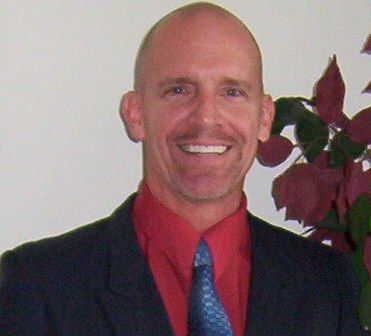
I’m delighted to introduce today’s guest blogger, Mike Woods from Making Room. As part of our series on “Thinking Orange,” I asked Mike to provide a perspective on what parents of kids with hidden disabilities need from their local church.

Mike received his Masters Degree in Conflict Management from Trinity College and Theological Seminary. He is a certified Crisis Prevention Instructor. Mike currently works for the largest school district in St. Louis as an Autism and Inclusion Specialist and is a Board Certified Associate Behavior Analyst. Prior to joining Rockwood, he served as a Master Training Specialist for the Judevine Center for Autism and as an Early Interventionist for the Missouri First Steps Program. He also taught continuing education courses on autism at Coastal Carolina College in North Carolina.

Mike has conducted workshops for a variety of churches, several national level autism conferences, and various annual state conferences.

He is happily married and the father of three wonderful boys, all three of whom are on the autism spectrum. He and his family attend Grace Church in St. Louis.  Grace has a wonderful group of people who graciously provide a ministry (“Special Edition”) to families of children with special needs!

You Are God’s Gift to Families

When I moved to Saint Louis with my boys back in 2002 one of the first things on my “to do” list was to find a place of worship.  At first glance it seems like a fairly easy process because you can open a phone book and look under the listing “Churches.” In a town the size of Saint Louis you will find hundreds of churches listed.  No problem, right?  Wrong.

The search for a church poses a big challenge for me.  Why?  Because I have three boys who are on the autism spectrum.   Taking a child with autism to church can be a source of stress for many parents.  People often stare, make comments or fail to understand any mishaps or behaviors that may occur. For example, out of the blue, my son Joshua will frequently kneel down and rub the carpet on the floor briskly with his fingertips.  He is seeking sensory input as a result of sensory integration difficulty which is not uncommon for someone with autism.  To a casual observer, however, the sight of a 13-year old boy kneeling on the ground and rapidly rubbing the carpet appears very strange.  As a result of similar types of experiences, families often feel uncomfortable taking their child to places where people gather together such as church.  Feeling like they cannot socialize or relate to others due to the behaviors of their child, parents of children with autism start to experience a sense of isolation from a community of faith.

Did you know that statistics show that only about 17% of families who have a child with autism belong to a family of faith?  That means that only 2 out of 10 families who have a child with autism know what it’s like to have a church that they can call “home.”  A big reason for this is that many churches do not have a ministry to meet the needs of families who have a child or adult with intellectual disabilities.   For most places of worship, the lack of special need considerations is not intentional, it is simply a matter of not having familiarity with the intellectual disability/special need environment.  So I knew that when I started calling the list of local churches in the yellow pages one-by-one to ask, “Do you have a special needs ministry?” the majority of the answers were going to be, “No.”  And they were.  I called 37 churches that first day, no luck.  Weary, I decided to try again another day.

Some parents would give up searching for a church after awhile.  It’s easy to do when you’ve been told “no” enough times no matter how polite the person on the other end of the phone sounds.  Feelings of rejection/isolation can start to creep in.    It often arises when you start to feel that you and your family have little importance or value in other people’s lives.   Social psychologists tell us that feelings of isolation begin to occur when a person begins to feel excluded from interpersonal relationships.  Isolation from relationships can either be an active process in which an individual or group intentionally excludes someone.  More often than not, however, isolation is usually a passive process by which people simply do nothing when needs are expressed by individuals who are experiencing major life challenges.

Scripture reminds us that we were never meant to live in a state of isolation.  We were created to be relational beings.  None of us was meant to live alone, away from meaningful connection.  Spend one minute looking at Genesis 2:18 and the words “not good” ring out.  “It is not good for man to live alone.”  Living an isolated life does not accurately reflect the One whose image we bear.  “Alone” and “isolated” were never to be used to describe His children.  Henry Cloud said it well, “God created us with a hunger for relationship—for relationship with Him and with our fellow human beings.”  At our core we are relational beings.  Cloud goes on to say, “The human soul cannot prosper without being connected to others.”

Do you want to know the one thing that keeps me going in search of a church?  People like you.  I firmly believe that the odds are good that if you are reading this blog it’s because you have an interest in special needs ministry.  If so, you’ve come to the right place because that’s the focus of Key Ministry.  And here’s one thing that I know about you from the Holy Scriptures:  You are God’s gift to families who have a child with autism. God calls people just like you to Himself, and then blesses you with the purpose of becoming part of a community of Christ-followers focused on helping “the least of these” (Matt. 25:40).  In Scripture God calls his people to live out the gospel pattern of welcome and generosity.  “Therefore, “ Paul says, “welcome one another as Christ has welcomed you, for the glory of God” (Ro.15:7).

I could list a handful of wonderful gifts that you give my children by providing a special needs ministry.  Today, however, I’d like to share with you four wonderful gifts that you bless my wife Linda and I with by providing a special needs ministry to our children and by being a welcoming church:

Gift #1:  The opportunity to express our love for God. Going to church is a visible, tangible expression of our love and worship toward God. It is where Linda and I can gather with other believers to publicly bear witness of our faith and trust in God.  It is where I can bring Him offerings of praise, thanks, and honor, which are pleasing to Him. Indeed, the Lord is deserving of our time and energy to honor Him with our service of devotion. “You are worthy, O Lord, To receive glory and honor and power; For You created all things, And by Your will they exist and were created” (Rev. 4:11).

Gift #2:  The opportunity to fellowship with God. Life can be confusing and at times overwhelming for me as I try to sift through and sort out right from wrong, truth from error, acceptance of things that I cannot change from the courage to change the things that I can.  All the more reason to go to church regularly.  It is in church that the voice of God speaks to me through sermon, Scripture, liturgy, and hymns.  His is a voice of strength and comfort, the voice of healing that I need to desperately to hear.

Gift #3:  The opportunity to be loved and encouraged. All of us face dilemmas and disappointments.  We all wrestle with discouragement and heartache.  Being a part of a loving, caring community is an important ingredient in my quality of life and good health maintenance. Coming to church gives my wife and I an opportunity to receive an encouraging word, a hug and a smile.  It means having someone who will listen and speak the words of comfort and direction that we need to hear.  How often a timely word of Gospel spoken from the heart of one believer to another makes the heart joyful!

Gift #4:  The opportunity to build up our spiritual strength. Receiving the preaching and teaching of the Word of God increases our faith and builds us up spiritually.  Every believer knows what it is to face spiritual conflicts to their faith, and realizes the importance of being fed spiritually so that they can overcome the challenges. Paul states that Christians must put on spiritual armor for protection, as it will take everything at our disposal to stand (Eph. 6:10-18). How important then that parents of children with special needs be given every opportunity available to receive ministry and strength from God’s Word. “So then faith comes by hearing, and hearing by the word of God” (Rom. 10:17).

I may have not had any luck on that first day of calling churches.  However, on my second day of making phone calls to churches I finally did hear, “Yes…yes we have a ministry for families of children with special needs!”  That group of people, people just like you, have been God’s gift to my family for the last two years.

I would encourage you today to look for those families in your community who need a “gift.”  They’re out there and they need to know that someone cares.  Perhaps you’re not sure of where or how to start.  If that’s the case then call Key Ministry today.  They are here to help you help families just like mine.

Mike will be facilitating an online teleconference tomorrow night (Thursday, March 25th) at 9:00 PM on “Managing Crisis Behaviors-The Tension Phase.” Call 1-712-432-3900 with the access code: 679673 to join in. Check out the Making Room page on Facebook for more of Mike’s daily thoughts and reflections.



Posted in Autism, Families, Hidden Disabilities, Inclusion, Key Ministry, Parents | Tagged , , , , , , , | 5 Comments

Defining Brokenness

Brokenness is the experience of pain, suffering and despair used by God to remove our sense of self-sufficiency, deepen our dependency upon Him and prepare us for meaningful service in His Kingdom.

Twenty-five years as a psychiatrist have led me to believe that God never wastes a hurt. The helplessness experienced when a child or loved one suffers from a serious emotional or behavioral disorder often provides the impetus for a renewed dependency upon God.

Has the experience of a child or a loved one with a hidden disability resulted in a strengthening of your relationship with God?

Martindale Christian FellowshipPlease feel free to join me for Sunday Morning worship at Martindale Christian Fellowship Church in Canton, Ohio on Sunday, April 3. I’ll be speaking on the topic Blessed by Brokenness. In the afternoon, I’ll have the opportunity to facilitate a more in-depth discussion for MCFC’s Men’s Ministry on Building From Brokenness.


Posted in Hidden Disabilities, Spiritual Development | Tagged , , , | 1 Comment

JAM Session Rewind

Random thoughts and observations after Key Ministry’s inaugural JAM Session last Friday:

Children’s Ministry staff and volunteers are incredibly hungry for practical resources to help them do a better job of serving kids with “special needs.” The majority of our participants came with interests and concerns related to serving kids who would traditionally be thought of as having “special needs.” There are a number of fine organizations and individuals offering training and resources to churches for this population (Joni and Friends, Friendship Ministries, Making Room, CCFH and McLean Bible Church, to name a few) and concentrations of presentations on “special needs” at major ministry conferences, including the Orange Conference and Children’s Pastor’s Conferences, but if our attendees are representative, churches are hungry for more and folks will travel for an all-day conference.

Folks are very interested in the capacity to do church-based respite. Our participants included a number of parents of kids who would be more appropriately characterized with hidden disabilities as opposed to special needs, as well as pastors with a keen awareness of the needs of families within their churches. Respite care initiatives resonate with churches with a heart for missional living or knowledge of the struggles parents of kids with all disabilities experience. Respite may be a logical starting point for churches serving relatively few families of kids with disabilities at present.

Addressing the needs of kids with more subtle disabilities is important, but not as urgent as kids with “special needs.” Churches that are struggling to meet the needs of kids traditionally considered to be disabled probably need to get a handle on serving those needs first before tacking the much larger population of kids who struggle to do church because of primary emotional or behavioral disorders, as opposed to developmental disorders.

The resources Key Ministry offers for kids with emotional or behavioral disabilities are unique and important. In a separate post, I’ll tell you about Angie. She’s an attendee from a church in eastern North Carolina who drove eleven hours one way because she struggled to find any other resources on hidden disabilities for her team back home. It would have been worth putting on the course if Angie was the only attendee.

JAM Sessions will be two-day events (or more) in the very near future. Feedback we received from our attendees suggests that our team from Key Ministry just scratched the surface in addressing topics of potential interest. We’ll definitely want to include training for respite outreach in the near future. I can easily envision adding sessions on serving kids with aggressive behavior, expanded sessions on safety procedures, and content on working with parents of kids with hidden disabilities who have kids with hidden disabilities in the relatively near future. Feel free to post any suggestions you might have for training topics that you’d like our team to consider.

You’ll get an excellent educational experience if you attend a JAM Session. I’ve had the opportunity to present at major international medical conferences, as well as regional and national ministry conferences. I’ll personally attest to the quality of the training and resources distributed during the JAM Session in Cincinnati and the JAM Sessions to come. Not only will you receive the opportunity to interact with some top-flight people, but you’ll benefit from the ongoing relationships you’ll develop with our trainers and your fellow participants.

We’re hoping to set dates for JAM Sessions later this year in Houston and Des Moines, and we’re open to compelling arguments from blog readers as to why we should come and stage a JAM Session in your city or region. Everything offered during the JAM Sessions is provided, as always, free of charge to you and your church.

Pictured below: Some of our JAM Session attendees, Cincinnati, OH, March 18, 2011

If you missed the JAM Session, but would like to sample what Key Ministry has to offer, we strongly encourage you to take advantage of free registration for the first annual Children’s Ministry Telesummit, sponsored by Pajama Conference, fromApril 5-8. I’ll be discussing the impact of the “Three A’s” (ADHD, Anxiety Disorders, Asperger’s Disorder) on Spiritual Development in Kids. Katie Wetherbee will be talking on effective communication strategies with parents, and Harmony Hensley will be presenting on outward-focused inclusion. Click here for your free registration.

Posted in Hidden Disabilities, Key Ministry, Resources, Strategies, Training Events | Tagged , , , , , , , , | Leave a comment

Thinking “Orange”…Communicating the Message

Welcome to Week Seven in our Winter series: Applying “Orange” Principles in Ministry to Families of Kids With Hidden Disabilities. Today, we’ll examine the importance of  how we communicate the most important concepts of our faith to kids with disabilities and their parents. This week’s discussion covers pages 134-157 in Think Orange.

Church leaders and parents need to be especially conscious of the importance of effective communication in teaching kids with hidden disabilities Biblical truths in a manner that will inspire them to become passionate followers of Jesus Christ.

Kids (and not infrequently, parents) with hidden disabilities often have difficulty filtering out extraneous information to the point that they miss out on what’s important. One of the top two or three complaints I get from moms about their kids when they first come to our office is that they need constant reminders to do chores or complete homework because other things around the house (TV, the computer, the dog, their little brother) intrude upon their consciousness. Church leaders and volunteers are faced with the challenge of cutting through the information overload that characterizes modern American society with kids and parents with conditions that make prioritizing more difficult.

This week’s section of Think Orange outlines three principles of communication that are especially applicable in working with kids with hidden disabilities and their parents:

Say what matters: In ministering to kids with hidden disabilities, focusing on concepts and truths that are most relevant in day to day life is critical. Weaknesses in executive functioning (verbal and non-verbal working memory) common to many of the conditions our kids experience result in more difficulty applying the teaching they receive in church or at home. Repetition is one strategy for helping kids internalize the stuff they most need to know. Kids with many hidden disabilities will be more likely to internalize the Biblical principles they need to apply on a daily basis if those principles are communicated on a regular basis, across multiple settings. Church leaders have an key role in assisting parents in prioritizing the most important teaching to reinforce at home.

Say it clearer: See our discussion above. Kids with many hidden disabilities often have difficulty with processing new information. They have trouble remembering lists of information…try giving a kid with ADHD a five-step instruction and see what happens. The capacity of our kids to retain what churches and parents are teaching depends upon communicating truths with as few words as possible. Reinforcing the message in as many sensory modalities as possible (seeing, hearing, reading, touching, smelling) will also help with retention.

Say it Louder: A key component of the Orange strategy is to coordinate church and home in reinforcing important faith concepts across multiple environments. Technology will play a critical role in implementing the strategy for families of kids with hidden disabilities. Click here for a more extensive discussion of how mobile technology may be used to facilitate the mission of the local church.

Churches also need to be intentional in designing physical and online environments that remove the distractions and clutter that interfere with the ability of kids and parents to focus on the most important message. Harmony Hensley from our group has discussed this concept in earlier blog posts (here and here) and will be presenting a workshop on ministry environments at next month’s Orange Conference.

Harmony’s church hosted a Key Ministry training event this past week. The conference was held on a weekday when the main building was relatively empty. The only thing I noticed when walking around the church were visual reminders for a teaching series and a corresponding small group initiative. They reinforced their communication by removing other competing messages. Such a strategy is especially important in helping kids with hidden disabilities and their families focus on what’s important.

Next Week: Getting families to do a little bit more without inducing guilt

We’re pleased that our teammate, Harmony Hensley, will be offering two presentations at this year’s Orange Conference in Atlanta. She’ll be accompanied by Katie Wetherbee. E-mail Katie (katie@keyministry.org) or call (440) 247-0083 to meet up at the conference.

Click here for conference registration.


Posted in Families, Hidden Disabilities, Inclusion, Key Ministry, Ministry Environments, Parents, Spiritual Development, Strategies | Tagged , , , , , , , , , | 1 Comment

Amanda Mooney…Newest Member of Key Ministry’s “Travel Team”

Key Ministry has been blessed with an extraordinary team of staff and volunteers who come with a remarkable depth of experience in serving kids with the most complex disabilities and their families in both the church world and the secular world, along with a passion that they would all experience the love of Christ through the ministry of a local church. We’re proud to announce the eighth and newest member of our travel team, making her debut on the road at Key Ministry’s inaugural JAM Session tomorrow in Cincinnati…Amanda Mooney.

Amanda received her Bachelor’s degree, majoring in Multi-handicapped Education from Bowling Green State University, along with a Master’s Degree in Education, with a concentration on Early Education of the Handicapped. Amanda spent five years as a Special Needs Preschool Teacher in Ashtabula and Wood Counties in Ohio, and was honored as Teacher of the Year in 1998 by the Northeast Ohio Special Education Resource Center.

Amanda has been a member of St. Gabriel’s Parish in Concord, OH for 33 years, and has served on staff as the Principal of St. Gabriel’s Parish School of Religion (PSR) since 2008. In her staff position, Amanda oversees a team of 40 volunteers offering programming for 330 children in grades 1-5 on a weekly basis, along with a comprehensive Special Needs ministry serving members of the church of all ages. Last summer, her team partnered with Key Ministry to create a unique event in which Vacation Bible School was extended for a sixth day exclusively as a respite experience for families of kids with disabilities in their community.

Amanda employs a visionary approach to religious education to more fully involve parents as the lead teachers in their child’s faith journey. She lives in Concord, OH with her husband, Dave and their two kids, Tommy, 8 and Lilly, 5.

Posted in Key Ministry, Resources | Tagged , , | 1 Comment

Making Sense of Brokenness

Martindale Christian FellowshipI’m very excited to have the opportunity to teach during Sunday Morning worship at Martindale Christian Fellowship Church in Canton, Ohio on Sunday, April 3. I’ll be speaking on the topic Blessed by Brokenness. After hanging around for lunch, I’ll have the opportunity to facilitate a more in-depth discussion for MCFC’s Men’s Ministry on Building From Brokenness.

As I go through my study and preparation for the day at MCFC, I’m going to share some ideas on the topic with the church staff, volunteers and families who follow this blog and make use of the resources of Key Ministry. As you can imagine, I have a fair amount of experience in talking with parents and kids during times of incredible brokenness. What I didn’t expect when I was led to this ministry adventure was the extent of brokenness I encountered among leaders in the church. A cursory overview of Scripture suggests that profound and repeated experiences of brokenness appear to be a prerequisite for those used by God to accomplish great things. I’m hoping that readers of this blog and those coming to be a part of the events on April 3 will come away from the experience with a better understanding of God’s purposes in exposing us to times of profound despair, heartache and helplessness.

Two resources I’d highly recommend to anyone seeking a deeper understanding of the topic are Brokenness, by Lon Solomon, Senior Pastor of McLean Bible Church, and hosts of the 2011 Accessibility Summit, where Harmony Hensley, Libby Peterson and Rebecca Hamilton of our Key Ministry team will be presenting on April 1-2, and The Blessings of Brokenness by Charles Stanley.

Hope to see you on April 3 in Canton, Ohio.

Posted in Key Ministry | Tagged , , , , , , , , , | Leave a comment

“Thinking Orange”: The advantages of an integrated ministry strategy

Welcome to Week Six in our Winter series: Applying “Orange” Principles in Ministry to Families of Kids With Hidden Disabilities. Today, we’ll examine the importance of an integrated ministry strategy in serving families of kids with disabilities. This week’s discussion covers pages 107-133 in Think Orange.

Chapter Six marks a transition point in the book. To this point, Reggie has articulated the principles that form the foundation of family-based ministry. The focus from this point on is to help churches to develop an effective strategy to synchronize the church and the family in influencing the spiritual development of the next generation.

Orange starts with the assumption that your church needs to determine what you want kids to become and an intentional strategy, combining the influences of church and family,  for helping them get there. I’d add that such an intentional strategy is equally important for helping adults to grow in faith. For a concise example of what such a strategy might look like, check out Libby Peterson’s post from earlier in the series on partnering with parents. Church programming supports the implementation of the intentional strategy.

In my mind, a key strength of the Orange model in serving families of kids with disabilities is the emphasis upon an integrated staff model emphasizing collective intentionality…ministry leaders from different departments within the church working together with a collective purpose. The families Key Ministry helps churches to serve often have lots of needs. One of the challenges we’ve observed in churches that launch disability ministry programs is that the needs of the families targeted by such programs cut across so many departments. When we think about ministry to the family as opposed to ministry to the child with a disability, collective intentionality is required to ensure the child’s disability doesn’t serve as an impediment to the ability of other family members to participate in activities and programs central to the church’s philosophy of ministry.

Let me use an illustration to help you ponder the importance of an integrated strategy and an integrated staff with families of kids with complex disabilities:

You’re in a leadership position within the family ministry at Happy Valley Community Church. Your church was launched seven years ago with a ministry strategy that encourages attendance at weekly “celebrations” featuring contemporary worship and relevant teaching from your dynamic senior pastor, active participation of adults in small group ministry, and engagement in high-impact missional initiatives that have challenged the assumptions many Happy Valley residents had about Christians and Christianity.

Your senior pastor returns from a conference with other prominent leaders in the church and announces an initiative in which families from the church would seek to adopt 100 children currently in the Happy Valley foster care system who are unlikely to find permanent families because of their advanced age (5 or above) or special emotional, behavioral or developmental needs. 60% of kids in the custody of Happy Valley Children’s Services currently receive mental health services. Let’s assume that the data summarized here accurately represents the needs of kids who will be served by the families of your church, and the kids are evenly distributed age-wise between your preschool, children’s and student ministry.

What supports would you need to put into place for the adoptive parents to maintain or increase their current level of involvement in your church? In worship services? In small groups? In missional service?

What resources would you require to include the influx of kids with disabilities in age-appropriate ministry programming most critical to their spiritual development?

How would the arrival of  the foster kids affect your facility needs? Your volunteer needs? Your budgetary needs? What would you stop doing in order to respond to this need?

What level of involvement would you need from senior leadership and leaders of other ministries in your church?

Our team at Key Ministry would be honored to come beside your church and help your team tackle challenges that arise in effectively ministering to families of kids with hidden disabilities.

Next Week: Effective communication with families of kids with disabilities

We’re pleased that our teammate, Harmony Hensley, will be offering two presentations at this year’s Orange Conference in Atlanta. She’ll be accompanied by Katie Wetherbee. E-mail Katie (katie@keyministry.org) or call (440) 247-0083 to meet up at the conference.

Click here for conference registration.


Posted in Adoption, Families, Inclusion, Key Ministry, Parents, Spiritual Development, Strategies | Tagged , , , , , , , , | Leave a comment

Jim Tressel: Responsibilities of High-Profile Christians

I’ve been a fan of Ohio State football for more than 85% of my life. I was seven years old when I saw the 1968 championship team defeat Northwestern on my first visit to the “Shoe”. I grew up with a reproduction of a painting of Woody Hayes standing guard over my bedroom. I suffered through Ol’ 9 and 3 Earle, and the dark days of John Cooper.

I’d argue that Ohio State football has never been more successful on the field than during the ten year tenure of Jim Tressel. We’ve won one BCS championship and played for three. Won outright or tied for a record six consecutive Big Ten championships. Eight BCS games (5-3). And most importantly, OSU has had a 9-1 record against the Evil Empire up North, including seven straight wins.

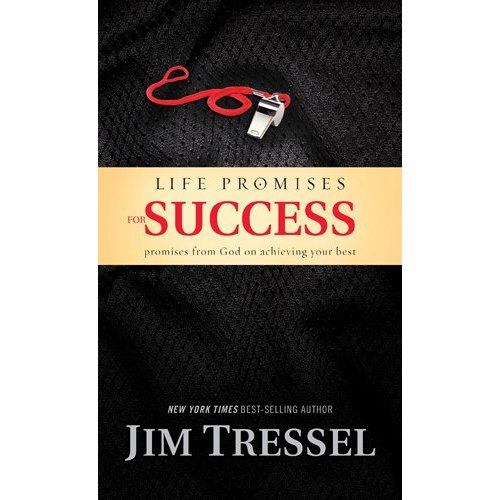
On top of everything else, Coach Tressel has been a very public spokesperson for the Gospel here in Ohio while serving as Head Coach at OSU. Our family provides financial support for the husband and wife team from Athletes in Action who serve as chaplains to the Ohio State men’s and women’s athletics. Tressel has spoken at outreach events they’ve organized where over 1,000 college students have answered altar calls to dedicate their lives to Jesus Christ. Just today, I received a ministry update reporting that Tressel had started a “Coaches in Action” Bible study attended by over 30 coaches from OSU men’s and women’s teams. Earlier this week, he was doing signings of his latest book, Life Promises for Success: Promises from God on Achieving Your Best.

Tressel ran afoul of the NCAA when he failed to disclose information that five key players were violating rules by selling memorabilia in exchange for cash and benefits (free or reduced-price tattoos.

Tressel defended himself by claiming he was acting to protect his players:

The Buckeyes coach said he kept quiet out fear for the safety of the two players connected to the federal, criminal drug-trafficking case. That investigation prompted an Ohio State and NCAA investigation involving players selling memorabilia and getting discounted tattoos.

“I have had a player murdered. I’ve had a player incarcerated. I’ve had a player get taken into the drug culture and lose his opportunity for a productive life,” an emotional Tressel said, tears welling in his eyes, at a news conference on Tuesday night. “It was obviously tremendously concerning. Quite honestly, I was scared.”

Assuming that Tressel’s primary motivation was protecting his players (as opposed to trying to put the most competitive team in the field), do priorities change when one occupies a highly visible position of leadership in the Christian community? How do you deal with situations in which you feel compelled to break rules when doing so seems to be in the best interest of your kids but fear that you’ll undermine the credibility of your Christian witness?


Posted in Controversies, Uncategorized | Tagged , , , | Leave a comment

“Thinking Orange”: Things Every Kid…With or Without Disabilities Needs

Welcome to Week Five in our Winter series: Applying “Orange” Principles in Ministry to Families of Kids With Hidden Disabilities. Today, we’ll examine ways in which the Orange approach to family ministry addresses unmet needs of kids with disabilities and their siblings.

This week’s discussion covers pages 97-106 in Think Orange.

In the Orange model, Reggie Joiner outlines five critical needs of kids that may be addressed through strategies that promote partnership between parents and churches. The needs (as listed on page 98 of Think Orange) include:

  • A really big God they can trust no matter what
  • Someone else who believes what they believe
  • Another voice saying the same things parents say
  • Uncommon sense to help them make wise choices
  • Nosy parents who know where their kids are spiritually

One reason I found the Orange approach appealing for churches intentional about ministry to families impacted by disabilities is all of the needs listed above tend to be more acute for kids with disabilities and their siblings, and parents of kids with disabilities have fewer places to go outside of the church where they can receive help in meeting those needs. Let’s look at the five needs again:

A really big God they can trust no matter what: Kids with disabilities often have questions about God’s power or God’s intentions that other Christians don’t need to sort out until they’re older or more mature. Why did God make me this way? Why are other kids so mean to me? I’m dumb, I’m stupid. If God cared about me, why is He letting this happen to me? For siblings of kids with disabilities, the questions involve Why did God do this to my family? I don’t get to do anything on the weekend because I have to watch my little brother. Our family never gets to go on vacation or doesn’t have the money to do cool stuff. My parents don’t have time for me. Why doesn’t God make my brother or sister better?

Parents need a church that can help them to personally experience God’s love and provision, and help them to communicate those truths to their kids with and without disabilities.

Someone else who believes what they believe: Parents of kids with disabilities who want them to have Christian friends often don’t have the option of enrolling their child in a Christian school. Private schools in general have fewer resources (special education teachers, speech and language pathologists, occupational therapists, psychologists, etc.) to meet the needs of kids with disabilities with complex educational needs. The cost of treatment means there’s less money available to send any of the kids in the family to private school. There may be no other option beside the church for kids with disabilities to experience a Christian peer group.

Another voice saying the same things parents say: Kids with hidden disabilities often lag behind their peers in developing motor coordination and are less likely to be actively involved in organized sports, making them less likely to have coaches who can help to reinforce their family’s values. Issues with emotional self-regulation, impulse control and the ability to accurately process social cues results in kids with fewer friends and fewer opportunities to form relationships with parents of friends.

Uncommon sense to help them make wise choices: Kids with many hidden disabilities have an increased vulnerability to negative environmental influences…drugs, alcohol, casual sex, risk-taking, antisocial behavior. They need more help from more adults more frequently in order to make good decisions.

Nosy parents who know where their kids are spiritually: The one question parents have the most difficulty responding to during my clinical evaluations is when I ask them to discuss their child’s spiritual development. In my experience, most parents in the church rarely contemplate any type of strategy or plan to foster their child’s spiritual development. What’s the likelihood that a parent would start to think about spiritual development in the same way as academic or athletic or artistic development outside of a place where they’ll encounter other parents with similar values?

Why do I want churches to rethink their approach to ministry for all families, but especially families in which one or more kids has a disability? Kids with disabilities, their siblings and their parents are frequently starving for relationships because of the social isolation that results from the functional limitations of the disabilities in question, both hidden and visible.

For families of kids with disabilities, what better place could there be for them to get their spiritual and relational needs met than the church? It’s an extraordinary opportunity for the church to radically expand its’ influence with our current generation of families, and to the generation to come.

Next Sunday: The advantages of an integrated ministry strategy

We’re pleased that our teammate, Harmony Hensley, will be offering two presentations at this year’s Orange Conference in Atlanta. She’ll be accompanied by Katie Wetherbee. E-mail Katie (katie@keyministry.org) or call (440) 247-0083 to meet up at the conference.

Click here for conference registration.


Posted in Families, Hidden Disabilities, Key Ministry, Parents, Spiritual Development, Strategies | Tagged , , , , , , , , , | 1 Comment

“Thinking Orange”: Libby Peterson on Partnering With Parents

I’m delighted that Libby Peterson graciously accepted my invitation to guest host the blog today on the topic of partnering with parents of kids with disabilities.

Libby is a long-time staff member currently serving as Director of Family Life at Bay Presbyterian Church in Bay Village, Ohio. Her efforts to support families from the church back in the ’90s who adopted kids with “hidden disabilities” from Eastern European orphanages formed the foundation for the ministry work we do today. Libby also serves as Vice-President of the Key Ministry Board of Directors.

C4EC: What general principles guide your church’s efforts to partner with parents?

LP: We have clarified the Biblical principles around parenting, marriage and faith training – these undergird all we do with parents.  The principles emphasize things like: parents are called to be the primary faith trainers for their kids, the home is to be the center of faith formation and the church is here to help. We teach four “fantastic faith forming family functions” – Talk, Pray, Read, Serve…encouraging parents to talk with their kids about the Lord, pray together as a family, read the Bible together and serve together. We consistently teach that the most important thing that any parent can do for their kids is to tend to the vitality of their own personal relationship with the Lord.  Additionally we try to consistently remind ourselves that ministry always travels along relational lines.

We are coming to believe that every time we tell parents we are here to “equip” them in the faith training of their children we reinforce their belief that they are not adequate AND we feed the cultural lie that parents should contract out each aspect of their child’s growth and development.  Parents need discipleship – to fall in love again with Christ – and encouragement to share what they know and are consistently learning with their kids. The church is here to HELP. Too often churches talk about partnering with parents  when the church is in fact taking the LEAD and expecting parents to get on board with their initiatives.

All these understandings guide our ministry with parents.

C4EC: What unique challenges have you encountered in partnering with parents of kids with special needs?

LP: I feel that all too often we try to partner with parents by working extra hard to fit them into our programmatic mold when what they really need are relationships. Programs CAN facilitate relationships, but only when people can get to them – too often this is not the case for these parents.   We’ve got to stop asking them to come to us to “get the goods” and start going to them!

C4EC: What do parents of kids with disabilities value most?

LP: Parents appreciate Sunday morning buddies – so they can worship, when they can make it to church. They appreciate respite events so they can get a little break – but what they appreciate most is when we begin to actually see their child the way God sees him… as opposed to the way the world sees him. What they appreciate most are authentic, caring, sacrificial friendships.  They appreciate the kind of people that Christ-centered churches should be full of!

C4EC: Any success stories to share from partnering with families of kids with special needs?

LP: We run summer family mission trips – to encourage our families to serve together in the city. Serving together is one of the fantastic four faith forming family functions! We gear all activities such that kids as young as Kindergarten can meaningfully engage and participate with their families.  These mission trips (which involve a Friday evening all day Saturday commitment) have been well received by some of our families with kids with special needs. Families have seen their kids serve others, when they are so used to being served, parents have been surprised to see what their kids are capable of, and the mission teams have been deeply enriched by the presence of each child and their parents.  When our ministry takes us from serving the families of the kids with special needs to serving others WITH/Alongside families of kids with special needs – the kingdom breaks through!

We are coming to believe that every time we tell parents we are here to “equip” them in the faith training of their children we reinforce their belief that they are not adequate AND we feed the cultural lie that parents should contract out each aspect of their child’s growth and development.  Parents need discipleship – to fall in love again with Christ – and encouragement to share what they know and are consistently learning with their kids. The church is here to HELP. Too often churches talk about partnering with parents  when the church is in fact taking the LEAD and expecting parents to get on board with their initiatives.

Updated May 1, 2014

***********************************************************************************************************

Key Ministry-NewCan you help us to help churches seeking to pursue kids with disabilities and their families? Help us get the word out regarding the free services we make available to churches and families? Help us invite more families to join us for online church? We need you to share our Facebook page with others who can help connect families of kids with disabilities to churches equipped to welcome them. Here’s more on how you can help.


Posted in Families, Hidden Disabilities, Inclusion, Key Ministry, Parents, Spiritual Development, Strategies | Tagged , , , , , , | 3 Comments