Mike Woods: C3: Comfort, Confirm, Challenge…Part Two

In honor of Autism Awareness Month, we’re honored to share with you the second guest post from Mike Woods… Special Needs Ministry Director at First Baptist Church of Orlando. For more info on Mike, click here.

Today, Mike continues his discussion from Tuesday on the process that his ministry staff and volunteers use to develop relationships with each child and adult with autism or other special needs they minister to.


One of the primary outcomes for each team member in our Special Friends Ministry is to develop relationships with each and every child and adult with special needs that we minister to.  The process that we use to develop a relationship is called C3 (Comfort, Confirm, Challenge) and is derived from the many interactions between Jesus and people with disabilties in the Gospels.

It’s been my experience with my son who is on the severe end of the autism spectrum, and other children with special needs, that developing a relationship with a child on the spectrum can be challenging (but worth it!).

Christianity is about entering into relationships with people…to include children with autism and other special needs.  And in order to be able to do that, it’s important to be familiar with how Jesus, the Master of developing relationships, interacted with people.  That’s why we use what I call the C3 model:  Comfort, Confirm, Challenge that’s based on His interactions with people with disabilities.

The first “C” in the C3 model is “Comfort” and I discussed this first step in the relational building process in a previous blog post.  The second “C” in the C3 model stands for ”Confirm.”   This second step in the process focuses on establishing and sustaining for children/adults the truth that their worth and value isn’t based on what they can or can’t do…it’s grounded in God’s love for them and the fact that they are created in His image!

There are over 20 references in the Gospels that teach us something about how Jesus confirmed someone with a disability.  If you look at these interactions I believe that there are 4 important “ingredients” that Christ modeled for us.  As we facilitate confirming a person’s worth and value we need to identify what these ingredients were so that as “imitators of Christ” we can be more nurturing towards the individuals we serve.

Here’s the Special Friends Ministry video presentation on the process of confirming a child’s worth and value.  Make sure to click subscribe or “like’ our facebook page in order to be notified when the next video presentation is published!

Sunday: Dr. Grcevich’s series continues with tips for church staff and volunteers serving kids with Asperger’s Disorder.


Posted in Autism, Inclusion, Resources, Strategies | Tagged , , , , , , , , | Leave a comment

Guest Blogger Mike Woods: C3: COMFORT, Confirm, Challenge

In honor of Autism Awareness Month, we’re honored to share with you a series of guest posts from the leader who is, in my opinion, the premier expert on inclusion of kids with autism spectrum disorders at church. For more information on Mike Woods, click here.

In today’s post, Mike discusses the process that his ministry staff and volunteers use to develop relationships with each child and adult with special needs they minister to.

One of the primary outcomes for each team member in our Special Friends Ministry is to develop relationships with each and every child and adult with special needs that we minister to.  The process that we use to develop a relationship is called C3 (Comfort, Confirm, Challenge) and is derived from the many interactions between Jesus and people with disabilties in the Gospels.

Strengthening the relationship is important because it lays the foundation to helping children develop their faith based on the developmental age as I have previously blogged.

It’s been my experience with my son who is on the severe end of the autism spectrum, and other children with special needs, that developing a relationship with a child on the spectrum can be challenging (but worth it!).

The most striking feature of autism is social disconnection.  Children with autism appear neither to be interested in nor able to “read” the social world.  It is as though they are “blind” to the sometimes complicated, emotionally loaded give-and-take of human interaction. Writing of one of the boys in his study, Leo Kanner (known for his work related to autism) stated:

“He paid no attention to the persons around him. When taken into a room, he completely disregarded the people and instantly went for objects, preferably those that could be spun. Commands or actions that could not possibly be disregarded were resented as unwelcome intrusions. But he was never angry at the interfering person. He simply pushed away the hand that was in his way or the foot that stepped on one of his blocks…” 

The boy in Kanner’s study pushed away interfering body parts without seeming to understand that they were attached to a whole person – a person with his own intentions and desires. They were just objects that happened to be in the way. This is very typical of some children on the autism spectrum.

However, our Special Friends Ministry team is determined to create and maintain relationships with our children on the autism spectrum.  Christianity is about entering into relationships with people…ALL people.  And in order to be able to do that, it’s important to be familiar with how the Master of developing relationships interacted with people.  That’s why we use what I call the C3 model:  Comfort, Confirm, Challengethat’s based on Jesus’ interactions with people with disabilities.

The first “C” in the C3 model is “Comfort.”  Creating a mutually valued relationship means that we need to help a child (or adult) with autism feel safe and secure with us.  We have to be careful that our physical presence does not signal fear or create anxiety for a child with autism.  The acceptance of human presence and engagement with others are the cornerstones of relationship.  Learning the meaning of human presence, engagment, and unconditional love leads to mutual and potentially reciprocal feelings and interactions that signal respect, worth, and sharing.

Here’s the Special Friends Ministry video presentation on how to develop comfort with a child or adult with special needs who is, to some degree, socially disconnected.  Make sure to click subscribe or “like’ our facebook page in order to be notified when the Confirm video presentation is published!

Thursday: Part Two of C3: Comfort, Confirm, Challenge. Dr. Grcevich’s series will resume on Sunday with tips for church staff and volunteers serving kids with Asperger’s Disorder.

Posted in Autism, Inclusion, Resources, Strategies | Tagged , , , , , , , | Leave a comment

More Resources for Autism Awareness Month

Our team at Key Ministry seeks to provide churches with the best possible resources for successfully including and ministering to families of kids with disabilities. We’re honored to offer you the resources of one of the church’s leading experts in ministry to children and adults with autism spectrum disorders.

Mike Woods will be sharing a series of guest blog posts in honor of Autism Awareness Month. Mike currently serves as Director of the Special Friends Ministry at First Baptist Church in Orlando, Florida. Prior to joining the staff at First Baptist, he worked for the largest school district in St. Louis as an Autism and Inclusion Specialist and is a Board Certified Associate Behavior Analyst. He has also served as a Master Training Specialist for the Judevine Center for Autism and as an Early Interventionist for the Missouri First Steps Program. Mike has taught continuing education courses on autism at Coastal Carolina College in North Carolina. He received his Masters Degree in Conflict Management from Trinity College and Theological Seminary. He has conducted workshops for a variety of churches, several national level autism conferences, and various annual state conferences.

Mike is happily married and is the father of three wonderful boys, all of whom are on the autism spectrum.

Here’s the schedule of what Mike has in store…

Tuesday, April 10th: C3: Comfort, Confirm, Challenge (a process for developing relationships with each child and adult with special needs served in ministry)

Thursday, April 12th: C3: Comfort, Confirm, Challenge…Part Two

Tuesday, April 17th: Human Engagement and Children on the Autism Spectrum

Thursday, April 19th: Giving Unconditional Worth to Children With Autism

Tuesday, April 24th: I’ll share links and descriptions for some of the most helpful resources Mike has made freely available to church staff and volunteers on the Web.

Mike’s series will be an excellent compliment to our current discussion on promoting spiritual growth in kids with Asperger’s Disorder and other social disabilities. The next installment of that series will occur on Sunday, April 15th, when we look at tips for church staff and volunteers serving kids with Asperger’s Disorder.

I’d invite you to check out the excellent website Mike has put together for the Special Friends Ministry at First Baptist Orlando and look forward to sharing his posts with you over the next two weeks!

Posted in Autism, Inclusion, Resources | Tagged , , , , , , | Leave a comment

Applying a Family-Based Ministry Model When Kids Have Asperger’s Disorder

Many parents are quite surprised upon the completion of an initial evaluation in my office. At that point, I’ve met with the parents alone, met with the child alone, reviewed rating scales completed by parents, teachers (sometimes), their child (sometimes), reviewed treatment and educational records, shared my diagnostic impressions and clinical formulation, and (in most cases) discussed the advantages and disadvantages of a range of treatment recommendations. The parents usually respond by asking something along the lines of “What should we do?” My response is usually…”You’re the experts…you’ve known your child for their entire life, I’m your consultant. I’ll share with you the full range of options that are safe and appropriate, but I’m counting on you to know what options will work best given your understanding of your child.”

I think this mental model fits very well with our discussion of promoting spiritual development in kids with Asperger’s Disorder and other social disabilities. I’m a subspecialist with 21 years of experience in treating kids with significant mental health conditions following four years of med school, three years of Psychiatry residency at Cleveland Clinic and two years of child psychiatry fellowship at University Hospitals of Cleveland. If I view the parents as the recognized experts at understanding the treatment approaches that will work best for their child and family, how is a children’s ministry or youth ministry director supposed to prescribe approaches more effectively than a parent can when the child has the complexities that characterize many kids with Asperger’s?

So…If the parent(s) are the “experts” when it comes to individualizing strategies to promote spiritual development in kids with Asperger’s, what’s the role for the church?

First, the church can come alongside the family. Notice that I didn’t say EQUIP. Instead, the focus can (and should) be building relationships with parents of kids with Asperger’s. Caring, sacrificial friendships. Here’s a quote from Libby Peterson, Family Life Director at Bay Presbyterian Church…

“We are coming to believe that every time we tell parents we are here to “equip” them in the faith training of their children we reinforce their belief that they are not adequate AND we feed the cultural lie that parents should contract out each aspect of their child’s growth and development.  Parents need discipleship – to fall in love again with Christ – and encouragement to share what they know and are consistently learning with their kids. The church is here to HELP. Too often churches talk about partnering with parents when the church is in fact taking the LEAD and expecting parents to get on board with their initiatives.”

Libby discussed the topic of partnering with parents at some length in this interview from March of last year.

Churches need to define their “win” when it comes to serving families of kids with any special need, including Asperger’s Disorder and social disabilities. Here’s one way I’d suggest for defining the “win” in serving the family of a child with Asperger’s:

A “win” occurs whenever a child/family with a disability connects in a meaningful way with their larger family in Christ through the ministries of a local church.

This definition helps us to keep in mind that by welcoming the child/teen with Asperger’s to church, we also obtain the privilege of ministering to that child’s parents and siblings.

Doing church as a shared family experience may be a preferred option for some kids with Asperger’s. Depending upon the nature of your church’s ministry environments, the “adult” worship service may be a better experience for kids with significant sensory processing issues and more advanced cognitive/language abilities. Kids may not experience the same pressures for social interaction in the worship service with “grown-ups.” Depending upon your church’s denomination, the nature of your church’s liturgy or worship may be better suited to kids who are more comfortable with consistency and routine. Roman Catholic churches may be at an advantage because of the uniformity of their liturgy, even between different churches. Assuming the child/teen with Asperger’s doesn’t also have issues with self-control that preclude regular attendance in adult worship, inclusion with parents during the church’s primary worship services is certainly an option.

The church can help families of kids with Asperger’s to develop routines around spiritual disciplines. Reggie Joiner discusses the importance of “establishing a rhythm” in his book, Think Orange. Routine is especially important for the majority of kids with Asperger’s Disorder and other autism spectrum disorders. We also know from research that regular times for family prayer, Bible study or devotions, and service opportunities as a family are three of the main drivers of spiritual growth in kids. Promoting spiritual growth through a strategy that’s likely to provide added benefits behaviorally to a child with Asperger seems like an obvious win-win.

Finally, the church can represent one place where the child/teen with Asperger’s can experience an intentionally safe and supportive community. In our previous post, we referenced a study demonstrating kids with Asperger’s are twice as likely to be bullied in comparison to kids with other autism spectrum disorders. Wouldn’t it be cool if church could be one place where kids with Asperger’s could experience encouragement and welcome, along with their families?

Next: Tips for church staff and volunteers serving kids with Asperger’s Disorder.

Anyone interested in reading more about family ministry strategies for kids with special needs can check out our blog series from Winter 2011: Thinking “Orange”…Family Ministry Strategies When Families Have Special Needs.

Posted in Autism, Families, Inclusion, Key Ministry, Spiritual Development, Strategies | Tagged , , , , , , , | 4 Comments

Asperger’s Disorder…Barriers to Inclusion at Church

Last Sunday, we examined some of the challenges to spiritual growth kids with Asperger’s Disorder are likely to encounter. Today, we’ll focus our attention more specifically on barriers to inclusion of kids with Asperger’s at church.

In order to include kids with Asperger’s Disorder at church, we first have to get the parents to bring them to church. There’s not a lot of data at this point on the heritability of Asperger’s, but in my practice, a not insignificant percentage of my patients with Asperger’s have parents who appear to share some of the same characteristics, and as a result, parents most likely to have a child with Asperger’s may be underrepresented compared to other young adults in churches. We’ve discussed that kids with Asperger’s may have more difficulty managing transitions…parents of kids with any special need are more likely to be exhausted by the end of the week after dealing with daily struggles to get their child ready and out the door for school. Church can become one more task for parents who are already overwhelmed. Because of the social isolation that results from having a child with Asperger’s, parents are less likely to come in contact with other families who’ll invite them to church through sports and other types of extracurricular activities.

Church environments don’t necessarily play to the strengths of kids with Asperger’s Disorder. We’ve already discussed this point at some length with respect to sensory processing. Bright lights, loud noise, bustling environments with unfamiliar people…all present challenges for the child with Asperger’s that are greater than those faced by same-age peers.

The reality that kids with Asperger’s may be very precocious in some areas of development but significantly delayed in others complicates program placement at church. Many will be extremely resistant to placement in a “special needs ministry” or to interventions (such as having an assigned buddy) that result in the appearance that they’re somehow different from their peers. We have a saying…If you’ve seen one kid with Asperger’s, you’ve seen one kid with Asperger’s. I have a patient of elementary-school age right now with an IQ that’s probably in the 160-170 range (four or more standard deviations above normal…high end of genius range) who at the same time can be extremely immature socially. We’re starting to broach the subject of church with the family and thinking about the types of church activities in which he might be successful and specific churches willing to do a highly individualized program working with the family is challenging.

Their experience with “Christian” kids at school. There was an interesting study that came out last week showing that the majority of kids with Asperger’s are bullied at school, and that kids with Asperger’s are more than twice as likely to be bullied compared to kids with other autism spectrum diagnoses! If our churches are going to be successful at welcoming and including kids with Asperger’s, our kids have to behave differently than other kids at school and out in the “real world” than their peers who don’t attend church.

Next: Applying a family-based ministry model when kids have Asperger’s

Reminder…The Children’s Ministry Websummit continues through Friday, April 6. Click here for downloads of my lecture handout and FREE registration! My presentation is on the topic Square Pegs and Round Holes…Helping Kids With Asperger’s Disorder and Social Disabilities Grow Spiritually.

Posted in Autism, Inclusion, Resources | Tagged , , , , , , | 15 Comments

Interview With Chuck and Colleen Swindoll…Part Two

Yesterday, we shared Part One of an interview Katie Wetherbee conducted with Chuck Swindoll and his daughter Colleen for last fall’s Inclusion Fusion in which they discussed the different ways in which their family had been impacted by having a child (Jonathan) with autism. Here’s Part Two of the interview, followed by the content of the guest blog Colleen wrote last year for Autism Awareness Day…

Here’s Colleen’s guest post from Autism Awareness Day 2011:

Shock. Disbelief. Anger. Hopeful. Bewildered. Relieved.  Words that represented my feelings leaving the doctor’s office that day; and feelings that wave through my soul like the sea swells through the oceans.  My son was diagnosed with Autism 12 years ago; 1 in 10,000 children were diagnosed with the same lifelong, no cure disability.  The icy, windy winter afternoon, it was clear that Jon’s life, my life,  and all of life would not fit the picture I had painted.

In it all, I want you to know, you are not alone. Finding a “new normal” is not easy.  Life is challenging. But you are never alone.  There is much loneliness, but you are not alone. Jesus Christ experienced everything you endure; He walked through the anguish and walks with you today. He encountered social battering,  religious rejection, and was betrayed by His closest friends.  Christ had siblings who didn’t understand their brother. He wept, He begged God to find another way, and eventually, He was killed.  But, that was NOT the end of his life; this was the beginning of life eternal.

Today, 13 years into Jon’s life, his complicated disabilities have not been reduced, they have grown.  His diagnosis includes: severe Tourette ’s syndrome, autism, intellectual and global developmental disabilities, ADHD, OCD, ODD, and complicated trauma syndrome. He has endured bullying and profound mistreatment. Yet, in it all, I have more freedom, more joy, more hope because it is birthed and grown by the grace of my sovereign, faithful, good, unlimited God and Heavenly Father.  Dear friend or parent, if I may offer you some rays of hope in the dark tunnel of autism, may our Lord be honored and your soul be filled with hope.

Limited to 10 truths, I pass along the following lessons I’ve learned:

1)      I have learned: You cannot handle the burdens of life. If you could, would you need a Savior. Strength to carry on is given by God alone so depend on Him.

2)     I have learned:  There is a profound purpose in loneliness and isolation.  Darkness reveals the true condition of your soul which is being refined through fire.

3)     I have learned:  Rejecting the help of others reveals pride, not strength.  Part of soul care means humbling oneself under God and accepting His grace.

4)     I have learned:  Misplaced hope is not true hope.  Therapies, studies, doctors, specialists, examinations, report cards, school advocacy, diets, answers will never provide you with a final answer and renewed hope.  Hope comes only from the Lord.

5)     I have learned:  True forgiveness is tough when judgment, rejection, and betrayal come our way.  Forgiving or resenting is a choice; forgiving is a command. Asking God for help to forgive opens our soul.

6)      I have learned:  There is a vast difference between ‘the God of my Bible stories” and “the God of the Bible”.  Abiding faith does not come from false beliefs but from the truths of God; immerse your mind on what is true.

7)     I have learned:  God is NOT required to answer our questions.  Entitlement demands answers; God is never required to give an explanation.

8)      I have learned:  Resentment reflects my selfishness. Finding relief is not what God promises; becoming self-less brings relief.

9)     I have learned:  God’s love is unconditional.  Authentic faith is cultivated when we believe God embraces us with His love.

10)    I have learned:  accepting Christ as my eternal Savior is the only way on the journey of life with autism. In Christ, there is eternal hope and joy.  Life is tough, but God is always good and faithful.

Colleen Swindoll serves as the Director of Special Needs Ministry at Insight for Living, where she regularly blogs, maintains an active presence on Facebook under the “Special Needs Ministry” page, personally ministers to parents and families worldwide struggling to raise kids with disabilities, and has assembled an array of resources for parents of kids with special needs.

To join us for the Children’s Ministry Websummit from April 2-6, 2012, click here for downloads of my lecture handout and FREE registration! My presentation is on the topic Square Pegs and Round Holes…Helping Kids With Asperger’s Disorder and Social Disabilities Grow Spiritually.

Posted in Autism, Families, Hidden Disabilities, Inclusion, Key Ministry, Stories | Tagged , , , , , , , , | Leave a comment

Autism Awareness Day 2012…Chuck and Colleen Swindoll

Last April, Colleen Swindoll graciously agreed to serve as our guest blogger for Autism Awareness Day. I had the great pleasure of meeting Colleen and her son (Jonathan) last October when we traveled to Dallas to film her father’s keynote presentation for Inclusion Fusion. I had a very enjoyable lunch talking weather (one of his favorite subjects) with Jon during a break in the taping.

In honor of Autism Awareness Day, we’d like to share an interview conducted by Katie Wetherbee in which Chuck and Colleen spoke at length about the impact of Jonathan’s disability on their family, how his presence in the family has been a blessing, and how Jonathan has helped Chuck become more effective in his ministry to people with disabilities. Here’s Part One of the interview…We’ll share Part Two tomorrow.

Colleen Swindoll serves as the Director of Special Needs Ministry at Insight for Living, where she regularly blogs, maintains an active presence on Facebook under the “Special Needs Ministry” page, personally ministers to parents and families worldwide struggling to raise kids with disabilities, and has assembled an array of resources for parents of kids with special needs.

Posted in Autism, Families, Inclusion Fusion, Key Ministry, Spiritual Development, Stories | Tagged , , , , , , | 1 Comment

Spiritual Growth Challenges for Kids With Asperger’s Disorder

We spent time this past week reviewing the criteria used to diagnose Asperger’s Disorder, and looked at some of the  challenges kids with Asperger’s experience as a result of other conditions frequently associated with the disorder. Today, we’ll use this information to anticipate the obstacles to spiritual growth kids with the condition are likely to encounter.

Let’s start with weekend worship experiences. As we discussed on Thursday, kids with Asperger’s are significantly more likely to experience crowded worship areas with bright lights and loud music with discomfort compared to their same-age peers. If the child and their family aren’t regular attenders, doing church represents a change in the typical routine…a situation that is more likely to evoke anger, tears and frustration than in kids without Asperger’s. Maintaining appropriate prosocial behavior may be more challenging for the child with Asperger’s in less familiar environments. The teen with Asperger’s may have more difficulty navigating the social aspects of church. In the churches my family has attended, more teaching and discipleship takes place in small groups as kids transition into middle school and high school. Teens with Asperger’s may be more comfortable in large group teaching than in small group settings. Picking up on social cues in small groups presents a greater challenge. It’s all too common for my teen patients with Asperger’s to tell me they encounter kids at church on the weekend who have been cruel to them during the week.

Kids with Asperger’s may have more difficulty responding appropriately during transitions from one church activity to another. Kids who respond well to the weekly Christian education programming may find special events (Vacation Bible School) too overstimulating, or experience difficulty adjusting to a different type of church activity. Similar to kids with anxiety, those with Asperger’s may be more uncomfortable with overnight activities or retreats in unfamiliar places. Lots of pictures, video, and for younger kids, social stories may make it easier for parents of kids with Asperger’s for unique, one-time or annual activities. Teens with Asperger’s are especially sensitive to rejection by peers and have more difficulty overcoming negative experiences of church, compared to same-age peers. Teens with Asperger’s are less likely to have friends to invite them to church, youth group, special activities or mission projects. As a clinician, it would be very helpful to have churches in my area that are deliberately inclusive in engaging kids with Asperger’s…we’re always looking for supportive environments where kids who struggle socially can meet peers who are likely to be encouraging and supportive.

In learning and practicing spiritual disciplines, kids with Asperger’s may have a harder time demonstrating sensitivity to the needs of others. They may be less introspective than their peers. They have more difficulty grasping abstract concepts. The classic example…The child with Asperger’s who hears the term “Ask Jesus into your heart” may become preoccupied with the mechanics of how Jesus is going to get inside their body and not grasp the concept being taught.

Some kids with Asperger’s may perseverate on negative thoughts and their own guilt when considering the concept of sin. I have one patient from a Catholic family who would perseverate and become so upset when she realized she had done something wrong that a major meltdown usually followed. In second grade she was expected to make her first confession to a priest-her parents were worried about she would handle the situation. Katie Wetherbee had been working with the family around educational issues. Together with the Christian education staff from her church, a plan was worked out for our girl to go to the priest with a list of character traits and behaviors she wanted to improve…an ideal solution for her.

Teens with Asperger’s may be more reluctant to try new spiritual disciplines and are vulnerable to developing a spirituality than can become mechanical and ritualistic over time. They may become excessively legalistic in their faith. Corporate disciplines will likely create more discomfort than solitary disciplines.

Parents may struggle significantly to engage a child with Asperger’s in learning about the family’s faith if the child doesn’t find the subject interesting. Managing the transitions involved in getting the child ready for church is likely to present more of a challenge for parents of kids with Asperger’s compared to parents of kids with anxiety or ADHD, because kids with Asperger’s will often demonstrate more rigidity or inflexibility when asked to stop a pleasurable activity to move on to a necessary activity. Aggressive behavior is more likely to occur around transitions. For all too many parents, the time and effort required to get the family to church becomes too overwhelming. Teens with Asperger’s may be less likely to engage in family service activities shown to be effective in promoting spiritual development. Negative experiences with peers can produce conflicts between the teen with Asperger’s and their parents around church attendance of a greater intensity than seen in neurotypical peers.

Here’s a slide from my Children’s Ministry Websummit presentation summarizing some of the common obstacles to spiritual growth experienced by kids and teens with Asperger’s Disorder:

Next: Barriers to inclusion of kids with Asperger’s Disorder at church

To join us for the Children’s Ministry Websummit from April 2-6, 2012, click here for downloads of my lecture handout and FREE registration!

Posted in Autism, Key Ministry, Resources, Spiritual Development | Tagged , , , , , , , , , | 2 Comments

Downloads and Free Registration for the Children’s Ministry Websummit

Just a reminder…my video presentation on our current blog series, Square Pegs and Round Holes…Helping Kids With Asperger’s Disorder and Social Disabilities Grow Spiritually, will be available online from April 2-6 as part of the 2012 Children’s Ministry Websummit.

The Children’s Ministry Websummit is produced by Jeremy Collins and his team at Pajama Conference, the same group that hosted last Fall’s Inclusion Fusion Special Needs Ministry Websummit. For those of you who registered for last year’s Websummit, the organizers have instituted some improvements modeled after Inclusion Fusion.

Every presentation will be available “on-demand” at any time during the conference. You’ll be able to watch my presentation, as well as any of the other presentations from 20+ highly-regarded children’s ministry leaders on the schedule whenever you’d like during the Websummit.

For free registration for the Websummit, click here.

To download a handout of the presentation slides, click here.

To preview the slides on Slideshare:

The complete DVD set of conference presentations (including the video of my presentation) is available now through this link at a reduced pre-conference price of $39.00. Proceeds support the availability of free ministry training offered by Pajama Conference, including Inclusion Fusion.

Posted in Hidden Disabilities, Inclusion, Key Ministry, Spiritual Development, Training Events | Tagged , , , , , , | 1 Comment

Top Posts From Q1 2012

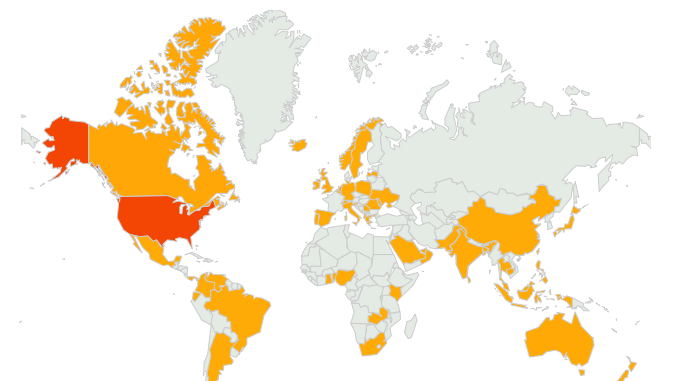
Thanks to everyone for your continued interest in Church4EveryChild. Our readership is up over 300% in comparison to the first quarter of 2011. What’s even more gratifying is appreciating the worldwide nature of our following…in the last month, our blog has been accessed by persons from 64 different countries, from every continent except Antarctica.

I’m grateful for the interest shown in all three of our “official” Key Ministry blogs. Along with Church4EveryChild, Harmony Hensley’s blog-A Reckless Pursuit and Katie Wetherbee’s blog-Diving For Pearls have been featured on the WordPress Blogs of the Day feature. Katie’s blog alone has had over 200,000 page views in the first quarter of 2012!

It’s easy for me to get very busy at work and miss out on Internet content I’d like to read. We try not to go over the top in repeatedly tweeting new posts or posting links multiple times to our Facebook page. Since all of us are very busy and the blog is adding new followers daily, I thought it would be helpful to posts links to the ten most viewed posts on the blog from the first quarter of 2012:

1.      Special Needs and Divorce: What Does the Data Say?

2.     The Anxious Christian

3.     What Christians (and the church) can learn from Planned Parenthood

4.     Ritalin Gone Wrong? What’s a Parent to Believe?

5.     Resource Page: ADHD and Spiritual Development

6.     Should a Parent of a Child With Special Needs Run For President?

7.     Kids With Aggressive Behavior…Is it Ever OK for a Church to Say No?

8.     The Pros and Cons of Medication for Kids

9.     Thinking “Orange”…Family Ministry Strategies When Families Have Special Needs

10.   The Shootings in Chardon

Please remind your friends to join me and 24 renowned children’s ministry leaders next week for the 2012 Children’s Ministry Websummit. All of the presentations may be viewed at any time from April 2nd through April 6th. I’ll be speaking on the topic… Square Pegs and Round Holes: Helping Kids With Asperger’s Disorder and Social Disabilities Grow Spiritually. Registration is free and available here!

Posted in Resources | Tagged , , , , , , , | Leave a comment