Are antidepressants safe for kids?

shutterstock_75695695Few topics in child and adolescent mental health have generated as much controversy over the last decade as the debate about the safety of antidepressant medication given to kids. In 2004, the FDA issued a “black box” warning claiming that antidepressant use in children and teenagers is associated with increases in suicidal thinking and behavior, which was expanded in 2007 to include adults between the ages of 18 and 24. In my opinion, the larger controversy about antidepressant use in children and teens is not “are they safe?” but “do they work?” and if they work, what do they work for? Some of those questions were addressed here.

In an effort to help parents make sense of what they read and hear, we’ll examine the findings of two large studies.

The first study (funded by the National Institute of Mental Health) was conducted by Dr. Jeff Bridge and his team at the University of Pittsburgh, analyzing results of 27 clinical trials of antidepressants…fifteen studies involved kids with depression, six with Obsessive-Compulsive Disorder (OCD) and six with non-OCD anxiety…encompassing 5,310 patients under the age of 19.

Important take-home points…

No child or adolescent patient to date in any trial of antidepressant medication submitted to the FDA or included in Dr. Bridge’s analysis actually committed suicide.

The number of patients who must receive a specific treatment for one to benefit (Number Needed to Treat-NNT) or for one patient to be harmed (Number Needed to Harm-NNH) varied for antidepressants depending upon the condition the child or teen was receiving treatment for in the study.

Major Depression: Number Needed to Treat=10     Number Needed to Harm=112

OCD: Number Needed to Treat=6     Number Needed to Harm=200

Non-OCD Anxiety: Number Needed to Treat=4     Number Needed to Harm=143

To clarify, patients with depression were eleven times more likely to experience significant benefit from antidepressant medication than to experience medication-related suicidal thinking or behavior, patients with OCD were thirty-four times more likely to experience benefit and patients with non-OCD anxiety were thirty-six times more likely to experience benefit.

shutterstock_69175456The second study (also funded by the National Institute of Mental Health) was conducted by researchers at the University of Chicago examined suicidal thoughts and behaviors in 9,165 patients (including 708 youth) treated with fluoxetine or venlafaxine for depression (all of the youth were treated with fluoxetine). In the four studies of youth on fluoxetine, the medication was effective in treating symptoms of depression, and no evidence of increased suicide risk was seen. At the same time, there was no evidence that a reduction in depressive symptoms produced a decrease in suicide risk in youth, as is the case with adults. The author of the study has speculated that other factors beyond depressed mood likely contribute to suicidal thinking and behavior in kids.

So…what advice do I give to parents around use of antidepressant medication when they ask “What would you do if this was your kid?”

First, I’d point out that the potential benefits of medication appear to outweigh the potential risks, especially for kids with anxiety, but in my experience the risk of an increase in suicidal thoughts/behavior associated with antidepressant medication appears to be greater than zero. I would be most concerned about an increased risk in  kids with some other condition (in addition to depression or anxiety) that interferes with emotional self-regulation and/or impulse control (ADHD, trauma, kids with behaviors similar to those seen in Borderline Personality Disorder). One hypothesis put forth to explain a possible increase in risk involves the suggestion that antidepressants might cause disinhibition n a subset of patients…the pathways in the prefrontal cortex of the brain don’t fully mature for most people until their early to mid-20s, coinciding with the time after which antidepressants are no longer associated with increased suicidal risk.

Second, since cognitive-behavioral therapy (CBT) appears to be an effective alternative to medication for kids with anxiety and depression, kids with mild to moderate symptoms should probably receive a trial of CBT prior to a trial of medication.

Finally, I remind parents that antidepressants have been shown to be of significant benefit in kids with anxiety, moderately effective in kids with OCD and of modest benefit in kids with depression. It’s also important that parents understand the limitations of medication and the evidence suggesting medication use offers no guarantee that a child won’t make a serious suicide attempt.

***********************************************************************************************************

KM Logo UpdatedKey Ministry has assembled resources to help churches more effectively minister to children and adults with ADHD, anxiety disorders, Asperger’s Disorder, Bipolar Disorder, depression and trauma. Please share our resources with any pastors, church staff, volunteers or families looking to learn more about the influence these conditions can exert upon spiritual development in kids, and what churches can do to help!

Posted in Anxiety Disorders, Controversies, Depression, Mental Health | Tagged , , , , , , , , , | 5 Comments

Vangie Rodenbeck’s interview with Dr. G on Mental Illness and the Church…

VangieEditor’s note: We’re pleased to make available the link to the interview Vangie Rodenbeck conducted with Steve this past Tuesday for Vangie’s Shaping Special Hearts podcast hosted by CM Connect and sponsored by Standard Publishing.

In honor of May having been designated as Mental Health Month, Vangie interviewed Steve on the topic of Mental Health and the Church. Some of the areas Vangie covered during the interview include…

  • The biggest obstacles children and adults with mental illness face in attending church
  • Why family ministry approaches make sense in implementing intentional mental health inclusion in your church
  • The available research on how churches are doing in supporting families impacted by mental illness
  • Helpful resources for those involved in children’s ministry, youth ministry and family ministry in better serving families in your church and your surrounding community impacted by mental illness.

mhm-facebook-coverIf you’d like to download the podcast and listen at your convenience, that’s also possible after clicking this link to CMConnect’s Blog Talk Radio page.

Updated May 22, 2015

***********************************************************************************************************

KM Logo UpdatedKey Ministry has assembled resources to help churches more effectively minister to children and adults with ADHD, anxiety disorders, Asperger’s Disorder, Bipolar Disorder, depression and trauma. Please share our resources with any pastors, church staff, volunteers or families looking to learn more about the influence these conditions can exert upon spiritual development in kids, and what churches can do to help!

Posted in Families, Hidden Disabilities, Inclusion, Key Ministry, Mental Health, Strategies, Training Events | Tagged , , , , , , , , , | 1 Comment

Mental health inclusion…The importance of getting the right people around the table

ID-100218762In the first segment of our series, Ten Strategies for Promoting Mental Health Inclusion at Church, Steve looks at the importance of involving the right people when developing a church-wide strategy for including families impacted by mental illness.

In our introduction to this series, we discussed the importance of involving leaders from all ministry areas of the church in developing a mental health inclusion strategy. Today, we’ll explore the unique importance of senior leadership to mental health inclusion along with the desirability of involving lay members of the congregation in the process who are not involved in day to day operations of the church.

Rick WarrenFirst…It’s highly likely that any mental health inclusion initiative is doomed to failure without the unequivocal support of the senior pastor/leader of the church. A cultural reality in most churches is that the ministries and initiatives that receive sufficient commitment of time, money and volunteer resources to thrive are those that matter most to senior leadership. For example, Saddleback Church is a nationwide leader in mental health ministry because the ministry is important to Rick and Kay Warren.

I anticipate that many (if not most) people reading this blog post are church members or lay leaders seeking to serve as catalysts to mental health inclusion ministry within their congregations. If you’re seeking to start such an initiative and your job title is something other that Senior Pastor, Job #1 is to get buy-in from the most senior leader in your church. Here’s why…

Change…even the most minor change-presents large challenges to church staff. If you’re not a pastor or a church staff member, ask someone on staff about the number of complaints they get on a regular basis about little details or minor inconveniences at church that most people wouldn’t notice. If leadership isn’t fully bought in to this type of inclusion ministry, they won’t be willing to work through the pushback that inevitably comes when making even minor modifications to ministry practices or environments.

shutterstock_156304973Communication…we’ll have an entire post on communication later in the series, but most families who newly arrive at church make judgments about the extent to which they’ll be welcomed by what they hear during the worship service. How do you help families who all too often come with baggage from past church experiences without the ongoing support of the guy with the microphone on Sunday morning?

Calling…The senior pastor/leader is in a position to use their influence to engage others in the church-staff and volunteers-to commit their time and talent to important ministry projects. I know I’m far more likely to help with something around the church if my senior pastor asks me to get involved than if I get a call from a more junior staff member or see a general call for volunteers in the bulletin or an online communication. You need the senior leader to call the right people to the table.

With that said, if we were to add to the skill set of church staff in planning an inclusion initiative for families impacted by mental illness, what types of experience, gifts and talents might we want to seek out in considering people for our team? This list is by no means inclusive and in no way implies that your team needs all of these resources for a successful inclusion ministry, but here are a few thoughts…some obvious, some not-about people with gift sets and experiences that could be very helpful to your team…

  • Mental health professionals…and people who serve in support positions in clinics where mental health services are provided. Having one or more people who can help church staff and volunteers to better anticipate the challenges that the people they serve experience when attending church and the needs they experience in navigating day to day demands of life is of great benefit. At the same time, don’t forget the staff, receptionists, billing clerks and case managers working in mental health clinics who have lots of day to day contact with families impacted by mental illness who may be positioned to help families connect, even if the mental health practitioners they serve aren’t inclined to encourage families to turn to the church for spiritual comfort or practical support.
  • Mental health advocates…Someone in the church with an ongoing experience of mental illness or the parent of a child with mental illness can offer a vital perspective if that perspective is otherwise missing from the planning team. Someone may be actively involved with NAMI or another advocacy group that may be helpful in getting the word out to families in need of a church and providing practical supports to the families in your church.
  • An occupational therapist…Sensory processing differences are commonly seen among people experiencing many mental health conditions. While children and adults with atypical sensory processing come in contact with a broad range of medical and mental health professionals, occupational therapists probably have more experience than any other discipline in understanding how to overcome the challenges presented by our ministry environments to children and adults with sensory processing disorder.
  • SUopenhouse068An interior designer…We’ll talk at some length in a future post about ministry environments, but the physical design of the spaces in which we do church serves to support and promote desired communication, social engagement and patterns of activity. Details that many people would never notice at church (seating, lighting, signage, fixtures, furniture, use of color) may impact the experience of families affected by mental illness in ways that might not be obvious to others. Someone with an experience in design may be able to offer lots of useful suggestions to your ministry team.
  • Someone with a social work background and familiarity with local agencies and resources…Persons with mental illness-or parents of kids with mental illness struggle on a daily basis with a range of challenges…finding good mental health care, needs for housing assistance, job training, employment services, case management and help in navigating educational or insurance bureaucracies. Someone who can help your team to identify unmet needs in your local community through which your church can share the love of Christ with people currently outside your walls is a valuable asset.

Any other people or gift sets we missed who could be invaluable to a mental health inclusion ministry? Add your suggestions in the comments section below.

I believe God intended for the entire body of Christ to come together to share his love with families experiencing the unique sense of brokenness that often accompanies mental illness. Everyone’s gifts are needed! I suspect the Apostle Paul might agree…

For as in one body we have many members, and the members do not all have the same function, so we, though many, are one body in Christ, and individually members one of another. 6 Having gifts that differ according to the grace given to us, let us use them: if prophecy, in proportion to our faith; if service, in our serving; the one who teaches, in his teaching; the one who exhorts, in his exhortation; the one who contributes, in generosity; the one who leads, with zeal; the one who does acts of mercy, with cheerfulness.

Romans 12:4-8 (ESV)

Photo courtesy of of suphakit73 at freedigitalphotos.net.

***********************************************************************************************************

KM Logo UpdatedKey Ministry has assembled resources to help churches more effectively minister to children and adults with ADHD, anxiety disorders, Asperger’s Disorder, Bipolar Disorder, depression and trauma. Please share our resources with any pastors, church staff, volunteers or families looking to learn more about the influence these conditions can exert upon spiritual development in kids, and what churches can do to help!

Posted in Advocacy, Families, Inclusion, Key Ministry, Mental Health, Strategies | Tagged , , , , , , , , , | 2 Comments

Does adoption Christianese sometimes feel like a sucker punch?

IMG_6957Editor’s note: Today we present the final post in a miniseries from Shannon on the words we use in the church when talking about adoption.

“It’s not a fist bump if the other person isn’t participating.”

I remember using those words to teach my daughter Jocelyn, then age five, a lesson. She had been punching her brother a few times a day for a week or so when I asked in frustration, “What are you doing, girl?!?”

She plainly replied, “I’m just fist bumping him!” Since she was doing so with no warning to Robbie, her intent was lost. The impact – literally – of her punch was all he felt.

Our words can work in the same way. All of us have experienced those “shoot, that’s not what I meant to say!” moments. All of us have also had well-intentioned moments in which we never realized how harshly our words landed on someone else’s ears. Instead of reacting defensively, being humble means we should step back and listen when someone lets us know about a hurtful impact that didn’t match the intent of our words.

In James, we are admonished to be slow to speak and quick to listen, and this topic is one in which that definitely applies. This is the first time I’ve written about language choices for adoption because I’ve been listening long before sharing any of my own words. In fact, many of the words in this post are drawn heavily from others, specifically Melanie Chung-Sherman, Tara Bradford, and Tara Vanderwoude. For me, the most beneficial session of the recent Christian Alliance For Orphans summit in October was theirs, titled Wrestling God: Reconciling Faith Through the Varying Perspective of Adult Adoptees.

Adoption is a product of both beauty and brokenness. Somehow, though, our words in the church about adoption primarily reflect just one half of that: the beauty. Please understand that in this post I am not trying to dismiss the beauty, because I do believe our family’s adoptions were miraculous blessings orchestrated by God. But I know that’s not the only truth about our adoptions, even as it’s the only one regularly recognized by most other Christians.

In their session, Tara Vanderwoude offered some common Christianese sentiments and then offered their possible meanings to an adoptee. For example, when we talk of the miracle or blessing of adoption, adoptees might wonder what kind of blessing requires the loss of their first families, countries, or languages. Kids might feel like they aren’t allowed to express sadness to their parents or church leaders if those adults see their adoption as a completely positive miracle. Children by adoption may be perplexed when they hear “God meant for you to be in this family,” because it sounds like her birth mother was merely an incubator or like God made a mistake in having him born to someone else first. Knowing that children can take figurative phrases literally – especially when those children are young or have cognitive or communicative disabilities – saying that a child was born in the heart of an adoptive mother can be confusing, as kids think “I thought I was born to my birth parents” or “no, I was born in Taiwan” or “babies are born in hearts? I thought they were in mommies’ tummies.”

Why do our words matter? Because our words – especially those couched in Christianese – communicate our theology. In their session, Melanie aptly pointed out that children’s images of God are intertwined with parent-child experiences. For children in adoptive or foster placements, their lived experiences might offer a perceived theology of a God who abandons, a God who watches but is not overly involved, a God who leaves, or several gods who are interchangeable as different caregivers. Then when we take those assumptions about God and layer confusingly positive Christian clichés about adoption, the end result can be dismissiveness instead of discipleship.

Adoption language is tricky. “What not to say…” lists are prolific. While those can be helpful, I think they are often received as jabs rather than friendly fist bumps. I hope this post and the previous two in this series will be received as the latter, aiming to instruct rather than sucker punch.

This post is the final one in a three post series on the words we use about adoption as Christians. Please know that I have been guilty – and sometimes continue to be at times – of every mistake to which I draw our attention. This isn’t about political correctness, self-righteousness, or simple rhetoric; it’s about love. I think we can all agree that words can be received as unloving, whether or not the speaker intended for them to be. Could we all be humble enough to set aside the argument “but I didn’t intend to…” and instead listen to how those words are being received on the other end? As I focus on the impact of our words, I’m hoping my words can be received with the same love with which I’m offering them. And as always, feel free to comment or engage with us if you don’t agree, because that’s one way iron can sharpen iron, to borrow the wording of Proverbs 27:17.

***********************************************************************************************************

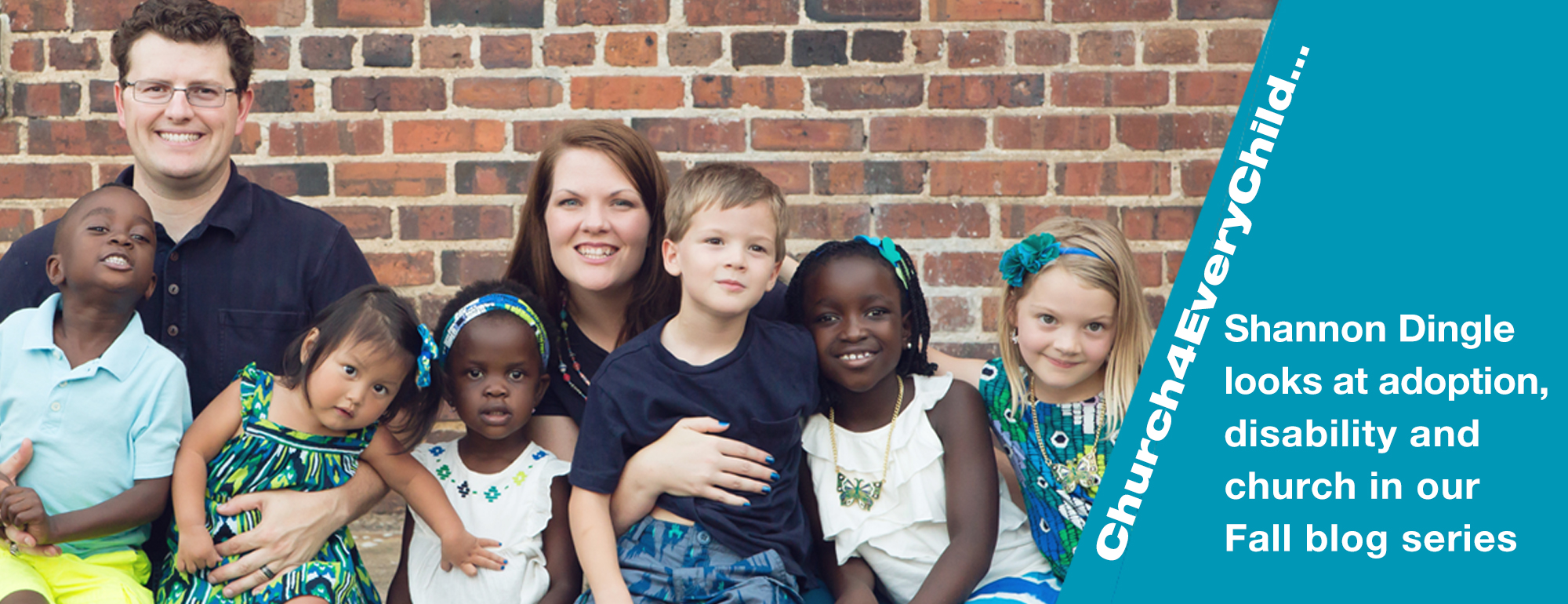
2000x770 S DINGLE CHRCH4EVCHILD 2Check out Shannon Dingle’s blog series on adoption, disability and the church. In the series, Shannon looked at the four different kinds of special needs in adoptive and foster families and shared five ways churches can love their adoptive and foster families. Shannon’s series is a must-read for any church considering adoption or foster care initiatives. Shannon’s series is available here.

Posted in Key Ministry | Tagged , , , , , , , , , | Leave a comment

Church, let’s stop equating vertical adoption and horizontal adoption

Editor’s note: Today we present the second in a three post miniseries from Shannon on the words we use in the church when talking about adoption.

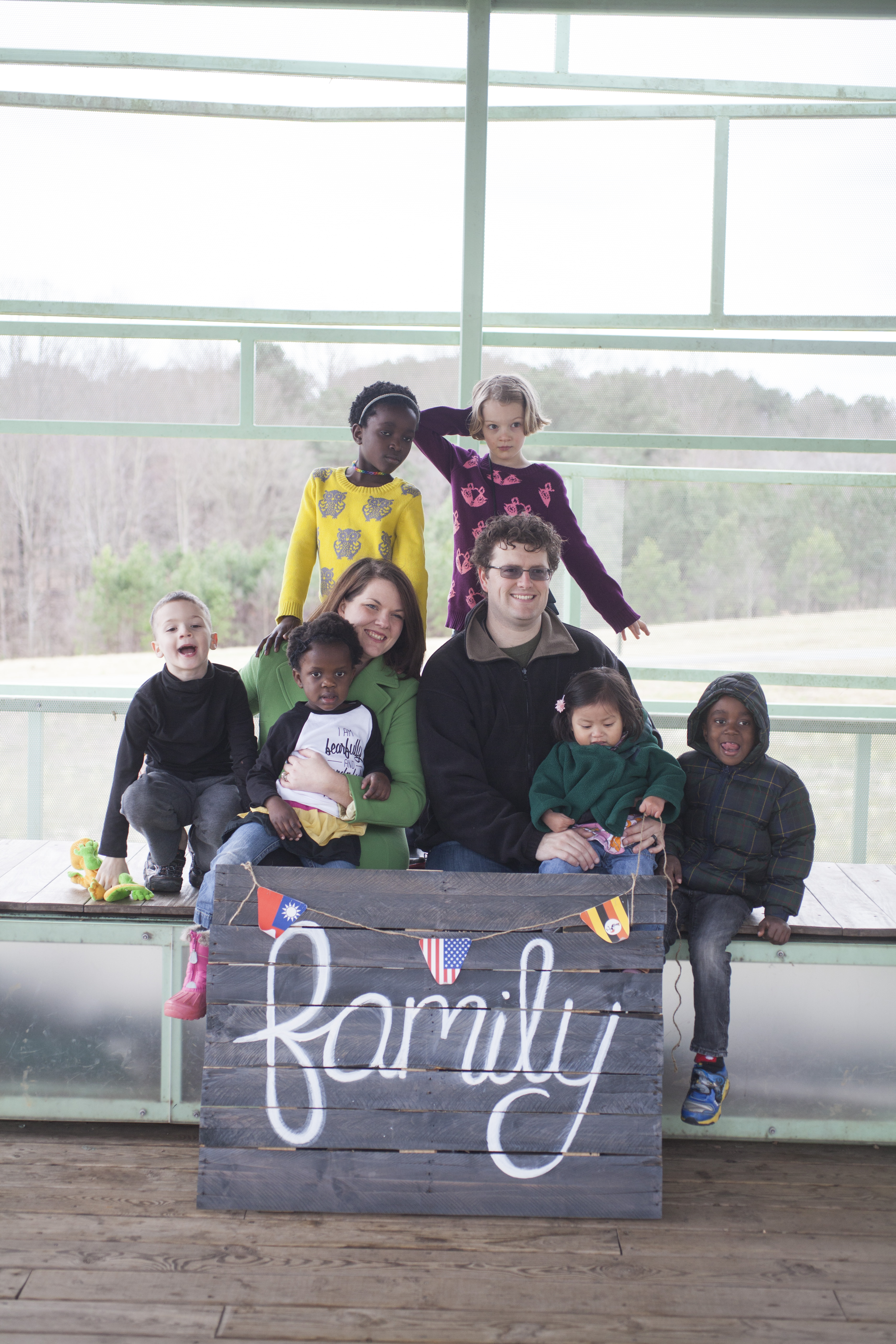
IMG_6273 Dingle Family

I’m a child of God. When he drew me in so I might know him, I joined God’s family. The Bible calls this adoption. In fact, the word “adoption” in scripture only refers to this sort of vertical adoption, from God to us.

Six darlings are children of mine. For four, we found out their need for a family and pursued the legal process for them to be added to ours. The earthly term for this is also adoption. But in all the adoption stories in the Bible – Moses, Esther, and Mephibosheth to name a few – the word “adoption” isn’t used. Instead the original Hebrew and Greek words give a sense of being brought in or cared for in these horizontal adoptions, those of parents to child adoptees.

In English, both scenarios are called adoption, but they aren’t the same.

  • In vertical adoption, the adoptive parent – God – is perfect. In horizontal adoption, we’re not. (My husband and I represent that well!)
  • In vertical adoption, the process is perfect with no error, ethical conundrums, or lies. In horizontal adoption, mistakes (or intentional injustice) occur because the process involves multiple flawed and sinful human beings.
  • In vertical adoption, God’s children respond to him in accepting our place at his table. In horizontal adoption, the child’s consent is rarely part of the process.
  • In vertical adoption, everything is gain and good and beneficial as we gain a heavenly Father without the prerequisite of having to be separated from our earthly one. In horizontal adoption, the loss of a first family for whatever reason is always involved (and possibly the loss of a country of origin or language or culture or the experience of childhood without trauma), even when the outcome is beneficial in almost every other way.
  • In vertical adoption, the act is final and irrevocable and forever. In horizontal adoption, that’s the intent but not always the outcome, as disruptions and dissolutions of adoptions occur more often than any of us would like to admit. (It’s helpful to note here that by Roman law, legal earthly adoption was irrevocable, whereas an adoptive parent’s rights can be terminated and custody of the child relinquished to another under our laws now. In other words, this analogy worked better in a biblical cultural context than it does in our own today.)
  • In both kinds of adoption, adoptees should be drawn into a closer, more intimate relationship with the adoptive parent(s), but sometimes that doesn’t actually happen in earthly adoption; even when it does, that doesn’t mean everything else about this flawed analogy works.
  • In vertical adoption, we are rescued by a Savior. In horizontal adoption, circumstances might improve due to adoption but parents like me didn’t save or rescue our sons and daughters. (There’s only one Savior, and it’s not me.)

shutterstock_139126682I can’t deny that our horizontal adoptions sometimes felt like parables of God’s vertical adoption of me. I remember being struck by his pursuit of me to bring me into his family as we did the same for the children we adopted. I remember considering the great cost he gave for us to be his children as my husband and I sacrificed in a much smaller way for our children to become our own. At the point in our horizontal adoptions when our children took our last name legally, I remembered the time when I received the name of Christian. When one of my children who was slower to respond affectionately to us responded “I love you too” and said spontaneously “I love you” for the first time 11 months and 18 months respectively after we took custody, I couldn’t help but consider how God loved me for much longer before I ever reciprocated that attachment. After our adoptions here on earth, verses about God viewing us as co-heirs with Christ took new meaning. I knew how I loved my children by both adoption and conception equally, and the realization brought me to finally believe that God the Father could really view me in the same way he does his Son.

But parables are merely an illustration and not the real thing. Speaking of parables, the ones in scripture about our spiritual adoption are more of a reunion than anything else. The lost sheep is sought and comes back to the flock, the prodigal son leaves and is welcomed back when he returns, and the coin which was missing is searched for until the owner finds it again. Vertical adoption is about us, God’s people, returning to the One who created us in the first place. Those are the sorts of parables Jesus told about spiritual adoption. Earthly adoption, while holding some similarities, is a poor parable by comparison to the ones Christ offered in the first place. One way the comparison is a poor one is that in Jesus’s parables about spiritual adoption, he is talking about redeeming the adopted from the hell they were headed for otherwise, whereas prior to earthly adoption, the realities of adoptees may or may not have been wholly unpleasant.

But “we’re all adopted” in the church, you might argue. Yes and no, I’d reply. All of us who know Christ were adopted in the vertical or spiritual sense of the word. But only some people’s circumstances require an earthly adoption. To make the issue even messier, many of those who have experienced earthly adoption will later experience spiritual adoption (or, in the case of older adoptees, may have experienced that first), but we don’t usually say they are twice adopted or doubly adopted. When kids in adoptive or foster placements hear comments like “we’re all adopted,” confusion can result as they may not be able to grasp the metaphor you’re trying to convey.

As I talk with adult adoptees – who are far too often hurtfully dismissed as “angry” if they dare to challenge the church’s adoption narratives with their own lived experiences – I am learning that the lessons I’ve learned about spiritual adoption through our earthly adoptions are precious but not perfect. I’m learning to choose my words and comparisons with more wisdom, as I listen to other believers I highly respect when ones like Tara Bradford write, “Shouldn’t we be careful in how we relate spiritual adoption to physical adoption through the use of our Adoption Christianese statements?” (I highly recommend clicking the link to read her entire post on this topic.)

I was adopted by God. Four of our children were adopted by me and my husband. While those English words are the same, their meanings are not. Just as you know I don’t mean the same emotion when I say “I love my husband” and “I love coffee,” let’s be mindful that vertical and horizontal adoption aren’t identical either. When we choose our words about adoption, let’s do so carefully so that we don’t add to the trauma and hurt that might already be present in our churches.

This post is the second in a three post series on the words we use about adoption as Christians. While my words might step on some readers’ toes, please know that I have been guilty – and sometimes continue to be at times – of every mistake to which I draw our attention. This isn’t about political correctness, self-righteousness, or simple rhetoric; it’s about love. I think we can all agree that words can be received as unloving, whether or not the speaker intended for them to be. Could we all be humble enough to set aside the argument “but I didn’t intend to…” and instead listen to how those words are being received on the other end? As I focus on the impact of our words, I’m hoping my words can be received with the same love with which I’m offering them. And as always, feel free to comment or engage with us if you don’t agree, because that’s one way iron can sharpen iron, to borrow the wording of Proverbs 27:17.

***********************************************************************************************************

shutterstock_24510829Key Ministry is pleased to make available our FREE consultation service to pastors, church leaders and ministry volunteers. Got questions about launching a ministry that you can’t answer…here we are! Have a kid you’re struggling to serve? Contact us! Want to kick around a problem with someone who’s “been there and done that?” Click here to submit a request!

Posted in Adoption, Advocacy, Foster Care, Key Ministry | Tagged , , , , , , | Leave a comment

Christians, are we being wise with the words orphan and fatherless?

Service member volunteers from the Transit Center at Manas hand out presents to children at the Belovodski Preschool Orphanage in Karabalta, Kyrgyzstan, Dec. 27, 2012. The orphanage houses more than 70 children between the ages of 3 and 7. (U.S. Air Force photo/Tech. Sgt. Rachel Martinez)

Photo courtesy of Tech. Sat. Rachel Martinez, U.S. Air Force via Wikimedia Commons

Editor’s note: Today’s post is the first in a three-part series from Shannon.

Words matter. The Bible is clear again and again that our words should be chosen with care. Our Lord is even identified as the Word who became flesh. And I’m concerned about our nonchalance and even carelessness in the church with the words orphan and fatherless.

Since our use of them originates in the Bible, let’s start there. I’m not a biblical scholar, but I am resourceful, so I brushed off some books and checked some proven websites (like Blue Letter Bible) for a word study. The Greek word orphanos and the Hebrew word yathom are the original words used for these biblical terms. Orphanos mean orphaned or without a father or lacking a guide or teacher. Yathom is more simplistic, used to mean a child who is fatherless or who has lost both parents, but Strong’s concordance point out that it comes from an unused root meaning to be lonely. Orphanos is only used twice, in John 14:18 (“I will not leave you as orphans,” also translated as “I will not leave you comfortless”) and James 1:27 (“Pure and undefiled religion is… to visit widows and orphans in their affliction”), while yathom is used 42 times, usually translated as fatherless, though sometimes as orphan, in the context of calling for justice and charity. Meanwhile, another Greek word, huiothesia (meaning to place or adopt as a son, as a combination of two Greek words: huios, meaning son, and tithemi, meaning to place or ordain) is used for adoption five times in Paul’s epistles but never paired with orphanos.

shutterstock_185745920How do those compare to our current day use of the words? For some, it’s close. Nowadays, the words double orphan or true orphan describe a child who had lost both biological parents to death. This kind of orphan is the typical dictionary definition of the word too. Meanwhile, a social orphan is one who loses parents due to poverty or mental illness or some other hard reality with one or both parents are still alive. These fit with the biblical definition, as the word fatherless in scripture – particularly the Old Testament – often meant the vulnerable children whose fathers were dead or absent and whose mothers were limited in their ability to provide for the family because women didn’t traditionally work or own property or have independent wealth then.

Yet another modern day definition comes from U.S. law, as cited on the US Citizenship and Immigration Services website: “Under U.S. immigration law, an orphan is a foreign-born child who: does not have any parents because of the death or disappearance of, abandonment or desertion by, or separation or loss from, both parents OR has a sole or surviving parent who is unable to care for the child, consistent with the local standards of the foreign sending country, and who has, in writing, irrevocably released the child for emigration and adoption.” Once again, this definition overlaps some of the ones we’ve already discussed but doesn’t match perfectly. I’ll expand upon this in more detail later, but it’s worth noting that current U.S. law never defines as child in the U.S. as an orphan, reserving that word for international cases.

Meanwhile, two entire groups of adoptees are rarely orphans by any definition.

  • First, if a parent or parents choose to create an adoption plan – such as at birth in the case of domestic newborn adoption – prospective adoptive parents are often able to be identified so that no gap exists between being in the biological parents’ care and entering the adoptive parents’ care. That child is never an orphan.
  • Second, in foster care, reunification is often the goal, for children to be able to rejoin their family of origin once it is safe and healthy to do so. Even when parental rights are terminated, often a parent or extended family member is still involved through visits or other contact. These kids aren’t orphans either.

Yet we still use orphan or fatherless a lot in the church when we’re talking about adoption and foster care, even when those words don’t fit with our current culture or a specific circumstance. Why?

One reason, mentioned at the beginning of this post, is direct: they’re used in the Bible. That said, the two bulleted examples above don’t fit with biblical use. Furthermore, also found in the Bible are the words cripple and dumb and lame and several other words we don’t use outside of their biblical references nowadays, so that can’t be the only reason.

Another reason is habit. Churches often cling to tradition, and the tradition of using orphan and fatherless to describe vulnerable kids is well established.

But can I be bold enough to step on some toes by offering a possible reason that stings a bit? I think maybe we’re a mixture of lazy and uncompassionate. It’s easy. Everyone else is doing it. As some kids and adult adoptees are saying they prefer other language, we don’t care enough to listen or change for someone else.

Am I advocating that we throw away those words completely? No. I don’t see that happening. In many instances, the words work well. I am, however, advocating that we use these words with wisdom. If a gentler but still accurate term – like at-risk families or vulnerable children – can fit the context, maybe it’s wiser to use those words.

After all, as people of the Word, words should matter to us.

This post is part of a three post series on the words we use about adoption as Christians. While my words might step on some readers’ toes, please know that I have been guilty – and sometimes continue to be at times – of every mistake to which I draw our attention. This isn’t about political correctness, self-righteousness, or simple rhetoric; it’s about love. I think we can all agree that words can be received as unloving, whether or not the speaker intended for them to be. Could we all be humble enough to set aside the argument “but I didn’t intend to…” and instead listen to how those words are being received on the other end? As I focus on the impact of our words, I’m hoping my words can be received with the same love with which I’m offering them. And as always, feel free to comment or engage with us if you don’t agree, because that’s one way iron can sharpen iron, to borrow the wording of Proverbs 27:17.

ShannonShannon Dingle provides consultation, training and support to pastors, ministry staff and volunteers from churches requesting assistance from Key Ministry. In addition, Shannon regularly blogs for Key Ministry on topics related to adoption and foster care, and serves on the Program Committee for Inclusion Fusion, Key Ministry’s Disability Ministry Web Summit. Shannon and her husband (Lee) serve as coordinators of the Access Ministry, the Special Needs Ministry of Providence Baptist Church in Raleigh, NC.

***********************************************************************************************************

KM Logo UpdatedKey Ministry has assembled resources to help churches more effectively minister to children and adults with ADHD, anxiety disorders, Asperger’s Disorder, Bipolar Disorder, depression and trauma. Please share our resources with any pastors, church staff, volunteers or families looking to learn more about the influence these conditions can exert upon spiritual development in kids, and what churches can do to help!

Posted in Adoption, Advocacy, Families, Foster Care, Key Ministry | Tagged , , , , , , , , , , | 18 Comments

One mother’s journey…adoption and psychiatric medication

Ward FamilyEditor’s note: We originally published this post from one of our readers (Janet Ward) on Mother’s Day weekend two years ago. Given the proximity of Mother’s Day to Children’s Mental Health Day/Week, I thought her post would be of interest to many of our new friends who have begun following the blog over the last two years.

Janet’s article captures the passion demonstrated by mothers who need to advocate  for for their children every day. She speaks with the acquired wisdom of a mom who has walked the walk and talked the talk and has valuable insights to share. Thanks to the folks at Adoption Today who graciously gave us permission to share…

Psychotropic Medications some pros and cons 

By Janet Ward

Driving our minivan up a scenic mountain road during a summer vacation, listening to my enraged 6-year-old daughter tantrum from the backseat, screaming about wanting to get another fairy doll at the country fair we had just left, my daughter becoming angrier with each passing second.

I concentrated intently on driving, hoping to safely and quickly make it back to the condo where we were staying. Suddenly, something struck me on the back of my head. She had taken off her shoe and had thrown it at me. I yelled at her to stop. She responded by throwing the next easily reachable projectile, which happened to be a book.

Much to my horror, I then heard the click of her seatbelt unbuckling. In the blink of an eye, my daughter charged me from the back of the minivan, pushing and hitting me on my head, right shoulder and arm as I struggled to keep the car under control.

That was it. That incident was the final straw that led to our decision to start my daughter on an antipsychotic medication. I didn’t know it that day, but during the next eight years, we would try 14 different psychotropic medications with her, all in an attempt to manage her wide array of symptoms related to anxiety, mood and attention.

During those years, I learned a lot about this hotly debated topic of medication for kids. I learned there are no easy answers. I learned that those who claim to have all the answers most assuredly do not. And I learned the answer that is right for one child and one family is not necessarily right for another.

In our fast-paced society, people often look for quick, easy fixes. Contrary to what many believe, putting a child on psychotropic medication is neither quick, nor easy, nor a fix. It is a serious decision with potentially serious consequences.

While there are times when medication is inarguably the best course of action, there are other times when arguably it is not. Either way, putting a child on psychotropic medication should be undertaken only after careful thought and with full awareness of the risks and costs of doing so. Here are some points for your consideration:

• Much needed relief: By the time parents consider psychotropic medications, especially the more potent antipsychotics, usually every single member of a family is suffering, not only the child. Medication can ease severe symptoms that hinder a child’s ability to function in his or her world, symptoms such as inattention, hyperactivity, anxiety, mood issues and more. By reducing, not necessarily eliminating, the intensity of symptoms, medications can stabilize a child, stabilize a family’s home life, and make concurrent therapies and/or interventions more effective. At their best, medications are essential to preventing or minimizing some kind of crisis, as in our case when safety and the ability to function in daily life were so severely compromised. When medication works as intended, the relief it provides both to the child and the entire family can range from immensely helpful to invaluable.

• Trial-and-error: Like much in life, there is no “one-size fits-all” answer to medication. Finding the right medication — or combination of medications — for any given child is a blend between art and science. No two children’s brains are the same; therefore, no two children react exactly the same to the same drug given at the same dosage, at the same time of day. Often, treatments require experimentation with dosage, time of day of administration, even the specific drugs themselves. Additionally, because children’s bodies change and grow, at times rapidly, even stable medication regimens need to be periodically re-evaluated and adjusted.

• Side effects; take ‘em seriously: We’ve all seen the small print at the bottom of magazine ads— usually so tiny it requires a magnifying glass to read. And we all tend to ignore it, thinking that such things only happen to other people. But my experience is that side effects with psychotropic medications are real, are common, and are not to be taken lightly. At various times, with various medications, my daughter experienced weight gain, weight loss, sleeplessness, excessive sleepiness, anxiety and some bizarre behaviors, such as constant coughing or smacking herself on the forehead with the palm of her hand. These side effects were pronounced, problematic enough that they had to be addressed.

Often with side effects, parents find themselves simply trading one set of behaviors to manage such as problems completing homework due to inattention for another such as having to ensure a child with zero appetite eats enough food to sustain him or herself throughout the day.

Side effects are so prevalent, there’s even a phenomenon called “symptom chasing,” in which another medication is added to the child’s regimen in order to address symptoms caused by a previous medication. When my 40-pound daughter gained a staggering 20 pounds after starting an antipsychotic, a stimulant was prescribed to reduce her appetite and help with attention. Her insatiable hunger did ease up, but the stimulant also had the side effect of increasing anxiety, which then led to the possibility of starting her on an anti-anxiety drug. We decided not to do that, but the lesson here is what started out as one psychotropic medication could easily have led to three, the second two being the result of managing side effects of the first.

Sometimes side effects are so troublesome as to warrant discontinuation of a medication, regardless of how well that medication is working. For example, after six years on a certain medication, my daughter developed side effects that threatened the health of her heart. She had to stop taking that drug, and its discontinuation was no easy task.

• Long-term consequences: As advanced as medical science is, long-term consequences of psychotropic medications on a child’s still developing brain are unknown. Medical science does know, however, that the human brain develops well into a person’s 20’s, so this is as much concern for an otherwise fully-grown teenager as it is for a younger child.

Adoption TodayWhat’s the exit strategy?

Politicians talk about having an exit strategy, a plan about how to leave a situation, either once an objective has been achieved or to minimize failure. Similarly, psychotropic medications require an exit strategy. Medication in and of itself is not a permanent solution. Medication simply squelches symptoms; it doesn’t fix anything. Your child will not magically outgrow his or her condition while on medication. Unless your idea is to have your child take medication into ripe old age,which really isn’t feasible, you need a plan. The ultimate goal is to enable your child to navigate the world successfully, on his or her own, without medication. This means that medication should be only one of several tools in your toolbox, a tool to be used in the short-term while you explore other options to effect permanent changes in the long-term.

Postscript: My daughter is now a teenager and has been medication-free for the past 18 months. She is happier and healthier than ever before, both emotionally and physically, thanks to an extreme amount of hard work and specialized treatment. For my family, psychotropic medication provided a critical tool on the road to get her to where she is today, at a time when we desperately needed it, but it was neither a simple nor problem-free tool to use. If you are contemplating psychotropic medication for your child, my advice is to make an informed decision about medication, as well as other alternatives. In this way, you can choose what is best for your child and for your entire family.

What to Do When Your Child Needs Medication

As a loving parent who wants what’s best for your child, you can be your child’s greatest ally. Here are a few tips to help you navigate through your child’s medication journey:

Find a good doctor: Prescribing psychotropic medication — wisely— is a most complicated affair. Work with the best doctor you can find, one who is highly trained in prescribing these medications, experienced with it, and who takes into account your input and concerns when making decisions.

Compliance is critical: Inconsistency in giving your child his or her medication can lead to further issues for both your child and family. Adequate dosage, timing and consistency are key to obtaining optimal results. Make sure your child takes medication exactly how and when it is prescribed. Aim for 100 percent compliance, and if you miss your mark by just a little bit, you’ll still be doing well.

Keep copious notes: One of the things about life that never changes is that life is always changing. Medication dosage, time of administration, the medication itself, even doctors — all change over time. Don’t trust these important details to your memory or to medical staff. Keep an up-to-date notebook containing all this information. Every time medication is started or adjusted, put on your Sherlock Holmes hat and keenly observe your child’s behavior. Record your observations about behavioral changes, both positive and negative, as well as notes about concurrent changes or stressors in your child’s life. Your notebook can become an invaluable tool to you and your doctor for making informed, intelligent decisions.

Be your child’s advocate: You’re an all-important link between the doctor and your child. You are the one providing most of the information that the doctor will use to make decisions. So communicate well. Describe your child’s behaviors, changes in behaviors, medication side effects, and anything else of significance.

Ask questions: If you are concerned you might forget something during an appointment, write down notes in advance. By taking an active, collaborative role during appointments, you can maximize the chance for the best possible decisions to be reached.

Janet B. Ward is the mother of three children, biological twin boys and a daughter adopted from Russia as an infant. A product of trauma while in Russia, her daughter has received 15 mental health diagnoses in 14 years.

Posted in Adoption, Advocacy, Controversies, Families, Mental Health, Stories | Tagged , , , , , , | 1 Comment

Seven reasons church attendance is difficult when kids have mental illness…

depressed teenWe as the church do a lousy job of welcoming and including families of children and teens with mental illness or trauma histories. I’d argue that a major reason why we struggle is the absence of an agreed-upon model for a mental health inclusion ministry for kids.

I’ve come to the conclusion that our team at Key Ministry needs to, at the very least, put forth a conceptual model for a mental health/trauma inclusion ministry that could be implemented by churches of all sizes, denominations and organizational styles. This model would be continually tested and refined through the experiences of ministry partners everywhere seeking to include kids and teens with ADHD, anxiety, attachment issues, mood disorders, post-traumatic stress and difficulties with social communication and interaction. Today, we’ll start by identifying seven reasons church attendance/participation is difficult for families of kids with mental illness.

Barrier #1. Social isolation

Families of kids with many of the common mental health conditions described above are less likely to have as many opportunities for interaction with other families/children that produce invitations to church.

Barrier #2. Social communication

Churches are intensely social places. Consider the challenges that a child or teen faces in an environment surrounded by same-age peers who has difficulty processing body language/body space, tone/inflection of speech, common rules of social behavior or  struggles to effectively use words to express thoughts or feelings in unfamiliar or stressful situations!

Barrier #3. The child/teen’s capacity for impulse control and emotional self-regulation

shutterstock_86980295_2Kids with common mental disorders frequently experience difficulties with impulse control, problem-solving, learning from experience, managing time, delaying gratification and self-regulating emotions…all of which are common expectations in the environments in which we do much of our children’s and youth ministry. See this post that further explains the importance of executive functioning.

Barrier #4. Sensory processing

Sensory processing differences are common among children with autism spectrum disorders, ADHD and anxiety disorders. Many respond differently to sound, light, touch and taste than their same-age peers, and ministry environments that some kids find engaging may be experienced as noxious by children with heightened sensitivity to sensory stimulation.

Barrier #5. Stigma in the church

As we discussed this past winter, many prominent pastors and church leaders have characterized common mental health conditions in children and teens as either an indication of sin or poor parenting. Others question whether commonly diagnosed conditions such as ADHD really exist.

Barrier #6. The fear of being singled out

shutterstock_15545299Kids and teens with the conditions we’re discussing often express their desperation at wanting to “belong.” Older children and teens are often very reluctant to accept any help that might result in their peers viewing them as “different” in any way. The vast majority of kids I serve in my practice would be horrified by the prospect of having to be part of a “special needs ministry.”

Barrier #7. Parents with mental illness

The apple doesn’t fall far from the tree. Many common mental illnesses are highly heritable. Kids generally don’t drive themselves to church. Any effective strategy to include kids with mental illness or trauma histories at church needs to take into consideration the barriers that have excluded their parents or caregivers from church.

***********************************************************************************************************

KM Logo UpdatedKey Ministry has assembled resources to help churches more effectively minister to children and adults with ADHD, anxiety disorders, Asperger’s Disorder, Bipolar Disorder, depression and trauma. Please share our resources with any pastors, church staff, volunteers or families looking to learn more about the influence these conditions can exert upon spiritual development in kids, and what churches can do to help!
Posted in ADHD, Hidden Disabilities, Inclusion, Key Ministry, Mental Health | Tagged , , , , , , , , , | 6 Comments

Welcome Ryan Wolfe to our Key Ministry team…

Ryan Wolfe ColorOn behalf of the Board and staff of Key Ministry, we’re delighted to announce that Ryan Wolfe has joined our ministry team as a church consultant.

Ryan will continue to serve full-time in the position he has held since 2010 as Developmental Disabilities Pastor at First Christian Church in Canton, Ohio. At First Christian, Ryan has developed a faith-based day program & employment program for adults with developmental disabilities. First Christian Church also hosts respite events, an annual prom, Sunday morning ministries for both children & adults, a volunteer guardianship program, and more to support persons with disabilities.

In addition to his church duties, Ryan is very active in his community, serving on the boards of ARC (Autism Resource Center) of Ohio and Canton Challenger Baseball. He has been honored for his community service by the Cleveland Indians – Honorable Mention for Mentor of the Year 2014 and the Arc of Ohio – Stark County Volunteer of the Year 2012. He also raised the funds to build a baseball field for the local Special Olympics Teams and Challenger Baseball in 2011 on the campus of First Christian.

When Key Ministry’s leadership team met to “reimagine” how we might serve churches in the future, we were in agreement on two important issues… First, we were unanimous in affirming a future in which our team continues to provide direct service to churches, and second, we were of a single mind in affirming that we will offer churches relationships along with resources. Ryan (along with Shannon Dingle) is available through our FREE Consultation Service to come alongside churches of all sizes when they have a child or family impacted by disability they’re called to serve. If you’re looking for advice on launching a disability ministry program or outreach, want to bounce ideas off an experienced disability ministry leader or are struggling with how to include a child or teen with especially challenging needs, Ryan and Shannon are available to help you and your church take the next step.

The best way to access Ryan’s services is to submit our “Contact Us” form either through the consultation page on our website or directly through this link.

We’re blessed to be able to offer Ryan as a resource to the disability and special needs ministry community. Please join us in welcoming him to the team!

***********************************************************************************************************

shutterstock_24510829Key Ministry is pleased to make available our FREE consultation service to pastors, church leaders and ministry volunteers. Got questions about launching a ministry that you can’t answer…here we are! Have a kid you’re struggling to serve? Contact us! Want to kick around a problem with someone who’s “been there and done that?” Click here to submit a request!

Posted in Inclusion, Key Ministry, Resources | Tagged , , , , , | 2 Comments

Church, what if we think _______ diagnosis isn’t a real thing?

shutterstock_149729270May 3rd-9th is Children’s Mental Health Week. Today, Shannon speaks out about the propensity of others to question the legitimacy of a child’s psychiatric diagnosis.

Everybody has that nowadays.

Isn’t that just a checklist thing? I mean, it’s not a real diagnosis, right?

That’s just an excuse for bad behaviors.

That’s so overdiagnosed.

When I was growing up, we didn’t label kids like that, and we did just fine.

I hear these comments often, usually about ADHD,  Asperger’s Disorder and childhood trauma. I’d love to address them, first as a special educator, then as a ministry leader, and finally as a mom.

In this post, I’m going to focus specifically on ADHD, but please keep in mind that these are CERTAINLY not limited to that areas of diagnosis. In my city and at my church, I’ve noticed that people only make such comments with boldness about ADHD. When they make comments like this about other special needs, they usually used more hushed tones…or they just think the comment instead of saying it.

As a trained special education teacher with my MAEd in the field, I’m no stranger to ADHD in the classroom setting. Is ADHD prevalent nowadays? Yes. It possible that some ADHD diagnoses aren’t legit? Yes. Is it a real disorder? Yes. Can you or I conclusively pass judgment on whether or not a specific individual has a legit diagnosis? Nope.

As a special needs ministry leader, is it be wise or profitable for you or I to try to pass judgment on whether or not an individual has a legit diagnosis? No. If you want to debate the issue from a diagnostic or theoretical perspective, particularly if you work in a field related to special education, go for it. Just don’t bring that into your ministry.

shutterstock_68372575As a mom, my daughter’s diagnosis of cerebral palsy is easier at church than the behavioral concerns I have for my son who will probably end up with a diagnosis of ADHD, Asperger’s, or sensory processing disorder. Why? Because I know no one is going to question her wheelchair and inability to walk in the way they might question his sensory meltdown or difficulty sitting through a church service designed for adults rather than kids. Others view my daughter’s disability objectively but my son’s subjectively (that is, assuming I’m right about the diagnosis to come for him).

Whenever you are tempted to pass judgment on the legitimacy of someone’s diagnosis, stop. Remember that God is all-knowing and you are not. He knows the ins and outs of each person’s life; you only know the tiny sliver of interaction that you have each week or month with that individual.

I don’t see Christ analyzing whether or not the woman who was hemorrhaging had sought adequate care first or bled enough to warrant healing. No, instead He noticed her desperate touch on His robe and called her daughter. I don’t hear Jesus suggesting that we place bouncers at the door of a Luke 14 banquet to ensure that folks are crippled enough, lame enough, or blind enough. No, He says, “But when you give a banquet, invite the poor, the crippled, the lame, the blind, and you will be blessed. Although they cannot repay you, you will be repaid at the resurrection of the righteous.” I don’t read about Christ ignoring the pain of His friends when Lazarus died, even though He knows that the death won’t stick because healing will be provided. No, He cares enough and feels enough to weep.

The comments I shared at the beginning remind me of comments I often hear about people who are homeless or poor. Well, we shouldn’t help them because they could be making a lot of money panhandling. They could be abusing my kindness. They might even {gasp!} buy alcohol with my money. And so those attitudes provide an excuse not to help others, not to care about them. Could those statements be true? Sure. But can you know with certainly whether or not they are? No.

Why are we so afraid of helping someone who might not be “worthy” (according to our own assumptions, that is)? Could it be that we have somehow deluded ourselves into thinking that we have made ourselves worthy in some way instead of acknowledging that not one of us is deserving of grace? God is the only one who knows without a doubt if a person was rightly diagnosed with a disorder or if a person really needs food. And He is the only one who can take a proficient sinner like me and turn her messy life into a masterpiece worthy of reflecting His glory.

What if we became less concerned about trying to be God – which is what we’re doing when we try to decide who is and isn’t worthy – and became more concerned about loving and serving others?

ShannonShannon Dingle provides consultation, training and support to pastors, ministry staff and volunteers from churches requesting assistance from Key Ministry. In addition, Shannon regularly blogs for Key Ministry on topics related to adoption and foster care, and serves on the Program Committee for Inclusion Fusion, Key Ministry’s Disability Ministry Web Summit. Shannon and her husband (Lee) serve as coordinators of the Access Ministry, the Special Needs Ministry of Providence Baptist Church in Raleigh, NC.

***********************************************************************************************************

KM Logo UpdatedKey Ministry has assembled resources to help churches more effectively minister to children and adults with ADHD, anxiety disorders, Asperger’s Disorder, Bipolar Disorder, depression and trauma. Please share our resources with any pastors, church staff, volunteers or families looking to learn more about the influence these conditions can exert upon spiritual development in kids, and what churches can do to help!

Posted in ADHD, Advocacy, Hidden Disabilities, Inclusion, Key Ministry, Mental Health | Tagged , , , , , , , , | 5 Comments