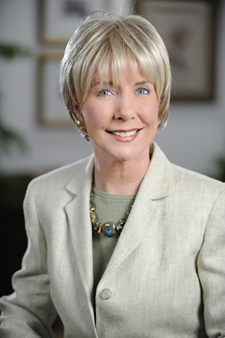

Harmony Hensley: God’s Grace in the Voice Mail

One of the things I dread most in my day to day routine is the task of managing voice mails.  Though I love to communicate and connect with folks for some reason voice mail has always been something that I’ve struggled to be excited about.   But today I listened to two voicemails that caused me to pause and reflect on the awesome ways that God moves.

Each fall since 2008, Vineyard Cincinnati has transformed its campus for one evening to roll out the red carpet (literally) and welcome upwards of 1,000 adults with special needs for our Prom Outreach.  Though this year will mark our 5th Prom (and we’ve hosted 2 luaus of similar size and scope) I have to say there are still moments in the midst of the madness that take my breath away, and humble me.  Today that came in the form of a couple of voicemails.

We typically have folks begin to call us about registering for the Prom the day after the outreach itself is over.  They don’t even let the dust settle on their suits and gowns before they start counting down the days until they can once again grace the red carpet and rock the dance floor.  For months we’ve kindly reminded guests who call that registration won’t open until the first week of August.

So even though Monday marked the beginning of “just another week” for you and me, it was something more for hundreds of eager folks in our community.  It meant its Prom season, and registration would be open.  And so begin the HUNDREDS of voice mails.

Today I began my day with a quiet voice mail where I could hear a young man rehearsing a script he had carefully planned out.  As he whispered through the words, slowly and carefully I could sense how important it was to him to get the message just right.  The voice mail ended and I could hardly make out what he was saying.  Minutes later I received a second voice mail.  Much louder, as this one was not for practice, but he wanted to make sure I knew that he would like to attend the Prom on Friday September 30th with his girlfriend Maria (he made sure to spell her name out very carefully for me “ M-A-R-I-A”).  Unfortunately, in his excitement as the message came to a close he let out a giant sigh and said “okay call me back THANK YOU!!!” and hung up – without leaving his number.

I listened to the message again and just smiled.  I was reminded that sometimes in ministry we get so caught up in the litany of tasks and events that we execute that we lose sight of the real impact they have on those we serve.  The Prom isn’t just a party.  It’s a night where the playing field is level, the kingdom advances, and a people who have been marginalized and often forgotten are celebrated.  So it only makes sense that our friends would begin counting down the days for their next dance the moment the DJ stops the music.  They thirst for the same thing you and I do – to belong.

In the coming weeks I will be inundated with voice mail.  Though there are an army of incredible volunteers who help us return calls and see to it that each person gets registered for the event I always make sure I stop and listen to a few messages.  I need those reminders that God has been so gracious to allow me to be a part of advancing this little corner of the kingdom.   That simple voicemail foreshadows the great things to come.  It signals that that magical moment each year when my friends and I make our way to the center of the packed dance floor to bear witness to our very own slice of heaven is just around the corner.

If you would like more information about how to host your own Prom or Luau Outreach please feel free to contact me….or join us on the red carpet Friday September 30th.
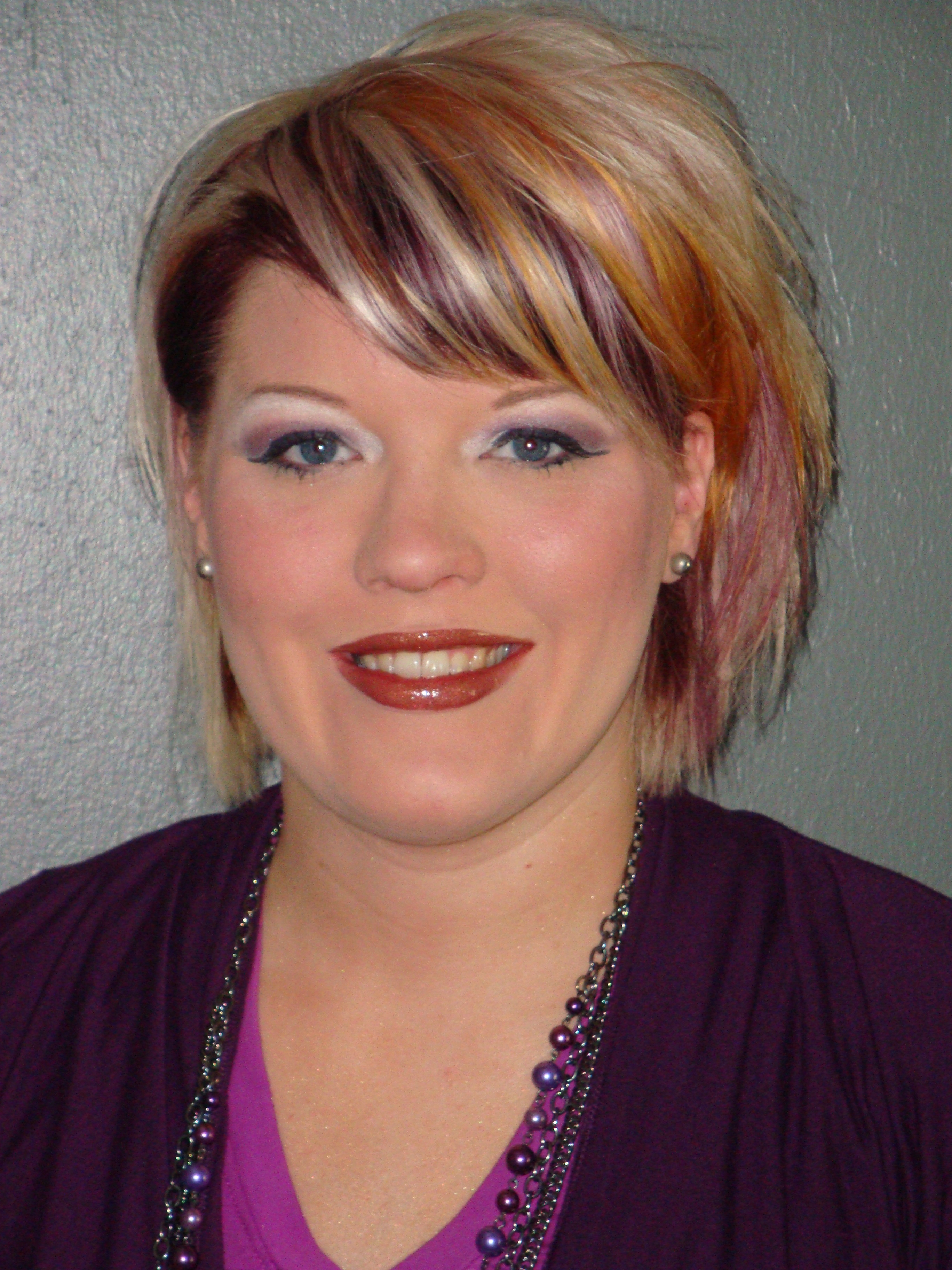
Harmony Hensley currently serves as Pastor and Director of Outreach and Inclusion at Vineyard Community Church in Cincinnati, OH. She also serves as a highly valued member of our team at Key Ministry. Harmony has had the opportunity to speak this year at the Orange Conference, the Accessibility Summit and the Children’s Ministry Telesummit. We have every confidence that she’ll demonstrate the same degree of excellence as a Mom later this month that she’s demonstrated to this point in ministry.

Harmony can be reached at hhensley@vineyardcincinnati.com. For more information on this year’s Prom, click here.

Posted in Inclusion, Stories, Strategies | Tagged , , , , | Leave a comment

Information Overload

Social mediaI have a confession to make to my friends and partners in ministry about my time spent on the Internet. But it’s not the problem that a lot of guys from church struggle with when they’re on the computer. I don’t have the time anymore to keep up with all of the resources my friends and colleagues in disability ministry or children’s ministry are making available. And I bet you’re having a hard time keeping up too.

Several years ago, our team began to execute a plan to use social media to increase awareness of the resources we have to offer and to make connections with other like-minded Christ followers seeking to serve families of kids with disabilities. Based upon the responses we’ve received and the people we’ve connected with, the effort has been an overwhelming success. But I’m starting to wonder whether it’s time for something different.

When we first started our Key Ministry adventure at the end of 2002, one of our initial tasks was to scour the Web in search of anyone else out there doing what we were doing, and we didn’t find a whole lot of folks with similar interests. Google the terms “hidden disability” “special needs ministry” or “disability ministry” and thousands of searches come up. Many ministry leaders have become aware of the value of social media and generate lots of quality content.

One of the downsides of this proliferation of ministry content and resources is the danger that ministries can get into an escalating “arms race” in which leaders feel they need to promote more and more content in overlapping social networks in an effort to be heard above the “noise” caused by the volume of social media available. There’s also a risk of churches and parents who want to start ministry initiatives becoming paralyzed by the range of resources available to them through what’s referred to as choice overload theory.

I think it’s also easy for ministry leaders to get so caught up in keeping up with social media and measuring success in terms of Facebook fans, Twitter followers and website hits that we lose sight of the ultimate goal…sharing God’s love with the people around us in such a way that those people are drawn to Jesus.

Here’s where I’d appreciate help from those who read this blog. Our team at Key Ministry is going to continue to put out ministry content through social media, but we don’t want to ask you to look at what we have to offer unless we have reason to believe what we’re sharing will be of value to you. So…can we be part of the solution as opposed to part of the problem?

I don’t want folks having to sift through multiple tweets or Facebook wall posts every morning to find the the information they need. What knowledge or resources would be most helpful to you as a ministry leader or as a volunteer? As a parent? What would you like to see us do LESS of?

Updated August 28, 2014

***********************************************************************************************************

KM Logo UpdatedKey Ministry has assembled resources to help churches more effectively minister to children and adults with ADHD, anxiety disorders, Asperger’s Disorder, Bipolar Disorder, depression and trauma. Please share our resources with any pastors, church staff, volunteers or families looking to learn more about the influence these conditions can exert upon spiritual development in kids, and what churches can do to help!

Posted in Key Ministry, Resources, Strategies, Uncategorized | Tagged , , , , , | 3 Comments

Defining Moments

I’ve been struggling with this blog for two days. Today’s post will be more personal in nature.

Over the last year, I’ve had two intensely frustrating ministry experiences. One has occurred in the context of Key Ministry, one involved another volunteer commitment. Both situations involved the same underlying theme…people who had reached a significant level of influence within the church were establishing barriers to prevent others from gaining a platform for meaningful service.

In retrospect, I’m convinced that God has had a clear purpose in mind for the anxiety and frustration of the past year. In the situation outside Key Ministry, I can see how God’s been at work, repositioning people in ways that everyone may serve more effectively and joyfully. Both situations have been instrumental in framing what will be a core value for Key Ministry going forward…that we will truly be inclusive, proactively seeking opportunities to support and promote other persons and ministry organizations with gifts and talents and resources of value in building the Kingdom.

These experiences have been instructive. In both situations, I’ve felt like an outsider looking in. I think that feeling is similar to the experience I’ve heard from many parents of kids with disabilities who’ve wanted to get more involved at church. They often describe the sense of being an outsider whose presence at church is an intrusion into the ways that things have always been done. Having two girls who would be considered “typical,” I wouldn’t have otherwise been able to empathize with the experience of families who feel left out.

Jesus came so that we could all become “insiders.” Everyone is ultimately invited to the banquet.

I also think God is using these experiences as opportunities for me to grow in spiritual maturity. Emotional self-regulation is not always a strength of mine, especially when my lingering adolescent revulsion for hypocrisy gets activated. In the conflict involving Key Ministry, I consider myself blessed to serve with Board members who modeled for me Christ-like ways of responding to conflict with other believers. I also want to do a better job of modeling for my own family appropriate ways of managing frustration with grace and maturity.

One of my takeaways from reading the Bible is that as long as I put God’s agenda first and try to maintain a continual awareness of the temptation to promote Key Ministry or myself out of the wrong motivations, God will continue to bless the efforts of our ministry team. The moments that will define me and will define my team involve the ways that we choose to respond when we’re hurt or under attack.

I appreciate your prayers as I try to live up to the standards God wants me to maintain as a leader of Key Ministry and as a spiritual leader in my own home.

********************************************************************************

On a brighter note, anticipate a major announcement on this blog later in the week regarding one of the most exciting ministry opportunities in which Key Ministry has been privileged to participate!

Posted in Leadership, Uncategorized | Tagged , , | 4 Comments

The Luau

The work of building the Kingdom is not the exclusive provence of professional Christians serving on staff at a local church.

Earlier this year, I shared the story of Abby Hamilton, a ninth grade classmate of my older daughter who initiated and led a outreach event, “FBC Luau 2011” to welcome and serve  adults in our community with developmental disabilities. Abby’s effort drew lots of attention from local media. Check out this story from the local NBC station that aired following the Luau.

I see the Luau as a triple win. It was a win for the Kingdom because many adults who don’t otherwise experience much recognition had an opportunity to experience the love of Christ through a party thrown in their honor at a local church. It was a win because lots of kids and adults had the opportunity to use their gifts and talents in serving others. It was also a win because the Luau led at least one family to reconsider attending church because of the experience their son had at the Luau. Check out this blog post following the Luau from Rebecca Hamilton, Abby’s mother. Here’s a quote from her post that sums the event up nicely, and also sums up why we do what we do at Key Ministry:

“So, back to that Friday night party and the Sunday morning worship that followed it. It’s not about the party at all, is it? It’s about being the hands and feet  of Jesus Christ to families who are affected by disability. It’s about meeting them where they are, with lots of love and no judgment.  When we do this, we have a rare chance to serve up a little slice of Heaven right here on Earth. And that’s where the real party is!”

Posted in Key Ministry, Stories, Uncategorized | Tagged , , , , | Leave a comment

I’m Taking My Talents to Cedarville…2011 Bioethics Conference and Joni and Friends Through the Roof Summit

I’m honored to have received the opportunity to speak at the 2011 Bioethics Conference and Through the Roof Summit, scheduled for September 15-17, 2011. The conference is cosponsored by Joni and Friends and the Center for Bioethics at Cedarville University.

An impressive assembly of leading experts in the fields of bioethics and pastoral care will provide biblical perspectives on the critical issues shaping the church as it relates to end-of-life and disability ministry. At the same conference, leaders interested in developing a disability ministry, as well as leaders who are just getting started or who have an existing disability ministry will experience the opportunity to choose from 40 workshops by noted authors, professors, researchers, church ministry leaders, and other professionals who bring their expertise to the pressing issues facing people and families affected by disability from diagnosis through all of life’s stages. In addition, participants will be able to visit exhibitors, gather resources and have a time of networking.

Joni Earickson Tada, the Founder and Chief Executive Officer of the Joni and Friends International Disability Center is scheduled to be the keynote and closing speaker.

I’ll be presenting two breakout sessions…one will be on the impact of Attention-Deficit/Hyperactivity Disorder (ADHD) on spiritual development in kids. The second breakout will address what to do when kids demonstrate aggressive behavior at church.

In addition to myself, Key Ministry will also be represented on the program by Dr. Cara Daily, Executive Director of Inner Health Ministries and a member of the Key Ministry Board. Cara is a recognized expert in the consultation, assessment, and treatment of autism spectrum disorders and other special needs. We may have other additions to the conference to announce in coming weeks, so stay tuned.

I’d encourage anyone interested in attending the conference to take advantage of the online registration. The conference is very reasonably priced and likely to sell out quickly. Opportunities are also available to join Joni and the other speakers for a reception and banquet on the evening of September 16.

I’m looking forward to meeting old friends and making new ones at Cedarville University this September 15th-17th!

Posted in Key Ministry, Training Events | Tagged , , , , , , , , , | 2 Comments

Shannon Dingle…Simply the Right Thing to Do

Since authoring this guest post, Shannon Dingle has become an established star in the field of special needs ministry. She is currently serving as Special Needs Ministry Coordinator at Providence Baptist Church in Raleigh, NC. Her background and training is in special education. She authors a thoughtful and well-written blog, The Works of God Displayed, that is one of only a few ministry resources I make time to read regardless of how busy things get in my practice. Shannon’s time for writing has been limited lately as she and her husband prepare to welcome the newest member of their family, Zoe Amanda in Taiwan on July 5, so we thought we’d share this guest blog Shannon wrote from last summer with our new readers.

I just watched The Blind Side with my husband this weekend, but I already knew about one scene. I had heard about it from a sermon or two and read about it in at least one book. In it, Big Mike looks around his new room and tells Leigh Anne Tuohy, the mom of the family who welcomes him into their home, “I’ve never had one before.” She says, “What, a room to yourself?” And he says, “No, a bed.” As she walks away, tears in her eyes, it’s obvious that she has been faced with a reality that is starkly different from her own.

If I want to go to Sunday school or a worship service, I do. If I want to serve in a ministry on Sunday morning or go to our church’s monthly leadership training, it’s not a problem. I have a two-year-old son and a four-year-old daughter, and if I want to do those things, I just take my kids to their class or childcare. If we need a babysitter, we call the girls across the street, even occasionally allowing the eleven-year-old to watch them for short stretches.

Like Leigh Anne in The Blind Side, I don’t regularly think about what life is like for kids without beds as I place my son in his bright blue racecar bed each night. And I don’t think twice about bringing my children to church or calling a trustworthy young sitter to come over so my husband and I can have a short date.

For many families, this isn’t an option. Due to their child’s special needs, they don’t know what to expect from church. Or maybe they’ve tried and been turned away. When my friend Amanda’s son – who loves cars and has autism – was having a tough time in a church’s children’s ministry, she spoke with the ministry leader. At the end of the call, the leader commented, “”I still can’t promise you it’s going to work.”

I’ve never had the children’s ministry pastor tell me that it might not work out for my kids to come to church. And, if your child doesn’t have special needs, you probably haven’t either.

I don’t know what it would take to make all church leaders have a “no, a bed” sort of realization about the need to welcome families with special needs, but work like what Key Ministry does is a start. Churches who turn away families with special needs don’t typically do so because they’re malicious or mean-spirited. In my experience, they’re either (a) ignorant, in that they don’t know there is a need, or (b) ill-equipped, meaning that they’ve realized the need but have no idea where to begin.

At the beginning of The Blind Side, the coach is advocating for Mike to be admitted to the private school. In doing so, he argues that it isn’t about athletics; it’s simply the right thing to do. He says that they ought to paint over the word Christian on their school name if they aren’t going to act like it.

Can we still call ourselves churches if we don’t care enough about others to consider their lives and their needs? Or would it be more accurate to paint over “church” and replace it with “country club” or “social group” instead?

Key Ministry’s mission is to help churches reach families affected by disability by providing FREE resources to pastors, volunteers, and individuals who wish to create an inclusive ministry environment.  We invite you to partner with us as we advance the Kingdom through our collaboration with the local and global church.  We have designed our Key Catalog to create fun opportunities for our ministry supporters to join in our mission.  The Key Catalog includes a variety of gift options for every budget.  A gift from the Key Catalog also makes for an amazing gift for a friend or loved one who is passionate about seeing the Body of Christ become more inclusive of people with disabilities.  Click here to check it out!

Updated June 22, 2012

Posted in Families, Inclusion, Uncategorized | Tagged , , , , , , , | 10 Comments

Demon or Disorder? Attitudes Toward Mental Illness in the Church

  • Steeple30% of attendees who sought help from their church for themselves or a family member because of a mental health condition reported negative interactions counterproductive to treatment.
  • Women are significantly more likely than men to report being told by their church that they don’t have a mental health disorder (37%), discouragement from their church about the use of medication for mental disorders (23%), and report negative interactions with their church (41%).
  • Reports of negative interactions from church attendees fall into three categories: abandonment or lack of involvement by the church (60%), mental disorder considered the result of demonic activity (21%), and mental disorder considered the result of a lack of faith / personal sin (19%).

  • 15% of adults who sought help from their church for a mental illness for themselves or a family member reported a weakening of faith as a result of their interaction, and for 13%, their interaction resulted in the end of their involvement with their faith.

Pretty shocking statistics? These results were reported in a study conducted by Matthew Stanford from Baylor University in 2007, published in the journal Mental Health, Religion and Culture. You can access the content of the paper here.

If we’re going to do a better job of including families of kids with hidden disabilities such as mental health disorders in the church, we’ll need to do a better job of equipping and resourcing churches to respond effectively when those families turn to the church during times of need.

What advice would you give to churches interested in ministering more effectively to families of kids with emotional or behavioral disorders?

Updated November 21, 2014

***********************************************************************************************************

KM Logo UpdatedKey Ministry has assembled resources to help churches more effectively minister to children and adults with ADHD, anxiety disorders, Asperger’s Disorder, Bipolar Disorder, depression and trauma. Please share our resources with any pastors, church staff, volunteers or families looking to learn more about the influence these conditions can exert upon spiritual development in kids, and what churches can do to help!

Posted in Leadership | Tagged , , , , | 2 Comments

What Pastors Believe About Mental Illness

shutterstock_149814353I’m considering the role that Key Ministry needs to play in educating pastors and church staff members about the possible causes and treatments for mental health disorders common among children and youth.

There’s a moderate amount of research looking at the attitudes of church members toward mental health issues, largely focused on the issue of where they go to find help in a crisis or how they gain access to mental health services. We know that many people seek help first from clergy for mental health problems, presumably because there’s less stigma or cost involved in seeking help from a pastor, trying to connect with the right person in the mental health system is often a bewildering process and because of the fear that secular mental health professionals will fail to grasp or minimize the spiritual component of the person’s presenting problems. What’s woefully missing from the research literature is an examination of the extent to which attitudes about mental disorders among leaders in the church becomes an impediment to church attendance and participation for families in which a parent or child experiences a significant mental illness.

shutterstock_397197004I came across an interesting paper published by Jennifer Payne in Community Mental Health Journal examining variations in pastor’s perceptions about the causes of depression categorized by the pastor’s race and denominational affiliation. Among the significant findings:

  • African-American pastors were more likely to endorse the view that depression is hopelessness that happens when one does not trust God, and less likely to endorse the conceptualization of depression as a biological mood disorder.
  • Pentecostal pastors, compared to pastors from mainline, conservative protestant and non-denominational churches, were more likely to endorse the view that depression is due to a moral problem in one’s life, and less likely to see depression as being due to a medical or biological condition.
  • Pentecostal and non-denominational pastors were more likely to view depression as being caused by a lack of faith in God.

I would think that churches inclined to view depression or other mental disorders as conditions associated with a lack of faith in God would be most committed to efforts to reach and build relationships with persons suffering from these conditions. After all, to fail to do so would be analogous to building a hospital and subsequently deciding to do as little as possible to let sick people know that the hospital was open.

Where I’m hoping Key Ministry can help is by providing churches with the training, education and resources to minister to families of kids with mental health disorders with skill, sensitivity and thoughtfulness that exemplifies the love of Christ.

Updated May 13, 2016

***********************************************************************************************************

shutterstock_291556127Key Ministry encourages our readers to check out the resources we’ve developed to help pastors, church leaders, volunteers and families to better understand the nature of trauma in children and teens, Jolene Philo’s series on PTSD in children, and series on other mental health-related topics, including series on the impact of ADHD, anxiety and Asperger’s Disorder on spiritual development in kids, depression in children and teens, pediatric bipolar disorder, and ten strategies for promoting mental health inclusion at church.
Posted in Depression, Leadership, Mental Health | Tagged , , , , , , | 2 Comments

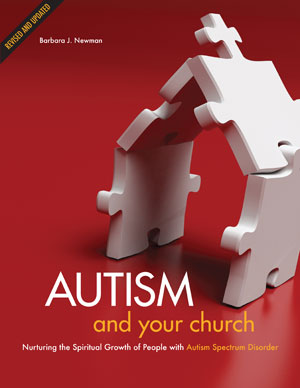
Autism and Your Church…Revised Edition by Barbara Newman

Barbara Newman has published an updated version of Autism and Your Church: Nurturing the Spiritual Growth of People With Autism Spectrum Disorder. Barbara has long been recognized as a thought leader on inclusion of persons with autism in the church. She is affiliated with Friendship Ministries from Grand Rapids, Michigan, an outstanding organization that supports churches with inclusion of persons with intellectual disabilities. The folks at Friendship graciously provided me with an advance copy of the updated version of the book that has been available here since Thursday. I was honored to have been invited to provide an endorsement.

Autism and Your Church is an excellent resource for church staff and volunteers seeking to more effectively minister to children and adults with autism spectrum disorders and their families, offering strategies for creating welcoming environments and practical solutions for churches seeking to be more inclusive of persons with special needs. There are lots of reasons why I think this book will become an indispensable resource for church staff and volunteers serving in children’s ministry, youth ministry or disability ministry.

A section of the book was written to help church staff and volunteers understand what autism spectrum disorders are and how persons with autism are different because of their condition.  That section constitutes the best description of autism in layperson’s terms that I’ve ever come across, and I’m likely to use it with families coming through my practice when I need a resource to educate them about the diagnosis of autism and the differences in how the condition presents among people on the spectrum.

Another section includes ten practical strategies for including persons with autism in activities at church, including strategies for information gathering and sharing, monitoring sensory input, establishing routines, helping persons with autism prepare for changes in routine and new situations, and tips on teaching and communicating with persons on the spectrum with more severe language impairment. The book also provides a template for staff and volunteers needing to address problematic behaviors at church, along with steps for organizing a special needs ministry and lots of reproducible forms and questionnaires for ministry intake and planning purposes.

There is one section in the book that I think will generate some degree of controversy in the disability ministry field…describing an “Individual Spiritual Formation Plan” (ISFP) along with a sample copy of an ISFP for use with children and adults within the church with disabilities. Barbara appears to draw a parallel between an ISFP at church and the IEP plans that guide service provision and educational intervention for kids when they attend school. My concern about such plans is that they can communicate the wrong message to family members about where the responsibility lies for spiritual development of kids with disabilities. The primary responsibility for training kids with or without disabilities in the Christian faith lies with parents…it’s the role of the church to resource and support parents in that role. While it’s a great exercise for churches to be thoughtful about how to support inclusion of kids with disabilities through provision of physical accommodations, as well as accommodations in staffing, communications, curriculum and worship, referring to such accommodations as an ISFP could lead to parents developing unrealistic expectations that the church can and should provide the same intensity and sophistication of support found in the child’s school.  Such plans may also result in parents of kids with disabilities attributing the responsibility for their child’s faith development to the church, as they attribute responsibility for their child’s education to the school.

Overall, I’d strongly encourage ministry leaders positioned to serve children and adults with autism spectrum disorders to buy this book, and suggest that family members of kids with autism consider purchasing a copy as a gift to their church. Autism and Your Church is not a book that’s going to collect dust on a shelf in the children’s ministry office. I strongly suspect it will become a well-worn resource on the desk of leaders in children’s youth, family and special needs ministry because the book offers many clear and practical suggestions to ministry staff and volunteers who seek to serve, welcome and include families of kids with autism in their local church.

The revised addition of  Autism and Your Church is available for purchase now through Faith Alive Resources.

Posted in Key Ministry | Tagged , , , , | 6 Comments

Are Churches Blind to Mental Illness?

Several weeks ago, I wrote about a significant study from Edward B. Rogers, Matthew Stanford and Diana Garland  from Baylor University examining the effects of mental illness on families within faith communities. Over the next couple of weeks, I’d like to take a closer look at some of the key findings from this study, other studies examining the ways in which churches respond to mental health issues among members and attendees and the implications for churches as they seek to connect with families of kids with hidden disabilities. Here’s a look at the study abstract:

The present study examined the experiences and values of families caring for a mentally ill loved one within the context of a Christian faith community. Participants (n= 5899) in 24 churches representing four Protestant denominations completed a survey describing their family’s stresses, strengths, faith practices, and desires for assistance from the congregation. Results showed mental illness in 27% of families, with those families reporting twice as many stressors on average. In addition, families with mental illness scored lower on measures of family strength and faith practices. Analysis of desires for assistance found that help with mental illness was a priority for those families affected by it, but ignored by others in the congregation. These results suggest that mental illness is not only prevalent in church communities, but is accompanied by significant distress that often goes unnoticed. Partnerships between mental health providers and congregations may help to raise awareness in the church community and simultaneously offer assistance to struggling families.

Here are some of the significant findings…

  • Among the adults completing the study, participants from families affected by mental illness were more likely to be younger, female, unmarried and to have been attending their current church for a shorter period of time.
  • Family stressors, including financial strain, serious illness or disability of a family member, close friend or relative, setting priorities for use of money, problems balancing work and family, job difficulties and conflicts between parents and children were all significantly more likely among families impacted by mental illness.
  • Members of families affected by mental illness reported praying less consistently and were more likely to report that one or more family members failed to attend church regularly.
  • When asked to identify the top six supports the church can offer families from an inventory of 47 items, families affected by mental illness rated support with mental health second out of 47 items while study participants from unaffected families ranked mental health support 42nd out of 47.

The most obvious take-home points from the study seemed to be that families in which someone was struggling with a mental illness were very desirous of support from their local churches, but members not exposed to mental health issues were basically oblivious to their needs and the presence of mental illness appears to be an impediment to church attendance and regular prayer.

There are lots of limitations to this study. First, the study instruments were distributed at church. Families who had stopped attending church would not have been included. There is no data that differentiates the impact of mental health issues when the study participant is experiencing mental illness as opposed to a family member, or differentiates between mental health issues among children as opposed to adults. There was no attempt to validate mental health diagnoses among family members surveyed, or to quantify the relative impact of specific disorders. The data was drawn from a non-randomized sample.

Nevertheless, the study points out the need for additional research examining the impact of specific mental health conditions on church participation and spiritual growth, along with data evaluating the effectiveness of helps and supports offered by churches to promote inclusion and spiritual growth.

What have you experienced from churches (good and bad) when you or a family member with a mental illness have attempted to attend worship or become involved with regular programming?

Posted in Controversies, Families | Tagged , , , | Leave a comment