
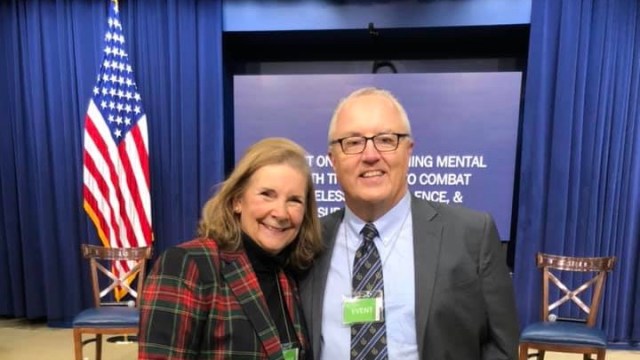
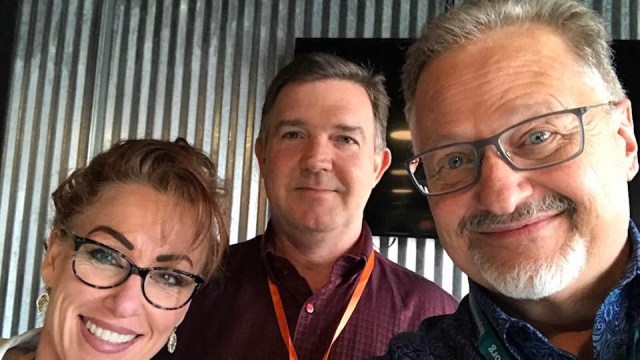
It was a delight to run into Janet Parshall – a true champion for persons impacted by mental illness in the church – at the White House Summit
I was honored to have been invited this past Thursday to participate in the White House’s Mental Health Summit. I suspect the invitation resulted from our ministry’s involvement in a unique project intended to help churches and other places of worship better care for and support individuals and families impacted by mental illness.
For the past two years we’ve had the opportunity to participate (together with faith leaders and mental heath professionals from a broad array of religious traditions) in an advisory group established by the Center for Faith and Opportunity Initiatives (The Partnership Center) within the U.S. Department of Health and Human Services.
This group is a small component of a much larger effort initiated by a law passed at the end of the previous administration – The 21st Century Cures Act. Through this Act (Public Law 114-255), the Interdepartmental Serious Mental Illness Coordinating Committee (ISMICC) was established to make recommendations for actions that federal departments can take to better coordinate the administration of mental health services for adults with a serious mental illness or children with a serious emotional disturbance.
The leaders serving on ISMICC had come to recognize the large body of evidence supporting the idea that religious belief is associated with significantly better mental health outcomes. From a 2015 review article on the subject:
In general, studies of subjects in different settings (such as medical, psychiatric, and the general population), from different ethnic backgrounds (such as Caucasian, African American, Hispanic, and Native American), in different age groups (young, middle-aged, and elderly), and in different locations (such as the United States and Canada, Europe, and countries in the East) find that religious involvement is related to better coping with stress and less depression, suicide, anxiety, and substance abuse.
The Center for Faith and Opportunity Initiatives established the advisory group in part to help government officials better understand the role faith-based groups and leaders assume in the continuum of care for persons struggling with, and in recovery from severe mental illness and how the faith community can play a greater role in supporting affected children, adults and their families. The group has also been charged with developing a nationwide learning community of faith-based leaders to share the work being done in mental health ministry. What I’ve found most valuable are the incredible opportunities to network with other ministry leaders (especially within the African-American community) doing great work that our team wasn’t aware of.
Our group was also set up to help churches and other places of worship access available grants and resources for mental health education and support. One focus is on helping churches and other places of worship obtain training in Mental Health First Aid and Trauma-Informed Care. The Partnership is in the process of developing a Mental Health Resource list across different denominations and faith traditions. They are also hosting monthly webinars addressing mental health in partnership with faith communities. I had the opportunity to participate in a November webinar with Jolene Philo and Katie Donahue – Navigating the Holiday Season: A Roadmap for Supporting Families Experiencing Mental Illness.
 The Summit itself was a great networking opportunity. I made new friends who will help support the work of our ministry in the year ahead. I was also impressed by the number of senior government officials who took part. Two cabinet secretaries (Alex Azar and Ben Carson) took part in the meeting, along with the Counselor to the President (Kellyanne Conway). We also had an unexpected visitor. I can’t help but think their participation is an indication of the importance the U.S. government is placing on supporting individuals and families impacted by mental illness.
My biggest takeaways… regardless of your view of the President, there are a lot of very good people at all levels of government who are highly committed to supporting children and adults with mental illness and their families. I found the government’s interest in partnering with churches, other places of worship and the law enforcement and judicial systems to find solutions quite remarkable. I’m grateful to the team at the Partnership Center and the White House staff responsible for the Summit for extending me an invitation.
***********************************************************************************************************
 Key Ministry’s work is accomplished on a very modest budget. Additional funding in 2020 is necessary for our ministry staff and volunteers to travel to more ministry conferences and training events and to ensure that our educational resources to get into the hands of more pastors and church leaders and provide Biblically-based encouragement and support to more families impacted by disabilities. Your prayers and financial support are much appreciated. You can click here to provide a secure donation to our ministry or contribute surcharge-free by making a gift to Dr. Grcevich’s Facebook fundraiser on behalf of Key Ministry.
Best Wishes to all of our ministry followers for a Merry Christmas and a Blessed and Joyous New Year!
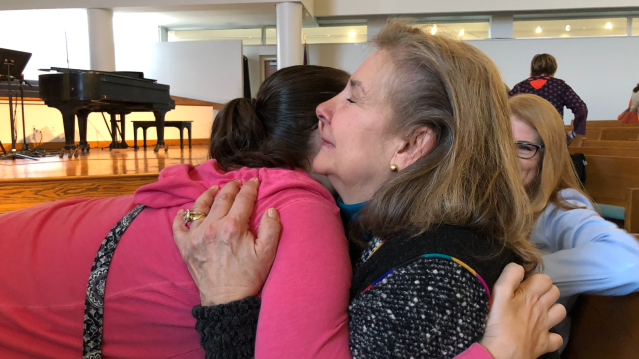 I think my favorite part of my job with Key Ministry is affording other people opportunities to use their gifts and talents to honor and serve God.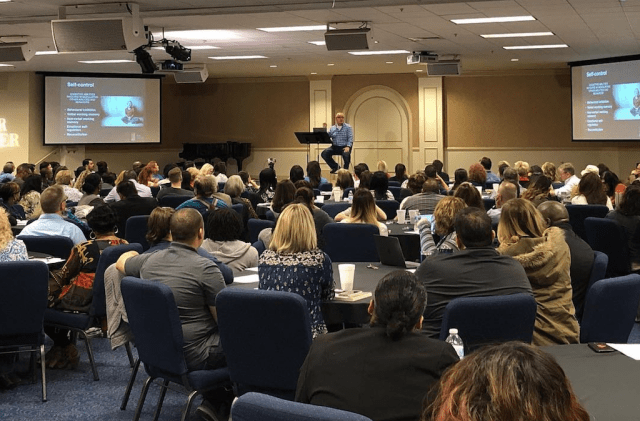

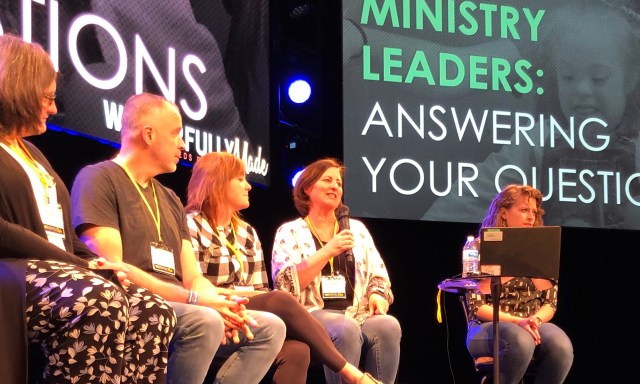
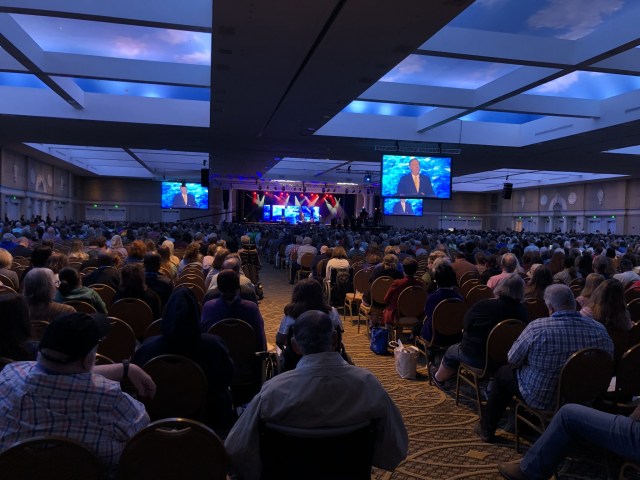
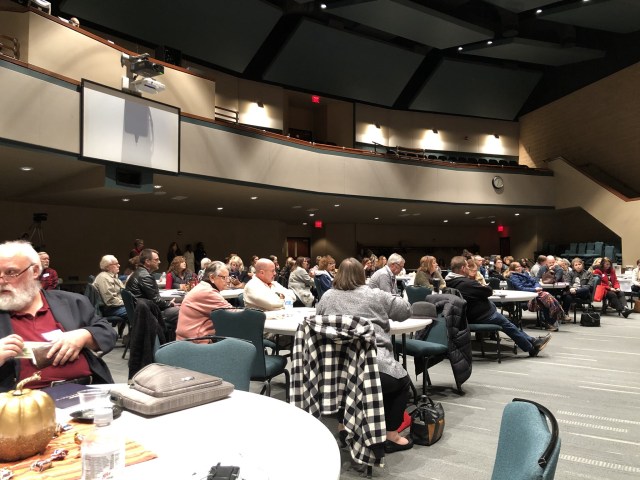
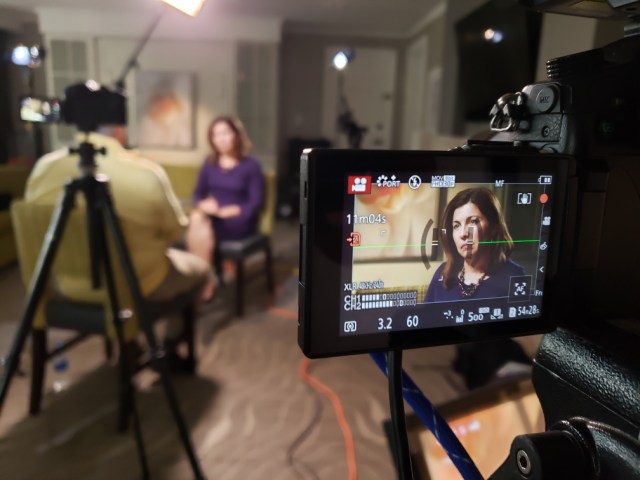


 The third of the five marks is that churches develop a mental health communication strategy. A LifeWay research study demonstrated a majority of unchurched adults disagreed with the opinion that churches would welcome them if they had a mental health issue. In our trainings, we often talk about the importance of changing perceptions of the church in the communities they serve with respect to mental illness. An especially powerful tool is for churches to create social media content for members and attendees to share with their friends and neighbors who might be struggling with mental illness.
 A related LifeWay study to the one I shared previously noted that families of adults with serious mental illness reported one of the most valuable supports their church could provide was for pastors and other leaders to talk regularly about mental illness so that existing stigma is diminished. A few minutes after I settled in, they shared this video with Chris Matetic (a graphic designer on staff at the church) in which he spoke of his experience with an anxiety disorder.
 In
In 
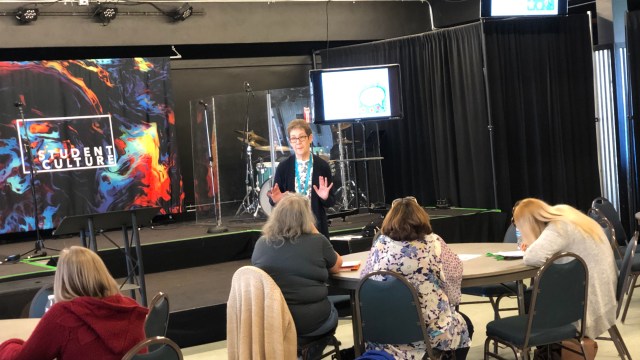


 Interested in learning more about how the church can do more to welcome, care for and support families impacted by mental illness? Come join Dr. Grcevich and a great lineup of speakers on Saturday, November 9th at Winebrenner Theological Seminary for
  While I was away this week at the American Academy of Child and Adolescent Psychiatry’s (AACAP) Annual Meeting, a
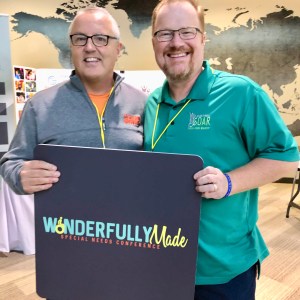 Wonderfully Made Conference
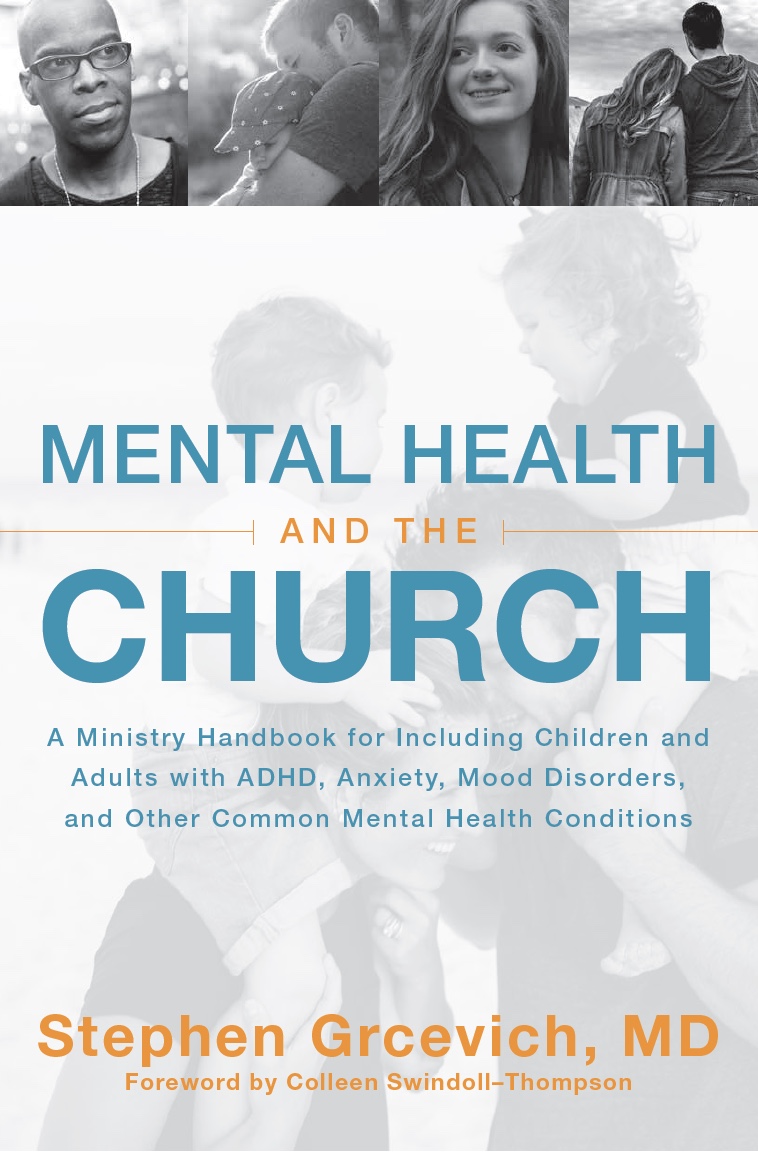
 Mental Health and the Church

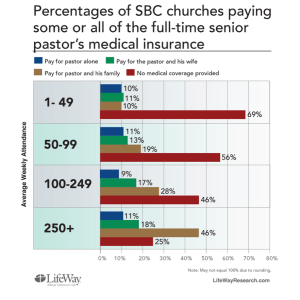 Pastors in need of mental health care are all too often unable to afford it. Congregations owe it to their pastors to provide them with health insurance necessary to access care without having to worry about how they might feed and clothe their families. Pastors are less likely to have insurance to offset the cost of their mental health care. Check out this survey from LifeWay reporting nearly half of Southern Baptist pastors of churches with weekly attendance of > 100 receive no health insurance. Pastors who obtain less expensive coverage through cost-sharing ministries typically receive no mental health benefits through such ministries. One such organization,
  Are you a pastor or ministry leader searching for resources to better understand how to support children, adults or families affected by mental illness in your church or in your community? Check out Key Ministry’s

 Shari’s goal is to launch 100 sites around the country offering the type of work experience currently provided in the cafe in Chagrin Falls. Could there possibly be a better place to host this type of job training than a church, a Christian school or university or a Christian-owned business?



 Church4EveryChild