 “Followers of Jesus are required to pursue truth wherever it leads them.”
Dallas Willard
Then you will know the truth, and the truth will set you free.
John 8:32 (NIV)
Yesterday’s British Journal of Medicine detailed the specifics of how Dr. Andrew Wakefield and his colleagues in England misrepresented data in his 1998 paper (subsequently retracted by The Lancet) claiming a link between the MMR vaccine and rapid onset of symptoms of autism.

After posting the link to the article earlier today on the Key Ministry Facebook page, I caught some flack from one of our followers who has two boys with autism who found the tone of the post a little insensitive…it probably was. I thought I owed her a little more than the standard brief response to a Facebook comment as to why I was so bent out of shape about this study, so here goes:
Truth is absolutely central to our Christian faith. Truth invariably points us back to the person of Jesus Christ.
I don’t see any disconnect at all between my identity as a physician/researcher and my identity as a follower of Christ. When I was at the child psychiatry meetings a couple of months ago sitting in on the presentations of preliminary neuroimaging and genetic research into conditions like autism and ADHD, I couldn’t help but marvel at the extraordinary complexity with which we were made. The intricacy of the human brain could only have come about under the influence of an incomprehensible intelligence. I can’t not think about God and His magnificence as I learn more about the design of His creation!
I had the honor of serving for six years (2001-2007) on the Program Committee and New Research Subcommittee of the American Academy of Child and Adolescent Psychiatry (AACAP). The Program Committee reviews all of the research submitted for presentation at the Annual Meeting and makes determinations as to the scientific merit and relevance of the information presented to 5,000 physicians and researchers from around the world. Under the leadership of Dr. Bennett Leventhal, Dr. Larry Greenhill and others, the Academy very intentionally “raised the bar” in terms of the quality of research in the child and adolescent mental health field. I learned more about critical thinking in my first weekend on the Committee than I had in med school, residency and fellowship put together. I’ve witnessed firsthand how the processes in place for vigorous peer review of research with appropriate disclosure of potential conflicts of interest leads to discoveries that guide us in helping kids with serious emotional, behavioral and neurodevelopmental disorders and their families. Vast improvements have occurred in the quality of the studies being conducted, transparency of funding sources and availably of study data, especially studies in which the hypothesis tested wasn’t proven to be true with an appropriate degree of certainty. If I’m committed to seeking truth, the truth, when I find it, is going to reflect something about the character or glory of God, or have some use in restoring his Kingdom through providing comfort or healing.
By accepting the incredible privilege of calling myself a follower of Christ, I also recognize the responsibility to present myself to others in a a way that reflects positively upon Him. In practical terms, that means reflecting excellence in the quality of assessment and treatment I provide to the kids and families served through my practice, the research we do, the interactions I have with other professionals, the manner in which I serve in our church and hopefully, in the quality of the resources and services Key Ministry provides to church staff and volunteers. As a result, the work I did with AACAP, the work we do in our practice (teaching/research/clinical care), work peer-reviewing studies…the work I do should be worship…participating in God’s plan to make things right again and redeem His creation.
I become intensely frustrated when I see Christian parents and families accept unproven theories and treatments, investing time, money and hope in approaches that less likely to be of benefit to their kids when proven alternatives are available. The reasons for this are complex and beyond the scope of this post, but I’m angered when kids and families who are my brothers and sisters in Christ settle for second best. After all, we’re the children of the King!
So…if Jesus is “the way, the truth and the life,” what’s the nature of something that’s demonstrably not true?
Coming back to Wakefield’s study, there were major problems with the methods used in recruiting patients to participate in the study, described in the retraction to the Lancet article. There appeared to have been attempts to obscure the source of funding for the study (trial lawyers) or the potential for financial gain for Dr. Wakefield and his co-authors by providing services to lawyers based upon the results of the study. The paper in BMJ suggests that this study was plagued by more than poor design and study methods, but represented a deliberate attempt to deceive readers.
Fiona Godlee, editor in chief of the British Medical Journal, summed it up in her editorial:
“Clear evidence of falsification of data should now close the door on this damaging vaccine scare.”
Continuing with the editorial:
“The Office of Research Integrity in the United States defines fraud as fabrication, falsification, or plagiarism.13 Deer unearthed clear evidence of falsification. He found that not one of the 12 cases reported in the 1998 Lancet paper was free of misrepresentation or undisclosed alteration, and that in no single case could the medical records be fully reconciled with the descriptions, diagnoses, or histories published in the journal.
Who perpetrated this fraud? There is no doubt that it was Wakefield. Is it possible that he was wrong, but not dishonest: that he was so incompetent that he was unable to fairly describe the project, or to report even one of the 12 children’s cases accurately? No. A great deal of thought and effort must have gone into drafting the paper to achieve the results he wanted: the discrepancies all led in one direction; misreporting was gross. Moreover, although the scale of the GMC’s 217 day hearing precluded additional charges focused directly on the fraud, the panel found him guilty of dishonesty concerning the study’s admissions criteria, its funding by the Legal Aid Board, and his statements about it afterwards.14
A purposeful deception occurred that led to widespread resistance to child immunization in cities and towns through the UK. (Rates of immunization in the US never dropped to levels associated with a significantly increased community risk). As a result, it appears that hundreds of kids experienced symptoms of a highly preventable illness, some are likely experiencing chronic disabilities because of the effects of measles, and at least one kid died. Can you think of anywhere else you might have read about a purposeful deception leading to death?
When most of us experience adversity, either personally or through the experience of someone we love, we desperately want to know WHY. As a physician, understanding why guides me in developing a plan to address the problem. Because of our human nature, we’re wired with a need for control. As a parent, knowing why helps us to take steps to protect our kids from bad situations or outcomes. Knowing why gives us a framework for interpreting or understanding the meaning behind the daily struggles we experience or the struggles our kids experience.
Consider the story of Job. Much of the book centers around the process Job went through trying to identify a reason for his suffering, with the assistance of some well intended, but insensitive friends who were clearly challenged in their capacity for discernment. In Job’s case, he never found out why. It’s unsettling for families today when their understanding of why is subsequently shown not to be true. This happens all the time when families come to our practice and leave with a different diagnosis and treatment approach than the one they’d been working with for years. No doubt it also happens when families leave our practice in search of a new answer.
Just because I want something to be true doesn’t mean that it’s true. As Christians, many of us try to put God in a box by picking and choosing the attributes of God that we like and dismissing or ignoring the attributes that make us uncomfortable. For example, I’d like to believe that everyone is going to be in Heaven with Jesus someday, but that’s not what Jesus taught.
In some ways, it would be pretty cool if Dr. Wakefield’s claims had been true. It would be nice if we could identify a preventable cause for autism associated with an environmental toxin manufactured by companies with very deep pockets to compensate families of kids affected with the disorder for the costs of effective treatments. It’s just not true.
Admittedly, I’m not as knowledgable about autism as I am about ADHD, mood disorders and schizophrenia, but as best as I can tell, we’re likely to find at least 300 genes linked to specific traits associated with autism spectrum disorders, with hundreds of environmental factors/toxins impacting the expression of individual genes that in turn influence traits. There won’t be an “autism gene”…that wouldn’t appropriately reflect the magnificent complexity of the brains God created for us.
When we stop seeking the truth, we stop seeking God. While I failed in reflecting grace in my Facebook post, I was angered by Dr. Wakefield’s deliberate attempt to misrepresent truth, and the harm that resulted to kids and families loved by God in the process.
Our work at Key Ministry is done with the hope that the churches we serve will be equipped to welcome, serve and include families of kids with disabilities with the intent that the local church will be the instrument of God’s healing and restoration.

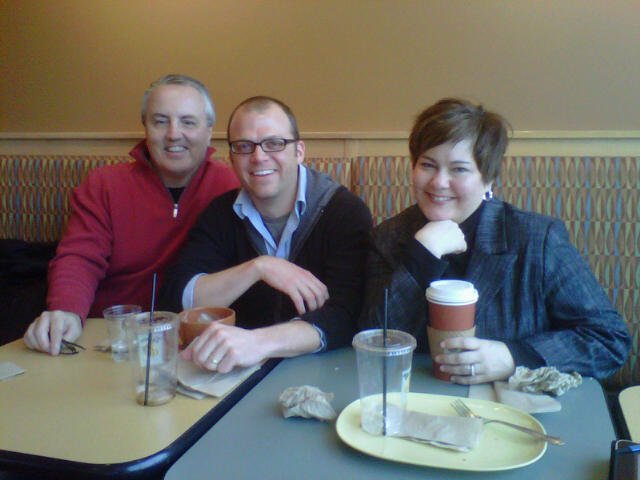 During the portion of my life when I experienced the opportunity to travel the country extensively to conduct lectures and roundtable discussions for my medical colleagues, one of the added benefits was the opportunity to meet people with whom I formed an almost immediate connection as a result of the faith we shared in Jesus Christ. I enjoyed the experience of being part of a large, extended family with half-brothers, half-sisters and cousins everywhere, all of us related through our connection with Jesus.
 This past week, I was out of town for two days for a Key Ministry team meeting and in-person meetings with two ministry leaders I’d become familiar with through websites and Facebook. I felt as if a weight was being lifted from me pulling into the entrance of the Cincinnati Vineyard campus for the team meeting with our colleague, Harmony Hensley. We always have fun with Harmony in developing plans to (in her words) “achieve total world domination on behalf of Jesus.” We laughed, we worked, we planned, we ate and one team member cried, presumably in honor of Cincinnati native and new Speaker of the House John Boehner.
 In my world, many of the “thought leaders” wouldn’t think about spending a morning with a group of junior colleagues for brainstorming, but that certainly wasn’t the case with Michael. You couldn’t ask to meet a servant leader more dedicated to the concept of Christ-followers coming together and sharing their gifts and talents for the benefit of God’s kingdom. We’re very much looking forward to contributing to the resources he’s assembling through CMconnect.org and tapping into his wisdom on an ongoing basis.
 Later on Thursday, I met Jeremy Collins, a visionary young ministry leader who is the developer of Pajama Conference, a resource to enable ministry staff and volunteers to receive cutting edge training at low or no cost through streaming video from the comfort of their homes. Jeremy has created Pajama Conference while serving full-time as the Children’s Ministry pastor at Bethel Harvest Church in Lexington, KY and spending lots of time with his wife and two boys. We’re privileged to be participating in the inaugural Children’s Ministry Telesummit organized by Jeremy and scheduled for this coming April.










 Church4EveryChild