Too much visual stimulation may be bad for most kids…

I came across a fascinating study today in the journal Psychological Science that has significant implications for church staff and volunteers involved with children’s ministry, regardless of whether they’re seeking to intentionally include kids with disabilities in their ministry environments.
10DIST1-tmagArticle

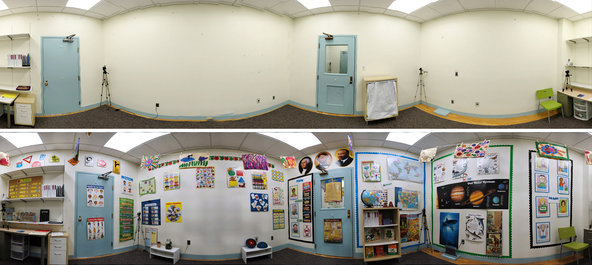
In this study from Carnegie-Mellon University, the authors conducted a controlled experiment in which they taught an identical series of science lessons to kindergarteners in two different classrooms…one classroom was extensively decorated with colorful posters and pictures, the other classroom was considerably more austere (picture courtesy of the New York Times). Here’s what they found…

A large body of evidence supports the importance of focused attention for encoding and task performance. Yet young children with immature regulation of focused attention are often placed in elementary-school classrooms containing many displays that are not relevant to ongoing instruction. We investigated whether such displays can affect children’s ability to maintain focused attention during instruction and to learn the lesson content. We placed kindergarten children in a laboratory classroom for six introductory science lessons, and we experimentally manipulated the visual environment in the classroom. Children were more distracted by the visual environment, spent more time off task, and demonstrated smaller learning gains when the walls were highly decorated than when the decorations were removed.

Jan Hoffman does an excellent job of discussing the study findings in her blog in the New York Times. The bottom line was that kids became distracted by one another in the more visually austere classroom in a developmentally appropriate manner, but in the highly decorated room, kids focused significantly less on their teacher and scored significantly lower when tested on the material presented.

Another study published out of the UK two years ago looked at the impact of building design on classroom learning in school-age children. They found that 51% of the variance in performance between children in different schools could be accounted for by three design parameters in the physical environment, but 73% of this variance resulted from differences at the classroom level linked entirely to six built design parameters…color, choice, connection, complexity, flexibility and light. The bottom line in the UK study was that achievement differences between kids in the schools with the “best” and “worst” learning environments were equal to the anticipated progress from an entire school year!

f77fc902f0ffff8a9dc080bff842bdddHarmony Hensley did a number of blog posts for us on designing ministry environments for kids with disabilities, questioning whether church may represent a “hostile environment” for some kids here and here, and sharing ideas for how churches could create welcoming environments for kids with ADHD here and here. Katie Wetherbee wrote about this topic on her blog, and I’ve written stuff before on the impact of environment on kids with sensory processing issues and kids at risk of aggressive behavior. Clearly, the level of visual stimulation in learning environments is an even  larger for kids with many common disabilities.

The research describing the impact of environment upon learning in children offers one of the best examples of how churches can take concrete steps to become more welcoming to all families (especially those with children who struggle with attentional regulation or sensory processing) and more effective during the limited time they have to influence kids without having to develop a stand-alone ministry “program” or requiring families to self-identify their kids with disabilities.

If you’re interested in digging deeper into the topic, here’s a link to a video Harmony shot on the topic of ministry environments for Inclusion Fusion 2011…

***********************************************************************************************************

KM Logo UpdatedKey Ministry has assembled resources to help churches more effectively minister to children and adults with ADHD, anxiety disorders, Asperger’s Disorder, Bipolar Disorder, depression and trauma. Please share our resources with any pastors, church staff, volunteers or families looking to learn more about the influence these conditions can exert upon spiritual development in kids, and what churches can do to help!

Posted in ADHD, Autism, Resources, Strategies | Tagged , , , , , , , | Leave a comment

Too much visual stimulation may be bad for most kids…

I came across a fascinating study today in the journal Psychological Science that has significant implications for church staff and volunteers involved with children’s ministry, regardless of whether they’re seeking to intentionally include kids with disabilities in their ministry environments.

10DIST1-tmagArticle

In this study from Carnegie-Mellon University, the authors conducted a controlled experiment in which they taught an identical series of science lessons to kindergarteners in two different classrooms…one classroom was extensively decorated with colorful posters and pictures, the other classroom was considerably more austere (picture courtesy of the New York Times). Here’s what they found…

A large body of evidence supports the importance of focused attention for encoding and task performance. Yet young children with immature regulation of focused attention are often placed in elementary-school classrooms containing many displays that are not relevant to ongoing instruction. We investigated whether such displays can affect children’s ability to maintain focused attention during instruction and to learn the lesson content. We placed kindergarten children in a laboratory classroom for six introductory science lessons, and we experimentally manipulated the visual environment in the classroom. Children were more distracted by the visual environment, spent more time off task, and demonstrated smaller learning gains when the walls were highly decorated than when the decorations were removed.

Jan Hoffman does an excellent job of discussing the study findings in her blog in the New York Times. The bottom line was that kids became distracted by one another in the more visually austere classroom in a developmentally appropriate manner, but in the highly decorated room, kids focused significantly less on their teacher and scored significantly lower when tested on the material presented.

Another study published out of the UK two years ago looked at the impact of building design on classroom learning in school-age children. They found that 51% of the variance in performance between children in different schools could be accounted for by three design parameters in the physical environment, but 73% of this variance resulted from differences at the classroom level linked entirely to six built design parameters…color, choice, connection, complexity, flexibility and light. The bottom line in the UK study was that achievement differences between kids in the schools with the “best” and “worst” learning environments were equal to the anticipated progress from an entire school year!

f77fc902f0ffff8a9dc080bff842bdddHarmony Hensley did a number of blog posts for us on designing ministry environments for kids with disabilities, questioning whether church may represent a “hostile environment” for some kids here and here, and sharing ideas for how churches could create welcoming environments for kids with ADHD here and here. Katie Wetherbee wrote about this topic on her blog, and I’ve written stuff before on the impact of environment on kids with sensory processing issues and kids at risk of aggressive behavior. Clearly, the level of visual stimulation in learning environments is an even  larger for kids with many common disabilities.

The research describing the impact of environment upon learning in children offers one of the best examples of how churches can take concrete steps to become more welcoming to all families (especially those with children who struggle with attentional regulation or sensory processing) and more effective during the limited time they have to influence kids without having to develop a stand-alone ministry “program” or requiring families to self-identify their kids with disabilities.

If you’re interested in digging deeper into the topic, here’s a link to a video Harmony shot on the topic of ministry environments for Inclusion Fusion 2011…

***********************************************************************************************************

KM Logo UpdatedKey Ministry has assembled resources to help churches more effectively minister to children and adults with ADHD, anxiety disorders, Asperger’s Disorder, Bipolar Disorder, depression and trauma. Please share our resources with any pastors, church staff, volunteers or families looking to learn more about the influence these conditions can exert upon spiritual development in kids, and what churches can do to help!

Posted in ADHD, Autism, Resources, Strategies | Tagged , , , , , , , | 1 Comment

Ed Stetzer is dead-on about mental illness and Christians…now what?

“Followers of Jesus are required to pursue truth wherever it leads them.”

Dallas Willard

I’ve been involved in the mental health field for nearly thirty years both as a practitioner and as a member of the scientific/research community. It’s only been in the last year that I’ve begun to recognize the extent to which an ongoing debate between factions of seminary professors, pastors and counselors influences attitudes about mental illness…and efforts to include persons with mental illness in the modern church.

Ed StetzerEd Stetzer serves as President of LifeWay research and is a highly influential speaker, teacher and author in Christian circles. Ed has written extensively on the mental health-related topics and shared a remarkable post this past week raising the issue of whether Christians struggling with mental illness look to Scripture, science or both.

In his post, Ed references articles written by Heath Lambert, Executive Director of the Association of Certified Biblical Counselors arguing that practitioners of Biblical Counseling are neither anti-science nor anti-medication. After quoting extensively from these articles, Ed strongly implies a hypothesis that the conceptualizations and attitudes demonstrated by many Biblical counseling practitioners have greatly influenced understanding of mental illness among pastors and lay Christians…

“Perhaps the perception that biblical counselors reject medicine and science is because of the rejection among some biblical counselors of, well, medicine and science.

So, I’m not sure the example of the rogue cashier is the right example. The beliefs that Dr. Lambert writes against are not fringe, because I’ve run into them on many occasions.”

In his commentary, Ed appears to support the view of “integrationists” in the church who see benefit to incorporating approaches from secular psychology (and psychiatry) in caring for those presenting to the church with mental health concerns…

But, yes, I believe we can take the healthy parts of psychology and psychiatry and use them in counseling. Furthmore, there may be physiological reality that require medical intervention. I’m concerned that many Christians appear to not see that– believing that prayer and Bible study alone can cure genuine mental illness (a view I don’t generally share, miraculous intervention an exception).

Readers interested in a deeper understanding of the differences between “Biblical” and “Nouthetic” counseling or the “Biblical” and “Integrationist” approaches to mental health treatment may feel free to click the links included here.

I find there’s an extraordinary (and tragic) disconnect between the pastors and seminarians in positions of influence within the church and faithful Christians working in the highest level of the medical/scientific community…a disconnect that may help to illustrate the lack of progress or indifference among church leaders to view families impacted by mental illness as an identified people group for evangelism, outreach or inclusion.

NeurotransmittersFor six years, I served on the Program Committee and New Research Subcommittee of the American Academy of Child and Adolescent Psychiatry. Our committee was responsible for reviewing ALL proposals for symposia, workshops case presentations and research for the world’s largest gathering of professionals interested in child and family mental health. I never heard of any of these people who exercise great influence among pastors or Christian counselors before seeking to understand the debates influencing attitudes toward persons with mental illness in the church…nor is it likely that any of those people ever heard of any of my colleagues seeking to unravel the mysteries of the brain and the role of neurobiology in the suffering of kids and families impacted by mental illness. Unfortunately, this disconnect is getting in the way of our ability as church to share the love of Christ with the largest population struggling with disability…persons with mental illness.

Looking at this debate from the perspective of a physician contributing to and familiar with the current research on mental illness, I’ve never come across any “settled” science that can’t be reconciled with the truth revealed to us through Scripture.

I’m certainly sympathetic to concerns that a secular worldview influences the way scientists may design or interpret their research…I’ve witnessed that firsthand. I can also see how approaches to mental health treatment grounded in theoretical foundations antithetical to the teachings of the Bible present an enormous problem when caring for vulnerable people. At the same time, I don’t see why pursuing the approach that Ed espouses in his post should be all that difficult for mature Christians…

“Yet, since all truth is God’s truth, there are parts of psychology and parts of psychiatry that we accept, parts we adapt, and parts we reject.”

Sadly, I can’t help but conclude that in our desire as church to avoid the influence of anti-Biblical worldviews foundational to some treatment orientations employed in the mental health community and worldviews held by the vast preponderance of mental health practitioners…we’ve forgotten to love the people experiencing mental illness and contributed to needless suffering by millions of Christ followers and their families.

I’d like to think that Key Ministry…and other like-minded ministries could facilitate conversations and dialogues that would advance the church in embracing kids and families impacted by mental illness while accepting and adapting the parts of psychiatry and psychology consistent with the absolute truth revealed to us through Scripture.

Revised October 8, 2014

***********************************************************************************************************

KM Logo UpdatedKey Ministry has assembled resources to help churches more effectively minister to children and adults with ADHD, anxiety disorders, Asperger’s Disorder, Bipolar Disorder, depression and trauma. Please share our resources with any pastors, church staff, volunteers or families looking to learn more about the influence these conditions can exert upon spiritual development in kids, and what churches can do to help!

Posted in Advocacy, Controversies, Hidden Disabilities, Inclusion, Key Ministry, Mental Health | Tagged , , , , , , , , , , | 13 Comments

Why would they want to come to church?

SteepleConsider today’s blog post as a work in progress.

Since the Sunday after Easter, the church that my wife and I attend has been doing a teaching series on the topic of #EveryDayChurch. It’s a look at the practices of the church described in Acts 2:42-47 in which “awe came upon every soul,” the church was viewed favorably by the culture within which it was based and the community of believers was growing daily. We were encouraged to read The Tangible Kingdom by Hugh Halter and Matt Smay throughout the teaching series. The subtitles of the book are Creating Incarnational Community and The Posture and Practices of Ancient Church Now. You may be hearing more about this book later…

Our staff and volunteers at Key Ministry do what we do because each of us has come to highly value our personal experiences as part of a local church…the sense of community we experienced, the ability to serve in a meaningful capacity, coming to know more about and grow closer to God through our relationship with Jesus. But what if most families we encounter with disabilities can’t identify with the experience of church that we as leaders hold in common?

shutterstock_123381934What would draw a family to church for whom church wasn’t part of their upbringing… especially when they have to overcome the complications of attending church with a child with a disability? What if being part of church in our postmodern culture isn’t very important to the majority of families we encounter? I see more and more families coming through our office now compared to fifteen or twenty years ago who report that their child’s spiritual development is of little or no concern and attending church is of little interest.

I’ve been thinking about this issue in the context of our very preliminary experience of Front Door while considering what our crew at Key Ministry can do to help churches connect with parents who don’t have a positive…or any experience of church…and what we might learn from the First Century model of “being the church” as opposed to “going to church.”

Here’s my description of our Front Door guests to this point…

  • People who had positive experiences of church in the past, but have been cut off from church because of the impact of a child or teen with disability.
  • People with a God-inspired desire to share the love of Christ with those around them who lack the opportunity to do so as part of their church, or desire to expand the impact of the ministry they currently have through their local church.

We’re coming up on seven weeks in our online church experiment, and I’ve been wrestling with the realization that very few families are making their way to Front Door without church having been very important to at least one parent at some point in their lives. I have some thoughts based upon our experience as a ministry organization and Biblical accounts of the First Century church of how churches might go about connecting with families in the culture with little experience or perceived need for church…

  • We can take initiative in providing services and resources that help to meet immediate needs of kids with disabilities and their families.
  • We can help increase the frequency with which the people of the church experience meaningful interaction with families impacted by disability.
  • We can offer them experiences of authentic community with Christians who seek to live out their faith on a daily basis.
  • We can provide them with the opportunity to use their gifts in the service of a mission…giving people a little taste of Heaven here on Earth.

What do you think? How can churches spark interest among families impacted by disability in a postmodern culture?

***********************************************************************************************************

Front Door CrossWelcome to Front Door…Online church from Key Ministry. Here’s what we have in store during the week of June 1st:

This week’s online worship services are scheduled as follows (all times Eastern):

Sunday: 8:00 PM and 9:00 PM
Monday: 9:00 PM
Wednesday: 9:00 PM
Thursday: 8:00 PM and 9:00 PM

Our featured speaker this week is Chris Emmitt. Our main worship service at each hour will feature Chris’ most recent message from his series looking at the First Century church, Roots. This week’s featured message looks at the first scandal that took place in the early church…and what we can learn from it. We also have helpful presentations scheduled throughout June from Jolene Philo, Dr. Cara Daily, Barb Dittrich, Shannon Dingle and Ben Conner. Check out Front Door this week and invite your friends!


Posted in Key Ministry, Strategies | Tagged , , , , , , | 1 Comment

Want to be a online worship host?

Front Door LogoWe’re looking for mature Christian men and women interested in serving as hosts on a weekly basis in our Front Door online worship community.

Worship hosts play a critical role at Front Door. We’re seeking to invite families impacted by disability for an interactive experience involving online chat, exposure to sound and engaging Biblical teaching and the opportunity to make connections that can grow into relationships with mature Christians who can provide prayer, encouragement and help in facilitating opportunities for inclusion in worship and other church activities taking place in the physical presence of other Christ-followers.

Online Church 2Hosts greet and welcome guests to our scheduled, online church services. Hosts facilitate conversations in the online chat window during the services, handle private chat conversations (when necessary), deal with any inappropriate comments, refer sensitive situations to appropriate experts and forward information to guests and Key Ministry staff as requested.  Hosts may follow up with guests during the week who make specific prayer requests, and help connect guests to resources available through Key Ministry, other like-minded ministry organizations or churches in the guest’s home region. Hosts are expected to use available social media tools to help promote the worship experiences in which they serve, and are responsible for cultivating a sense of Christian community among those regularly connecting online during their assigned worship hour(s).

Our expectations for worship hosts include…

  • Demonstrable spiritual maturity.
  • Experience serving as staff or a key volunteer in a local church OR a professional caring for persons with disabilities OR a family member caring for someone with a disability.
  • Ability to serve a minimum of one hour per week at a regular time
  • A Facebook account and broadband internet access.

578524_10151266419728410_502320352_nLike to learn more? We have a training opportunity available on Thursday, June 5th @ 9:00 PM Eastern (8:00 PM Central) for potential hosts with Nils Smith, Innovation Pastor at Community Bible Church,  San Antonio and Key Ministry consultant…

Interested? Send me an e-mail (steve@keyministry.org) or message me on Facebook. Let me know which session you’d like to attend.

Updated June 2, 2014

***********************************************************************************************************

Key Ministry-NewEver wonder if the often-quoted statistics about divorce rates in families impacted by disability are true? Check out Key Ministry’s resource: Special Needs and Divorce…What Does the Data Say? In this article, Dr. Steve Grcevich reviews the available research literature on the topic of disability and divorce…and draws some surprising conclusions! Check it out…and share with your friends!

Posted in Key Ministry, Strategies, Training Events | Tagged , , , , , , , | Leave a comment

Observations from a Christian Psychiatrist…Elliot Rodger and the Santa Barbara Killings

Elliot RodgerOn behalf of our crew at Key Ministry, our prayers and heartfelt condolences go out to the families impacted by Friday night’s stabbing/shooting near the University of California, Santa Barbara in which seven people (including the identified gunman, Elliot Rodger) were killed and seven others were injured.

Early media reports suggest that Elliot had been diagnosed with Asperger’s Disorder. He was living in a independent living facility for persons with developmental disabilities. In the online manifesto he posted prior to the shooting, Eliot reports appointments with a psychiatrist (he refused the Risperdal prescribed by the psychiatrist at their final appointment) and describes two different counselors in his last year of life who tried to help him to develop better social skills.

Advocates from the autism and mental health communities fear that teens and young adults will be stigmatized by the perception that persons with those conditions may be predisposed to violence. The research literature demonstrates that people with autism are no more likely to become violent than others in the general population. Undoubtedly, some advocates will try to make the argument that either autism or mental illness was responsible for the Santa Barbara murders, but such dichotomous thinking serves little purpose. While many in the autism community reject the argument that autism is a mental illness, the research literature also suggests that the majority of kids with autism spectrum disorders also meet criteria for one or more mental health disorders.

Anxiety, depression and obsessive thinking are more common among youth with autism  spectrum disorders. A 2008 study published in the Journal of the American Academy of Child and Adolescent Psychiatry reported that 70% of a sample of 10-14 year-olds with autism spectrum disorders met criteria for one or more comorbid mental health disorders. According to the authors,

Psychiatric disorders are common and frequently multiple in children with autism spectrum disorders. They may provide targets for intervention and should be routinely evaluated in the clinical assessment of this group.

Individual traits associated with autism or specific mental illnesses may place individuals at greater risk of aggressive or violent behavior, depending upon their past experiences and characteristics of the environments in which they are expected to function on a daily basis. Two traits associated with a number of conditions may have contributed to Eliot’s downward spiral…

  • Cognitive rigidity (obsessiveness)…the inability to be able to let go of, or move past intrusive, bothersome thoughts
  • Difficulties with social communication leading to social isolation. For some kids, this difficulty may be related to their inability to pick up on nonverbal social cues or tone/inflection of voice. For others, social anxiety may lead to avoidance of situations in which kids learn how to appropriately interact with others.

Often, the combination of these two traits leads to a “snowball” effect…social isolation results in more time to obsess/ruminate about negative thoughts and experiences and intensifies the impact of those experiences.

Some observations about Elliot…

  • He likely experienced profound difficulty with social anxiety and may have had difficulties with social communication.
  • His memoir is characterized by a few intense preoccupations that he held to tenaciously for a very long time. His preoccupation that he would only be fulfilled through having sexual intercourse with an attractive woman persisted from early puberty to the end of his life. His You Tube page also featured videos related to Pokemon cards.
  • Elliot Rodger 2He certainly manifested a number of characteristics associated with narcissistic personality…the propensity to objectify others, absence of empathy, extreme envy toward those who experienced what he didn’t have, arrogance accompanied by an overall sense of entitlement.
  • He appears to have had access to reasonably good mental health/support services during the last couple of years of his life. The child psychiatrist caring for him works as the Medical Director for the Department of Child and Family Services in Los Angeles County. Two different counselors attempted to help him to improve his social skills.
  • His family expressed concerns about his risk for violent behavior to the appropriate authorities, who lacked any legal justification for taking action after interviewing him.

Autism? Mental Illness? Personality Disorder? I suspect Elliot manifested “D”…all of the above. But there’s something else about Elliot’s story that jumps out at me that I’ve seen no one comment on in all the press coverage following the massacre.

shutterstock_98689610Much has been made about the impact of bullying in the aftermath of school shootings in recent years…there are reports that Elliot experienced an altercation… The impact of the bullying is magnified in kids who have difficulty letting go of troublesome thoughts. But no one has commented on the impact of the sexual content so freely available in our culture on vulnerable young people, or the trend in culture to make sexual orientation/activity the defining feature of one’s identity.

I’d suggest that Elliot was traumatized by his initial exposure to sexual images over the Internet. From his manifesto…

Towards the end of sixth grade, I still hadn’t made a group of friends who I could see outside of school. The only social interactions I had outside of school were playdates with old friends from Topanga every now and again. Joining chatrooms through AOL temporarily filled in the social void for a few weeks. This will definitely not be the first time I would try to fill in that void with the internet.

Once I established myself in the chat rooms, I made a few friends who I instant messaged frequently. Most of them were in middle school and some were in high school. I also talked to a few people I knew from Pinecrest over AIM.

One friend who I met through a chat room suddenly emailed me pictures of beautiful naked girls, telling me to “check this out”. When I looked at the pictures, I was shocked beyond words. I had never seen what beautiful girls looked like naked, and the sight filled me with strong and overwhelming emotions. I didn’t know what was happening to me. Was it the first inkling of sexual desire in my body? I was traumatized. My childhood was fading away. Ominous fear swept over me, and I stopped talking to that person.

As the Sixth Grade year came to a close, I felt dissatisfied and insignificant. Indeed, a whole new world had opened up before me, and I had no idea how to prevail in it. I still wanted to live as a child.

Later, he describes another experience in the eighth grade at a place where people gathered to play video games…

One time while I was alone at Planet Cyber, I saw an older teenager watching pornography. I saw in detail a video of a man having sex with a hot girl. The video showed…(deleted). I didn’t know anything about sex at the time. I barely even knew what sex was. I was slowly starting to develop sexual feelings for hot girls, but I didn’t know what to do with them. To see this video really traumatized me. I had no idea what I was seeing… I couldn’t imagine human beings doing such things with each other. The sight was shocking, traumatizing, and arousing. All of these feelings mixed together took a great toll on me. I walked home and cried by myself for a bit. I felt too guilty about what I saw to talk to my parents about it. I was quite shaken for a few days.

This was among the very first glimpses I had of sex. Finding out about sex is one of the things that truly destroyed my entire life. Sex… the very word fills me with hate. Once I hit puberty, I would always want it, like any other boy. I would always hunger for it, I would always covet it, I would always fantasize about it. But I would never get it. Not getting any sex is what will shape the very foundation of my miserable youth. This was a very dark day.

We know that vulnerable kids experience enormous harm from harsh words and bullying, and our schools and institutions have appropriately taken steps to protect them. But what about protecting vulnerable kids from the impact of the highly sexualized culture in which we live? I’ve treated a number of kids in recent years who exhibit the effects of trauma resulting from exposure to sexual material or situations fairly common to daily life.

Elliot’s identity was defined by his inability to engage in behavior that is idolized in our culture. Unfortunately, it’s highly likely we’ll be seeing more incidents like this as kids at risk become saturated with images disseminated through Snapchat or “sexted” by peers. We’ll hear lots of discussion in the coming weeks about the need for gun control and better mental health preventive services, but I bet we won’t hear about limiting the impact of a culture upon vulnerable youth that values sexual fulfillment over almost anything else.

We have a responsibility to our vulnerable young people to expose and include them in an alternate culture…a culture that values them for the fullness of who they were created to be and provides them the opportunity to be part of a larger story…a story of grace and redemption!

***********************************************************************************************************

KM Logo UpdatedKey Ministry has assembled resources to help churches more effectively minister to children and adults with ADHD, anxiety disorders, Asperger’s Disorder, Bipolar Disorder, depression and trauma. Please share our resources with any pastors, church staff, volunteers or families looking to learn more about the influence these conditions can exert upon spiritual development in kids, and what churches can do to help!

Posted in Advocacy, Anxiety Disorders, Autism, Controversies, Hidden Disabilities, Key Ministry, Mental Health | Tagged , , , , , , , , , , | 6 Comments

Treatment doesn’t eliminate the need for ongoing support…

shutterstock_145410157In the fourth segment in our series… Ten Things I Wish Church Leaders Knew About Families and Mental Illness, we’ll look at a feature of most common mental health conditions that is often overlooked…the propensity of symptoms to persist over time despite effective treatment.

When I started my child psychiatry fellowship a quarter century ago, I was quickly relieved of my misperception that kids were far less likely to experience chronic mental illness than adults.

While we see kids who “outgrow” their ADHD, master their social anxiety, overcome the effects of a specific trauma or remain symptom-free years after an episode of major depression, they’re the exceptions as opposed to the norm. Most of the kids I see in our practice experience conditions every bit as chronic as the diabetes, hypertension and heart disease managed by my med school classmates who went into internal medicine specialties.

My first attending physician as a resident in psychiatry at Cleveland Clinic went on to become a world-renowned researcher in the field of mood disorders. I remember sitting in a conference room hearing him say that “successful” treatment in our field was indicated by 50% or greater improvement in symptom severity on a rating scale that had been statistically normed and validated for the condition being treated.

Obsessive-Compulsive Disorder (OCD) is a great example of this…the typical kid who was classified as a “responder” in the FDA trials of medication for OCD got about 40% better following three months of treatment at the dose ranges employed for the study. I’ll tell parents that if we’re successful, their child/teen will obsess half as much for half as long with half of their current intensity. But if their son or daughter’s obsessive thoughts are especially intrusive or their compulsive behaviors sufficiently disruptive, they may still be miserable much of the time and the impact on family life may be unbearable.

Let’s look at kids diagnosed with Bipolar Disorder…more than 50% of kids deemed “positive responders” to medication in short-term studies that led to FDA-approval conducted at a major academic medical center relapsed within a year. Among the kids who relapsed, the benefits of their “effective” treatment lasted, on average for seventeen weeks.

Or teens with depression…In the “landmark” study examining treatment of  adolescent depression, kids who received “combined treatment”…three months of medication combined with three months of cognitive-behavioral therapy (CBT) in our top academic medical centers-only 37% achieved “remission” of their depression and half of the “responders” continued to experience significant functional impairment from depression.

Or kids and teens with anxiety…in the “definitive” treatment study, 40% of kids receiving CBT didn’t experience a significant response. 45% of kids receiving medication alone failed to respond. Roughly one kid in five failed to respond to the combination of BOTH medication and CBT…administered by highly skilled clinicians in our best research centers! In the long-term follow-up study, more kids had relapsed than remained in remission among those who had been positive responders six years earlier.

Clearly, good treatment can help the vast majority of kids and families impacted by mental illness. But treatment doesn’t always work as well as we would hope in the fallen, messed-up world we live in. And families need our support through every step of their journey.

shutterstock_80344798Rick and Kay Warren’s son presumably had access to the best mental health care available. According to the Centers for Disease Control, suicide is the third leading cause of death in the U.S. among persons ages 10-24, and the second leading cause of death (behind only motor vehicle accidents) in 25-34 year olds. These are serious illnesses. Lots of young people die.

How can churches (or individuals) help? Here are four ideas…

  • Give families the gift of presence…Isolation is an unfortunate byproduct of many of the more common mental health conditions we treat. Being present for those who are hurting in difficult times is an immediate expression of the love of Christ.
  • Don’t assume to understand God’s purposes when those around you fail to experience relief from suffering. See Job, Chapters 38-42. God is not pleased when we misrepresent Him to others in the midst of their suffering.
  • Take care of those serving in vocational ministry and their families. By virtue of what I do, I see a fair number of PK’s. Many of the conditions we’ve discussed are associated with a significant genetic predisposition. It’s the norm as opposed to the exception for kids with mental health issues to have parents with mental health issues, because of the interface between genetics and the additional strains mental illness places on the family. In every single ministry family currently on my caseload,  someone else in the family in addition to the child I’m treating is receiving mental health treatment. An added burden ministry families face (in addition to the stigma in the church at large) is the financial pressure of paying for treatment. Most ministry families I see blow through their entire health savings account well before the end of the year on the cost of outpatient mental health care or medication alone. The best mental health practitioners frequently opt out of insurance networks. I can’t imagine how a church that fails to provide adequately for the needs of those who devote their lives to preaching and teaching will be effective caring for those outside of the church.

***********************************************************************************************************

KM Logo UpdatedKey Ministry has assembled resources to help churches more effectively minister to children and adults with ADHD, anxiety disorders, Asperger’s Disorder, Bipolar Disorder, depression and trauma. Please share our resources with any pastors, church staff, volunteers or families looking to learn more about the influence these conditions can exert upon spiritual development in kids, and what churches can do to help!

Posted in ADHD, Advocacy, Anxiety Disorders, Bipolar Disorder, Depression, Families, Key Ministry, Mental Health, Strategies | Tagged , , , , , , , , , , , | Leave a comment

Families impacted by mental illness crave support from their church…

Church in the snowIn the third segment in our series for Mental Health Month… Ten things I wish church leaders knew about families and mental illness, we’ll look at a reality most church leaders fail to appreciate… the extent to which families impacted by mental illness desire support from the church.

Several years ago, I wrote about a significant study from Baylor University examining the effects of mental illness on families within faith communities. There were several eye-opening findings described in the study…

The present study examined the experiences and values of families caring for a mentally ill loved one within the context of a Christian faith community. Participants (n= 5899) in 24 churches representing four Protestant denominations completed a survey describing their family’s stresses, strengths, faith practices, and desires for assistance from the congregation. Results showed mental illness in 27% of families, with those families reporting twice as many stressors on average. In addition, families with mental illness scored lower on measures of family strength and faith practices. Analysis of desires for assistance found that help with mental illness was a priority for those families affected by it, but ignored by others in the congregation. These results suggest that mental illness is not only prevalent in church communities, but is accompanied by significant distress that often goes unnoticed. Partnerships between mental health providers and congregations may help to raise awareness in the church community and simultaneously offer assistance to struggling families.

Here are some of the significant findings…

  • Among the adults completing the study, participants from families affected by mental illness were more likely to be younger, female, unmarried and to have been attending their current church for a shorter period of time.
  • Members of families affected by mental illness reported praying less consistently and were more likely to report that one or more family members failed to attend church regularly.
  • When asked to identify the top six supports the church can offer families from an inventory of 47 items, families affected by mental illness rated support with mental health second out of 47 items while study participants from unaffected families ranked mental health support 42nd out of 47.

The most obvious take-home point from the study seemed to be that families in which someone was struggling with a mental illness (27% of families in this study) were very desirous of support from their local churches, but other members/attendees were oblivious to their needs. The other key point is that the presence of a family member with mental illness appears to be an impediment to church attendance and regular prayer.

There were significant limitations to this study. First, the study instruments were distributed at church. Families who had stopped attending church weren’t included. We don’t know how the impact of mental health differs when the person experiencing the mental health condition is a child as opposed to an adult. There was no attempt to validate the presence of mental illness among family members surveyed or to quantify the differential impact of specific disorders (schizophrenia vs. depression or anxiety). In addition, the study data was obtained from a non-randomized sample.

Nevertheless, the study points out a crying need on the part of families impacted by mental illness for help and support through their local church to facilitate inclusion and spiritual growth.

***********************************************************************************************************

KM Logo UpdatedKey Ministry has assembled resources to help churches more effectively minister to children and adults with ADHD, anxiety disorders, Asperger’s Disorder, Bipolar Disorder, depression and trauma. Please share our resources with any pastors, church staff, volunteers or families looking to learn more about the influence these conditions can exert upon spiritual development in kids, and what churches can do to help!

Posted in Families, Key Ministry, Mental Health, Spiritual Development | Tagged , , , , , , , | 1 Comment

Why are thousands of toddlers receiving ADHD medication?

shutterstock_49401919This past Friday, an official of the Centers For Disease Control (CDC) reported that more than 10,000 two or three year olds in the U.S. are being treated with medication for ADHD, according to an article published in the New York Times. The CDC analysis was based upon a review of the Medicaid claims database in Georgia and a national database examining private insurance claims.

Why would a two or three year old NEED medication for ADHD?

Prior to ten years ago, the majority of my patients were kids receiving treatment through a publicly-funded community mental health center. I can’t remember the last time in my private clinic that I’ve been asked to evaluate a three year old. Back in my community mental health days, referrals of very young children were uncommon (a few in any given calendar year), but not unheard of. I’ll share some recollections of the children ages three and under I’ve been asked to see…

  • Almost always, the event(s) leading to the child’s referral involved serious occurrences of aggressive behavior. Most of the time, aggression directed toward other children resulted in dismissal from a Head Start program or preschool. More often than not, the child had been dismissed from multiple preschool programs prior to their referral.
  • In my experience, another event that frequently led to referrals was the introduction of a younger, more vulnerable child into the home. The parent may have been managing the aggressive behavior exhibited by the child in question for an extended time, but following the birth of a younger sibling the child being referred attempted to harm (or caused harm) to a younger sibling.
  • The vast majority of the time, the mother of the child being referred was in need of treatment for depression. These were classic “chicken vs. egg” dilemmas. Was the child’s behavior precipitating the mother’s depression? Was the mother’s depression contributing to the child’s behavior? OR… Were both conditions contributing to a downward spiral in the family’s capacity for functioning?

Without having the statistics from the CDC report readily available, our ability to draw more definitive conclusions is limited, but the Times article strongly implies that use of ADHD medication was more common among kids covered under Medicaid than in kids covered by private insurance. Based upon experience and familiarity with the research literature, I’d hypothesize that…

shutterstock_174158831Two and three year olds who are prescribed medication for ADHD are significantly more likely than their peers to have experienced the impact of trauma, neglect or parents with mental illness. They may have been exposed to environmental toxins (alcohol, drugs, toxins in cigarette smoke) in utero. A study published last year in JAMA Pediatrics reported a significant association between exposure to intimate-partner violence and parental depression with ADHD diagnosis at age three.

The lack of access to good, alternative evidence-based mental health services probably contributes to the use of medication in very young children. When I was working in community mental health, the families served by the agency where I worked were able to receive a reasonably broad array of services. To this day, I’d insist that trained mental health and/or education professionals do a home and school evaluation prior to referring me any child under the age of four.  I’d guess that there were kids receiving medication through Georgia Medicaid living in communities where access to qualified professionals equipped to help parents manage young children with severe aggression was very limited to nonexistent. What would we want a pediatrician or psychiatrist to do if presented with a child who is injuring other children when there are no available or affordable behavioral health services of high quality that families can be referred to?

Most parents see medication as a last resort…especially parents of very young children, and they welcome alternative services and supports that help them better care for their kids and meet immediate family needs. The Preschool ADHD Treatment (PATS) Study cited in the Times article was intended to evaluate the safety and efficacy of methylphenidate for 3-5 year-olds with ADHD, but because the study design allowed parents at several points in the protocol to opt out of the medication arm of the study into behavior therapies and most parents opted out of medication when given the opportunity to do so, the data on medication safety/efficacy was less robust than originally intended.

This data reinforces the reality that we live in a very messed-up and broken world inhabited by lots of very young children and families struggling with serious mental health problems.

***********************************************************************************************************

KM Logo UpdatedKey Ministry has assembled resources to help churches more effectively minister to children and adults with ADHD, anxiety disorders, Asperger’s Disorder, Bipolar Disorder, depression and trauma. Please share our resources with any pastors, church staff, volunteers or families looking to learn more about the influence these conditions can exert upon spiritual development in kids, and what churches can do to help!

Posted in ADHD, Advocacy, Families, Key Ministry | Tagged , , , , , , , | Leave a comment

Putting the pieces together…Guest blogger Kathleen Bolduc

Kathy BolducIn addition to being a friend of Key Ministry, Kathy Bolduc is a spiritual director and a nationally recognized author and speaker in the field of disability and spirituality, concentrating on God’s presence in the midst of diability, disability’s impact on the family system, and ways in which churches can become more welcoming of families that live with disability. Her newest book, The Spiritual Art of Raising Children with Disabilities was recently released by Judson Press. She has also authored Autism and Alleluias (Judson Press, 2010); A Place Called Acceptance: Ministry with Families of Children with Disabilities (Bridge Resources, Louisville, KY, 2001); and His Name is Joel: Searching for God in a Son’s Disability. Today, she shares on how God helps to repair the heartbreak parents experience as they live through the challenges presented by their children’s disabilities. Here’s Kathy…

Parenting a child with a disability or chronic illness is hard work. It will most likely be the hardest work we will encounter in our lives. Keeping up with the research alone is a job that could swallow a person alive. Add to that negotiating daily life—trips to the grocery store (disruption of routine), doing the laundry (chaos), serving family meals (beware the picky eater), getting out the door to go to work (Are you kidding?), and finding the best schools for our children’s needs (Help!).

Yet overriding all of the above is our deep and abiding love for our children. Fragile hearts are a condition of our humanity. Our hearts break as we observe our children’s struggles and anxieties; watch a nurse hook them up yet again to an IV; see them left out of a neighborhood game; or witness their daily meltdowns, aggressive behaviors, or inability to voice their thoughts and feelings.

And so we work. We work until we’re numb, finding the right doctors, the right therapies, the right schools, the right medications and supplements, the right diet, the right parenting techniques. Our to-do lists grow exponentially. We expect the lists to shorten as our children get older, but instead, we find them growing.

And we become very, very tired.

Where do we go for solace? For rest and refreshment? For an infilling of joy? We know where to find those things for our kids, but where do we find them for ourselves?

Henri Nouwen is one of the great spiritual teachers of my life. I never met him in person, but I knew him intimately through his books on the spiritual life and his work with adults with disabilities. In his book Spiritual Direction: Wisdom for the Long Walk of Faith, Nouwen defines spiritual direction as a relationship between someone who is seeking after God and one who has already walked this path and is willing to listen to, pray with, and respond with wisdom to the questions the seeker is living with.

I have been seeking God in the midst of my son’s disability for more than twenty-eight years. Meditating on and writing about this journey has grown into my life’s work. This walk with Joel’s disability has led me to my own spiritual director and to becoming a spiritual director myself. It is my greatest desire, in the pages of this book, to walk alongside you as you seek answers to the questions that are rising up in your heart, and to help you pay attention to God’s presence in your life. I will give you some questions to ponder and some reflections to consider, so that the words on the page will become three-dimensional, turning into lived experience.

The pages of this book are also filled with stories from other parents who have walked similar paths with a child’s disability or chronic illness, and who have encountered God along the way.

Best of all, you’ll find a treasure chest full of ancient traditions—the spiritual disciplines—for us to explore together. These are traditions that have been a part of the Judeo-Christian experience for thousands of years; traditions that draw us ever closer to God; traditions that heighten compassion for our fellow travelers, fill us to overflowing with the joy of the Holy Spirit, and, amazingly, lower stress at the same time. Could you use a little less stress in your life? I thought so!

As I pondered the theme of this book, an image of a mosaic kept coming to my mind. I began thinking of the way mosaics are fashioned from broken shards of pottery and pieces of splintered glass… I’ve been thinking of how the artist fits these pieces together; carefully arranging and rearranging them so that the broken edges piece together like a puzzle, forming a beautiful and elaborate pattern.

What a wonderful metaphor for our lives as parents of children with disabilities. Think about it. Think about the way our lives are shattered with that first diagnosis. How we wake up the next day, realizing that our lives will never be the same again. How we work and work at gathering up the pieces, attempting to rearrange them into the familiar pattern we knew before. How we keep striving to create something new.

If we allow it, God, the master artist, will help us bring those broken pieces together. God will, in infinite love and compassion, work alongside us, helping us to rearrange the pieces into a work of beauty that surpasses the beauty of what our lives were before.

Reflection Exercise: Close your eyes and visualize an empty cup. Allow yourself to feel its emptiness. Then, in your mind’s eye, see that cup being filled by a pitcher of water. A bottomless pitcher of water. See the water slowly fill the cup until it runs over the rim. Feel the refreshment of an empty cup being filled. Allow the life-giving waters of the Holy Spirit to fill you to overflowing.

Excerpted from The Spiritual Art of Raising Children with Disabilities (Judson Press, 2014). Used with permission.

***********************************************************************************************************

TheSpiritualArt (1)Join Kathy at a free webinar: The Spiritual Art of Raising Children with Disabilities: Learning to Let Go and “Be” – Thursday, May 22nd, at 1 pm Eastern time. If you can’t attend at that time, register and participate at your leisure. You are promised an hour of rest and refreshment using art, music, and Scripture. Sign up here for Kathy’s webinar.

Make a point of checking out her website… www.kathleenbolduc.com. Kathy’s most recent book, The Spiritual Art of Raising Children with Disabilities and all of her other books are available at Amazon.

Posted in Families, Parents, Resources, Stories, Strategies | Tagged , , , , , , , | Leave a comment