The power of stories…Dave Lynden

Dave_Micah_iLyndenIn the fifth installment in David Lynden’s blog series on Spiritual Autism he continues his Wednesday discussion examining the power of stories that we tell, rejoice in, and hear over and over again…and how, through these stories we strive to fill in the puzzle pieces and reach for something that brings all of the stories together into a coherent whole.

Watching Micah delight and obsess over stories that drew him in forced me to look at my own spiritual autism and how God is penetrating through those barriers of static systems and isolation and a very closed world. God does it by inviting us into a story that, deep down inside, we know is true because it cannot help but resurface with every story we tell.

TolkeinThis is the argument that was made by the author of The Lord of the Rings, J.R.R. Tolkien to one of his colleagues at Oxford- a man he called “Jack”. Jack was a brilliant professor of literature in the early part of the 20th century. He was also an avowed atheist. But, Jack had come to respect and even enjoy Tolkien’s company. Tolkien, of course, was also professor of literature at Oxford and both of these men dearly loved mythology, the ancient hero stories- sometimes even learning languages like Old Norse and then translating the myths out of their original languages so they could be read for the simple, sheer enjoyment of the stories themselves. Around this time, Jack had also begun to seriously question his atheism. Indeed, around the summer of 1929, Jack had professed a belief in God, though he had not adopted any particular faith.[1]

One blustery night (September 19th, 1931 to be exact), Jack had dinner with Tolkien and another literature professor at Reading University- Hugo Dyson. After dinner, the three men walked along Addison’s Walk discussing the purpose of myth. In the midst of the discussion, Jack began to wrestle out loud about his questions with Christianity. Specifically, how could one man’s sacrificial death 2000 years ago help us in the here and now? That comment led to a question from Tolkien and Dyson that went something along the lines of- “Why does it so bother you to hear of Jesus’ self-sacrificing death and yet you can read about similar acts of heroism and sacrifice in the myths and be moved by it? You are too hard on the gospels as they present Jesus as the self-sacrificing savior considering how much pleasure you get from mythology’s self-sacrificing heroes.” Jack, of course, responded, “But, myths are lies, even though lies breathed through silver.” In other words, the great stories of old Norse mythology about Thor or Balder, they are enjoyable stories, but they are not true, so you put no stock into them, no hope into them. To which Tolkien responded, “No, they are not [lies].”

And as they walked along, the author of that epic story of Frodo Baggins and the ring of power and the Dark Lord began to explain that all myths are trying to tell the one true story, the story over which humanity continually obsesses.

CS LewisJack listened intently. He posited a question- “You mean the story of Christ is simply a true myth, a myth that works on us the same way other myths do, except this one really happened?” The three men chatted until 3:00AM. Tolkien finally went home while Jack and Hugh Dyson finished their conversation. Tolkien began composing a poem titled Mythopoeia to capture his thoughts on the truth of myths which find their zenith in Christ, sending one manuscript to Jack (marked “for C.S.L.”). Twelve days after that conversation, Jack, better known to the world as C.S. Lewis, wrote to another friend, Arthur Greeves:

“I have just passed on from believing in God to definitely believing in Christ- in Christianity. I will try to explain this another time. My long night talk with Dyson and Tolkien had a great deal to do with it.”[2]

It is the power of stories, stories that we tell and hear and rejoice in over and over again…like a feedback loop. In our own spiritual autism, we continually rewind these myths to catch our favorite parts and to see the glimpses of hope in them. And sometimes we even catch ourselves, from time-to-time, breathing in these same myths and moving past the joy of the plot and the heroics to asking if they are somehow ultimately true, if perhaps they are pointing us to a true story of hope and if they may, in fact, be inviting us to participate.

Micah TVSo here was my little guy, Micah, standing in front of the TV, wrapped in his royal blue fleece blanket jumping up and down, clapping and laughing as he watched his favorite stories over and over again, reminding me of what I do, what we do, how we strive to fill in the puzzle pieces and reach for something that brings all of the stories together into a coherent whole. God’s story starts with a creation of all things good and a fall that poisoned everything. It was a fall that introduced both death and a despot into the world and made enslavement the norm. But, the redemption part of the story, the hero part of the story, begins with an exodus and that is something I can join in on the jumping and clapping and laughing because all of our stories tell me it is true. The myth-makers and writers of sagas gave us these raw materials to reconstruct a true hope as we find it in God’s true tale; a tale which God Himself obsesses over. Or as Tolkien wrote in a section from Mythopoeia:

Blessed are the legend-makers with their rhyme

of things nor found within record time.

It is not they that have forgot the Night,

or bid us flee to organised delight,

in lotus-isles of economic bliss

forswearing souls to gain a Circe-kiss

(and counterfeit at that, machine-produced,

bogus seduction of the twice-seduced).

Such isles they saw afar, and ones more fair,

and those that hear them yet may yet beware.

They have seen Death and ultimate defeat,

and yet they would not in despair retreat,

but oft to victory have turned the lyre

and kindled hearts with legendary fire,

illuminating Now and dark Hath-been

with light of suns as yet by no man seen.

[1] Carpenter, Humphrey, Tolkien- A Biography, pub. by Houghton Mifflin Company, 1977, p. 146

[2] Carpenter, p. 148

***********************************************************************************************************

Square Peg Round HoleKey Ministry has assembled a helpful resource on the topic of Asperger’s Disorder and Spiritual Development. This page includes the blog series Dr. Grcevich and Mike Woods developed for Key Ministry, links to lots of helpful resources from other like-minded organizations, and Dr. Grcevich’s presentation on the topic from the 2012 Children’s Ministry Web Summit. Click here to access the page!

Posted in Autism, Key Ministry, Spiritual Development, Stories | Tagged , , , , , , , , , , | 1 Comment

Obsessing on the story…Dave Lynden

Micah TVWelcome to the fourth installment in David Lynden’s blog series examining Spiritual Autism. Today, Dave looks at a commonality we all have with his son (Micah)…our propensity to obsess on seeing, hearing and telling the same story, again and again. Here’s Dave…

I don’t know what it is about watching Sesame Street in reverse that makes my 12 year old son Micah just downright giddy, but that VHS tape is getting some real wear-and-tear from the constant rewinding and playing, rewinding and playing. There he is, every Saturday morning, wrapped in his favorite fleece blanket like a royal blue “kid burrito”- his black, noise-muting headphones on, his stuffed tiger in a stranglehold under one arm while the other arm remains free in order to hit the “stop”, “play” and “rewind” buttons. Sometimes he sits in a laundry basket that he brought downstairs.

Other times, he freelances throughout the living room. As the tape plays, he will hit the rewind button, stand back, and watch a scene in reverse- laughing, clapping and hopping up-and-down only to start the process all over again. Now he doesn’t do this with the whole tape, but only with certain scenes. It is like his very own manually-driven feedback loop. The same scene shows up again and again (albeit in reverse). He seems obsessed with this video.

Then again, he obsesses about a group of stories. We routinely read and re-read…and re-read again stories like Eight Silly Monkeys, Ten Little Ladybugs, Ten Rubber Duckies, Ten Little Dinosaurs, The Monster at the End of This Book, Tickle Monster. They never get old…for him. I was pondering what it is that causes him to obsess over these stories. True, a lot of them are counting books. Several of them feature monsters. Yet, there is something else that acts as a common denominator and it is this- they all engage him to enter their story. Some of them let him touch and feel textures on the pages. In some, the monster speaks directly to the reader. The Tickle Monster book requires me to stop and execute various tickling as the story indicates. The Sesame Street characters in the books and on his videos look right at the audience and speak directly to Micah. Steve from Blue’s Clues engages his viewers to participate. I think his obsession is connected with connecting; with a story that invites him in, that involves him, that finds some deep need and makes a point of contact. So there he is, either on Saturday mornings or in his bed for the bedtime story- laughing, clapping, rejoicing with the story he is invited to participate in. Somehow, the story reaches past the autism and finds a contact point.

Mind PuzzleI am not so sure this is a trait exclusive to children with autism. In our own way, we too have this odd, little habit. What we do is we tell the same story over and over again. Oh, we use different characters and different times and different settings, but we still tell the same general story, and it is a story of redemption. I think we do it in order to see the bigger story that we are living in. I think we do it in order to fill in more pieces of the puzzle, to join in, to participate, to connect beyond passive observations. Perhaps, like our glimpses of the paradise long lost, this “common story” is another primal memory that God has downloaded into our hard drive; one in which we can access bits and pieces by playing it out again and again. In fact, let me give you a couple of examples of how we keep telling the same stories in something of a feedback loop.

The stories we tell…again and again

ThorI love watching the more recent movies that have brought my favorite childhood comic book heroes to the big screen. It is one of the things my oldest son, Josiah and I do whenever the latest one hits the theatres. One of those movies is Thor. The story follows a hero (a Norse god) who is sent to earth for his arrogance and recklessness. Thor can only return to Asgard (the heavenly realm he calls home) after proving himself worthy. Through his experiences, he learns humility and servanthood while here on earth. And when his friends’ lives are threatened by the forces of evil (in particular, his envious step-brother Loki), Thor makes Loki an offer to save the town that is being attacked. He freely offers up his own life so that Loki’s anger would be assuaged, shielding his friends from further violence. Of course, it is at that moment when he proves himself worthy and is raised from death by the chief Norse god (his father, Odin) to overcome the forces of evil and to lead a new path out of danger and into safety. So what kind of story do we see? A story of heroic death that produces salvation for others, a resurrection and a new way forward!

I saw the same story in the Harry Potter movies, especially in the last installment- Harry Potter and The Deathly Hallows (Part Two). Harry is the “chosen one”, the only one who can defeat the evil sorcerer, Voldemort, who threatens to dominate and enslave the earth. But, in order to break Voldemort’s power, Harry must allow himself to be killed by his nemesis. Harry’s death suddenly makes Voldemort vulnerable, all but sealing his fate. Thus, when Harry returns from death, he leads a rebellion against the forces of evil, defeating Voldemort for good and bringing safety and security to a once-broken world. So what kind of story do we see? A story of heroic death, salvation, resurrection and a new way forward! Déjà vu!

Frodo-Lord of the RingsI saw this story yet again in J.R.R. Tolkein’s epic trilogy (and my favorite work of fiction), The Lord of the Rings in which a very ordinary hobbit becomes a self-sacrificing hero, offering his own life to save Middle-Earth and to break the power of evil. You’ll see this story in modern movies like Armageddon, Braveheart, The Shawshank Redemption, The Green Mile, etc… Different characters, different settings, but the same story. I could go on. We are telling the same story! Dare I say obsessing over it? Death/self-sacrifice, resurrection, salvation, a new world! You get the picture! It’s a feedback loop! These, and so many others, are the stories we tell over and over again in a sort of joyful dance.

Most of us are not hopping around the living room in our underwear, wrapped in a blue fleece blanket with a stuffed tiger under one arm, while the story is being told again (at least, most of us would never admit to doing this). But, why else do we keep obsessing over the telling the same story? My suggestion is that we not only find great joy and hope in these stories, but that such joy and hope is produced because God has embedded this story deep into our conscience. The “spiritual autism” that isolates us from others is penetrated, in part, by a story God has weaved into the fabric of our very being. And in that sense, it is not only we who are obsessing over a story, but God who is drawing us in- connecting with us, telling us we are part of the story! We keep hearing and telling the same story and it brings us to laughing, clapping, jumping up-and-down only to start the process all over again. Could it be that no matter where we are coming from as far as our views on God, the story of the Bible or our personal beliefs, we know deep down inside that we are yearning for a world where we will experience freedom from the enslavement of despair, doubt, oppression, sin, brokenness and isolation? And that such a world will only be accessed through the strength and sacrifice of a hero beyond ourselves? Even the notorious atheist philosopher Frederich Nietzsche, having declared God to be dead, nevertheless looked for a “superman” who would arise and bring hopeless, helpless humanity to a new world of freedom. Even Nietzsche had this story inscribed on his heart, even if it was quite warped from the original tale. Watching Micah delight and obsess over stories that drew him in forced me to look at my own spiritual autism and how God is penetrating through those barriers of static systems and isolation and a very closed world. God does it by inviting us into a story that, deep down inside, we know is true because it cannot help but resurface with every story we tell.

Mind photo courtesy of http://www.freedigitalphotos.net

***********************************************************************************************************

Key Ministry-NewEver wonder if the often-quoted statistics about divorce rates in families impacted by disability are true? Check out Key Ministry’s resource: Special Needs and Divorce…What Does the Data Say? In this article, Dr. Steve Grcevich reviews the available research literature on the topic of disability and divorce…and draws some surprising conclusions! Check it out…and share with your friends!

Posted in Autism, Key Ministry, Spiritual Development, Stories | Tagged , , , , , , , , , , , | 4 Comments

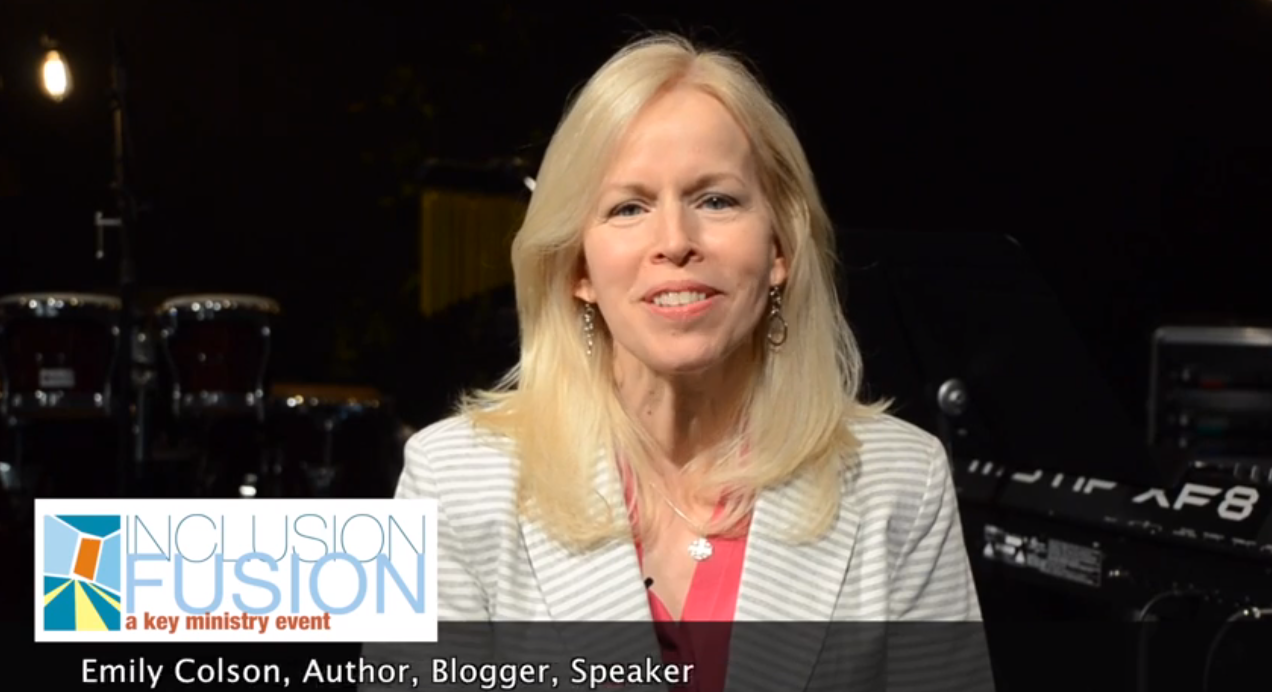
Join us for a conversation with Emily Colson

Inclusion Fusion updatedWe’d like to invite all of our readers to join us today for A Conversation With Emily Colson, available beginning at 12:00 AM Eastern Time on Monday, April 7th through Inclusion Fusion at Key TV.

In our conversation, Emily discusses how she came to faith, the value she places on being an active member of a local church and the “the pain of not being pursued” that she experienced when she was unable to attend church for five years because congregations in her area weren’t yet equipped to support inclusion of her son (Max).

In Emily’s blog for Autism Awareness Day, she shared “I always knew Max needed the church, but no one could have imagined how much the church needed Max.” Her uplifting account of how God has used Max to be a blessing to the people of her church are an inspiring reminder that persons with special needs also have gifts and talents to contribute to the work of the church…and a reminder of how the church is diminished without the inclusion of families impacted by disability.

Here’s how to join us…

Click HERE to access Key TV.

Emily’s talk will be available at Key TV every hour on the hour at Key TV on Monday, April 7. Feel free to watch the interview…or refer your friends to the interview at ANY time during the day.

Emily will be LIVE in our “chat room” from 12:15 PM-1:30 PM Eastern and from 9:00 PM-10:15 PM Eastern.

For this Inclusion Fusion event, we’re requiring guests to log in with their Facebook accounts. Doing so allows participants to join in the chat, and makes it easy to invite others to join us for Emily’s conversation.

Beginning Tuesday, April 8th, we’ll have lots of additional resources available at Key TV for pastors, church staff, volunteers and families to support inclusion at church and faith development at home in conjunction with Autism Awareness Month. During the daytime, we’ll offer great resources for church staff, including video from…

  • Dr. Cara Daily on practical tips for including kids with autism spectrum disorders at church
  • Katie Wetherbee with tips to address bullying at church
  • Jolene Philo on how churches can support parents of kids with special needs

In the evening, we’ll feature resources for parents, including…

  • Interviews with Chuck Swindoll and Colleen Swindoll-Thompson
  • Strategies for parents seeking to explain abstract spiritual concepts to kids with autism spectrum disorders
  • Understanding the impact of Asperger’s Disorder on spiritual development in kids

We’re looking forward to you joining us for Emily Colson on April 7th…and making use of all the resources available through Key TV and Inclusion Fusion!

Emily Colson Promo

***********************************************************************************************************

Square Peg Round HoleKey Ministry has assembled a helpful resource on the topic of Asperger’s Disorder and Spiritual Development. This page includes the blog series Dr. Grcevich and Mike Woods developed for Key Ministry, links to lots of helpful resources from other like-minded organizations, and Dr. Grcevich’s presentation on the topic from the 2012 Children’s Ministry Web Summit. Click here to access the page!

Posted in Autism, Inclusion, Inclusion Fusion, Key Ministry, Spiritual Development, Stories, Training Events | Tagged , , , , , , , , , , , , , | Leave a comment

Exercises for overcoming our spiritual autism…Dave Lynden

Micah in tree 1We’re pleased to present the third installment in David Lynden’s blog series examining Spiritual Autism. Today, Dave shares three spiritual strategies to help us overcome our spiritual autism.

Using our sanctified imaginations a little might help us move this elusive relationship with God into a more fluid way. So let me suggest a few exercises that I have found to be very helpful in overcoming our “spiritual autism”.

  • Locate yourself in God’s story

As we grow closer to God, the difficult thing is knowing where we have come from- not just individually, but also collectively as human beings. The world as it once was is so hard to grasp. It is much like a dream- a wonderful, vivid dream that we do not want to wake from and yet, when we are awake, we lose the dream quickly from our mind’s eye. The cares and speed of the day sweep those visions into the air like a small dust cloud that quickly dissipates in the wind and disappears into the background of the outdoor world. A person with a more fluid relationship with God will work hard at seeing the world that God created and then see the heights of our fall from grace in a broader context. As we locate ourselves in God’s story, we are on the other side of a perfect world, that like our dreams, escapes our minds and imaginations much too quickly! At the same time, we are being drawn towards an ending in which all things come to a climax of restoration, having seen the plot take a sharp turn away from the downward spiral of despair at the cross and the empty tomb.

This is so important because without a metanarrative (the larger story we find ourselves located in), the day-to-day events feel like individual and unrelated moments. They easily break down into a black-and-white evaluation of what happened and why. We experience a difficulty, for instance, and try to figure out if we had it coming, if it was fair or unfair, if there is someone to blame? The event is not seen against the backdrop of any larger story and thus its’ meaning to us is relegated to a static sentence is a chapter-less existence. This is symptomatic of ‘spiritual autism”.

The story of the Bible starts us off “in the beginning” when the relationship with God was unhindered and fluid. It shows us how we ended up where we are currently at and then where we are going. In other words, the beginning of God’s narrative offers us the background for the pages and chapters of our day-to-day moments, encounters and troubles in life. The world as it once was gives a point of comparison and contrast. It allows us to see our moments from the 30,000 foot perspective.

Milky WayI remember when I was on a mission trip in the mountains of Guatemala and for the first time ever, I saw the Milky Way. It looked like someone had smeared the stars across the black sky! And a friend of mine who had served in the military in the Middle East told me that in the middle of the desert- far from any artificial light- the stars come right down to the bottom of the horizon. Beauty- be it in nature or in the perfection of a newborn baby or in a piece of music that has the markings of genius and soul- these are all glimpses into a world that once was; these are all traces of a world that has disappeared, but not completely.

Yet, from this 30,000 foot vantage point, there are also many pictures of the brokenness as well. The same desert my friend found himself in was due to the Iraq War. We were in Guatemala because we were trying to aid a church in dire poverty. And beautiful newborns can still grow up to be quite rebellious. All of this points us towards the upcoming chapters and where the plot will turn next.

Relating to God starts with finding your location in the story He is telling. The relationship, like any other relationship, starts with context. Otherwise, it is simply a functional relationship like that of a bank teller and a person making a deposit or withdrawal from their checking account. No eye contact required.

  • Understand how you are the one disconnecting

Whenever I talk to people about their feeling of disconnect with God, it always seems- whether consciously or unconsciously- that they seem to blame God for the problem of unfamiliarity. Rarely do I meet people who both struggle to know God AND at the same time see themselves as the ones with the problem. But, one of the most important first steps in relating to God is to see yourself in a way that you may have never considered before- that the communication breakdown is on your shoulders, not God’s. There are practices to help us shift perspectives. For Tom, it was an hour with a special needs child and the task of trying to look through God’s eyes to see himself. For others, it might be asking an honest friend how often you miss things being said to you or how frequently you seem to tune out in the middle of a conversation. If we do this with others, we surely do it with God!

  • Don’t confuse activity with connection

Culturally speaking, we are so into “doing” that we struggle with “being”. We are notorious for checklists and events and noise and busyness. Dallas Willard wrote about the potential terrors of ceasing the busyness and just listening when he wrote,

“Silence is frightening because it strips us as nothing else does, throwing us upon the stark realities of our life. It reminds us of death, which will cut us off from this world and leave only us and God. And in that quiet, what if there turns out to be very little to ‘just us and God’?”[1]

Connection comes from multiple sources- through service, through Bible study, through the Spirit’s healing power- but to practice the presence of God, to slow down and listen, well…I have rarely had anyone walk away from an extended time of silence and solitude and say to me, “What a colossal waste of my time!” One of the biggest red flags of spiritual autism is the inability to be still, to quiet oneself, to set aside the compulsive need to occupy all space with an activity or with sound. The din of such frenzied activity actually drowns out the possibility of connecting with God. It exchanges fluidity with God to a static system.

More aware than we might realize

I think that there is another line of reasoning that we typically get backwards. Not only do I think we tend to see our disconnect as rooted in God instead of in ourselves, but I also think we have it backwards in terms of who is pursuing who. Some of the suggestions above might convey the idea that we are the ones pursuing God. In fact, it is just the opposite. Over and over again, the biblical storyline pictures humans as straying sheep that the Shepherd must go after…or we are lost coins or prodigal sons. God is the one pursuing us. That is the point in God’s story of Jesus’ arrival to this planet- to pursue us as one of us; to encounter us in our isolated, spiritually-autistic routines and confusion and sin. Yet, there is a response to this pursuit. Soon, if we are engaged with God, we realize that He is the one coming towards us, re-connecting the lines of communication and we respond by moving towards Him…and discovering new levels of fluidity, new levels of awareness.

Like I warned Tom, Micah is much more aware of what is going on around him than he lets on. But, a lot of that is from me and my wife pursuing Micah. It is us who began initiating tickle time after school- 30+ minutes of going upstairs, away from the distractions and just playing and tickling. And now, as Micah has seen the value of this time, it is him who grabs one of us by the hand asking for “tickles” or “upstairs” or “Mike Tysons”. The time we have spent with Micah has caught his attention and now he responsively pursues us for more connection. But, the connection has also enhanced the fluidity and even now, in all of the severity of Micah’s autism, he has begun to break out of his static systems…most recently through telling a joke.

Micah TickleA “joke” may be a slight exaggeration. How about using humor in his interaction with me? So there we were, in his room. It was after school tickle-time. He asked for interaction- “I would tickles please, I would like tickles please” and I tickled him, and then waited. “I would like tickles please, I would like tickles please.” More tickling, more waiting for the next request. Suddenly, Micah sat up, looked me in the eye and got this enormous grin on his face. “I love you…MOMMY!” “Mommy?!”, I said as he began to giggle. “Do I look like Mommy to you?” “YES!!”, he shouted followed by a long, gut-splitting belly laugh. And as we laughed, I saw the functional, choreographed, static system briefly dissipate. I saw trajectory- from a world of fluid connection that fell into chaos that substituted routines for real relationship to the end for which God intends it. I saw myself with God in the brief moments when He breaks through my own autistic, chapter-less existence and into His grand redemption story. There is no equation for this. There is God pursuing us through Jesus of Nazareth and us beginning to make eye contact again.

[1] Willard, Dallas, The Spirit of the Disciplines- Understanding How God Changes Lives, pub. by HarperCollins, 1988, p. 163

***********************************************************************************************************

Emily ColsonEmily Colson will be joining us on Monday, April 7th at Key TV for the next installment of our Inclusion Fusion Disability Ministry Web Symposium. In A Conversation With Emily, she shares from her heart regarding her family’s experience of church while raising her son (Max) who has been diagnosed with an autism spectrum disorder. Emily’s interview captures the incredible ways in which God blesses congregations that pursue families impacted by disability…families without which the church is incomplete. The video interview with Emily will be available every hour on the hour. Emily will be available to chat live at the Inclusion Fusion site from 12:15 PM to 1:30 PM Eastern and from 9:00 PM to 10:15 Eastern.  Join us for a remarkable discussion on Monday with Emily and invite your friends!

Posted in Autism, Key Ministry, Spiritual Development | Tagged , , , , , , | Leave a comment

Becoming more fluid in our relationship with God…David Lynden

Micah TicklePastor, Old Testament scholar, husband and father David Lynden presents the second segment in his blog series examining Spiritual Autism. Click here to read the first installment in the series.

I have a friend named Tom, who I have been investing in as a spiritual mentor. Tom is a very enthusiastic, very driven person who started off his journey as a Christian with an amazing zeal. Along the way, Tom began to be involved in more and more activities at the church until he began to feel a certain level of spiritual fatigue. The feeling of disconnect with God was also still evident, which confused Tom since it seemed logical that if one reads their Bible more and comes to more and more church activities, the connection should begin to grow, right? And yet, it had not.

“Man! I just feel like I am spiritually tired and God still seems so distant. What do I do?,” he said.

Having gotten to know Tom and his git-‘er-done, gung-ho spirit, I wondered if he had substituted events for relationship; if he had assumed that there was a simple equation like- Bible study + small group + ministry involvement = closer connection to God. It certainly seemed like a static system of fixed movements. So I gave him an assignment involving our son with autism.

“OK Tom, here is what I want you to do. If you are coming to church this Sunday, I want you to spend one of the hours watching Micah. And as you interact with him, I want you to think of yourself as God and Micah as you. In other words, use this little moment to see yourself through God’s eyes and tell me what you learn about yourself and your relationship with God.”

Tom, who is both very willing and very teachable, ran with it. I saw him that Sunday morning near the end of second service. The sweat was beading on his forehead. He was smiling, but clearly exhausted. Micah was twirling about the atrium while Tom was catching a breather. The service was ending with a time of dedication prayer for our graduating High School Seniors. Micah, who had lulled Tom into a false sense of security (one of his best tricks), saw his chance and made a break for it, running into the Worship Center while everyone prayed, with his eye on the drum set at the back of the platform. Tom’s eyes widened and he launched himself after Micah before he disrupted the service. Thankfully, my wife headed Micah off at the pass. Later that week, we debriefed. I asked Tom if he knew why I had given him that assignment.

“I think so. When I picked him up at the door, I reminded myself that I was to look at this as though I were God and Micah was me…and a lot of stuff makes so much more sense now.”

“How so?,” I asked as Tom leaned in, ready to share his thoughts.

“Well, Micah is a really sweet kid. He was really giggly and wanted to be tickled all of the time. By the way, what is a ‘Mike Tyson?’ He kept asking for that.”

“Oh, a ‘Mike Tyson’ is when I nibble on his ear.”, I responded.

Tom got a laugh out of that little inside joke and then continued-

“You know, I really wanted to connect with him, but he couldn’t seem to move beyond the basics. He had his own agenda. When we went to the playground outside, he used me as a human ladder to climb to the monkey bars. And then he would use me to get back down again. I wanted to talk, but he just didn’t seem to understand my words. And he was all over the place. He couldn’t sit still for one thing long enough to enjoy it or connect with me. He was off for another thing to get into. It was like he could play around me, but not play with me.”

“And how did you see you and God?”, I asked.

“I get it. That’s me with God. I cannot seem to slow down long enough to find God’s desire to connect with me in all the events of life. I kind of use God the way Micah was using me- like a vending machine or something to get what I want. Relating to him felt kind of mechanical. It wasn’t fluid. I could totally see myself in this exercise.”

Dave_Micah_iLyndenThat is where we start with this mysterious “relationship with God” that so many people refer to, but so few can clearly define- with a little perspective, with a little self-awareness. The story of the Bible starts out at two places- the goodness of creation and the utter disruption of rebellion. I wanted Tom to live a little bit in the world of brokenness, not as Tom, but as God working with the broken creation. It is a great exercise to glimpse things from God’s viewpoint. And one of the things I wanted Tom to see was how static, rather than fluid, our relationship with God really is. In my own reflections, autism really brings my disconnect with God into HD-level clarity.

Let me stop at this point and explain what I mean by “static” and “fluid” relationships. We are so used to looking at another person face-to-face while we talk that we take it for granted how complex communication really is. It is one of the relational features of what Dr. Steven Gutstein calls a “fluid communication system”. Gutstein, a clinical psychologist and autism researcher, explains the difference between relationships for people with and without autism in terms of “static systems” and “fluid systems” of communication.[1]

Every time two or more people interact they create a temporary communication system. A “fluid system” is one in which there is a free-flow of communication; not just through words, but through body language, facial expressions, tone of voice, volume, etc… A fluid communication system is when you and a friend sit down “face-to-face” at a Starbucks to have some coffee and shoot the breeze. The conversation moves about without any pre-planned course. The topics change depending on the mood, the interest, the un-choreographed “dance” of the relationship.

A “static system” is just the opposite. It is outcome-oriented. There are very clear boundaries; the movements of the relationship are very predictable, very staged. Standing in line at the bank is a “static system”. You walk into the bank, stand at the back of the line, stay within the roped off aisles. When it is your turn, you step to the next available teller, who says to you, “How are you today?” and you reply, while turning in the bank slip, “I’m fine. How are you?” After the teller completes the task, you get a copy of the transaction statement, you say “thank you” and “have a nice day”, and you step off to the side and go back to your car. And no one would think it strange that you and the teller never made direct eye contact. It is unnecessary because the relationship is “static”; it is based purely on function.

A person with autism, while often able to learn static systems, struggles to function in a fluid system. Micah can verbally ask for a cookie or juice, but he cannot share an experience with me. Nor does he seem to understand when I say, “I love you.” In short, our relationship is imprisoned in the routine, in the choreographed.[2]

And that is the analogy I used to help Tom face his checklist spirituality, his “static relationship with God.” Tom, like many of us, often relate to God through a series of activities. We read our Bibles. We pray. We show up on Sunday morning and maybe put some money in the plate. Perhaps we are even involved in some ministries. And yet, like Tom, many of us also feel like this is an “on-paper” relationship with God. We could walk through the whole routine and never make “eye contact”, so to speak, with God. It feels more like an equation than it does a give-and-take fluid system of communication. It can feel choreographed, routine, static and…well, empty.

[1] Gutstein, Steven E., Autism, Aspergers: Solving the relationship puzzle, pub. by Future Horizons Inc., 2000, pp. 33-35

[2] Lynden, David J., “Overcoming Spiritual Autism”, Discipleship Journal- Issue 168, March/April 2008, p. 66

***********************************************************************************************************

Inclusion Fusion updated

Emily ColsonEmily Colson will be joining us on Monday, April 7th at Key TV for the next installment of our Inclusion Fusion Disability Ministry Web Symposium. In A Conversation With Emily, she shares from her heart regarding her family’s experience of church while raising her son (Max) who has been diagnosed with an autism spectrum disorder. Emily’s interview captures the incredible ways in which God blesses congregations that pursue families impacted by disability…families without which the church is incomplete. The video interview with Emily will be available every hour on the hour. Emily will be available to chat live at the Inclusion Fusion site from 12:15 PM to 1:30 PM Eastern and from 9:00 PM to 10:15 Eastern.  Join us for a remarkable discussion on Monday with Emily and invite your friends!

Posted in Autism, Key Ministry, Resources, Spiritual Development | Tagged , , , , , , , , | 1 Comment

Emily Colson…Becoming Still

Max Colson GreetingEmily Colson is an author, speaker and extraordinarily powerful advocate for the inclusion of families impacted by disability in the church. Most importantly, she’s Max’s mom. We’re honored that Emily agreed to serve as our guest blogger for Autism Awareness Day 2014, and our guest for this month’s Inclusion Fusion Web Symposium on Monday, April 7. Here’s Emily…

Becoming Still

I desperately needed church this morning to calm my fevered mind. Pressures have splintered my life lately. I am living in fragments of therapies, paperwork, medical appointments, work demands. And in between I’m often in a frenzied search for one of Max’s favorite objects that’s gone missing, which in our house feels like a sign of the end times. I’d been nursing a four-day stress headache, and I needed to be quiet before God. I craved stillness.

But our morning would be more aerobic.

Max stood in the doorway of church so excited that he was practically vibrating. His helper Marsha stood proudly beside us. It’s not that I can’t manage my 23-year-old son with autism alone; I’ve been a single mother for most of Max’s life. But when someone steps in to help, I feel like the ground shifts less beneath me. I straightened my son’s blue blazer and the three of us waited for the first car to pull up. Max stared through the windows and then started to bounce, straight up from his toes. His calf muscles are the size of New Jersey. As a woman approached the door Max stretched out his hand, his voice exploding into the foyer. “Welcome to church!” he yelled, now leaping like a 190-pound ballerina. Caught off guard, and trying to grab for his moving-target handshake, the woman burst into a smile. “Thank you,” she answered, her armor dropping noticeably.

After 30 minutes of high-impact greeting, I corralled Max over to the busy Welcome Center. That’s Max’s spot during the service. We’re a bit too “wiggly” to enjoy sitting through the sermon just yet. Max often sits with a helper at the Welcome Center, and I’m even able to attend some of the service. Max listens to the sermon on a television monitor positioned beside the Welcome Center. When our pastor reads scripture, Max always reads along for others to hear, holding up the sermon worksheets as if he were the town crier. Max sleeps with those worksheets under his pillow. We’ve come a long way since those early years of staying home on Sunday mornings when we couldn’t find our place. Back then, like so many families, we couldn’t even make it across the threshold. Autism held us hostage. I had to make a conscious decision to go forward every day, no matter what, and claim the abundant life God promises. I always knew Max needed the church, but no one could have imagined how much the church needed Max.

get-attachment-37.aspxThe church service ended and Max threw open the doors. Light spilled into the darkened church. As the music began, loud with guitars and drums, I let go of my helium-filled son. People here expect Max now, delight in him. If their only contact with Max had been at the mall or the park, they might have smiled politely and passed him by, or even pretended they didn’t notice. I might have too. Most of us avoid what makes us this uncomfortable. We keep our distance, until someone changes position.

The music carried Max through the open doorway and right into the church. I prayed extra hard, asking God to surround him with angels, a Holy Spirit cowcatcher clearing the track of small children and older folks, especially those carrying cups of hot coffee. I watched as Max made it to the center of the church, and then dropped to the floor in a yoga-gone-break-dance move. Max’s arms and legs flew wildly as if bouncing over twisting currents of whitewater. He became the music. I could see the worship team smiling at him from up on stage.

Max jumped to his feet and lept toward several people who were standing and singing. We do have a non-traditional format in our church, but this is New England; people here are rather restrained in their worship. My trigger fast reflexes kicked in and I darted into the church, ready to shift Max into a more open space. But before I could get there, people started clapping for Max. His unbridled joy seemed to call others to it. The whole back row welcomed him. And in that moment they all forgot themselves.

And they danced.

The beauty and ache caught in my heart, and everything stopped. Even the music grew faint. I could see Max still dancing but he was in slow motion, floating weightlessly in a too big sort of way, like a bubble in a lava lamp. And I knew I’d seen a little miracle this morning, watching our lives connect, seeing God plant gifts in Max that the rest of us desperately need. It’s as if God gives gifts to one person knowing they will be delivered to another, like a spiritual FedEx system. But we have to get up close, forget ourselves, and be open to receive. God’s fingerprints are on every life.

I could sense Max’s presence behind me. He was making breathy little noises from all that exercise. Max gently wrapped his arms around my shoulders from behind, this gargantuan muscle-bound young man hovering over his tiny mouse-mother. I think he was smelling my hair. I leaned back against my son in awe of how God has used Max to bless so many lives, right through the autism. God can create such beauty through what the world defines as brokenness and loss; He never makes mistakes. And there, in the noise, in the flashes of neon vying for my attention, in the unpredictability of life with autism, I found my focus. And I was still.

Emily ColsonEmily Colson is a popular speaker, and author of the award winning book, Dancing with Max. She speaks in churches and organizations nationwide, and has appeared on numerous media outlets including Focus on the Family, the Huckabee Show, and Hallmark’s Home & Family.  Her book was recently awarded “Book of the Year” by the Autism Society. Through her powerful message of the sanctity of life, Emily has inspired many to persevere through their own challenges and see the gifts. Emily has been a single mother for most of Max’s 23 years, with hard fought lessons in faith, life, love and a whole lot of laughter. Emily and Max live on the coast of New England where they can often be found dancing.

***********************************************************************************************************

Square Peg Round HoleKey Ministry has assembled a helpful resource on the topic of Asperger’s Disorder and Spiritual Development. This page includes the blog series Dr. Grcevich and Mike Woods developed for Key Ministry, links to lots of helpful resources from other like-minded organizations, and Dr. Grcevich’s presentation on the topic from the 2012 Children’s Ministry Web Summit. Click here to access the page!

Posted in Advocacy, Autism, Families, Hidden Disabilities, Inclusion, Inclusion Fusion, Key Ministry, Stories, Training Events | Tagged , , , , , , , , , | 2 Comments

David Lynden…Connecting with God through the routines of life

Dave LyndenThroughout Autism Awareness Month 2014, we’re honored to share with a blog series from a true champion of families of kids with autism and other special needs in the church. Dave Lynden will be sharing with us a six part series on the topic of Spiritual Autism.

Dave is a graduate of the University of Akron and Trinity Evangelical Divinity School. While serving as an associate pastor at Far Hills Community Church in Dayton, OH, Dave was instrumental in launching a respite care initiative for families of kids with special needs. Dave and his wife (Desiree) experienced the need firsthand… their middle child (Micah) is diagnosed with autism. Early in Dave’s five year tenure as Senior Pastor of Fellowship Bible Church in Chagrin Falls, ohio he launched “Breathe”…the largest, free, church-based respite ministry in Northeast Ohio. Here’s the first post in Dave’s series…

The morning ritual

Coffee CupMost mornings for our family are a clockwork-like routine.  On school days, I get up around 5:50AM, get some sweatpants on, descend the staircase, make a pot of coffee and turn on the TV for the morning news shows.  Then, it is time to head back upstairs and get the first two kiddos up.  To achieve this, I typically reach up and grab our oldest- Josiah- by the heels and begin to drag him halfway out of his loft bed so that the sensation of hanging out of bed will wake him the rest of the way.  Cruel, maybe. Effective, absolutely…and he has not fallen yet.  Our daughter, Jordan, requires a simple wake-up call.  After trudging down the stairs and over to the kitchen table, they slowly begin to nibble away at breakfast.  Despite the grogginess and the tinge of crankiness of my two early morning diners, there is something peaceful about this morning routine.  It has a certain serenity and quiet safety to it.  Everything is ordered, everything is structured.  Josiah and Jordan are still too sleepy to begin pecking at each other.  It is a small moment shared with others who belong to you and you belong to them.  I cannot say why I experience this sensation as I watch two of my kids slumped in chairs, eating their breakfast and grumbling about how tired they are and how tough they have got it, but I do.  In all of its simplicity, it is a little wonder with two of my three children.

About the time they are finishing breakfast (and perking up), 7:00AM rolls around and it is time to wake up child #3 (whose bus comes later).  And there is rote and routine here as well.  Like his brother Josiah, waking Micah usually requires me to drag him feet first out of his bed.  After a long, deep stretch, Micah begins pulling his socks and pants on, although still bleary-eyed and zombie-like.  He slips his shirt over his head, gives me a big hug, squeezing his face against mine and then off we head downstairs, past Josiah and Jordan who are heading up the stairs to brush their teeth and have my wife Desiree fix up Jordan’s hair.  Micah is still hugging me as we get to the steps, which he counts all the way down even while clinging to my side before tiptoeing over to the kitchen table to nibble away at his own breakfast.  It is a small little innocuous moment and yet, one filled with wonder…if you are looking.  Walter Brueggemann wrote,

“The most foundational experience of orientation is the daily experience of life’s regularities, which are experienced as reliable, equitable and generous…this experience is ordained and sustained by God.” (emphasis his)[1]

Why don’t I experience God?

I don’t know if it is just me, but it always feels like I am waiting for some big encounter with God to assure me again of His presence and His care.  I don’t need a burning bush, mind you.  But, it seems like it should be something fairly out-of-the-ordinary, something that really stands out.

Perhaps if you have become familiar with the Bible, you might be tempted to see stories of God speaking audibly with Abraham or Jacob.  Or perhaps you might see Daniel having dreams and visions and assume, “If I have an encounter with God, it should look something like that.  So, why do I not experience God?”

Yet, sometimes it is these small wonders and little moments where it becomes obvious that God is present.  We forget the story of Elijah when God “passes by” and he sees a firestorm, a windstorm and feels an earthquake only to experience God in a “still, small voice” (1 Kings 19:12).  Sometimes, it is the simple, the subtle, the hard-to-detect that offers us a fresh encounter with God.  Sometimes, it is in the everyday routines and rhythms, the “daily experience of life’s regularities” in which we are able to orient ourselves to see what might have slipped by in the chaos of the moment.  I have found that my relationship with Micah not only helps me see something new about this relationship with God, but I even see it from what it might look like from God’s perspective.

Small breaks in the routine

Micah in tree 1Micah is a beautiful twelve year old boy who also has autism.  He is very low functioning with a minimal capacity to use language expressively.  His favorite toys are everyday items around the house with which he can engage in stimming (e.g. strings, beads, rubber snakes, etc…).  His world is one regulated by routine- when he gets up, what he has for breakfast, the order of brushing his teeth, combing his hair, getting his coat on, waiting for the bus.  Later the same day, when he gets off the bus, he checks the mailbox, comes in the house, takes off his shoes, gets his folder out and sets it in the same spot and then looks for snacks.  Soon, it is time for dinner, some play time, a shower, brushing his teeth and getting ready for bed.  For bed time, Micah will request the same book for a month at a time.  Currently, we’re reading The Monster at the End of This Book and I have developed a sore throat from trying to talk like Grover every night for the past three weeks.

There are plenty of times when Micah is walking through his routines, that I find myself feeling more like a prop than a parent; more like a means than an end.  If he cannot reach something in the cupboard above the refrigerator, he’ll grab my arm and aim it at what he wants.  When he needs pressure, he wedges himself behind whoever is sitting in a living room chair.  If I ask, I can get an obligatory hug from Micah, but if it interferes with one of his routines, he squawks loudly.  As I stand back from these interactions, however, I wonder if that is how God experiences us.  Perhaps we do not experience God’s presence because we are missing the gift of routine.

God’s routines and rhythms

Curiously, the story of the Bible begins with routines.  It begins with a certain rhythm.  God speaks- “Let there be”…and it is so…and there was ______ (e.g. light, waters above and below, land, fish, birds, etc…)…and God saw that it was good…and there was evening and there was morning, day ____.  Woven into the very creation is a rhythm to the week- six days work, one day rest.  Then later on in Genesis, God establishes another routine, another rhythm- the seasons (Gen. 8:22).  Such a rhythm is quite counter-cultural to our world of 24/7 news coverage and the immediate accessibility, the adrenaline junkies seeking new thrills and the continual need for upgrades for our tech toys.  And yet, God counters our penchant for stimulation (which, left unchecked, will ultimately overstimulate us) and has gifted us with rhythm and routine in life.

Micah may need routine, but even through his disorder, God has been teaching me about order.  God has given us routines and rhythms for living so that we do not get overwhelmed and frustrated.  I stumbled across an interesting observation while reading the book, The Curious Incident of the Dog in the Night Time by Mark Haddon.  The main character, telling the story in the first person, is a teenaged autistic savant who shares with the reader the feeling of being overwhelmed by too much noise and change.  He describes it as trying to listen to an AM radio station where two stations are coming in at the same time and all you hear is static with an occasional word or two.  Is this what Micah experiences?  Is this how our children with autism feel?  This is why we give our children the gift of routines and structure.  And in that, perhaps we can stop and see beyond another sunrise, or the rhythm of the work week or the school year to understand that God is offering us structure to help us cope with our “spiritual autism”.  Brueggemann wrote this about the rhythm and routine of the week with Sabbath rest:

“Sabbath is an unspoken prayer for the coming of a new sanity shaped by the power and graciousness of God.”

In a word, we experience God by the rhythm and routines He gives our lives.  And we also experience God in the breaks in the routine.

Breaks in the routine

There is something more about the gift of routines: they can create a contrast to help us see what might be considered small and insignificant.  One of the mantras of wisdom that our autism support group used to rehearse is to celebrate the small, incremental progressions of our children with autism.  And they were easier to see because the routines make them stand out so much more than our typical children.

For instance, Micah and I have a very regular bedtime routine.  After brushing his teeth, he leaps into his bed.  He must have “Tiger” (his favorite stuffed animal), whom he holds tightly with his left arm.  I then pull his favorite blanket over him, lay down on the side of the bed with the big floor fan blowing at us and read him his night time story.  Then I sing him the Shema (I was raised Jewish and this was part of my night time routine), pray for him and tell him, “I love you, Micah” to which he responds, “I love you, Micah”.  I shake my head and point to myself and he makes the correction- “I love you (pause), Daddy.”  “Night night”, I say.  “Night night”, he echoes back.  “See you in the morning”, I say.  “See you in the morning”, he echoes back…and then I am free to leave the room and allow him some sleep.

That is how we have done bedtime for years.  So when Micah and I were settling down for bed and I said, “I love you Micah”, the break in the routine stood in sharp contrast to the norm.  This particular night, he rolled towards me, pressed his nose against my nose and giggling, said without prompt or adjustment, “I love you, Daddy”.  The routine created a backdrop for this interaction.  The “I love you” statements that get tossed about so casually in most typical relationships jumped out at me with Micah.  And this moment, too, taught me how to move past this spiritual autism of ours.  It called me to pay attention to the subtle differences, to the incremental changes in the routine.  With a child who is so restricted socially, the question of, “Does he really know I love him?  Does he really love me?” is answered by the break in the routine- “I love you (pause), Daddy.”

We need, then, to both know our routines and pay attention to the subtle changes.  When we look at the sky that we see every day and every night with a new tinge of purple or orange painted across the bottoms of the clouds, we see God reaching through the routines to get our attention.  When we read the Gospels or the Psalms and get away from the assumptions we bring to the text and then see something we had never seen before, God is drawing us out to a fuller awareness of who He is.  And yet, it is the routines that draw our attention to these moments in the first place.  It is the routines that slow us down enough to hear the still, small voice of God.  Part of the solution to the spiritual autism that isolates us from God and makes “eye-contact” so difficult is the discipline of slowing, the structure of routine, what some Christians call a personal “Rule of Life”.  I love what Chuck Swindoll once said when it comes to the speed of life and the lack of quiet.

“The only trouble with success is that the formula for achieving it is the same as the formula for a nervous breakdown.”

Clockwork

School BusOne of our more recent mornings went like clockwork.  The kids were up at the slated times.  Breakfasts were eaten, sleepy kids grumbled, teeth were brushed, hair was combed, backpacks were filled and buses were boarded.  But, this morning presented a slight change to Micah’s routine.  Our dog Buttercup recently had ACL surgery and we have begun short walks down the driveway as part of her therapy.  So we combined Micah’s walk to the bus with Buttercup’s therapy, which meant that I had to stop halfway down the driveway and allow Micah to get on the bus without me right next to him.  The change in the routine offered a contrast and thus, insight.  He followed much of the routine as though I were right there.  And standing back with a wider perspective of everything, I could see beyond the routine.

Without me there to stop him from getting his shoes wet, Micah played around the stream of ice water in the drainage ditch which ran under our driveway, hopping over the tiny brook or tossing in a stone for the “kerplunk” noise.  With the subtle switch in routine and my newfound perspective, I watched this little boy experience a bit of wonder in the things that we both pass by so quickly in the midst of our various missions of the day.  When the bus arrived, Micah was standing in his typical place.  The door opened, he climbed on and in accordance with the routine, said (with back still turned to me), “Bye Dad, I love you.”  But, I was a little further back with the dog and I didn’t hear him, thus breaking the routine of echoing back to him, “Bye Micah, I love you.”  The break caused Micah to stop, turn back, look directly at me and repeat, “Bye Dad, I love you.”  I responded, “Bye Micah, I love you.  Have a good day at school.”  A broad smile crossed his face and then he sat down to buckle up.  Was this how God sees us?  Is this how God gains our attention?  With routines, and subtle breaks in the routine?  Is this one of the still, small voices by which God breaks through our spiritual autism to look at us face-to-face and declare, “I love you” with greater clarity?  Is it the broad smile of understanding that God is seeking in us?

“The most foundational experience of orientation is the daily experience of life’s regularities, which are experienced as reliable, equitable and generous…this experience is ordained and sustained by God.”


[1] Brueggemann, Walter, The Message of the Psalms- A Theological Commentary, pub. by Augsburg, 1984, p. 28

Some photos courtesy of http://www.freedigitalphotos.net

***********************************************************************************************************

Emily Colson largeEmily Colson, speaker, award-winning author and mother of Max will be serving as our special guest blogger for Autism Awareness Day 2014 on Wednesday, April 2nd, and will be our featured interview for a special edition of Inclusion Fusion on Monday, April 7th. Emily will share her family’s experience prior to finding a church where they were welcomed and accepted, and we’ll learn of the unique and wonderful ways that Max has been a blessing to the people of his church. Emily will be available at designated times throughout the day to chat online, and our participants will be provided the opportunity to share their stories as well. Mark your calendars today!

Posted in Autism, Key Ministry, Spiritual Development | Tagged , , , , , , , | 1 Comment

A Game of Chess With No Winners…Mike Pitts

shutterstock_81693892She certainly didn’t look like a seventh grader and maybe that’s why every middle school guy wanted to be with her. Each Wednesday night was like a scene out of a 80’s teen movie when she walked in. You know the one where the pretty girl walks by and the world happens in slow motion. We youth workers would always have a good laugh at the middle school boys’ expense. Maybe the next time I needed to make an announcement I should just have Michelle walk past so they would be quiet. By appearance Michelle looked more like she was in high school than middle school. Michelle definitely stuck out more than her fellow seventh grade girls.

Honestly, I never thought Michelle was a mean girl, but at times her nose appeared to be in the air (the entourage of mean girls that followed her didn’t help). None of my volunteer youth workers ever reported her being mean to anymore, and most had never even heard her speak. Like most middle school kids, she would only speak when spoken to and even then they were usually only one to two word declarative statements to appease the question. Sadly, her stay in my student ministry was short lived. She dropped off the scene just as quickly as she popped onto it.

Youth Pastor Confession: I thought that maybe we weren’t cool enough for her. After all my group was full of “average Joes”, underdogs, and fringe kids. We definitely didn’t fill the niche of “queens bees” and the “elite.” Every youth pastor understands that community is everything in youth ministry and maybe we just couldn’t provide the type she was looking for.

Michelle’s parents were long-time members of our church and I remember feeling slighted when they never reached out to connect with me. To be honest, it made me feel like I had done something wrong…like I had failed to qualify as a youth pastor because maybe they didn’t trust me to shoulder their daughter’s issues and burdens alongside them.

shutterstock_79177156I can’t imagine what it feels like when your kids don’t want want to be part of the youth ministry in the very church they were born and raised in.

But it breaks my heart to know our churches are full of students and families like that. I guess in some ways I did fail Michelle and her parents as I never reached out either. Maybe we were both hanging by the phone to see which side made the first move until we waited so long nobody did.

Years later one of my former middle school guys told me that Michelle had withdrawn from high school after her anxiety and panic attacks had become unmanageable. Then he said, “You know she was diagnosed with anxiety in 7th grade? She takes medicine and everything.” Why did I not know?

They never told me.

But I never asked.

Maybe they were embarrassed.

How do you ask a parent if those questions if they don’t volunteer the information?

I had failed Michelle. They had failed Michelle. We had failed Michelle. And to think that church could have been a huge win for Michelle and the Kingdom! It hurts.

Parents, truth is I could have done a heck of a lot to accommodate Michelle in my youth group and I know hindsight is 20/20. We could have made minor tweaks, we could have helped to lessen the unknowns that cause anxiety, we could have given her a safe and quiet place to go when she felt a panic attack coming on, and we could have connected her with one of our female volunteers who also has anxiety. The list goes on and on. Thinking about how many possible “Michelles” I’ve had over the years almost makes me want to have a panic attack.

THE CONCLUSION: I want to start waiving the flag for you, but I need some help. The church needs you to help us be the church. We need information that will help us include, celebrate, and minister to your teen’s uniqueness. We don’t want to label your student or give them an IEP at church. We are the church-not the public school. We want to make them feel wanted and included. Let me leave you with some food for thought after having this very conversation with a fellow youth pastor.

Asking a parent if their student has a disability or disorder is like asking a woman if she is pregnant.

Example:

Youth Pastor: So I’ve been observing Billy, and I think he might just be on the spectrum. High functioning of course. He meets all the criteria on Web MD.

Parent: We’re finding a new church.

There’s got to be a better way. Parents…How you can you help us help you? How can we better partner?

***********************************************************************************************************

Mike PittsMike Pitts is a  youth worker from the southeastern United States who made his way north to the Midwest. Along his journey, this southern transplant developed a passion for middle school students and for engaging students with hidden disabilities. Mike is an ambassador for Key Ministry challenging youth workers to pursue ministry with students with hidden disabilities. Mike and his wife Hope have been married for four years and live with their two young children (Emery & Phoebe) in Cleveland, Ohio.


Posted in Anxiety Disorders, Inclusion, Key Ministry, Mental Health | Tagged , , , , , , , | 2 Comments

Amy Simpson Interview

Amy SimpsonAmy Simpson will be speaking later today at Saddleback Church’s Gathering on Mental Illness and the Church.  We were fortunate to have her guest blog for us last Mother’s Day. Amy is a former publishing executive now working at Christianity Today as Editor of GiftedForLeadership.com and developing marriage & parenting resources for Today’s Christian Woman. She has published articles in Leadership Journal, Christianity Today, Today’s Christian Woman, Relevant, PRISM Magazine, Her.meneutics, ThinkChristian, Christian Singles, Group Magazine, and several others. 

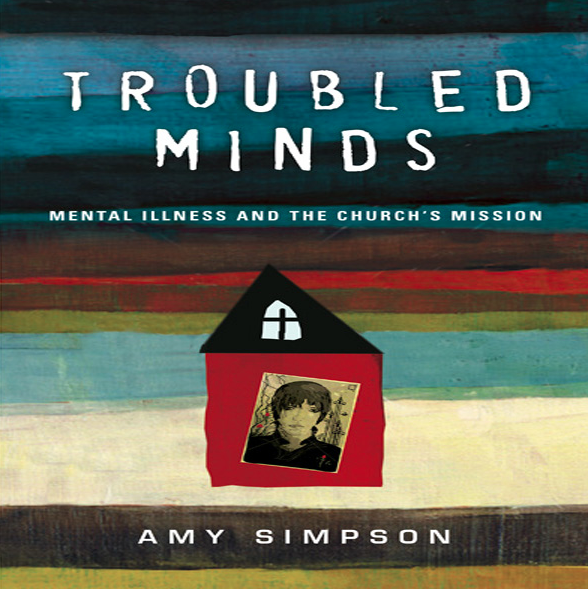
Her family’s firsthand experience with mental illness provided the inspiration for her new book, Troubled Minds: Mental Health and the Church’s Mission. She wrote for us last year on the topic, Does Your Church Inadvertently Hurt People With Mental Illness?

In April, news outlets revealed a disturbing practice that’s apparently common in Nevada’s State mental health system, and particularly in its largest psychiatric hospital, Rawson-Neal Psychiatric Hospital in Las Vegas.

The hospital, coverage revealed, regularly places people with mental illness on Greyhound buses and sends them to other states. In 2012, Rawson-Neal sent nearly 400 patients to 176 cities and 45 states around the country.

The state claims it’s merely helping people find their way back home, but specific cases show this is not always true. Nevada also claims the state is sending people off with adequate provisions, but again, documented cases call that claim into question.

Is Your Church Like Vegas?

Like Nevada, and all the states those Greyhound busses are bound for, churches are full of people who struggle with mental illness. Each year, 26.2 percent of the American adult population suffers from a diagnosable mental illness. At the same time, an estimated 20 percent of children in the United States are at least mildly impaired by some type of diagnosable mental illness. And about 5 to 9 percent of children ages 9 to 17 have a “serious emotional disturbance.” That translates to millions of individuals and families directly affected by mental illness. Many more are affected by the symptoms of friends, classmates, co-workers, and the people who sit next to them on Sunday morning.

The church is the first place many people go when they’re looking for help of all kinds, including treatment for mental illness. Among people who have sought treatment, 25 percent have gone first to a member of the clergy. This is a higher percentage than those who have gone to psychiatrists, general medical doctors, or anyone else. Unfortunately, many church leaders are ill-equipped to help people get the care they need. And while 25 percent of those who seek help from clergy have the most serious forms of mental illness, studies have shown that clergy refer less than 10 percent of them to mental-health professionals. On top of that, for every person who seeks help, many more stay silent, afraid to admit their illnesses to themselves or to risk the rejection of the people around them.

With so many opportunities to help people in need, how many churches respond as the state of Nevada does?

Some churches actually intentionally reject people with mental illness. In their theological framework, mental illness has no place among God’s people. Those who manifest symptoms are assumed to be demon-possessed, willfully attached to some egregious sin, or lacking the faith they need to claim God’s healing. When they don’t get better by simply praying or exercising more faith, they are considered at fault and not welcome within the fellowship. Such churches misunderstand the true nature of mental illness and need to revisit their theology of illness and suffering of all kinds. Until they do, they are not safe places for people with mental illness or their families and are best avoided.

But most churches do not hold to the kind of theology that overtly blames, rejects, and casts out people whose brains have shown themselves particularly vulnerable to the forces of disease and decay that haunt us all in various ways. Even so, many inadvertently communicate rejection through their policies or culture.

Here are three ways many churches are emulating Nevada, along with some key questions for church leaders.

Uniquely Attractive—and Responsible

As news coverage has pointed out, the city of Las Vegas makes Nevada a unique state: “The city’s entertainment and casino culture draws people from all over the world…including the mentally ill.” The trappings of Vegas may be more likely to attract people with mood disorders, schizophrenia­, and other conditions—and the same may be said for churches. Spiritual experiences, promises of peace and joy, opportunities for community and for communion with God…these elements of church life are understandably attractive to many people with mental illness. Churches have a special responsibility to recognize this and respond intentionally.

– ­Do you make people with mental disorders feel unwelcome? ignore them and focus on the more attractive new people who walk through your doors, hoping they’ll go away and other churches will meet their needs?

– In sermons, Bible studies, and classes, do you send the false message that Christians should not expect trouble, pain, or sickness? that happy, comfortable, and “victorious” life is the norm?

– When was the last time mental illness was mentioned in a sermon, in a way that normalized it?

– Does your community expect people to have it all together when they walk through the doors?

– Do you expect people to be “cured” before finding a place to serve?

None of us will ever be whole this side of heaven—and many people with mental illness suffer from chronic and repetitive symptoms that can be managed but not technically cured. These conditions do not cancel God’s purposes for them. They do not disqualify people from a place in the body of Christ. Just as much as other ill or injured people, they deserve loving acceptance, clear and consistent boundaries, and grace.

Missing Basic Needs

In at least a few documented cases, Nevada’s mental-health care system placed people on buses without adequate provisions or chaperones. Many churches use a similar strategy, without realizing they’re not fulfilling their responsibilities.

  • If you’re a church leader who doesn’t happen to be a qualified mental health professional, do you recognize and acknowledge your limitations? If yes, that’s a good thing.
  • Do you refer people to professionals who can help with disorders and provide therapy and medication as necessary? This is also a good thing.
  • But do you then walk away and assume your job is done?
  • Mental-health care is incomplete without spiritual nurture and loving friendship. Does your church push people toward psychiatric care but leave them without adequate spiritual guidance and a kind friend to walk alongside them?
  • Do you provide practical help (hospital visits, meals, rides, financial assistance) to people with other health crises but ignore these basic needs in families affected by mental illness?

Psychiatrists do not provide pastoral care. Therapists don’t make sure the bills are paid and the kids get to school. Medication does not answer questions about why God feels so far away. Just because people receive medical treatment does not mean they don’t need anything more from the church.

Neglecting Support Systems

Nevada claims it is simply busing people back to their home states and first making contact with support systems at those destinations. But investigations reveal those connections are not always made and plans for follow-up care aren’t always in place. Many churches also fail to consider what they can do to strengthen the support system for people with mental illness.

  • Are you ignoring the families of people with mental illness? My own survey showed that only 56.8 percent of church leaders have reached out to the family of someone with mental illness within their congregation. Have you asked families what they need? Are you prepared to help as you can?
  • Do you consult with mental-health professionals? If people in your congregation are receiving care, you can request that they sign consent forms to allow you to collaborate with professionals and discuss the best ways for your church to support these members’ mental health. If you don’t receive that written consent, you can still discuss the best ways for you to support people with various types of mental illness.
  • As in Nevada’s state mental-health care system, in your church are people getting caught within a beauracratic system with no one really aware of or responsible for their needs?
  • Are you relying on “trickle-down ministry,” focusing on your core leaders and expecting them to lead the next tier, and so on? Is anyone in your church likely to feel responsible for a good support system, or does everyone assume someone else will take care of it?
  • Are you willing to adapt your schedules, plans, and expectations in order to deal compassionately with people in crisis? Or do you expect everyone to follow the same process and grow within the same system?
  • Are you willing to let people with mental illness do ministry in your church? Mental illness is rarely predictable, but it is not a spiritual or relational death sentence. People affected by mental disorders don’t always fit into a tightly scripted service with high production values. It can hard to find their place in a segmented congregation. But with understanding and grace, you can give them opportunities to serve according to the gifts God has given them. Allowing people to engage in ministry when they’re functioning well, and take a break when they’re not, can provide an incredible support system.

A Call to the Church

CT Book AwardsI wrote my new book, Troubled Minds: Mental Illness and the Church’s Mission, to help the church better understand the needs of people affected by mental illness. I also wrote it to challenge the church­—that’s everyone who follows Christ—to see this as part of our mission in this life.

As I’ve said in my book, “The church should not lag; it should lead the way. We serve a God who calls us to serve “the least of these” as if we were serving him (Mt 25:40). Jesus said, “Healthy people don’t need a doctor—sick people do. I have come to call not those who think they are righteous, but those who know they are sinners” (Mk 2:17). As living temples carrying God’s presence in this world, we must allow his light to shine out from us and infiltrate the darkness that surrounds so many people and drives some of them to despair.”

Let’s embrace our calling and shine the light of Christ in the darkness.

***********************************************************************************************************

Troubled MindsMental illness is the sort of thing we don’t like to talk about. It doesn’t reduce nicely to simple solutions and happy outcomes. So instead, too often we reduce people who are mentally ill to caricatures and ghosts, and simply pretend they don’t exist. They do exist, however—statistics suggest that one in four people suffer from some kind of mental illness. And then there’s their friends and family members, who bear their own scars and anxious thoughts, and who see no safe place to talk about the impact of mental illness on their lives and their loved ones. Many of these people are sitting in churches week after week, suffering in stigmatized silence. In Troubled Minds, Amy Simpson, whose family knows the trauma and bewilderment of mental illness, reminds us that people with mental illness are our neighbors and our brothers and sisters in Christ, and she shows us the path to loving them well and becoming a church that loves God with whole hearts and whole souls, with the strength we have and with minds that are whole as well as minds that are troubled. Available at Amazon.


Posted in Advocacy, Inclusion, Key Ministry, Mental Health | Tagged , , , , , , , | 1 Comment

Interview with Dr. Matthew Stanford

Stanford_Color_HDThe movement to include families impacted by mental illness in the church will be well-represented tomorrow at Saddleback Church’s Gathering on Mental Health and the Church. In honor of Amy Simpson’s appearance, we’ll rerun a guest blog she had shared with us last year. Today, we’re recognizing Dr. Matthew Stanford from Baylor University and Mental Health Grace Alliance by sharing an interview he did with us two years ago along with a video he did for Inclusion Fusion 2012.

Dr. Stanford was involved in the publication of a study with Dr. Diana Garland, Dean of the Department of Social Work at Baylor and Edward Rogers (lead author and former youth pastor) examining the relationship between mental illness and faith practice published in the journal Mental Health, Religion and Culture that we reviewed last July on this blog. He also serves as Director and Founder of Mental Health Grace Alliance, a faith-based, non-profit organization created to promote understanding in the church and provide assistance and support to individuals living with mental illness and their families.

SG: Your group at Baylor has developed an interest in studying the impact of mental illness on family involvement in churches. What led you to see this topic as a necessary and worthwhile area for research?

MS: As a person of faith and a psychologist I have often been pulled aside by fellow believers and asked questions about mental health issues or told of negative interactions between those struggling with mental illness and the church. That led me to begin taking seriously the interaction between those with mental illness and the local church. I came to Baylor in 2003 to specifically begin a line of research in the area in an attempt gain understanding and educate the church.

SG: Last year, your group published the results of a study of nearly 6,000 participants from 24 churches representing four Protestant denominations examining the impact of mental illness in a family on church involvement and spiritual practices. What in your mind were the key findings from the study?

MS: I would say that the key finding of that study was that approximately a quarter of families in the church are struggling to care for a mentally ill loved one. Those families are in significant distress and that distress has not only affected their personal relationships and daily lives but has also disrupted their ability to practice their faith and connect with God. Sadly, these families appear virtually invisible to the congregation as a whole.

SG: Was there any data to suggest that the presence of mental illness in a child or teen has more or less impact on church involvement and spiritual practices compared to mental illness in a spouse or a parent? Any hypotheses from data you’ve reviewed?

MS: While we didn’t specifically look at that question the families we surveyed were caring for a variety of loved ones suffering with mental illness including children. From what we can tell at this time there is no difference; both have a significant negative impact on the family’s spiritual practices.

SG: What additional studies is your group conducting (or planning to conduct) on the impact of mental health issues on spiritual practices? Is there research being done by other groups that churches served by Key Ministry should know about?

MS: Presently we are conducting several studies 1) the interaction of sexual assault survivors and the local church, 2) how personal spirituality or faith can be used therapeutically within a secular therapy setting and 3) the difference between the mental health needs of men and women in the church.

SG: You’ve been involved in the development of a new non-profit organization, Mental Health Grace Alliance. Can you share with our readers the mission and vision of Mental Health Grace Alliance, and some of the services and resources your organization provides?

MH Grace AllianceMS: Mental Health Grace Alliance is a faith-based, non-profit organization created to promote understanding in the church and provide assistance and support to individuals living with mental illness and their families. We assist individuals and families affected by mental illness through Christ-centered counseling and support. We use a comprehensive (holistic) approach to equip individuals and families with biblical and clinical understanding and practical tools to navigate the health care system and daily life. We facilitate Christ-centered support groups, called Grace Groups, for both those living with a mental illness and their loved ones (presently in CA, FL, MA, TN, TX). We also provide training seminars and resources for churches and faith-based organizations to help leaders and professionals understand the balance between the clinical and spiritual aspects of mental illness and recovery. You can learn more at http://www.mentalhealthgracealliance.org.

Stanford Grace for the AfflictedSG: In addition to your work at Baylor and through Mental Health Grace Alliance, you’ve also published two books…The Biology of Sin (available as a Kindle e-book) as well as Grace for the Afflicted: A Clinical and Biblical Perspective on Mental Illness (also available as an e-book). What are some of the key topics and questions you’ve addressed through your books?

MS: I think the key issue in all my writings is that the scientific or clinical aspects of mental health issues are not incompatible or inconsistent with a spiritual perspective. So when we are discussing medical or psychological treatments for Bipolar disorder we should also be discussing the spiritual impact on the individual and how we might effectively minister to them in their distress.

Matt did a fabulous talk for Inclusion Fusion on the topic of Viewing Mental Illness Through the Eyes of Faith that should be required viewing for pastors and church staff seeking to more effectively minister to families impacted by mental illness. Some of the topics Matt addressed in this relatively brief talk (20 minutes) included:

  • What is a Biblical and clinical understanding/response to mental illness?
  • How to recognize mental illness.
  • The essential role of the church in the recovery and treatment process.
  • How to respond to families dealing with mental illness.
  • How to create mental health related supportive care within the church.
  • Resources to help families navigate the health care system and everyday life.

***********************************************************************************************************

Stanford Biology of SinMatthew S. Stanford is professor of psychology, neuroscience, and biomedical studies at Baylor University. He serves as the graduate director for the Psychology Doctoral Program. He received his Ph.D. in Neuroscience from Baylor in 1992. After graduating from Baylor he completed a post-doctoral fellowship in the Department of Psychiatry and Behavioral Sciences at the University of Texas Medical Branch. Prior to coming to Baylor in 2003 he was a faculty member in the Department of Psychology at the University of New Orleans. Dr. Stanford’s research focuses primarily on the biological basis of impulsive and aggressive behavior. In addition, he has conducted psychophysiological research in a variety of patient populations including those with aggression, personality disorders, post-traumatic stress disorder, stroke and traumatic brain injury.

Dr. Stanford’s books, The Biology of Sin (available as a Kindle e-book) as well as Grace for the Afflicted: A Clinical and Biblical Perspective on Mental Illness are available at Amazon.


Posted in Hidden Disabilities, Inclusion, Key Ministry, Mental Health, Training Events | Tagged , , , , | Leave a comment