A Parent’s Greatest Fear

Angry KidOne of the benefits I experienced during my days on the lecture circuit was the opportunity to meet wise and learned senior colleagues who shared pearls of knowledge that helped me see clinical situations in a new light. One such colleague is Dennis Rosen, a developmental pediatrician in Western Massachusetts well-known for treating kids with a variety of emotional or behavioral problems. He shared the anecdote below after an evening lecture:

Before he finishes a consultation, Dr. Rosen regularly asks parents “Deep down inside, is there anything you were afraid you’d find out as a result of our meeting today?” By far and away, the most common answer he receives is “I was afraid that I did something to cause my child’s problems.”

I suspect the fear of being told that their parenting strategies, family values or choices are the cause of their child’s emotional or behavioral problems poses a major obstacle to families becoming actively involved with a local church.

I came across a message on the Internet from a pastor discussing signs that may be indicative of a child being unnecessarily provoked to anger by their parents. I believe the pastor’s intent was to show that children posing behavior challenges may be the product of scripturally unsound parenting…five specific examples he used in his outline are shown below:

Signs of parent provocation in a child:

  • When you see kids pulling away from their parents
  • Angry outbursts from a child
  • Lack of joy in a child, seldom smile
  • Rebellion against authority
  • A child who says mean things to their parents or others

When you see kids pulling away from their parents: A common sign seen in kids suffering from depression is the propensity to isolate oneself from friends and family members. Kids who have been adopted or kids in foster homes often pull away from parents in response to difficulty processing attachment issues related to early trauma, abuse or neglect.

Angry outbursts from a child: Kids with ADHD very frequently exhibit difficulties with the ability to regulate emotions. Kids with Bipolar Disorder often experience marked increases in anger and irritability during mood episodes. Kids with Disruptive Mood Dysregulation Disorder (DMDD) are prone to anger outbursts during transition times that are frequently exacerbated by medication prescribed to treat comorbid conditions.

Lack of joy in a child, seldom smile: Common symptoms of depression…may also be observed in kids with attachment issues.

Rebellion against authority: This is pretty much the definition of Oppositional Defiant Disorder. A propensity to disrespect authority is seen in conditions associated with poor executive functioning and a lack of capacity to delay gratification. This pattern may also be seen in kids with obsessive thinking, along with kids experiencing the “cognitive rigidity” that frequently accompanies autism spectrum disorders.

A child who says mean things to their parents or others: This behavior can be attributed to many conditions in the DSM-5.

Getting to the root cause when kids experience the behaviors listed above can be pretty challenging. That’s why I had to do four years of med school, three years of general psychiatry residency and a two year child psychiatry fellowship in preparation for my job. There are all kinds of developmental, environmental, biological, genetic, psychosocial and spiritual issues at play in kids with disruptive behavior. Is it possible that “scripturally unsound parenting” could contribute to the behaviors listed above? Absolutely. How might a parent of a child being treated for ADHD, depression, Bipolar Disorder or Reactive Attachment Disorder hear the message described in the post? If that parent is exploring Christianity, would they experience grace in the teaching they experienced?

There are topics that are very difficult to discuss outside the context of a relationship. After I’ve gotten to know parents for a while, I can talk about “scripturally unsound parenting” because I’ve taken the time to understand all facets of their child’s situation. There may be parents who are trying their to attend church with kids who have bad genes, kids who have been exposed to trauma or abuse, or kids who haven’t yet developed the skills to effectively self-regulate their emotions and behavior.  How do we welcome them and share with them the unconditional love Christ has for them? How do we as the church best communicate with parents so we build the relationships necessary to cast influence in their family?

There’s a lot to say about how churches handle this issue.

An earlier version of this post was originally published on 7/25/10.

Photo courtesy of http://www.freedigitalphotos.net

***********************************************************************************************************

600817_10200479396001791_905419060_nConfused about all the changes in diagnostic terminology for kids with mental heath disorders? Key Ministry has a resource page summarizing our recent blog series examining the impact of the DSM-5 on kids with mental health disorders. Click this link for summary articles describing the changes in diagnostic criteria for conditions common among children and teens, along with links to other helpful resources!
Posted in Advocacy, Families, Hidden Disabilities, Inclusion, Key Ministry, Mental Health, Parents | Tagged , , , , , , , , , , , , , | 1 Comment

Advocating for inclusion in Christian schools…tips for parents

CLC2We’re looking at the topic of inclusion of kids with special education needs in this miniseries with Barb Newman and Elizabeth Dombrowski of CLC Network.

In Part One of the series, we discussed how CLC Network became involved in serving kids with disabilities in Christian schools in their home region of Western Michigan, and the obstacles they face in getting other Christian schools to pursue inclusion. Today, we’ll hear from Barb and Elizabeth on funding inclusive Christian education, and advice for parents who want their kids with special education needs to attend a Christian school.

C4EC: How do schools find the financial support to afford families an educational experience for their children who qualify for IEPs that is equal to (or better) than that offered by the public schools?

CLC Network: Each school has a unique plan. Some schools build in the needed money by simply making it part of the tuition each family pays. Some schools ask for donations or hold fundraisers that allow for those funds. Some schools have a foundation that keeps a good portion of the expenses funded. Some schools can access limited funds from the public school, depending on the district and needs of the children. The most important thing, however, is allowing the community to understand that this “inclusion” program does not just benefit the children with a disability. An inclusion program is about including everyone, and the benefits are for everyone. Isaac’s presence in that school has cost some money, and Isaac’s presence has benefitted nearly each child in the school. It’s money well spent, schools will agree.

C4EC: What advice would you give to the Christian parent who wants their child with special education needs to attend a faith-based school, but lives in a community where none of the local Christian schools are willing or equipped to meet their needs?

CLC Network: Perhaps the Isaac video is a great place to begin. Taking the administrator or key teacher out for lunch and sharing that video clip might be a great place for discussion. Giving them a copy of Barb’s books… Any Questions or Nuts and Bolts of Inclusive Education may also give them a picture of what it could look like in their school. A call to the Executive Director of CLC Network can also help that school imagine the possibilities. We also invite interested schools and parents to visit one of the schools partnered with CLC Network so they can see it in action in schools of varying size and backgrounds. Don’t recreate the wheel. Let us help! That’s the call God has placed on our organization, and we are eager to walk with Christian schools in this exciting journey. Remember it doesn’t take a huge investment—you and your school don’t have to have all the answers today. You might get a lot of “yes, but” answers in the beginning. If you and your school leaders can keep the big picture in mind, you can find a way to ensure your student is part of the community.

C4EC: CLC Network has developed some extensive resources for Christian schools seeking to better serve kids with learning differences. What resources do you make available for educators in Christian schools? How can they access those resources?

CLC Network: In addition to the books and DVD’s in our catalog, we have a library of professional development videos and an online Goals & Objectives program that can track the success of any student on an alternate learning path. Our eight Teacher Consultants draw on their experiences to provide customized advice to your school and your students. In addition, our four school psychologists provide in-depth evaluations, starting with each students’ gifts and providing a plan for success. We know there isn’t one plan that works for everyone, so we like to talk with you to identify what tools might be best for this point in your journey.

Next: Resources for Christian schools seeking to pursue inclusion 

***********************************************************************************************************

logoCLC Network is a nonprofit educational consulting firm helping schools and churches support people at all levels of ability and disability.  To contact CLC Network for a consultation, evaluation, or resources, call 616-245-8388 or visit www.clcnetwork.org.

Posted in Advocacy, Families, Hidden Disabilities, Inclusion, Resources | Tagged , , , , , , , , | Leave a comment

Including Kids With Special Education Needs in Christian Schools: CLC Network

ms_slide2Many Christian parents of children with learning disabilities, mental illness, trauma or developmental disabilities desire for their children to attend a school where they can receive an excellent education in an environment that supports the values the parents seek to instill at home. Our friends from CLC Network help make that desire reality.

Since 1979, CLC Network has delivered education and support services to faith-based and public charter schools, home educators, and churches nationwide. Their services include individual assessment, educational and worship planning, teacher and parent seminars, as well as online courses. CLC Network staff members work closely with your home, school and church community to ensure that those who have disabilities, unique learning challenges, or exceptional academic gifts become vital participants who are challenged to their fullest capabilities.

Barb Newman and Elizabeth Dombrowski from CLC Network have graciously agreed to share their experience with our readers in this miniseries.

BarbNewman1April2011Barb has been a special education teacher and consultant for CLC Network for over twenty years. She is the author of “Helping Kids Include Kids with Disabilities”, “The Easter Book”, “Autism and Your Church”, “Any Questions? – a Guidebook for Inclusive Education”, “Circle of Friends Training Manual”, and “Body Building: Devotions to Celebrate Inclusive Community”. She has written curriculum for Friendship Ministries, was a major contributing author of “Special Needs SMART Pages” for Joni and Friends, co-authored the “G.L.U.E.  Training Manual”, and is a frequent national speaker at educational conferences and churches. In addition to writing and speaking, Barb enjoys working in her classroom at Zeeland Christian School.

Elizabeth pictureElizabeth is the advancement director for CLC Network, formerly known as the Christian Learning Center in Grand Rapids, MI. Prior to joining CLC Net, Elizabeth was with the Adler Planetarium in Chicago.

Today, Barb and Elizabeth discuss how CLC Network became involved in serving kids with disabilities in Christian schools in their home region of Western Michigan, and the obstacles they face in getting other Christian schools to pursue inclusion.

C4EC: CLC Network is building a well-deserved reputation for excellence in including kids in Christian schools who typically require special education services only found within the public school system. What led CLC Network to spearhead the initiative to serve kids with more complicated educational needs?

CLC Network: As with many initiatives, parents were the ones who started the educational ball rolling. When a Christian day school for children with disabilities closed down in the late 1970s, parents had only one option left – the public school system. These families were already sending their other children to local Christian schools, and they wanted a Christian education for each one of their children. While CLC (Christian Learning Center) truly started as a more self-contained set of rooms for children with Down syndrome, autism, and physical challenges, the rooms were inside a Christian School building. As the trend toward mainstreaming and then inclusion moved forward, the administration of CLC learned more about these initiatives. Inclusive education seemed so much like the picture painted in I Corinthians 12 – one body together in Christ – that the program decentralized into many different Christian schools. Now siblings can attend school together in their own local communities. As the program for children with more significant areas of need developed, so did the opportunities for children with learning differences. Delighted with the concepts of neurodevelopment, and standing firmly on Scripture that shows each one is gifted and each one is important within the body of Christ, schools have been developing programs that support the needs and use the gifts of children who may need support in certain academic areas. CLC Network psychologists help parents and staff to better understand that child’s learning profile and then put together additional school accommodations and supports based on what might best allow the child to be successful.

C4EC: CLC Network’s “Including Isaac” video is going viral and serves as a fabulous example of the benefits that accrue when a Christian school embraces the concept of including kids with disabilities. Most kids who could benefit from inclusion in a Christian school have disabilities less obvious than Isaac’s. What is the range of disabilities that schools served by CLC Network have accommodated? Are there specific disabilities that are nearly always beyond the capacity of a Christian school to serve effectively?

CLC Network: We suggest that schools focus less on the child’s label or disability and instead focus on what it would take to be able to serve that child in the school. As we talk with parents and observe the child, we try to imagine what a day may look like and what supports the child would need. Although not true in every state, in Michigan, many of our students get on-site therapy services through the local public school districts. These are important supports for many of our students. While we have times when the intake team along with the parents have decided we cannot meet the child’s needs, we have been able to include children whose designations range from: severely multiply impaired, cognitively impaired, autism spectrum disorder, physically impaired, speech and language impaired, specific learning disability, attention deficit/hyperactivity disorder, medically fragile, emotionally impaired, and a combination of these designations. In Isaac’s case, Byron Center Christian brought together a team that helped figure out how to make it possible for him to be part of that school. They still do that to this day.

C4EC: You (and CLC Network) serve as consultants to 58 Christian schools in four states serving kids in need of special education services. Why aren’t there more schools doing what you’re doing in Western Michigan? What is the biggest obstacle you have to overcome in getting the leadership of Christian schools to buy into your vision?

CLC Network: Following this path isn’t always easy. It takes a passion and a belief that this is important, and the faith to take it one day—and one child—at a time. We applaud every school community who decides to take even one small step forward to say “welcome” to kids at all levels of ability and disability, and we believe the entire community will be blessed beyond measure! One of the biggest obstacles is the perception that you need a room, or a building, or an entire fundraising campaign in order to become an inclusive school. That’s not the best way to start. Start by thinking about your school, and your mission. Do you strive to mirror the body of Christ? Are you developing students for Christian service? Is diversity of talents important? Inclusion can be key to all of those goals. No Christian school administrator enjoys turning students away, but we know it happens when a student has special needs. So we encourage leaders to think about what it would really take to say “Yes, you belong here. We need you here.” Your inclusion program won’t look like the schools’ down the street, and it doesn’t need to. Just figure it out for today, for one student. In our experience, the blessings that student brings will be addictive and your community will want to do more.

Next: Paying for an inclusive Christian education, and advice for parents who want their kids with special education needs to attend a Christian school.

***********************************************************************************************************

logoCLC Network is a nonprofit educational consulting firm helping schools and churches support people at all levels of ability and disability.  To contact CLC Network for a consultation, evaluation, or resources, call 616-245-8388 or visit www.clcnetwork.org.

Posted in Advocacy, Families, Hidden Disabilities, Inclusion, Resources | Tagged , , , , , , , , | 1 Comment

Downloadable presentations on Slideshare

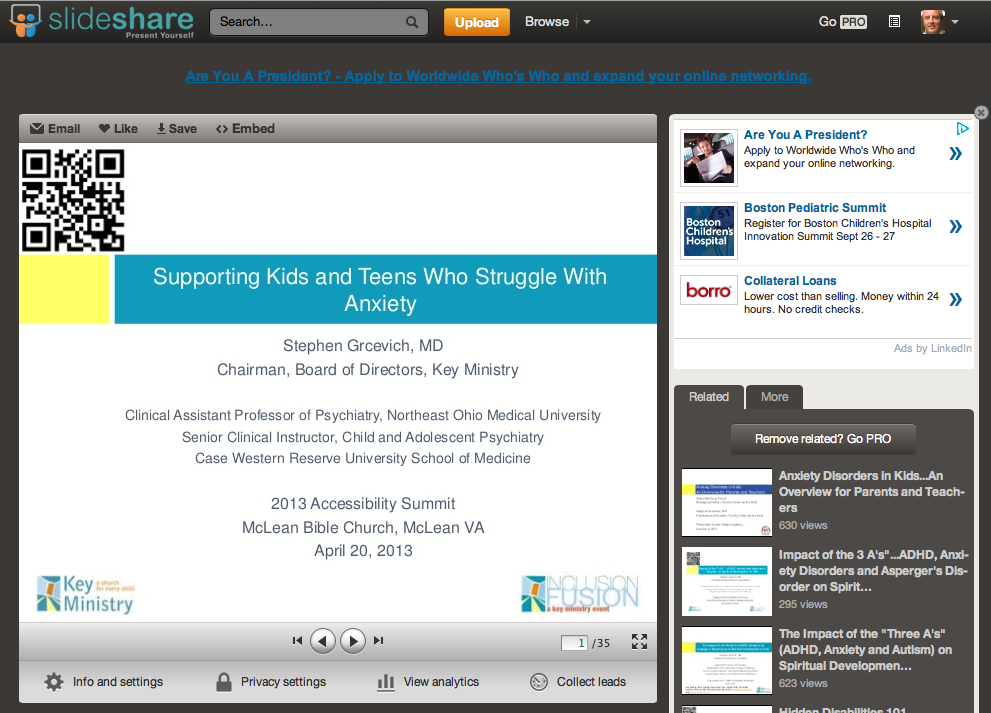
SlideshareNearly two years ago, I established a page on Slideshare.net to house Power Point presentations I’ve done for Key Ministry, as well as select presentations I’ve offered for professional conferences. You can access any of the presentations I’ve posted by clicking here.

We now have downloadable handouts on the site for 26 presentations, including the following Key Ministry presentations…

Supporting Kids and Teens Who Struggle With Anxiety, presented at the 2013 Accessibility Summit, McLean Bible Church, McLean, Va.

Hidden Disabilities 101, Including the Child With Aggressive Behavior at Church and Impact of the “3 A’s”…ADHD, Anxiety and Asperger’s Disorder on Spiritual Development in Kids, presented at the 2012 ENGAGE Children’s Ministry Conference in Mechanicsburg, PA.

Kids and Teens With Mental Health Disorders…Barriers to Spiritual Growth, presented at the 2012 Faith and Disability Symposium, St. Peter’s United Methodist Church, Katy, TX.

Square Pegs and Round Holes…Helping Kids With Asperger’s Disorder and Social Disabilities Grow Spiritually, presented at the 2012 Children’s Ministry Web Summit.

Kids With “Issues”…The Mission Field Next Door, presented during Inclusion Fusion 2011.

Children and Youth Who Demonstrate Aggressive Behavior at Church…What to Do?, presented at the 2011 Bioethics Conference and Through The Roof Summit, Cedarville University, September 17, 2011.

Raising Spiritual Champions…What Does the Data Say?, updated 12/27/11.

Tips and Tools for Including Children With Hidden Disabilities and Their Families at Church, prepared for volunteers at Redeemer Presbyterian Church, September, 2010.

Hidden Disabilities and Church…Cause of Irregular Attendance, Presented at Northland, A Church Distributed, October 3, 2009.

Embracing Children With Special Emotional/Behavioral Needs and Their Families…Responding to God’s Call, Fall 2009.

With one click, you can choose to “follow” my account on Slideshare, and receive notifications when future presentations are added.

Our team at Key Ministry is pleased to offer another free resource to church staff, volunteers and parents.

***********************************************************************************************************

600817_10200479396001791_905419060_nConfused about all the changes in diagnostic terminology for kids with mental heath disorders? Key Ministry has a resource page summarizing our recent blog series examining the impact of the DSM-5 on kids with mental health disorders. Click this link for summary articles describing the changes in diagnostic criteria for conditions common among children and teens, along with links to other helpful resources!

Posted in Key Ministry, Resources | Tagged , , , , , , , , , , | 1 Comment

Key Ministry is coming to Nashville!

Our Key Ministry crew will be putting on our next JAM Session in Nashville… We’re thankful for the invitation from the good folks at Lakeshore Christian Church who’ll be hosting our team on Saturday, September 21st.

Nashville JAM

NashvilleThe flyer above tells you pretty much everything you need to know…Our J.A.M. sessions are regional trainings designed for children’s pastors, student pastors, church leaders and key volunteers. This J.A.M. session will provide participants with an intensive, one-day training experience that will prepare them to lead ministry to kids with hidden disabilities in their churches, including sessions on including kids with disabilities in age-appropriate children’s or student ministry activities.

To register for the Nashville JAM Session, click here!

Our team looks forward to seeing you there!

***********************************************************************************************************

cropped-key-ministry-door.pngOur Key Ministry website is a resource through which church staff, volunteers, family members and caregivers can register for upcoming training events, request access to our library of downloadable ministry resources, contact our staff with training or consultation requests, access the content of any or all of our three official ministry blogs, or contribute their time, talent and treasure to the expansion of God’s Kingdom through the work of Key Ministry.

Posted in Key Ministry, Training Events | Tagged , , , , , , , | Leave a comment

How do you measure a “God thing?”

Pie ChartTwo conversations from last week have been on my mind…

One was with a colleague working in a ministry that serves kids with special needs. The sense of discouragement in their voice was palpable. This person is a very dedicated servant, but was questioning whether the work being done was making a difference.

Earlier in the week, I was pondering a question from our acting Executive Director… What have we done at Key Ministry in the past ten years that’s made the greatest impact?

I had a very hard time approaching the question.  If our mission is to help churches connect with families impacted by disabilities, the answer would seem straightforward. Our “win” occurs every time a family of a kid with a disability connects in a meaningful way with a local church we’ve trained or influenced.

Thoughtfully evaluating the “fruit” of our ministry is an important task. Although I firmly believe God places more importance upon our faithfulness than He does in our success, we’re nevertheless called to be good stewards of the resources we’ve been given (see Matthew 25:14-30). We have a responsibility to those who support our ministry to seek the best return on their Kingdom investment. There will be times when God closes some doors and opens others. Investing people and resources into those activities where God appears to be at work transforming lives seems like part of our ongoing discernment process.

We’re challenged in trying to evaluate our primary outcome measure because we’re dependent upon the churches we serve to report to us when kids with disabilities and their family members are making new connections. One measure we can look at is the number of kids being served by churches we’ve trained as part of our FREERESPITE initiative. But is that more (or less) impactful than training church staff and volunteers on including kids and families into weekend worship services or other Christian education activities?

UntitledThis morning, I was having breakfast with Stephen Burks… a very gifted worship pastor who launched a fabulous video production company to help support a ministry that serves the arts community. Stephen has also been a great contributor to our Key Ministry Board, and we were lamenting the failure of our ministry team (and other like-minded ministries) to effectively communicate and disseminate the “stories” of God at work through the efforts of local churches. With a little more time for reflection, a couple of Bible passages came to mind that appear to illustrate the principle that the measures of a “God thing” are the stories of the people whose lives were indisputably touched as a result of God at work, through the ministry of Jesus or the work of the Holy Spirit in the lives of His followers.

The first passage is from Matthew 11…John the Baptist had been imprisoned and sent his disciples to Jesus with questions…John may have thought his disciples needed encouragement while he was imprisoned, or John (like the rest of the Jewish people) may have been expecting a very different type of Messiah. Here’s Jesus’ response…

Now when John heard in prison about the deeds of the Christ, he sent word by his disciples and said to him, “Are you the one who is to come, or shall we look for another?” And Jesus answered them, “Go and tell John what you hear and see: the blind receive their sight and the lame walk, lepers are cleansed and the deaf hear, and the dead are raised up, and the poor have good news preached to them.

Matthew 11:2-5 (ESV)

Later, in Acts 15, we find the early church making a critical decision at the Jerusalem Council regarding the status of Gentile converts based largely upon the stories Paul and Barnabas related “what signs and wonders God had done through them among the Gentiles”.

While there is merit to many of our outcome measures, the most reliable measures of God at work are the stories of what God accomplishes through the service of His people.

Here’s a story of one of the families served through the ministry launched in Stephen’s church…

***********************************************************************************************************

600817_10200479396001791_905419060_nConfused about all the changes in diagnostic terminology for kids with mental heath disorders? Key Ministry has a resource page summarizing our recent blog series examining the impact of the DSM-5 on kids with mental health disorders. Click this link for summary articles describing the changes in diagnostic criteria for conditions common among children and teens, along with links to other helpful resources!

Posted in Key Ministry, Leadership, Stories | Tagged , , , , , , | 2 Comments

If we can include Isaac…

IsaacThumbOur friends at CLC Network in Grand Rapids provide inclusion resources for Christian schools, churches and home educators. They currently work with 58 Christian schools in four states, equipping the schools to serve kids who qualify for special education services that are generally available only through public schools.

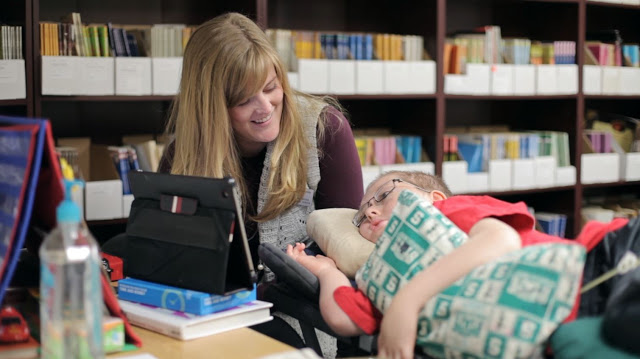
Last weekend, a short film was released online telling the story of Isaac, a student at Byron Center Christian School…one of the schools served by staff from CLC. This film is a little more than ten minutes long, but well worth the time! Isaac’s inclusion at Byron Center can only be characterized as an incredible blessing to the faculty and staff…From Bradley Productions, here’s Including Isaac:

https://vimeo.com/118712017

I suspect my reaction to the video was different from most. When I saw what the team at Byron Center was able to do with Isaac, I became very frustrated that Christian schools can’t (or won’t) do more to include kids with less obvious disabilities (dyslexia, dysgraphia, ADHD, communication disorders, processing delays) that generally require parents to turn to the public schools for help.

It seems to me the disability ministry movement has done a really nice job of highlighting the needs of kids like Isaac…but we haven’t done so well at serving kids with more subtle brain-based disabilities that present barriers to participation in Christian schools, as well as church itself. It’s time we do something about it!

Barb Newman and Elizabeth Dombrowski from CLC Network have graciously offered to put together a “back to school” miniseries on inclusion of kids with special education needs in Christian schools. We put together a list of questions for Barb and Elizabeth to spotlight the work they’re doing as well as the resources they have available for parents and educators with a common passion. We plan to begin the miniseries on Tuesday, September 3rd.

BarbNewman1April2011If Barb’s name sounds familiar, it’s because it is! While Barb’s day job is in special education, she may be best known by our readers for her advocacy for including kids with disabilities at church. We reviewed the most recent edition of her popular book, Autism and Your Church back in 2011.

Parents shouldn’t have to sacrifice a Christian education in order for their kids to get the specialized academic instruction they need.  And we’re going to introduce you to some folks who can help!

***********************************************************************************************************

ADHD Series LogoKey Ministry offers a resource center on ADHD, including helpful links, video and a blog series on the impact of ADHD upon spiritual development in kids and teens. Check it out today and share the link with others caring for children and youth with ADHD.

Posted in Advocacy, Inclusion, Key Ministry, Strategies | Tagged , , , , , , , , , , , , | 7 Comments

Talking to your child’s physician about medication for church

With the start of a new school year, and the start of a new program year, an appropriate topic to put on the table for children and teens who need ADHD medication for school is the question of their medication needs for church activities. In our office, we’re completing a very busy time in which we’ve been re-evaluating the medication needs of our patients with ADHD at school. If the activities our kids participate in through church are at least as important as what they do at school, it makes sense that we’d want to reassess their need for medication at church.

If I were serving as a children’s pastor or ministry volunteer and had a kid whose difficulty paying attention and maintaining self- control was creating disruption in the learning environment for other kids and discovered the child takes medication during the week to function in school but not on weekends at church, I might be a little upset. Why wouldn’t the doctor tell the parents to give the medication to the child on Sundays or in the evening for church?

Maybe the physician felt uncomfortable asking about family religious practices? In our ultra-PC world, more and more physicians are likely to avoid any discussion of religious practices altogether for fear of offending parents.

The physician is so busy that they don’t have time to ask about church. For any of you who’ve been to the doctor in the last few years, you probably recognize that there’s less and less time available to share your concerns with your child’s physician. Families who depend upon managed care to cover the cost of their child’s treatment or families receiving care through large hospital systems may have enough time at a follow-up visit to discuss one aspect of their child’s treatment.

The physician may not have the cultural competency to understand the importance of church in the life of the child’s family. I’m fascinated by some of the gaps in the range of culture academic physicians are exposed to, especially the lack of exposure to families from more conservative Protestant traditions. Docs tend to train in large, urban hospitals. Evangelicals tend to hang out in the suburbs. There was and issue of the journal Child and Adolescent Psychiatric Clinics of North America devoted to the issue of religion and spirituality a few years back in which there was an article entitled “Cultural Competency with Protestant Christians.” Let’s face it…there’s a really big difference in the values and attitudes of folks involved with the Church of Christ vs. folks in the United Church of Christ and between Presbyterians and Pentecostals. My specialty (child and adolescent psychiatry) includes a significant percentage of foreign medical graduates, many of whom were raised in countries where Christianity is far from the predominant religion. Bottom line: There’s a good possibility your child’s physician may come from a cultural or educational background in which they wouldn’t realize how important church is for some families.

The physician may recommend withholding medication on weekends to minimize the impact of side effects: It’s not uncommon for kids to have difficulty eating or fail to gain weight while taking medication for ADHD. That’s probably the most common reason physicians suggest to parents that they withhold medication on weekends. I won’t digress into a comprehensive review of the research on the long term effects of medication on growth, but it’s not something I worry too much about with my patients.

The physician may not have the depth of understanding about ADHD that would lead them to individualize the child’s treatment for evening or weekend activities. As with any other field, some docs have a greater level of sophistication in understanding ADHD and the nuances of the medications used to treat it. Educated parents who have done their homework and make well-reasoned suggestions to their child’s physician often get what they want.

In a nutshell, it should be possible to find a solution for church for kids who benefit from medication at school. There are currently 25 different FDA-approved products to treat ADHD. 22 of the 25 approved medications are stimulant products. All of the stimulant products have in common one of two active ingredients. One family of stimulants has as  a base ingredient some type of amphetamine salt or prodrug (Adderall, Adderall XR, Dexedrine, Dexedrine Spansules, Procentra, Vyvanse). The other family of stimulants contains methylphenidate as a base ingredient (Ritalin, Concerta, Metadate, Focalin, Focalin XR, Daytrana, Quillivant XR). The differences between the products within a given family involve the form the medication comes in (pills, liquid, patch), how the drug is released into the body, and most importantly for this discussion, how long the medication lasts.

While these medications are highly effective (the odds that a kid will respond to a product from at least one of the two families of stimulants is around 90%), a slight majority of kids clearly respond better to products from one stimulant family or another. What this tells us is that kids who take an extended-release form of stimulant (8-12 hours or more) to get through school during the week will probably respond to a short-acting form of the same medication on weekends, or a short-acting booster to extend the duration of medication effects in the late afternoon or evening. For example, a kid who takes Concerta or Focalin XR (pictured left) during the week might take Ritalin or immediate-release Focalin (pictured below) on a Sunday morning to get about 4 hours worth of medication effects. A kid on Adderall XR or Vyvanse might take an immediate release Adderall to get 4-6 hours of effects on weekends. With late afternoon booster doses, the same principle would be true…the potential drawbacks being medication effects on appetite at dinner or delaying the onset of sleep. Some physicians will use booster doses in the late afternoon that are less potent than the equivalent long-acting stimulant medication in the evening to try to minimize side effects.

I’m not neglecting the three approved non-stimulant medications in this discussion (Strattera, Intuniv and Kapvay), but kids on non-stimulants are usually treated seven days/week and the question of whether to give medication on the weekend typically doesn’t usually become an issue. Non-stimulants are generally less effective than stimulants. One observation: Most of my patients on Strattera typically take medication twice daily (first thing in the morning and after school) because I’ve found the effects typically don’t last the entire day. Most of the manufacturer’s clinical trials with Strattera were conducted with medication administered twice daily. Bottom line: Kids who are prescribed Strattera and struggle with evening church activities may need a second dose in the late afternoon.

We put together a sheet that parents can download and share with their child’s physician when they would like their child with ADHD to experience the benefits of medication for church activities. The purpose of the sheet is to help parents share their concerns about church activities with the child’s physician and provide them with the information they’ll need to make any necessary adjustments.

Download the form here: Medication Request for Church

Note to church staff and volunteers: Don’t share the existence of this form with parents who have not explicitly disclosed that their child takes prescribed medication for ADHD and expressed interest in using or adjusting medication for church. The use of prescription medication should not be a precondition for a child’s involvement in church activities.

***********************************************************************************************************

ADHD Series LogoKey Ministry offers a resource center on ADHD, including helpful links, video and a blog series on the impact of ADHD upon spiritual development in kids and teens. Check it out today and share the link with others caring for children and youth with ADHD.

Posted in ADHD, Hidden Disabilities, Mental Health | Tagged , , , , , , | Leave a comment

A milestone reached…and a look at what’s ahead

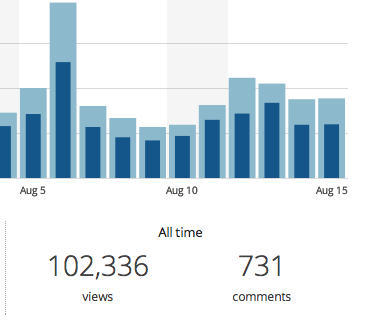
317650_266042136752225_116940088329098_865135_613522890_nI’d like to thank all of our blog readers for your comments, encouragement, prayers, supports, shares and retweets…earlier this month (on what turned out to be a bittersweet day) this blog hit a significant milestone for page views. Advocating for the inclusion of families of kids with emotional, behavioral and developmental disabilities at church isn’t exactly a topic likely to generate broad interest. It’s extraordinary that nearly 600 people regularly follow the stuff we post here! That’s considered a large church in most parts of the country.

Four years ago, several members of our team met with some folks with a large Christian publishing company. We discussed a couple of projects, one of which ultimately came to fruition. I was encouraged to submit a proposal for a book. The title was going to be Wonderfully Made: A Guide for Parents of Kids With Mental Health Issues (and those who minister to them). Apparently, there’s not much of a market for this type of book. But there were still folks who wanted and needed the information, and a book to be written.

Blog StatsThis blog is the “book”…without too much editing and lots of other stuff thrown in related to the disability ministry movement and our team at Key Ministry. I suspect that more pastors, church staff, volunteers and parents have accessed the “book” in blog form than would have been the case.

The “book” is almost done…I still plan to do a blog series on trauma this fall, along with a mini-series on learning disabilities, but we’re pretty much finished with the content I’d hoped to present when the blog was launched. So…what’s next?

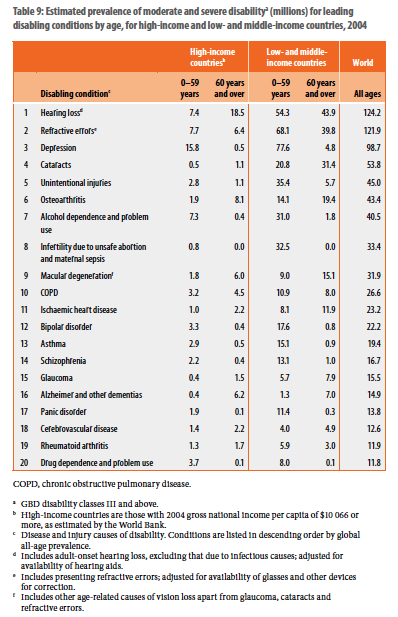
WHO Disability StatisticsWe need a forum for advancing the conversation within the church about the need to minister more effectively to families of children with mental illness, trauma and developmental disabilities. The church has made enormous strides over the past ten years in expanding ministry to kids with intellectual disabilities and kids with significant physical disabilities, but has struggled to serve the vastly larger population of kids and teens with mental health disorders. According to the National Institute of Mental Health, mental disorders are the leading cause of disability in the U.S. and Canada, and represent the third leading cause of disability worldwide (behind hearing loss and refractive vision), according to the World Health Organization. Mental illness is the most common cause of disability among kids in the U.S. by a wide margin. My gut tells me that one of the reasons we don’t talk about ministry to families impacted by mental illness is that our church leaders don’t understand the issues involved and have few strategies for including kids and families affected into the life of the church. That’s always been a central part of our mission at Key Ministry. We’ll find the folks who have the answers and provide them a platform for sharing them with the larger church.

We’ll use the blog to disseminate some of the wonderful resources developed by our team and our colleagues with other ministries. Once a week, beginning in the Fall, we’ll open the Inclusion Fusion library to share videos from our last two Web Summits with a new audience. We’ll continue to expose our readers to the work being done by other disability ministry leaders and introduce you to the faces of the disability ministry movement.

Thanks for your comments, your encouragement and your interest! And please keep forwarding posts and resources of interest to pastors, church staff, volunteers and families who see the Church as incomplete without the presence of all of God’s kids and families!

***********************************************************************************************************

220px-The_ScreamKey Ministry offers a resource center on Anxiety and Spiritual Development, including helpful links, video and a blog series on the impact of ADHD upon spiritual development in kids and teens. Check it out today and share the link with others caring for children and youth with anxiety disorders.

Posted in Key Ministry, Mental Health, Resources | Tagged , , , , , , , , | 2 Comments

Ten priorities for the disability ministry movement…

Key Ministry DoorBut Caleb quieted the people before Moses and said, “Let us go up at once and occupy it, for we are well able to overcome it.” Then the men who had gone up with him said, “We are not able to go up against the people, for they are stronger than we are.” So they brought to the people of Israel a bad report of the land that they had spied out, saying, “The land, through which we have gone to spy it out, is a land that devours its inhabitants, and all the people that we saw in it are of great height.

Numbers 13:30-32 (ESV)

large door final.inddAs we’re coming up on the beginning of a new ministry year, we’ve been spending some time scouting out the landscape and developing a plan as an organization for how we might use the resources God has very generously provided Key Ministry to produce the greatest possible impact for the Kingdom. We’ll be meeting next week as a Board to finalize our priorities for this year…and perhaps the next few years as well.

Those of us in leadership positions throughout the disability ministry movement need to ask ourselves whether we’ll approach the challenges ahead from the perspective of Caleb and Joshua while scouting out the Promised Land, or whether we’ll focus on seemingly insurmountable obstacles…as did the ten other spies sent by Moses along with Caleb and Joshua.

Here are some thoughts about how, with God’s help, God’s people might overcome the “giants” standing in the way of families impacted by disabilities who face barriers to connecting with their larger family in Christ through involvement in the local church. I’ve listed ten priority “targets” for the disability ministry movement. I’m very interested in hearing the thoughts and observations of our fellow “spies” so we might develop a coordinated “battle plan”.

  • We need to pursue relationships with senior pastors and executive pastors of churches that aren’t intentionally pursuing any strategy to connect with families impacted by disabilities in their local communities,  seeking  first to understand their perspectives before expecting them to understand ours. All too often, we in the disability ministry movement stick together in our “holy huddles”, indignant at churches who don’t share the same passions as us without taking the time to appreciate their call, or the priorities that they juggle on a daily basis. We can’t find common ground with our brothers and sisters in leadership until we first take the time understand the church cultures in which they serve, and consider models of outreach and inclusion that will work within the context of their church culture.
  • We need to develop new models of inclusion at church. We struggle to find common ground with churches that don’t do ministry “programs”. Some churches don’t have volunteers to spare to launch ministries heavily dependent upon the use of “buddies”.
  • We need to develop and publicize effective models of service ministries to children and adults in the community impacted by disabilities. The movement among churches to become more “missional” and “outwardly-focused” is a golden opportunity to establish common purpose between the disability ministry movement and churches that have to this time demonstrated little intentionality in serving those in the community with disabilities.
  • We need to develop better strategies for connecting with and including families impacted by the full range of disabilities…not just those with severe physical, intellectual and developmental disabilities. Teens with disabilities are frequently terrified of any service or intervention with the potential for causing their peers to see them as “different”…an enormous limitation for ministries dependent upon “buddies” or self-enclosed classrooms. Mental illness is the leading cause of disability in the U.S. and throughout the developed world, yet we lack demonstrably effective ministry models for outreach to and inclusion of children and adults with significant mental health concerns. That must change.
  • We need to do a much better job of telling and disseminating our “stories.” We’re not going to be successful in engaging church leaders, mobilizing volunteers and raising the necessary funding to expand our influence within the larger church without continually casting a compelling vision of how those currently outside the disability ministry community can join God at work by supporting outreach to and inclusion of the persons and families we seek to serve.
  • We need (to quote one of our Board members) “scaleable” models for training church staff and volunteers in disability ministry. I’ve enjoyed the occasional opportunity to join our ministry team at a couple of our JAM sessions where we might have the opportunity to train 15-40 staff and volunteers from 3-12 churches in a given region. The reality is we need events in which we’re training hundreds of pastors and thousands of volunteers if this movement is to truly have an impact throughout the church, much less our larger culture.
  • We need modern, effective means for communicating our most effective ministry strategies…“best practices” with one another and with the larger church.
  • We need to engage and mobilize members of the professional community who are sympathetic to our cause. Our Board and ministry team has always seen the effort to share the love of Christ with families impacted by disabilities as a “three-front war.” The first front encompasses the effort to influence churches to recognize the need that exists in their local communities and train the pastors, staff and volunteers of those churches to respond to the need. The second front involves mobilizing parents of children with disabilities who are established within the church to become advocates within their local congregations and supporting them as they encourage and exhort one another. Mike Woods and the team of parent-authors assembled at Not Alone have done a fabulous job of ministering to and supporting parents as they become champions for their children in the local church. The final front involves mobilizing professionals who can lend wisdom and credibility to ministry efforts in local churches as well as the larger disability movement, and direct families they serve in their daily work to local churches prepared to meet their needs.
  • We need to become more effective at empowering families impacted by disabilities to use their gifts in ministry to others. Most of the leaders I’ve met in this movement are parents of kids with disabilities who love the Lord, have strong connections with local churches and want the same for everyone else’s family. Our kids with disabilities and their families have marvelous gifts to contribute to the Kingdom…we can give them the opportunity!
  • The organizations and leaders who compose the disability ministry movement have a unique opportunity to reflect what it means to be the body of Christ as described by the Apostle Paul in Romans 12. We have lots of small ministries and organizations with passions and gifts that complement one another very well. We need to look for organizational synergies in order to advance the movement. We need to seek ways of using our resources to advance the work of our colleagues in ministry. The title of a book describing the hospital where I served my residency pretty much sums it up. To Act as a Unit…

***********************************************************************************************************

SNDMThat’s our “scouting report” on the territory ahead. I don’t mean for this post to be the final word on anything in disability ministry, but to serve as a discussion starter. I’ll be posting this on the Special Needs and Disability Ministry Leaders Forum on Facebook and encourage discussion there.

Posted in Inclusion, Key Ministry, Leadership, Mental Health, Strategies | Tagged , , , , | 3 Comments