A small church doing big things…Ellen Stumbo

Ellen profile picEllen Stumbo is a rising star in the field of disability ministry and the founder of Disability Matters. She is a writer and speaker who focuses on sharing the real -sometimes beautiful and sometimes ugly – aspects of faith, church, disability, parenting, and adoption. Ellen is a pastor’s wife, and her husband, Andy, leads a Christian and Missionary Alliance church. Ellen’s writing has appeared on Focus on the Family, LifeWay, MomSense, Not Alone, Mamapedia and the Huffington Post. Ellen blogs at ellenstumbo.com and you can also find her on Twitter and Facebook. We interviewed Ellen in anticipation of her upcoming Inclusion Fusion presentation.

C4EC: Can you tell us a little bit about the importance of disability ministry at your church (Orchard View Alliance Church)?

ES: Disability Ministry at our church is best described as simply doing life together. We don’t have an established disability ministry, mainly because we are a micro church (50 or less people), yet we are somehow defined by disability. We have adults with disabilities, children with disabilities, and many caretakers. As a matter of fact, over 50% of our congregation is impacted by disability in some way. As we meet on Sunday mornings or Wednesday nights, or special occasions, we make disability fit in as an organic way of doing church. We don’t have the people to staff new ministries, so we look at each other and say, “We are not alone,” and together we do the messy of life, and we celebrate the good, and we laugh and cry and support one another.

C4EC: You’ve developed an interesting model for including families impacted by disability into community. Can you tell us about it?

ES: First, we believe that we are all made in the image of God, and that we are all valuable members of the body of Christ, all of us. We need each other. We all give, and we all take, it is part of human interactions and relationships. We also look at our church as a family. About half of our kids in our children’s ministry have disabilities, which also means that most of the typical kids have a sibling with a disability, so these kids naturally help out, or they are awesome at ignoring behaviors. Nobody makes a big deal about noises, or steaming, or speech that is hard to understand.

If a mom is sitting in the foyer with a child, we make sure that mom is not sitting on her own, because what is the point of going to church if you sit alone in the foyer trying to keep your child calm from the overwhelming stimulation of church? Sometimes, some of the best conversations happen in the foyer, or walking around the church parking lot pushing wheelchairs. We share openly, honestly, we are willing to be vulnerable because we desperately need those close relationships.

And we take turns, we don’t have the people to run Children’s Church, so we gladly take turns with the kids.

C4EC: What advice would you give to other small churches in which persons with disabilities represent a disproportionately large part of the congregation?

ES: Trying to establish a new program or ministry with already overworked or limited volunteers is intimidating, daunting, and perhaps not even doable. But including disability as a normal part of church makes it attainable. Back when the Christian church began, believers did life together. They gathered often, they helped each other, they had no established “ministries.” So the question would be, how can your church include disability organically? Can adults with disabilities help as greeters, ushers, or help with small, easy tasks? Can the special needs parents connect with each other and be supported by the rest of the church members?

C4EC: How did you find the resources to make your church facility so friendly to kids with disabilities?

Stumbo sensory roomES: One Sunday we found ourselves with 16 kids, and eight of them had a disability. We have kids in wheelchairs, non-verbal kids, kids with autism, Down syndrome, cerebral palsy. And many of them have sensory issues. Church is a hard place to be for many kids with special needs. So one of the moms said, “We need a sensory room.” And another moms said, “I have a swing I could donate.” and it went from there. Eventually, this idea grew and we saw the benefit it had for the kids we have (as not all of them can be in a Sunday School class because of their needs and the overstimulation). My husband and I visited a church in Illinois (Rockford First) and we toured their sensory rooms and special needs ministry. It was amazing! From there, we saw how we could combine a sensory room with Children’s Church. We made a list of what we would need, looked at our space at church (we have a large building) and came up with the cost. Then we raised the money. We knew God was in this when it took us only three weeks to raise $5,000.

C4EC: How can a small church make a big impact for the Kingdom through ministry to families impacted by disabilities?

Stumbo Sensory Room 2ES: When we built our sensory rooms, we planned on making them available to the special needs community. Our idea was to have “open hours” so parents could bring their kids and use our facility. We have therapy equipment, and lots of sensory items that can be beneficial to children with disabilities, yet too expensive for most families to purchase and have at home. The local respite program heard about what we were doing, and they contacted us asking if we would consider hosting their program. To us, this was an answer to prayer, another confirmation that this was from God. Every week, we have a moms group gathering, while the kids have a special activity, and every month we have dozens of families drop off their kids for respite. Our church might be small (micro) but we are making a difference in our special needs community. We are the church that embraces disability.

It also helps that the senior pastor (my husband) has two children with special needs!

C4EC: You’re personally embarking on a new ministry adventure. Why did you launch Disability Matters?

ES: Disability Matters was the result of a long drive back home to Wisconsin from Montana. I had written a blog post about Church and Disability as a response to many stories shared with me from special needs parents and adults with disabilities and their experiences at church. The response from that post was overwhelming, with more and more stories making their way into my inbox or the comments section on my blog. After reading all those stories my husband and I began asking, what can we do to encourage every church to embrace disability? So I took out a notebook and we started brainstorming. When we got home, we had the main concept for Disability Matters, with a mission, vision, and plan of what we wanted to do and accomplish. Our mission is to encourage every church to embrace disability. We are not talking a new program or ministry, but a way of doing life together, because disability is a normal part of life.

C4EC: What will you be sharing with everyone who joins us for Inclusion Fusion?

ES: I will be sharing about Disability Matters, about doing life together, about how people are searching for meaningful and real relationships and how those relationships should happen at church. I will also be sharing about our model of small groups, and how established small groups can become great support groups for everyone involved, not only those impacted by disability.

Find out more about Disability Matters at whydisabilitymatters.org. ***********************************************************************************************************
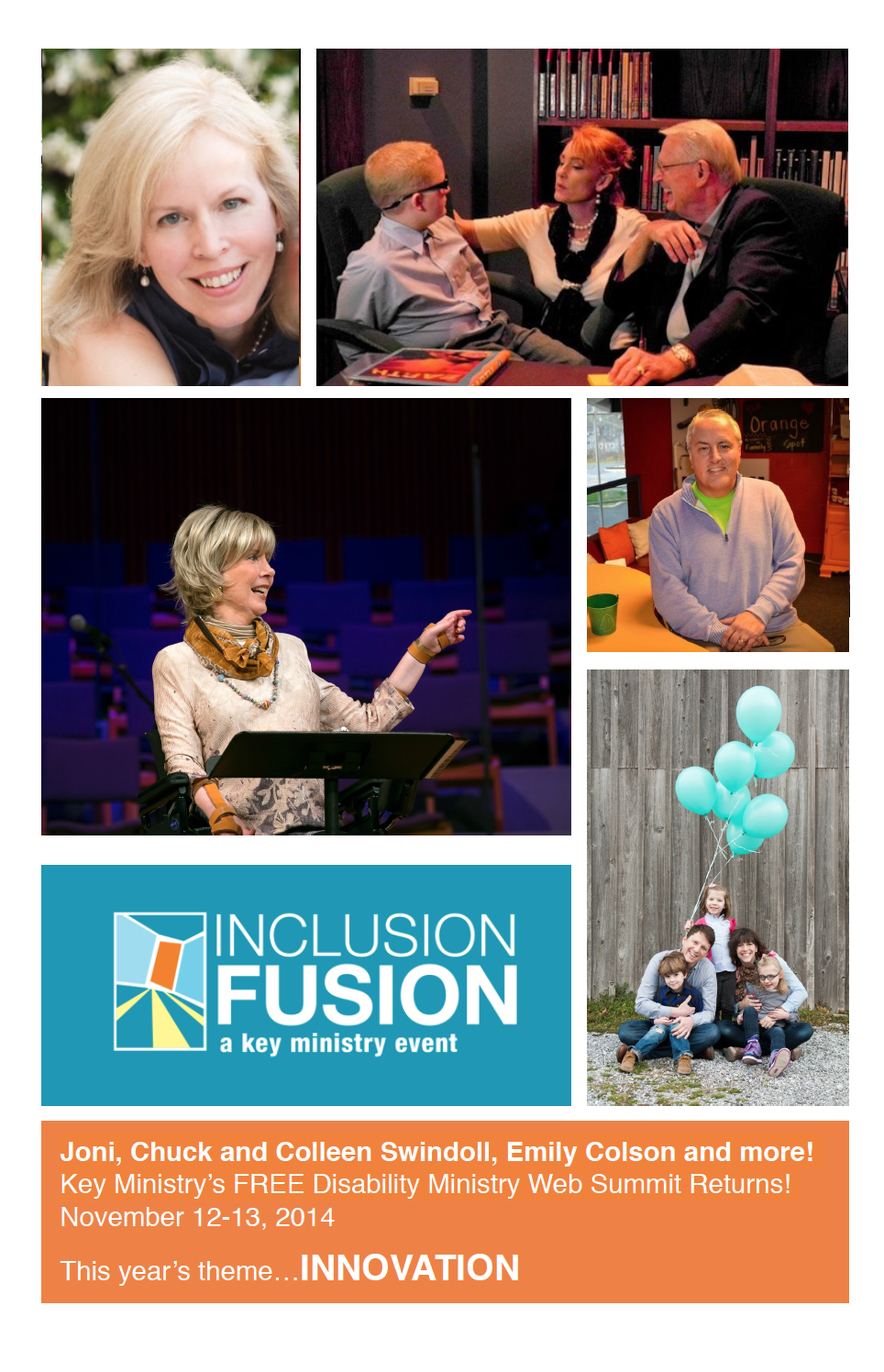
IF 2014 PosterJoin keynote speaker Joni Eareckson Tada, Chuck Swindoll, Emily Colson, Barb Newman and 20+ leaders representing the scope of the disability ministry movement this coming November 12-13 for Inclusion Fusion 2014, Key Ministry’s FREE, worldwide disability ministry web summit. Engage in interactive chat with many of our speakers and watch each presentation at the time of day that works best for you in the environment in which you’re most comfortable. Click here to view our entire speaker lineup and register for Inclusion Fusion 2014.


Posted in Families, Inclusion, Inclusion Fusion, Key Ministry, Ministry Environments, Strategies | Tagged , , , , , , , , , , | 3 Comments

The responsibilities of church leaders who promote adoption

featured-image2Today, Orphan Sunday is being recognized and celebrated in thousands of churches, large and small, here in the U.S. and beyond. It’s incredibly cool to see the church “being the church” through enabling the world’s most vulnerable kids the opportunity to experience the love of Christ through a caring family.

One of our priorities for Key Ministry as we move forward is to expand the scope of resources available to share with churches responding to the need for adoptive homes. Our ministry developed as a byproduct of a large church’s attempts to meet the needs of a highly committed group of families who were struggling to stay involved at church in the aftermath of adopting kids from Eastern European orphanages. We’ve already begun to see the fruits of our planning through the incredible response we’ve experienced to the series Shannon is doing on adoption and the church.

My clinician’s perch affords me a unique perspective on the commitment and faithfulness of families called to serve as foster care providers or led to adopt kids who wouldn’t otherwise have a home. My “day job” has also led me to anticipate the challenges families will often face in their adoption or foster care ministry…challenges that far too many families and churches are oblivious to when they commit to an adoption or orphan care ministry. In our practice, our adopted kids are among our most challenging to treat, and the most likely to need an out of home placement. In reality, the church hasn’t exactly distinguished itself by its’ depth of understanding of those with complex mental health concerns.

Dingle Front Door SliderShannon has been discussing how churches can love their adoptive and foster families. I’d like to challenge church leaders to assume responsibility for supporting their families when they pursue adoption ministry.

1. Church leaders have a responsibility to be forthright with the families about the challenges they’ll potentially face. According to this paper in Pediatrics, adopted children are more likely than biological children to:

  • Have difficulties with emotions, concentration, behavior, or getting along with others.
  • Have a learning disability, developmental delay, or physical impairment
  • More than twice as likely as biological children to have special health care needs
  • More likely to have repeated a school grade
  • Less likely to have a very close relationship with the parent
  • Parents of adopted children are more likely than parents of biological children to have felt that the child is harder to care for than most children

Too many parents go into foster care or adoption assuming their love will be sufficient for overcoming the damage resulting from a child’s experiences or upbringing. Love isn’t always enough.

2. Church leaders have a responsibility to commit the time of your church staff and the necessary funding to ensure that your leadership becomes trauma-informed. Shannon said what needed to be said on the subject here.

3. Church leaders have a responsibility to provide tangible supports for families who, as a result of encouragement from church leadership pursue a calling in adoption or foster care. Will you help families access the mental health services they’re more likely to need for an adoptive or foster child? What about the medical services they may require if adopting a child with special medical needs. What about tutoring or advocates who might help families access special education or support services from schools? What about child care or respite care when families can’t find or can’t afford someone when they need a break?

4. Church leaders have a responsibility to put in place the supports to allow the family to maintain no less than their preexisting level of engagement in the church. In my mind this one is MOST important. Are you prepared to welcome their kids into your children’s ministry or youth ministry? What if the parents adopt a child who is HIV-positive? What will the parents need to continue to attend their small group every week? What will they need to continue to serve in the ministries where they’ve grown and matured in their faith?

Are we as church called to care for orphans? You bet. Are we expected to use the gifts and talents entrusted to us to plan effectively to support families after respond to such a noble calling? They should expect nothing less!

***********************************************************************************************************

Inclusion Fusion 2014Join keynote speaker Joni Eareckson Tada, Chuck Swindoll, Emily Colson, Barb Newman and 20+ leaders representing the scope of the disability ministry movement this coming November 12-13 for Inclusion Fusion 2014, Key Ministry’s FREE, worldwide disability ministry web summit. Engage in interactive chat with many of our speakers and watch each presentation at the time of day that works best for you in the environment in which you’re most comfortable. Click here to view our entire speaker lineup and register for Inclusion Fusion 2014.

Posted in Adoption, Families, Foster Care, Key Ministry, Strategies | Tagged , , , , , , , , , | 4 Comments

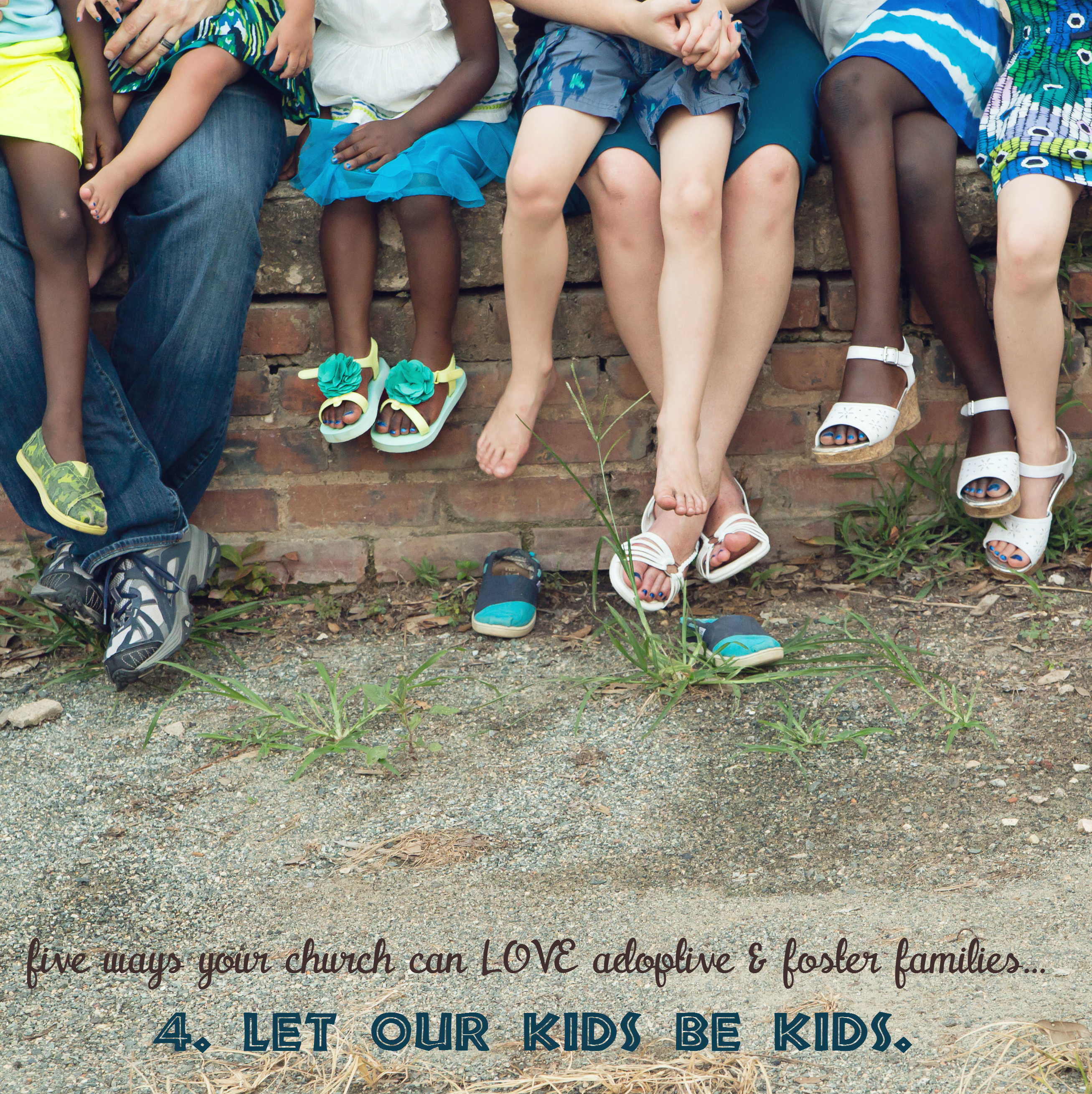
To love adoptive and foster families, (4) let our kids be kids…

Dingle Family

We’re delighted to present Shannon Dingle’s next installment in her series on Adoption and the Church. Shannon is a co-founder of the Access Ministry at Providence Baptist Church in Raleigh, NC and serves as a Key Ministry Church Consultant. Today, she shares the fourth of five ways churches can love their adoptive and foster families-Let our kids be kids. Here’s Shannon…

After writing four posts so far about how the church can show love uniquely to foster and adoptive families, this post might seem like I’m backtracking. I’ve shared the four kinds of special needs commonly found in foster and adoptive families, specific ways to partner with parents like us, a request not to treat us as idols, and a basic primer on what churches need to know about trauma and attachment.

And now I’m asking you to let our kids be kids.

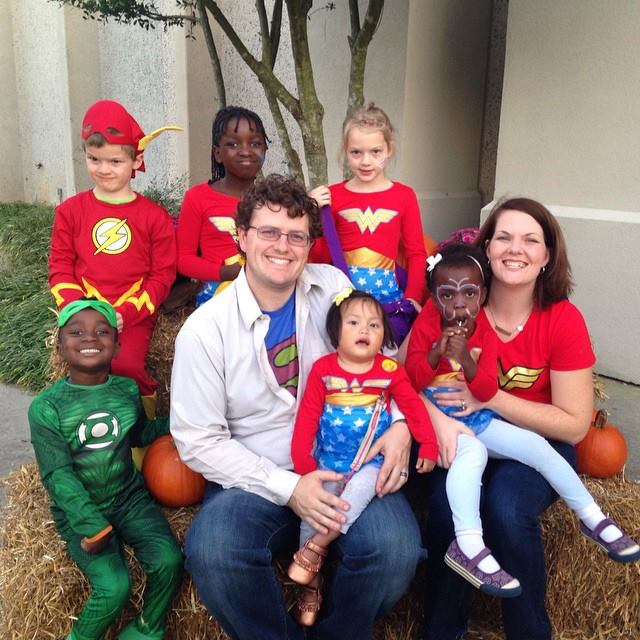
They love swings and slides. They stall at bedtime. They have prized toys and special blankies and favorite colors. They’ll do almost anything to earn time to play games on the iPad. They’ll all suit up as superheroes – four Wonder Women, one Flash, and one Green Lantern, with Wonder Woman mom and Superman dad – tomorrow for Halloween.

Their stories and the stories of other kids in adoptive and foster placements might be more complex than the typical kid. They might talk about more than one mother, or they might only recognize their adoptive parents as mom and dad. They might have been held by their adoptive parents on the day they were born, or they might have hit puberty before having a family, or they might still be waiting to be adopted, or they might be in a foster home temporarily before being reunited with their biological family. They might have switched foster homes more than military kids switch schools. They might be open about their backgrounds or they might not be, but either way they get to own their pasts without anyone expecting them to satisfy someone else’s selfish curiosity. Their worst day ever might be much darker and traumatic than the worst days of most adults. They might have been called an orphan in the past, but they’re not orphans anymore.

C4EC adoption series image 4But they are kids, first and foremost.

Welcome them as you would any other child.

Work with their parents or guardians to figure out how to include them well.

Love them, cheer them on, and tell them how much God loves them.

Let them be kids.

***********************************************************************************************************

Cameron DoolittleJoin keynote speaker Joni Eareckson Tada, Chuck Swindoll, Emily Colson, Barb Newman and 20+ leaders representing the scope of the disability ministry movement this coming November 12-13 for Inclusion Fusion 2014, Key Ministry’s FREE, worldwide disability ministry web summit. Engage in interactive chat with many of our speakers and watch each presentation at the time of day that works best for you in the environment in which you’re most comfortable. Click here to view our entire speaker lineup and register for Inclusion Fusion 2014.

Posted in Adoption, Families, Foster Care, Key Ministry, Strategies | Tagged , , , , , , , , | Leave a comment

The Silent Fighter…

Whitney OpdahlI came across Quiet Little Voices when a colleague with another ministry shared the post we’re about to share on Facebook. I read some of Whitney’s other posts. Her writing represents one of the most authentic depictions of the experience of mental illness that I’ve run across. She graciously allowed us to reblog this post.

Whitney describes her blog with this summary…”I’m a girl. I have mental illness. Let’s talk about it. Honestly.” Check it out. Here’s Whitney…

Treading water is a fact of life. Everyone does it at some time. But not everyone treads in the same ocean and one ocean does not mirror another.

The ocean of mental illness is not an easy one to weather. Nothing brings this to greater light than hearing of someone else’s reality in this expanse we share. Sometimes so closely similar it’s staggering and for a few moments, you find yourself in that same ocean but experiencing a different location…or perhaps reflecting on the path behind you. The depth of the water and the struggle to survive wax and wane, but you tread, or, in the good times, perhaps you swim.

At first, you most likely find yourself staring down the deep, black, dense waters that turn your soul to a lead weight. Hard, painful, confusing times. The sea is so big. It’s so big. And you are so small. So very small. A swell could easily topple you into oblivion. An endless expanse. An Immensity of unknown, pain, emptiness, and hopelessness.

Why do you keep treading? It’s so big, dark, and raging with storms and hurricane winds. The swelling realization of this endless reality begins to loom; the doctor appointments become too many; the pills accumulate like driftwood fished from the water, examined, discarded. The leaden weight in your chest could easily carry you under, a casualty to the chaos.

But you keep treading.

Even if there is no explanation, something, just something, leads you to believe there’s a sprig of hope floating somewhere in this Immensity. But it’s just…somewhere. A hidden, teasing treasure.

The work is hard and your legs are weary. The water is cold and storms brew and crash against you. You are ship-less, sail-less. A waif in the Immensity. So tragically voiceless as the thunder drowns your words and the cold numbs and makes you too weary to attempt explanation.

And the beach is so far away. Leagues and leagues away. How could one ever reach it? Hopelessness seeps into the winds that whirl around your sinking head.

The deep draws closer. You almost welcome it. To just let go and sink…freedom. Or is it loss? Do you have things to lose? You cannot decide which it would be, but it is choice only once made and you have no comfortable answer. So you tread.

Then one day, an unexpected day, a wave pushes you up toward the surface instead of pulling you down into the dark. Just one day. Just one wave. One breath where hurricanes are simply storms and the darkness swallows you a little less. One day. One wave.

Time passes and the waves float by, most dragging you but still some lifting. The clear, free air loosens your souls weight slightly and a thought begins to form. A crazy, harebrained idea only a madman would entertain…but it nags.

You will never have a ship. You have no wood, no cloth for a sail. But what if you could…

…swim?

A positive wave every few days does not a hopeful treader make, but the possibility of pushing toward tamer waters…it lingers like the smell of roses passing by your nose.

Time is insignificant and a pointless gauge of success, but a puzzle is forming piece by backbreaking piece in your mind and at some startling moment, you feel a shiver of heat run through your veins. Fight. Just a teaspoon. Your exhausted legs still plead to simply let go, but even just the teaspoon is too much to ignore. It has gone to your brain. Maybe it’s not enough to swim, but it’s enough to test your waters.

A teaspoon every so often, steady, like the upward swells, and your weight lightens, your legs energize, the rain is not as cold and the winds are almost pleasant at times. Fight.

The depths still loom. They threaten. They seduce. They fight back, grasping at your feet. But your fight, the teaspoons you have gathered into your body, says, “I cannot let you take me. I cannot.” No explanation, just blind trust and hope that your fight and your faith will lead you to better waters.

And they do. Your fight grows. It spins tendrils through your mind. You become A Fighter. A Gladiator in your arena of mental demons. The Immensity has lost some of its power over you.

As fighters do, you will lose rounds. You will stumble backward and have to gather your fight teaspoon by teaspoon again.

But you will know that the depths, the darkness, that thing that calls to you and promises release from it all, cannot overcome the whisper of hope you have seen grow in yourself. You are A Fighter now.

You will never beat back the Immensity completely. It is the ocean into which you were born. You will weather storms and battle tsunamis. You will swim in shallower waters and breathe sweeter air. Hope, though, that sensation you felt at the first upward swell, the first free breath, will remind you of your fight. It promises you better times in bad and greater strength in good.

So await your teaspoons and gather your fight. Because we who started out so beaten and weathered, so ship-less and imprisoned, so agonized and voiceless, we are Fighters now. No matter the distance you swim, or whether you swim at all, you have cleaved to your hope and clawed your way from darkness and have been given a medal forged of blood and tears.

Few will see it and few will acknowledge its worth, but wear it. Because you have fought the invisible battle and even if you are feeling overtaken by the Immensity right now, you have still won because your hope has not let your head sink under the waves. You are A Fighter.

Never Lose Hope. Never Stop Fighting.

***********************************************************************************************************

KM Logo UpdatedKey Ministry has assembled resources to help churches more effectively minister to children and adults with ADHD, anxiety disorders, Asperger’s Disorder, Bipolar Disorder, depression and trauma. Please share our resources with any pastors, church staff, volunteers or families looking to learn more about the influence these conditions can exert upon spiritual development in kids, and what churches can do to help!

Posted in Advocacy, Anxiety Disorders, Depression, Mental Health, Stories | Tagged , , , , , , , , , , , , | Leave a comment

To love adoptive and foster families, (3) partner with us…

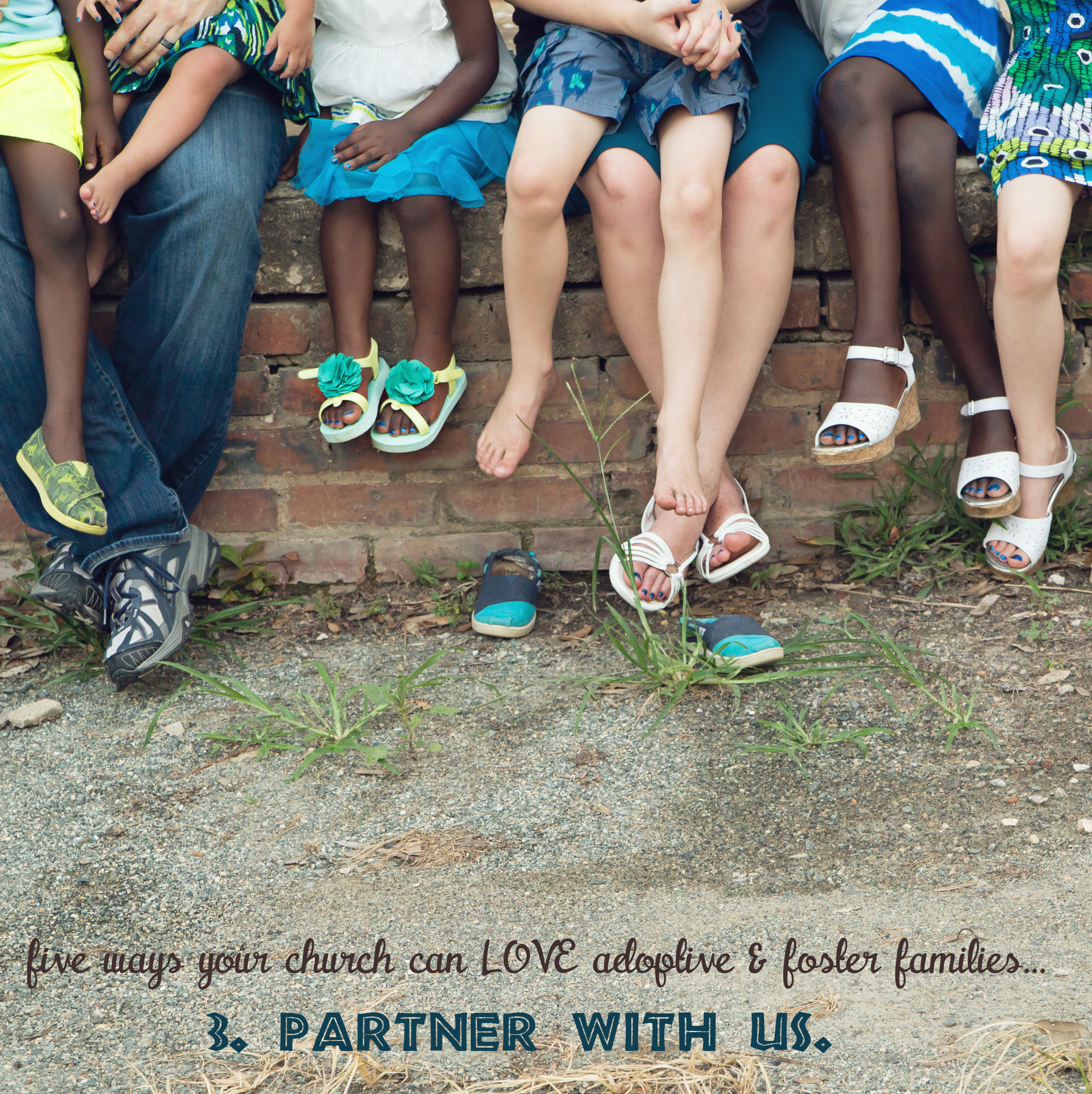
C4EC adoption series image 3We’re pleased to share Shannon Dingle’s next installment in her series examining adoption and the church. In addition to serving as a Key Ministry Church Consultant, Shannon is a co-founder of the Access Ministry at Providence Baptist Church in Raleigh, NC. Today, she presents the third of five ways churches can love their adoptive and foster families…Partner With Us. Here’s Shannon…

Family ministry is a buzzword in the church today. A lot of the language around this trend is about partnering with families because God created the institution of the church and the institution of the family to complement one another.

So it makes sense that one way to love the adoptive and foster families in your church is to partner with us. In many ways, this looks just like family ministry does for everyone else. In the words of Timothy Paul Jones from his book Family Ministry Field Guide: How Your Church Can Equip Parents to Make Disciples, family ministry is:

“The process of intentionally and persistently coordinating a ministry’s proclamations and practices so that parents are acknowledged, trained, and held accountable as primary disciple-makers in their children’s lives.”

To this end, churches are promoting and/or developing resources to equip parents. As a mom, I’m a huge fan of this! I love all the tools I can get my hands on, and with six children who are each uniquely created with different learning styles and temperaments, parenting isn’t a one size fits all endeavor for me and my husband (nor is it for any other parent).

If you’ve missed the other posts in this series, you might want to read those for a little more context: the one in which I introduced our family, the one about the four kinds of special needs in adoptive and foster families, the first way to love adoptive and foster families: avoid treating us like idols, and the second way: become trauma- and attachment-informed.

When it comes to partnering with families who are adopting, have adopted, and are involved in foster care or Safe Families, the church can step up in love in a few specific ways to help equip us:

  • shutterstock_154112351Familiarize yourself with local resources. Are there family counselors or therapists in your area who are experienced in working with foster and adoptive families? Can you name one adoption- or foster-trained social worker in your county? If one of your adoptive or foster families wanted to go to a conference to be better equipped in their roles as parents, how would you direct them? What agency manages post-adoptive counseling for families who have adopted from foster care in your state? If you can’t answer those questions, do a little research so that you can.
  • Use your words wisely, in three specific areas:
  1. Be thoughtful in how you talk about adoption and foster care. When adoption, foster care, orphans, or the fatherless are talked about in your church, be mindful that you are describing people not abstract concepts. If you would change your words if you knew a former or present foster child, orphan, or other unparented child was in your congregation, then choose different words.
  2. Avoid framing adoption as a Plan B if biological children don’t come. I’ve been in situations in which a pastor or other leader frames parenting sacrifices as trying to have children and pursuing treatments to that end and then, after exhausting that path, considering adoption. Each time, I want to reach over and cover the ears of my children, because they aren’t the afterthoughts that adopted kids sounded like in those sermons. Yes, many families do chose adoption after infertility, but when that’s how adoption is framed, their children – who are often in church and hearing the same sermons – might feel like they aren’t as wanted or preferred as biological children. And many families like mine chose to adopt or foster without ever experiencing infertility.
  3.  Talk about “the family” in a way that respects our families too. How do you frame the family in your sermons and other teaching? Please define family more broadly than just one father, one mother, and 2.5 biological children (and not just for our benefit, as other families – like blended families or those led by a single parent or two divorced parents – are also loved well in this way). Our foster and adopted children were not born to us, may not be biologically related to us, and – in the case of foster families – are not ours and might only be in our home for a season. Those kids can feel like less if your definition of a family doesn’t include them.
  • Love our other children well. If we already had other children in our home, we might find it challenging to give them all the attention they need in the midst of a new adoptive or foster placement. Invite our other children on play dates, to the movies, or to the mall food court… simple gestures that can give them the attention they hunger for while allowing us to focus our energy on the new addition(s) without guilt.
  • Don’t judge us. If we feel safe enough with you to share about the overwhelming hard times, especially the moments when we wonder if we’ve made a terrible mistake or the moments when scary words like dissolution* or disruption* enter our minds, Love. Don’t dismiss us. Don’t sing songs to our heavy hearts. We don’t expect you to have tidy answers to our messy realities; we just expect compassion.

Family ministry is a healthy trend as churches partner with parents to disciple their precious ones. Thank you, pastors and other church leaders, for being willing to come alongside us and understand some of the unique aspects of adoptive and foster families like ours.

*Dissolution or disruption is the legal word for ending an adoption. It could be compared to divorce ending a marriage. While dissolutions and disruptions are heartbreaking, they happen and sometimes they are necessary for the wellbeing of all involved for reasons often related to trauma and attachment.

***********************************************************************************************************

IF 2014 PosterJoin keynote speaker Joni Earackson Tada, Chuck Swindoll, Emily Colson, Barb Newman and 20+ leaders representing the scope of the disability ministry movement this coming November 12-13 for Inclusion Fusion 2014, Key Ministry’s FREE, worldwide disability ministry web summit. Engage in interactive chat with many of our speakers and watch each presentation at the time of day that works best for you in the environment in which you’re most comfortable. Click here to view our entire speaker lineup and register for Inclusion Fusion 2014.
Posted in Adoption, Advocacy, Families, Resources, Strategies | Tagged , , , , , , , , , | 1 Comment

Join us Wednesday for a “Notable” documentary…

83 - Version 2Our friends at 99 Balloons have developed a unique ministry that provides ways for others to engage children with special needs locally and globally.

Their “rEcess” ministry is a monthly respite program provided for children with special-needs. These events are typically hosted by churches longing to serve families within their own community. 99 Balloons has now launched “rEcess” in churches in eight different states and Canada.

99 Balloons also casts a larger global vision to personally engage individuals with disability around the world. They recently co-sponsored Engage Disability India, a nationwide conference to strengthen the Christian response to disability in India. They have sponsored mission trips to Haiti, but the ministry seems to have a special call to ministry in Uganda.

99 Balloons has forged a partnership with Ekisa Ministries around a “rEcess Uganda” global project. Ekisa offers a community care program to help support and encourage families affected by disability in Uganda serving approximately 50 families. The two organizations have worked together to develop an overnight respite program for families served by Ekisa. Culturally, these families have a lot going against them – they are often shamed, isolated and marginalized by their community because of their child having a disability. But Ekisa’s community care program has provided tremendous support, resources and encouragement for these families, and this new respite opportunity will be a huge blessing for these families.

This past Spring, I had the opportunity to attend a private screening of Notable, a documentary produced by 99 Balloons on disability in Uganda. The film highlights three stories of individuals with disability living in a culture where families are often shamed, isolated and marginalized by their community because of their child having a disability. It’s easy for us in the disability ministry community to assume that attitudes and challenges we experience in the U.S. are universal, while in reality, the challenges faced by families impacted by disability in other cultures may be far greater…and present greater opportunities to the church than we ever imagined!

After experiencing the film, I knew I wanted to share the experience with the churches and constituents we serve through Key Ministry. On Wednesday, October 29th, you’ll have the opportunity to view the film as well.

We’ll be featuring Notable from 7:00 AM-midnight Eastern time on Wednesday the 29th. The film is approximately 30 minutes long and will be available all day for viewing at keyministry.tv, on the hour and the half-hour all day long. In addition, viewers will have the opportunity to “chat” about the film with Matt Mooney, the visionary founder of 99 Balloons during the 12:00 PM and 12:30 PM  screenings, while Brian Hill (one of the filmmakers) will be available during the 6:00 PM and 6:30 PM screenings.

No reservation is required to join us during the day, but you will need to respond to the prompt to login with your Facebook account to join in the interactive chat.

Hope to connect with you at Key TV this Wednesday!

***********************************************************************************************************

IF 2014 PosterJoin Jolene, keynote speaker Joni Earackson Tada, Chuck Swindoll, Emily Colson and 20+ leaders representing the scope of the disability ministry movement this coming November 12-13 for Inclusion Fusion 2014, Key Ministry’s FREE, worldwide disability ministry web summit. Engage in interactive chat with many of our speakers and watch each presentation at the time of day that works best for you in the environment in which you’re most comfortable. Click here to check out our speaker lineup and register for no charge.

Posted in Advocacy, Key Ministry, Stories | Tagged , , , , , , , , , , | 2 Comments

He won’t remember: Children and PTSD…Jolene Philo

PHILO - Children and PTSDSome things parents never forget. Like the first time a mother holds her newborn child. Or the first time a baby belly laughs at a father’s antics.

But when I think of our son’s early days, an unpleasant memory comes to mind. Our baby’s wince of pain when the nurse took him–bristling with drainage tubes, feeding tubes, IVs, and monitor wires–and placed him in his daddy’s arms.

Newborns Dont Feel Pain

“Should we really be moving him?” my husband asked. “Wouldn’t it be better for him to lie still in his bed?”

“No,” the nurse assured us. “He needs the security of your arms more than anything right now. Besides, newborns don’t feel pain like they do when they get older. That’s why your baby isn’t on pain meds.”

I looked at the two inch vertical incision on our baby’s stomach and at the horizontal one that began under his armpit and ended at his spine. I looked at my son’s drawn mouth, the frown lines on his forehead, and the strain in his eyes.

“Are you sure?” I questioned the nurse…and later the surgeon, the pediatrician, and the GI doctor. “Are you sure he’s not in pain? Are you sure this won’t affect him emotionally?”

He Won’t Remember

One after another, well-meaning health care professionals gave the same answer.

“He won’t remember.”

“He won’t remember.”

“He won’t remember.”

Our baby was 26-years-old before a mental health care intake counselor confirmed our suspicions.

Our newborn son did feel pain during and after surgery.

He did remember.

He remembered a lot.

But because the experiences were pre-verbal, he had no words to describe how he felt.

Those memories were the source of his emotional and behavioral issues during adolescence.

Your Son Has PTSD

“Your son has PTSD.”, the woman said.

My heart sank.

Then she added, “And we can help him.”

At first, I didn’t believe her or the other counselors at the clinic. “Everyone says they can help,” I explained. “But nothing changes.”

“We can help him,” they repeated.

Because our son had nothing to lose and everything to gain,

because my husband and I had no Plan B,

because we all sensed God at work guiding us to this place,

we stayed.

Our Son Still Has PTSD

One week later, our son had his life back. He was whole in a way he’d never been before. He was ready to move forward with his life, and he did.

Our son still has PTSD.

He always will.

But it no longer controls him.

Rather, he controls it.

Because he now has words to explain what he experienced in the first hours and days of his life. When those emotions try to whisper fear, he speaks back truth. He moves on.

PTSD Awareness Is Growing

Awareness of PTSD is growing. Churches talk a lot about adults with PTSD: soldiers returning from war, victims of natural disasters, children and teens who experience physical, sexual, or emotional abuse.

But very few churches talk about the babies, special needs babies, who also suffer from PTSD.

Because we don’t want to believe they feel pain.

Very few churches talk about children already traumatized before birth or children traumatized by direct or observed trauma.

Because we good church people don’t want to believe they remember.

But children do remember.

My son remembered and suffered for 26 years.

Then, in one short week, with the right treatment, his life was given back to him.

No child should have to suffer for 26 years when effective treatments exist. My heart breaks when I think of lives ruined, families torn apart, teens and young adults who feel like failures because they want to change but can’t. Such would have been our story had God not intervened and led us to the talented mental health care professionals who healed our son. So church leaders, be aware of these truths:

Babies in the womb can be traumatized.

Newborns do feel pain.

Infants can remember trauma.

Children can be traumatized when they observe a loved one suffer trauma.

That trauma can develop into PTSD.

Effective treatments for PTSD do exist.

Children as young as 3 can be treated.

If you think your child may have PTSD, seek treatment now.

Hope exists!

Jolene Philo blogs at Different Dream for My Child

Updated July 11, 2015

***********************************************************************************************************

NCTSDKey Ministry offers a resource page on Trauma and Kids to pastors, church staff, volunteers and families. The resource page includes links to all of the posts from our Fall 2013 blog series, links to resources from Jolene Philo, the National Child Traumatic Stress Network and Empowered to Connect. Check it out today and share the resource page with others who would benefit.

Posted in Advocacy, Hidden Disabilities, Inclusion Fusion, Mental Health, PTSD, Resources, Stories | Tagged , , , , , , , , , , | 38 Comments

#2…Churches should become trauma and attachment-informed

C4EC adoption series image 2Today, Shannon Dingle continues her series examining adoption and the church authored while serving as a Key Ministry Church Consultant. Today, she looks at the second of five ways churches can love their adoptive and foster families…Become Trauma and Attachment-Informed.

Adoptive and foster parents know about trauma and attachment, so their churches should too.

But what does that mean?

Attachment is the act of bonding, usually focused on the child bonding to his or her adoptive or foster family but also applicable to new parents bonding to their family’s new child. Children who have been adopted or who are in foster care don’t have the typical attachment process of biological children. Even a child adopted at or soon after birth spent months in the womb hearing a different voice than the mother they went home with, and research has shown that bonding of a child to mother begins with those first sounds and smells in the womb and soon after. For children who have learned not to trust adults (for example, if trusted adults have abandoned them or died or lied or hurt them), attachment can be even harder. This affects behavior, nutrition, learning, self-worth, and more.

Trauma includes a constellation of previous experiences a child has that could have a negative effect, including abuse, neglect, loss, grief, starvation, medical mistreatment, and being witness to violence. That’s a long list, isn’t it? And it’s not comprehensive. Every child is different, and so are the responses of each child to their own trauma histories. That said, research shows that trauma can impact children’s developing brains. Research indicates that childhood trauma is sometimes misdiagnosed as ADHD, early trauma leads to changes in brain chemistry and development, and institutionalization of children leads to higher rates of lasting sensory processing issues. And that’s just the tip of iceberg on what experts have to say about the effects of childhood trauma.

So, church leaders, what can you do to become trauma- and attachment-informed and to then use that knowledge to serve adoptive and foster families well?

  1. Just say no to romanticizing adoption and foster care. Can there be beauty there? YES! But is it borne out of hard places? YES! God calls us to care for unparented children, so we should be willing to say, “Here I am, Lord, send me,” but we aren’t serving anyone well if families dive in after being presented with a glamourized version of the realities of adoption and foster care.
  2. Give high fives instead of hugs. Okay, that’s not a firm rule, but please resist the desire to shower our kids with affection. Ask us first. That might sound harsh or like we’re helicopter parents, but the reality is that our kids might not understand who to trust or how to know what love is. God designed children to learn about love for the first time in a family environment: the womb, then their parents’ arms, and so on. Those moments of early feedings and middle of the night soothing develop a child’s brain to know that mom and dad are their secure sources of affection. Sometimes well-meaning folks forget that many kids in adoptive and foster placements never learned that. One of my children showed this to the extreme with what experts call “indiscriminate attachment.” In layman’s terms, she would willingly go with any adult, with no preference for me or my husband. For her to learn healthy attachment, she needed us to be the main sources of affection.
  3. Same goes for food and gifts. Once again, ask us first. Kids learn to trust and attach to caregivers through nourishment (i.e. food) and provisions (i.e. gifts). Getting those from us and from others can be confusing, especially at first.
  4. Let us enter children’s ministry on our timetables. In other words, be flexible. Understand that our kids might need to be with us more and in the nursery or Sunday school less, and please help us navigate that reality for the season in which it applies to us. Be willing to change some rules if they don’t make sense for us. For example, the nursery program for our ladies’ midweek Bible study program is run by a precious woman who gently pushes moms to go to their own small groups instead of lingering, and that works for most kids. But when our youngest cried so hard she ruptured a blood vessel in her eye when we finally started putting her in the nursery? We both knew that wasn’t working for our family, and we adjusted accordingly.
  5. Don’t say, “Oh, every kid does that.” We feel dismissed by those words, and they show that you don’t get it. Let’s return to the previous example. Did my daughter’s reaction look like typical separation anxiety? Yes. Was it? No. Many of the attachment- and trauma-related behaviors for kids in adoptive and foster families might look like the usual kid behaviors, but they’re different.
  6. Respect our children’s privacy. To love our family well, you don’t need to know the specifics of our children’s history with attachment, trauma, and life in general. Some families choose to share limited information, but most of us consider our children’s stories to be theirs to own and share on their own timetables.
  7. Finally, understand that every family is different. Every adoptive and foster family deals with attachment and trauma differently, so this entire list might not apply to all the families in your church. So be willing to listen and learn from us before acting based on assumptions.

By reading this post, you’re already showing great love for the adoptive and foster families at your church because you care enough to learn a little about how child development might differ for our kids. Thank you for that.

Updated January 6, 2018.


Posted in Adoption, Advocacy, Controversies, Families, Foster Care, Hidden Disabilities, Inclusion, Strategies | Tagged , , , , , , , , , , | 27 Comments

Five ways the church can love their adoptive and foster families

C4EC adoption series image 1This is the third post in a series by Shannon Dingle examining adoption and the church. In addition to Shannon’s role as a Key Ministry Church Consultant, she is a co-founder of the Access Ministry at Providence Baptist Church in Raleigh, NC. Today, Shannon looks at the first of five ways churches can love their adoptive and foster families…Avoid Treating Us Like Idols.

Before we brought home our daughter with cerebral palsy from Taiwan, I read all the books. We talked to other adoptive parents. We completed every educational module required by our social worker. We felt prepared.

But nothing prepared us for how isolated we would feel when we came home.

Yes, people brought meals and coffee and notes of encouragement and hugs and so on. But when we struggled, I didn’t know how to reach out. I felt like we had been put up on a pedestal by so many:

Look at the sacrifices they made to give this child a family – they’re amazing!

Her special needs are a complete unknown, and they still said yes. What saints!

When they adopted that child, they rescued him from death.

While each of those statements might hold a nugget of truth, they set us up to be superheroes or saints or something else that we simply aren’t. We’re human. We struggle. And when we’re up on a pedestal that others have built for us, we’re set apart from the rest of the community. That’s not what God’s design is for the church.

Furthermore, our kids aren’t charity cases, and we don’t want them to feel like they are or were. As “Orphan Sunday” approaches in a few weeks, consider how your church might be sensitive to the children, youth, and adults in your congregation who were once unparented themselves, be it in a hospital nursery, foster care environment, orphanage, or elsewhere. When their parents are being elevated with comments about what a great thing they did, then those children may feel like they are less deserving of their families than a biological child might be.

Yes, our families might have been made differently and even look differently than the majority of families in your church, but we’re just families. Our path to parenthood (either in general or of one or more of our children) might not be the same as yours, but we have more in common than you might think.

In the next few posts, I’ll write about some unique aspects of our families that might require some modifications in ministering to us. But before I dive into those, remember that our lives involve the same perfectly imperfect aspects as any other family: dirty diapers, homework, bedtime battles, meal planning, and mountains of laundry. And we yell and cry and fight and fail and apologize just like you do.

We aren’t rescuers or heroes or martyrs, not any more than all the other parents who love and sacrifice for their children. Let us be on common ground with you, sinners at the foot of the cross made saints before the throne of grace. Instead of worshiping us, welcome us into community with you as we glorify the One True God together.

***********************************************************************************************************

12_JONI_SPEAKING_0001Join keynote speaker Joni Earackson Tada and 20+ leaders representing the scope of the disability ministry movement this coming November 12-13 for Inclusion Fusion 2014, Key Ministry’s FREE, worldwide disability ministry web summit. Engage in interactive chat with many of our speakers and watch each presentation at the time of day that works best for you in the environment in which you’re most comfortable. Click here for FREE registration.

Posted in Adoption, Advocacy, Families, Foster Care, Key Ministry, Strategies | Tagged , , , , , , , , | 7 Comments

The compelling case for social media in special needs ministry…Barb Dittrich

Photo image courtesy of Tsung-Lin Wu via 123rf.com

Photo image courtesy of Tsung-Lin Wu via 123rf.com

It’s easy to feel very old when I consider how things used to be at the foundation of our ministry 12 years ago. As I obediently stepped out in faith with young children and little knowledge, God surely carried out His perfect plan in and through Snappin’ Ministries. We began with a box of tissues, 6 couples and a potluck dinner with 3 tossed salads at our very first meeting. That quickly morphed into monthly meetings with expert speakers and free, on-site child care. The parents whom we served were able to access critical information, encourage one another, and get a small break from the kids.

Unfortunately, we found attendance waning over time, even though interest and need remained high.

The question for us became, “If our parents can’t come to us, how can we come to them?”

The answer, of course, took us down the winding road of social media.

From Merriam-Webster online (http://www.m-w.com), First used in 2004

social media (noun) : : forms of electronic communication (as Web sites for social networking and microblogging) through which users create online communities to share information, ideas, personal messages, and other content (as videos)

When we think of marginalized populations, those with physical disabilities, chronic illnesses, and special needs are certainly among the most prominent. Isolation is a critical core issue. Regardless of the paradigm, leaders in special needs ministry are attempting to include and connect people to the Body of Christ in various ways. This is why using social media is so compelling.

Social media can:
• Help those who are isolated connect to others right from where they are.
• Offer opportunities to worship online outside of a bricks-and-mortar church.
• Assist those with mental health, social, or learning challenges in overcoming barriers.
• Provide confidential small groups through a variety of settings and platforms.
• Direct participants to resources they may never otherwise identify on their own.
• Offer on-demand training for volunteers and leaders.
• Consolidate and save postage on monthly newsletters.
• Schedule events and outreach for your ministry.
• Activate fundraising campaigns for ministry.
• Enable real-time meetings with people in various locations.
These are just a few of the possibilities.

Although people can get stuck on the notion that social media presents a false front or an impersonal touch in ministry, I prefer to look at it in a more positive light. I don’t think it’s an either/or situation, but rather a both/and. In other words, it is my strong opinion that social media cannot be a complete replacement from in-person community, but rather a supplement to it.

For example, within the context of a church, if one of your families cannot get to the church building because a child is hospitalized or a family member is having an anxiety attack, they can benefit greatly by connecting to you through social media. If you have a Facebook page, they could be encouraged by photos that were taken at this weekend’s service. They would be able to access the sermon if you uploaded it to YouTube. If you blog, they could access spiritual insights and instruction there. If you Instagram, your youth group could send a quick “get well” message to the affected child.

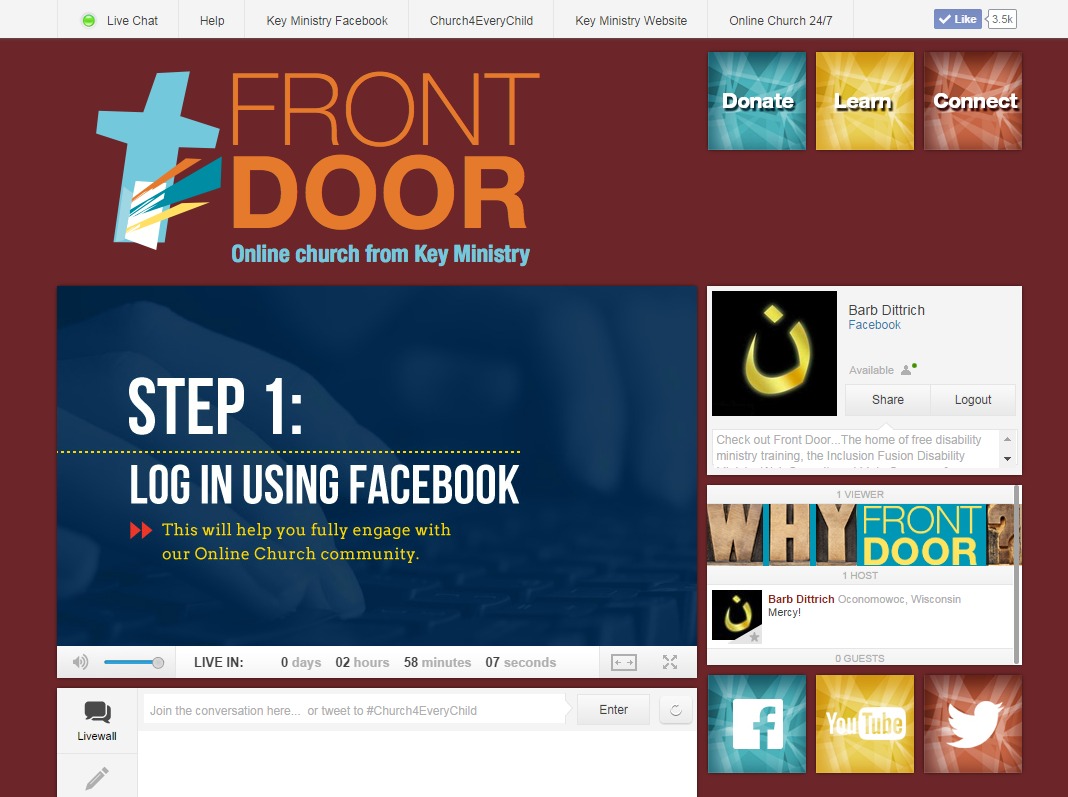
Livewall BlankIn addition, we need to realize that there is still much work to be done in the way of special needs and inclusion ministry. Not every church has a functioning, healthy method of reaching those affected by disability or chronic illness. In that case, those of us who do have vibrant programs or para-church outreach need to stand in the gap. We can do so by offering online community via social media.

Our ministry has continued to reach parents through our parent mentor program. However, we have recently changed our model to that of a small group. Our Side-By-Side Small Groups enable parents from different locations find support where they otherwise would have found none. For example, we have parents that may want to connect with another parent at 9 AM on a Tuesday, but there’s no one in their area who can meet at that time. Through the use of tools like video conferencing, we can create that opportunity for struggling parents. It is incredible to see God work in and through it.

I have also had parents discuss with me the possibility of their lonely children connecting to another child in the same situation through a safe, healthy platform. That also could be initiated, monitored, and maintained through some form of social media.

The possibilities are boundless. Something like Inclusion Fusion couldn’t even exist if not for the gift of social media.  You can see why a leader like me gets so excited about how God can use this tool to seek and save His children, if we are obedient. He owns the cattle on a thousand hills. Why should we not trust Him with use of the internet?

********************************************************************************************************

Barbara Dittrich is Executive Director and Foundress of Snappin’ Ministries. She also serves as Barb D.Social Community Manager for Key Ministry.  She and her husband, Steve, raise their 3 kids, each with either a special need or chronic illness, in Southeastern Wisconsin.  Watch for her upcoming interview on Social Media & Special Needs Ministry during Inclusion Fusion, November 12 & 13, 2014 at http://inclusionfusion.tv.

Posted in Inclusion, Inclusion Fusion, Key Ministry, Strategies | Tagged , , , , , , | Leave a comment