Hot Topics: Why is effective mental health care for kids so hard to find?

Today’s post is the first in a series on Hot Topics in Children’s Mental Health we’ll be doing in May in recognition of Mental Health Month, National Children’s Mental Health Awareness Week (May 6-12), and and National Children’s Mental Health Awareness Day. We’ll start by taking a look at some reasons why families often experience great frustration in obtaining effective treatment for their children with mental health disorders.

Shortly after launching this blog, I wrote a post entitled Church, We’ve Got a Problem following the publication of a government-funded study reporting that 22% of children entering first grade met criteria for at least one mental health disorder. Serving kids with mental health issues and their families wouldn’t be such a big problem for churches if more kids were receiving more effective treatment. Sadly, that’s not the case.

Much has already been written about the challenges families face in obtaining an appointment for a child or teen with an appropriately trained and qualified mental health professional. Here’s an interesting study examining access to mental health care for kids on a state-by-state basis. Unfortunately, it says nothing about the effectiveness of the services provided.

I’m in my 21st year as a practicing child and adolescent psychiatrist following completion of residency and fellowship training. Because of the nature of my practice, the majority of families I see have received services from other mental health practitioners prior to my initial evaluation. Keeping in mind that I have a biased sample (these families wouldn’t be coming to our office if their child had responded positively during prior attempts at treatment), I never cease to be amazed by the experiences families report to me when I’m taking a history of their child’s previous episodes of care.

I see several recurring themes among patients who present to our practice after having received unsuccessful treatment elsewhere…

  • There often appears to be an inadequate understanding of the causes of the child’s presenting problem(s) by the professionals treating the child…or at the very least, a failure to communicate that understanding effectively to the child’s parents.
  • When medication is a component of the child’s treatment plan, the parents and the child often demonstrate little knowledge of why medication is being prescribed, the rationale for using a specific medication, the anticipated benefits of medication and the time frame in which the benefits of medication might be observed. I’ve also observed that healthcare professionals often fail to appreciate the extent to which medication-related side effects complicate the lives of the kids they treat.
  • Kids often receive ineffective treatments (psychological and/or medical) for long periods of time without anyone involved…parent or professional…regularly questioning the course of treatment.

Reflecting upon these observations, one barrier to kids receiving effective mental health care is that parents often lack an appreciation of the standard of care they should expect for their children. Another barrier is that many parents don’t know the right questions to ask to ensure that their kids get the treatment they need. Parents may be intimidated by the prospect of questioning professionals about their child’s care, especially when access to other qualified professionals is limited by geography or finances. An additional reality is that too many professionals treating kids aren’t especially competent or effective, but continue because the need is so great and alternatives are scarce in many communities.

Recommended resources:

Here’s a download from NAMI’s Child and Adolescent Action Center…Getting an Accurate Diagnosis for Your Child: 10 Steps for Families.

Here’s a Facts for Families download from the American Academy of Child and Adolescent Psychiatry on questions for parents to ask about psychiatric medication.

Here’s a fact sheet from the National Institute of Mental Health on Frequently Asked Questions About Treatment of Children  With Mental Illnesses.

Next: How money influences the mental health care our kids receive…

***********************************************************************************************************

Key CatalogOur Key Ministry team is very much in need of your support if we are to continue to provide free training, consultation and resources to churches. Please consider either an online donation or a sponsorship from the Key Catalog. You can sponsor anything from an on-site consultation at a local church, the addition of a new site for church-based respite care, to a “JAM Session” to help multiple churches launch special needs ministries in your metropolitan area. Click the icon on the left to explore the Key Catalog!


Posted in Advocacy, Controversies, Resources | Tagged , , , , , , , , , | 2 Comments

Square Pegs and Round Holes…The Bottom Line on Helping Kids With Asperger’s Disorder Grow Spiritually

Today’s post concludes our series on helping kids with Asperger’s Disorder and other social disabilities to grow spiritually. We’ll finish by looking at some general principles to  help church staff, parents and volunteers to minister more effectively to very unique kids made in the image of God who tend to defy categorization.

What are the most important things for a pastor, children’s/youth ministry director or volunteer to remember when helping a kid with Asperger’s Disorder to come to faith or grow in faith?

Kids who are less neurotypical are likely to require more individualized approaches to spiritual growth. They’re too different to fit neatly and cleanly into “one size fits all” programming. When I think of my own caseload of kids with Asperger’s, the differences are astounding. I saw a kid this week fortunate enough to attend a great church that appears willing to offer him a summer job…his family is concerned that his lack of attention to personal hygiene could become a problem and we strategized how they might work through this issue. I have another kid with Asperger’s who sent me a Power Point presentation detailing the strategies he uses to better manage his obsessive thinking. Good luck trying to implement the same strategies in serving the two of them, although they share the same diagnosis.

Allow parents to take the lead in guiding the spiritual development of their children… come alongside them to lend resources, encouragement and support. To borrow from a famous figure in the family ministry movement, parents get 3,000 hours a year with their kids….church staff and volunteers (if fortunate) get 40-100 hours. Who stands the better chance of understanding the best way to teach kids about Jesus who process relationships and the world around them differently than everyone else? The person who goes to their kid’s therapy appointments or the person who has spent the most time that week in church staff meetings?

Identify their gifts, strengths and talents and offer them opportunities to use them serving in the church. After all, church is the place where a kid’s value isn’t based upon their popularity, their athletic ability or their overall capacity for achievement but in the regard Christ has for them as a child in His Kingdom. And the Bible is very clear that all of Christ’s followers have gifts and talents to contribute as the church seeks to reestablish  the presence of the Kingdom here on Earth.

Many of the kids I encounter with Asperger’s Disorder and other social disabilities are desperate for friends and acceptance. What better place for them to find true friends… especially our Ultimate Friend…Jesus-than through His church?

Several weeks ago, I had the opportunity to do a presentation on this topic for the 2012 Children’s Ministry Websummit. For those of you who were unable to participate in this year’s Websummit, here’s the video from the presentation:

The complete DVD set of presentations from the Websummit (including the video of my presentation) is available now through this link for $49.00. Proceeds support the production of free ministry training offered by Pajama Conference, including Key Ministry’s Inclusion Fusion Special Needs Ministry Websummit.

Key Ministry will be offering another free, day-long JAM (Jumpstart All-Inclusive Ministry) Sessions at Center Pointe Christian Church in Cincinnati, OH on Saturday, May 12th. Click here to register!

Posted in Autism, Key Ministry, Spiritual Development, Strategies | Tagged , , , , , , , , | Leave a comment

May Series…Hot Topics in Children’s Mental Health

If kids and teens affected by mental illness and their families are to be successfully welcomed and fully included in our churches, the church will need to make great strides in its’ understanding of mental illness. That’s where I hope we can help.

May is designated as National Mental Health Month, and the week of May 6-12 is officially designated as Children’s Mental Health Awareness Week. In order to promote better understanding of common mental disorders in children and teens and the challenges faced their families, we’ll spend the month looking in depth at some of the more controversial topics in the field of child and adolescent mental health.

I’m not saying we’ll be able to cover all of these topics, but some ideas under consideration include…

How much influence does the pharmaceutical industry have with the physicians who treat kids for mental illness?

Are there effective homeopathic treatments for mental illness in children and teens?

Do antidepressants increase suicidal behavior in youth?

How do insurance companies/managed care impact the mental health treatment received  by children and teens?

What legitimate safety concerns exist regarding the use of psychotropic medication in children and teens?

What do we know about the relationship between trauma and mental illness in kids?

How does our educational system contribute to the increased prevalence of mental illness in kids?

Does psychotherapy work for kids? If so, when?

Why is it so hard to find good Christian mental health services for kids?

Are the increased rates of mental illness reported in kids legitimate?

When should a parent search for a new psychiatrist, psychologist or counselor for their child?

What would YOU like us to talk about? Leave your suggestions below in the Comments section. We’ll try to get to as many requests as possible in our May series…that could easily extend into the summer.

Key Ministry will be offering free, day-long JAM (Jumpstart All-Inclusive Ministry) Sessions at Two Rivers Church in Knoxville, TN on Saturday, April 28th and at Center Pointe Christian Church in Cincinnati, OH on Saturday, May 12th. Click here to register for either JAM Session!

Posted in Controversies, Hidden Disabilities, Key Ministry, Resources | Tagged , , , , , , , | 1 Comment

Ministry Resources From Mike Woods for Kids With Autism

We’ve been fortunate to enjoy the benefits of Mike Woods’ wisdom and experience during his recent guest blog series for Autism Awareness Month. Mike’s truly a thought leader in the field of disability ministry, but a humble thought leader. When we first discussed his guest blog series, I’d asked him to put together a post with links to many of the excellent web-based resources he’s developed for church staff, volunteers and parents for serving kids with special needs. Mike seemed a little reluctant to blow his own horn, so I thought I’d share links to some resources Mike has developed that church staff and volunteers might find especially valuable in ministering to kids with autism spectrum disorders and their families…

Special Friends Ministry…Mike’s blog that he writes in his capacity as Special Needs Ministry Director at First Baptist Orlando. If you enjoyed the miniseries he did here for Autism Awareness Month, you can subscribe and receive the benefit of his wisdom several times each week.

You are A Gift to Parents…This is a segment from Mike’s online radio program in which he shares his story of trying to find a church with three sons with autism spectrum disorders, and the ways in which the church can be a blessing to the family impacted by autism.

Four Gifts That Parents Receive from a Special Needs Ministry… This is a blog post Mike wrote on CM Connect that can serve as a great encouragement to volunteers serving in special needs ministry as well as support for launching or growing ministry initiatives to families of kids with special needs.

Relational Crisis Prevention…This is a website Mike launched last year to provide resources to families to avert challenging behaviors while maintaining healthy relationships. Here’s the first in a series of videos he put together for the site:

Making Room…This site was developed while Mike was working for the St. Louis County Schools. There are lots of useful downloads, including a church welcome assessment, handouts to a number of presentations Mike has given on behavioral interventions, and links to some of his favorite radio programs.

Michael the Marine…Here’s a five minute radio show from Joni Earickson Tada that aired after Joni had the opportunity to meet Mike earlier this year at First Baptist Orlando.

Family-Focused Special Needs Ministry…This is one of my favorites. I had the opportunity to be Mike’s guest on his radio show on May 17th, 2011. We discussed the topic of family-based ministry approaches for kids with autism and other special needs. I hope to have the opportunity to continue this discussion with Mike when his responsibilities with First Baptist Orlando allow.

Thanks again to Mike for a fabulous guest series on building relationships with kids and adults with autism spectrum disorders. You can read the first, second, third and final installments of his series here.

Key Ministry will be offering free, day-long JAM (Jumpstart All-Inclusive Ministry) Sessions at Two Rivers Church in Knoxville, TN on Saturday, April 28th and at Center Pointe Christian Church in Cincinnati, OH on Saturday, May 12th. Click here to register for either JAM Session!

Posted in Autism, Inclusion, Resources, Strategies | Tagged , , , , , , , , | Leave a comment

Strategies For Promoting Spiritual Growth in Kids With Asperger’s Disorder

We’ve spent a considerable length of time in this series on Asperger’s Disorder and spiritual development on the challenges kids with the condition and their families face in “doing church.” Today, we’ll look at potential strategies for promoting spiritual growth in kids with Asperger’s and speculate about ways in which the condition might provide advantages to a Christ-follower.

If a parent of one of my patients with Asperger’s were to ask me about what they could do to promote their child’s faith development, aside from the activities that influence spiritual growth among kids in general, some of the ideas I’d share would include:

Helping your child to identify spiritual pathways that fit with their gifts, passions and the way in which their brain has been wired. There are multiple spiritual pathways in addition to the relational path…intellectual, activist, servant, contemplative, worship and creation pathways all help people to grow closer to God. When kids with Asperger’s find their “sweet spot”…the place or activity in which they’re most aware of God’s presence and experience spiritual growth…they may pursue God with a single-minded intensity that’s more difficult for persons without Asperger’s to achieve.

Cultivating personal spiritual disciplines. Kids with Asperger’s are often creatures of habit…they do well with, and benefit from routines. They may be more likely to stick to a regular schedule of Bible study or family devotions. In fact, their need for routine may help their entire family to do a better job of sticking to a routine around family prayer and/or devotional times.

Find them a job in the church. As we’ve discussed earlier, many kids with Asperger’s will have an easier time relating to adults as opposed to their peers. Consistent with their age and maturity, providing kids with an opportunity to serve alongside adults helps reinforce the idea that they have gifts and talents of value in God’s kingdom, and encourages the development of Christian role models outside of the family capable of reinforcing and supporting parental influence as they advance through the teen years.

Using electronic media to promote spiritual growth. Many of my patients with Asperger’s seem to have a unique fascination with screens. There’s nothing wrong with using videos, games or apps to teach kids about Jesus if they’re most easily engaged through their electronic toys.

I’m convinced there’s an important role for online tools in reaching teens with Asperger’s and helping them to overcome their reticence to participate in youth ministry. In my experience, many kids with Asperger’s and other social disabilities are far more comfortable with electronic modes of communication. I’m hoping Key Ministry will identify churches to partner with for pilot projects during the coming 12-24 months to explore uses of online ministry for teens with Asperger’s. We’d be looking for churches with the capacity to stream their youth worship that would be interested in launching online small groups for kids with Asperger’s in their cities led by an experienced youth pastor or small group leader. An additional purpose of the online small groups (beyond their role in promoting spiritual growth) would be the promotion of a sense of trust enabling group participants to work toward the goals of meeting in person at a local church, joining in large group worship, and becoming involved in the full range of ministries offered by the local church.

Next: Tying it all together

Key Ministry (ably represented by Katie Wetherbee, Rebecca Hamilton and Harmony Hensley) will be offering a free, day-long JAM (Jumpstart All-Inclusive Ministry) Session at Two Rivers Church in Knoxville, TN on Saturday, April 28th. Click here for registration info. Stay tuned for registration info for a JAM Session in May in the Greater Cincinnati area!

Posted in Autism, Inclusion, Key Ministry, Strategies | Tagged , , , , , , | Leave a comment

Mike Woods: Giving Unconditional Worth to Children on the Autism Spectrum

Special thanks to Mike Woods for today’s fourth and final installment in his series of guest posts in honor of Autism Awareness Month.  Mike currently serves as Special Needs Ministry Director at First Baptist Church of Orlando. For more info on Mike, click hereToday’s post addresses strategies for communicating a sense of unconditional worth to children with autism spectrum disorders. 

In my previous post I discussed the important of human engagement with children and adults with autism in an effort to develop relationships.  Our goal is to bring a nurturing spirit into the special needs volunteer/child relationship…one that is characterized by genuine warmth, mutual respect, and unconditional worth.  In order to facilitate these relational characteristics it is essential to maximize the use of giving unconditional worth.

Unconditional worth refers to any action on the part of the special needs staff/volunteer that recognizes and expresses the dignity, worth, and value of the child.

Whether verbal or nonverbal, unconditional worth can be given any time, not just contingently.  In other words, unconditional worth is given regardless of any particular behavior because it is given for who the child is, not for what s/he has done.  We should avoid the tendency to value a child only after he has done something well, accomplished a task, or complied with a direction.

Giving unconditional worth conveys sincerity and genuineness.  It is communicated through words, physical touch, gestures, or any other form of nonverbal or verbal expression.  The three most common methods of giving unconditional worth are:

Verbal :  any interactions involving words or vocalizations that express authentic and joyful vocal expressions.  These range from the specific words that you use (i.e., “God has a great plan for you Bobbie, and I look forward to discovering what it is!”) to your tone of voice.

Physical:  any interactions involving appropriate physical contact that express worth, value, and respect.  Hugs, handshakes, and patting are a few examples.

Gestural:  any interactions involving smiles, nods of approval, and/or positive facial expressions that express the child’s worth as an equal being.

Giving unconditional worth shows children with autism that we welcome them…just as they are…for who they are.  Unconditional worth is more than a type of reward, because rewards are typically given for compliance.  Unconditional worth is given rather than earned.  It is expressed even in difficult moments.  Giving unconditional worth should be a regular part of our engagement with a child with autism and demonstrate through words, gestures, and appropriate touch, our acceptance of the child.  These types of interactions are central to what we do as special needs ministry staff and volunteers.

Special needs ministry can sometimes feel like a challenging road to journey.  Ministering to children and/or adults on the autism spectrum, especially those whose behaviors can be difficult, requires us to remember what we are doing and why we are doing it.  It asks us to be people who embrace showing others their value as human beings through unconditional worth.

Being His presence, His words, and His hands to children with autism asks us to be empathic with those who are unable to reach out toward others until others reach out toward them.  It involves a commitment to give value even when being rejected; it asks us to be tolerant, respectful, and persevering.  The desire to engage even the most “distant” child on the autism spectrum with unconditional worth is based on the belief that all of us long to develop friendships in this life and that this feeling for being with others and a sense of belonging resides in all of us.

Sunday: Strategies for Promoting Spiritual Growth in Kids With Asperger’s Disorder

Our Key Ministry team has two exciting training opportunities in April for our friends from around the U.S. Harmony Hensley will be presenting on the topic: Under Construction: Building an Inclusion Ministry at the McLean Bible Church Accessibility Summit in McLean, VA on April 21-22. She’ll be joined there by guest bloggers Aaron Scheffler of Mark 2 Ministries, Jolene Philo of Different Dream Parenting and Shannon Dingle of Providence Baptist Church in Raleigh, NC.  Registration info is available here. Katie, Rebecca and Harmony will be offering a free, day-long JAM (Jumpstart All-Inclusive Ministry) Session at Two Rivers Church in Knoxville, TN on Saturday, April 28th. Click here for registration info.

Posted in Autism, Inclusion, Key Ministry, Strategies | Tagged , , , , , , , , , | Leave a comment

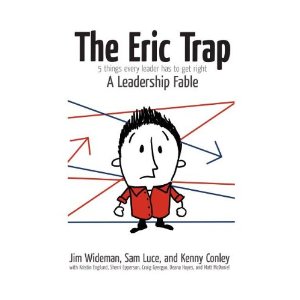
Review: The Eric Trap…A Leadership Fable

The Eric Trap…A Leadership Fable. Authored by Jim Wideman, Sam Luce and Kenny Conley with Kristen Englund, Sherri Epperson, Craig Gyergyo, Deana Hayes and Matt McDaniel. Available through Amazon.com.

I’m honored to have been invited to review “The Eric Trap”…A Leadership Fable… written by three of the heaviest hitters in the world of Children’s Ministry…Jim Wideman, Sam Luce and Kenny Conley. All three are well-known bloggers and conference speakers.

Jim Wideman

While the book was written by children’s pastors about a children’s pastor for children’s pastor, I found the principles and ideas shared in the book to be highly applicable in my own work life and family life. If Jim, Sam and Kenny were to ask my opinion, I’d encourage them to consider making some minor revisions and repackaging the book for a much broader audience in such a way that individuals looking for advice on working more effectively within their organization or maintaining a more effective balance between work and family would benefit from the content.

Sam Luce

The premise of the book involves “Eric,” a children’s pastor in his mid 30’s who experiences a week in which his work and family life spiral out of control because of his inability to consistently apply five key leadership principles relevant to his job situation… the need to delegate responsibility, the need to respect and support the leader of his church, the need to partner with the parents of the kids he’s charged to serve, the importance of using the right measures in measuring success, and the need to maintain his personal priorities.

Kenny Conley

The book was a quick and easy read…I finished it cover to cover in two sittings over about  three hours in one day. A leader in ministry could also find the book useful for a self-directed retreat. The authors included succinct but probing discussion questions at the end of each chapter. A children’s pastor without a budget to hire a coach or ministry consultant could use questions from the book as a guide for working through vocational challenges common to children’s ministry.

I thought it might be helpful to look at the book through a different set of eyes…I may be the only person outside of paid ministry invited to do a review. However…our ministry team interfaces with staff from hundreds of churches around the country on a regular basis and I’ve seen the situation described in the book in many “ministry families” served by my practice. I’d consider myself to be a “knowledgable outsider” in the relational and organizational dynamics Eric struggles with in the book.

As a physician specializing in child and adolescent psychiatry, I’d try to look at Eric’s situation very systematically…The types of questions I’d ask are as follows:

What predisposed Eric (the prototypical pastor) to fall into the trap?

What precipitated Eric’s fall into the trap?

What might perpetuate Eric’s time in the trap, and what will the impediments be to using the sage advice offered and get out of the trap?

The book does a great job identifying the precipitants…Jim Wideman alluded to a key predisposing and perpetuating factor in his final chapter…fear.

From where I sit, fear is the “elephant in the living room” for too many people in ministry. I’ve encountered way too many church staff who eschew involvement of high-capacity volunteers into their ministry because of fear their weaknesses could be exposed, hesitate to delegate ministry responsibilities because they fear becoming dispensable to cash-strapped churches, and avoid seeking help from church leaders when they’re struggling because of the fear of being perceived as less than competent.

The fear is qualitatively different than that encountered in the secular work world. Ministry is truly calling, and for most folks I’ve encountered in ministry world, work is worship. The fear of losing the opportunity to pursue a calling in ministry is worse than the fear of losing a job, and most children’s pastors have far less financial margin to fall back upon compared to other workers if they need to leave a ministry position. I’d like to hear more from Jim, Sam and Kenny about the fears they see in their training and consultation that lead the Erics of the world into traps and prevent them from escaping traps.

Bottom line: The Eric Trap contains lots of sound advice from three highly qualified leaders in the field of children’s ministry. This is a great synopsis of the type of wisdom one would get from listening to several days of main stage speakers at a major ministry conference. I’d strongly recommend the book to my friends in “kidmin” world, as well as other areas of ministry, especially those who are feeling “stuck.”

Disclosure…I received a free preview copy of the book.

Our Key Ministry team has two exciting training opportunities in April for our friends from around the U.S. Harmony Hensley will be presenting on the topic: Under Construction: Building an Inclusion Ministry at the McLean Bible Church Accessibility Summit in McLean, VA on April 21-22. She’ll be joined there by guest bloggers Aaron Scheffler of Mark 2 Ministries, Jolene Philo of Different Dream Parenting and Shannon Dingle of Providence Baptist Church in Raleigh, NC.  Registration info is available here. Katie, Rebecca and Harmony will be offering a free, day-long JAM (Jumpstart All-Inclusive Ministry) Session at Two Rivers Church in Knoxville, TN on Saturday, April 28th. Click here for registration info.

Posted in Leadership | Tagged , , , , , , , , , , , | 1 Comment

Mike Woods: Human Engagement and Children on the Autism Spectrum

We’re pleased to share with you the third installment in Mike Woods series of guest posts in honor of Autism Awareness Month.  Mike currently serves as Special Needs Ministry Director at First Baptist Church of Orlando. For more info on Mike, click hereToday’s post addresses the importance of providing comfort to children and adults with autism spectrum disorders and the theologic foundation to his ministry’s approach to relationships with persons who have special needs.

The first chapter of John reveals a couple of important truths about why Jesus came to be with us:

“The true light that gives light to everyone was coming into the world…Yet to all who did receive him, to those who believed in his name, he gave the right to become children of God”

John 1:9,12

For me these passages share two important truths.  One, Jesus turned on a light for us spiritually.  Two,  He built a bridge for us relationally.  As you read  through the Gospels it becomes apparent that Jesus often established a pattern of establishing relationships and then sharing truth…building a bridge, then turning on a light.

Sounds easy enough and this pattern describes what many special needs ministries are striving to accomplish.  But how does one do this with children and/or adults on the autism spectrum?  Many consider social interaction deficits to be the core deficit of autism.  Many suggest that the presence of deficits in reciprocal social behavior is what distinguishes autism from other psychiatric disorders.  As listed in the diagnostic criteria, impairments in social interaction associated with autism include:

  • Deficits in nonverbal behaviors such as eye-to-eye gaze, facial expression, and gestures to regulate social interaction.
  • Failure to develop peer relationships appropriate to developmental level.
  • Lack of spontaneous seeking to share enjoyment and interests (e.g., by a lack of showing, bringing, or pointing out objects of interest), and
  • Lack of social or emotional reciprocity.

As people who are called to special needs ministry, I believe that we should strive to accomplish the same things with the children and adults we serve that we see Jesus do: Build a bridge, then turn on a light.  However, with kids and/or adults on the autism spectrum this can be a challenge…but not impossible!

In order to be able to do this with those on the autism spectrum, it’s important to be familiar with how Jesus, the Master of developing relationships, interacted with people.  Christianity is about entering into relationships with people…ALL people.  And in order to be able to do that, it’s important to be familiar with how our Lord developed relationships and interacted with people.   In our special needs ministry at First Baptist Orlando we use the C3 model (Comfort, Confirm, Challenge) as our approach to developing relationships and strengthening engagement with kids on the spectrum.  The C3 model is based on Jesus’ interactions with people with disabilities.

The first “C” in the C3 model is “Comfort.”  Creating a mutually valued relationship means that we need to help a child with autism feel safe and secure with us.  We have to be careful that our physical presence does not signal fear or create anxiety for the child.  The acceptance of human presence and engagement with others are the cornerstones of relationships.  Learning the meaning of human presence, engagement, and unconditional love leads to mutual and potentially reciprocal feelings and interactions that signal respect, worth, and sharing.

In a previous post I provided some ideas on how to establish engagement with children on the autism spectrum using the C3 model.  In this post, I want to focus a little bit more on why we should establish human engagement with children on the autism spectrum.  In ministry, as we draw near the child with autism, we need to enable the feeling that being with us and participating with us draws us closer together, opens up opportunities for sharing, and begins to establish a backdrop for friendship.

A core belief in Christianity is that the value of a human being isn’t based on what a child can do or can’t do, but it’s based on who they are.  Our belief is that people’s lives take on value and meaning because they are made in God’s image.  I would add that human beings made in God’s image are interdependent: dependent on God and dependent on one another.  This core truth serves as the foundation for our need for engagement with one another.

To be engaged is to feel that it is good to be with someone else, interact, share, and give and receive human valuing.  Being together and being engaged in the flow of ordinary life communicates feelings of union.  Engagement is not a relationship based on manipulation or control, but the affirmation of the other through mutual participation.

Therefore, a primary focus with kids in a special needs ministry should be to bring about engagement.  This is facilitated by doing activities with the child and using this structure to express acceptance and valuing.

The Sunday School teacher decides to establish engagement with a hesitant boy named Daniel.  Instead of focusing on gaining compliance and having Daniel try to independently complete a Bible story related craft, she sits beside him, reaches her hand out, and offers words of value while also completing the craft with him.  She does not mind that Daniel is not “complying,” but is focused on having him feel that it is good to be near her and know that she is there to help.  Daniel’s hesitancy begins to diminish as he learns that his teacher recognizes his value and is there to help.

In the beginning, we have to enable the elaboration of engagement.  Putting aside the desire to require compliance, we have to be present with the child and avoid dominating the interaction.  As in teaching the C3 step of “Comfort,” we need to concentrate our efforts on valuing, moving toward the child whether or not the child actively participates in our Sunday school activity or not.

As special needs ministry staff or volunteers, we have two basic choices when it comes to enabling human engagement.  One is to try to make the child comply with us by giving him rewards for compliance.  This method is often very prevalent in educational and service settings.  The by-product of this approach is that it often teaches kids on the autism spectrum that engagement with other people is always involves doing something for them.   They learn that it’s in the “doing” that affirmation is given.

The other choice is to create a newly emerging meaning of our engagement with the child.  This choice seeks to develop a relationship thru unconditional valuing.  Valuing that does not depend on contingencies but is given because he is a human being with a hunger and longing for affection and warmth.  To unconditionally value another is to uplift, respect, and honor someone whether with words or nonverbal expressions.  To do this unconditionally is to express it regardless of deeds done.

When Kimberly refuses to participate in the Sunday School lesson, the teacher does not attempt to gain compliance with a promised reward.  She approaches the little girl as a friend.  She sits down with Kimberly and does the task with her, even if she has to do everything.  All the while, the teacher dialogues with Kimberly, gives unconditional worth, and gradually creates feelings of safety and security.  Kimberly’s cries lesson; the teacher quietly picks up a book and helps her turn the pages.  Kimberly gazes up and smiles at the teacher.

The teacher chose not to center her interactions with Kimberly on “you need to do this” and the use of a reward to gain compliance.  Instead the teacher chose to establish a pattern of engagement based on unconditional worth.  This requires us to put aside the urge to focus our efforts on the completion of an activity or obedience.  Remember that the purposes of human engagement are to teach the child that it is good to be with us and it is good to do things with us.  The key word is with.

Children with autism are like flowers. They need to be nurtured with great care. They are delicate and need our full attention until their roots are deep and strong. The main nurturing that we do is to teach our little ones to feel safe with us and loved by us.  This is best accomplished through the process of establishing human engagement with them.

Thursday: Giving Unconditional Worth to Children on the Autism Spectrum

Our Key Ministry team has two exciting training opportunities in April for our friends from around the U.S. Harmony Hensley will be presenting on the topic: Under Construction: Building an Inclusion Ministry at the McLean Bible Church Accessibility Summit in McLean, VA on April 21-22. She’ll be joined there by guest bloggers Aaron Scheffler of Mark 2 Ministries, Jolene Philo of Different Dream Parenting and Shannon Dingle of Providence Baptist Church in Raleigh, NC.  Registration info is available here. Katie, Rebecca and Harmony will be offering a free, day-long JAM (Jumpstart All-Inclusive Ministry) Session at Two Rivers Church in Knoxville, TN on Saturday, April 28th. Click here for registration info.

Posted in Autism, Inclusion, Key Ministry, Resources, Strategies, Uncategorized | Tagged , , , , , , | 2 Comments

Tips for Church Staff and Volunteers Serving Kids With Asperger’s Disorder

In our current blog series we’ve looked at some of the common characteristics of kids with Asperger’s Disorder, outlined impediments they face to spiritual growth and obstacles families of kids with Asperger’s face when attempting to “do church.” Today, we’ll get very practical and examine some helpful hints for church staff and volunteers involved in serving kids with Asperger’s.

1. Consider the impact of sensory stimulation in your ministry environments. We’ve discussed some of the challenges faced by kids with Asperger’s resulting from differences in how they process sensory information. They’re more likely to have a successful church experience in sensory-friendly ministry environments. Using lower-watt light bulbs in your children’s areas, lowering the volume of music during large group worship, utilizing slightly less vibrant color schemes and establishing a special entrance and/or drop-off point for kids with Asperger’s or other sensory issues are all potentially helpful strategies. Here’s a post on ministry environments Harmony Hensley shared as part of our ADHD series in 2010 that’s also applicable to kids with Asperger’s

2. Inclusion is not an “all-or nothing” proposition. Partial inclusion may be an option. Some kids with Asperger’s might do fine with every aspect of your children’s programming except for large group worship. There’s nothing wrong with them attending the beginning of the adult worship service, watching a video, serving in some other place in the church or practicing other spiritual disciplines during that time. Teens might come to large-group adult worship but feel uncomfortable doing a house group. That’s OK. What’s important is that your church establishes a relationship with the child with Asperger’s and their parents that can be used to cast influence in the months and years ahead.

3. Consider creating service opportunities for kids with Asperger’s alongside adults in your church. Parents of many of my kids with Asperger’s have observed that their children relate better to adults than with their peers, because adults tend to be more tolerant of personality quirks or subtle differences in social development. Providing kids with Asperger’s opportunities to serve with adults helps them grow in confidence by tapping into their gifts and abilities, promotes the development of spiritual friendships and helps them to internalize an understanding that they have a valuable role to play in the body of Christ.

4. Offer kids with Asperger’s the opportunity to rehearse new experiences and activities. Kids with Asperger’s are more likely to be successful in a new situation when they have a clear understanding of what will be expected of them and the opportunity to practice/rehearse the social skills they’ll need to be successful. This principle would apply to small groups or house groups, retreats and mission trips. Sharing lots of video or pictures of where they will be, the activities they’ll participate in and providing opportunities to role-play interactions they’ll have to navigate with trusted adults can help to ease feelings of anxiety in kids with Asperger’s prior to a new experience and enhance the likelihood of a successful outcome.

5. Promote disability awareness among kids served in your children’s/student ministry. I understand that children’s and youth ministry leaders have a tremendous amount of content to cover and relatively little time with their students to cast influence, but the treatment kids with Asperger’s experience from their peers at church has a HUGE  impact upon the likelihood that they’ll continue to attend church as teens or adults. Kids with Asperger’s are generally more sensitive to teasing/bullying from peers…they tend to perseverate on negative experiences and have a very difficult time letting go of past hurts. Creating ministry environments in which all kids feel valued and welcome is not only Biblical…it’s a whole lot easier than trying to undo the damage that can follow a hurtful experience at church.

Next: Strategies For Promoting Spiritual Growth in Kids With Asperger’s

Our Key Ministry team has two exciting training opportunities in April for our friends from around the U.S. Harmony Hensley will be presenting on the topic: Under Construction: Building an Inclusion Ministry at the McLean Bible Church Accessibility Summit in McLean, VA on April 21-22. She’ll be joined there by guest bloggers Aaron Scheffler of Mark 2 Ministries, Jolene Philo of Different Dream Parenting and Shannon Dingle of Providence Baptist Church in Raleigh, NC.  Registration info is available here. Katie, Rebecca and Harmony will be offering a free, day-long JAM (Jumpstart All-Inclusive Ministry) Session at Two Rivers Church in Knoxville, TN on Saturday, April 28th. Click here for registration info.

Posted in Autism, Inclusion, Key Ministry, Strategies | Tagged , , , , , , , , , | 1 Comment

Cindi and Joe Ferrini…The Unexpected Journey of Relationships

Cindi Ferrini was the special guest last night for SNAPPIN’ Ministries Special Needs Ministry Tweetchat…transcript available here. The discussion topic was Marriage With Special Needs Children. A number of participants had commented on the outstanding presentation Cindi and her husband (Joe) gave for last fall’s Inclusion Fusion on The Unexpected Journey of Relationships…When Special Needs Change Our Course. Here’s the video from Cindi and Joe’s presentation:

Here’s a link to download the handout that accompanied the presentation…and here’s a link to a guest blog containing links to other resources the Ferrini’s have produced for parents of kids with special needs.

The entire boxed set of DVD presentations, including the Ferrini’s presentation can be purchased for $49.00 from the folks at Pajama Conference.

Posted in Inclusion Fusion, Key Ministry, Parents, Resources | Tagged , , , , , , | 1 Comment