Pastor Hu Auburn: An Appreciation

During the month of December, I’m recognizing members of our ministry team who lead behind the scenes and make possible the training, consultation and resources Key Ministry offers to churches.

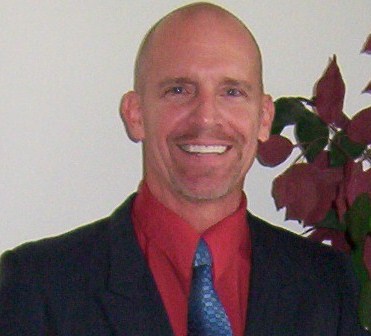
Today, I’m honoring the contributions of Pastor Hu Auburn, one of our founding Board members and Key Ministry Vice-President for the past eight years.

Shortly after I started my residency at Cleveland Clinic, I met my wife on a blind date, and not too long thereafter we decided to take a drive one night out along the shoreline west of the city. Heading out Lake Road, past the mansions and more modest cottages on the Lake Erie shoreline, my (then) girlfriend commented that she’d heard good things about the church we’d just passed (Bay Presbyterian) on the morning TV show she watched while getting ready for work and suggested I check it out on one of those rare Sundays when I didn’t need to go into work. I took her up on the suggestion and enjoyed the teaching of Hu Auburn, then eleven years into his 33 year tenure as Senior Pastor.

I enjoyed the church services and the people, went through the new member class and was assigned to a small group. My girlfriend became my wife, we became increasingly connected to the church and the small group, and because of the quality of the preaching and teaching, stayed actively involved in the church, despite moving first to an apartment and later a house 35 miles east of Bay Presbyterian. I can’t necessarily say that any one sermon Hu gave stood out more than others, but through attending church every week and participating in weekly Bible studies he led very early in the morning, I developed a solid foundation in understanding Scripture and implementing the teachings of the Bible in everyday life.

Hu’s tenure at Bay Presbyterian was marked by his willingness to share responsibility for ministry with the people of the church instead of reserving ministry for the “professional Christians.” When the church celebrated Hu’s 25th anniversary, in lieu of a significant monetary gift, he asked the people of the church to contribute money to a fund to support the work of “emerging ministries.”

On the back of the church bulletin, under the listing “Ministers” was “All the people of Bay Presbyterian Church.” The opportunity to “do” as opposed to simply watch and listen has been enormously important for my spiritual growth. Our church went with me to my office in Chagrin Falls and came along with me if I was lecturing in Nashville or Chicago or Atlanta.

While my career was taking off, providing opportunities to travel, teach and conduct research, Hu and the church Board (of which I had been a part) supported very innovative ministry initiatives developed by our Children’s Ministry director to serve families connected to the church who were experiencing great challenges after adopting kids from orphanages in countries behind the Iron Curtain with serious mental health or developmental disorders. As a child and adolescent psychiatrist, I recognized the unmet spiritual needs of kids and families served through my practice that occurred because the vast majority of families in which a child has a serious emotional or behavioral disorder have no ongoing connection with a local church. I had been wrestling with a “call” to start an organization to help churches across the country provide the type of service offered to families at Bay Presbyterian. Our oldest daughter was in first grade by this time and attending the local public school. My wife and I were torn between our desire to not give up the relationships we had at Bay Pres and the need to find a church closer to home so that our girls would have a Christian peer group in public school.

I set up a meeting with Hu to tell him about our church dilemma but also shared the call to do something larger with the ministry that had been birthed at Bay Presbyterian. Not only was he gracious in excusing us to become involved at Fellowship Bible Church, but he offered (as the pastor of what had become a megachurch) to become personally involved in the launch of the new organization by serving on the Board, contributing of his personal resources to help launch the ministry, and volunteering his wife, who had extensive experience in launching parachurch ministries to become our founding Executive Director. He got on the phone and recruited other leaders in the church to serve on our Board and to help us get started. Key Ministry (Hu came up with the name) was officially launched on Christmas Eve, 2002, between the 7:00 and 9:00 PM services when we signed the paperwork in his office.

I appreciate having people on our Board who aren’t afraid to tell me when I’m wrong. Hu has a way of communicating his thoughts when I’m about to make an incorrect decision that doesn’t lead me to become embarrassed or defensive. He’s just wise. He’s able to identify elements of a situation that I hadn’t considered or anticipate problems I didn’t foresee. I can’t overestimate the benefit to our organization of having a leader of his experience on our team from the very beginning.

Thirty-three years of life as a Senior Pastor of a large, dynamic church has taken its’ toll on Hu’s health. He and his wife enjoy traveling, and I hope they’ll get a chance to enjoy his retirement. He left Bay Presbyterian in good hands upon his retirement, positioned to be a leading congregation in the Evangelical Presbyterian Church. He has no shortage of organizations seeking his time and talent. We’ve been blessed to have him as a part of our team from the very beginning, and we continue to be blessed by his involvement with Key Ministry.

Thanks, Hu. Merry Christmas!

Here’s a link to an article Hu wrote on the theological and Biblical foundation of Key Ministry.

Posted in Hidden Disabilities, Key Ministry | Tagged , , | 1 Comment

Are We Providing a Service or Leading a Movement? (Part One)

Julie Jones is one of my favorite leaders in the Greater Cleveland Christian community. I served with her on the Board at Bay Presbyterian Church, where she’s currently on staff as Director of Outreach. She’s currently helping to lead an incredibly cool project in which Bay Pres purchased the property of a Catholic parish on the near West side of Cleveland that they’re converting into an urban ministry campus, including a sanctuary for new church plants, a school for kids with learning disorders who fell through the cracks in the city schools, ministry space for partner organizations in the city and a gathering place for the people who live in the neighborhood. I digress…I’m just proud of my old team!

Julie’s very direct in a grace-filled way. Several years ago, she was serving on our Board and helping us plan our regional ministry initiative in Northeast Ohio she posed the question that’s the title of today’s post…”Are we delivering a service or leading a movement?” The obvious answer is both, but I think her purpose in asking the question was to force us to think about the systems we need to have in place and the resources necessary to do both. Today, I want to look at what’s ahead for the “Movement” in the months and years ahead, and share some thoughts about Key Ministry’s role in the Movement.

When I look for evidence that we’re engaged in a “God thing,” one of the strongest affirmations I see that we’re barking up the right tree is the way that God is moving through so many of His followers in different places, with different gifts and in different church traditions to minister to families of kids who have been impacted by disabilities, primarily “hidden disabilities.” Thanks to the wonders of Facebook, we’ve discovered many new ministry colleagues in the past year who have been moved to do neat things in the communities and spheres of influence in which they’ve been planted. Here are a few folks we’ve “met” either in person or online in 2010 who God seems to be positioning to do big things for His Kingdom:

Mike Woods (St. Louis): Mike is an ex-Marine and a parent of three sons with autism spectrum disorders. He works as a behavior analyst in the public schools and leads a ministry organization, Making Room, charged with developing ways to include people with autism into the community of faith.

Barb Dittrich (Milwaukee): Barb is a former investment broker and prolific Facebook poster who leads Snappin’ Ministries, an organization that provides support and encouragement to those living with the daily challenge of parenting a special needs child, so that the genuine love and hope of Jesus will be experienced and shared in their everyday lives.

Aaron Scheffler (Indianapolis): Aaron recently accepted a position in which he is directing U.S. operations for Mark 2 Ministries. Mark 2 Ministries exists to encourage and equip the local church to evangelize, disciple, and integrate into their congregation individuals with disabilities. Aaron has been working with churches in the Greater Indianapolis area through helping churches to develop outreach through offering free respite care to families of kids with disabilities.

Jolene Philo (Iowa): Jolene is a former teacher of gifted and talented students, church staff member and author who has been led to champion the cause of families of kids with critically or chronically ill children. Jolene’s website, A Different Dream was set up to be a resource to parents of “really sick kids.” She’s currently hard at work on her second book for parents of kids with special needs.

Please don’t feel excluded or overlooked if you’re not specifically mentioned…I simply wanted to illustrate a representative sample of the people and organizations being called to the Movement.

On Monday, I’ll share some thoughts about the role God may be preparing Key Ministry to play within the Movement.

Posted in Hidden Disabilities, Key Ministry, Resources, Strategies | Tagged , , , , , , , , , , , | 1 Comment

Thankful for Adversity

Several years ago, I was invited to speak at a men’s retreat and discussed a spiritual principle that I referred to as “The Eric Snow phenomena.”

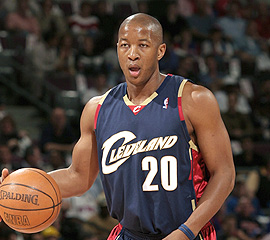
Eric Snow was a long-time NBA point guard who finished his career with our hometown Cavaliers.  To some of our readers he may be better known as the husband of one of the stars of  the first season of Real Housewives of Atlanta.

By the end of his career, Snow’s knees were shot and he was arguably the worst offensive player in the NBA. During his final season, he made only 15.8% of his shots (45% is typical for an NBA player). Because the Cavs had a very talented player at that time (who would later choose to take his talents to South Beach) who was a much greater threat to score, opposing teams wouldn’t even bother to guard Eric Snow. He was so bad offensively that he could easily be ignored.

Eric Snow illustrates a spiritual principle that applies to Christians. If you’re not encountering any resistance or adversity in your life, you’re probably not a threat to accomplish much  for God’s team.

This has been a very difficult year for me personally, probably the most difficult in the last 25 years. The practice I lead has been through some challenges (a serious health issue with a key team member and a long term colleague VERY unexpectedly leaving for greener pastures) that could have easily led us to close. Between those circumstances and the changes looming on the horizon for medicine, I’ve felt very discouraged about my professional future. All this at a time when opportunities abounded for Key Ministry and the challenges at work represented an enormous distraction.

God has been faithful to his promises through these circumstances. Our ministry team really stepped up. Several very generous donors provided funding that allowed us to respond to our most promising opportunities. An unexpected consulting opportunity came along in October that will allow us to pay our bills at the end of the year. I’ve had the health to maintain my ministry responsibilities. Several months ago, an outstanding psychologist with extensive management experience joined our group in a leadership role, freeing me up to do more with the ministry. (Welcome aboard, Sherri!)

Many of our ministry colleagues who are doing great things to connect families with churches have faced great adversity this year-far greater than the minor bumps in the road I experienced. I’d encourage them to view their circumstances as I have mine…as validation of the blessing we’ve been given to serve in a meaningful way as God re-establishes His Kingdom here on Earth.

I’m thankful for my less than optimal circumstances. I was forced to become more aware of my own inadequacy and reminded of my need to depend upon God.

Praise be to the God and Father of our Lord Jesus Christ, the Father of compassion and the God of all comfort, 4 who comforts us in all our troubles, so that we can comfort those in any trouble with the comfort we ourselves receive from God. 5 For just as we share abundantly in the sufferings of Christ, so also our comfort abounds through Christ.

2 Corinthians 1:3-5 (NIV)

Happy Thanksgiving to friends and supporters of Key Ministry everywhere!


Posted in Key Ministry, Spiritual Development | Tagged , | 1 Comment

Defining the Win

HockeyA win for Key Ministry occurs whenever a child with a hidden disability or their family experiences a meaningful connection with their larger family in Christ through a local church.

I’ve found that church staff and volunteers can easily lose sight of the big picture when ministering to kids with disabilities.

A few years ago, our team was doing a training in Cincinnati in which one of the attendees expressed significant frustration with her assignment as a “buddy” to a boy with a moderate to severe developmental disability. Her frustration stemmed from his lack of interest in the lessons she’d been given to teach and she was questioning the time and energy she was devoting to the effort.

I pointed out that because of what she was offering the boy, his parents were in the worship center listening to the senior pastor’s teaching and his siblings were in classes and groups where other ministry leaders and volunteers were positioned to be a positive influence. None of which would have been possible if she wasn’t available to spend time with the boy with a disability and her church wasn’t intentional about wanting to welcome the boy and his family.

A couple of our team members were meeting with a potential funding source who didn’t see the value of a ministry that can’t produce data on the number of people who have come to Christ because of our efforts. While the ultimate “win” occurs when a kid with a disability or a family member comes to Jesus Christ through faith, we don’t have any control over that. After all, only God, through the working of the Holy Spirit is able to save anyone. Our job at Key Ministry is to arrange the opportunities for kids with mental illness, trauma or developmental disabilities and their families to explore the claims of Jesus.

The impact of the connection may extend far beyond the teaching and ministry offered to the child or teen with a disability. If the family can’t connect with a church, where will the parents learn how to be spiritual leaders in their home? Where will the siblings go to develop relationships with adults who are living out their faith on a daily basis? How will kids with “hidden disabilities” and their family members get the opportunity to use their spiritual gifts and talents to contribute to the work of the local church?

We may not be able to quote a potential funding source an exact number of the kids and families who have “prayed the prayer” because of our efforts in connecting families to churches but we’re blown away that God allows us to be part of His plan and just fine with Him getting all the glory.

Photo courtesy of Sports Illustrated

Updated January 24, 2014

***********************************************************************************************************

600817_10200479396001791_905419060_nConfused about all the changes in diagnostic terminology for kids with mental heath disorders? Key Ministry has a resource page summarizing our recent blog series examining the impact of the DSM-5 on kids. Click this link for summary articles describing the changes in diagnostic criteria for conditions common among children and teens, along with links to other helpful resources!

Posted in Hidden Disabilities, Key Ministry, Strategies | Tagged , , , , , , , | 1 Comment

One Family’s Story: Rebecca and Jamie Adam…following up

“As a church we really need to emphasize the importance of that child’s faith over any outward behavior. Not every child has the ability to sit quietly for an entire sermon or look and act appropriately in front of adults, but every child has the ability to have a loving relationship with Jesus.”

Last Sunday, Rebecca and Jamie Adam shared their experience of trying to “do church” as a family in which two sons have been diagnosed with Asperger’s Disorder and another has ADHD. Their comments generated much interest-Sunday and Monday were two of the top three days for “hits” on this blog since we formally launched in September. We also connected with Jill Spicer’s blog in Texas, where we encountered more than enough stories from parents to keep our ministry team inspired for the rest of the year. I asked Rebecca and Jamie to expand upon some of their comments from Sunday…they graciously agreed to share so that church staff, volunteers and other families may benefit from their experience.

C4EC: What could a church do to help families like yours to feel welcomed and included? To help with the “angry eyes” you encounter at church?

Having a child with a hidden disability and trying to make them function and flourish in a socially demanding environment like church is a bit like trying to shove a round peg into a square hole.  It is not like we want to announce to every usher or to the church that our child has challenges or disabilities so please allow a little slack.  In my childhood, our church always emphasized that Christian children needed to have impeccable behavior and that good behavior was directly proportional to their inward belief.  As a church we really need to emphasize the importance of that child’s faith over any outward behavior.  Not every child has the ability to sit quietly for an entire sermon or look and act appropriately in front of adults, but every child does have the ability to have a loving relationship with Jesus.  We would hope that other church members would suspend judgment of a child or a teenager when they are having a difficult time, being reminded of Jesus’ own words “better a millstone around the neck than to cause one of these little ones to stumble.”

A church needs to aware of the challenges of hidden disabilities and initiate the reaching out to affected families just as Christ was the Master Initiator to those in need. One time during a baptismal service our pastor kindly warned the congregation that there was going to be loud cheering and clapping at the end.  It was just enough time to warn our son to anticipate the loud noise and encourage him to cover his ears.  We also think that sometimes churches need to give families of children with hidden disabilities some loving space.  Many times our sons would have been overstimulated by certain children’s activities and we chose to refrain from them such as Vacation Bible School and Christmas pageants where the energy level for all is fever pitched.  We truly didn’t want to hurt anyone’s feelings by not participating, it is just grows difficult trying to explain why your child might not handle otherwise “exciting” celebrations of the church.   As a parent the most loving question you could ever hear from a church staff member is “What can we do help your son/daughter get the most from Sunday School or church?”

C4EC: Why have you continued to attend church in light of the experiences you described?

We attend church not just because the Lord commands it, but because we desire to worship and fellowship with other believers.  As importantly, in order to train up our children according to God’s Word they need the same opportunity.  Despite the challenges that corporate worship has presented at times, the positive experiences have far outweighed the disappointments.  As the children have matured, we have noticed that the struggles have lessened.  Christianity in its essence is made of fellowship, the Trinity itself being the model.  It is important not to allow negative situations to color our attitude toward the church and other Christians.  We believe if we allow our children to only see a negative view of church, we would have instilled in them unintentionally, a soured attitude towards God’s Kingdom.  We have always believed that God created our children in order to bring something unique to His church and have never wanted to hold back the special blessing they can bring to a church family.

C4EC: What would be of most help to the two of you in teaching your kids about Jesus and helping them to grow in faith?

With autism, it has been difficult to try and get across abstract spiritual truths to our sons.  Jesus was a Master Teacher who always reached out to teach people in ways they could understand clearly.  It doesn’t say in scripture that Jesus refused to teach the multitudes unless they were sitting quietly with their hands folded.  The disciples Christ chose Himself were known for interjecting off topic questions and for their impulsivity.  And yet, Jesus used concrete examples from their everyday life to communicate God’s love for them.  It is important in dealing with individuals who have difficulty understanding spirituality to stay very concrete and emphasize Christ’s parables.  One time our church had several different stage setups to illustrate spiritual disciplines.  On the stage illustrating confession we as a family had to write our past sins on little clay pots and then with a hammer we had to smash the pots.  Our sons learned about forgiveness in a very concrete way by trying to see if they could read the sins they had written after the pot was reduced to tiny pieces.  Also, it is almost impossible for children with Autism Spectrum Disorder to understand “Christianese” phrases such as “live for the Lord”, or “asking Jesus into your heart”.   If those sayings were rephrased in a concrete way such as “make sure your actions would please Jesus everyday” or “pray that God will forgive us and ask Jesus to guide our lives” it would help these children understand what truths we ultimately want them to understand.

C4EC: What advice would you give to parents of kids with conditions like Asperger’s Disorder or ADHD who don’t regularly attend church because of a negative experience in the past?

In John 9, Jesus answered the question of why a man had been afflicted from birth with blindness “but this happened so that the work of God might be displayed in his life.”  We have to keep in mind that the Lord designed each of our children, no matter what kind of disorders they may carry with them through life.  According to the Bible, God designed them to bring glory to Himself.  If we fail to bring our children to church or other social environments, we dampen the ability for others to see God’s glory revealed in their lives.  It is a difficult task for a family to work with their church in trying to make the staff understand their child’s disability.  We understand that parents of children with special needs are exhausted by the weekend from battling with school and behavioral health agencies.  However, God’s grace can be extended to every struggle in our lives, including the struggle to find a place where our children can be taught about Christ’s love.  Sunday School teachers can grow in their acceptance of disabled children and other church members can broaden their understanding of the body of Christ.  Although this can be a slow process, the end result is that Christ’s church is sanctified.


Posted in ADHD, Autism, Families, Hidden Disabilities, Inclusion, Key Ministry, Parents, Spiritual Development, Stories | Tagged , , , , , , , , , | 1 Comment

One Family’s Story: Rebecca and Jaime Adam

Two followers of our blog, Rebecca and Jamie Adam have graciously volunteered to share from their experiences today. To learn more of why I invited Rebecca and Jamie to share their story, check out yesterday’s post. Here’s their story:

Jamie Adam grew up outside of Reading, PA and attended Ursinus College where he received a B.S. in Biology in 1992.  He and Becky were married that same year.  Jamie received his Ph.D in Microbiology and M.D. from the University of Rochester  in 2001.  He received his medical residency training in pathology at the University of Virginia from 2001-2005. Jamie is currently the Clinical Laboratory Director at Sharon Regional Health System in Sharon, PA.

Rebecca graduated with a B.S. in Biology also in 1992 from Ursinus College.  She received her B.S. in nursing from the University of Rochester in 1996.  She currently is a full-time mom who cyberschools their four sons.

Rebecca: My husband and I are blessed with four sons ages 14, 11, 8, and 6.  Our oldest son has been diagnosed with Asperger’s syndrome, our third son with mild autism, and our youngest son with ADHD.  They are all wonderful boys and I hesitate to emphasize these labels rather than who they truly are as the young men God created them to be.

My husband and I have served in different children’s ministries in various churches (we moved often due to his medical school and residency).  Even before we knew that our children had special needs – our oldest son was not diagnosed until age 9 and our third was diagnosed at 4 – we taught a special needs Sunday School class at a church in Virginia.  We always had a heart towards children, but this was our first experience working with children with special needs and we loved it.

Our class had a teenage boy with Down’s Syndrome who could recite many Bible verses and two sweet teenage girls with moderate mental retardation.  There also was a boy with Asperger’s (curiously enough my husband used to compliment me on how well I bonded and worked with this boy) – God has a way of preparing us for the challenges we meet in our lives!

Jamie: Becky and I had discussed whether we might be willing to adopt a special needs child after we had our own children, obviously not knowing what paths our future would follow.

Rebecca: I wish I could say that I liked the way our church in Virginia integrated the children with special needs, but we found they were isolated from the rest of their peers.  Their Sunday school classroom was small and far removed from the rest of the teenagers.  I used to feel sorry for the parents of our kids because they had to walk all the way around the church sanctuary to pick up their children, making it difficult for them to mingle with other families.  Our kids, for some good reasons (noise sensitivity being one), did not go to the teenage praise worship sessions but had to sit in on the elementary song time where they were conspicuous.  I remember the first order of business of our Sunday School class was to ask for prayer requests.  Our boy with Down’s syndrome would shoot up his hand right away and every week his prayer would be the same – he would ask God to give him a friend.  I wondered why his need for friendship wasn’t being met in the church.  Just across the sanctuary there were about fifty “normal” teenagers in their weekly praise session, but our designated room was far away not only physically, but emotionally. This was my first real taste of some of the struggles churches face in integrating children with special needs into practices of worship.  I truly had no idea back then that eight years later these struggles would become our own.

The diagnosis of our first and third sons came after our relocation to Pennsylvania.  Our oldest son’s Asperger’s diagnosis followed years of seeing various pediatricians and child psychologists and knowing that his development was not typical.  It was almost a relief to have a name for what he was struggling with, but the diagnosis of our third came as a major shock in our lives.

Jamie: Even though I’m a physician, I hadn’t realized that our boys’ struggles were anything well out of the ordinary.  I felt remorse for not recognizing their needs so that appropriate interventions could have been initiated earlier.  Once I started to learn about autism spectrum disorders and more effective ways to help my boys, the future appeared promising again.  For instance, I’ve always wanted to remain emotionally close with my boys and was disappointed that these relationships did not seem to be developing as I had expected.  Simply finding out that I needed to initiate physical and emotional closeness felt like a spiritual victory.

Rebecca: The guilt I bore, as a mom, was almost unbearable. In the church nursery, one of my sons would often go into a near catatonic state and not move or make any contact with his environment.  I remember the nursery worker would say to me after the service,  “Whatever you gave him for breakfast this morning, don’t ever give him that again!”   I already felt like everything was all my fault. I needed so desperately to hear from the church that these children were a gift, wonderfully designed by God and that it wasn’t my fault.  I understand this reassurance was a lot to expect knowing that the teacher got stuck scrubbing out the bathroom in the wake of my son’s panic in the anticipation of the toilet flushing. Thankfully, there were some Christians in my life who did remind me of their value in God’s eyes.

With our third son we struggled with physical therapy, occupational therapy, and speech therapy to get him ready for kindergarten.  I remember fighting to keep him enrolled in a small Christian preschool near our home.  Some of my son’s behaviors were difficult to deal with and I sympathized with his teachers.  At one point, his preschool teacher and the school director pulled me aside and stated, essentially, that if I wanted to keep him enrolled that would be fine, but they did not have the time to deal with him.  We agonized for months and interviewed our public school system, concluding he needed a smaller school environment.  I had always dreamed of having my children go to a Christian school.  I quickly learned, however, that having a child with a developmental disability makes it nearly impossible to enroll in many private schools.  While my son was capable of doing the academic work with the help of an aide, our preferred Christian school rejected him, because they did not feel they could deal with a child with autism.   I was livid.  For decades my husband and I have worked actively in the pro-life movement.  I do not understand how we as Christians can feel such righteous indignation at the thought of a mother aborting her developing baby because of a disability and yet find no regret about telling that same mother five years later that they simply do not have the resources nor the staff to deal with her child.    I do feel that by rejecting children with special needs we create an elitism instead of a true world-changing Christianity.

Jamie: As a man, my main reaction to these roadblocks was to want to fight harder for my children.  Although there are certainly occasions when we need to “storm the beaches” for our kids, I came to understand that putting our children in a situation where they would be unwelcome was not necessarily a battle worth winning.  In our circumstances, there were no great educational alternatives and, therefore, we had to pursue the best choice available (for us, cyberschooling) and regularly evaluate whether it’s still superior to other options.

Rebecca: There have been many bright moments when our Christian brothers and sisters have borne our burdens.  Once, some local church members built a swing from a tree trunk and placed it in our basement.  It remains my son’s primary method to calm himself during the day.  I think the greatest gift a church can offer parents of special needs children is simply to ask them about their youngsters.  Many times I think people are afraid to ask about our sons.  Perhaps the greatest gift to me was learning to give and receive grace and forgiveness from other believers.

It came as a great surprise recently when my son’s former pre-school teacher caught my arm as I walked through a local craft store.  As I struggled to remember who she was, she began crying as she told me she no longer was teaching.  She had received an advanced degree, became a Christian counselor, and worked a lot with families struggling with autism.  She never had forgotten or had been able to forgive herself for how she had received our son that year.  In the middle of the store aisle she asked for my forgiveness. Truthfully, the mother bear inside me was still angry as I carried around so many hurts from that first year.  However, I realized our sons will constantly be in the same position of needing Christian people in their lives who can grant them grace and mercy.  They may always be socially awkward and say or do things that others don’t expect from them.  They need Christ’s unconditional love and acceptance to be evident in the people around them.

Jamie: For me, these struggles have served to some extent as a voyage of self-discovery.  Although I don’t have Asperger’s, it has become clear that I share some of my sons’ traits.  I’m not the only one who’s noticed.  While discussing our boys’ challenges with my parents a few years ago, my mom interjected that she was sorry for not recognizing that I too had difficulties interacting with other kids when I was a child.  It’s never too late to start the healing process.

Posted in ADHD, Autism, Families, Hidden Disabilities, Inclusion, Key Ministry, Parents, Stories | Tagged , , , , , , , , | 3 Comments

The Village Project: Discovering Unmet Needs of Families of Kids With Disabilities (Part Two)

Dr. Gary Sweeten is a friend of Key Ministry and a passionate advocate within the church for families impacted by disabilities. Gary currently serves as Founder and Chairman of LifeWay Counseling Centers and is President of Sweeten Life Systems, a research, coaching, consulting and training organization for professional and peer caring. Sweeten Life received a $300,000 research grant from the Hatton Foundation to identify the most critical needs of families of children with special needs. Today, Gary discusses some of the preliminary findings of their research.

We were shocked & surprised by a few key items:

While we gained many new insights about the research topic, and know that these insights will help others in addition to Sweeten Life create good solutions, here are a few big surprises to us:

First, they told us “no one has ever asked us questions about our needs in the past.”  This is shocking!  Does it mean that none of the outside caregivers listened to them but only did what they what they saw as important?

Second, every family wanted to share what they had learned – their ‘Best Stuff’ – with other families to help them out.  Wow!  They weren’t ‘takers’, they wanted to be ‘givers.’  And,

Third, their isolation from society takes them out of the mainstream of most community services.  They become a hidden culture.

Other key insights

Nobody knows a child with special needs better than the parents. They are the real experts and anyone who wants to help the IP must listen carefully to the family members and take their views into treatment considerations.

Most of the families have discovered things that work for them and will work for others. However, there is no current way to share these Best Practices.

The additional relational, emotional, physical, financial and spiritual stress on parent with a child or adult who has a major disability is overwhelming and far too often leads to marital fractures.

Parents told us they need practical, easily supplied assistance from friends. They want spiritual support and encouragement, prayer and wisdom now more than ever. They need folks to help with home repairs, food, lawn care, painting and ironing.  Things that friends and family do for those they love and churches can provide rather easily. However, unlike groups such as Habitat for Humanity, there are no widely available support systems set up to coach/support the families and reduce their stress.

These parents want and need friends from their churches and community to listen with love and respect; pray with faith, hope and positive expectation; serve with practical works of mercy at their homes on a regular basis; This will require Lay or Peer Helpers to be trained as one very important part of their total care.

My work for the past forty years shows that ordinary people with little of no professional training in medicine or psychology can be equipped with the skills proven by numerous research studies to foster health and healing in needy individuals and families.

Adoption and foster care is also important and requires that the “parents” get even more training in the skills of helping than biological parents.

What did the families learn from their participation in The Village’ research process?

During our final face-to-face, at-home mom & dad interviews we asked them to share any significant impact the year-long, monthly research process ITSELF might have made on the quality of their family’s lives.  These positive results are what they told us they felt.  The family-centered, non-judgmental relationships established during the research led to these statements.

Making an empathic connection meant we were authentic, not superficial.”I found that you are sincerely interested in our situation, beyond the requirements of the study.  You wanted to know us as real people.  And that was important to me.  There are studies where the researchers try to disconnect.  There was always a personal relationship.  It helps us open up and feel comfortable in our conversations.”

Being with the entire family in their home got our team close to their reality. “You can only gain an understanding when you live with a child 24/7.  It is hard for anyone to have a grasp if what it is like to have a fear of the future.  After nine years it has become a chronic wearing problem; food issues, behavior, school staff meetings, medication, will there be new problems as he gets older?

Commitment to a monthly process, setting aside time to learn and focused introduced reflection and planning that was very useful. “It forced us to sit and do some self-reflection and talk about what we do think about the different areas.  It taught us we have something to give – our experiences could be beneficial for others. We have these things that we never sit and think about or express, and once we express them they really change us.” “This study caused me to think about what I can delegate, what can I get help with, what don’t I need to control, what I can let go to others.”

New family-chosen solutions: “This study caused me to think about what I can delegate, what can I get help with, what don’t I need to control, what I can let go to others.”

Affirmation, caring & celebration: “An affirmation that we are doing a good job with our kids.  I think your caring about us made you better researchers.  You made it personal and relational.  It wasn’t clinical.”

Gary’s team will be presenting the findings of the research this Saturday at The Village Family Fall Gathering/Conference at Christ Church in Mason, OH.

Gary blogs at www.sweetenlife.com and http://garysweetenblogspotcom.blogspot.com/.


Posted in Families, Hidden Disabilities, Inclusion, Parents | Tagged , , , , , | Leave a comment

The Village Project: Discovering Unmet Needs of Families of Kids With Disabilities

Dr. Gary Sweeten is a friend of Key Ministry and a passionate advocate within the church for families impacted by disabilities. Gary currently serves as Founder and Chairman LifeWay Counseling Centers and is President of Sweeten Life Systems, a research, coaching, consulting and training organization for professional and peer caring. Gary blogs at www.sweetenlife.com and http://garysweetenblogspotcom.blogspot.com/. Sweeten Life received a $300,000 research grant from the Hatton Foundation to identify the most critical needs of families of children with special needs. Gary’s team will be presenting the findings of the research this Saturday at The Village Family Fall Gathering/Conference at Christ Church in Mason, OH. Today and tomorrow, Gary will be discussing the underpinnings of the research they undertook in the greater Cincinnati area, along with some preliminary results of their work.

The Research: Beginning in March of 2009 and ending in April of 2010, a research team from Sweeten Life Systems and 12 Cincinnati families who have a child with a special need spent over 7000 hours in total, reflecting, analyzing, & sharing together about the unmet felt needs those families experience related to the caregiving of their child.

To our knowledge this is the first such study to focus primarily on the family’s needs, whereas most previous research has focused on the needs of the child.

The goal of this exploratory, in-depth work was to more fully understand what those needs are – personal needs, household needs, spiritual needs, emotional needs, mom’s needs, dad’s needs, at home needs, away from home needs.  In effect, anything and everything that affects conducting family life.

Of course Sweeten Life had an objective:  ‘Know the needs first, then, begin to develop solutions that could strengthen family life, resulting in better family life for everyone involved, and consequently reducing the high divorce rate among these families.”

Although our research is consistent with our original hypotheses, the needs are greater, the stresses more intense and the lack of support more acute than we supposed.  Here are some of our findings. “In the United States there are sixty-five million people providing care for a chronically ill, disabled or aged family member or friend. (Jacqui Moskowitz, Ex Dir of the Family Support Center, New Jersey, USA) Disability is the largest minority in America.

Facts: There has been a tremendous increase in kids and elderly persons with chronic disabilities.

Autism Spectrum Disorders have a 6000% increase in the last few decades-Why? What can we do?

Depression and Anxiety have a tenfold increase in the last century. Why? What can we do?

Estimates are that over 20% of the kids in elementary school have a diagnosed mental, emotional, relational or physical disability. Why? What can we do?

Finally, some 85% of the parents who have a child with a chronic disability get a divorce making the stresses, strains and financial crises much greater. Why? What can we do?

There are many speculations but few answers. What can we do to cure these ongoing, chronic issues? We in the West have medical and psychological and religious traditions that focus on total CURES. We have developed incredibly good medicines, surgical procedures, technologies and interventions to change and heal. I have a stent in my chest that saved my life. However, it did not cure me. My lifestyle had to change because I have a chronic problem that is incurable but treatable. I have prayed for healing and experienced small but significant improvements but my family and I must live with the situation on a daily basis forever.

Many of you are caring for children or loved ones with chronic issues. All of us wish there were a total cure for them but in most cases there are no miracle treatments. But we have learned a lot about how to increase our quality of life with small, incremental healings that come from God, medical treatment and hard work.

Let me offer a funny statistic that you may find difficult to see its application. How do we insure that our kids in general will make better grades? What do we need to do to boost their learning? The adults in the house that kids live in have lot of books. You want to boost your kid’s grades? Buy more books!

Oh, you say. “Of course. The parents read to their kids so they study more and get better grades”. That was my thought but that is not right. The parents don’t even have to read the books, just have them and the kids do better. Why? We don’t know but it works.

When we take a look at the things that bring healing and relief plus improve the quality of life for parents, kids and the family, the answers are not always obvious. They don’t operate in a straight cause and effect manner. Some of the time it comes down to attitude and interactions more that a specific intervention.

That is why we at Sweeten Life Ministry do not follow a disease model in our research and interventions. The Disease Model focuses mostly or only on the diagnosis and the illness or problems. In fact people who follow the disease model can forget that the patient is a person with a family and friends who must live with the symptoms. So, we include the patient, her personal concerns, her family and friends and spiritual support system in our treatments.

Back in the Eighties when these chronic diseases were growing rapidly, I wanted to discover how to help the parents. I read as many journals and books as I could on the impact of parental cooperation on the progress of the disease or disability. I found very few resources since most authors are interested in treating the child’s diagnosis.

One did though and it said this: When Dad and Mom went together to the doctor with their chronically ill child it helped that child progress more rapidly in symptom reduction than if mom went alone. All that was necessary for the child to thrive was for the parents to be together with their child at the doctor’s office.

Why? That is like having lots of books in the house to boost grades. The environment makes a big difference in quality of life for the child and for the rest of the family. A positive relationship between mom and dad is critical to the child’s improvement. A positive relationship between the parents is critical to a child’s improvement.

SLS builds great relationships with God, self and others. The Family Model encourages every member to grow in love, joy and grace as well as in healthier lifestyles. Our research went far beyond the digital surveys we sent to the parents. We spent a couple of hours with each family going over their survey responses and discussing their answers and questions while playing with their children. And, all of it was taped so we could study it when we got back home.

Tomorrow: Preliminary Results of the Research

Posted in Families, Hidden Disabilities, Parents | Tagged , , , , , , | Leave a comment

ADHD and Spiritual Development: Tying it All Together


shutterstock_123881458 2

This is the eighteenth post in our Fall Series: ADHD and Spiritual Development: Strategies for Parents and Church Leaders

As we conclude this series of posts on the subject of helping kids with ADHD to grow spiritually, hopefully I’m going to model for our readers a strategy useful in teaching kids with ADHD.

We’ve covered lots of ground in the last six weeks. We’ve discussed how kids and adults with ADHD have brains that are wired differently, resulting in difficulties with sustaining focus and concentration on uninteresting tasks and weaknesses in executive functioning…a set of cognitive abilities involved in controlling and regulating other abilities and behaviors. We’ve discussed the challenges ADHD presents in practicing spiritual disciplines and maintaining a process of continual spiritual growth. We’ve looked at the obstacles that ADHD presents for kids and parents seeking to be actively engaged in a local church. We’ve examined teaching strategies for parents and church leaders serving kids with ADHD and ideas for creating more “ADHD-friendly” church environments. I’m going to conclude today by identifying four ideas for those serving in church leadership positions to consider if your church desires to connect with and influence families in your community currently unserved by other churches. These ideas are also useful if your motivation is to minister more effectively to families already in your church who have children with ADHD. For those of you with ADHD, I’ll help you prioritize the most important “takeaways” from this series.

Your church doesn’t need to create a new program to effectively serve kids with ADHD and their families, but it does need to be intentional about developing a strategy to minister to them. While ADHD is a disability, persons with ADHD don’t generally identify themselves as being disabled. The vast preponderance of kids, teens and parents with ADHD can be effectively served within the ministry programming your church leadership has found to be most effective in building Christ-followers. Parents of kids with ADHD are reluctant to self-identify to church staff or volunteers and probably won’t mention their child’s condition on children’s or student ministry registration forms. Most kids with ADHD (assuming they don’t have other mental health, learning or developmental disorders that complicate their needs) won’t require “buddies” or special assistance on a weekly basis. Families with ADHD do need a church where they’ll feel welcomed…not judged for their shortcomings. They need a church where they can come to know more about God in environments that help them to focus on the important teaching that’s offered. They need a place where they’ll be provided opportunities as they mature to use their spiritual gifts and talents in serving others. They need a place where they’ll connect with and build relationships with adults outside their family who can teach them and mentor them in 1:1 and small group situations. A church doesn’t develop the capacity offer such supports to families of kids with ADHD without some degree of intentionality in planning and purpose.

If you don’t become intentional about ministry to kids with ADHD and their families because there are too many of them in your community to ignore, you’ll become intentional because of the need to support and maintain your children’s and youth ministry volunteers. Kids with hidden disabilities such as ADHD are increasingly becoming the “new normal.” When 9% of school-age children and 4.4% of adults (on average) in your community have a condition with the potential to interfere with church participation and spiritual growth, the group is too big to ignore. We might wish that the kids and families in our communities behaved in ways more similar to what we as leaders remember growing up, but God’s given each of us as individuals and the church as a whole the responsibility to be a light to the people of our generation. If we do what we’ve always done, we’ll fall short of getting what we’ve always got because the kids and families of this generation need to come to know Jesus in ways consistent with how they learn, process information and experience relationships.

Some kids with ADHD will turn up in our churches if we do absolutely nothing. When they do, volunteer teachers and leaders may become discouraged and frustrated if they’re not adequately resourced and equipped to carry out their ministry responsibilities when kids in their classes or small groups disrupt the teaching environments most conducive to spiritual growth. If you’re a senior pastor or children’s/student pastor, you need to consider how to best serve kids with ADHD because the volunteers upon whom you depend may quit if you don’t.

It takes a church to raise a child with ADHD…not just the children’s or student ministry team. Kids with ADHD don’t come to church unless their parents (who may very well have ADHD themselves) bring them to church. If a church doesn’t consider how ALL of the ministries of the church can welcome families of kids with ADHD, any plans developed by the children’s or student ministry team are likely to be in vain. If I were looking for families who identify themselves with our church but aren’t actively engaged because of a child (or parent) with ADHD, I’d start by checking up on kids and parents who are “irregular attenders.” Maybe the parent needs someone to remind them of the importance of coming to church if they or their child hasn’t come for several weeks? Maybe they need a mentor or a friend who can help show them what it means to be a spiritual leader in their home. Maybe they need to be purposefully connected to a small group where they can receive encouragement and support as well as a measure of accountability? That doesn’t occur without the support of the senior pastor and the active involvement of staff and volunteers involved with adult ministry or discipleship.

Resourcing and equipping parents as partners in catalyzing spiritual growth may be even more important for kids with ADHD than kids in general. Kids with ADHD learn best in 1:1 or small group environments with a minimal number of distractions. Who could possibly be better positioned to teach and model what it means to be a follower of Christ to a kid with ADHD than their parents? I’ll be spending a good portion of November exploring how a family-based ministry philosophy in which the church and parents become partners in raising kids who become sold-out Christ followers can be applied to families of kids with hidden disabilities.

In conclusion, I don’t believe that God has brain cramps (I’d have used a different word, but Katie Wetherbee would kill me). The kids and families we’re called to serve are the way that they are for a reason. In Jesus’ day, the culture believed that disabilities were the result of a specific sin (or sins) committed by that individual or their parents. There are lots of people in the church who still believe that in reference to kids with hidden disabilities. What if God has a larger purpose in mind?

“Neither this man nor his parents sinned,” said Jesus, “but this happened so that the work of God might be displayed in his life.

John 9:3

What if God allows some kids and adults to have ADHD so that He might use their condition to connect them to their larger family in Christ? What if he created them with a unique set of traits and abilities to carry out a special role on His team?

What could be more cool than to be used by God in carrying out such a plan?

Posted in ADHD, Families, Hidden Disabilities, Inclusion, Key Ministry, Ministry Environments, Parents, Spiritual Development, Strategies | Tagged , , , , , , , , , | 3 Comments

A Remarkable Story

For the past two months, my friend, colleague and ministry teammate Katie Wetherbee has been sharing from her family’s experiences with their daughter, Annie before, during and after she experienced a stroke the day before her fifth birthday.

I have little doubt that Annie’s story will someday be turned into a book. She’s grown into a great kid who seems to be a friend to everyone she meets, is actively involved in her school, and serves faithfully in our church.

Annie’s story represents a classic example of God using for good a situation that in the moment doesn’t appear to make sense. I’d encourage any of you who follow my blog who know families who are trying to find hope in their circumstances raising kids with disabilities, either visible or hidden, to forward them the link to Katie’s blog.

Not everyone who has a child with a disability is going to be equipped and positioned as Katie has to engage in a ministry to help churches reach kids and families who are currently outside the church, but God is faithful to His promises, and the same God who has worked through Annie’s circumstances is certainly capable of working through yours.

Here’s the beginning of the Wetherbee’s story:

Unexpected Words: Our Family’s Story~ Prologue

Posted in Families, Hidden Disabilities, Key Ministry, Stories | Tagged , , | 1 Comment