
A different way of thinking about kids with mental illness

ID-10072791

As a parent of two teens and a physician specializing in child and adolescent psychiatry, I’m frequently asked my opinion about the explosion of kids in our society who have been identified with mental health disorders…11% of school-age kids in the U.S. and 20% of teen boys have received a diagnosis of ADHD. 8-12% of kids on any given day meet the criteria for one or more anxiety disorders. One in 88 kids born this year will be diagnosed with an autism spectrum disorder. We even have a new diagnosis (Disruptive Mood Dysregulation Disorder)  that came about largely in response to a 40-fold increase in the frequency with which kids are being diagnosed with bipolar disorder. How does a parent or a ministry leader or anyone else who cares about kids make sense of this epidemic of mental illness?

Ben_Conner_11Ben Conner is a theologian in Virginia who leads a group of teens with developmental disabilities organized through Young Life Capernaum. He wrote a wonderful little book in which he puts forth the hypothesis that it is our culture that “disables.” He asserts we “live in an ‘ableist’ culture that rarely affords them (people with disabilities) the space or opportunity to make their unique contribution to society and does not lift up the value of choosing them as friends.” One of the challenges in understanding the epidemic of mental illness in kids is that conditions such as anxiety disorders and ADHD may represent disabilities in some environments, but not others. In fact, some mental health conditions that we identify as disabilities may actually provide kids with advantages at performing specific tasks. Here’s an example…

In our practice, the average age of kids we newly diagnose with ADHD is 13, even though people think of ADHD as a problem for younger kids. Those who have what’s referred to as the inattentive subtype of ADHD either outgrew their issues with impulse control and hyperactivity or never had them to begin with. Kids with the inattentive subtype of ADHD have difficulty maintaining their focus and avoiding distraction, especially during uninteresting tasks…they can be riveted to Call of Duty on their Xbox yet be unable to stay focused on their Social Studies teacher. They’re often disorganized, misplacing papers and mismanaging time. They underestimate the length of time to write papers or prepare for tests and struggle to meet deadlines. Constant reminders from parents are often unheeded.

For many of our kids with ADHD, their most difficult time in live occurs from 7th to 12th grade. Prior to that time, most bright kids can compensate for their organizational difficulties through sheer intelligence. In college, kids get to pick their major…presumably 80% of their classes are in a subject they’ve professed interest in or are relevant to a future career interest. Adults can pick jobs that suit the way their brains are wired.

Anecdotally, I meet lots of fathers of my kids with ADHD who are entrepreneurs…they’re good socially, visionary leaders, and big picture thinkers who don’t do well with other people telling them what to do. If they’re smart enough to hire a really good manager who is very compulsive and attend to detail, they’re often very successful. Many find jobs involving travel…they get restless and are bored with seeing the same people in the same office every day. I wouldn’t want to hire one of my former patients with ADHD to do my taxes…they might continue to be “disabled” if having to attend to detail and meet deadlines in an accounting firm. When we see statistics that 20% of high school age boys have been diagnosed with ADHD, we have to ask if the problem is with the kids, or the environments in which we expect them to function.

Let’s think about church for a minute and consider the reality that folks with mental illnesses have disabilities that cause them difficulty in some environments but not others. There are lots of things about the environments in which we “do church” that pose major barriers for a parent or child struggling with common mental health disorders.

What if a family has a child with an anxiety disorder? How might that effect…

  • Their willingness (and the family’s ability) to leave the house to come to church?
  • Their ability to separate from their parents to participate in age-appropriate ministry activities?
  • Their comfort in reading aloud in front of unfamiliar peers, or willingness to participate in church plays and pageants?
  • Their ability to participate in overnight events held in unfamiliar places?
  • Their ability to transition to large group environments with lots of (older) unfamiliar kids moving from children’s to middle school ministry or middle school to high school ministry?
  • Their comfort level with participation in mission trips, especially if a parent is unable to attend?

What if the environments in which we “do church” are distressing to large segments of our population who struggle with common mental illnesses? And what about the family members of a child or adult with a mental illness who miss out on learning about Jesus or growing in faith in Jesus because attending church or belonging to a small group or participating in a service ministry is too overwhelming to their brother or mother? It’s not unreasonable to assume that a significant chunk of people in any given community have some experience of church but don’t regularly attend church because of the subtle, but real ways in which mental illness presents a barrier to the environments in which we do ministry. If the church is to come alongside families of kids with mental illnesses and build relationships with them, we first have to ensure that the environments in which we do church don’t create unintentional but real impediments to the active participation of all family members.

To reach people no one else is reaching, the church will need to try stuff no one else is trying. The more church leaders understand about the experience of kids and adults with mental illness, the better equipped the church will be to create ministry environments where all people can come to investigate the claims of Jesus and grow in faith in Him.

This post was originally shared on May 9, 2013 for Children’s Mental Health Awareness Day at joedmcginnis.com and updated on December 20, 2013.

Photo courtesy of http://www.freedigitalphotos.net

***********************************************************************************************************

IMG_0209-2Can you help us to help churches pursue kids with disabilities and their families? For this year’s Key Ministry Online Campaign, we’re asking our friends not for money, but to share our ministry’s Facebook page with others who share interest in our mission. We’re over halfway to our goal of 5,000 “likes”! Here’s more on how you can help.

Posted in ADHD, Advocacy, Anxiety Disorders, Families, Hidden Disabilities, Key Ministry, Mental Health, Strategies | Tagged , , , , , , , , , , , , , , | 1 Comment

Children’s Mental Health Day 2013…a look at the data

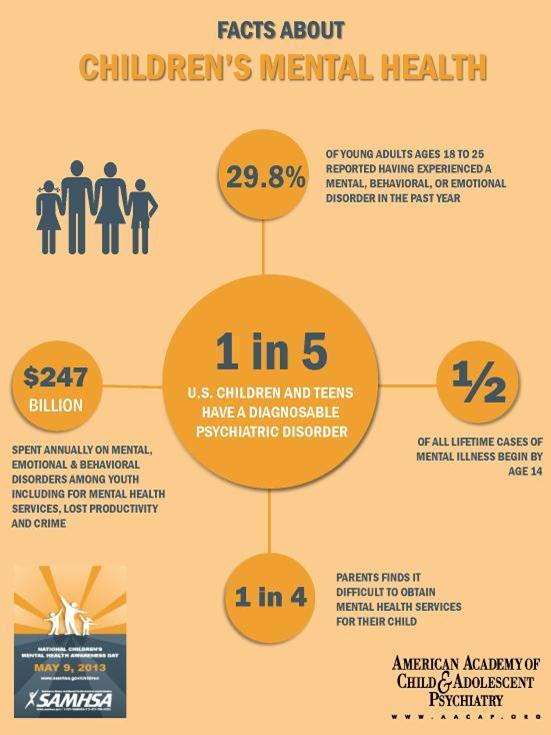
2013ad_webbadge_200x200I’m guest blogging today for family therapy guru and all-around good guy Joe McGinnis on the theme A Different Way of Thinking About Kids and Mental Illness…check out Joe’s blog by clicking here. I thought I’d keep it simple today and share this graphic for you from the American Academy of Child and Adolescent Psychiatry…

AACAP FACTS

***********************************************************************************************************

Key MinistryOur Key Ministry website is a resource through which church staff, volunteers, family members and caregivers can register for upcoming training events, request access to our library of downloadable ministry resources, contact our staff with training or consultation requests, access the content of any or all of our three official ministry blogs, or contribute their time, talent and treasure to the expansion of God’s Kingdom through the work of Key Ministry. Check it out today!

Posted in Advocacy, Key Ministry, Mental Health | Tagged , , , | Leave a comment

Contributing to a conversation about faith and mental illness

adrianwarnockheadshotAdrian Warnock is a Christian author who serves on the leadership team at Jubilee Church in London. He writes a widely circulated blog on the evangelical channel at Patheos.com. I’ve messaged back and forth with him a few times because we have a couple of things in common that are extremely unusual in the evangelical church… We’re both physicians trained in psychiatry (Adrian with adults, I see kids) and we’ve both been involved with research.

Adrian was invited by Patheos to facilitate a broad conversation about mental health to include bloggers from outside the Patheos community. He’s posed a couple of questions for discussion this week I found worth tackling for Mental Health Month…

How has your religious community historically seen mental illness? 

How does your faith, today, shape the way you see mental illness? 

I’ll look at the first question today, and the second question tomorrow.

NeurotransmittersI think the perception of mental illness varies widely from denomination to denomination, and even more so between churches within a specific denomination. From where I sit, the attitudes of the senior leadership in any given church greatly influences the experience of families impacted by mental illness in that particular church. When the senior pastor “gets” mental illness or a family involved with leadership is impacted by mental illness, the church culture is more likely to be accepting and supportive.

The two churches I’ve attended as an adult (one Presbyterian, one non-denominational) have been very proactive in providing well trained pastors and professionally trained counselors to help support the needs of individuals and families not just in the church, but in the surrounding community as well. Both operate large and vital respite care programs serving families of kids with disabilities, the majority of whom have mental health diagnoses. The efforts of our home church to support families who adopted children from Eastern Europe with severe emotional and developmental disabilities led to the development of Key Ministry. I served on the Catholic Charities Services Board that oversaw delivery of millions of dollars in mental health services to residents of Northeast Ohio, and my first job out of training was as the medical director of the largest adolescent  residential treatment center in the state of Ohio, also operated by Catholic Charities. I’ve seen the church pool resources to meet very significant needs for kids with mental illnesses and their families.

From where I sit as a child and adolescent psychiatrist, there are two areas in which the church has the greatest potential for growth in ministering to families impacted by mental illness…

shutterstock_118324816First, the church has made MUCH more progress in recognizing the signs of mental illness in adults and providing appropriate support than it has for children or teens. Mental illness in kids often manifests with anger, moodiness, irritability, aggression, defiance, and difficulties with self-regulation of emotion and behavior. It’s much more common in my experience for the signs of mental illness to be dismissed as a parenting problem as opposed to a spiritual problem. There was a family who shared their experience in looking for a church home with two young boys with severe ADHD…the mother summarized their experience with this statement…

“People in the church think they can judge when a disability ends and bad parenting begins.”

Lots of churches in our area have the ability to offer free or low-cost counseling to adults struggling with common conditions including anxiety and depression. In my experience, it is extremely rare for churches to offer resources to help children experiencing symptoms of mental illness, with the exception of respite care available for parents of kids with “special needs.”

Second, the church has missed a tremendous opportunity to reach out to and share the Gospel of Jesus with an enormously underserved people group.

While I can’t cite a specific, well-designed study looking at rates of church attendance and participation among families impacted by mental illness, I’d hypothesize (based on 27 years in the field of psychiatry) that kids and adults with mental illness are significantly less likely to attend weekend worship services or to be actively involved in small groups, Bible studies or serving ministries compared to the general population.

shutterstock_162849719People with mental illness don’t fit neatly and cleanly into our ministry “silos.” Most kids or teens with mental illness would never think of themselves as having “special needs” or as being “disabled”, nor would their parents think of a disability/special needs ministry as having something to offer them. Adults who suffer from Bipolar Disorder, recurrent depression and many types of anxiety often experience extended periods of relatively symptom-free functioning, and are less likely to be defined by their mental illness in comparison to adults with outwardly apparent disabilities or those participating in 12-step programs. Adults and kids who suffer from anxiety often avoid services tailored to meet their needs because their condition often leads them to misinterpret the level of risk in new situations and misperceive the way their acceptance of services offered to them is viewed by others in the immediate environment.

The church has had a hard time understanding how persons with mental illness experience conditions that represent disabilities in some environments, but not others. The environments in which we “do ministry” present major impediments to people with common mental illnesses who may function reasonably well in other life activities. Let me cite an example…

Consider the obstacles your ministry environments would pose to a family in which the mother has moderate to severe symptoms of Social Anxiety Disorder (according to the National Institute of Mental Health, anxiety disorders are the most common mental health disorder in the U.S., affecting 18% of the adult population, or 40 million people)…

  • She’s less likely to have friends to invite her (and the family) to church.
  • The prospect of going somewhere for the first time where most people are strangers (and some will likely approach her to initiate conversation) may feel overwhelming.
  • She’s likely to fear how she’ll be perceived if her child becomes distressed.
  • If she becomes confused during her early experiences, she’s likely to have difficulty approaching a volunteer to help.
  • She may find the invitation to introduce herself to others during the worship service heightens her experience of anxiety.
  • She may struggle with making a follow-up call in response to an announcement in the bulletin to register her child for an activity, or to volunteer to serve in the church.
  • The prospect of having to self-disclose in a small group study may lead to avoidance of small groups.

I just started reading Andy Stanley’s new book, Deep and Wide, with the subtitle “Creating Churches Unchurched People Love to Attend.” What if the environments in which we “do church” are distressing to large segments of our population who struggle with common mental illnesses? And what about the family members of a child or adult with a mental illness who miss out on learning about Jesus or growing in faith in Jesus because attending church or belonging to a small group or participating in a service ministry is too overwhelming to their brother or mother? It’s not unreasonable to assume that a significant chunk of people in any given community have some experience of church but don’t regularly attend church because of the subtle, but real ways in which mental illness presents a barrier to the environments in which we do ministry.

To reach people no one else is reaching, the church will need to try stuff no one else is trying. The more church leaders understand about the experience of kids and adults with mental illness, the better equipped the church will be to create ministry environments where all people can come to investigate the claims of Jesus and grow in faith in Him.

Updated July 4, 2014

***********************************************************************************************************

KM Logo UpdatedKey Ministry has assembled resources to help churches more effectively minister to children and adults with ADHD, anxiety disorders, Asperger’s Disorder, Bipolar Disorder, depression and trauma. Please share our resources with any pastors, church staff, volunteers or families looking to learn more about the influence these conditions can exert upon spiritual development in kids, and what churches can do to help!


Posted in Advocacy, Anxiety Disorders, Key Ministry, Mental Health, Strategies | Tagged , , , , , , , , , , , | 3 Comments

Does your church inadvertently hurt people with mental illness? Guest blogger Amy Simpson

Amy SimpsonEditor’s note: Our  Key Ministry staff and volunteer team is pleased to extend our congratulations to Amy Simpson upon her recognition as a winner of of one of Christianity Today’s 2014 Book Awards for Troubled Minds: Mental Health and the Church’s Mission. 

Amy is a passionate leader and communicator who loves to encourage Christ’s church and its people to discern and fulfill their calling in this life. A former publishing executive, she now spends part of her professional life working at Christianity Today as Editor of GiftedForLeadership.com and marriage & parenting resources for Today’s Christian Woman. She has published articles in Leadership Journal, Christianity Today, Today’s Christian Woman, Relevant, PRISM Magazine, Her.meneutics, ThinkChristian, Christian Singles, Group Magazine, and several others. I have worked for Tyndale House Publishers, Group Publishing, Standard, Gospel Light, Lifeway, Focus on the Family, and Christianity Today.

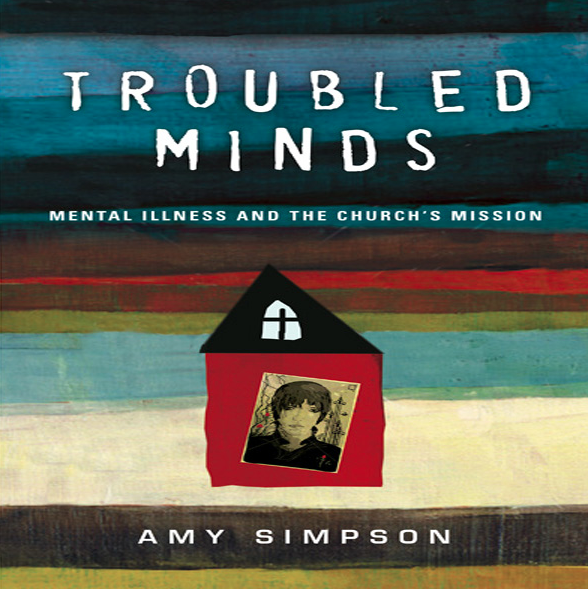
Her family’s firsthand experience with mental illness provided the inspiration for her new book, Troubled Minds: Mental Health and the Church’s Mission. Here’s her guest post to kick off the month, Does Your Church Inadvertently Hurt People With Mental Illness?

In April, news outlets revealed a disturbing practice that’s apparently common in Nevada’s State mental health system, and particularly in its largest psychiatric hospital, Rawson-Neal Psychiatric Hospital in Las Vegas.

The hospital, coverage revealed, regularly places people with mental illness on Greyhound buses and sends them to other states. In 2012, Rawson-Neal sent nearly 400 patients to 176 cities and 45 states around the country.

The state claims it’s merely helping people find their way back home, but specific cases show this is not always true. Nevada also claims the state is sending people off with adequate provisions, but again, documented cases call that claim into question.

Is Your Church Like Vegas?

Like Nevada, and all the states those Greyhound busses are bound for, churches are full of people who struggle with mental illness. Each year, 26.2 percent of the American adult population suffers from a diagnosable mental illness. At the same time, an estimated 20 percent of children in the United States are at least mildly impaired by some type of diagnosable mental illness. And about 5 to 9 percent of children ages 9 to 17 have a “serious emotional disturbance.” That translates to millions of individuals and families directly affected by mental illness. Many more are affected by the symptoms of friends, classmates, co-workers, and the people who sit next to them on Sunday morning.

The church is the first place many people go when they’re looking for help of all kinds, including treatment for mental illness. Among people who have sought treatment, 25 percent have gone first to a member of the clergy. This is a higher percentage than those who have gone to psychiatrists, general medical doctors, or anyone else. Unfortunately, many church leaders are ill-equipped to help people get the care they need. And while 25 percent of those who seek help from clergy have the most serious forms of mental illness, studies have shown that clergy refer less than 10 percent of them to mental-health professionals. On top of that, for every person who seeks help, many more stay silent, afraid to admit their illnesses to themselves or to risk the rejection of the people around them.

With so many opportunities to help people in need, how many churches respond as the state of Nevada does?

Some churches actually intentionally reject people with mental illness. In their theological framework, mental illness has no place among God’s people. Those who manifest symptoms are assumed to be demon-possessed, willfully attached to some egregious sin, or lacking the faith they need to claim God’s healing. When they don’t get better by simply praying or exercising more faith, they are considered at fault and not welcome within the fellowship. Such churches misunderstand the true nature of mental illness and need to revisit their theology of illness and suffering of all kinds. Until they do, they are not safe places for people with mental illness or their families and are best avoided.

But most churches do not hold to the kind of theology that overtly blames, rejects, and casts out people whose brains have shown themselves particularly vulnerable to the forces of disease and decay that haunt us all in various ways. Even so, many inadvertently communicate rejection through their policies or culture.

Here are three ways many churches are emulating Nevada, along with some key questions for church leaders.

Uniquely Attractive—and Responsible

As news coverage has pointed out, the city of Las Vegas makes Nevada a unique state: “The city’s entertainment and casino culture draws people from all over the world…including the mentally ill.” The trappings of Vegas may be more likely to attract people with mood disorders, schizophrenia­, and other conditions—and the same may be said for churches. Spiritual experiences, promises of peace and joy, opportunities for community and for communion with God…these elements of church life are understandably attractive to many people with mental illness. Churches have a special responsibility to recognize this and respond intentionally.

–      ­Do you make people with mental disorders feel unwelcome? ignore them and focus on the more attractive new people who walk through your doors, hoping they’ll go away and other churches will meet their needs?

–      In sermons, Bible studies, and classes, do you send the false message that Christians should not expect trouble, pain, or sickness? that happy, comfortable, and “victorious” life is the norm?

–      When was the last time mental illness was mentioned in a sermon, in a way that normalized it?

–      Does your community expect people to have it all together when they walk through the doors?

–      Do you expect people to be “cured” before finding a place to serve?

None of us will ever be whole this side of heaven—and many people with mental illness suffer from chronic and repetitive symptoms that can be managed but not technically cured. These conditions do not cancel God’s purposes for them. They do not disqualify people from a place in the body of Christ. Just as much as other ill or injured people, they deserve loving acceptance, clear and consistent boundaries, and grace.

Missing Basic Needs

In at least a few documented cases, Nevada’s mental-health care system placed people on buses without adequate provisions or chaperones. Many churches use a similar strategy, without realizing they’re not fulfilling their responsibilities.

  • If you’re a church leader who doesn’t happen to be a qualified mental-health professional, do you recognize and acknowledge your limitations? If yes, that’s a good thing.
  • Do you refer people to professionals who can help with disorders and provide therapy and medication as necessary? This is also a good thing.
  • But do you then walk away and assume your job is done?
  • Mental-health care is incomplete without spiritual nurture and loving friendship. Does your church push people toward psychiatric care but leave them without adequate spiritual guidance and a kind friend to walk alongside them?
  • Do you provide practical help (hospital visits, meals, rides, financial assistance) to people with other health crises but ignore these basic needs in families affected by mental illness?

Psychiatrists do not provide pastoral care. Therapists don’t make sure the bills are paid and the kids get to school. Medication does not answer questions about why God feels so far away. Just because people receive medical treatment does not mean they don’t need anything more from the church.

Neglecting Support Systems

Nevada claims it is simply busing people back to their home states and first making contact with support systems at those destinations. But investigations reveal those connections are not always made and plans for follow-up care aren’t always in place. Many churches also fail to consider what they can do to strengthen the support system for people with mental illness.

  • Are you ignoring the families of people with mental illness? My own survey showed that only 56.8 percent of church leaders have reached out to the family of someone with mental illness within their congregation. Have you asked families what they need? Are you prepared to help as you can?
  • Do you consult with mental-health professionals? If people in your congregation are receiving care, you can request that they sign consent forms to allow you to collaborate with professionals and discuss the best ways for your church to support these members’ mental health. If you don’t receive that written consent, you can still discuss the best ways for you to support people with various types of mental illness.
  • As in Nevada’s state mental-health care system, in your church are people getting caught within a beauracratic system with no one really aware of or responsible for their needs? Are you relying on “trickle-down ministry,” focusing on your core leaders and expecting them to lead the next tier, and so on? Is anyone in your church likely to feel responsible for a good support system, or does everyone assume someone else will take care of it?
  • Are you willing to adapt your schedules, plans, and expectations in order to deal compassionately with people in crisis? Or do you expect everyone to follow the same process and grow within the same system?
  • Are you willing to let people with mental illness do ministry in your church? Mental illness is rarely predictable, but it is not a spiritual or relational death sentence. People affected by mental disorders don’t always fit into a tightly scripted service with high production values. It can hard to find their place in a segmented congregation. But with understanding and grace, you can give them opportunities to serve according to the gifts God has given them. Allowing people to engage in ministry when they’re functioning well, and take a break when they’re not, can provide an incredible support system.

A Call to the Church

CT Book AwardsI wrote my new book, Troubled Minds: Mental Illness and the Church’s Mission, to help the church better understand the needs of people affected by mental illness. I also wrote it to challenge the church­—that’s everyone who follows Christ—to see this as part of our mission in this life.

As I’ve said in my book, “The church should not lag; it should lead the way. We serve a God who calls us to serve “the least of these” as if we were serving him (Mt 25:40). Jesus said, “Healthy people don’t need a doctor—sick people do. I have come to call not those who think they are righteous, but those who know they are sinners” (Mk 2:17). As living temples carrying God’s presence in this world, we must allow his light to shine out from us and infiltrate the darkness that surrounds so many people and drives some of them to despair.”

Let’s embrace our calling and shine the light of Christ in the darkness.

***********************************************************************************************************

Troubled MindsMental illness is the sort of thing we don’t like to talk about. It doesn’t reduce nicely to simple solutions and happy outcomes. So instead, too often we reduce people who are mentally ill to caricatures and ghosts, and simply pretend they don’t exist. They do exist, however—statistics suggest that one in four people suffer from some kind of mental illness. And then there’s their friends and family members, who bear their own scars and anxious thoughts, and who see no safe place to talk about the impact of mental illness on their lives and their loved ones. Many of these people are sitting in churches week after week, suffering in stigmatized silence. In Troubled Minds Amy Simpson, whose family knows the trauma and bewilderment of mental illness, reminds us that people with mental illness are our neighbors and our brothers and sisters in Christ, and she shows us the path to loving them well and becoming a church that loves God with whole hearts and whole souls, with the strength we have and with minds that are whole as well as minds that are troubled. Available at Amazon and Christianbook.com.


Posted in Families, Key Ministry, Leadership, Mental Health, Resources | Tagged , , , , , , , | 6 Comments

Introducing Amy Simpson…guest blogger for Mental Health Month

MHM2013HorizontalBannerMay is National Mental Health Month, and our Key Ministry team has lots of great people and resources to share in support of churches seeking to serve families impacted by mental illness.

We’ll be kicking off the month with one of two guest blog posts from Amy Simpson. Amy is an extraordinarily gifted and passionate writer and leader in the church who experienced firsthand the impact of mental illness as the daughter of a mother with schizophrenia. Amy writes for Christianity Today  and is the author of the recently released book, Troubled Minds: Mental Health and the Church’s MissionTomorrow, Amy will be guest-blogging on the topic: Does Your Church Inadvertently Hurt People With Mental IllnessOn Mothers’ Day, Amy will blog on the topic A Call to the Church.

Check out the video introducing Amy and her family’s story below…you’ll get to meet her and learn more about her new book tomorrow.

DSM-5I’ll be doing a short series next week in honor of Children’s Mental Health Week examining the obstacles to fixing our country’s broken system of providing care for kids and teens with mental illness and their families and exploring ways in which the church might play a redemptive role in supporting families in need of care. Later in the month (or whenever it becomes available), we’ll be launching a series based upon the publication of the DSM-5, the new Diagnostic and Statistical Manual of Mental Disorders. We’ll look at some of the changes in diagnostic criteria likely to impact the care of children and teens, and help parents, church staff and volunteers to become more adept at recognizing the signs and symptoms of mental illness in kids.

Make a point of checking out and sharing Amy’s guest post tomorrow as we kick off our features for Mental Health Month.

***********************************************************************************************************

Key MinistryOur Key Ministry website is a resource through which church staff, volunteers, family members and caregivers can register for upcoming training events, request access to our library of downloadable ministry resources, contact our staff with training or consultation requests, access the content of any or all of our three official ministry blogs, or contribute their time, talent and treasure to the expansion of God’s Kingdom through the work of Key Ministry. Check it out today!

Posted in Families, Hidden Disabilities, Key Ministry, Mental Health, Resources, Stories | Tagged , , , , , , , , , | Leave a comment

Why every mature Christian should have to preach at least once…

Jamie 2I’m absolutely drained this morning.

Every once in a while, I get an invitation to teach for a local pastor during Sunday morning services. I’ll be filling in this Sunday at Martindale Christian Fellowship Church in Canton, OH.

I finished the rough draft of the message yesterday afternoon. I’ve probably spent around 25 hours reading, studying, and preparing for Sunday’s teaching. From the guys I know who serve as teaching pastors, I guess that’s pretty typical. I wanted to make sure I got the bulk of the preparation done well in advance of Sunday, because emergencies tend to happen (especially this time of year) in my specialty and I wanted to be prepared. But my pastor friends deal with emergencies at least as much, if not more than I do.

I probably did more public lectures and presentations last decade than any other doc in my specialty. But I’d often give the same (or a very similar presentation) multiple times, and in a year in which I’d give 200 talks, I’d probably cover 10-15 topics. Pastors have to generate original content every week, and may get the opportunity to publicly rehearse their material two or three times tops before they’re on to the next topic. As an experienced speaker, getting up in church to teach on Sunday morning is harder than anything I’ve had to do in the medical field.

That’s why every mature Christian should have to preach at least once. We’d all have a far greater appreciation for the dedication and commitment required of the folks who put their heads and hearts into sharing with us from God’s Word every week. Make a point of telling your pastor how much you appreciate their dedication and commitment. Take them out to breakfast or lunch or get them a gift card to download more books or resources. Commit to praying for them on a regular basis. And don’t forget to acknowledge the children’s pastor or youth pastor who takes the time to teach your kids with less notice or recognition.

***********************************************************************************************************

Key MinistryOur Key Ministry website is a resource through which church staff, volunteers, family members and caregivers can register for upcoming training events, request access to our library of downloadable ministry resources, contact our staff with training or consultation requests, access the content of any or all of our three official ministry blogs, or contribute their time, talent and treasure to the expansion of God’s Kingdom through the work of Key Ministry. Check it out today!

Posted in Uncategorized | Tagged , , , | 6 Comments

Advancing the movement…

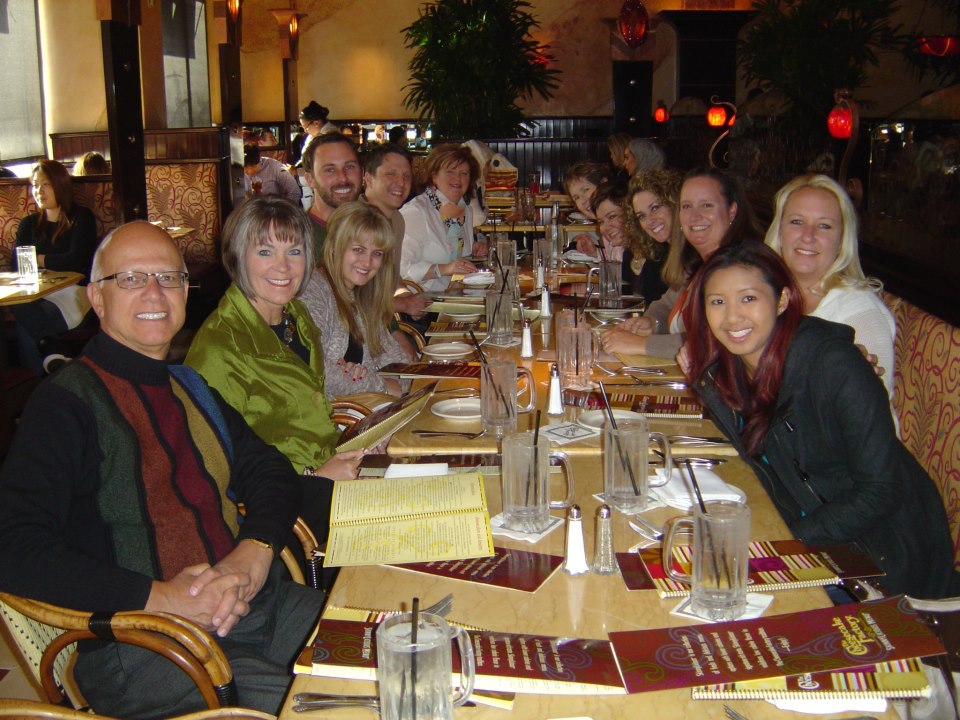
Dinner group Access SummitLast week, our Key Ministry team enjoyed the opportunity of sharing and connecting with many of our colleagues involved with disability ministry at McLean Bible Church’s 2013 Accessibility Summit. In the aftermath of the meeting, we experienced great energy and enthusiasm among the leaders of other like-minded ministries for getting together on a more regular basis and working together to advance the “Movement” among churches to become more effective in welcoming and including persons with disabilities and their families.

In the coming weeks, we’re likely to have more discussion of the “how” of developing synergy between diverse ministry organizations. For now, I’ve been giving some thought to what Key Ministry can do to serve our colleagues in ministry in maintaining the energy resulting from the sense that God’s up to something really big. In the same way that we’ve been guided by a set of “Key Strategies” throughout our ten plus years of ministry, leaders in the disability ministry movement might identify and agree upon some common strategies for advancing larger Kingdom goals beyond the scope of the supports and services provided by our individual ministries. I’ll share some ideas about strategies we can all begin to pursue where we’re positioned right now…this is intended to be a starting point to spark discussion, and I’m posting the link to this post on the Special Needs and Disability Ministry Facebook Forum (“friend” me and send me a message if you’re not part of that group and would like to be invited) to encourage other ministry leaders to add their ideas and feedback.

Strategies for advancing the “Movement” among churches to become more effective at including persons with disabilities and their families…First Draft

Leaders and organizations seeking to honor God through ministry to families impacted by disability seek to…

  • Be intentional in identifying and pursuing opportunities to collaborate with other like-minded leaders and organizations. Jesus meant for His followers to work together.
  • Model a spirit of generosity in sharing ministry resources with other leaders and organizations. We don’t need to expend precious time, talent and resources reinventing the wheel when excellent ministry resources already exist.
  • Welcome and include new leaders and ministries to the movement when there’s evidence the Holy Spirit is present in their work. Everyone gets to play!
  • Use the communications tools available to our respective organizations to enhance the visibility of resources developed by other like-minded ministries.
  • Commit to an “abundance mentality”…the success of one leader or ministry does not take away from other organizations. To paraphrase my teammate (Harmony Hensley)…We can compete with one another when every person in every family impacted by disability has come to know Jesus and is actively using their gifts and talents in a local church. Until then, there’s plenty of work for everyone to do.
  • Agree to be “Kingdom builders”…as opposed to builders of individual kingdoms. It’s nice to be recognized as a leader in the church. Individual and organizational agendas need to work in support of God’s larger agenda.
  • Identify and mentor the next generation of disability ministry leaders. The disciples were constantly working alongside and mentoring the leaders who would succeed them.
  • Demonstrate a willingness to be accountable to one another and to hold one another accountable in accordance with principles outlined in Scripture.
  • Establish the habit of offering prayer and encouragement for our like-minded colleagues in ministry. Disability ministry is hard work. When we serve the Kingdom in meaningful ways, we will invariably face adversity. We need one another.

What strategies should be added to the list? What should we take away? What’s stopping us from doing all of these things now?

Posted in Key Ministry, Leadership, Strategies | Tagged , , , , , , | 2 Comments

An adoptive parent’s plea…Why won’t God show us what to do?

shutterstock_373527394I received an e-mail over Spring Break from a mother who subscribes to our blog. She and her husband adopted two preschool-age siblings a number of years ago who are now young adults struggling both emotionally and spiritually. I have permission from her to share the message she sent me along with my response with our blog readers. Some non-essential details of the story have been changed for confidentiality purposes…

My husband and I adopted two children seventeen years ago at age 5 and 3. They were siblings. We raised them in the Christian faith and our family strived to be on a Christ-like path as much as we were able. Both children have many mental health issues and have increasingly struggled along their road to adulthood. Today, our daughter Rebecca, 20, is someone we barely know. She spent her spring break in an intensive outpatient program, in part because there were no beds at our local psychiatric hospital at the time of her most recent crisis. The time she spent in the program (and most of her previous treatment) has been of little impact and she’s right back to the same behavior she had prior to entering. They added bipolar to her alphabet soup diagnoses (ADD, Asperger’s, PTSD, anxiety, depression, adoptive issues). She is rejecting God, us, and her family when she is in the throws of her illness, preferring to be with strange men and pursue risky behavior. Our goal is to make it to next week when she has a follow up appointment with a new psychiatrist who has recently opened a practice near our home. She’s taking a couple of classes at a local community college and works part time in retail. Matthew is more functional but sleeps most of his off-time away. He dropped out of college during his first semester and has no prospects for a life after that. He won’t accept medical or therapy help for several years now, and shows little initiative when it comes to looking for work.

Questions we wrestle with are spiritual, honestly. Would God have spared them in their early life from abuse/neglect, put them with us for all these years, only to return her (now) to the life she was rescued from earlier? We believe that her illness is not more powerful than the God who lives in her yet we watch her slip further and further away from the Christian life we hoped her to have and into the life of dysfunction and mental illness, seeking out people who are like her, very ill mentally, or others that see her illness and take advantage of her. She has all but moved out physically from our family. There are still some snippits of time where we see the old Rebecca but that, too, is leaving us. Why won’t God show us what to do more effective than what we are doing? We are prayerful people and are so distraught with anguish as to how to help anymore. We are desperate not to lose her.

Dear Mom,

I’m so sorry for what you and your husband are going through. I’ll make a point of praying for the two of you, along with your kids at church this weekend. I wish I could tell you that your experience is rare, but I’ve heard stories very similar to yours far too often as a child and adolescent psychiatrist over the last two-plus decades. Here are some things to consider…

First, while this truth is hard to comprehend, Jesus loves your kids even more than you do. No doubt he’s more distressed about the status of their relationship with him and their inability to this point to fulfill the potential he’s given them. I suppose Jesus gives all of us free will so that He can be glorified when the Holy Spirit works through us to conform our will to his. But free will can be both a blessing and a curse.

shutterstock_73997065Second, I would see the struggles your kids are experiencing as evidence that we live in a fallen world in the same way that kids with cancer, acts of terrorism, natural disasters and every manner of brokenness imaginable serves as evidence of a fallen world. Mental illness is at least as painful and destructive as any other type of disease. Sadly, the struggles you describe with your kids are all too often typical of the natural progression of mental illness. Here’s what I do know from Scripture and personal experience…God has demonstrated Himself to be completely trustworthy and He knows the past, present, and future of our children. I have to trust Him with their care if for no other reason than He has infinitely more information than I ever will to comprehend what is best for them.

Third, I talk to FAR too many loving, Christian parents in my day job who adopted children with the understanding that if they were diligent in their love and care, the kids would assuredly overcome the circumstances from which they came and become mature, Christian adults. All too frequently, that’s not the case. From a research standpoint, we’re coming to understand how powerful genetic influences can be in determining complex patterns of behavior and social interaction. There’s a growing awareness that many children adopted from birth may exhibit the signs of attachment disorders without ever having experienced abuse, neglect or pathologic care. Trauma can play a huge role in determining a child’s future ability to self-regulate behavior and emotions and has long-term implications for overall health. As parents, we can have a powerful influence upon our kids…but there are lots of other influences that impact our kids as well and sometimes adopted kids are very predisposed toward a certain life path independent of the love and care they receive at home. Who could love us more than Jesus? Yet despite his perfect love…infinitely more perfect than the love we as parents can provide… many reject His love and choose to rely upon their own wisdom.

I’m thrilled that the church is getting more involved with adoption of “at-risk” kids, but I also feel strongly that parents need to be fully aware of the challenges they’re likely to face and to “consider the cost” prior to adopting. We need to let parents know that all of their love and concern for their kids provides no guarantee of a positive outcome. The church also needs to be prepared to come alongside parents raising kids exposed to trauma or abuse and proactively put the necessary supports in place to allow families who adopt to maintain their active role in their local church family.

Finally, I’m convinced that God never wastes a hurt. Is it possible that he’s already using the circumstances your kids are in for his purposes? You said this in your e-mail:

Why won’t God show us what to do more effective than what we are doing? We are prayerful people and are so distraught with anguish as to how to help anymore.

Could it be that God is using this circumstance to draw you and your husband into a deeper relationship with him? Let’s try to look at this situation from God’s perspective, to the extent we’re able. Relationship is HUGELY important to God. Through Jesus’ death on the cross God paid a horrible but necessary price in order to have a relationship with us. Is it possible that God is using the brokenness that you and your husband are currently experiencing as a means of drawing you closer to him? I don’t believe that God necessarily allows harm to come to one person as a way of helping another person, but I do believe that he can use the pain and brokenness inherent in our fallen world for good.

I’ll be praying for you and your kids. I strongly suspect our readers will be as well. Your kids are blessed to have such faithful and loving parents!

***********************************************************************************************************

© 2014 Rebecca Keller PhotographyCheck out Shannon Dingle’s blog series on adoption, disability and the church. In the series, Shannon looked at the four different kinds of special needs in adoptive and foster families and shared five ways churches can love their adoptive and foster families. Shannon’s series is a must-read for any church considering adoption or foster care initiatives. Shannon’s series is available here.

Posted in Adoption, Families, Key Ministry, Stories | Tagged , , , , , , | 1 Comment

Evidence of God at work…just outside the Beltway

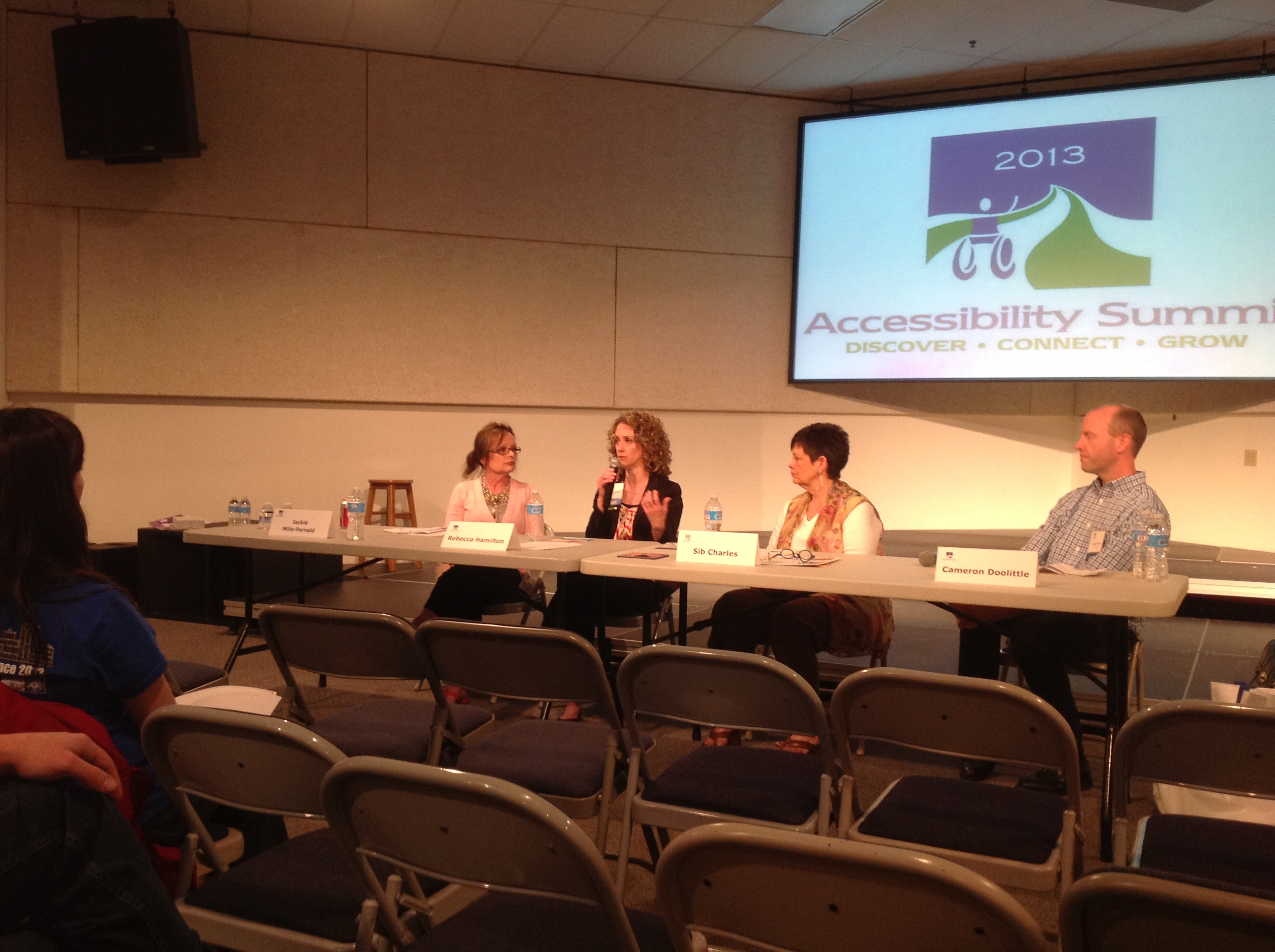
Emily ColsonOn behalf of our entire team at Key Ministry, I’d like to extend our thanks to Jackie Mills-Fernald, Rosie Oakley and their crew at McLean Bible Church for graciously inviting us to be a part of the 2013 Accessibility Summit. Every time I’ve been able to attend, I’ve come away with three or four invaluable new contacts who have contributed greatly to our work at Key Ministry, including (five years ago) a certain youthful inclusion ministry leader with a reputation for using hair as a vehicle of self-expression. This year was no exception. I’ll share a few highlights for those who couldn’t attend.

I wasn’t familiar with Emily Colson or the story of her son (Max) prior to the Summit outside of an awareness that she had written a very popular book with her father about their family’s experience with autism. Max has a remarkable capacity for bringing joy to the people who surround him, but Emily also has a remarkable capacity to view Max from the perspective of his giftedness and is clearly his biggest fan. Emily has a great passion for young adults with autism and is likely to do marvelous things to ensure that the kids of this generation with autism will be loved, cared for and appropriately supported as adults. Here’s a brief interview introducing Emily and Max…

Barb NewmanA couple of years ago, I shared a review of Barb Newman’s book Autism and Your Church, but I’d never actually met Barb or heard her speak until this past weekend. She’s good. Very good. I didn’t fully appreciate the depth of her training and experience, or the extent of her involvement in helping Christian schools successfully integrate kids who would qualify for special education services in the public schools. While beyond the scope of our mission through Key Ministry, I’d want our team to support Barb as she helps tear down the barriers that exist for families of kids with learning differences who long for their children to receive a faith-based education in a Christian school. As someone closer to the end of my career than the beginning, I appreciate the difference that results because Barb brings a lifetime of experience to her work. I invite you to learn more about Barb and her crew at CLC Networks.

IMG_0313Amy Kendall (pictured with Katie Wetherbee) currently serves as Disability Ministry Coordinator at Saddleback Church and is one of the very few people I’ve encountered in this field of ministry with a graduate degree in the mental health field (Marriage, Family and Child Counseling). I’m excited by the potential for Saddleback to do great things in taking the lead on helping the church to more effectively minister to families impacted by mental illness. Amy’s uniquely positioned to be a fabulous resource to Saddleback as they move forward.

Finally, Matt Mooney wasn’t a presenter at this year’s Summit, but I strongly suspect he will be in the future. Matt is the founder of 99 Balloons, a great young organization helping others to engage persons with special needs locally through their rEcess respite care initiative, and globally, through a series of initiatives to improve the lives of kids with disabilities. Matt has a huge vision for how the church can demonstrate the love of Christ through serving persons with special needs, mobilizing the followers of Christ through effective use of storytelling and social media. He has a gift for telling stories. If fact, it’s more likely that you’re familiar with Eliot (Matt’s son) than you are with Matt and his work…

IMG_0323Finally, I have to admit I’m pretty proud of our crew. Most organizations are fortunate to have one communicator who can teach with excellence…everyone on our team has both the presentation skills and the depth of experience to represent us well. They also have lots of fun when they get together with others who share their passion for wanting all kids and families to get to know Jesus. God was honored and a good time was had by all.

Block out April 4-5, 2014 on your schedule…you’ll have a worthwhile experience at the 2014 Accessibility Summit!

***********************************************************************************************************

Key MinistryOur Key Ministry website is a resource through which church staff, volunteers, family members and caregivers can register for upcoming training events, request access to our library of downloadable ministry resources, contact our staff with training or consultation requests, access the content of any or all of our three official ministry blogs, or contribute their time, talent and treasure to the expansion of God’s Kingdom through the work of Key Ministry. Check it out today!

Posted in Advocacy, Autism, Families, Inclusion, Key Ministry, Training Events | Tagged , , , , , , , , , | 1 Comment

Guest Blogger Dave Lynden…Remembering How the Story Began

LyndenIn celebration of Autism Awareness Month, we plan to introduce our readers to several fathers of children with autism who were led to serve families impacted by disabilities because of their experiences. This past Sunday, we introduced you to Joe Butler of Ability Tree. Today, we’re pleased to introduce you to Dave Lynden of Fellowship Bible Church in our hometown of Chagrin Falls, OH.

Dave is a graduate of the University of Akron and Trinity Evangelical Divinity School. While serving as an associate pastor at a large church in Dayton, OH, Dave was instrumental in launching a respite care initiative for families of kids with special needs. Dave and his wife (Desiree) experienced the need firsthand… their middle child (Micah) is diagnosed with autism. Shortly after Dave assumed his current role as Senior Pastor of Fellowship Bible Church in the Spring of 2009, he launched “Breathe”…the largest, free, church-based respite ministry in Northeast Ohio. Here’s Dave’s guest post… Remembering How the Story Began.

I love going back to the beginning of the story of the Bible.  It is kind of like watching the first part of a movie when all is good; there is peace, wholeness (what the Bible calls “shalom”) before the crisis shatters the characters and the calm into pieces.  Sometimes, I am tempted to watch the movie up to that point and then turn it off and re-write the story in my own imagination so that the shalom remains undisturbed.  I am also tempted to read Genesis 1:1-2:25 and stop there.  Here was a place of extreme beauty, extreme shalom; a time and a place where there was no pain, no troubles, no autism or abuse or depression or loss.  It was a place of joy; of quiet, flawless communion.  I wonder if we might even say that it was a place of play.  I do not think that the word “play” is too strange or crass.  I think that God actually “played” in His own creation.  The language in Job almost pictures a God who not only creates, but engages in and with His creation; plays in it!!  The lightning bolts announce to Him where they are (Job 38:35).  God wades through the oceans (Job 38:16) like a schoolboy might puddle-jump in his rubber boots while the stars sing at the sunrise of a new day (Job 38:7).  We find God almost playfully engaging wild donkeys and oxen and horses (Job 39:5-25), rejoicing in the majestic soaring of a hawk (Job 39:26).  Cornelius Plantinga writes,

“God loves creation.  God celebrates creation. God even plays with His creation.”[1]

Both Plantinga and Eugene Peterson reference a poem by Gerard Manley Hopkins which speaks to the same thought of God playing and resting in His magnificent creation!

As kingfishers catch fire, dragonflies draw flame;

As tumbled over rim in roundy wells

Stones ring; like each tucked string tells, each hung bell’s

Bow swung finds tongue to fling out broad its name;

Each mortal thing does one thing and the same:

Deals out that being indoors each one dwells;

Selves- goes itself; myself it speaks and spells,

Crying “What I do is me; for that I came.”

I say more: the just man justices:

Keeps grace: that keeps all his goings graces;

Acts in God’s eye what in God’s eye he is-

Christ- for Christ plays in ten thousand places,

Lovely in limbs, and lovely in eyes not his

To the Father through the features of men’s faces.

“Christ plays in ten thousand places”.  That line ended up being the title of Peterson’s book on spirituality and the Bible’s overarching story.  And in this place of play, God designated a sacred space to meet and play with the pinnacle of His creation-humans; a place that was unique and special and filled with shalom; a place where humans had no doubts about God’s intentions and goodness; a place where they could talk with God and He could reply in unmistakable clarity.  There was never a thought that we were talking to ourselves when we prayed, pretending it was God when it was just wishful thinking.  No one needed to make up encounters with God or create clichés or settle for routines of prayer, Bible study and church attendance.

That is where I am tempted to stop the story.  But, the story doesn’t stop there.  There was an act that we cannot get much more than a wisp of understanding…but right to the point, humans rebelled.  We ate from the tree of “I want to be my own boss” (that is the meaning of the Hebrew idiom- “knowing good and evil”) and shalom was shattered.  We lost so much.  We destroyed so much.  Our ignorance concerning the devastation that sin and willfulness created is almost as tragic as the devastation itself.

Dave_Micah_iLyndenWhat did we lose?  I got another glimpse of a world that once was (and what happened) through our autism support group.  Many of the parents we know who have a child with autism can tell you of a time when their child was around 18-24 months old, developing nicely…and then they regressed into this little inner-world that struggles to let anyone in.  The language stops.  The understanding stops.  The eye contact stops.  Listening to these parents, it is like something leaked out of their child never to come back again.  I wonder if that is how God felt that one particular day He came to the garden to play in His creation in that special place with human beings, only to find that something had leaked out of His children.  They don’t want to speak to Him.  They don’t want to make eye contact with Him.  It’s like they lost the ability to play.  Of course, this was not some innocent tragedy.  The original humans had betrayed God and something happened to them that created instant isolation and alienation.  We tend to read the story of what theologians call “the fall” (i.e. “the fall from God’s grace”) as though it were a simple mistake.  It was just fruit, after all.  Why should God be so upset?  The truth is, the fruit represented something.  It represented a loyalty to God; to trust Him to be God and to honor the way in which He ordered His world by obeying Him.  To eat the fruit of “I want to be my own boss” meant that God could not be trusted, that He wasn’t good, that they (we) could run this universe better than Him.  It was a claim to His position as king.  It was a revolt.  It was a denouncement of His friendship.  So they had to leave, we had to leave.  I wonder sometimes how grieved God must have been as He watched these two “playmates” walk silently out of their sacred space, heads hung low in shame and loss.

Thankfully, the story doesn’t end there either!!  By the time we get to the end of the story (Revelation 22), the “sacred space”, the garden is restored (and then some)!  I wonder if God imagines how “play-time” in His new creation will be once His old friends have experienced redemption and restoration and returned to Him.  I wonder if He longs for the laughter and the knowing and the eye contact to be back in full, unhindered swing.  But, we are getting ahead of ourselves.  We’re still in the part of the story that precedes all of that.  We are at the beginning, right after the crisis has shattered the characters and the calm.  While we are presently on the other side of the cross of Christ where our rebellion was paid for and the empty tomb where Jesus conquered death; where when God’s people, when worshipfully surrendered to Jesus begin to see “hell break apart under our feet”[2], as Gary Thomas so strikingly puts it, we are not yet to the place where Jesus has completed the work of making all things new again.  We are still remembering snippets and longing for more of God and more of His world that once was and will be again.  I get a God’s-eye view of all of this as a father to Micah, whose autism seemingly slipped in like a thief in the night and leaked out of him something precious and irreplaceable.  Trying to connect with Micah must be, in some small way, how God is trying to reconnect with us as we avert eye contact and struggle to communicate due to our own “spiritual autism”.

On the Labor Day weekend of 2010, I found myself- yet again- living the story of the Scriptures while on a trampoline with my beautiful little boy who was soaking in the unadulterated one-on-one time he had with his dad.  Indeed, I found myself encountering God; looking through His eyes at His partially restored creation awaiting its full restoration.  Here we were- Micah and me- in our “sacred space”, our “garden”, resting, bouncing, playing.  There is just something about bouncing that helps calibrate his little mind.  He thinks better.  He communes better.  During our “plop-down” times, he will look at me directly in the eyes and smile and tell me he’s “happy” (a pronouncement that I had to call Des about because it is that rare).  He asks for tickles and kisses.  It’s in these small moments, that I wonder if we will get to relive this moment again one day when we have both passed from this world and into God’s new garden.  I wonder if we will bounce and play in our trampoline.  What will Micah express to me in complete sentences with inflection and unhindered mind in our sacred space now renewed?  What will our relationship be like when whatever leaked out is put back in?  It is something I can barely even dream of, though I pray for those dreams to come at night.

DSCF0156This was a window of clarity for me; a moment of revelation in which God gave me a glimpse of a world that once was, a world I could barely imagine.  There were no voices, no visions; just a snapshot of a sacred moment with my son.  But, it was also an unmistakable encounter with God.  It is small moments and little wonders like this where I realize how much we’ve truly lost, how badly we’ve screwed things up in this world, and yet, how much God must truly love us; how much He is looking forward to the time when all things are re-born and His creation is making eye contact again; how much He is truly invested in making all things new, re-forging shalom and…playing again.


[1] Plantinga Jr., Cornelius, Engaging God’s World, pub. by Wm. B. Eerdmans, 2002, p. 24

[2] Thomas, Gary L., Seeking the Face of God, pub. by Harvest House, 1994, pp. 29, 31

***********************************************************************************************************

BREATHE Special Needs Respite provides a fun, safe, evening out for families with special needs kids. BREATHE takes place monthly (except during December) at Fellowship Bible Church in Chagrin Falls.

At BREATHE, kids enjoy an evening of food, games, and fun while parents and caregivers get a well-deserved break. Each child attending is paired up with a trained volunteer for the evening. The best part? BREATHE is FREE! All children 0-18 years of age are welcome, along with their siblings. Each guest may participate in as many activities as he wishes. A quiet room is also available for kids who prefer peaceful activities with fewer transitions. All special dietary concerns are accommodated, including gluten free/casein free, color/dye sensitivities, and standard food allergies.

Click on the image below to learn more about BREATHE, or to register your child for the next free respite event.

Breathe

Posted in Autism, Families, Hidden Disabilities, Stories | Tagged , , , , , , , , | 2 Comments