Leaning into our greatest fear…

AStoryUnfinishedAlthough letting go of control is awful, pretending to be in control of that which we are not is even worse. Besides, it is only through the holes in the fence that beauty enters in, along with the pain. Our structures of protection serve to keep out blessing as well. All is intertwined and wound up together , pain and beauty, and both advance only as the fences fall and the gate swings open.

I thought A Story Unfinished was going to be about disability-the story of how God was at work through Matt and Ginny Mooney’s experience as parents of a boy (Eliot) who lived for 99 days with a genetic disease (Trisomy 18) that had made his birth unlikely. After all, Matt is a visionary leader within the disability ministry movement currently serving as Executive Director of 99 Balloons, a non-profit organization based in Northwest Arkansas that helps others engage children with special needs locally and globally. But the book isn’t really about disability…instead, A Story Unfinished is a testimony from a remarkably faithful young Christian couple that touches upon much broader issues that produce tension and conflict for people of all ages who seek to better understand the ways of Jesus.

Matt’s authenticity in describing his attempts to maintain a sense of control over life’s circumstances while avoiding pain at all costs is a mindset I identify with-and a very common mindset among my friends and neighbors. We desire to be safe…especially those  of us who are part of the church. Our local contemporary Christian radio station markets itself as “safe for the whole family.” An unspoken desire of many church families with school-age children is that a faith-based upbringing will protect their kids from the emotional, physical and legal consequences of choices that run counter to the teachings of Scripture. Matt points out the impossibility of truly following Christ while avoiding pain.

Only by faith, and never by reason, do we stand in line for the very ride that all within us says to avoid. Jesus plunged headfirst into the swirl of the Cross-the one He prayed to avoid if at all possible. Scripture informs us that the lifeless body of Christ was laid in a tomb, where it remained for three days until He arose, overcoming death and ascending to heaven to reside with the Father on the day we commemorate as Easter Sunday. In my former bifurcated life, Easter is good, but Friday is not.

Matt’s book is really about submission…giving up our agendas and sense of self-sufficiency for a life in which we experience both pain and joy in the process of truly experiencing the presence of God through becoming totally dependent upon Him.

The Cross reminds us that God’s hope for us does not lie in temporary, status-quo safety. Instead, He asks us to trade in our most intimate desires for a life of faith-the kind of faith that does not allow for constructing safety nets, the kind of faith through which He is enough, and He is all we have.

I hope A Story Unfinished receives exposure far beyond the disability ministry community. It was the most challenging book I’ve read on Christian living in several years, cutting to the core of issues with which we all struggle far more than we’re willing to admit.

***********************************************************************************************************

Mooney FamilyAt thirty weeks pregnant Matt Mooney and his wife Ginny were informed that their child had a genetic disease Trisomy 18.

They were told that birth was unlikely.
That life was not viable.
That a bleak future awaited.

They were not told that they would get 99 days with this child and these precious days would change them forever. Through the sleepless nights, an unrelenting desire for answers, and the frightening reality that slides in where optimism once resided, Matt and Ginny walked with family and friends through the life and death of their first born son.

At Eliot’s funeral, 99 balloons were released into the air to represent the 99 days of his life. This act of remembrance stirred the hearts of a community and a country.

The story of Eliot was featured on Oprah and the Today show. A video of his life was watched by millions on Youtube. But the story of Eliot’s life and death is not the end of this journey. Through the impact of his life, a legacy has continued.

A Story Unfinished chronicles a father’s journey of pain and redemption and the mystery of God and His goodness in the midst of it all.

Available at Amazon and booksellers everywhere.

Posted in Advocacy, Families, Key Ministry, Spiritual Development | Tagged , , , , , | 2 Comments

What type of evaluation should a child receive before starting medication?

ID-10078568Here’s the third installment in our Summer 2013 blog series…Ten Questions Parents and Caregivers Ask About Kids and Medication. We’ll examine the question What type of evaluation should a child receive before starting medication?

The longer I’ve been in clinical practice, I’ve found myself needing more time as opposed to less for new patient evaluations. I’ve learned that there are more and more questions I need to ask to effectively anticipate challenges likely to arise during treatment. Taking the time up front to get a thorough understanding of a child’s situation greatly helps minimize the likelihood of problems down the road…and gives me credibility with parents when I can speak about complications before they occur.

For economic purposes, some clinics have a physician extender (physician assistant, nurse practitioner) or a non-physician clinician (psychologist, counselor, social worker) collect much of the child’s history in an initial assessment. I prefer to do this myself, because process matters as much as content. When I was on the lecture circuit, my physician colleagues would frequently ask me how I managed situations when I thought a child or teen needed medication and the parents refused to consent to the recommended treatment. My response was to share that I rarely had difficulty getting “buy-in” from parents as long as they felt I’d taken the time to understand their child’s condition and listen to their concerns. Unfortunately, our situation probably represents the exception as opposed to the norm in our modern reimbursement-driven healthcare system.

With that said, here’s my take on what physicians need to know prior to recommending medication for kids with mental health disorders…

They need to obtain a thorough history of presenting problems from the child and their parent(s). I need time with the parents without the child in the room to allow them to speak freely on a variety of topics, including their parenting approaches, the impact of the child’s condition on the family unit, their personal histories of mental illness and other sensitive topics. I need time with the child or teen alone to ask about concerns (substance use, sexual behavior, abuse, suicidal thoughts or self-injurious behavior) they might be reluctant to discuss in front of parents. This time is critical to developing a good clinical formulation leading to an effective treatment plan.

They need to screen for common mental health conditions that may appear unrelated to the child’s presenting problem(s). Much of the time I spend with kids and parents in an initial assessment is spent screening for other “comorbid” conditions that often confound our ability to treat what appears to be the primary problem. For example, kids with ADHD are more likely than kids in the general population are more likely to experience anxiety disorders and kids with anxiety are more likely to have symptoms of ADHD, after eliminating anxiety as a cause of their attention problems. Stimulant medication used to treat ADHD frequently exacerbates symptoms of anxiety while SSRIs used to treat anxiety may contribute to behavioral activation and decreased motivation for homework completion in kids with ADHD. We want to anticipate potential problems in advance.

They need to obtain a thorough understanding of the family’s history of mental health problems, regardless of whether the problems have been formally diagnosed. The apple literally doesn’t fall far from the tree. A parent who has struggled with the effects of an undiagnosed mental illness may not recognize the severity of a child’s functional impairment. A parent’s mental illness may impact their ability to effectively participate in or implement important components of their child’s treatment plan. At the same time, we need to exercise caution in not leaping to conclusions prematurely…i.e., a child presenting with moodiness and irritability isn’t automatically “bipolar” when a family member has been treated for bipolar disorder.

They need to review the child’s previous mental health treatment (including medication). This part of the evaluation can be time-consuming when kids have a long and complicated history. Parents frequently forget names of clinicians who treated their child in the past. Recollections of responses to medications (and doses) are frequently foggy. We have a very detailed intake packet that parents download from our website that asks lots of detailed questions about medication, yet many parents don’t take the time to complete that section thoroughly, even when their primary concern revolves around medication recommendations. I frequently encourage parents to visit their local drugstore to obtain a printout of all the prescriptions they’ve had filled for their child prior to their initial evaluation when they haven’t maintained detailed records.

They need to review of child’s medical history and developmental history. It’s a good idea for the child to have had a current physical (within the last six to twelve months) from their primary care physician when parents are seeking treatment from a psychiatrist. We often find that kids with developmental delays in language or motor skills may qualify for and benefit from intervention available through local schools.

They need to review report cards, educational records and psychoeducational testing (if available). School records are often a treasure trove of information. Kids with ADHD frequently have characteristic comments about work completion and/or behavior for several years preceding the child’s referral. Multifactored evaluations may contain reports of detailed classroom observations from trained observers, or psychological assessments (Child Behavior Checklists-CBCL) from teachers and parents with measures across multiple domains. On occasion, kids present to the office with emotional or behavioral issues related to inappropriate school placement or lack of access to necessary special education services or accommodations.

They may want to obtain rating scales from parents and teachers, along with observations from other corroborating sources (when appropriate). Diagnostic criteria for many common mental health disorders are extremely subjective. Diagnostic clarity is enhanced when the clinician has access to information from as broad a range of adults/caregivers as possible involved in the child’s life.

They need to perform a detailed evaluation of the child’s mental status. When considering medication, clinicians need to establish a solid baseline sense of the child’s thought processing, affect, mood, appearance, memory and motor movements to appreciate changes resulting from any prescribed medication.

Bottom line…Parents need to feel confident that their child’s physician has truly taken the time to understand the causes of their child’s situation and considered a full range of medical and non-medical alternatives prior to moving forward with a treatment plan that includes prescription medication.

Resource: Here’s a download from the American Academy of Child and Adolescent Psychiatry to help parents understand what they should expect from a psychiatric evaluation.

Photos courtesy of http://www.freedigitalphotos.net

***********************************************************************************************************

ADHD Series LogoKey Ministry offers a resource center on ADHD, including helpful links, video and a blog series on the impact of ADHD upon spiritual development in kids and teens. Check it out today and share the link with others caring for children and youth with ADHD.

Posted in Controversies, Families, Hidden Disabilities, Mental Health, Strategies | Tagged , , , , | 2 Comments

How would I know if my child would benefit from medication?

PillsWelcome to the second installment in our Summer 2013 blog series…Ten Questions Parents and Caregivers Ask About Kids and Medication. Today, we’ll examine the question How would I know if my child would benefit from medication?

Given all the controversy generated by the topic of psychiatric medication for kids and teens, I’m frequently asked for guidance and direction from parents and caregivers as to when medication is necessary and appropriate. Here are some clarifying questions I share with parents to help them in their decision making process…

Does your child have a mental health condition for which medication is demonstrably effective? Just because a child has a mental health condition, that doesn’t necessarily imply that medication will help…or help more than other interventions. Some examples of conditions for which medication is demonstrably effective in kids:

  • ADHD
  • Anxiety Disorders
  • Obsessive-Compulsive Disorder
  • Aggressive behavior in kids with autism spectrum disorder
  • Bipolar Disorder (accurately diagnosed)
  • Schizophrenia
  • Depression (modest effect)

Does your child’s condition result in significant functional impairment in one or more major life domains (school, friends, family, community)? A fairly frequent scenario I’ll encounter in my office is a kid suspected with ADHD who meets the diagnostic criteria in terms of having enough symptoms but continues to do well in school because of high intelligence or use of compensatory strategies, and has little difficulty with family or peer relationships. A general rule of thumb is that we don’t treat the disorder…we treat functional impairment or some maladaptive trait associated with the disorder.

Your child has a condition for which evidence-based non-medical treatment is unavailable, has been unsuccessful or less effective than medical treatment. Let’s use the example of a child with panic attacks and social anxiety who is 15 sessions into a course of cognitive-behavioral therapy (CBT) from an appropriately trained therapist who has demonstrated little improvement. Let’s say the child lives in a community where regular CBT is unavailable. Medication for anxiety would certainly be appropriate in either of those situations. Here’s another example…let’s say we’re treating a teen with ADHD who struggles greatly with organization, focus, work completion and academic performance. Behavioral interventions are more likely to be successful after an effective medication regimen is established for ADHD.

Does the severity of your child’s condition require a more rapid response than available through non-medical treatment? If we have a kid come in with severe depression, accompanied by significant suicidal thinking, we’d be more likely to consider starting a trial of medication together with CBT. Or say we have a child with an autism spectrum disorder who can benefit from applied behavior analysis (ABA) who becomes so aggressive during transitions at home that the safety of other children in the home is placed at risk? Medication to reduce the risk of aggressive behavior while behavioral interventions are put in place is certainly justified when reducing or eliminating the behavior is necessary if the child is to continue to live at home.

Photo courtesy of http://www.freedigitalphotos.net

***********************************************************************************************************

600817_10200479396001791_905419060_nConfused about all the changes in diagnostic terminology for kids with mental heath disorders? Key Ministry has a resource page summarizing our recent blog series examining the impact of the DSM-5 on kids with mental health disorders. Click this link for summary articles describing the changes in diagnostic criteria for conditions common among children and teens, along with links to other helpful resources!

Posted in ADHD, Controversies, Hidden Disabilities, Mental Health | Tagged , , , , | Leave a comment

Why does it seem so many kids are on medication?

Question MarkWelcome to our Summer 2013 blog series…Ten Questions Parents and Caregivers Ask About Kids and Medication. Today, we’ll kick off the series by examining the question Why Does it Seem So Many Kids Are On Medication?

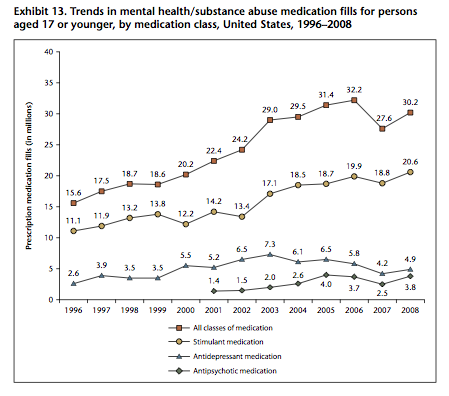
Let’s start with a look at some data examining prescribing practices with psychoactive medication and kids…

Here’s data from the U.S. Centers for Disease Control looking at the percentage of U.S. kids between ages 8 and 15 prescribed medication across a range of mental health conditions:

Medication Prevalence

From the Wall Street Journal…

Number of prescriptions WSJ

From the U.S. Substance Abuse and Mental Health Services Administration (SAMSHA):

Medication fill rates SAMSHA

Getting back to our original question…Why does it seem so many kids are on medication?

ADHD is (by a very large margin) the mental health condition for which medication is most frequently prescribed. But the number of kids taking medication for ADHD on any given day may be dramatically overstated.  Looking at the statistic above, 8.6% of kids ages 8-15 received at least one prescription for ADHD medication in 2008. In 2009, according to SAMSHA statistics, 5.29 million kids ages 17 and under received prescriptions for stimulant medications. If we use SAMSHA’s data for the number of prescriptions written in 2008 (one year earlier) and divide by the number of kids with ADHD, the typical kid with ADHD receives approximately four prescriptions per year for a thirty day supply of medication. Here’s an earlier blog post that explains why the number of prescriptions filled for ADHD is far lower than expected.

The success of available treatments have created a culture in which medication has become more accepted. Social networks likely play a significant role in parents’ willingness to consider medication. We see this in our practice…When several kids with well-connected parents respond positively to medication, it’s not at all unusual for us to see a steady stream of families from that school seeking help.

Parents who themselves have responded to psychiatric medication are more accepting of having medication prescribed for their children. We see this most often when we’re considering medication for a kid with anxiety or depression. When mom or dad has responded positively to medication, the child is more likely to be started on medication, especially if some type of counseling/therapy has previously been tried. The converse is often true with ADHD medication…parents seek out evaluation after observing a positive response to medication in their child.

Parents aren’t necessarily willing (or capable) of implementing behavioral, home-based interventions. The apple often doesn’t fall far from the tree. Kids who struggle with prioritization, self-control and a lack of follow-through frequently have parents who share the same struggles. For parents who are willing to implement behavioral approaches, good help may be nearly impossible to find. We’re fortunate to have a capable practitioner in our area with a team that offers home-based behavior intervention at a reasonable price. Mental health benefits offered under traditional health insurance doesn’t typically cover home-based behavioral therapy, or administrative demands are so arduous that the few service providers available choose not to contract with insurance.

Medication often serves as a substitute for effective evidence based psychotherapies in both public and private settings. Good psychologists, counselors and social workers are very hard to find! Pediatricians and family physicians are generally available in areas where mental health resources are in short supply. Here’s a chart review study presented this past May from the American Academy of Pediatrics reporting 9% of kids in 14 sites representing 11 states received medication from their pediatrician between 2009 and 2011.

The ever-increasing demands for academic productivity from schools accompanied by the rapidly escalating cost of higher education have led more families to seek out treatment for ADHD, and contribute to the increased prevalence of anxiety in teens. In my 22 years in practice after completing my fellowship, one of the most striking changes I’ve seen is the increase in the volume of work kids are assigned in school, along with increased expectations from both schools and parents for kids to manage and organize their workloads. Declining grades related to missing homework might be the most common concern I see on referrals of new kids to our practice. The pressure for good grades and high SAT/ACT scores kids experience from their parents…and themselves can be overwhelming…as evidenced by the article featured in this commentary.

Training bias on the part of practitioners. For nearly all of the residents and fellows who pass through our practice, much of their clinical training takes place in very busy community mental health centers where trainees are expected to evaluate and treat lots of kids in relatively brief time slots…and focus almost entirely upon medication needs. Young psychiatrists who graduate from training do what they’re trained to do when they move into public or private mental health positions.

Reimbursement bias on the part of the government and commercial insurers. The CPT codes physicians, hospitals and clinics are required to use in billing for services heavily favor medication services compared to psychotherapy or other psychosocial interventions. Under the new codes (effective January 1, 2013), the discrepancy in compensation for medical services vs. psychotherapy is more pronounced than in the past, and the greater the complexity of the child’s medication regimen (and required medical decision-making), the easier it is to qualify for billing codes linked to higher reimbursement.

The impact of cultural change on our kids. 41% of U.S. children born in 2010 come from single parent homes…homes where kids are five times more likely to be raised in poverty. Between school and scheduled activities, modern kids have far less time to play. Kids are impacted when marriages end in divorce. We know that kids who have been exposed to chronic stress from neglect, physical, sexual or emotional abuse or violence in the home are at risk of changes in brain development associated with suicide attempts and depression.

Should we be surprised so many kids are prescribed medication given what we know about the design of our mental health care delivery systems, our expectations for academic performance, the breakdown of so many families and the values of our culture? I think not.

***********************************************************************************************************

ADHD Series LogoKey Ministry offers a resource center on ADHD, including helpful links, video and a blog series on the impact of ADHD upon spiritual development in kids and teens. Check it out today and share the link with others caring for children and youth with ADHD.

Posted in ADHD, Depression, Families, Hidden Disabilities, Key Ministry, Mental Health | Tagged , , , , , , , , , | 2 Comments

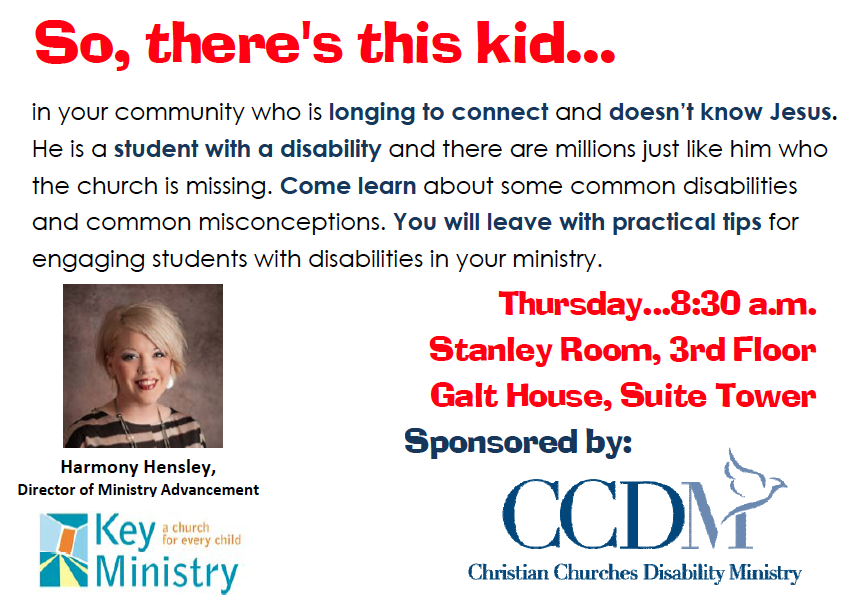
Harmony Hensley representing Key Ministry at the 2013 North American Christian Convention

North American Christian ConventionFor those of you planning to attend (or know someone who plans to attend) next week’s North American Christian Convention in Louisville, KY, please make a point of getting the word out about Harmony Hensley’s scheduled presentation on Thursday, July 11th at 8:30 AM. Harmony will be speaking on the topic So, there’s this kid… She’ll be teaching on common disabilities, common misperceptions about those disabilities and provide practical tips for engaging kids with disabilities in your church.

We need you to help get the word out! You’ll see below a photo of a postcard the conference organizers mailed out for Harmony’s session. You can download one here to e-mail to friends attending NACC!

NACC 2013

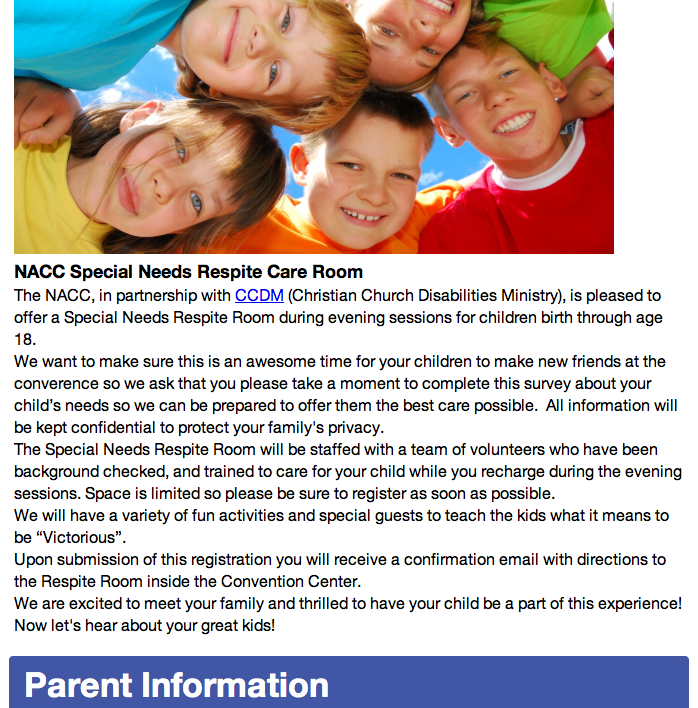
NACC Special Needs RespiteOne neat feature at this year’s NACC is the availability of respite care for kids with special needs attending the conference with parents every evening during the conference. Parents in need of respite care at the conference may register here.

When Harmony presented at last year’s NACC, she was the first speaker in many years on the topic of disability ministry. This year’s closing speaker is Joni Earickson Tada.

Please make a point of saying hello to Harmony at the NACC in Louisville!

***********************************************************************************************************

cropped-key-ministry-door.pngOur Key Ministry website is a resource through which church staff, volunteers, family members and caregivers can register for upcoming training events, request access to our library of downloadable ministry resources, contact our staff with training or consultation requests, access the content of any or all of our three official ministry blogs, or contribute their time, talent and treasure to the expansion of God’s Kingdom through the work of Key Ministry.

Posted in Inclusion, Key Ministry, Training Events | Tagged , , , , , , , | Leave a comment

Weekend reading

Baby TechI don’t know about you, but when life gets busy, I find it more and more difficult to keep up with all of the good content friends and colleagues have to share on the Web. Since many of us have the weekend off, I’d like to share some suggested reading in the event you missed these posts the first time around…

AStoryUnfinishedMatt Mooney’s post for Father’s Day, Why After All the Hard, Did You Choose Hard Again, was the most-viewed guest post in the history of our blog. Matt talks about his family’s decision to adopt their daughter (Lena) with profound disabilities from a Ukranian orphanage six years after losing their son Eliot following 99 days of life with a genetic disease (Trisomy 18). Eliot’s life is chronicled in Matt’s new book,  A Story Unfinishedmy weekend reading thanks to the wonders of Amazon.com.

Dittrich IF 2012Our friend Barb Dittrich consistently generates lots of high-quality content on her blog. One of her best posts was this short piece, The Fellowship of Suffering, in which she discusses the importance of relationships for parents of children with special health care needs.

Shannon Royce serves as President of Chosen Families, a non-profit organization based in Virginia that provides information to parents, family members, religious leaders and the general public on effective solutions to living in families with hidden disabilities. Shannon authored a piece last month for Not Alone on her struggle to view her child as a person with a disability and not simply a “difference” compared to neurotypical peers.

Parents frequently ask me whether video games, iPads, and the electronic gadgets that preoccupy so many kids are contributing to the rapidly expanding prevalence of ADHD. Here’s a very thoughtful post (including several excellent video links) from Mashable on the topic Are Kids With Gadgets More Likely to Have ADHD? The relationship is more complicated than what one may think. I’d also challenge church leaders to consider how they might take advantage of the fixation so many kids have for technology and how technology might be used to increase their curiosity about Jesus.

Have a great weekend! We’ll be back with original content on Monday when we launch our next series…Ten Questions Parents Ask About Kids and Medication.

***********************************************************************************************************

220px-The_ScreamKey Ministry offers a resource center on Anxiety and Spiritual Development, including helpful links, video and a blog series on the impact of ADHD upon spiritual development in kids and teens. Check it out today and share the link with others caring for children and youth with anxiety disorders.

Posted in ADHD, Adoption, Advocacy, Families, Hidden Disabilities, Key Ministry, Stories | Tagged , , , , , , , , , , , , | Leave a comment

The DSM-5: Will kids with mental illness be abandoned in an evidence-based world?

ID-10046148Our current blog series… Dissecting the DSM-5…What it Means for Kids and Families, concludes by examining the conundrum looming for persons with mental illness and their families…the likelihood that little or no money will be available to fund clinical research to address critical treatment issues in children’s mental health before the current generation of kids transitions into adulthood.

The concept of evidence-based medicine has become so ubiquitous in the health care professions over the last 10-20 years that it’s hard to imagine that there’s ever been a time in which treatment was not “evidence-based.” It’s like trying to explain to my kids that there was a time when seat belts weren’t required in cars or explaining to physicians in training that the chairman of psychiatry at Cleveland Clinic used to smoke in his office during my required supervision as a resident. Despite the progress we’ve made on so many fronts in the health care field in recent decades, a remarkable number of clinical decisions required of us in child and adolescent psychiatry are based upon intuition and experience in the absence of evidence from well-designed  research studies.

I was honored to have been invited to speak as a representative of clinicians at the American Academy of Child and Adolescent Psychiatry’s 2010 Research Forum on the topic of research priorities for our field. You can click this link to download the presentation, but here are examples of questions that parents routinely ask in my office for which too little research support exists…

  • What are the long term effects of commonly prescribed medications on neurodevelopment?
  • Are there studies to help predict in advance whether my child will experience serious adverse effects from medication?
  • How safe and effective are common homeopathic treatments?
  • For how long will their child need medication?
  • How does psychotherapy and psychosocial treatments attenuate the need for medical intervention?
  • How effective is community-based psychotherapy performed by clinicians on managed care panels? Working for public agencies?
  • What is the best way to treat kids with severe irritability, aggression, and/or self-injurious behavior in chaotic living situations?
  • What is the best way to treat kids when two or more mental disorders are present? (e.g., ADHD together with an anxiety disorder)

Given what we don’t know about common questions that arise in treating kids with mental illnesses, a critical priority in any major initiative to improve treatment outcomes should be support of research to address our enormous knowledge gaps. The tragic flaw in the DSM-5 is that the new diagnostic criteria have been declared “dead on arrival” by the leaders of the organization positioned to fund the research necessary to direct clinical care.

At the very beginning of this series, we quoted the blog written by Dr. Thomas Insel, Director of the National Institute of Mental Health on the inadequacies of the DSM-5. Here’s what Dr. Insel had to say regarding the utility of the DSM-5 in research…

But it is critical to realize that we cannot succeed if we use DSM categories as the “gold standard.” The diagnostic system has to be based on the emerging research data, not on the current symptom-based categories. Imagine deciding that EKGs were not useful because many patients with chest pain did not have EKG changes. That is what we have been doing for decades when we reject a biomarker because it does not detect a DSM category. We need to begin collecting the genetic, imaging, physiologic, and cognitive data to see how all the data – not just the symptoms – cluster and how these clusters relate to treatment response.

That is why NIMH will be re-orienting its research away from DSM categories. Going forward, we will be supporting research projects that look across current categories – or sub-divide current categories – to begin to develop a better system. What does this mean for applicants? Clinical trials might study all patients in a mood clinic rather than those meeting strict major depressive disorder criteria. Studies of biomarkers for “depression” might begin by looking across many disorders with anhedonia or emotional appraisal bias or psychomotor retardation to understand the circuitry underlying these symptoms. What does this mean for patients? We are committed to new and better treatments, but we feel this will only happen by developing a more precise diagnostic system.

So…what happens to the needs of kids and families impacted by mental illness in the healthcare system of the future when resources are finite and the evidence supporting the effectiveness of treatments is lacking? More importantly, how will we get the answers we need to help the 20% of kids with mental illness and their families?

Photo courtesy of http://www.freedigitalphotos.net

Updated June 27, 2014

***********************************************************************************************************

KM Logo UpdatedKey Ministry has assembled resources to help churches more effectively minister to children and adults with ADHD, anxiety disorders, Asperger’s Disorder, Bipolar Disorder, depression and trauma. Please share our resources with any pastors, church staff, volunteers or families looking to learn more about the influence these conditions can exert upon spiritual development in kids, and what churches can do to help!

Posted in Advocacy, Families, Hidden Disabilities, Key Ministry, Mental Health | Tagged , , , , | Leave a comment

DSM-5…Parents can have separation anxiety too!

Panic AttackOur current blog series… Dissecting the DSM-5…What it Means for Kids and Families, continues today with a look at changes in how the new criteria treats anxiety disorders.

The most sweeping changes in the DSM-5 pertaining to anxiety disorders involve the establishment of two new categories of conditions previously classified as anxiety disorders that may share common characteristics with anxiety but are now recognized as stand-alone conditions…Obsessive-Compulsive and Related Disorders, and Trauma and Stressor Related Disorders.

Separation Anxiety Disorder is the most common anxiety disorder among kids ages 12 years and under. Separation Anxiety (along with Selective Mutism) was removed from the category of Disorders Usually First Diagnosed in Infancy, Childhood and Adolescence and included among anxiety disorders. The similarities between separation anxiety and selective mutism and other anxiety disorders led to the decision to include them in this category. Other data leading to the inclusion of separation anxiety was the observation that 0.9-1.9% of adults meet criteria for the condition during any twelve month period.

The DSM includes numerous signs and symptoms of Separation Anxiety in adults. Some of these signs and symptoms include…

  • Difficulty leaving the parental home
  • Difficulty traveling independently
  • Nightmares in which the content expresses the person’s fears upon separation
  • Palpitations, dizziness, weakness
  • Excessive concern about offspring, spouses and marked discomfort upon separation from them
  • Significant disruption to work and social experiences because of the need to repeatedly check on the whereabouts of significant others

Symptoms must be present for a minimum of six months for a child or an adult to meet criteria for Separation Anxiety Disorder. The six month criteria for duration of symptoms is included for most anxiety disorders in order to reduce the likelihood of inappropriate diagnosis.

Changes were also made involving the diagnosis of Panic Disorder. Panic Disorder and Agoraphobia have been separated into two different disorders, because agoraphobia is possible without panic attacks. A panic attack specifier can now be added to another diagnosis when panic episodes occur within the context of another disorder. For example, it’s not unusual in my experience to see kids who experience panic attacks only during episodes of depression-when their mood improves, the panic attacks resolve. Use of the specifier allows for the recognition of a clinical condition that is often an important treatment consideration without the need for the child or adult to be labeled with an additional diagnosis.

Photo courtesy of http://www.freedigitalphotos.net

***********************************************************************************************************

220px-The_ScreamKey Ministry makes available an Anxiety Disorders Resource Page, including our earlier blog series on anxiety and spiritual development, helpful links and slides from Dr. Grcevich’s 2013 Accessibility Summit presentation. Please share the link with church staff, volunteers and parents who might benefit from the information.

Posted in Anxiety Disorders, Hidden Disabilities, Mental Health | Tagged , , , , | Leave a comment

Is Oppositional Defiant Disorder a description or a diagnosis?

shutterstock_63651613Our current blog series… Dissecting the DSM-5…What it Means for Kids and Families, continues today with an examination of the recently updated diagnostic criteria for Oppositional Defiant Disorder.

Mental health professionals working with kids and families are often asked to intervene when children chronically exhibit angry or disrespectful behavior. The causes of this behavior are often complex, but typically are grounded in two very different biologic predispositions…referred to in the DSM-5 as disinhibition/constraint and negative emotionality.

My problem with the diagnosis of Oppositional Defiant Disorder (ODD) is that establishing the diagnosis doesn’t tell you anything about what to do to treat it. Consider it a “lite” version of Disruptive Mood Dysregulation Disorder without the severe, protracted tantrums or meltdowns.

In the DSM-5, the eight diagnostic criteria for ODD were regrouped into three categories: Angry/Irritable Mood (loses temper, touchy/easily annoyed, angry/disrespectful), Argumentative/Defiant Behavior (argues with authority figures/adults, defies/refuses to comply with rules/requests from authority figures, deliberately annoys others, blames others) and Vindictiveness. Kids are required to have four or more symptoms for at least six months for an ODD diagnosis, criteria have been included to emphasize that the behavior is beyond the norm for the child’s developmental age and specifiers for severity have been included. In addition, kids with ODD may now be diagnosed with Conduct Disorder as a comorbid condition.

Some kids are disrespectful and defiant because of issues with poor executive functioning. They roughly correspond to the angry/irritable group. One way of understanding their behavior is to view them as impulsively defiant…they argue with parents and authority figures without stopping to think about the issue that upsets them or why they’re upset. It’s not unreasonable to question whether this subtype of kids diagnosed with ODD would be better described as having ADHD, with the defiant behavior representing difficulties with emotional self-regulation caused by the executive functioning deficits central to our understanding of ADHD. In fact, one of the criticisms the folks from Shire Pharmaceuticals faced when they sought FDA approval of Adderall XR for ODD was the question of whether ODD was truly a stand-alone diagnosis-since 79% of the kids in their study were diagnosed with ADHD in addition to ODD.

shutterstock_86980295_2Other kids are disrespectful and struggle with transitions because of their inability to let go of their mental script of how a given interaction or situation should unfold. They correspond to the argumentative/defiant group in ODD. They perseverate or get “stuck” on a picture in their mind of how things should be and escalate when  adults violate their sense of control. The first subset of kids is defiant because they can’t stop and think. The second subset is defiant because they can’t tolerate the inner frustration when events unfold differently than they’ve pictured in their minds.  We know kids who “ruminate” or perseverate often experience problems with anxiety and/or depression as they get older.

What we do to help is contingent on our conceptualization of the cause of the defiant behavior. If they have difficulties with self-control related to ADHD, we’ll treat the ADHD. If they’re rigid, inflexible and perseverate, we might look at cognitive strategies or behavioral interventions to help. Use of the ODD label adds little to our understanding of how to best help address the behavior that led parents to seek professional help.

Updated January 24, 2016

***********************************************************************************************************

KM Logo UpdatedKey Ministry has assembled resources to help churches more effectively minister to children and adults with ADHD, anxiety disorders, Asperger’s Disorder, Bipolar Disorder, depression and trauma. Please share our resources with any pastors, church staff, volunteers or families looking to learn more about the influence these conditions can exert upon spiritual development in kids, and what churches can do to help!

Posted in ADHD, Controversies, Families, Hidden Disabilities, Key Ministry, Mental Health | Tagged , , , , , , , | 5 Comments

Does the DSM-5 harm bright kids with learning disabilities?

albert_einsteinIn today’s installment of our blog series… Dissecting the DSM-5…What it Means for Kids and Families, we’ll take a closer look at the criteria for Specific Learning Disorder-and how the new criteria create barriers for families seeking accommodations or remedial education services for affected children.

As a physician specializing in child and adolescent psychiatry, I find myself inquiring about possible (or identified) learning disabilities in nearly every new evaluation we perform. Learning disabilities are a potential cause of the academic, emotional  and  behavioral problems that bring kids to our practice, and are frequently a major contributor to conflicts in the home, and common comorbid conditions in kids with ADHD, anxiety or mood disorders. A thorough understanding of the impact of learning disabilities is foundational to outpatient mental health practice serving kids and families. Given the outsized role these conditions play in children’s mental health, the DSM-5 diagnostic criteria for specific learning disorder represent a major fail for the field.

The DSM-5 eliminates the categories of Reading Disorder, Mathematics Disorder, Disorder of Written Expression and Learning Disorder Not Otherwise Specified and replaces them with the term Specific Learning Disorder with specifiers for impairment in reading, mathematics and written expression, and specifiers for severity of disability.

I’ll focus my criticism on two features of the new criteria that are very problematic…the requirement that a learning disorder produce functional impairment below that expected for a child’s chronological age, and the absence of any criteria for kids and teens with learning difficulties related to weaknesses in processing speed or working memory. If you’re interested in an outstanding review of the weaknesses of the new criteria coauthored by Drs. Sally and Bennett Shaywitz of Yale’s Center for Dyslexia and Creativity, with Ruth Colker and Jo Anne Simon (from The Ohio State University School of Law and Fordham School of Law, respectively), click this link.

Among the criteria in the DSM-5 for specific learning disorder is the following…

The affected academic skills are substantially and quantifiably below those expected for the individual’s chronologic age, and cause significant interference with academic or occupational performance , or with activities of daily living, as confirmed by individually administered standardized achievement measures and comprehensive clinical assessment. For individuals age 17 and older, a documented history of impairing learning difficulties may be substituted for the standardized assessment.

The new criteria potentially pose a major impediment to families of children identified as twice exceptional when defining academic achievement associated with learning disorders as “substantially and quantifiably below those expected for the individual’s chronologic age.” An important concept in the identification of learning disorders involves the use (in some states) of discrepancy measures in spotting differences between achievement (what a child has demonstrably learned) and intelligence (a measure pointing to a child’s expected level of achievement). For example, a child with measured intelligence superior to 98% of same-age peers but reading comprehension superior to 48% of same-age peers may be identified with a reading disorder (dyslexia). When Albert Einstein is referenced as a person who possibly struggled with a learning disability (admittedly, there’s no definitive evidence…he may have had ADHD, Asperger’s or a processing/retrieval issue), he likely would have qualified because of such a discrepancy, accompanied by evidence his disability produced difficulties in standardized testing.

The DSM-5 criteria would suggest that kids who markedly underachieve academically but fail to fall significantly below norms for age-matched peers shouldn’t qualify for special education intervention as a result of a specific learning disability (SLD). The updated criteria provide a rationalization for school officials to refuse additional testing or intervention when bright kids struggle but fall within the range of “normal” in academic achievement. Parents have a very difficult time fighting these determinations without trained educational advocates or legal assistance. The criteria also undermine determinations made by governmental bodies that discrepancy is sufficient to demonstrate the presence of a disability. Quoting from the Colker/Shaywitz article referenced above…

This Guidance presumes that dyslexia and other learning disabilities are readily considered “impairments” and that it should not be difficult to demonstrate that these impairments cause “substantial limitations” in major life activities such as reading that can be demonstrated on the basis of clinical evidence. In particular, this Guidance presumes the continued use of the “discrepancy” model in demonstrating the existence of dyslexia and related learning disorders. It does not require the application of specific formulae or level of severity.

I’ll share an example…Several years ago, I was seeing a boy in middle school who was prone to disruptive behavior in class. He was referred to a neuropsychologist who identified a 40 point discrepancy between his measured intelligence (99th percentile) and reading achievement (50th percentile). When placed in less stimulating classes requiring a minimal amount of reading, boredom would frequently precipitate talking out in class, impulsive speech and disrespect toward the teacher. The school steadfastly refused to provide him any remedial support to help improve his reading ability to his achievement in other areas. The end result was that the boy had been placed on medication for ADHD that did nothing to address the underlying problem and unmasked his predisposition to  anxiety.

The second problem with the new standards is their failure to recognize the challenges kids experience in learning when difficulties with processing speed and working memory  compromise academic performance across subject areas.

For the purpose of this discussion, working memory refers to the ability to hold new information in short-term memory and perform some mental manipulation to the information to answer a question or achieve a desired result. Working memory is important in reading, higher level thinking and achievement and is critical for planning, prioritizing and sequencing information. They may benefit from study guides that assist in identifying the most critical material to study for tests and use of multiple modalities when instructions are given. Processing speed refers to the ability to focus attention and with quickness and accuracy scan, discriminate between and sequentially order information. Measures of processing speed are sensitive to motivation, difficulty working under time pressure and well as motor coordination. Kids with processing speed delays will often experience difficulties taking in new information and generating academic products at rates commensurate with their overall intelligence. They often require copies of class notes and extended test time as educational accommodations. Weaknesses in working memory often exacerbate difficulties with processing speed and reading comprehension.

Working memory and processing speed difficulties are commonly seen in kids with ADHD…in my experience, kids with significant anxiety, OCD or an Asperger’s diagnosis are especially prone to processing speed delays. In clinical practice, these are kids who need four or five hours to complete the work that takes peers an hour or two to complete. Homework and projects become an enormous struggle. They struggle with discouragement related to school performance and medication prescribed for ADHD frequently exacerbates anxiety/obsessiveness, resulting in mood lability and irritability. The presence of demonstrable processing speed weakness accompanied by evidence the identified weakness impacts ability to take timed tests under standardized conditions is required for extended time on SAT testing. From the SAT guidelines for professionals…

Please keep in mind that a student’s documentation must demonstrate not only that he or she has a disability, but also that the student requires the accommodation being requested. Therefore, a student who requests extended time should have documentation that demonstrates difficulty taking tests under timed conditions. In most cases, the documentation should include scores from both timed and extended/untimed tests, to demonstrate any differences caused by the timed conditions.

The following tests are commonly used to measure a student’s academic skills in timed settings. Because tests are frequently developed and updated, this list is not exhaustive.  There are other timed tests that may also be used. Tests must be conducted under standardized procedures.

  • Nelson Denny Reading Test, with standard time and extended time measures Stanford Diagnostic Reading Test (SDRT)
  • Stanford Diagnostic Math Test (SDMT)
  • Woodcock-Johnson III Fluency Measures
  • Test of Written Language-Third Edition  (TOWL-3)

When these tests are administered under standardized conditions, and when the results are interpreted within the context of other diagnostic information, they provide useful diagnostic information about testing accommodations. A low processing speed score alone, however, usually does not indicate the need for testing accommodations. In this instance, it would be important to include documentation to support how the depressed processing speed affects the student’s overall academic abilities under timed conditions.

While an argument can be made that working memory and processing speed difficulties represent traits that contribute to other disorders (ADHD, dyslexia) and aren’t stand-alone conditions, the failure to include any specific criteria for identification of processing speed and working memory deficits in the DSM-5 contributes to ongoing misunderstanding between mental health professionals, educators and parents, represents a missed opportunity for professionals to support parents in the process of obtaining beneficial accommodations and supports in academic settings, and increases the risk for inappropriate treatment interventions.  Working memory represents a significant construct in the National Institute of Mental Health’s Research Domain Criteria (RDoC) available for objective measure grounded in an increasingly well-developed understanding of the neural circuits involved. This would have been a good place to begin the process of psychiatric diagnosis grounded in demonstrable measures of neuropathology.

***********************************************************************************************************

ADHD Series LogoKey Ministry offers a resource center on ADHD, including helpful links, video and a blog series on the impact of ADHD upon spiritual development in kids and teens. Check it out today and share the link with others caring for children and youth with ADHD.

Posted in Advocacy, Controversies, Hidden Disabilities, Inclusion, Key Ministry, Mental Health | Tagged , , , , , , , | 7 Comments