Wish you could go to church this Easter?

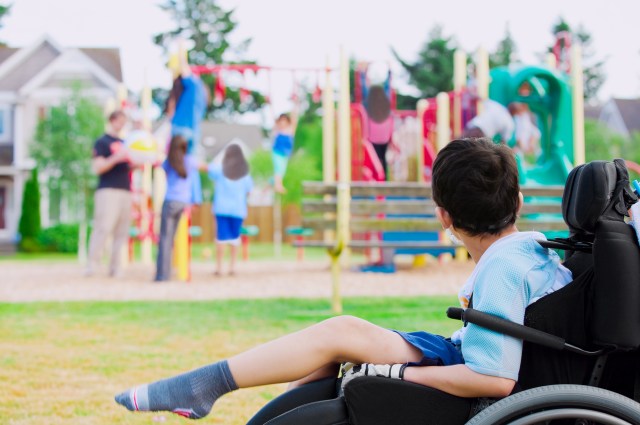
shutterstock_139126682We started Key Ministry because we wanted all families to be able to be part of a local church, and we know attending church can be VERY challenging for families of kids with mental illness, families of kids who have experienced significant trauma and kids who struggle with social situations.

Millions of families here in the U.S. and throughout the world would like to be able to celebrate Jesus’ resurrection this weekend together with friends and neighbors. And while the disability ministry movement has made great strides in helping local churches to welcome and include kids with disabilities and their families at church, far too many will be unable to attend this Easter…

  • Kids and adults who experience panic attacks in crowds
  • Kids and adults with significant sensory processing issues
  • Kids and adults with social anxiety or difficulties with social communication
  • Families of kids who struggle with self-control
  • Families of kids who become distressed in unfamiliar situations

Thanks to the generosity of our friends at Community Bible Church in San Antonio and Bay Presbyterian Church in Bay Village, OH we’ll have a number of LIVE and prerecorded, interactive worship experience that any family can join online this Easter weekend.

Join us today and Sunday for these special LIVE Easter service as CBC’s new lead pastor, Ed Newton looks at the topic of What We Believe. Garnett Slatton, Senior Pastor at BPC will Be sharing a very personal message about New Life for everyone…especially people struggling with anxiety or depression at Easter. Come here the Gospel message like never before!

Here’s TWO ways to join us…

For Community Bible Church, go to onlinechurch.com

Connect with us and others attending online by signing in with your Facebook account…a Facebook account isn’t required to attend online church, but to join the chat a Facebook account is required.
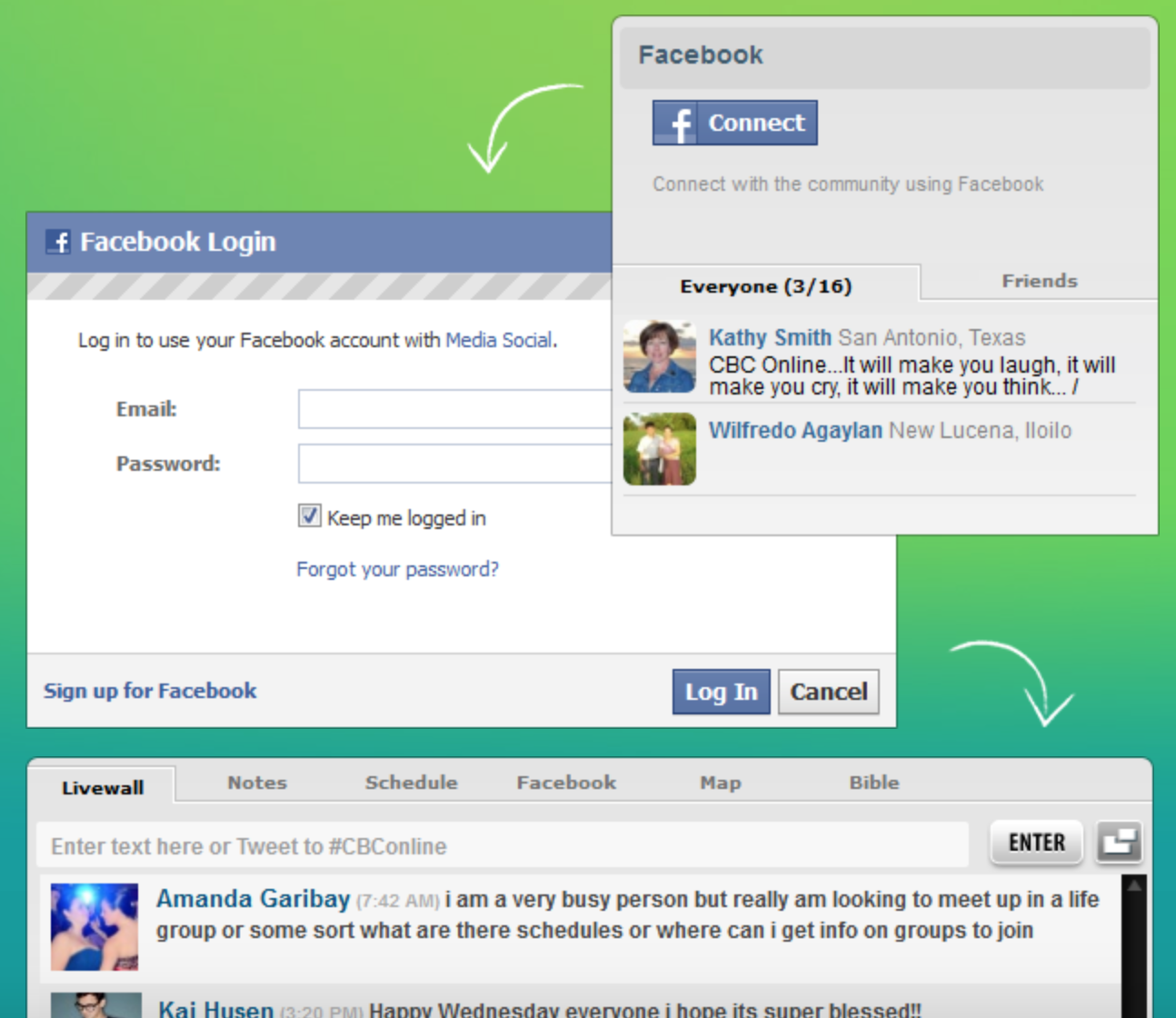
Connecting through Facebook

Method #2

For Bay Presbyterian Church, go to baypres.tv and click the arrow in the video screen that appears on the upper, left hand side of the screen.

Garnett

Here’s our most recent schedule of hosted worship services…check back for updates!

Sunday, March 27th:

10:00 AM Eastern/9:00 AM Central: Community Bible Church (LIVE)

11:00 AM Eastern/10:00 AM Central: Bay Presbyterian Church (LIVE)

12:00 PM Eastern /11:00 AM Central: Community Bible Church (LIVE)

2:00 PM Eastern/1:00 PM Central: Community Bible Church (LIVE)

8:00 PM Eastern/7:00 PM Central: Community Bible Church (hosted by Barb Dittrich)

Monday, March 28th

9:00 PM Eastern/8:00 PM Central: Community Bible Church (hosted by Ann Holmes)

WE NEED YOUR HELP! Please share the link to this post on your Facebook wall and through your social media accounts with families who would otherwise be missing from church this Easter.

On behalf of the Board and staff of Key Ministry, we wish everyone a very Happy Easter!

He is Risen!

***********************************************************************************************************
KM Logo UpdatedKey Ministry has assembled resources to help churches more effectively minister to children and adults with ADHD, anxiety disorders, Asperger’s Disorder, Bipolar Disorder, depression and trauma. Please share our resources with any pastors, church staff, volunteers or families looking to learn more about the influence these conditions can exert upon spiritual development in kids, and what churches can do to help!

Posted in Key Ministry | Tagged , , , , , , , , | Leave a comment

I am not depression

Gillian2014-26-Edit-1Gillian Marchenko is serving as our guest blogger this Spring. Her new book, Still Life; A Memoir of Living Fully with Depression publishes in May and her work has appeared in numerous publications including Chicago Parent, Today’s Christian Woman, Literary Mama, Thriving Family, and MomSense Magazine. Her first book, Sun Shine Down, was published in 2013. She lives near St. Louis with her husband Sergei and their four daughters. Connect with her at her Facebook page

When a person has mental illness, it can freeze you from everything else in life.

A few years back, my major depressive episodes lasted for weeks, sometimes months. It seemed I was more depressed than not, and therefore, unable to engage in my world.

During that season, it was easy to think that ‘depressed Gillian’ was my new identity. The other Gillians; wife, mom, friend, daughter, even Christian fell from my frozen body from the weight of depression. I drown often in the bitter water of no emotion.

And whenever I came up for air from the latest riptide, the aching, self-despising guilt over my new identity threatened to swiftly swallow me again.

How can you think you are a mother when you don’t see your children because you cannot get out of bed? How can you be a friend when you let every phone call go to voice mail and hide in the bathroom when the doorbell rings? How can you be a follower of Christ when the only thing you follow is nine mind-numbing seasons of The Real Housewives of Orange County?

In those painful days, my husband and I realized we could no longer attempt to deal with my struggles on our own. We needed help. I needed help. Serious help.

My doctor put me on an antidepressant. I began the hard work of finding a therapist and after she was located (thank you, Jesus), we started weekly meetings. With her help, and as the medicine dissipated some of my depressive symptoms , I slowly began to posses tools that could be applied both in and out of depressive episodes.

But the biggest help, the biggest tool in my new toolbox was this: I started to accept that my depression was not my identity.

My depression was my illness.

Even while sick, I was still a wife, mom, friend, daughter, and Christian.

The revelation that depression was a real illness and not just my weakness or my inability to handle life when it seemed like everyone else around me was doing just fine, shined a light on my false assumptions.

Now, years later, my healing is not complete, and perhaps it never will be this side of Glory. I work every day to use the tools I’ve learned to try to stay away from the freezing water of depression. Sometimes they work. And sometimes I fall in again.

I try to rely on the Lord. I close my eyes and imagine him carrying me while he walks on water.

But I know this for certain. My depression is the illness I fight, not my identity. I’m empowered to share more with others. I am comfortable asking for prayer. I am open about the scary, difficult parts of my mental health story.

And I’m passionate to remind others who have mental illness that they too, are not just their sickness. Is this you? Then I’m telling you now. It is one aspect of you. But you are so much more.

Depression reoccurs in my life. I still ignore my family and let calls go to voice mail. But also, there are days I tuck my kids into bed at night. I kiss my husband. I take a friend out to lunch. I open up the Word of God and sit in it, attempting to let it seep into my bones, providing the warmth needed to combat my illness.

I am many Gillians. But my depression is not my identity.

It is my illness.

***********************************************************************************************************

Still LifeIn Still Life,  Gillian Marchenko continues her description of depression: “I must keep still. Otherwise I will plunge to my death. ‘Please God, take this away,’ I pray when I can.”

For Gillian, “dealing with depression” means learning to accept and treat it as a physical illness. In these pages she describes her journey through various therapies and medications to find a way to live with depression. She faces down the guilt of a wife and mother of four, two with special needs. How can she care for her family when she can’t even get out of bed? Her story is real and raw, not one of quick fixes. But hope remains as she discovers that living with depression is still life.

Still Life is available here for pre-order from IVP Press.

Posted in Depression, Hidden Disabilities, Mental Health | Tagged , , , , , , , , | Leave a comment

Let’s be the people who show up on Saturday

shutterstock_105554129_rendered

Shannon Dingle shares some reflections on Holy Week from her perspective as an adoptive mom… 

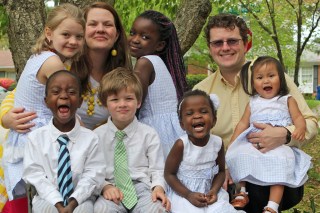
People love to talk to me about my family. They comment on the beauty of our diversity, the spiritedness of six children under age 10, and our acceptance of special needs, specialists and whatnot into our world. I’ve lost count of the number of times I’ve heard someone gush over our family: “I just love adoption!”

I do too. We wouldn’t have added four children to our family in that way if we didn’t.

But I usually pause at some point in those conversations, weighing if the other person wants the full story. Usually, they don’t. Usually, I wouldn’t offer it anyway, because my children’s stories aren’t mine to tell. Usually, I let the conversation stick to the redemption story side of the equation, the part we all love.

Have we forgotten, though, that all redemption comes with a cost?

Have we become a resurrection people who gloss over the agony of the cross to get to the part when the tomb is finally empty?

shutterstock_92527099Have we willfully skipped over Christ’s pleading in the garden with his Father that there might be another way as we declare that he is risen indeed?

Have we rushed to celebrate Easter without pausing to consider the weight of Good Friday?

It’s Holy Week, and I’m pondering these things in my heart. From just this year’s Lenten season, I could tell you stories of mine and other families like mine in which the brokenness has loomed larger than the beauty: A foster child whose joyful reunification with a mother he loved ended abruptly with a swift return into care just a few days later. A beloved daughter who had been adopted internationally and naturalized as a U.S. citizen but last week had classmates yell, “Go back to Africa!” at her on the playground. A son who has been well fed for years but still steals food for fear of the hunger he still remembers. A child who is re-entering a residential care facility because the trauma she carries is showing up in ways that make her unsafe to herself and others.

These stories are real, but they aren’t finished. We’re longing for the redemption, but we don’t know when it will arrive. We hope it will come on this side of heaven, but it might not, at least not in the ways we’d like.

So for now, we’re resting in the hard places. One of my favorite writers Brené Brown calls it “the messy middle.” In this place, the grief is so palpable we can almost touch it, and joy is something that must be chosen because it certainly isn’t coming naturally. It’s going to be okay, we hope, but it isn’t yet.

We can say things like “it’s Friday, but Sunday’s coming.” But here’s the thing: the disciples didn’t know Easter was coming. Even if they hoped, they didn’t understand what the timeline would be. Now when we dwell in our own post-Friday but pre-Sunday darknesses, we don’t know how long we’ll wait to see our own resurrection stories or what they’ll look like when they come. God’s promises for us are already granted but not yet fully realized.

Yes, we are a Hallelujah people, and redemption is our song. But let’s not cheapen that redemption by acting like it wasn’t costly. Let’s not look to the folded grave clothes and forget the bloodshed along the way. And let’s not rush the story as if a time jump to Sunday would have made Easter better.

shutterstock_620304For those who are struggling – in the adoption and foster care world or in the midst of other hard places – let’s be the people who show up on Saturday too. Let’s be present with those who hurt when the public tragedy is over but the private pain is still deep. And let’s believe with our actions that God is enough instead of fooling ourselves into thinking we make anything better when we dress up grief or slap tidy bows on messy packages.

I love adoption. Truly, I do. And I love the Sunday stories when God has made all things new in ways that only he can. We all do. But every adoption is born from some sort of Friday brokenness that meant the parents who bore a child couldn’t or wouldn’t raise him, so let’s own that part of the story too. Let’s own the Saturdays when the loss is heavy and come alongside those whose burdens feel crushing. Let’s not just celebrate with those who celebrate but also mourn with those who mourn.

Let’s be people of the full Gospel, not just the parts we find convenient.

***********************************************************************************************************

Dingles SpringCheck out Shannon Dingle’s blog series on adoption, disability and the church. In the series, Shannon looked at the four different kinds of special needs in adoptive and foster families and shared five ways churches can love their adoptive and foster families. Shannon’s series is a must-read for any church considering adoption or foster care initiatives. Shannon’s series is available here.

Posted in Adoption, Advocacy, Foster Care, Key Ministry | Tagged , , , , , , | 18 Comments

A kid first…AND it’s Down Syndrome Awareness Day

shutterstock_202500244Editor’s note: Shannon Dingle shares a story in honor of Down Syndrome Awareness Day.

I was planning to post this here today anyway, but today is also World Down Syndrome Day, 3/21. The date was chosen because people with Down syndrome, or Trisomy 21, have 3 copies – the two typical ones plus an extra – of chromosome 21. And, as one more educational note, the preferred spelling – at least in the USA – is Down syndrome, not Down’s syndrome.

I know and love a precious little boy. He loves cars and dogs. He likes giving hugs. He would rather run than walk. He cuddles with his parents and looks up to his older brothers.

Oh, yeah, and he has Down syndrome and a seizure disorder, and he’s had more surgeries than years of life.

He isn’t just a kid with Down syndrome. He’s a kid who reminds me of my son Robbie in a lot of ways. And who also has some medical and intellectual baggage that’s different from most kids.

I know lots of mommas who don’t like sharing their kids’ disabilities with people because then some people will never look at their kids the same way after that disclosure. They will always view the child through disability-tinted glasses.

That’s why it’s standard practice in special education to put the person first – “a kid who has Down syndrome” rather than “a Downs kid.” The concept of person-first language is often considered to be about political correctness. And it is, a little.

But it’s more about compassion. About not defining a kid by his disability. It’s about caring about him as a child. It’s about putting the kid first and the disability second in our thoughts, actions, and words.

The APA stylebook gets it right with their first statement under 3.15 Disabilities: “The overall principle for ‘nonhandicapping’ language is to maintain the integrity (worth) of all individuals as human beings.”

God calls Gideon a warrior when he’s cowering. God sees that his struggles don’t define him and that there’s more to him than his present condition.

God calls believers saints and makes us righteous, even though most days it would be more apt to label me “disobedient” or “sinful.”

God still knit together my young friend in his mother’s womb. God loves him. When Jesus invited the children to come to him, He didn’t stipulate that only the kids with the correct number of chromosomes should come.

God is the one gives each of us worth.

I don’t think that Jesus would flippantly label Thomas with the moniker he is often assigned, “Doubting Thomas.” Did Thomas ask for evidence of Christ’s bodily resurrection? Yes. Was it his finest moment? Maybe not. But he’s known by many as the guy who doubted.

It think it’s because we love categories:
The kid with Down syndrome.
The guy with cancer.
The young wife who is struggling with infertility.
The abused woman.
The homosexual.
The girl in time-out (who, by the way, is my daughter right now, but that’s another story).

Labels aren’t wrong. They aren’t (always) untrue.

They are typically overly simplistic, though.

If it’s useful to refer to someone by his/her label, go ahead. If a label isn’t necessary, though, think before you speak. Please.

Because my little friend is a sweet boy who you would love to know. When his momma looks at him, the first words that come to mind aren’t “Down syndrome.” If you stop at the definitions given by his disabilities, you might miss out on all the sweetness that his momma sees. You might miss out his “integrity (worth)…as a human being,” a worth that was created by the same Creator who made the other kids you know and love.

Let him be a kid, first and foremost.

***********************************************************************************************************

shutterstock_392274319Key Ministry promotes meaningful connection between churches and families of kids with disabilities for the purpose of making disciples of Jesus Christ. We depend upon individual donors to make available free consultation, training, resources and support to the churches we serve. This blog is accessed by 40,000 users/month from nearly every nation. In honor of our 1,000th post, our team invites all churches, church leaders, volunteers and families who recognize the need for our ministry to partner with us in our “Penny-a-post” campaign so we might help families of children with disabilities to find welcoming churches near their homes where they might worship Jesus, grow in faith and experience Christian community. Please consider a generous gift to support the ongoing work of our ministry!

Posted in Advocacy, Key Ministry, Special Needs Ministry | Tagged , , , , , , | 2 Comments

Seven things I learned from our first 1,000 blog posts…


IMG_1521I never thought we’d be celebrating our 1,000th blog post when we started Church4EveryChild in the summer of 2010.

For the first few years of our ministry (2003-2005), folks found out about Key largely by word of mouth. At the time, I was traveling around the country doing a lot of speaking. Folks would discover us at lectures and presentations I gave to physicians and other health care professionals, who in turn shared our contact info with staff from the churches they attended. We networked with other leaders and organizations we discovered online (Marie Kuck from Nathaniel’s Hope and David Glover from PURE Ministries, along with Mark 2 Ministries in Indianapolis were early pioneers). We put everything we knew onto a CD-ROM in early 2006 and published around 250 copies…around ¼ of them were given away after we presented at a national ADHD conference.

Looking back at minutes from meetings around that time, one of our ministry goals was “get the word out.” Our goal was to build relationships with folks in children’s ministry and to get ourselves invited to present at more “kidmin” conferences. Our efforts to get the word out led to a new website at the beginning of 2010, and recommendations from a consultant for a social media plan that included two blogs…one that would offer lots of practical strategies and resources for volunteers working in the trenches of disability inclusion and a “less-popular” blog for pastors and church leaders that would focus on the “why” of our ministry. You’re currently browsing the second blog.

While we created the blogs to make churches aware of how we could help them better serve families of kids with “hidden disabilities,” I’ve learned a lot in the process. On the occasion of our thousandth post, I’ll share the seven most important takeaways I’ve gained since starting this journey with you in the summer of 2010.

  • I wish I’d started sooner. We’ve been able to impact FAR more churches than we would have simply by presenting at more conferences, and we’ve been able to provide a much greater depth of information than we could during our live presentations. But our online community grew slowly. We averaged a little over 500 page views per month in year one. That increased to 57 per day in year two, 125 per day in year three and 182 per day in year four. We now receive over 1,700 views by nearly 1,300 visitors every day. Had we started several years earlier, we might have influenced far more churches and leaders than we have.
  • image001018-smaller-824x549I would’ve created more content more quickly for churches seeking to minister with adoptive or foster families. I was first drawn to disability ministry nearly 20 years ago by the initiatives my home church launched to support families who struggled to stay involved at church after adopting kids from Eastern European orphanages following the fall of the Iron Curtain. The two most popular posts we’ve ever published were from Shannon Dingle on how the church could help redeem the foster care system and what folks shouldn’t say to adoptive and foster families. I thought churches would grow inclusive ministry to kids with emotional and behavioral difficulties through their children’s and student ministries. I’m now thinking that inclusion may be driven by churches embracing adoption or foster care ministries.
  • Our readers are hungry to understand more about the kids they care for…especially when kids are struggling with mental illness. 20% of school-age kids meet the criteria for at least one mental health disorder at any given time, and very little is written about the impact that these conditions have on their spiritual development. The Biblical counseling movement largely skipped over children and teens. Helping pastors, church staff and believing parents understand the unique needs of kids with common mental illnesses will remain a critical function of our ministry in years to come.
  • For as far as we’ve come, we still have a long, long way to go in the church in welcoming families impacted by mental health conditions or trauma. I’m often reminded of how much work still needs to be done for kids and families with “issues” to be fully included at church. Here’s a comment one of our readers left on the blog this past month…

I spend my days caring for children with special needs. It’s very frustrating to see how the “hidden disabilities” are treated in the church. Doubly so when our own internationally adopted daughter with severe anxiety has been kicked out of the children’s ministry. She has sensory issues but they interpret it as bad behavior and poor parenting. I believe it was made worse by the fact that the pastor has also internationally adopted and his children are perceived as “normal”. We’ve been in evangelical churches all our lives, my husband’s father is a pastor. We are currently churchless because of these issues and feeling hesitant to keep trying to find a church where are daughter is accepted and understood. Thanks for your ministry – I hope change is coming in time.

  • IMG_1519It really isn’t about myself…or any one person. Our internet address (drgrcevich.wordpress.com) was truly an accident…one we’ll be rectifying when we move to our new online home in a few weeks. Our blog (and our ministry) are much more valuable when we provide a platform for other leaders with unique gifts, talents, wisdom and insight. I’d especially like to thank Shannon Dingle, Jolene Philo, Mike Woods, Gillian Marchenko and Jeff Davidson for their contributions to this blog over the past six years. I was charged by Mrs. G with straightening up the bookshelves in my home office over the weekend. I was amazed by the number of autographed books on my shelves from friends and colleagues in ministry. I’m delighted that our readers have been introduced to so many remarkable disability ministry leaders over the past six years.
  • I’m glad I had the opportunity to do this blog instead of a book. Far more folks have accessed this blog than would have ever purchased and read a book. Back in the day when I was a speaker, I’d typically show up to meet with a physician group with no set presentation and put together something on the spot based upon their unique interests and needs. I much prefer conversations to lectures. A book is a lecture…this blog has been a conversation. The comments and responses you share make us better as a ministry and make me better as a leader. We’ve gotten back more than what we’ve shared. Thanks to you – our followers…for making this possible!

Steve and the Key Ministry Team

***********************************************************************************************************

Key Ministry promotes meaningful connection between churches and families of kids with disabilities for the purpose of making disciples of Jesus Christ. We depend upon individual donors to make available free consultation, training, resources and support to the churches we serve.

shutterstock_386391007Church4EveryChild, Key Ministry’s principal blog is accessed by 40,000 users/month from nearly every nation. In honor of our 1,000th post, our team invites all churches, church leaders, volunteers and families who recognize the need for our ministry to partner with us in our “Penny-a-post” campaign so we might help families of children with disabilities to find welcoming churches near their homes where they might worship Jesus, grow in faith and experience Christian community.

Posted in Adoption, Advocacy, Key Ministry, Mental Health, PTSD, Resources | Tagged , , , , , , , , , , , , , , , , , | 4 Comments

The societal ruin of the term ‘depression’ and other hurtful comments about mental illness

shutterstock_381876286Gillian Marchenko is serving as our guest blogger this Spring. Her new book, Still Life; A Memoir of Living Fully with Depression publishes in May and her work has appeared in numerous publications including Chicago Parent, Today’s Christian Woman, Literary Mama, Thriving Family, and MomSense Magazine. Her first book, Sun Shine Down, was published in 2013. She lives near St. Louis with her husband Sergei and their four daughters. Connect with her at her Facebook page
As a person diagnosed with major depressive disorder, I think society has ruined words that describe “mental illness.”

According to the National Alliance of Mental Illness (NAMI):

  • Approximately 1 in 5 adults in the U.S.—43.8 million, or 18.5%—experiences mental illness in a given year
  • Suicide is the tenth leading cause of death in the U.S…the third leading cause of death for people aged 10–24 and the second leading cause of death for people aged 15–24. Click here for more statistics on suicide.
  • If untreated – and all too often when treated – mental illness can result in death.

shutterstock_382636453People don’t take mental illness seriously. Many use inaccurate terms in conversations about mental illness. If a person is down, they are “depressed.” That makes it hard for those of us battling actual mental illness because of those identifying with an occasional bout of sadness, an off day, or downheartedness.

Now, I’m not diminishing sadness, an off day, or downheartedness. Life is hard. Reoccurring pain exists. And I’m not downplaying difficult life situations. Things occur in our lives that can bring a person to the point of serious depression. I’m not a psychiatrist, but in my limited knowledge, I’ve learned that situational depression (depression that typically ensues because of serious ‘situations’ in peoples’ lives; death, divorce, etc. instead of brain wiring) exists, and I’ve learned that it can be just as serious as any other mental illness diagnosis. Situational depression can be just as difficult to heal as well.

But I’m talking about people who throw around comments like “I’m depressed,” or “that person is crazy,” or even “he is six french fries short of a happy meal.” I’m talking about people who mock persons with mental illness or claim illnesses for themselves without having been diagnosed.

Amy Simpson, a champion in the fight to abolish the stigma of mental illness and author of Troubled Minds and Anxious addresses this in her blog post, 10 Ways Mental Illness is Stigmatized in Our Culture:

We regularly watch TV shows and movies that treat mental illness, and people who have such illnesses, as one big joke.

This has to stop. Casual, hurtful comments, whether jokes or false identification, downplay the seriousness and stigma of mental illness.

Tennis BallsHere’s an example: If you play tennis with sadness and the ball comes at you and you are able to lob it back to where it came from, you probably aren’t clinically depressed. Now, if a hundred tennis balls are pelting you at a mile a minute and you are crouched down, arms up protecting your face, turning away from the balls but feeling every whack, then your sadness may be a symptom of depression.

The other danger of misusing words about mental illness is the tendency for the person with the actual diagnosis to think they might be blowing their symptoms out of proportion. If everyone thinks of depression as “a bad day” that can be overcome without significant help (medication, therapy, community acknowledgement and social, spiritual, and tangible assistance), then why can’t we?

Again, the short answer is this: depression and other diagnoses are illnesses. Serious, life altering, and often jarring illnesses that turn the lives of the individual and those who love them up side down.

So please, watch what you say. Don’t joke about people who are “crazy.” You never know if the person you are talking about is battling mental illness in their life.

***********************************************************************************************************

Gillian2014-26-Edit-1In Still Life,  Gillian Marchenko continues her description of depression: “I must keep still. Otherwise I will plunge to my death. ‘Please God, take this away,’ I pray when I can.”

For Gillian, “dealing with depression” means learning to accept and treat it as a physical illness. In these pages she describes her journey through various therapies and medications to find a way to live with depression. She faces down the guilt of a wife and mother of four, two with special needs. How can she care for her family when she can’t even get out of bed? Her story is real and raw, not one of quick fixes. But hope remains as she discovers that living with depression is still life.

Still Life is available here for pre-order from IVP Press.

Posted in Depression, Key Ministry, Mental Health | Tagged , , , , , , , , | Leave a comment

Is it ever okay to exclude a child at church?

shutterstock_222766585Is it ever okay to exclude a child at church? The question seems simple, but it isn’t. A blanket no without any more discussion isn’t enough. Complexities come out in more specific situational questions, so let’s walk through a few together that have landed in my inbox lately…

  • One of our kids has cochlear implants to hear, and they can’t get wet. We’re having a water day at Vacation Bible School. Do I come up with something different for him?

Ask the parents what they do in water play situations. They’ll probably have a good answer for you. If they’d prefer he sit out, then go ahead and plan an activity that can include him too (perhaps with at least one of the full group activities being dry enough for him to fully join in). But my guess is that an effective solution is waiting for you if you ask his caregivers. Sometimes we see a problem when all we need to do is have a conversation.

  • Our church meets in small groups in homes around the area. The kids play off to the side or sit with their parents during the discussion time. One of our kids – I don’t know his diagnosis – doesn’t handle that well and acts out, and the family says they’re just going to stop coming because that’s easier. What should I do?

Come alongside the family to create a better option! Maybe one group can have a paid or volunteer childcare worker with the kids in another room? Or possibly a different small group might offer a better dynamic for all of them? Or maybe the current group would work just fine if you’d be willing to humbly ask, “I feel like this isn’t working for you, and we’d like to help make it better. What things does he like to do? In what environments does your son thrive? How can we make our small group environment one of those places?”

On the other hand, if you say “this is just how we’ve always done small groups and we’re not changing it,” then you’re saying you value your small group structure more than you value this child and his family.

  • Our Sunday night kids’ program is loud and active, and some of our kids with autism or sensory issues don’t do well in that environment. We don’t have the volunteers to do something separate for them, and I’m not in the position of leadership to change the program yet to be more accommodating. Is it okay to tell parents this program might not be ideal for their child?

Ideally, you’d modify the environment for all kids so these children can join in. If that’s not possible, you’d create something separate. Even though a separate program might feel exclusionary, it can be the best way to meaningfully include the child in church.

It sounds like you’ve considered both of those options, though. Could I gently suggest that you reconsider them? Maybe there’s someone who can help be a change-maker with you.

If not, though, make sure you are saying yes to these families in as many other ways as possible. If you have to extend a no for one program but are including the child at every other turn, then the rejection doesn’t sting so much. Also, make sure you communicate your desire for the child’s best when you discuss this with the parents, saying something like, “I love John! He’s doing great on Sunday morning and has started joining the group during storytime then. We’re so glad he’s there! But I know our Sunday evening program is overwhelming to kids who aren’t sensory sensitive, because [describe your program], so I’m not sure he’ll be happy there. What do you think?” This invites the parents into the decision making process instead of just saying no, and the wording communicates the child’s needs as the driving factor for the concern.

  • A child consistently injures or bullies other children so the environment isn’t safe for them. Is it wrong to ban the child from coming?

Every child should be safe at church. Before we jump to banning the child, though, consider strategies for including her instead. Are you viewing this as a disability or as behavioral choices? I define a disability as anything that hinders a child from full inclusion in the church, and that seems to be the reality here. In this case, an emotional or behavioral issue is creating a social problem in the classroom. What would you do for a child with a physical or developmental disability? The same solutions – one-on-one support or a smaller classroom or trained teachers or parent help – can apply here.

shutterstock_155980163In some rare cases, though, a child is reactive and dangerous to himself or others to such a degree that inclusion with other children is not wise, at least for some period of time. (Please, though, practice two cautions here: 1. Don’t make that decision without involving a behavioral specialist or mental health professional, because they may be able to train you in such a way that the issue becomes manageable with new tools they provide. Spending the money to pay someone for their time to help in these situations is worth the investment, and 2. Communicate with parents on an ongoing basis about behavioral concerns so that once you reach this point, no one is surprised or caught off guard.) If a break in attendance is needed, though, define the time period. Saying “we want and need your child here, but we need time to work on a plan to include your child safely, so we’re going to take the next month to work on this and check in with you weekly to keep you involved in the process” is far more loving than “no, you’re not welcome.” Then, get creative about how to continue including the child in church without being in class. Maybe someone visits once a week or so with the lessons he’s missed. Perhaps you budget some funds for a paid caregiver for the child at home so that his parents can come to church. No matter what you do, though, I urge you to help the family connect with mental health professionals who can help the child in ways in which the church is not equipped.

  • Our high school group takes a ski trip each year. One of our students uses a wheelchair and needs assistance for basic skills, including sitting up. Is it fair to exclude her from the trip?

Talk to her parents. They may have already decided it’s a no go for them, just as other families decide not to go for their own personal reasons. If she does want to come, though, consider what she can do (maybe hang out in the ski lodge with those who are taking a break?) and how she can have her needs met (what’s involved in her feeding? toileting? clothing? sleeping?). If you have to say no, explain why with compassion, and remember that excluding a child from one trip isn’t excluding a child from church altogether.

In short, no, it’s not okay to exclude a child at church, but sometimes including them in the same way as every other child isn’t a common sense approach either.

In addition to serving as a Key Ministry Church Consultant, Shannon Dingle is a co-founder of the Access Ministry at Providence Baptist Church in Raleigh, NC.
***********************************************************************************************************

shutterstock_24510829Key Ministry is pleased to make available our FREE consultation service to pastors, church leaders and ministry volunteers. Got questions about launching a ministry that you can’t answer…here we are! Have a kid you’re struggling to serve? Contact us! Want to kick around a problem with someone who’s “been there and done that?” Click here to submit a request!

Posted in Autism, Inclusion, Ministry Environments, Special Needs Ministry, Strategies | Tagged , , , , , , , , , , | 1 Comment

Andy Stanley’s comments support the need for churches of all sizes…

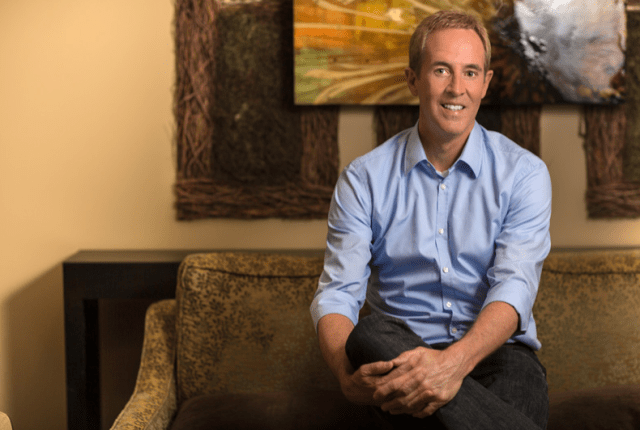
Andy StanleyAndy Stanley serves as the founding pastor of North Point Community Church in suburban Atlanta. North Point has become one of the largest churches in the U.S. Their ministry yields enormous influence through leadership conferences they produce that are attended by tens of thousands of pastors each year. The family ministry strategies developed at North Point have fueled a movement that now includes thousands of churches across North America.

I’m a fan and supporter of their ministry. A friend of mine who connected with NPCC – now a staff member at one of their campuses – is one of the most passionate and authentic Christians I know. Other friends have attended there. Andy and his team do great work.

Many were taken aback recently when Andy made comments (for which he has subsequently apologized) in the context of a sermon on the importance of the local church.

“When I hear adults say, ‘Well I don’t like a big church, I like about 200, I want to be able to know everybody,’ I say, ‘You are so stinking selfish. You care nothing about the next generation. All you care about is you and your five friends. You don’t care about your kids…anybody else’s kids.’ You’re like, ‘What’s up?’ I’m saying if you don’t go to a church large enough where you can have enough Middle Schoolers and High Schoolers to separate them so they can have small groups and grow up the local church, you are a selfish adult. Get over it. Find yourself a big old church where your kids can connect with a bunch of people and grow up and love the local church.”

Andy was arguing in the moment that their church’s model of doing student ministry. Most people who make the sacrifices involved with serving in ministry are passionate about what they do and their approaches to ministry, especially if they’ve been fruitful. Andy demonstrated much grace while clarifying his comments in an interview with Christianity Today.

shutterstock_349590200Folks in ministry can become VERY sensitive in response to real or perceived criticisms of the size of their churches or their approaches for promoting spiritual growth. Those of us who serve in children’s ministry, student ministry or disability ministry aren’t immune.   Do we get too hung up on our own models for doing ministry as the solution for everyone?

Because disability ministry is still in its’ infancy, I’d like to think our movement might be able to create a culture in which all churches are valued for the unique ways in which they might share the love of Christ with persons with disabilities and their families. We’re being very intentional in developing a model for mental health inclusion that churches of all sizes can implement.

Why would God allow for megachurches and large churches and little churches and house churches and online churches if each didn’t fulfill a unique purpose?

Here’s a principle I’d suggest for our peers who are called to disability inclusion…

No church can effectively serve ALL kids and families impacted by disabilities, but every church can effectively serve SOME kids and families with disabilities.

For as in one body we have many members, and the members do not all have the same function, so we, though many, are one body in Christ, and individually members one of another. Having gifts that differ according to the grace given to us, let us use them: if prophecy, in proportion to our faith; if service, in our serving; the one who teaches, in his teaching; the one who exhorts, in his exhortation; the one who contributes, in generosity; the one who leads, with zeal; the one who does acts of mercy, with cheerfulness.

Romans 12:4-8 (ESV)

Churches of every size, worship style and approach to discipleship have gifts and talents to use for disability ministry inclusion.

shutterstock_323673467

Michel Piccaya / Shutterstock.com

Big churches have much to offer…

  • Big churches often have much experience with assimilating newcomers and designing ministry environments that are engaging and welcoming.
  • Big churches may have more resources for doing large events serving the disability community. Several in our home area offered proms last month with the support of grants from Tim Tebow’s foundation. 
  • Big churches may be better positioned to use technology (online worship, social media) to reach families impacted by disabilities.
  • Big churches may have resources to hire professional staff to oversee and direct disability ministry.
  • Big churches may be MORE open to change.

Mid-sized churches also have much to offer…

  • Mid-sized churches are often capable of offering identified special needs ministries.
  • Mid-sized churches typically have enough people to make available small groups and support groups.
  • Mid-sized churches typically have less administration to impede disability ministry development.

Small churches also have much to offer…

  • Small churches may be advantaged in offering sensory-friendly ministry environments.
  • In small churches, the pastor is personally involved in caring for all families, including those impacted by disabilities
  • Small churches quickly notice when people are missing.

We’re looking for churches of all sizes to join with us in welcoming families of kids with disabilities who lack an identified church home following the launch later this Spring of our Key for Families website. Click here to provide us the information we need to provide families a connection with someone at your church able to welcome them.

Bottom line…While I’d like to think our crew at Key Ministry has lots of answers, we don’t have ALL the answers to disability inclusion, just as no individual church has a monopoly on the best approach to ministry for ALL kids and families impacted by disability.

***********************************************************************************************************

KM Logo UpdatedKey Ministry depends upon your generous financial contributions so we might continue to offer free training, consultation and support to churches seeking to welcome, serve and include families of kids with disabilities. Please keep our team in your prayers as we prepare to launch our new resources for families of kids with disabilities and consider a generous financial gift in support of the ongoing work of our ministry team.

Posted in Advocacy, Inclusion, Key Ministry, Ministry Environments, Strategies | Tagged , , , , , , , , , , | 1 Comment

Why I tell my kids about my depression

A sculpture of the mourning woman. Old graveyard.

A sculpture of the mourning woman. Old graveyard.

Gillian Marchenko is serving as our guest blogger this Spring. Her new book, Still Life; A Memoir of Living Fully with Depression publishes in May and her work has appeared in numerous publications including Chicago Parent, Today’s Christian Woman, Literary Mama, Thriving Family, and MomSense Magazine. Her first book, Sun Shine Down, was published in 2013. She lives near St. Louis with her husband Sergei and their four daughters. Connect with her at her Facebook page

I guess the short answer is they already know about it anyway.

Marchenko girlsMy husband Sergei and I have four girls. I have depression. One of my most serious episodes occurred at the end of 2011 into 2012. At some point during that time, I basically gave up on life. It’s hard to admit as a mom and also as a Christian, but I stopped functioning. I found myself in and out of bed, sometimes up to weeks at a time for months. Unless there was something I absolutely had to do, I was locked away in my room, sleeping or watching television. Before then, my major depressive episodes occurred mostly around the birth of my kids. So the girls were younger. They didn’t notice as much, And I liked it that way.

But years ago, my children were eleven, ten, six, and five. The older girls knew something was up with mom. All of a sudden I wasn’t making lunches, picking them up from school, participating in family prayers, washing clothes, or kissing them goodnight at bedtime. Their mother was no longer there, although I spent the majority of my life those months in our house.

Since then, as I am able, my goal has been health. I call it ‘working the system.’ There are several things I do to help me stay in the safe zone and away from the waves of depression that still threaten (and sometimes succeed) to knock me down on a daily basis.  I pray. I read scripture. I see a cognitive behavioral therapist. I take antidepressants. I am trying to open up more to friends, family, and my church community about my battle to fight the stigma that exists around mental illness.

I’m not healed. But I am healing. It is a day by day, ‘do the next thing’ struggle.

But depression is a family illness.

One of my daughters is often angry that she has a mom who fights depression. Another doesn’t talk about it much, but spends a lot more time alone in her room. The little girls show their emotions, too. One wants to always be in my face, like if we aren’t touching, I’ll disappear. The other tends to ignore me after a bout of depression. I have to work to get back into her good graces.

My husband and I have set some ground work around my depression for our kids.

  1. We tell our children when I am struggling.

Trust me, they can tell when I am having a bad day. But still, we say it out loud (and if I can’t verbalize it, my husband does it for me). I am a firm believer in words. If the spirit in our home is downtrodden and we don’t talk about it, then it becomes a bigger deal and scarier to our kids. If we talk about it, depression is no longer the elephant in the room. By naming it and talking about it (according to the girls’ ages and level of understanding), it isn’t me against my family, but us together moving toward health. It also teaches my kids to talk about their struggles, too.

  1. We protect our children from the wholeness of my depression. 

We don’t tell them everything. Our job as parents is to protect them. There’s no need to go into the depth of my despair. They are not my confidants or my counselors. I’m the adult. I’m the mom. They should get to be the kids.

  1. Outside of a depressive episode, my kids can tell me how they feel.

One of my daughters is a verbal processor. She needs to talk about things. In order to help her, she can say anything about my depression when I am well enough to hear it. “I hate that you have depression! You don’t do enough as a mom! Why can’t you just get over it?” I let her tell me what she is thinking, and pray that I have the wherewithal to stand it, and also to grow from it. I commiserate with her. “I’m sorry that my illness is so hard for you. It isn’t fair. I am trying to get better.” I don’t know if this is right or wrong, but I know she feels a lot better being heard. Her mom cares. That’s huge to her.

  1. Life goes on when mom is struggling.

Yes, everyone has to pitch in more when I am not doing well. But we also want our kids to know that life goes on. My husband and I try to get them to all their school and social obligations. There’s still laughter in the house and prayer. Sergei makes a point to spend more time with them if I’m out of commission. I am trying to connect more with them as I am able. The children are learning (and re-learning and re-learning) that life isn’t perfect. People get sick. People struggle. But life goes on.

  1. And God is still good.

We believer in Jesus. He is the author and perfecter of our faith (Hebrews 12:12). I want my kids to see that in the midst of trials, God is still good and he is in control (. It is work, I’m not going to lie, but I try to thank God for what he is teaching me through my depression in the presence of my children. I want them to see that I trust God. I want them to see that they can trust him.

  1. Having a plan regarding my kids helps.

Guilt and catastrophic thinking are two major components of depression. “They hate me. I’m the worst mom in the world.” These are thoughts I combat often. Knowing that we have a plan for our family helps. It helps me feel like a better mom because I am doing what I can, well, to be a better mom.

***********************************************************************************************************

Still LifeIn Still Life,  Gillian Marchenko continues her description of depression: “I must keep still. Otherwise I will plunge to my death. ‘Please God, take this away,’ I pray when I can.”

For Gillian, “dealing with depression” means learning to accept and treat it as a physical illness. In these pages she describes her journey through various therapies and medications to find a way to live with depression. She faces down the guilt of a wife and mother of four, two with special needs. How can she care for her family when she can’t even get out of bed? Her story is real and raw, not one of quick fixes. But hope remains as she discovers that living with depression is still life.

Still Life is available here for pre-order from IVP Press.

Posted in Depression, Families, Key Ministry, Mental Health | Tagged , , , , , , | 2 Comments

Three different inclusive approaches in one night

happyeasterA week ago Sunday my plane landed at my home airport about an hour and a half before our usual evening programming at church. Usually I stay home, trusting our children’s ministry team to manage the special needs side of things – both for our kids and for the other families I serve – and trusting my husband to manage our six kids. But this night would be different. I was arriving back from spending the past four days in Seattle at the Refresh Conference. My kids were dysregulated. My superhero husband was spent. I was needed.

We arrived, and I realized I didn’t even know where our kids were supposed to go. The Beanie Boo stuffed animals I brought home from the trip needed to stay in the car, we said. All but one child was okay with that. The one who wasn’t was very not okay over it. I carried a lot of pounds of melting-down child down the hall and around the corner, only to realize we were late enough that the kids were already in the worship center with their classes for the first part of the evening. I was spent from the trip, so that was enough for me to crack a bit and have to hold back tears. I set my child down for a moment. I took a deep breath. Then I turned and resolved to do the hard mom things, when a teacher rounded the corner. He gently said hello to my child, called him by name, spoke kindness to him, and invited him to go with him to join the rest of the class. Making eye contact with me, he said, “We’re good, Shannon. I’ve got him,” and walked off hand in hand with my boy.

I let some of those tears fall, this time in appreciation instead of the frustration in which they had welled up.

After a few moments to myself, I felt restored. I was ready to go see how all our babies were doing. As I got to the side doors to our worship center, our family discipleship pastor caught my eye. He had seen my son come in, and he realized the music was going to not only be loud but would vibrate strongly where his class was sitting on the floor. The noise-cancelling headphones our child usually wears were at home, of course. I said, “Let’s watch and see how he does, but if it’s too much, I need to be the one to sit with him,” knowing that part of his dysregulation was due to my absence the past few days. We stood to the side, ready to intervene. Within moments of the music starting, the rest of the kids were standing while my son was sitting and rocking himself on the floor. So I joined the class, sitting on the floor with my child in my lap – allowing my body to absorb the vibrations – and with my hands cupped over his ears to dampen the noise. He smiled. He could listen and sing and soak it all in with those helps.

Partway through, he moved my hands from his ears during a quieter time, just long enough for me to snap this picture and share with my husband via text that our son was wearing two right shoes – one of his in his size and one of his brother’s in a smaller size. Bless it.

image1 (7)

As we left and the kids went to small group, I stepped back to let my boy join his group after coaching him in how to answer his curious friends who had been asking what was wrong with him. (“I have supersonic ears that hear better than other people’s, so that’s why my mom was covering them,” he said proudly, just as we discussed and then added “I’m actually part superhero, and that’s one of my powers.”) I thanked the pastor for loving our son well by seeing the potential issues before I did and alerting me to his need for support.

Then my husband and I wandered out to the lobby, where we chatted with friends and I napped a bit in an armchair next to him. (I’m a mom to six small children, many with special needs, so I have no shame napping wherever and whenever I can.) As he went to get the kids from classes, I asked if he’d mind doing that on his own so I would enter the worship center for the closing songs. The music in corporate worship feeds my soul more than anything else in big church. I stood in the back and caught the eye of one of my best friends who was in the back row. We hugged and moments later she scooted out of the row she was in with her family and came to stand with me in the back. I was such a simple gesture, but her presence was sweet ministry to my soul.

Sometimes we think inclusion is a place or a single strategy. But that night, inclusion looked like a volunteer who took my child by the hand so I could step away, a pastor who noticed a need and invited me to help with the solution, and a friend who joined me in the back of the church. I think inclusion is a mindset that says, “I love you, and you belong here,” and then does whatever is necessary to put those words into practice.

If you think about it, this inclusion is really a gospel practice. Jesus loved us so much that he sacrificed everything to become man, die painfully, and defeat death so that we could ultimately be welcomed into his family as children of God. As a gospel-driven people, we get the precious opportunity to follow Christ’s example in a small way by sacrificing in much more minor ways so that our friends affected by disability can be welcomed into our church families.

And today, I’m thanking God for the volunteer, the pastor, and the friend who lived out the gospel for our family last weekend.

In addition to serving as a Key Ministry Church Consultant, Shannon Dingle is a co-founder of the Access Ministry at Providence Baptist Church in Raleigh, NC.
***********************************************************************************************************

© 2014 Rebecca Keller PhotographyCheck out Shannon Dingle’s blog series on adoption, disability and the church. In the series, Shannon looked at the four different kinds of special needs in adoptive and foster families and shared five ways churches can love their adoptive and foster families. Shannon’s series is a must-read for any church considering adoption or foster care initiatives. Shannon’s series is available here.

Posted in Advocacy, Inclusion, Key Ministry, Strategies | Tagged , , , , , | Leave a comment