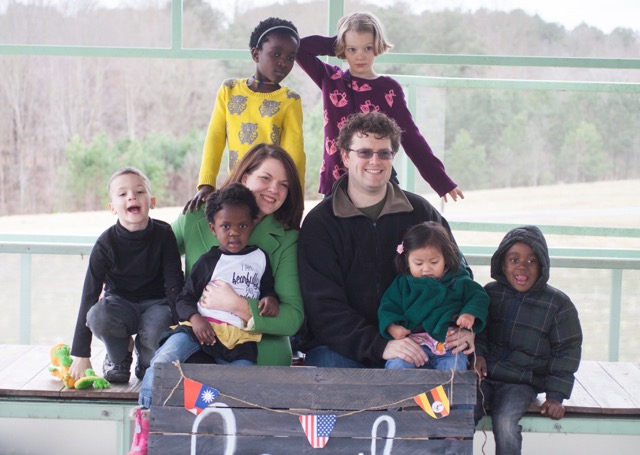
What about us? A sibling to kids with disabilities shares her needs

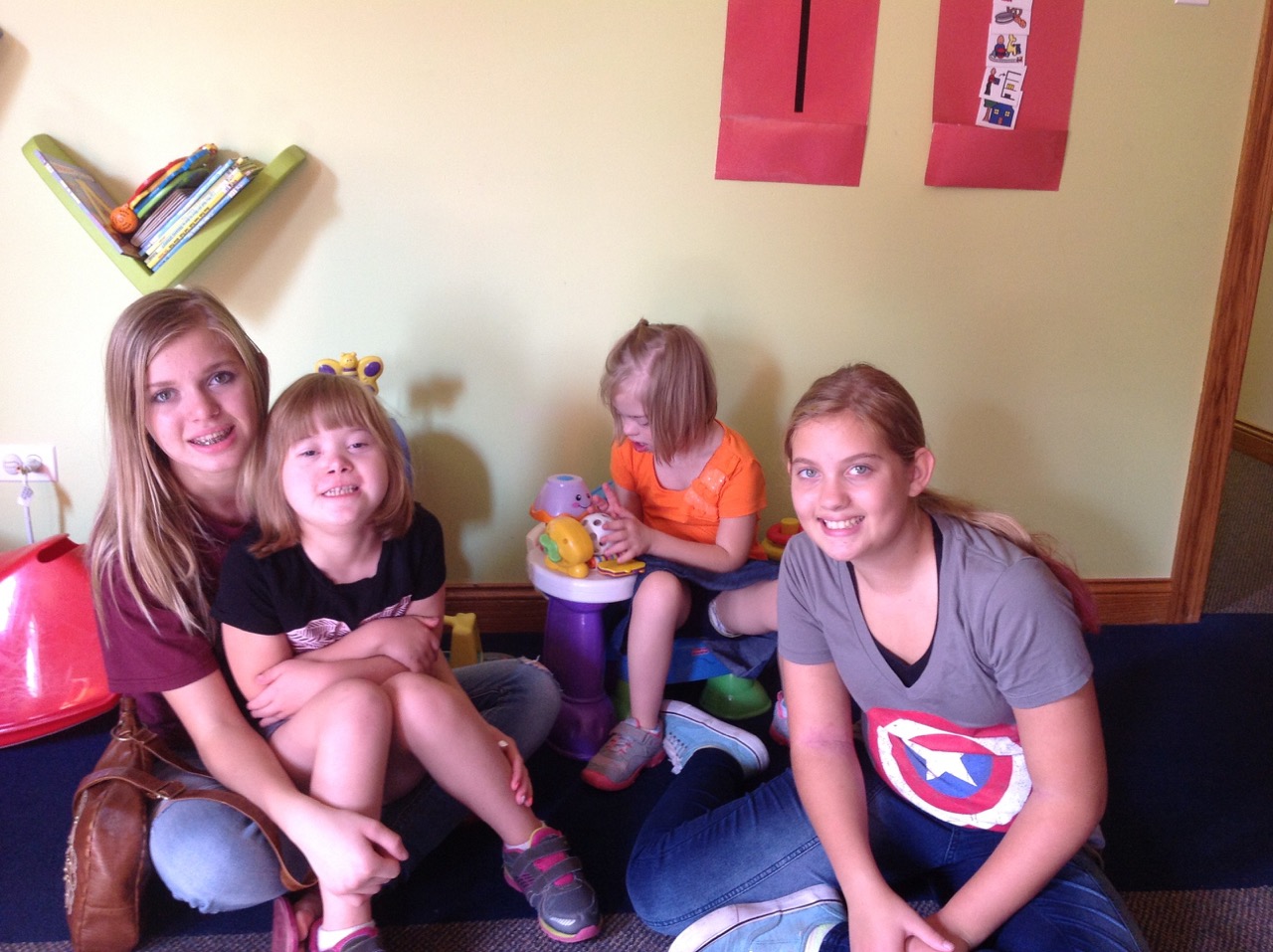
Marchenko Girls

I met Elaina Marchenko last fall when my family had the opportunity to worship at the church where her father was serving as pastor and her mom (Gillan Marchenko) was leading the special needs ministry. Elaina is now 15 and following in her mother’s footsteps as a gifted writer. Elaina and Gillian gave their permission for me to share this well-written article originally posted on Gillian’s blog on the experience of siblings in a family impacted by special needs. Here’s Elaina…

Today, my sister Zoya and I watched Polly and Evie, our two little sisters with disabilities, while my mom went out for a haircut. It being summer we do watch our sisters more often, but we don’t really mind. Usually we pop in a movie, go outside, or just have fun playing Barbies together. But, today Evie threw a tantrum, stressing us out, pushing Polly’s attention more out of the way, and resulting in bickering. After mom came home, we talked about what happened and how everybody was. It warmed my heart when my mom asked me if I was okay! I wasn’t the one throwing a tantrum or having trouble communicating, yet my mom took a minute to check in with me. Little things like that help remind me that my parents do care about me and don’t forget about their other kids. In light of my experience today and others like it, I came up with a list of three things parents can do to make sure their kids without special needs feel just as important as their siblings with special needs. Keep reading to see what my three tips are…

1. Take time to do fun stuff

Now, this may be an ‘aha’ moment or just a good reminder but it is very important to take one on one time to do things with your child. By planning fun activities to do with your kid it makes them feel like you care about their happiness and that you aren’t forgetting that they are in tough boat too. I understand that parents to kids with special needs have a lot of obstacles and struggles, but sometimes the kids who are typical share some of those struggles. So plan a day of shopping, see a movie, or even just talk! Just make sure it is one on one and something you both want to do.

2. Ask us simple questions that might have slipped your mind otherwise

I know I appreciate it when my family is having a hard day and my parents ask how my day at school was. It shows you not only care about big struggles with your kids with special needs but you also care about your typical kid’s homework or what their are planning to do on the weekend. This is a simple way to show you care.

3. Ask us our opinions on things regarding your kid(s) with special needs

By asking us our opinions it makes us feel like we are in the loop and we get to know about what things have been taking up a lot of our parent’s energy or time. We better understand it instead of being outside of it all and feeling neglected. Even if we don’t really get a say, it’s nice to feel like our opinions are heard.

I hope this helped! Remember that siblings of kids with special needs are usually pretty flexible and understanding. Yes, we all have our moments, but we love our family members with disabilities as much as our parents do, just maybe in a different way.

Thanks for reading and I hope this helped!
***********************************************************************************************************

shutterstock_24510829Key Ministry is pleased to make available our FREE consultation service to pastors, church leaders and ministry volunteers. Got questions about launching a ministry that you can’t answer…here we are! Have a kid you’re struggling to serve? Contact us! Want to kick around a problem with someone who’s “been there and done that?” Click here to submit a request!

Posted in Families, Inclusion, Intellectual Disabilities, Stories, Strategies | Tagged , , , , , , , | 1 Comment

Fall training events from Key Ministry

shutterstock_302536130In our part of the country, parents and families are quite busy with back to school shopping and finalizing plans for the year ahead. Our Key Ministry crew is preparing to hit the road for a number of live training events. While we hope this list will grow longer, we wanted to give our followers a sneak preview of events planned for Ohio, North Carolina, Tennessee and Kentucky this coming Fall…

Saturday, September 12, 2015, Bay Presbyterian Church, Bay Village, OH:

Every Child Welcome Conference

The Every Child Welcome Workshop is a networking and training event for church staff, volunteers, parents, and professionals in the special needs ministry community. Serving as Keynote Speaker is former Key Ministry staff member Katie Wetherbee, co-author of Every Child Welcome: A Ministry Handbook for Including Kids with Special Needs. The workshop will also feature an “Ask the Doctor” interactive segment with Dr. Steve Grcevich from Key Ministry.

The workshop is free. Online registration (available here) is encouraged, although walk-ins will be accommodated as space permits. This workshop is sponsored by Bay Presbyterian Church and Key Ministry and is a follow up to the Northeast Ohio Special Needs Conference hosted by Bay Pres this past February.

September 18-19, 2015, Christ Covenant Church, Matthews, NC

Irresistable Church

Join Joni and Friends Charlotte for our second Southeast Disability Ministry Summit. Be inspired by Keynote Speakers John Stonestreet, national radio host of The Point, and Emily Colson, author of award-winning book Dancing with Max.

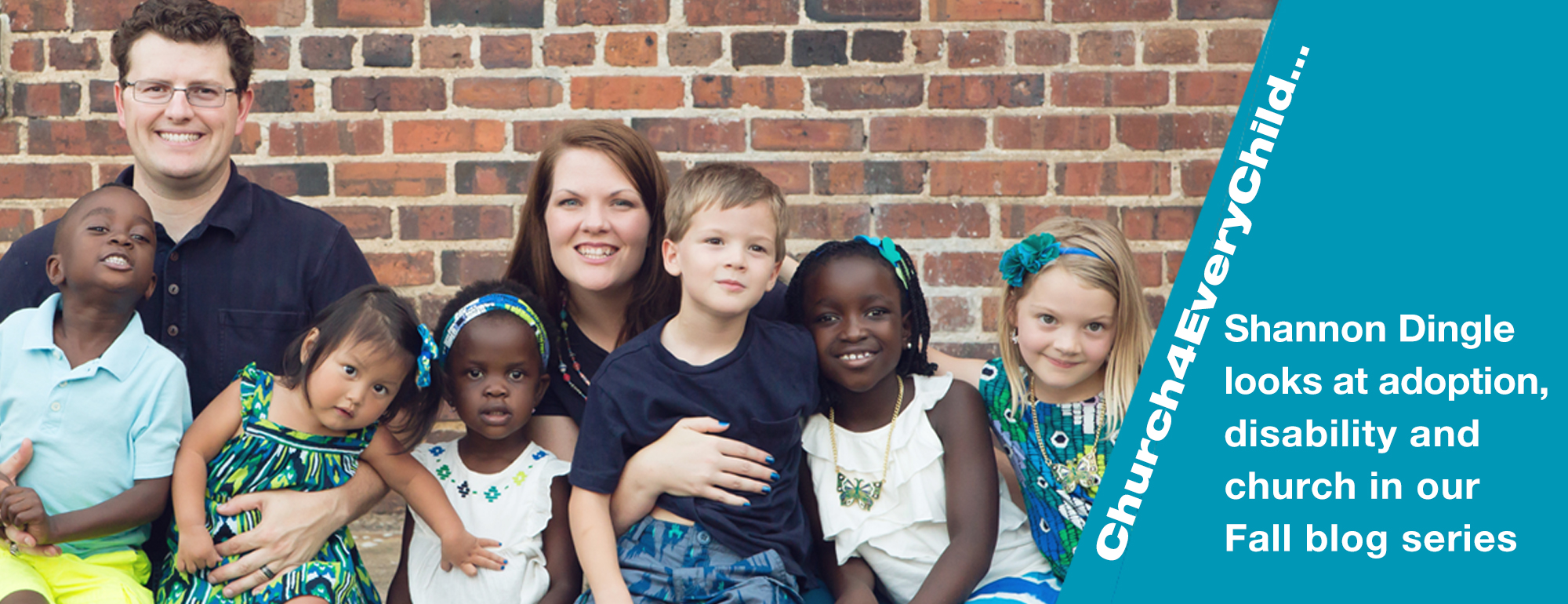
Shannon Dingle will be presenting from Key Ministry on the topic Special Needs of Adoptive and Foster Care Families.

Research shows that children who are or have been in foster care or an institutional setting like an orphanage have higher rates of disability, mental illness and neurological changes due to early childhood trauma than the general population. Is your church ready to welcome them while offering hope and help to their families? In this workshop, Shannon will share five specific ways your church can make itself a safe place for these children and teens. She will draw from her experience as a special educator, a disability ministry leader, a church consultant for Key Ministry, and a mom of six children, four of whom joined her family through special needs adoption.

Cost: $85 per person; $65 per person (group of 4 or more); $45 per student* Click here to register…Contact: Kate Brueck, Church Relations Manager, Joni and Friends Charlotte; kbrueck@joniandfriends.org or 704-841-1177

 October 19-21, 2015, Music City Center, Nashville TN

Lifeway Kids Ministry Conference

Shannon Dingle will be leading two sessions at Lifeway’s Kids Ministry Conference, to be held October 19-21, 2015 at Music City Center, Nashville, TN. Her sessions will include Recruiting, Training and Supporting Volunteers in Disability Ministry and Common Misperceptions About Special Needs Ministry. For more information or to register, click here.

November 5-7, 2015, Summit Church, Durham, NC

Together for Adoption

Shannon Dingle will be serving as a presenter at this year’s Together for Adoption conference. More information to follow on the specifics of Shannon’s presentations. Click here for registration.

November 7, 2015, Louisville, Kentucky

More to come on this shortly, but Dr. Steve Grcevich is tentatively scheduled to serve as Keynote presenter at a regional training event planned in Louisville. Save the date…more to come by the end of August.

***********************************************************************************************************

shutterstock_24510829Key Ministry is pleased to make available our FREE consultation service to pastors, church leaders and ministry volunteers. Got questions about launching a ministry that you can’t answer…here we are! Have a kid you’re struggling to serve? Contact us! Want to kick around a problem with someone who’s “been there and done that?” Click here to submit a request!

Posted in Adoption, Foster Care, Key Ministry, Mental Health, Training Events | Tagged , , , , , , , , , , , , , | Leave a comment

Expert tips on teaching kids with ADHD…

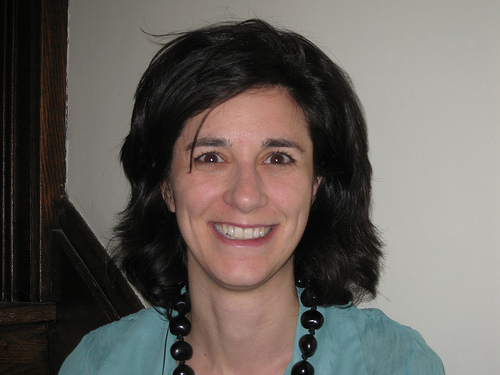
KarensPictureKaren Sunderhaft is a nationally recognized teacher, author and ADHD expert. We had the opportunity to pick her brain for ideas on teaching kids with ADHD a little while back and thought “back to school” time would be the perfect time to share her tips with a new audience.

Karen has been a teacher for 21 years. She has been spending time learning, writing and speaking about ADHD since 1999. After completing an undergraduate degree in Elementary Education and Philosophy at Boston College and receiving two awards upon graduation. Karen earned a special education degree with a concentration in learning disabilities at Northern Michigan University.

Over the years, Karen has taught at prominent private schools such as Laurel School and University School in Shaker Heights, Ohio and Tower Hill School in Wilmington, Delaware. Karen currently teaches at Kenston Middle School in Ohio.

For three years, Karen ran the academic learning center for the Cleveland Clinic’s 8 week summer treatment program for children whose primary diagnosis was ADHD.  She has been educated by some of the most important people connected to the diagnosis and treatment of ADHD and learning disabilities. Some of these people have included Dr. William Pelham, Ned Hallowell and Mel Levine.

For four years, Karen was also one of only two teachers asked to be part of the ADHD Experts on Call, a national call-in campaign to provide general advice and referrals regarding ADHD, where she and I had the opportunity to serve together.   She has been a regular contributor for ADDitude Magazine, a national magazine for and about families with ADHD, since 2003.

In addition to Karen’s professional contributions to the field of ADHD, she volunteers as the coordinator of the respite outreach offered through her home church in Chagrin Falls, Ohio that Key Ministry was honored to lend a hand in developing. Here’s our interview with Karen…

shutterstock_170694854

C4EC: Any ideas for the volunteer Sunday School teacher or small group teacher who has a couple of kids who can’t seem to sit still, keep their hands to themselves or stop talking during the lesson/group?

Karen: What seems to work for some teachers in our Sunday School classes is what I call “front end loading” your efforts. You need to take the time at the beginning of the year to set up some classroom rules and expectations so the rest of the year just flows peacefully and successfully….at least most of the time.

I believe in always beginning the year with a group conversation to create some simple, but clear rules. As the teacher you should have a few rules that are most important for you to keep order, but allow the class to generate the main list. Try to reword any comments so they stay positive. For example, instead of writing down John’s suggestion of, “don’t shout out answers”, you could agree and write down, “raise your hand to speak”. Create this list and then have everyone in the room sign it….including the teacher.

Our church classes are usually held on Wednesday or Thursday afternoons from 4:45 – 5:45 and from 6:00 – 7:00, so you can imagine how hard it is for my ADHD friends, who are just coming off of their medicine, to keep interested, engaged and focused. It becomes even more important for this time together to be fun. In the spirit of keeping it fun, try to set up some type of simple reward system to give positive, consistent feedback for when you see your students following the rules. This will allow the kids who really want to follow the rules, but sometimes can’t, to know exactly which behaviors get rewarded.

One of my favorite teachers had a stop sign with the big green circle, yellow circle and red circle on a poster board. She had each child’s name on a clothespin. Every one started the class on the green circle. If someone started to break some of the pre-established rules, then they may get a gentle reminder from the assistant, but if that didn’t work, then their clothespin name may move to the yellow circle. Now…there are two ways for this student to go…if they can get it together, then their clothespin can move back to green, but if things get worse it moves to the red circle.

This system only makes sense to the kids if they know the consequences for when the clothespins move. At the end of class, everyone on the green circle gets a small piece of candy, but those on yellow may get a sticker and those on red may have to have a talk with the teacher and parent. Do what will work for your students and families…but try to keep it fun and positive.

I forgot to mention the most important part, my favorite teacher had a secret weapon…..an ASSISTANT. If your church classes can be taught by two people…..then I highly recommend it. Having one person to teach a lesson and one person to go around and assist students, by helping them with a kind word or a gentle redirection, keeps the whole class moving in the right direction.

As noted before, keep the same general routine that works for everyone. Perhaps the time together begins with a quiet, settling coloring activity. Native Americans believe that by coloring from the outside in, it can bring focus and clarity. By coloring from the inside out, it can bring creativity and openness.

  • Change in location is the easiest way to get attention
  • Teachers can move to the back or side of the room
  • Go outside when possible
  • Switch classrooms
  • Mini Field trips….even around your church grounds or to see the inner workings of the building
  • Surprise the group with a piece of music or artifacts
  • Have students present learning to one another
  • Guest speaker
  • Switch it up
  • Overall – provide a rich balance of novelty and ritual. Novelty ensures attention getting, ritual ensures predictable structures for low stress

The most important thing to remember, that if you or a student has a not so successful day, then remind yourself (and them) that next week is another time and a new chance to try again.

C4EC: What are some helpful hints you’d share with children’s pastors or youth pastors for effectively communicating to kids who have ADHD when they’re teaching in a large group setting?

shutterstock_112057619Karen: My first suggestion is to involve children in the teaching and learning process. No one really learns something just by listening. As a teacher, I often remind myself that to be more effective I need to NOT be “The Sage on the Stage, but rather the Guide on the Side”. Standing up and lecturing to a group is not as effective as talking a little and then giving a task to the group to help them engage in the learning process.

Perhaps setting up a play about a passage or a story and allowing members of the group to play a part or to offer feedback, such as a picture or a discussion allows the message to penetrate more effectively. Even the latest brain research has a formula for how much time should be spent listening and how much time should be spent processing information. By processing information I mean “using it” in a way that allows a learner to move from just listening to something to truly understanding it.

First, much of what is learned cannot be processed consciously; it happens too fast. Second, in order to create new meaning, we need internal time. Meaning is always generated from within, not externally. Third, after each new learning experience, we need time for the learning to “imprint”. Harvard studies suggest that cramming more content per minute virtually guarantees that little will be learned or retained. In fact it leads to more time re-teaching.

  • Change the activity to allow movement if possible. 12-15 minutes is how long a teenager can pay attention to a single activity. (Adults are 30 minutes)
  • 5-7 minutes of direct instruction for grades K-2
  • 8-12 minutes for grades 3-7
  • 12-15 minutes for grades 8-12

Some ideas for processing include the following…

  • Group work – Make a poster or build something together
  • Reflection – verbally to a peer or in a journal
  • Individual work or project
  • Drawing
  • Summarize and review

C4EC: What suggestions would you share with pastors or church leaders who want to design ministry environments where kids with ADHD will have great experiences? Lighting, sound, use of color, room decorations? What’s the right balance between fun and engaging vs. too much stimulation for kids with ADHD?

SUopenhouse067Karen: I love the church I belong to. Holy Angels in Bainbridge, Ohio has plenty of windows and natural light. The pews are comfortable, without the kneelers and the room is large with four big seating sections. There is a small water feature in the center that is soothing, but otherwise there are simple decorations year round and only a few extra plants and decorations for holidays. The homilies, which takes the Bible teachings and relate it to everyday experiences is beautifully done week after week. Father Dan always seems to start with a witty or profound story that allows each one of us to see how it relates to our own lives. In the middle of his homily he refers back to the Bible teachings and clearly states the message that we need to take away with us for the following week. Finally he ends with another story or pertinent joke, or an example of God’s words working in our church.

The best part of course is the rockin’ music that goes along with the terrific, meaningful homilies. There are three masses to choose from….8:00, 10:00 and 12:00 on Sunday. We always have music, but at the 10:00 mass, the little children leave during the main homily and are taken downstairs to the nursery, for their own special homily or story. Before they leave the room, they are encouraged to run up the aisle to the priest so that he can bless them and their teachers during this short time. It allows their little legs (kids as young as 3 and as old as 1st grade) to move and for them to either draw or color while listening to a story downstairs, where they can be a bit louder. Sitting still for an hour is very hard for a child with ADHD, but knowing that there is a break during that whole time, for both parents and children, helps to make the mass more enjoyable for everyone. If your child is too young or afraid to leave you, then I would come with a bag of tricks.

C4EC: Your family is active in a Roman Catholic church. In most Catholic churches, kids with ADHD would be expected to attend Mass (worship services) with their families. What suggestions would you have for parents of a child with ADHD who want to have a meaningful experience at church, but have kids who struggle with self-control when they’re bored in worship services designed for adults?

shutterstock_304063100Karen: Parents can put together a “Bag of Tricks.” This is the same type of bag I bring on airplane rides. Remember what they say there…..give yourself the oxygen first before administering to your child. Think of this bag as being filled with little trinkets of oxygen and dispense one at a time as needed.

The bag, and its contents, will change over the years, but either way it should be filled with some items that don’t make noise, are new and engaging and include something to hold your child’s attention for bursts of time. The bag should only come out during these special times. In fact you can use puffy paint to have your child decorate their special bag. This makes it more meaningful for them.

Everyone’s magic bag may be different, but mine includes paper and pencil for drawing, silly putty, stickers, small figurines, small books (some churches have their own basket of children’s church books). My favorite books are those with open the flaps. They are great for younger kids. Basically I fill this bag with anything that I can find at the dollar store that fits the criteria for “quiet and engaging” items. Depending upon your church a mini bag of cheerios or gold fish might be good too.

There may be some of you out there who believe that your child should sit still and listen attentively to the homily or sermon, but I would set the goal of asking your child to try to find one thing that they either heard or saw at church that they really liked. Set this expectation up ahead of time, so the child knows what will be happening. I am a big believer in helping the children establish and expect a routine from experiences, so there are no surprises. Then have them share that with you on the ride home one thing they learned. I believe that even though they may be drawing…..they are still taking in the sights and sounds around them.

C4EC: Many churches expect kids with ADHD to memorize Bible verses, prayers or worship songs. Since kids with ADHD frequently struggle with memory and recall, do you have any pointers for parents or Sunday School teachers to help?

Karen: Set it to music. There is so much research out there about the benefits of using pneumonic devices to remember something.

C4EC: There’s a growing “family ministry” movement, in which church leaders see their role as a support, not a substitute for parents in teaching kids about matters of faith. What advice do you have for moms and dads who want to instruct their child in the family’s faith, but are worn down from the struggles to complete schoolwork common among kids with ADHD?

Karen: PRAY: When my first child was born I went to a mom’s group through my church. I will never forget the one comment the speaker shared. She said that she prays for her kids’ safety and guidance from God, but she also prays even more for the people who will come in contact with her child throughout their life. What an interesting concept, to pray for my daughter’s best friend, or my son’s future wife. How many times can I tell my son to wear a jacket when it is cold, but as soon as his best friend’s mom suggests he wear a jacket, he responds as if it is the first time he heard this brilliant idea. This is one piece of advice I always like to pass on.

The other thought I have is something you have heard before. You are your child’s first teacher and your actions speak louder than words. You are a role model in your faith.

Try to do one activity a month that gives back to others and talk about that at home. Whenever I make a meal for a sick friend or someone that had a baby we talk about it or deliver it together. I am grateful for the BREATHE events I help run four times a year at my church. My entire family (ages 9, 13 and 14) joins me to help out wherever they can.

shutterstock_70300438PRAY. We pray before meals, even when out in public, or when friends come over for dinner. We pray when we see an ambulance speed by or we pray together when someone is sick. We pray for strength and guidance as we struggle with school work, jobs or friends. We pray to give thanks for a great day, a great friend or a special event.

Family conversations about God will eventually happen on their own, but only when the parents start the praying and doing in God’s name.

C4EC: So why should parents of kids with ADHD bother going through all the hard work and effort to make it to church each week and to worship with others?

Karen: Check out this great quote that was passed through me by email:

A churchgoer wrote a letter to the editor of a newspaper and complained that it made no sense to go to church every Sunday. ‘I’ve gone for 30 years now,’ he wrote, ‘and in that time I have heard something like 3,000 sermons. But for the life of me, I can’t remember a single one of them. So, I think I’m wasting my time and the pastors are wasting theirs by giving sermons at all.”

This started a great controversy in the “Letters to the Editor’ column, much to the delight of the editor. It went on for weeks until someone wrote this clincher:

“I’ve been married for 30 years now. In that time, my wife has cooked some 32,000 meals. But, for the life of me, I cannot recall the entire menu for a single one of those meals. But I do know this…they all nourished me and gave me the strength I needed to do my work. If my wife had not given me these meals, I would be physically dead today. Likewise, if I had not gone to church for nourishment, I would be spiritually dead today! When you are DOWN to nothing…..God is UP to something! Faith sees the invisible, believes the incredible and receives the impossible! Thank God for our physical AND our spiritual nourishment!

It is the same with everything…you may not remember the exact words of this blog, but I hope that you will come away with a firm feeling of commitment or resolve to do one thing differently. Be a warrior for God and your family…..both your family at home and your family at church.

***********************************************************************************************************

shutterstock_302633579We encourage you to check out Key Ministry’s resource page on ADHD. You’ll find links to Dr. Grcevich’s blog series on ADHD and Spiritual Development, a very helpful lecture explaining differences in brain functioning in persons with ADHD and links to resources from the American Academy of Child and Adolescent Psychiatry. Share with a friend!

Posted in ADHD, Families, Hidden Disabilities, Key Ministry, Mental Health, Spiritual Development, Strategies | Tagged , , , , , , , , , , , | 4 Comments

Building Strong Families in a Hostile Culture

IMG_1110Message presented by Dr. Stephen Grcevich at Sunday Worship, Linwood Tabernacle, Linwood Park, Vermilion OH, August 9, 2015

Good morning…I’m honored Hu invited me to share with you today. I’m Steve Grcevich, and in addition to the neat things Hu shared with you about our work at Key Ministry, I’m in my thirtieth year as a physician and my 25th year as a child and adolescent psychiatrist.

I’m aware that Hu has been leading you through a summer-long series on faith, family and friendship. My day job affords me “floor seats” to see the walking wounded among our kids and families up close and personal. We find ourselves in the midst of a culture war…a war for the hearts of men and women that has raged since the beginning of time…a war that will rage until our Lord and Savior Jesus Christ returns to end it once and forever. The Lord’s enemy seeks to lie, steal and destroy and one of his fundamental strategies is to disrupt efforts to prepare the next generation for service in Christ’s Kingdom.

Given the recent developments in our culture, I’d be an utter hypocrite if I didn’t disclose I worry more than I should for someone who claims to be a follower of Jesus. I worry for myself about how I’m going to cope with the challenges to come for those of us who seek to publicly exercise our faith, but what I REALLY worry about is whether we’ve done enough to prepare our daughters for the challenges they’ll face as they seek to live out their faith.

I wonder how many of you share the same worries about your kids or grandkids, your nieces and nephews, or the children of your friends. What can we do NOW to build families capable of serving as fortresses…families that honor God and serve as outposts for the reestablishment of Jesus’ Kingdom in the midst of “enemy territory?

shutterstock_293625503

As we explore God’s Word in search of guidance for implementing God’s vision for our families in a culture more overtly hostile to Christianity and Christian virtue than at any point in my lifetime, let’s turn back to a point in God’s story 2,400 plus years ago when another group of God’s people faced strikingly similar challenges. If you brought your Bible or downloaded the Bible app on your tablet or smartphone, turn to Nehemiah 4:7-14.

Before we dive in, a little historical context. Nehemiah was 5 1/2 centuries removed from King David’s reign on the throne of Israel. Despite being “a man after God’s own heart” David began an unfortunate trend of kings who loved and honored God but were universal failures at raising sons to continue their spiritual legacies. David’s son Solomon built the Temple in Jerusalem but pursued earthly alliances that led to marriages of political expediency. Through Solomon’s marriages, the influences of the pagan gods and cultures surrounding Israel penetrated the nation’s ruling class. Infighting among Solomon’s heirs led to a spilt between the Northern Kingdom (Israel, later renamed Samaria) and the Southern Kingdom (Judea).

Each kingdom turned to worship of pagan gods…worship that frequently included ritual prostitution and child sacrifice. The cultural decline occurred more quickly in the Northern Kingdom, given over by God to the Assyrians in 722 BC. The Southern Kingdom was conquered in three stages by the Babylonians, with the fall of Jerusalem complete in 586 BC. The best and brightest of Judah were taken captive and sent into exile in Babylon. You might remember Shadrach, Meshach and Abednego, along with their friend, Daniel.

The practices of the Assyrians and the Babylonians for populating conquered territory differed, which will come into play later in our passage. The Assyrians repopulated the Northern Kingdom with pagans from other cultures, while Judah largely sat vacant when the Babylonians exiled the people of Judah.

Babylon fell to the Persians in 539 BC, followed by the return of 50,000 Jews the following year. The prophet Ezra led a smaller group back in 458 BC, and Nehemiah led a third group back when he returned in 445 BC.

Nehemiah was a descendant of the exiles who stayed in Babylon. He’d earned a trusted position in the inner circle of Persia as cupbearer to King Artaxerxes. The king’s stepmother was Queen Esther, and she may have influenced the king to view the Jewish people with favor. Nehemiah was likely influenced by Esther’s willingness to risk her life and her position in the palace to save her people from extermination.

shutterstock_97552016God had placed a burden on Nehemiah’s heart for God’s reputation and the state of God’s (and Nehemiah’s) people. In the 90 years since the Jewish people first returned to the Promised Land, the returning exiles struggled with misplaced priorities and appeared headed down the same road as their ancestors. In Ezra 9 we learn that ten years prior to Nehemiah’s arrival in the city, intermarriage with pagan peoples was rampant and involved family members of the High Priest.

The first group that returned to Jerusalem arrived with an order from King Cyrus granting permission to rebuild the temple. The leaders of the people in the land were less than thrilled by God’s people re-emerging as a power in Jerusalem. They undermined construction of the temple for 16 years, abetted by the misplaced priorities of the Jewish people. The prophet Haggai (Haggai 1:4-9) notes the people prioritized their lifestyles over rebuilding the Temple…and endured poverty from a drought resulting from their disobedience. The Temple wasn’t completed until the subsequent Persian king (Darius) issued a decree reaffirming the original decree from Cyrus… including authorization of taxes from the Samaritans and other pagan peoples of the region to pay for it!

A temple in a city without walls wasn’t terribly helpful in the ancient Near East. People couldn’t attend to the study of God’s law when they were exposed to bandits, robbers and others who might want to plunder God’s temple. Nehemiah was called to rebuild the walls of God’s city so that the people might be called back to the study of God’s law and recognition of their sinfulness. He foreshadows the second coming of Jesus, who will provide the ultimate restoration of God’s people in God’s city.

Let’s jump ahead of our text by one verse and look at Nehemiah 4:6

“The people had a mind to work.”

The walls of Jerusalem were rebuilt in 53 days without modern construction equipment… an accomplishment that didn’t seem humanly possible. The people put God’s work first – leaving us with an illustration of God’s power at work when God’s people are faithful.

The Jewish people had been exiled because their ancestors failed to put first things first. They rejected God and his law. Nehemiah and the people attracted the attention of their enemies when they pursued their task from God. We need to recognize that when we prioritize God’s work and God’s plans for our families, we become a threat to the established social and political order. Verse 7:

But when Sanballat and Tobiah and the Arabs and the Ammonites and the Ashdodites heard that the repairing of the walls of Jerusalem was going forward and that the breaches were beginning to be closed, they were very angry.

Sanballat was the Persian governor of the territory…and a Samaritan. The Jews returning to Judah viewed Samaritans as “half-breeds” because of their polytheism. The Samaritans resented the Jews because their taxes supported the reconstruction of a temple where they were excluded from worship. Verse 8:

And they all plotted together to come and fight against Jerusalem and to cause confusion in it.

How does the enemy cause confusion?

From where I sit, the enemy’s principal tactic is moral relativism. Moral relativism is a philosophy that asserts there is no global, absolute moral law that applies to all people, for all time, and in all places.

Look back at Genesis 3. The enemy hasn’t made significant changes to the playbook since the Garden of Eden! He uses the same tactics over and over…because they work!

Does your Bible REALLY say that?

God must not want you to be happy!

How could a loving God punish someone for _____?

All religions point to God.
MacLean'sMoral relativism is foundational in the enemy’s plan to kill, steal and destroy. When I criticized a New York Times op-ed piece encouraging parents of teens to host sleepovers for their boyfriend or girlfriend, my radical suggestion led to an interview with Canada’s most prominent news magazine. The rate of suicide attempts among teens increases incrementally with every new sexual partner they experience. The “means justifies the ends” philosophy leads many kids to see nothing wrong with cheating on tests or buying prescription medication off the street to get better grades or a better SAT or ACT score.

Look at the confusion the enemy has caused in the church! We have denominations fighting long-time church attendees for control of church property as some denomination leaders have abandoned the view that Jesus represents our only path to salvation or the view that Scripture is authoritative.

We’re now seeing confusion in the redefinition of marriage, gender roles and the God-ordained and complimentary roles of fathers and mothers. God made man male and female…Facebook came up with 50 more genders.

On to Nehemiah’s response-Verse 9:

And we prayed to our God and set a guard as a protection against them day and night… or The Message translation: We countered with prayer to our God and set a round-the-clock guard against them.

“We countered with prayer.” How often do we consider prayer as a strategy to protect our families from the culture? If you’re like me, not often enough. We don’t know from the passage if Nehemiah’s next steps resulted from his prayer, but we see that his prayer is accompanied by concrete actions. He prayed, but also posted a round-the clock guard across the work area to monitor for an imminent attack.

What do we expect when we pray for our families? I think many of us ask God to look after our families while we address priorities in our workplace. That begs the question of why God would want us to invest more time and attention at jobs hundreds of other people could do at the expense of fulfilling family responsibilities He’s uniquely positioned us to address?

Were Nehemiah’s problems fixed? Not quite. Verse ten…

In Judah it was said, “The strength of those who bear the burdens is failing. There is too much rubble. By ourselves we will not be able to rebuild the wall.”

God had Nehemiah and the people positioned right where He wanted them! We’re more likely to be doing God’s will when God’s involvement is necessary for success. Libby Peterson is a fellow Board member at Key Ministry who frequently points out that we know we’re pursuing a “God thing” when God’s involvement is essential for success.

God wants us to depend upon him! After all, He gave His son to die on a cross to remove the barrier to relationship with Him resulting from our sin. Relationship is so important to God that we can anticipate He’ll put us in uncomfortable situations if ou discomfort serves to advance the relationship with Him.

Next…we get the threats from the enemy and seeds of doubt planted among the people. Verses 11 and 12:

And our enemies said, “They will not know or see till we come among them and kill them and stop the work.” At that time the Jews who lived near them came from all directions and said to us ten times, “You must return to us.”

IMG_1108The enemy often works through intimidation and bullying. In 2015, the threat may be “You’re going to bake me that cake or I’ll destroy your business.” It’s the military chaplain or officer threatened with court martial for being too forthright in sharing their faith. It’s the Little Sisters of the Poor threatened with ruinous fines because they refuse to compromise their consciences or regulations crafted to force faith-based organizations out of providing social services.

We’ll all face threats. Getting “unfriended” on Facebook isn’t a real threat. Some in my practice may lose our licenses if we try to help a teen seeking help to refrain from acting upon their same-sex attraction. My older daughter will spend the next fifteen years of her life and $500,000 training to be a physician. When she finishes, she may be threatened with the loss of her license for refusing to help her patients commit suicide. Think that’s far-fetched? Across the lake, the Ontario Medical Society considers refusal to participate in physician-assisted suicide a violation of professional ethics if no other physician is available to help.

How did Nehemiah respond to the threats? He reminded the people of what mattered most! Verses 13-14:

So in the lowest parts of the space behind the wall, in open places, I stationed the people by their clans, with their swords, their spears, and their bows. And I looked and arose and said to the nobles and to the officials and to the rest of the people, “Do not be afraid of them. Remember the Lord, who is great and awesome, and fight for your brothers, your sons, your daughters, your wives, and your homes.”

“Remember the Lord who is great and awesome.” He reminds the people that God comes first. He then positioned men in the lowest spots of the wall alongside their families so that their families were at the forefront of their minds.

Where are our families most vulnerable? I’d like you to ponder that question as a family in the coming week. From where I sit, here are three observations…

We worship the wrong stuff: Similar to the people of ancient Israel, we worship idols. We don’t pray to little bronze statues or hook up with temple prostitutes, but our idols are all of the things held in a higher place in our hearts than God. Career advancement. Money. Status. The boat. The beach house. Control. Security. Our kids’ accomplishments. When God is a secondary priority, our families are vulnerable. I’ve included a link in your handout to an article from Timothy Keller offering four suggestions to help you identify your idols.

BibleOur faith is without foundation: Too many professing Christians lack a deep understanding of what they claim to believe and why they believe it. Without such understanding, we’re vulnerable to the lies and deceptions we encounter on a daily basis. If we don’t know what God said in God’s Word, how do we recognize when God’s Word is being distorted? We’re vulnerable…and our families are vulnerable when we lack a working knowledge of the Bible to apply its’ teaching in our everyday life. You guys are into hymns. Remember “In Christ the solid rock I stand, all other hope is sinking sand”?

1 Peter 3:15, encourages us to “always being prepared to make a defense to anyone who asks you for a reason for the hope that is in you.” Are you prepared to explain why you’re a Christian or why you live and believe as you do? You need to be.

We don’t walk the walk! Teenagers are born with great hypocrisy detectors. While we want our kids to know the Bible, most kids learn far more about Christianity from watching their parents live their faith than they will from their Bibles. How is the faith of our kids impacted by their daily interactions with us?

What can we learn from Nehemiah in building families prepared to thrive in the face of the distortions present in our culture?

  1. Put God first…and prioritize the spiritual growth of our families.

Libby Peterson (mentioned earlier) directed the children’s ministry for many years at BPC while Hu served as senior pastor. Based on research from the Search Institute, Libby encourages parents to:

  • Regularly pray together as a family
  • Regularly study the Bible as a family or participate in family devotions
  • Regularly serve together as a family

The Barna Group found the most important determinant of kids from Christian homes maintaining active, personal ministry in their 20s was the average length of time they spent in conversations with their parents when young.

Pray together. Read the Bible together. Serve together. Talk to your kids. It works.

Parent Child Praying

  1. Model for your families the public exercise of your faith

Imagine the impact upon the wives and children positioned near the low points in the wall from seeing their husbands and fathers working to protect them by day and standing guard to protect them at night? The work on the wall was an act of worship. The way the people of Jerusalem spent their time and money reflected their priorities. How do you reflect your priorities in front of your family?

  1. ALL Christians have a role to play in the effort to build strong families.

Nehemiah reminded the people that they needed one another. Every family owned the fight. And we need the support of other families to sustain the fight. There were far too many low spots in the wall for any one family to guard.

When Hu prepped me for today, he described your screened-in porches, houses clustered closely together, unlocked doors and open windows. Linwood can be a special place where kids and families develop relationships to encourage and sustain one another on the faith journey.

From the time they were young, my wife and I wanted our daughters to have relationships with mature Christian adults outside of our family. As your children get older, you as parents will transition from maintaining control over your kids to exercising influence with them, and your capacity for influence depends upon the quality of your relationship with them. One way to maximize our influence is when we encourage other like-minded adults to invest in relationships with our kids. Allow me to explain.

I knew from my job that as our daughters got older, situations would arise that they wouldn’t want to share with my wife or myself. We make the rules, pay the tuition, provide their transportation and pay their cell phone bills. Trust me, your kids don’t tell you everything! We wanted our girls to have established relationships with adults from outside of our family who share our faith so they would have people to give them wise counsel when the time came that they couldn’t talk to us.

To prepare our kids for the culture they’ll face, they need to know there are other people who believe as they believe. I heard Jessie McMillan taught here on Deuteronomy 6… a great picture of the entire community owning responsibility for the spiritual welfare of the kids.

Here’s a challenge I’d like to offer…Your mission (should you choose to accept it) in your remaining time here at Linwood is to be intentional in building relationships with kids from another family so you might support their parents in preparing them for the challenges of the culture they’ll inherit.

Joshua (in Joshua 24:15) states… But as for me and my house, we will serve the Lord. How about your family?

Discussion Questions:

  1. If you were to “inspect the walls” of your family, what vulnerabilities would you find? How might you shore up any “low spots” you identify?
  2. Are you an idol worshiper? Does anything (or anyone) hold a higher place in your heart than God? See this link from Timothy Keller to learn more: http://www.christianitytoday.com/ct/2009/octoberweb-only/142-21.0.html
  3. How would you respond if someone asks why you’re a follower of Jesus?
  4. Who might you seek out at Linwood for the purpose of building relationships to promote the spiritual development of one another’s families?

IMG_1109


Posted in Families, Resources, Spiritual Development | Tagged , , , , , | Leave a comment

Who’s your Ethan?

11825054_10204291036627794_4172757221443346666_n

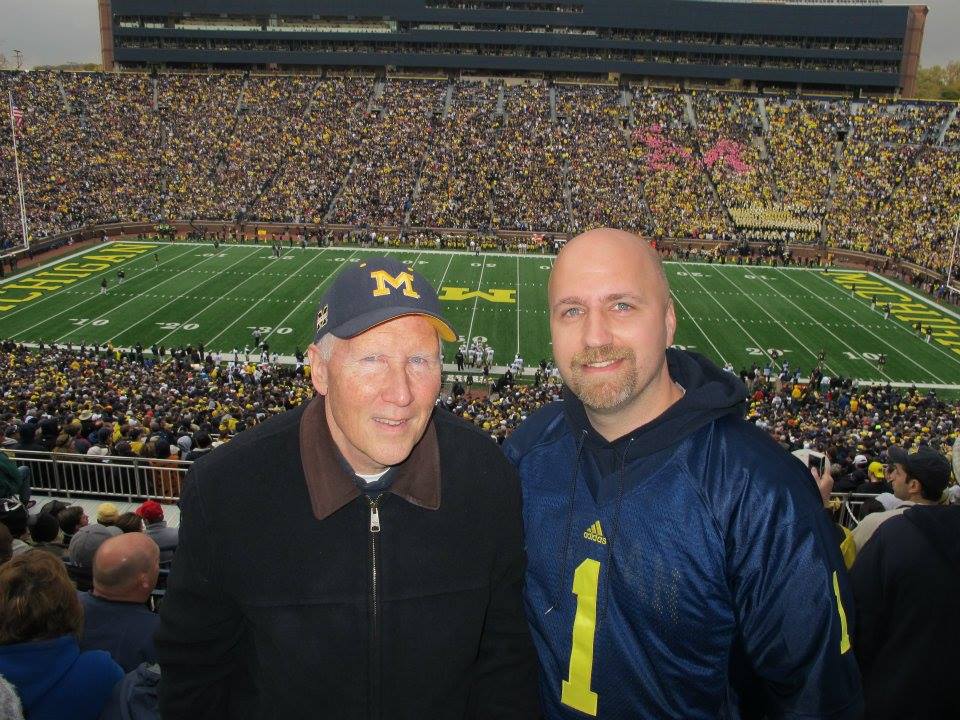
Dr. Ethan Schafer pictured above (right) in the Big House.

Come now, you who say, “Today or tomorrow we will go into such and such a town and spend a year there and trade and make a profit”— yet you do not know what tomorrow will bring. What is your life? For you are a mist that appears for a little time and then vanishes.

James 4:13-14 (ESV)

I lost a friend way, way too soon this weekend.

Ethan Schafer was an exemplary child psychologist and a tireless advocate for the kids and families who crossed his path. He was also a loving and devoted husband and father to his two preschool-age boys (Michigan, Class of ’31 and ’33, respectively). After returning home from an appointment with one of our mutual patients, Ethan went to the emergency room at the urging of his wife, where he went into cardiac arrest following a ruptured aortic valve/aortic aneurysm. He was life-flighted to Cleveland Clinic where emergency surgery was done to repair the aneurysm. Unfortunately, the blood loss was so great that severe neurologic damage was the end result. Ethan was 39 years old when he died this morning.

11823124_10205962912024604_2133670654958184578_oEthan and I were nearly polar opposites. He was a Michigan grad…I saw the 1968 National Championship team at my first Ohio State game as a seven year old. He did however express appropriate horror and concern when my oldest daughter submitted an application to Notre Dame. It’s pretty safe to say that we canceled out one another’s votes in every national election. And Ethan was a self-professed atheist.

Ethan wore lots of different hats. He was the chief psychologist at a fabulous private school in our area for kids with ADHD and/or learning disabilities. He established a teaching clinic offering affordable learning assessments for families unable to access what their children needed through the public schools. He divided his time with an elite college prep school for boys where he used his influence to help teachers and staff to create environments where my patients could be successful. During summers, Ethan was very much in demand as a camp consultant. He was on a very short list of “go-to” referral sources of mine for anxious kids with demanding parents because he was an excellent therapist and demonstrated remarkable dedication to his clients.

One late summer day, Ethan arrived for our annual pre-football season breakfast with a very sunburned head. When kids are treated with cognitive-behavioral therapy, an essential component of the treatment is exposure…putting kids in the situations where they most frequently experience anxiety and helping them to work through their fears with the techniques and strategies they’ve learned in therapy. Ethan was treating a boy who was afraid to go outside because of his fear of bees. Their most recent therapy session prior to our breakfast had involved a picnic lunch in a public park in early September…a time of year when bees are everywhere and are attracted to food.

The vast majority of professionals in my field…especially those from elite academic institutions such as Michigan run in social circles where Christians and Christianity aren’t held in high regard. As we got to know one another better and Ethan became aware of work we were doing through Key Ministry, he was clearly curious. The concept of 100 churchgoers giving up a weekend night to care for kids with special emotional, behavioral and medical needs didn’t fit with his previous understanding of evangelicals. He volunteered to help Key Ministry with any training needs that might arise. I’m sorry now that we didn’t take him up on the offer.

Ethan’s professional life brought him into regular contact with a number of very mature Christians. One was the director of admissions at the school serving kids with special educational needs. Another was Sherri McClurg…the managing director of our practice group, Ethan’s clinical supervisor when he was in training and interim Executive Director for a faith-based international hosting program for orphaned children. This past December, Ethan joined the Board of the Building Behaviors Autism Center, a Christian-based organization that provides services to families of children with autism spectrum disorders, disruptive behavior disorders, and other special needs started by Dr. Cara Daily where I’ve also served as a Board member.

Our most recent series of phone calls took place around a tragedy. Ethan provided consultation to summer camps when emergency situations arose. He was called in to help after inner city kids on an outdoor camping experience sponsored by a Christian organization witnessed the death of a peer caused by a severe weather event. He wanted to know the advice he was sharing was culturally sensitive to differences in how Christians might process a traumatic event of that type.

I’m blessed to not have had to deal with death very often. In the past 20-25 years, everyone I’ve known reasonably well who died had come to faith in Jesus. My dad was a man of great faith…it was hard to be sad for more than a few seconds when he died suddenly because his life goal was to be in the presence of Jesus. My wife’s grandmother was involved in a personal ministry through which she cared for an estimated 300 foster kids over 50+ years of service. My senior class president and former teammate (a politician) left his hospice to give one final speech for the ages that represented a remarkable testimony to his faith.

Our faith teaches us that our purpose in life is “to give glory to God and to enjoy Him forever.” Death is a cause for celebration within our Christian bubble. It’s so much harder to accept when we don’t have a testimony or baptism on video or a decades-long history of seeing someone live out their faith.

We want people we care about to have hope and confidence about a future with Jesus that we as Christians share. In Ethan’s case, I’m encouraged because he seemed drawn to Jesus as reflected in the Christ-followers he encountered in his clinical and volunteer work. I have no doubt that Ethan would have openly expressed his love for Jesus given more time to get to know Him better. A mutual friend reminded me God was not ambivalent about Ethan and that we don’t know what God was doing in his heart. I’m encouraged that Jesus will cover his situation with the same grace and mercy He’s extended to me. I’m looking forward to seeing him in Heaven…after Ohio State has won another 15-20 Big Ten championships and 5-7 more national championships!

Who’s your Ethan? Who are the people outside of our Christian bubble who you want to experience the peace and comfort we derive from the knowledge of an amazing future in the presence of our Lord? We can’t “save” anybody. But we can initiate conversations in which we share the reason for the hope we have in Jesus and we can seek to be a reflection of Jesus to the people who cross our paths.

I’m glad my friend had the opportunity to see Jesus through the lives of a number of our mutual friends. Don’t wait to introduce your friends to Jesus. Tomorrow is promised to no one.

Hail! to the victors valiant
Hail! to the conqu’ring heroes
Hail! Hail! to Michigan,
the champions of the West!

Michigan_Wolverines_Helmet

Posted in Key Ministry | Tagged , , , , , , , , , | 9 Comments

Five Outcomes for Children When Adoptions Fail

shutterstock_133357592

Adoptions sometimes fail. We’ve previously written here about why adoptions fail and how to effectively minister to prospective adoptive families when they do.

But what about the kids? What are the outcomes for children when adoptions fail?

Raised from birth in the family of origin

When expectant parents plan for adoption and then change their minds, those parents are like any other biological parents raising their children from birth. Little to no adoption trauma is created for the child in this circumstance, because no adoption happens.

Re-referral

Much like the previous outcome, the decision is made before any adoptive placement occurs. In this case, though, the family with the original referral to adopt the child is passed over for a variety of reasons and a new referral is issued to another family. The second prospective adoptive family moves forward with the adoption, while the first grieves their loss. On a personal note, this is what happened in our family’s recent adoption failure. For children who haven’t been born yet or ones who never met the original prospective adoptive parents, the children may never know about the first referral. As such, additional trauma isn’t always part of re-referrals.

Reunification

This outcome is encouraging. The child is able to return to the family in which God placed him or her in the first place. Sometimes this is called resettlement. Reunification isn’t all rainbows and unicorns, though. Nothing about adoption or foster care ever is, even in the best of scenarios. Resettlement might not be the end point, as these situations can fail too. The degree of trauma experienced by the child depends on age and number of placements prior to reunification.

Re-placement or readoption

When a child in foster care is removed from one placement, he or she is typically placed in a new home. Meanwhile, when an adoption is disrupted or dissolved, the best case scenario is readoption, in which a new family is found to be a better match for the child. The new foster placement or adoptive family might be an improvement for the child, but experiencing multiple foster or adoptive placements is highly correlated with poor outcomes for children due to instability and trauma.

Retraumatization as the child continues to wait

Additional trauma can occur in any of adoption failure scenario, but the risk for trauma is highest when no consistently reliable and trustworthy adult is investing in the child. Research indicates that involvement of that sort of adult makes a significant difference in the outcomes for those who experience childhood trauma. When the adoption fails for a child who thought he had found that adult, trust is broken. Attachment to future adult caregivers could be damaged. The child waits, possibly with multiple placements. Eventually she might find a family, but some of these children in our country enter foster care and then age out without ever being adopted.

In the church, we have kids from a variety of backgrounds who arrive every week. Some have experienced trauma from adoption losses, like those described above. When adoptions fail, the effects on children may include additional trauma, or they might not. Knowing a child’s story can help you love him well. That said, trauma is more traumatizing for some children than others (here’s a post about why), so you should never assume you know what the effects of a child’s history will be in her future. Only God knows that. Love may not heal all wounds from childhood trauma, but churches can and should be part of that healing process.

In addition to serving as a Key Ministry Church Consultant, Shannon Dingle is a co-founder of the Access Ministry at Providence Baptist Church in Raleigh, NC.

***********************************************************************************************************

© 2014 Rebecca Keller PhotographyCheck out Shannon Dingle’s blog series on adoption, disability and the church. In the series, Shannon looked at the four different kinds of special needs in adoptive and foster families and shared five ways churches can love their adoptive and foster families. Shannon’s series is a must-read for any church considering adoption or foster care initiatives. Shannon’s series is available here.

Posted in Adoption, Families, Foster Care, Key Ministry, PTSD | Tagged , , , , , , , , , | 1 Comment

Deliver us from evil…

shutterstock_154023329In reflecting upon the Lord’s Prayer, the last line for me been the easiest to overlook. The ideas that God’s name is to be revered, that we’re to look forward to the reestablishment of his Kingdom, that we’re to seek his will, that we’re to depend upon him to provide for our needs, to ask for his forgiveness and his assistance in forgiving others and to rely upon his help in avoiding temptation…all reflect daily struggles each of us experience. But “deliver us from evil?” I can’t say the need to be delivered from evil has been an everyday concern… until recently.

The presence of evil has felt less immediate. The atrocities committed by combatants in the Middle East and Africa seem half a world away. The recent act of terrorism in Chattanooga, the vile, racially-motivated attack in the church in Charleston, shooting at schools and theaters could be dismissed as isolated, random acts of evil. I’ve found the evil  portrayed in the videos released by the Center for Medical Progress capturing the process through which Planned Parenthood staff procure and sell body parts of aborted infants profoundly unsettling.

The perpetrators of acts we recognize as evil aren’t typically part of our day-to-day experience. I don’t know any adherents to Islam whose actions suggest they would seek to kill others who don’t share their beliefs. Despite my line of work, I can’t remember the last time I saw a teen who led me to fear their potential to carry out a mass shooting. The depravity captured in the investigative videos from the Center for Medical Progress could easily have come from the mouths of friends, neighbors and colleagues. I’m also horribly unsettled by the ease with which the leaders and opinion shapers of our culture so readily ignore the abject evil in front of their faces and proceed as if it doesn’t exist.

Planned ParenthoodThe videos capture several Planned Parenthood medical directors negotiating prices with undercover reporters for body parts of aborted babies. One physician uses the term “intact”  to refer to babies they permitted to die when delivery occurred before they could perform an abortion…babies who were also sold for body parts. In one video, a Planned Parenthood employee is heard to say “it’s a boy” as a clinic “doctor” chops up the body of an abortion victim to procure the desired body parts.

I couldn’t help but think as I watched the videos that the physicians from Planned Parenthood could have easily come from my medical school class, or the faculty of either of the schools where I teach. I strongly suspect the vast majority of my colleagues in child and general psychiatry wouldn’t be the least bit troubled by anything they saw in the videos and suspect many are among the most ardent supporters of Planned Parenthood. I haven’t attended a state or local psychiatric society since the late ’90s after my colleague and I resigned from the American Psychiatric Association when the APA president authored a front-page editorial on behalf of the Association endorsing partial-birth abortion. General psychiatrists cannot belong to state and local societies without holding membership in the national organization.

Human CapitalI’m frightened by the ease with which a highly educated person who dedicated ten or more years to attain the required education and training to save lives could so utterly and completely abandon any sense of right and wrong and demonstrate such contempt for the value of life. Sadly, the value system and worldview of the physicians and support staff in the videos are shared by the people in position to influence healthcare-related public policy decisions related and to make determinations regarding medical treatments you or your loved ones may access.

Those who shape and influence the culture appear to be doing their very best to ignore the disclosures from the Planned Parenthood videos. They repeat talking points from the crisis communication company hired by Planned Parenthood claiming that videos have been doctored or altered, despite the availability of unedited video on the Internet providing what Big Ten football officials used to refer to as “indisputable video evidence” of the involvement of high-ranking Planned Parenthood staff. Thanks to PP’s friends and allies in the media, the death of Cecil the Lion in Zimbabwe received more media attention in one day than the Planned Parenthood videos received in two weeks! Remember that while you’re currently reading this post on your computer, tablet or smartphone, large segments of our population obtain their news exclusively from broadcast television or newspapers where daily papers are still available. If the media doesn’t cover it, it’s as if it never happened. A devout physician colleague of mine who is “technologically challenged” wasn’t at all aware of any of the videos until I asked him his opinion of them yesterday.

There’s nothing new under the sun. God allowed the people of Judah to be taken into captivity for reasons including their worship of pagan gods through ritual prostitution and child sacrifice. As with Planned Parenthood, the ancients sought to distract from their most heinous practices…

MolechMolech worship occurred in the Valley of Hinnom…this was located at the South end of Jerusalem, just outside the walls of the city. Jesus references the place during the Sermon on the Mount of the destination of people who harbor anger against their brothers.

The ancients would heat a brass idol up with fire (appearing like a pot-bellied stove with a head) until glowing. A priest would put the infant child on the arms of the idol. A child sacrifice laid on the hands, would roll into the fire in the belly cavity. The area before the statue was filled with a loud noise of flutes and drums so that the cries of the children being sacrificed should not reach the ears of the people.

Surely other manifestations of great evil take place all around us, day after day. Human trafficking. Sexual abuse. Physical violence directed at the weak and vulnerable. But you can’t forget what you’ve seen. If you were to encounter a helpless young child being cut into pieces for his or her body parts in the middle of the street, could you walk away without trying to help and pretend nothing had happened? Dr. Richard Selzer captured the experience in his essay collection, Mortal Lessons: Notes on the Art of Surgery.

How does such evil continue? The people involved construct very elaborate defenses to ward off feelings of anxiety or guilt. The abortion industry has developed language to help…”fetus,” “pregnancy termination,” “women’s healthcare,” “reproductive rights.” Ultimately, they have to deny or diminish the humanity of the developing child.

Ross Douthat discusses the impact of the videos in an excellent commentary in the New York Times

It’s a very specific disgust, informed by reason and experience — the reasoning that notes that it’s precisely a fetus’s humanity that makes its organs valuable, and the experience of recognizing one’s own children, on the ultrasound monitor and after, as something more than just “products of conception” or tissue for the knife.

Because dwelling on that content gets you uncomfortably close to Selzer’s tipping point — that moment when you start pondering the possibility that an institution at the heart of respectable liberal society is dedicated to a practice that deserves to be called barbarism.

That’s a hard thing to accept. It’s part of why so many people hover in the conflicted borderlands of the pro-choice side. They don’t like abortion, they think its critics have a point … but to actively join our side would require passing too comprehensive a judgment on their coalition, their country, their friends, their very selves.

For the reasons Douthat describes, the church would appear to be the ideal societal institution to take the lead on confronting this particular evil in our midst. Every woman who has made the choice to have an abortion is an image bearer of God, infinitely loved by his son, Jesus Christ. Many who choose abortion make their decisions during times of significant economic or emotional distress. Because of Christ’s work on the cross and his subsequent resurrection, Jesus offers the prospect of forgiveness along with the peace and perspective to move on from the past.

Yet, so many of our spiritual leaders are afraid to confront the issue because abortion has been so prevalent in our society. By some estimates, as many as one in three American women has experienced at least one abortion…and the men who contributed to the unplanned pregnancies and often pressured or manipulated women into abortions. Impediments the church faces in addressing abortion include…

  • The challenges we face in discussing a topic as emotionally-laden as abortion with the necessary grace and sensitivity.
  • Church leadership is (for the most part) male-dominated.
  • The fear of driving away many of the folks sitting in the pews each week.
  • The risk of opening (or re-opening) some very deep wounds

We will all pay a price if we don’t face up to this issue. The longer we fail to defend the sanctity and dignity of human life, the greater the likelihood that all life will be devalued, including our own. We’ve already seen a paper published in the Journal of Medical Ethics that uses the arguments of abortion champions to advocate for “after-birth abortion.” Here’s a sample of the thinking in the paper…

Although it is reasonable to predict that living with a very severe condition is against the best interest of the newborn, it is hard to find definitive arguments to the effect that life with certain pathologies is not worth living, even when those pathologies would constitute acceptable reasons for abortion. It might be maintained that ‘even allowing for the more optimistic assessments of the potential of Down’s syndrome children, this potential cannot be said to be equal to that of a normal child’. But, in fact, people with Down’s syndrome, as well as people affected by many other severe disabilities, are often reported to be happy.

Nonetheless, to bring up such children might be an unbearable burden on the family and on society as a whole, when the state economically provides for their care. On these grounds, the fact that a fetus has the potential to become a person who will have an (at least) acceptable life is no reason for prohibiting abortion. Therefore, we argue that, when circumstances occur after birth such that they would have justified abortion, what we call after-birth abortion should be permissible.

In spite of the oxymoron in the expression, we propose to call this practice ‘after-birth abortion’, rather than ‘infanticide’, to emphasise that the moral status of the individual killed is comparable with that of a fetus (on which ‘abortions’ in the traditional sense are performed) rather than to that of a child. Therefore, we claim that killing a newborn could be ethically permissible in all the circumstances where abortion would be. Such circumstances include cases where the newborn has the potential to have an (at least) acceptable life, but the well-being of the family is at risk. Accordingly, a second terminological specification is that we call such a practice ‘after-birth abortion’ rather than ‘euthanasia’ because the best interest of the one who dies is not necessarily the primary criterion for the choice, contrary to what happens in the case of euthanasia.

The weakest and most vulnerable among us will pay the steepest price. Here’s a link to a fabulous talk on disability from the Catholic Archbishop of Philadelphia, Charles J. Chaput. Archbishop Chaput cuts to the heart of the issue…

Evil talks about tolerance only when it’s weak. When it gains the upper hand, its vanity always requires the destruction of the good and the innocent, because the example of good and innocent lives is an ongoing witness against it. So it always has been. So it always will be. And America has no special immunity to becoming an enemy of its own founding beliefs about human freedom, human dignity, the limited power of the state, and the sovereignty of God.

How shall we respond? I’ll leave that to Archbishop Chaput…

ChaputPour your love for Jesus Christ into building and struggling for a culture of life. By your words and by your actions, be an apostle to your friends and colleagues. Speak up for what you believe. Love the Church. Defend her teaching. Trust in God. Believe in the Gospel. And don’t be afraid. Fear is beneath your dignity as sons and daughters of the God of life.

Changing the course of American culture seems like such a huge task; so far beyond the reach of this gathering today. But Saint Paul felt exactly the same way. Redeeming and converting a civilization has already been done once. It can be done again. But we need to understand that God is calling you and me to do it. He chose us. He calls us. He’s waiting, and now we need to answer Him.

***********************************************************************************************************

shutterstock_24510829Key Ministry is pleased to make available our FREE consultation service to pastors, church leaders and ministry volunteers. Got questions about launching a ministry that you can’t answer…here we are! Have a kid you’re struggling to serve? Contact us! Want to kick around a problem with someone who’s “been there and done that?” Click here to submit a request!

Posted in Controversies, Key Ministry | Tagged , , , , , , , , , , , | 2 Comments

The 4 most common types of adoption failure

shutterstock_209614678Shannon Dingle…The 4 most common kinds of adoption failure

Just as pregnancies don’t always end with the birth of a living child, adoptions don’t always end in the arrival of one. If families in your church are adopting, fostering, or considering either, you will eventually shepherd some through the loss of a child they hoped would be theirs.

This is grief. This is hard. This is worth knowing about in the church.

In many circumstances, adoption loss for one family is gain for another. For example, when an expectant mother decides to raise her child instead of placing him for adoption, her entire family gains the sweet little one who the prospective adoptive parents hoped to raise. So while this article focuses on the losses faced by prospective adoptive families, please be mindful that this loss is not as simple as death. Sometimes sorrow is felt all around, but sometimes it’s a two-sided coin with joy on one side and grief on the other. Your church community likely includes adoptive parents and prospective adoptive parents alongside adult and child adoptees as well as adults who placed a child for adoption in the past. While this post and my previous one focus on adoptive parents, who are often the most privileged member of the adoption triad, please be mindful that they aren’t the only party to these situations.

That said, what are the four most common kinds of adoption failure?

  1. Lost referral before placement

In this circumstance, a child’s picture and information have been shared with a prospective adoptive parent or parents. No matter how much their agency or brains warn them that anything can happen, they fall for this child. They begin decorating his or her room and filling the closet and doing other new parent things, like buying car seats and thinking through the adjustment for the whole family.

Then the country changes criteria, or the first family decides to parent, or more than one family was being considered and they aren’t the chosen ones, or some other series of events results in the referred child not joining that family. The little one, still longed for, will not be coming home.

  1. Adoption-ending changes during the process

In this scenario, a referral might not be given yet, but the family is still preparing for a child or children. They’ve been through the homestudy process, being evaluated by a social worker and background checked by federal agencies and examined by medical doctors and scrutinized financially. In that process, they narrow the criteria for what child or children might be a good fit for their family, including factors like age, number of siblings, special needs, and gender.

Then the unexpected happens. Maybe it’s a health crisis or a country closing its doors to international adoption or a lost job or a surprise pregnancy or the death of a loved one… and the adoption can’t happen, perhaps for a time or maybe forever. The plans are set aside, and that loss is worth mourning.

  1. Lost placements

This kind of loss is usually restricted to two kinds of adoption: foster placements and domestic newborn adoption. In the first, a foster parent, intending to adopt a child, takes a legal custody of a child but then another family – perhaps the child’s biological family – is where the child ends up. Or maybe the foster parents never intended to adopt and knew the placement would be temporary, but they still do what any good parents do – love deeply. So once the time comes for the child to move on, be it back to the original family or on to another foster family or into an adoptive home, the parents’ heartache is real. In both of these situations, the placement can end as planned or as abruptly as a caseworker’s phone call on the way to collect the child.

In domestic newborn adoption, on the other hand, every state has different laws about adoption finalization. The baby can be placed with the adoptive parents at birth, but in many states, the birth parents have a legally mandated waiting period– ranging from 12 hours to 60 days (or longer, if coercion, fraud, or duress can be demonstrated) – in which they can revoke their voluntary termination of parental rights. When this happens, the adoptive parents have to legally surrender the baby back to the original family. That first family moves forward with a child, while the adoptive family is left with shattered dreams.

  1. Disruptions or dissolutions of adoption after finalization

Adoption is forever, right? Yes, most of the time. But sometimes adoptions end and a new family is needed. Why? The reasons vary as much as the reasons why any other child might need a family. Death of a parent. Unexpected medical conditions. Abuse or neglect (though ideally these factors are made less likely by the pre-screening process that takes place during the homestudy prior to the first adoption).

But a couple of factors unique to adoptive families can lead to disruptions or dissolutions: attachment issues and early childhood trauma. Children may have difficulty attaching to their new parents (and parents may struggle with attachment too). In some cases, the child might blame his or her adoptive parents for all the losses they experienced in the adoption process, in which they may have lost their first family, their first country, their first culture, their first language, and more. Those losses can be traumatizing, and sometimes that trauma is strongly associated with the adoptive parents in the child’s mind, making a healthy family bond difficult, if not impossible. As we’ve shared on this blog previously, early childhood trauma has lasting effects on health, neurology, and emotional wellbeing, some of which can make adjustment into a new family situation incredibly challenging.

Sometimes the first adoptive placement simply isn’t prepared to deal with all of this complexity. Sometimes no amount of preparation is enough. Sometimes the child’s needs are better met in a different kind of family – larger or smaller, more or less structured, single parent or two parent, more authoritarian or more laid back, located nearer to medical facilities, and so on. Often the child is far more successful in the next adoptive home than he or she was in the first, though sometimes the child enters or reenters the US foster care system.

While the adoptive parents usually choose for the adoption to end in this type of adoption loss, they still find themselves emotionally reeling. Every prospective adoptive parent expects for their adoption to be forever. Every family plans to be the forever family for the child they adopt. Hearts get just as deeply broken in disruptions and dissolutions as they do in any other kind of adoption loss.

No matter the reason for the adoption loss, the unexpected change in plans results in grief. Please, be sensitive to that. Give families permission to grieve, join them in their brokenness, set aside judgments, encourage them to be real with God, and don’t share their tale as an adoption horror story. Love them well, just as Christ has loved you.

In addition to serving as a Key Ministry Church Consultant, Shannon Dingle is a co-founder of the Access Ministry at Providence Baptist Church in Raleigh, NC.

***********************************************************************************************************

© 2014 Rebecca Keller PhotographyCheck out Shannon Dingle’s blog series on adoption, disability and the church. In the series, Shannon looked at the four different kinds of special needs in adoptive and foster families and shared five ways churches can love their adoptive and foster families. Shannon’s series is a must-read for any church considering adoption or foster care initiatives. Shannon’s series is available here.

Posted in Adoption, Controversies, Foster Care, Key Ministry | Tagged , , , , , , , | 6 Comments

Key Ministry to be featured Tuesday night on Cleveland radio…

Wonderfully MadeWe’re delighted to announce that Key Ministry’s own Dr. Steve Grcevich will be the featured guest for Wonderfully Made, a weekly radio broadcast that spotlights God’s work in the lives of individuals with special needs, hosted by Dr. Cara Daily. The interview with Dr. G will air on Tuesday, July 28th at 7:30 PM Eastern time. They’ll be discussing the topic: Welcoming Families of Kids With Mental Illness at Church.

Wonderfully Made LogoEach week on the program, Cara hosts a conversation with someone who has a story or a program to share about how the glory of God has been displayed in the lives of individuals with special needs. Since Cara’s radio program launched in early summer, she’s featured interviews with Emily Colson, Colleen Swindoll-Thompson, Katie Wetherbee, Jolene Philo, Nick Palermo, Harmony Hensley and other leading figures in the disability ministry movement. Listeners can enjoy any of the previous shows “on-demand” from the program’s website. If you’re unable to join us on Tuesday evening, the permanent link to the interview should be available from the program’s website later in the week.

Listen LiveWonderfully Made can be heard in Northeast Ohio at WHKW-1220 AM – The Word but can be accessed from anywhere with Internet access through the “Listen Live” button in the the upper right hand corner of the station’s homepage.

We’re looking forward to joining us on Tuesday, July 28th at 7:30 PM for Dr. G’s interview with Dr. Cara!
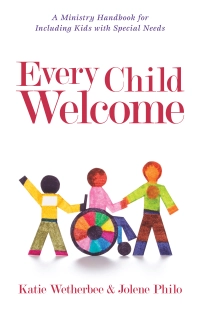
***********************************************************************************************************

KM Logo UpdatedKey Ministry has assembled resources to help churches more effectively minister to children and adults with ADHD, anxiety disorders, Asperger’s Disorder, Bipolar Disorder, depression and trauma. Please share our resources with any pastors, church staff, volunteers or families looking to learn more about the influence these conditions can exert upon spiritual development in kids, and what churches can do to help!

Posted in ADHD, Advocacy, Autism, Families, Hidden Disabilities, Inclusion, Key Ministry, Mental Health, Strategies | Tagged , , , , , , , , , , | 1 Comment

5 ways you can minister to a family with a failed adoption

IMG_6273 Dingle FamilyAdoptions are complex, but our first two followed the expected processes with few hiccups. The third failed. I was already planning to write this post before my personal experience, because I think this topic needs to be addressed. Now, though, I’m writing as much from my emotion as I am for your instruction.

With pregnancies, we know they end in a variety of ways. We hope for an uncomplicated birth of a live child after a full pregnancy, but we know that doesn’t always happen. So it is with adoptions.

Before I dive into the list, I want to note that this post focuses on prospective adoptive families. They are not the only members of the adoption triad, though. We in the church need to learn to love and support birth families and adoptees as well. While this post primarily centers on how to love only one member of that triad, the intent is to equip readers with a focused post rather than to dismiss any other roles without adoption.

To minister to a family with a failed adoption…

  1. Give them permission to grieve.

I don’t know why we minimize pain, but that’s the default for many of us. Adoption loss is a loss. I know that might seem obvious, but it isn’t always treated as such. Perhaps because, unlike a miscarriage, the child is alive and (usually) well, just not being raised with the family who planned to love him or her. But while the child isn’t lost to this world, he or she is lost to the family. Their grief is real. The dreams they had for the child need to be laid to rest. Give them permission to mourn those losses.

  1. Enter into their brokenness.

When loved ones were hurting, Jesus showed up. He knew he would be raising Lazarus from the tomb, but he wept with his friends anyway. He entered into their grief and was broken with them in it. Just as minimizing pain can be the default for some folks, others of us disappear. We back off or get silent or pretend the pain never happened, and we don’t realize those acts can sting too.

  1. Set aside judgments.

When a friend’s adoption fell through in a country known for corruption, someone told her, “Well, that’s what you get choosing to adopt from there.” Likewise, a friend whose adoption of a teenage boy didn’t turn out like they planned was met with “well, we thought something like this would happen” from members of their church. Ouch. These stories play out again and again, all with different versions of “I told you so” or “you should have known better.” Yes, adoptions can fail. But so can pregnancies, yet we don’t usually tell women grieving over stillbirths, “well, that’s the risk you take.” Loving kids is always both risky and worth it. Even when a prospective adoptive parent was naïve or made poor decisions, now’s not the time to slam them over those.

  1. Encourage them to place their hope (and anger and sorrow and everything else they have) in God.

Trusting God means being authentic with him. That means hoping in him, but it also means coming to him with our fears and fury and broken hearts. For me, the past few months which have included not only our failed adoption but also the deaths of a close friend by suicide and another friend’s son by a rare immune disorder. To say I’m reeling would be an understatement. I told a friend today, “If I didn’t trust God, I’d think he was mean or cruel. But because I trust him, I have to believe some good purpose is in all this pain.” God and I have had some hard talks lately. If you read the Psalms, David had it out with God sometimes too. If you try to shut down the authentic feelings of grieving friends, then you’re saying you’re not a safe place for them to bring the hard stuff. If you’re a ministry leader, they might also receive the message that your church or even your God is not a safe place for their hurts either.

  1. Don’t use their tale as an adoption horror story to someone else.

When we started our first adoption, people felt the need to share the worst adoption stories they had ever heard. These stories included adoption failures among other hard topics. Every other adoptive family I know has had a similar experience. I don’t know if the tale tellers intend to inform us of possibilities, scare us from adopting altogether, or prepare us in case an adoption hardship hit home, but please keep our pain in confidence instead of making our circumstance into an urban legend.

Finally, if this is a new road for you to walk and you need help, please remember that Key Ministry offers free ministry consultation service. We’re happy to help if we can.

***********************************************************************************************************

2000x770 S DINGLE CHRCH4EVCHILD 2Check out Shannon Dingle’s blog series on adoption, disability and the church. In the series, Shannon looked at the four different kinds of special needs in adoptive and foster families and shared five ways churches can love their adoptive and foster families. Shannon’s series is a must-read for any church considering adoption or foster care initiatives. Shannon’s series is available here.

Posted in Adoption, Families | Tagged , , , , , , , | 2 Comments