What if you have a disability? Chuck Swindoll’s teaching this week at Insight for Living

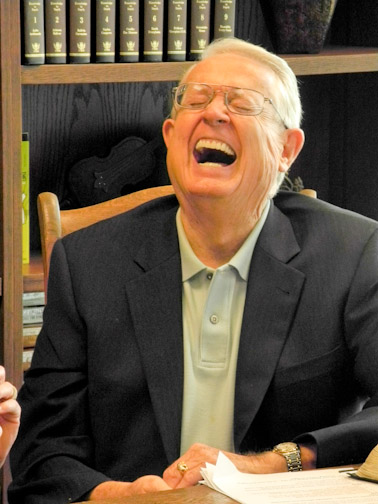
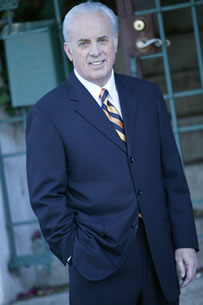
Chuck Swindoll 10/7/11We heard about a couple of fabulous resources of interest to our readers being offered by Colleen Swindoll-Thompson and our friends over at Insight for Living in the next week or two that we’d like to share.

First, Chuck Swindoll will be teaching on the topic What if you have a disability? this coming Tuesday, Wednesday and Thursday (February 24-26) as part of his current series What If? airing from January 26-March 16. Here’s a description…

What if . . . ? What a haunting, yet profound question. We’ve all found ourselves in situations where we have felt helpless to determine our next step if the unknown were to happen. Either due to lack of knowledge or lack of ability, we wonder what we should do.

And yet, that very act of wondering, of asking questions like, “What If You Have a Disability?” stands as a perfect opportunity to gain biblical wisdom about a difficult subject.

As you make your way through this series about the difficult questions and decisions we face, remember that it’s in wrestling with the questions that we come closest to the Lord.

Here’s a link to access the broadcasts this week if you’re unable to listen through a local station or SiriusXM.

During the month of March, Colleen’s new book When Life Isn’t Fair: What They Didn’t Teach Us in Sunday School will be available as a premium to those who donate to Insight For Living.

Colleen's bookTo love someone, or to be loved through tough circumstances is a gift-an opportunity to experience the fragile beauty of those made in God’s image. And it’s a reminder that all people stand broken in front of God.

In her book, Colleen weaves together Biblical truth, practicality and her own growth experiences as a mother of a son with special needs. She writes with raw honesty about her personal crisis of faith as well as the hardship and humor that come with learning to trust God through difficult times.

Colleen’s book offers a touch of hope, help and a touch of humor for those seasons when life is difficult or downright disabling.

We’ll have more here on Colleen’s book when available next month. In the meantime, we encourage you to check out her blog for a sample of the help and encouragement she’ll be offering through her book.

***********************************************************************************************************

slide-jonathan-colleen3Join us every first and third Monday of each month at 10:00 PM Eastern/9:00 PM Central at keyministry.tv for “Chat with Colleen,” an opportunity to interact live with Colleen Swindoll-Thompson live as she shares full-length versions of the video interviews of ministry leaders made available through Insight for Living’s Special Needs Ministry. Replays of Colleen’s interviews will be available at 8:30 AM, 6:00 PM and 10:00 PM Eastern daily.

Posted in Advocacy, Resources, Spiritual Development, Stories | Tagged , , , , , , , , | 1 Comment

One father’s spiritual legacy…

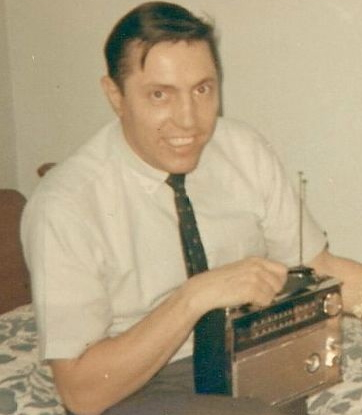
Dad and Kids - Version 2Twenty years ago today, my dad went home to be with Jesus.

While I wasn’t there when he died, the Lord honored him with a pretty remarkable sendoff.

My dad was raised in a Catholic home, but became “born again” around the time I started high school. He became a passionate student of the Bible, and for many years co-lead the Christian Businessmen’s Bible Study in our hometown of Boardman, Ohio. He served faithfully on the Board of the ministry charged with feeding and housing the homeless in nearby Youngstown. He had been asked to become a national speaker for CBMC near the end of his life, but developed heart problems and colon cancer shortly thereafter and was unable to travel.

Throughout his life, he was actively involved in the ethnic church where he was baptized. One of his passions was teaching the Bible to his fellow Roman Catholics. He developed a popular course in which participants could cover the entire Bible.

On his last day, he had the opportunity to go to his favorite breakfast place with my mother (Bob Evans)…although I suspect he would have enjoyed Chick-fil-A had they made their way into Ohio in the early ’90s. They then went to the church near their home where he taught. A woman who was active in my father’s Bible Study had died, and her family had asked him to deliver the eulogy at her funeral.

St. CharlesMy dad finished the eulogy, looked at my mother, stepped down from the pulpit and died at that very moment of a massive heart attack, right at the foot of the altar, in front of the cross.

While I was obviously bummed about temporarily losing my dad, I couldn’t help but be happy for him for achieving his life’s goal…getting the opportunity to meet Jesus. I thought it was incredibly cool that he was called home while doing what he loved in God’s house.

His outlook on life was pretty much summed up in Philippians 1:21-23…

For to me to live is Christ, and to die is gain. If I am to live in the flesh, that means fruitful labor for me. Yet which I shall choose I cannot tell. I am hard pressed between the two. My desire is to depart and be with Christ, for that is far better.

He made quite an impression on my wife when he was excited about having had a heart attack because to him it meant he was getting closer to meeting Jesus. He wanted to meet Paul next, because he had a laundry list of questions he hoped to get clarified about the Epistles.

Clearly, seeing the way he lived over the last twenty years of his life made a big impression on me and my family.

Friday night, I was hobbling back into the hotel after having the opportunity to speak at the Joni and Friends’ Global Access Conference thinking that I’m getting the chance to finish the work that my dad started. He never got to go on any speaking trips before he became too ill to travel.

A couple of months ago, I was digging through one of those cabinets where one hides old news clippings and found an obituary written about my dad in the Catholic Exponent. While my dad was a teacher for a time, his primary career was as a broadcaster. He had a classic, deep voice for radio, and was an early rock and roll DJ in the late ’50s. He later went on to start the telecommunications department at Youngstown State University, launching a public radio (WYSU) and television station (WNEO/WEAO). After he retired, his last job was working for the Catholic Diocese of Youngstown, helping to grow a cable television station started to reach people in his area who couldn’t get to church.

Two entirely different upbringings and career paths, but yet we ended up with pretty much the same task in the Kingdom, separated by a generation. I do wish I’d inherited his voice and his skills as a baseball player as opposed to his sensory stuff…he hated long-sleeve dress shirts because he didn’t like how they felt, and I have the same issue, but with collared shirts and ties. Coincidence? It’s clear to me that God orchestrates our paths.

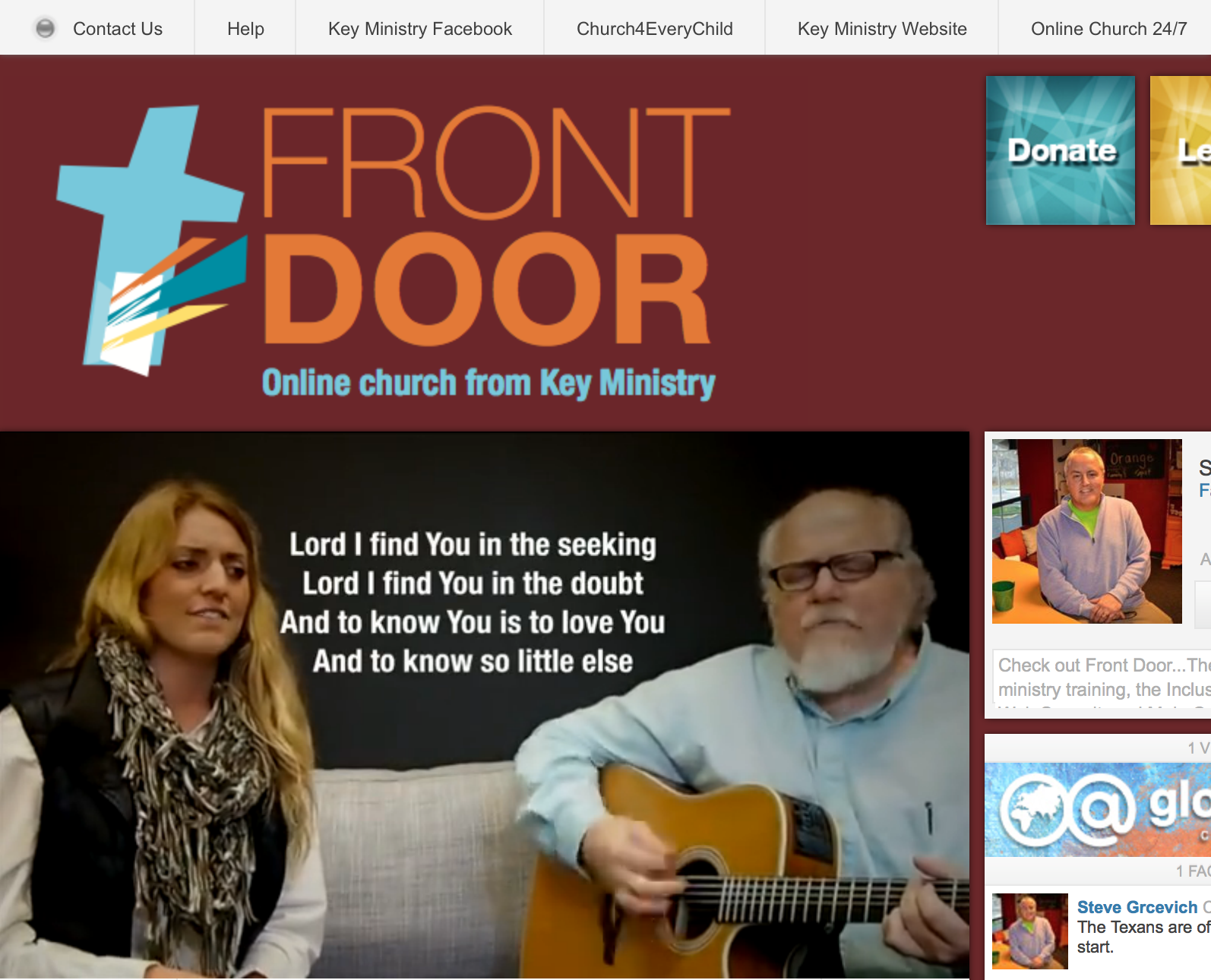
Stephen Front Door 3While I’m glad to celebrate the 20th anniversary of my dad’s homecoming this weekend, there are only two things I’m sad he missed out on…getting to know his grandkids and being on the team for keyministry.tv and our Front Door online church. He was quite the “techie” in his time, and he would freak (in a good way) if he saw the technology that’s available for sharing the Gospel with families impacted by disability.

I’m grateful for the opportunity to take the next step with the work God gave my dad to do and mindful of trying to be as good a model for my kids as a spiritual leader as he was. I do think it would be pretty cool if I could be serving somewhere when it’s my turn to meet Jesus and hear what he unquestionably heard twenty years ago today…

“Well done, good and faithful servant.”

Posted in Spiritual Development, Stories | Tagged , , , , , , , | Leave a comment

Including Kids and Teens With Mental Illness in the Church and Community…#globalaccess2015

shutterstock_15545299_2Here’s the Slideshare of Dr. Grcevich’s presentation today at the 2015 Global Access Conference, presented by Joni and Friends…Including Kids and Teens With Mental Illness in the Church and Community.

You can download a .pdf of the presentation here.

Here’s a link to Dr. Grcevich’s Slideshare account to access earlier Key Ministry presentations, along with lectures offered as a faculty member at Case Western Reserve University School of Medicine and Northeast Ohio Medical University.

***********************************************************************************************************

KM Logo UpdatedKey Ministry has assembled resources to help churches more effectively minister to children and adults with ADHD, anxiety disorders, Asperger’s Disorder, Bipolar Disorder, depression and trauma. Please share our resources with any pastors, church staff, volunteers or families looking to learn more about the influence these conditions can exert upon spiritual development in kids, and what churches can do to help!

Posted in ADHD, Advocacy, Anxiety Disorders, Autism, Bipolar Disorder, Families, Hidden Disabilities, Inclusion, Key Ministry, Training Events | Tagged , , , , , , , , , | 1 Comment

Matt Walsh, responsibility, stigma and ADHD

shutterstock_68372575Matt Walsh is a popular blogger in the Christian community. He has over 250,000 Facebook followers, his writing is featured on other websites and he describes himself as being part of a community engaged in the battle for the traditional family. He’s developed his following (in part) by making very controversial statements about hot-button social topics. It’s how he makes his living and supports his family. I’d like to consider this post my contribution to his family’s sustenance.

In the middle of attending a wonderful conference on the topic of how the church can better care for and include persons with disability and their families, the mother of one of my patients messaged me with a link to Matt’s blog post from today on ADHD after her teenage son read the post this morning and was concerned about what she thought. I’ll share a brief sample with you to give you the flavor of his piece.

I have all of the “symptoms,” but I don’t have a disorder because there is no disorder. There might be people with legitimate disorders who get labeled with this one, but this one, this specific thing we refer to as ADHD, is a godforsaken lie. I don’t care who is upset by that statement, who will stop reading me because I said it, or how many angry and disappointed Facebook comments are coming my way. ADHD is a fraud…

I’ll share a little more. Having read Matt’s stuff in the past, I often find a kernel of truth in some of his statements that sometimes gets lost in a presentation style that seems designed to generate clicks, tweets and Facebook shares…

ADHD is not a matter of psychology or neurology, but of institutions. Schools can’t deal with kids who act this way, parents don’t want to deal with them, daycares aren’t equipped to deal with them, and society at large has no patience for any of it — so, we call it a disease and start passing out the prescription strength speed.

Does any Actual Illness work this way? If you go to the doctor complaining about bronchitis, will he ask you if the bronchitis is “creating problems at work on an ongoing basis”? No, because that doesn’t matter. Bronchitis is bronchitis is bronchitis. But ADHD is only ADHD in very specific circumstances. Public school, by the way, is a very specific (and temporary) circumstance. A child’s inability to succeed in that environment might be troubling for his parents, but it is not itself proof or indication of a mental defect. Why don’t we ever stop to consider that the defect lies in the institution that cannot function unless millions of its students are hopped up on drugs?

It’s true that with many of the conditions we categorize as mental illness in kids and teens, kids experience difficulty functioning in some environments, but not others. Matt’s personal story is very consistent with what I see among the kids we serve in our practice as they get older…when they’re old enough to either choose their area of study in school or choose a job with functional demands that fit the way they process and experience the world around them, ADHD becomes far less of a problem.

shutterstock_177465083So…when do these traits cross the line into becoming a “disorder” for which treatment (medication, educational interventions, therapy) is indicated? When they significantly interfere with the individual’s functioning in two or more major life domains (I look at these domains as school/work, family, friends, and community).

What Matt’s right about is that the expectations we have for kids in our educational system  in terms of their capacity to sustain focus and generate gobs of academic product aren’t consistent with the way many of our kids are wired. Ben Conner described this phenomena in his wonderful little book, Amplifying Our Witness

“It is our culture that disables.”

“When one is disabled, the problem is not really that they have impairments and social skill deficits. The issue at stake is that they live in an ‘ableist’ culture that rarely affords them the space or opportunity to make their unique contribution to society and does not lift up the value of choosing them as friends.”

Unfortunately, the consequences of failure in school are far more significant now than they were for my generation. Matt may have failed chemistry in high school, but modern-day Matts who fail chemistry don’t qualify for the scholarships that they need to attend college. The battles that parents engage in to get their kids with ADHD through school destroy the relationships that form the foundation of the influence parents have in shaping character.

IMG_0905The kids I see in my practice don’t want to have this. Much to the chagrin of the drug companies, most patients with ADHD take medication only take it when they absolutely need it. Try telling a kid who spends six hours a night doing the schoolwork that their friends get done in two that they don’t have a disorder. Or the kid who is having an anxiety attack at home after forgetting to bring home the right books from school for the third time in a week. Or the kid who struggles with impulse control and emotional self-regulation to the point that they can’t make or keep a friend? Or the family that has been asked to leave church because their child struggles with self-control?

The vast preponderance of parents who come through our practice are slow to accept a diagnosis of ADHD and anxious to find alternatives to medication as a treatment strategy. The ones who are out there looking for a pill after downloading a checklist from the Internet pretty much conclude that we’re not the place for them before they get to the end of our phone screen in the office. Not many realize that the odds of a marriage ending in divorce if a child has ADHD are greater than those marriages in which a child is diagnosed with autism.

Our parents are fighting to do the best they can for their kids in the face of an educational and healthcare bureaucracy with a propensity for pounding square pegs into round holes. They’re uncomfortable enough without someone in their culture with a platform shaming them by implying that their kid’s problems may result from parenting issues while communicating to their friends and neighbors that their kid has a non-existent condition. Way to go in supporting the traditional family, Matt! Sarcasm intended.

I’m speaking this Friday on the topic of how churches (and the community) can better serve and include kids with mental illness. One of the challenges we face in getting churches to serve families with the issues we see in our practice is that no one sees a need for intentional disability ministry outreach for those who aren’t thought to have a disability. Matt and others like him aren’t making my task any easier.

Responsibility comes with having a platform. Articles like this one…articles that leave my teenage patients questioning whether they have a genuine condition, have consequences. Google “Jenny McCarthy” and “measles,” for example.  We can do better than this in the Christian subculture.

For your reading pleasure, I direct you to the 148 published papers I found on the National Library of Medicine website using the search terms “neuroimaging,” “genetics” and “ADHD.”

***********************************************************************************************************

ADHD Series LogoKey Ministry has assembled a helpful resource page for church leaders and parents addressing the topic of ADHD and spiritual development. This page includes our blog series on the topic and links to helpful videos and resources for pastors, church staff, volunteers and parents. Access the resource page here.

Posted in ADHD, Controversies, Key Ministry, Mental Health | Tagged , , , , , , , , , | 10 Comments

Shannon Dingle…Why do you keep writing about how broken kids in foster or adoptive placements are?

© 2014 Rebecca Keller PhotographyA reader gently asked me this, and I immediately understood what she meant. I’ve written about trauma and attachment difficulties, and I’ve written about permanent brain changes resulting from institutionalization at an early age. I wrote a whole post about how “all kids do that” dismisses the hard histories that have shaped some of the behavioral responses our children show. I spoke at the Global Access Conference about the special needs of foster and adoptive families.

So, yes, I can see how it might seem like I’m saying that kids in foster or adoptive placements are broken while other kids are whole. That’s not what I’m saying, though, so I want to take a moment to clarify.

We are all broken. In Genesis 1, we see a perfect world in which everything God created was good. In the absence of sin, everything in the garden would have stayed good and pure and right and perfect. In the garden, adoption and foster care would never be necessary because no parents would die or be unable to care for their children or get sick or abuse their offspring or be coerced into giving up parental rights or neglect the ones born to them or give birth to a child outside of a loving and safe family environment.

But then we know what comes later in that book and what effects the first sin and all the ones that came after, including yours and mine, have reaped on this world. The need for adoption and foster care is one result of the brokenness of this world, and those of us parenting children who entered our home through adoption or foster care see daily the impact of that particular kind of brokenness.

But all of us are broken. I see the impact of other kinds of brokenness when the daughter who grew in my womb comes home in tears because someone made fun of her hair and when a healthcare professional rudely said “What’s wrong with him? Get it together, hon,” to my son whose sensory issues were manifesting a meltdown that didn’t seem age appropriate. I see it in the slumped shoulders and quivering lips of my dear ones when I lose my temper and yell at them instead of respectfully addressing whatever issues are at hand. I see it in our marriage, when a disagreement can escalate because I tend to shout more because that’s what my family did growing up while my husband withdraws more because that’s the behavior he learned at home.

It’s true, though, that I often write and speak specifically about brokenness in adoption and foster care. That observation is valid. We at Key Ministry are seeing an increase in the number of families telling us of challenges in church involvement after adopting and foster care, an uptick in the number of churches asking for help in including these families well, and – in Steve’s case as a child psychiatrist – a rise in the number of families seeking professional help for the children who entered their homes through adoption or foster care. At the same time, we’re seeing positive stories shared without the challenges (often because sharing those wouldn’t be respectful to the children involved), sermons about the need for orphan care with no comment on the difficulties that may arise, and memes that romanticize and glamourize the brokenness that leads to adoption or foster care.

Do I love adoption and foster care? Yes. Do I think the church ought to be involved in both locally and globally, as well as family preservation efforts to prevent their need? Certainly.

But I also want to make sure we’re telling the whole story. I’m not saying “don’t adopt” or “stop it with those memes” but rather standing in the gap between Hallmark movie versions of adoption/foster care and the hard realities that sometimes persist after placement. I’m saying “we’re all broken, but it seems like we’re glossing over this kind particular kind of brokenness.”

As Christians, we are people of the Truth, so let’s act like it by telling the whole story and loving children and families in the midst of both the beauty and the brokenness of adoption and foster care.

Updated May 27, 2016

ga-ad-300x250-2***********************************************************************************************************

NCTSDKey Ministry offers a resource page on Trauma and Kids to pastors, church staff, volunteers and families. The resource page includes links to all of the posts from our Fall 2013 blog series, links to resources from Jolene Philo, the National Child Traumatic Stress Network and Empowered to Connect. Check it out today and share the resource page with others who would benefit.

Posted in Adoption, Advocacy, Controversies, Foster Care, Key Ministry, Training Events | Tagged , , , , , , , , , , , | 27 Comments

Dr. Oren Mason…Wondering what a pill will do to me?

oren_informal_close_up_websizeEditor’s note…Dr. Oren Mason is serving as our guest blogger today. We’re delighted to share a first-person account from a highly respected physician and author of his personal experience with taking medication for ADHD.

Those who have ADHD were born with it. You learn everything with an ADHD brain and never know what learning, living or executing a plan are like for folks without ADHD. When you figure out that others have better emotional and executive self-control than you, you can’t really imagine what it’s like to be them. Imagining better self-control is about as easy as imagining living on the other side of the world. You can guess dozens of details, but thousands never occur to you, till you get there.

When I held the very first ADHD pill I took in my hand, I tried to imagine what I would be feeling in an hour. An hour later, the answer was ‘nothing’. By the end of the day, the answer was still ‘nothing’. I felt no joy, no elation, no energy, no buzz, no euphoria, no calm, no peace and no different. But looking back on the day, there were a thousand differences from the patterns of the previous forty years that were all small, but collectively stunning.

I learned a lot about ADHD in the first few days after I started medication for it by what changed and what stayed the same. I found myself able to do things that I had never been able to do before. It was far more exciting for me in some ways, than for my wife.

“Guess what I can do?” I prodded her excitedly. “I can simultaneously talk to patients AND keep mental track of the time!” This was very new and different. I could think of a world of useful things that could be done with such a super-power. Not get an hour behind my schedule every day for example.

Her response couldn’t have been more deflating. “Yeah, hon, everybody can do that.” She didn’t even look up from the book she was reading.

“Well I couldn’t before the meds, and I can now,” I replied.

She looked at me with utter incredulity, like I had just told her I’m Martian and need to catch a shuttle back there now. Her concept of ADHD was changing just as fast as mine. The surprise in her eyes relaxed, and she grew more reflective.

“I never imagined you couldn’t do that,” she said. “I thought you were choosing not to.”

We had been married almost 20 years, and she had never known this stunningly basic fact about me. She assumed that I wanted to come home late every night more than I wanted to be with the family. There were plenty more surprises those first few days.

I drove home from work one night (an hour earlier than usual) in crowded, but fast-moving traffic. The driver in front of me was very erratic and irritating. I felt the manly impulse to drive right up her rusty tailpipe, flashing my lights and generally intimidating her into driving less erratically. (“Great plan with a high chance of success!” you’re probably thinking.) The thought of arriving home safely and calmly also flashed through my mind, and I backed off a couple car lengths.

“Does this pill make me a driving wimp?” crossed my mind. The only answer I could think of to my own question was “No, given the choice, I’d rather relax and think my own thoughts than to be a butt-head.”  Once again, it was a brand new thought for me that I had a choice of reactions to this annoyance, and the simplest choice was to relax and not be obnoxious.

The most remarkable thing, though–and it occurred time and time again–was how simple small work tasks became. I could look at several necessary jobs, pick the top priority and start working on it with less effort than it takes to read this sentence. People who don’t have ADHD probably never imagine how much effort goes into the smallest task, the simplest morning routine, nor do they know how frustrating it is to spend that much effort and still do it badly.

With ADHD, the amount of internal wrestling you go through to start a mundane task is many times the work of the task itself. If you’ve ever spent 10 minutes getting your teenager to spend 2 minutes taking out the trash, you know what I mean. People with ADHD cajole and plead with their inner teenager to finish every item of the morning routine, to start every simple task of the work day, to pick up every piece of clutter.

Experts refer to this as “motivational impairment”, but it really deserves a much more descriptive name, such as “the soul-wrenching effort to shame yourself into doing small, mundane tasks, by imagining that God and your ancestors will hate and disown you if you don’t”. “Motivational impairment” is the short-cut the experts use to save time in their busy research labs.

The need to start a task occurs hundreds of times in a day. People who do hundreds of tasks in a day deserve to feel tired, and they deserve their rest at the end of the day. People with ADHD may only accomplish dozens of tasks, because of the exhausting inefficiency of wrestling our minds from task to task. We may be working harder than anyone knows behind the scenes, but only get credit for the work accomplished. There is no credit for the motivational “pre-work”.

Being able to do a full day of simple work is the most amazing thing I experienced after starting medication. It’s like waking up and taking a deep, delicious breath of the morning air, and realizing that—as far back as you can remember—all you’ve ever known is breathing through a straw.

***********************************************************************************************************

UnknownDr. Oren Mason lectures and teaches about ADD/ADHD to professionals, educators, patients and families across North America. He serves as Associate Professor in the Department of Family Practice at Michigan State University College of Human Medicine and Clinical Associate Instructor at Wayne State University School of Medicine’s Grand Rapids Medical Education Consortium.

He lives in Grand Rapids, MI with his wife, Christine, co-owner and operations manager of his private practice, Attention MD. They have two sons and five Sudanese foster children.

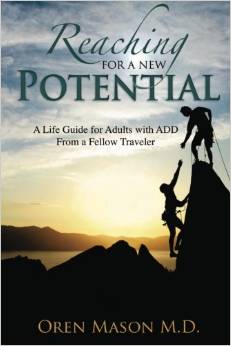
Dr. Mason’s first book, Reaching For A New Potential: A Life Guide for Adults With ADD From a Fellow Traveler is available through Amazon.

 

Posted in ADHD, Advocacy, Hidden Disabilities, Key Ministry, Stories | Tagged , , , , , , | 29 Comments

Why many in the church don’t see ADHD as a disability…

shutterstock_185745920In the fourth installment of our series, Sin, Mental Illness and the Church, we look at the sources of a mindset that exists in many churches that ADHD isn’t a real disability and fails to recognize the challenges parents of kids with ADHD might face in regularly attending church.

“People in the church believe they can tell when a disability ends and bad parenting begins.”

This statement was made by a parent from my church during a disability awareness Sunday service conducted in the late ’90s. Sadly, it summarizes the experience of church reported by all too many families passing through our practice over the last 20+ years.

Within the evangelical subculture, some very prominent leaders and organizations have espoused opinions on the diagnosis and treatment of ADHD that would lead parents of kids identified with questions as to whether they or their children are welcome at church.

macarthurbioJohn MacArthur is a highly respected pastor and Bible teacher from Southern California. I grew up listening to his teaching…my dad accepted Christ around the time I started high school and MacArthur’s radio program was on in the background just about every morning when I was getting ready for school. It’s probably safe to say that I may be the only child psychiatrist in America who owns (and uses) MacArthur’s Bible Commentary. Nevertheless, he’s a big proponent of the Nouthetic Counseling movement and has some decidedly countercultural things to say about ADHD

“Parents who have been programmed not to spank them because that’s been reclassified as child abuse, parents who really don’t know what moral system to teach them, parents who are too busy to bother largely are now trying to deal with these children who are angry because they’re not given the love and affection and attention that they need, who are uncontrolled because they have not been taught self-control. Parents are now trying to deal with these children in the most frightening ways.

It takes a lot of time to train a child, a lot less time to give him a pill. But turning your disobedient child, your child that lacks self-control, maybe your angry child because that child is not cared for properly, turning that child into a drug addict, is that a solution?”

“You know who they’re describing? All of our children. Don’t kid me, that’s all of my children. That’s all of my grandchildren. That’s me. I don’t have a disease. Every kid is like that if he’s not taught self-control.”

“I had a lot going on in my head, and I couldn’t concentrate on just one thing because I was busy with a whole lot of things. God made me a certain way, wired me to be able to deal with a lot of stuff. And that’s my life now. I’m glad my parents didn’t turn me into a drug addict. I didn’t have a disease or a disorder, that was just me.”

Pat Robertson has said some pretty provocative things over the years on the cable television channel operated by his ministry. Some statements he made a couple of years ago about adoption got the attention of many of our readers. Pat had some especially interesting things to say in the last minute or so of this video segment looking at one alternative approach to treating ADHD…

john_rosemond_headshotJohn Rosemond stands out as perhaps the most prominent (and vocal) critics in the church of the diagnosis and treatment of ADHD. Rosemond is a popular speaker at church-based parenting events, and authored The Diseasing of America’s Children: Exposing the ADHD Fiasco and Empowering Parents to Take Back Control. He has some provocative things to say about ADHD in his book…

“Where ADHD is concerned, neither verifiable, objective evidence nor replicable experimental results exist to support the claims of the ADHD establishment. We are convinced, therefore, that the science behind ADHD and other childhood behavioral disorders it has birthed (primarily, oppositional defiant disorder and early-onset bipolar disorder) is not science at all.”

“We are alarmed that so many parents are allowing members of the Establishment to manage their children for them through the use of powerful, potentially hazardous psychotropic drugs. As we will show you, these drugs are unnecessary. We have seen enough children diagnosed with ADHD begin behaving functionally at home and school without medical intervention to know that this is not a medical issue. We further know that parents who accept responsibility (not blame) for their children’s problems take the first step toward self-empowerment and disentangling.”

“But is ADHD a disorder? Does its nomenclature accurately reflect that there is something amiss with the children in question, that for whatever reason-biological or otherwise-they can’t “think straight,” and thus their behavior is often chaotically disorganized? Or is attention-deficit/hyperactivity disorder simply a more scientifically-sounding way of referring to what, not so long ago, people simply called a spoiled brat?”

Rosemond has lots of good parenting advice to offer and encourages parents to raise kids who will accept responsibility for the consequences of their own behavior. He also appears to have won acceptance within evangelical culture. He has interviews and podcasts over at the Focus on the Family website, and one of his books was a premium for those who contributed to their ministry.

One critique of mainstream psychology and psychiatry that Rosemond and proponents of Biblical Counseling share that I fully agree with is the failure to recognize the sinful nature each and every one of us is born with. I like to remind my atheist/secular progressive colleagues of this reality when their two and three year olds start hitting, kicking and tantruming…behaviors they surely hadn’t been taught or observed at home! I would question the extent to which the twenty-month old child who was the subject of this consultation was capable of exercising free will…

Had this mother not been willing to accept that her child’s sinful nature had awakened, she and her husband might have fallen for the currently popular notion that any persistent behavior pattern that deviates ever so slightly from the norm is a sign of either psychological or physiological problems. Both of these explanations—which are really two sides of the same post-modern coin—deny the sinfulness of human nature, deny that even a toddler exercises free will, and deny that a child is (and should therefore be held) fully responsible for his behavior. These parents might have wasted years, not to mention thousands and thousands of dollars, pursuing a chimera. They would have begun, when their child was not yet two, ceding authority in his life to medical and psychological professionals who would have had a field day with his “case.”

Ed WelchSome voices within the Biblical Counseling field have come forward to temper criticism of the diagnosis itself and parents who pursue the mainstream treatment approaches recommended by the American Academy of Pediatrics and the American Academy of Child and Adolescent Psychiatry. Ed Welch, who had previously written a book critical of the diagnosis and treatment of ADHD, posted a very thoughtful article on the website of the Christian Counseling Educational Foundation (CCEF). Here’s a brief excerpt…

These are helpful observations but now the real fun begins. With our spiritual lenses we can see even more as we place these observations into a much richer context.

Wisdom: Many of our daily decisions are moral ones but there are also decisions that are not essentially right or wrong, though Scripture’s wisdom still guides us. For example, a decision to embezzle money is a moral one but a decision about how much money to save or give away is not; it is a matter of personal wisdom. In the same way, decisions about medication are not right or wrong; instead, medication might be wise for some children and unwise for others. This should take some of the pressure off parents.

As the series progresses, we’ll discuss how our attitudes and understanding of disability in the church has led to specific conditions being included (or excluded) from the scope of what most churches understand as the purview of disability ministry.

***********************************************************************************************************

ADHD Series LogoKey Ministry has assembled a helpful resource page for church leaders and parents addressing the topic of ADHD and spiritual development. This page includes our blog series on the topic and links to helpful videos and resources for pastors, church staff, volunteers and parents. Access the resource page here.

Posted in ADHD, Advocacy, Inclusion, Key Ministry, Mental Health | Tagged , , , , , , , , , , , | Leave a comment

Wow!

IMG_0815When I pulled into the parking lot of my church 45 minutes before the scheduled start of yesterday’s Northeast Ohio Special Needs Ministry Conference hosted by Bay Presbyterian Church and saw the lot looked like Sunday morning, I knew we were in for a very unique day.

Well in excess of 300 people spent their Saturday brainstorming how the church might more effectively welcome individuals and families impacted by disability. The folks I met over the weekend were very enthusiastic.

Not only would it appear that God is preparing something big in Northeast Ohio, but elsewhere as well. We were filming some future training with Barb Newman in front of a intimate audience on Friday afternoon. Out of the dozen or so guests, two were from Ohio, and two thirds came from 7+ hours away. Here’s Pastor Gary Wynn from Bridgeton, NJ…

Luz Roa and Melissa Rodriguez were among five women who drove together from Manhattan to attend the conference…

Cathy Calloway came 748 miles from Lakeville, Minnesota to be with us…

Here’s what I’ll remember from the weekend…

  • IMG_0751I’m so encouraged to see so many people from throughout our home region willing to spend a day examining how we can more effectively welcome kids, families and adults impacted by disability into our churches.
  • The experience of seeing so many very talented people coming together seamlessly while using their gifts and talents for a common purpose was truly unique. We had some very good speakers this past weekend. There was no evidence of any pride or ego. The support team from the church was flawless in pulling off a respite event for fifty kids, a dinner for the parents of the kids attending respite and a conference for over 300 attendees the following day. Including snacks and lunch. All for free.
  • Everybody I encountered seemed happy. Especially the kids attending Friday night’s respite event.

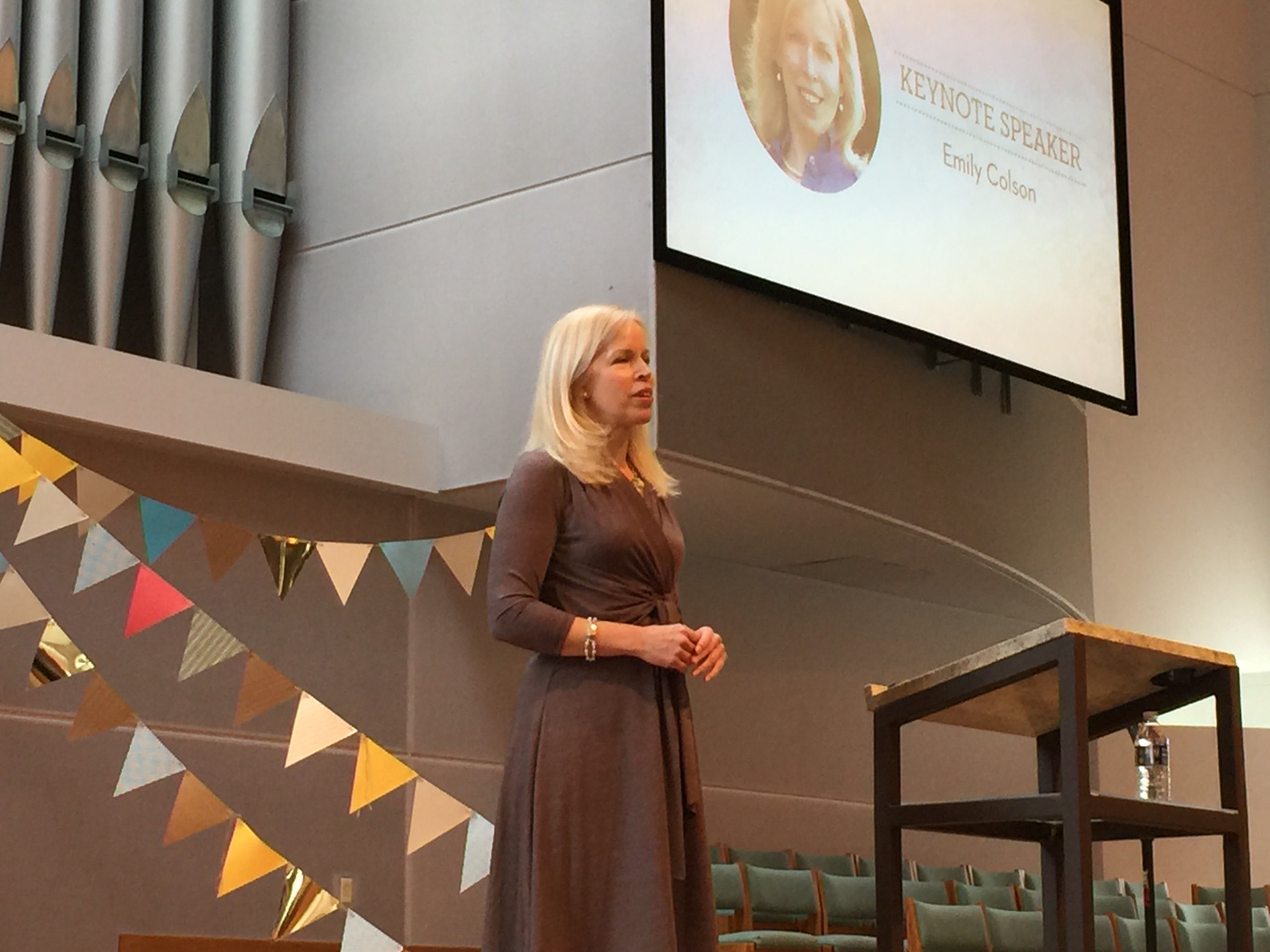
IMG_0828A huge thank you to everyone involved! Emily Colson did a fabulous job as Keynote speaker. Barb Newman (as always) had wonderful, practical advice for including kids with disabilities at church. We’re very much looking forward to sharing two of her presentations from Friday through keyministry.tv in the upcoming months. Two current Board members (Carrie Lupoli and Libby Peterson) along with a former Board member (Dr. Cara Daily) are very gifted presenters in their own right. Deb Petermann from Joni and Friends Ohio, Ryan Wolfe of First Christian Church, Canton and Christine Boyle offered a well-rounded program.

Most of all, I am so proud of my church! Our Special Needs Ministry Director (Beth Golik) and our Children’s Ministry Director (Julie Hazlett) did a truly remarkable job organizing and directing dozens of volunteers as plans for a conference for fifty regional leaders mushroomed in size and scope. I’ll leave it to one of our teaching pastors (Matt Guertin) to explain what the weekend was all about…

***********************************************************************************************************

shutterstock_24510829Key Ministry is pleased to make available our FREE consultation service to pastors, church leaders and ministry volunteers. Got questions about launching a ministry that you can’t answer…here we are! Have a kid you’re struggling to serve? Contact us! Want to kick around a problem with someone who’s “been there and done that?” Click here to submit a request!

Posted in Advocacy, Hidden Disabilities, Inclusion, Key Ministry, Stories, Training Events | Tagged , , , , , , , , , , , , , , | 1 Comment

Disability ministry has captivated my heart…Bekah Behnke

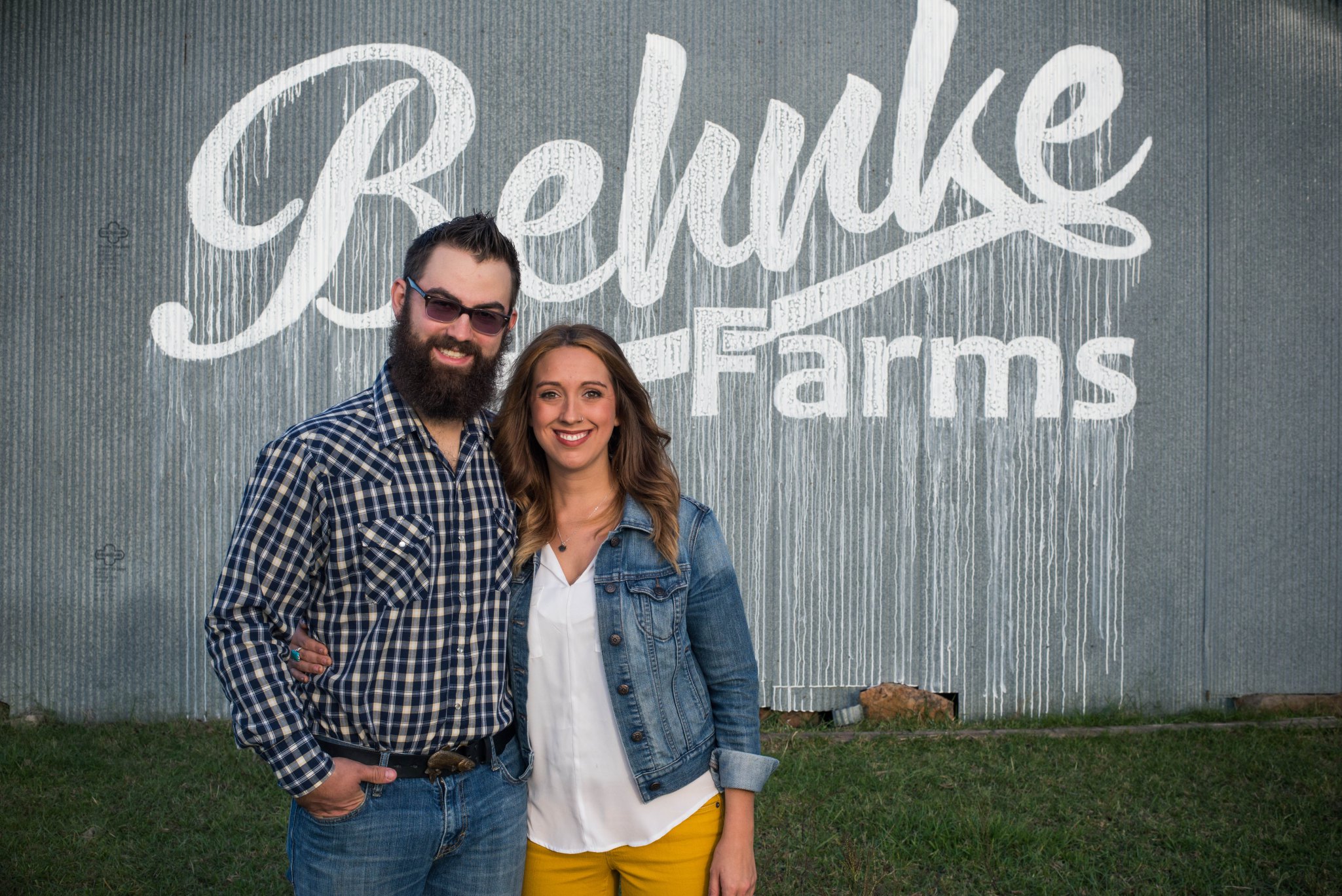
farm-picture-of-usGreetings, my fellow Christ followers. I am so honored to be asked to share my heart with you. My name is Bekah Behnke. I am a Missouri girl through and through. I live on a farm with my amazing husband, Kevin and our many animals.

Disability ministry has not only stolen my heart, but also captivated it. There is not a time in my life that I was not surrounded by God’s beauty shining through my friends with disabilities. In first grade I had a boy in my class with a learning disability. I remember sitting by him at lunch because he was alone. Even then, my heart wondered why these differences separated us. So, I fought for him, stood up for him and loved him. We are still friends to this day. In third grade, there was a girl in my class who was deaf. So, after asking many times, my mother bought me lots of sign language books and my classmate’s interpreter helped me learn. It was important to me to communicate with her. We became friends pretty quickly!

It was that year that I decided I was going to be a Special Education teacher. I had a plan. However, this plan was not what my life had in store and oh, am I so grateful for a God who gives us so much more! When I was in high school, my youth minister always told me he wanted ME to be a youth minister. I thought he was crazy. After all, I had a plan.

God talks to us in the craziest times, doesn’t He. I remember it like it was yesterday. I was sitting in a stinky, old church van and was asked a question many seniors are asked. It was the famous “What are you going to do with your life?” question. Words fell out of my life. Words I had never thought of or considered before, “I am going to start a Special Needs Ministry.”

So, that’s where it began.. And though my heart for this ministry began to take shape, this did not mean that is was going to be easy. In fact, it was an uphill battle.

BibleI grew up in my church. And by grew up, I mean I have been here since I was two. My heart really felt called to start this ministry here, at my home church. But this meant that I needed to show others the wonders of this ministry. I had so much to learn. Where better to go than the Bible? To Jesus? Jesus is by far the best example of what disability ministry looks like.

Starting this ministry was no easy feat. In fact, it took me 5 years. After being told so plainly by God what I was going to do, I just started doing it. There were several students in our church that needed one-on-one help. So, that’s what I did. I heard about a sweet and sassy 5th grade girl who really needed some extra instruction and love during Sunday School and Wednesday night services. From the first time we met, we were best friends! We did church together, laughed together and had many slumber parties. She was even one of my bridesmaids. For 5 years I loved our students and brought their needs to attention. I got to know each of our students affected by special needs and their families. Through passion, persistence and lots of prayer, I watched the church grow to understand. I watched as other students welcomed these precious students in. I watched as other church volunteers did the same. Chills.

This past summer, I got a call from my church offering me a part time job to start a Special Needs Ministry. Humbled. Thrilled. Chills, again. God knew what He was doing. His timing was perfect. His plan, better than mine.

On Sunday mornings and Wednesday nights, we provide a buddy system for our students. We encourage them to stay with their peers and learn along side each other. My heart is to give these students opportunities to share the Gospel, and they do! I have been blown away by the way that they teach their peers, and even their teachers.

I consider myself one of the lucky few to be immersed in this ministry. My whole heart is overjoyed knowing that this is a growing ministry. When I first heard about Global Access Conference, I knew I had to go! Being surrounded by other Christians seeking to serve God’s people the same way, mind blowing. I can’t wait to see what God has to say to us. I can’t wait to see what I can learn from each of you. I can’t wait to thank you for what you do! So, let’s get on a plane, grab coffee and chat. We have lots of catching up to do!

Bekah Behnke serves as Special Needs Ministry Facilitator at Christ’s Church of Oronogo in Webb City, Mo. Check out her blog…Behnke Farms.

***********************************************************************************************************

GA-Social-Media-Graphic-Elizabeth ElliotJoin me as I learn from Joni Eareckson Tada, Nick Vujicic, Shannon Dingle, Dr. G and over 50 other speakers at the Global Access Conference—this February 17-20 in Westlake Village, CA . To receive the lowest possible registration fee, use the priority code “guest” at globalaccessconference.org. Space is limited so don’t delay.  Please share this post and hope to see you there!

Posted in Adoption, Families, Inclusion, Stories | Tagged , , , , , , , | Leave a comment

Unintended consequences…Sin, mental illness and the church

shutterstock_12866266In our third installment of our series, Sin, Mental Illness and the Church, we look at a significant unintended consequence of the Biblical Counseling movement, and introduce you to several church leaders seeking to influence the way in which the church understands the struggles of those with identified mental health conditions.

Ten or so years ago while attending a scientific meeting, I was hanging out at a reception with a colleague I’d worked with on some medical education projects who was deeply involved with increasingly controversial research involving pediatric bipolar disorder. The research being done at their institution was receiving increasing degrees of scrutiny by some in the media as the prevalence of kids being treated for bipolar disorder exploded.

By the time I was considered a “thought leader” in select therapeutic areas within my specialty, I came to understand that along with the privilege came great responsibility. I had (and have) great respect for this investigator and the integrity of the research done at the institution where they serve. But it appeared to many that clinicians in the trenches were misinterpreting the research and exposing kids to unnecessary and potentially dangerous treatments because they weren’t taking into account all of the guidance derived from the research, and my colleague and I politely disagreed about whether he and his associates had a responsibility to intervene.

Last week, we looked at some of the teaching of Jay Adams, the founder of the Biblical Counseling movement in the late ’60s and early 70s. Adams held (and some might argue, continues to hold) very negative views about psychiatry and psychology. Adams also wrote about the importance of grace in the counseling process. But in the same way that some clinicians went overboard in diagnosing every kid with protracted temper tantrums as “bipolar”, lots of biblical counselors went overboard on the “sin” and “truth” components of Adams’ model and forgot about the “grace.”

Stanford_Color_HDLet’s talk about why this is a big issue. Here are some findings from a research study published seven years ago by Dr. Matthew Stanford from Baylor University titled Demon or Disorder: Attitudes About Mental Illness and the Church

▪ 30% of attendees seeking help from their church for themselves or a family member because of a mental health condition reported negative interactions counterproductive to treatment.

▪ Women are significantly more likely than men to report being told by their church that they don’t have a mental health disorder (37%), discouragement from their church about the use of medication for mental disorders (23%), and report negative interactions with their church (41%).

▪ Reports of negative interactions from church attendees fall into three categories: abandonment or lack of involvement by the church (60%), mental disorder considered the result of demonic activity (21%), and mental disorder considered the result of a lack of faith / personal sin (19%).

▪ 15% of adults who sought help from their church for a mental illness for themselves or a family member reported a weakening of faith as a result of their interaction, and for 13%, their interaction resulted in the end of their involvement with their faith.

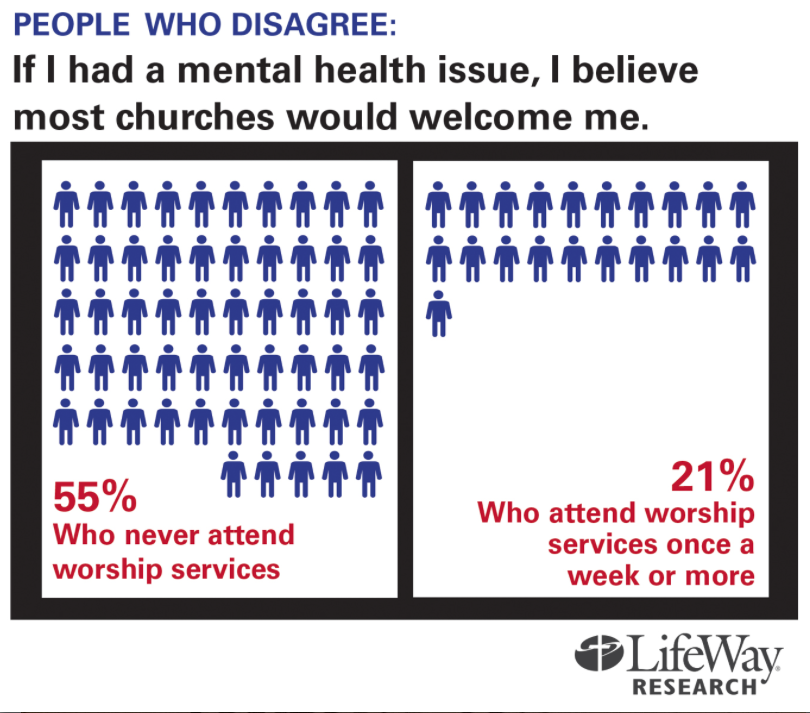
Lifeway Research was involved with Focus on the Family in a large research project entitled the Study of Acute Mental Illness and Christian Faith, the results of which were made public last Fall.

Lifeway 1

Some findings in the Lifeway study appeared to confirm results described in the Baylor study.

  • Among individuals with mental illness who have attended church regularly as an adult, 10% changed churches as a result of a previous church’s response to their mental illness, 8% stopped attending church and 5% reported not being able to find a church.
  • In addition, 23% of pastors indicate they have personally struggled with mental illness of some kind, but only 12% of pastors surveyed were ever formally diagnosed. Pastors in the Midwest were significantly more likely to report undiagnosed mental illness.

The research appears to suggest that we have a lot of people within the church who struggle with emotional distress who have been badly hurt by their interactions with pastors, church staff, counselors and the reactions of fellow believers. Clearly, there’s an established perception among the majority outside the church that those struggling with more serious or chronic mental health concerns won’t be welcome at church…and that’s a very big problem when it comes to fulfilling Christ’s command to make disciples.

I want to share with you a comment “Kristin” left on our blog when we were discussing the perception in the church that sin causes mental illness…

Twenty years ago, I was repeatedly told by many people that I just needed to pray harder and that if my relationship with Jesus was better, my severe depression would be healed. I bought into that for a while and did everything humanly possible to pray, study the Bible go to church and so on. But my depression was not healed. I left the church for several years, but returned hoping that not all Christians thought that way. Of course, I also didn’t tell too many church friends about my mental illness.

Fast forward to the present. I now have 2 children with severe mental illness. Last year, my daughter was forced to join a Sunday School class in which she knew no other child. I tried in vain to explain that she had severe social anxiety and needed to be in a class where she had a friend. Because of that, she wasn’t happy in Sunday School and ended up quitting the children’s choir too. We hardly ever go to church any more. I write this with tears in my eyes because I want to find a church where my kids and I are accepted, and yes, even given “special” treatment from time to time…

I guess I got off topic of your blog post, but the idea of mental illness or any illness being caused by sin is still very prevalent in out churches, as is the idea that we should be able to pray it away.

There are other prominent voices within the evangelical/reformed movements with harsh things to say about our conceptualization of mental illness. John MacArthur did an entire blog series this past September on the topic. Here are links to the first and second part of a two part post that echoes the themes espoused by the Nouthetic Counseling Institute.

It is reasonable for people to seek medical help for a broken leg, dysfunctional kidney, tooth cavity, or other physical malady. It is also sensible for someone who is alcoholic, drug addicted, learning disabled, traumatized by rape, incest, or severe battering to seek some help in trying to cope with their trauma.

There may also be certain types of emotional or mental problems where root causes are identifiably organic, or where medication might be needed to stabilize an otherwise dangerous person. These are relatively rare problems, however, and should not be used as justification for the indiscriminate use of secular psychological techniques for what are usually spiritual problems. Dealing with the physical and emotional issues of life in such ways is not sanctification!

Certain techniques of human psychology can serve to lessen trauma or dependency and modify behavior in Christians or non-Christians equally. But since the secular discipline of psychology is based on godless assumptions and evolutionary foundations, it is capable of helping people only superficially with no contribution toward their spiritual growth.

It appears that a not insignificant number of people who seek help from their churches for mental health-related concerns have experiences so negative that their spiritual life is impacted and some ultimately leave the church. Clearly not the intended consequence of a movement grounded in the idea that the Bible is sufficient in providing answers to the struggles experienced by those wrestling with mental illness.

shutterstock_127567055There are ways in which the church can reach out to and include families impacted by mental illness without compromising the truth contained in God’s Word. There are groups within the church wrestling with these issues. Here’s a link to a very thoughtful discussion of the issues involved from the Biblical Counseling Coalition. Ed Welch has a very helpful article in the current issue of CCEF Now (pages 9-11 in the .pdf) on ways that persons in the church can help others with psychiatric disorders. Brad Hambrick has proposed A Christian Perspective on Mental Illness.

Next, we’ll look at how kids with identified mental health conditions have been stigmatized in the church.

***********************************************************************************************************

KM Logo UpdatedKey Ministry has assembled resources to help churches more effectively minister to children and adults with ADHD, anxiety disorders, Asperger’s Disorder, Bipolar Disorder, depression and trauma. Please share our resources with any pastors, church staff, volunteers or families looking to learn more about the influence these conditions can exert upon spiritual development in kids, and what churches can do to help!

Posted in Advocacy, Controversies, Families, Hidden Disabilities, Inclusion, Key Ministry, Mental Health | Tagged , , , , , , , , , , , , , | 3 Comments