More Stuff You Should Know About Kids With Asperger’s Disorder

This past Tuesday, we reviewed the diagnostic criteria for Asperger’s Disorder and emphasized the notion that the unique pattern of strengths and weaknesses seen in kids with the disorder complicates efforts to serve them programmatically. We’ll continue our discussion today by examining three additional characteristics of many kids with Asperger’s that often complicate their ability to participate in activities at church.

Kids with Asperger’s Disorder are more likely than their peers to struggle with motor skills and coordination. As a result, common activities that occur in children’s ministry settings (arts and crafts, hand gestures during praise and worship songs, games played in children’s church or during VBS) may be more challenging for kids with Asperger’s and evoke more frustration. They may be sensitive to teasing that results from peers observing their lack of competence during such activities.

Kids with Asperger’s Disorder are more likely to experience difficulty with attention, concentration, organization and/or obsessive, inflexible thinking relative to their peers. By some estimates, 60-70% of kids diagnosed with Asperger’s Disorder will also meet symptom criteria for Attention-Deficit/Hyperactivity Disorder (ADHD). As a result, they are more likely to have difficulty inhibiting behavior, self-regulating emotions, maintaining focus and staying on task compared to kids without Asperger’s. Here’s a post from that may explain the link between ADHD and autism spectrum disorders, as well as a resource page on ADHD and spiritual development.

Kids with Asperger’s Disorder are more likely than their peers to experience issues with sensory processing. When kids struggle with sensory overload, likened to a neurological “traffic jam” that prevents certain parts of the brain from receiving the information needed to interpret sensory information correctly, they experience difficulty processing  and acting upon information received through the senses. Here’s an excellent handout on the condition from the Sensory Processing Disorder Foundation. Kids who struggle with sensory processing issues experience challenges in performing countless everyday tasks.

Translate this to a typical children’s ministry environment…lots of noise, too many kids talking, bright lights, vivid color. Kids with conditions associated with sensory processing disorder (common in kids with Asperger’s Disorder) may find church environments experienced by “neurotypical” kids as vibrant and engaging as unpleasant or aversive.

Next: Spiritual Growth Challenges for Children With Asperger’s Disorder

Join me for the 2012 Children’s Ministry Websummit, from April 2nd through April 6th. I’ll have a video presentation on the topic…Square Pegs and Round Holes: Helping Kids With Asperger’s Disorder and Social Disabilities Grow Spiritually. I’ll be joining many leading speakers in the field of children’s ministry. Free registration is available here for the Websummit! Also, the complete DVD set of conference presentations (including the video of my presentation) is available now through this link at a reduced pre-conference price of $39.00. Proceeds support the availability of free ministry training offered by Pajama Conference, including Inclusion Fusion.

Posted in Autism, Families, Hidden Disabilities, Inclusion, Key Ministry | Tagged , , , , , , | Leave a comment

Square Pegs and Round Holes…Understanding Kids with Asperger’s Disorder

As we begin our discussion of how churches can more effectively connect with, welcome and support kids with Asperger’s Disorder as they mature spiritually, a good place to begin is to establish a common understand-ing of the condition.

Listed below are the diagnostic criteria for Asperger’s Disorder from DSM-IV.

A. Qualitative impairment in social interaction, as manifested by at least two of the following:

  • marked impairment in the use of multiple nonverbal behaviors such as eye-to eye gaze, facial expression, body postures, and gestures to regulate social interaction
  • failure to develop peer relationships appropriate to developmental level
  • lack of spontaneous seeking to share enjoyment, interests, or achievements with other people (e.g., by a lack of showing, bringing, or pointing out objects of interest to other people)
  • lack of social or emotional reciprocity

B. Restricted repetitive and stereotyped patterns of behavior, interests, and activities, as manifested by at least one of the following:

  • encompassing preoccupation with one or more stereotyped and restricted patterns of interest that is abnormal either in intensity of focus
  • apparently inflexible adherence to specific, nonfunctional routines or rituals
  • stereotyped and repetitive motor mannerisms (e.g., hand or finger flapping or twisting, or complex whole-body movements)
  • persistent preoccupation with parts of objects

C. The disturbance causes clinically significant impairment in social, occupational, or other important areas of functioning.

D. There is no clinically significant general delay in language e.g., single words used by age two years, communicative phrases used by age three years).

E. There is no clinically significant delay in cognitive development or in the development of age-appropriate self-help skills, adaptive behavior (other than in social interaction), and curiosity about the environment in childhood.

F. Criteria are not met for another specific pervasive developmental disorder or schizophrenia.

American Psychiatric Association. (2000). Diagnostic criteria for Asperger’s disorder. In Diagnostic and statistical manual of mental disorders (Fourth edition—text revision (DSM-IV-TR). Washington, DC: American Psychiatric Association, 84.

Let’s examine the criteria more closely…

Qualitative impairment in social interaction: Compared to what one would expect based upon age and intelligence, kids with Asperger’s Disorder struggle because of a relative inability to intuitively know how to act in social situations. They may not  process social cues (body language, facial expressions, voice tone, inflection, context) in a manner one would expect for their age and intelligence. They may have difficulty grasping when adults are becoming frustrated by their behavior or peers find them off-putting.

They also tend to struggle with empathy…the ability to identify with and understand another person’s situation, feelings and motivation. As a result, many of my patients with Asperger’s struggle greatly to make and keep friends. When younger, many of them are content and comfortable to play by themselves and dwell on the games and activities they find most interesting. As they become teenagers, many (but not all) express feelings of loneliness. Some are desperate for friends…they struggle because they don’t know how to pursue friendships or fear trying to connect with peers because of lingering hurt from teasing or bullying.

Restricted repetitive and stereotyped patterns of behavior, interests, and activities. The feature most frequently associated with Asperger’s Disorder is intense interest in a subject or topic that seems odd or unusual for one’s age. The first child I met with Asperger’s walked in the room carrying a foot-high pile of books and pictures of buoys. I have a patient who taught himself Japanese when he was in kindergarten. A patient from a Christian home became preoccupied with (and memorized) the Book of Judges. Not every child with Asperger’s has these intense preoccupations or interests, but all kids I’ve met with the condition seem to experience difficulty with cognitive rigidity or inflexibility. Parents struggle when the child needs to transition from an enjoyable to a necessary activity. Changes in routine or unfamiliar situations often evoke great distress for the child and their family.

Clinically significant impairment in social, occupational, or other important areas of functioning. Asperger’s Disorder represents a significant disability. Typically, kids with Asperger’s will struggle to function at a level commensurate with their intelligence in school and experience difficulty making and keeping friends. They are far less likely to be involved in extracurricular activities (especially sports) common for kids of their age and intelligence in their communities. They also tend to struggle with fulfilling age-appropriate roles as a member of their families.

No clinically significant general delay in language. Kids with Asperger’s tend to acquire speech and develop receptive and expressive language in accordance with developmental milestones. Their speech may be different than their peers…marked by a lack of rhythm, an odd inflection, or a monotone pitch.  They often lack the ability to modulate the volume of their voice to match their surroundings.  They may need reminders to speak more softly every time they go to the movies or attend adult worship services with their families.

There is no clinically significant delay in cognitive development. By definition, kids with Asperger’s Disorder have (at least) average intelligence. In my practice, the average IQ of our patients with Asperger’s is significantly above average. This raises a very interesting challenge for churches…

When we think of the term “Special Needs,” what comes to mind? My guess is that most of us think of kids with intellectual disabilities. According to the U.S. Centers for Disease Control (CDC), the majority (59%) of kids diagnosed with autism spectrum disorders are of normal to above-average intelligence! I’ve seen kids with Asperger’s stop attending church after (presumably) well-intentioned efforts to serve them by including them in “Special Needs Ministry” programming. They see themselves as having little in common with kids identified as having “special needs” and in many instances, kids with Asperger’s and high-functioning autism are very sensitive to any public identification of being different. We’ll talk more about strategies for inclusion in later posts, but kids with Asperger’s will confound programmatic solutions.

The bottom line…If you’ve met one kid with Asperger’s, you’ve met one kid with Asperger’s.

Next: More Stuff You Should Know About Kids With Asperger’s Disorder

Join me for the 2012 Children’s Ministry Websummit, from April 2nd through April 6th. I’ll have a video presentation on the topic…Square Pegs and Round Holes: Helping Kids With Asperger’s Disorder and Social Disabilities Grow Spiritually. I’ll be joining many leading speakers in the field of children’s ministry. Free registration is available here for the Websummit! Also, the complete DVD set of conference presentations (including the video of my presentation) is available now through this link at a reduced pre-conference price of $39.00. Proceeds support the availability of free ministry training offered by Pajama Conference, including Inclusion Fusion.

Posted in Autism, Hidden Disabilities, Inclusion, Key Ministry, Resources | Tagged , , , | Leave a comment

Square Pegs and Round Holes…Helping Kids With Asperger’s Disorder and Social Disabilities Grow Spiritually

Today we’re launching a series to help support churches seeking to minister more effectively to families of kids with Asperger’s Disorder and other social disabilities. The blog series will kick off five weeks of special content in honor of Autism Awareness Month. This series will also accompany a video presentation I’ll be offering on the topic as part of the 2012 Children’s Ministry Websummit, available online, everywhere, free of charge (registration required), from April 2-6.

In today’s opening installment of the series, I’ll share some observations about challenges facing families and churches who desire to effectively include and disciple children and teens with social disabilities.

Churches are social institutions. That’s not at all surprising in light of the traditional view that Christianity differs from other faiths in focusing upon a relationship with Jesus as opposed to religious rituals or practices. In his best-selling book, The Purpose-Driven Life, Rick Warren identifies fellowship as one of the five purposes for which man was created. Two of the other purposes (ministry and mission) Warren describes are largely carried out in the presence of others. Worship is viewed as a communal activity. The REVEAL survey found that the fifth purpose (discipleship) is catalyzed by organized church activities and spiritual activities engaged in with others, in addition to spiritual beliefs and attitudes and personal spiritual practices. When it comes to kids, our teammate, Libby Peterson teaches four “fantastic faith forming family functions” – Talk, Pray, Read, Serve…encouraging parents to talk with their kids about the Lord, pray together as a family, read the Bible together and serve together.

So…where does this leave kids and teens who are “hard-wired” in such a way that they struggle to engage in and comprehend relationships?

God created all of us as unique human beings. His purpose is revealed through all of his creation, especially through those of us created in His image. Is it an accident that more kids in this generation are being identified with Asperger’s Disorder and other autism spectrum disorders than in previous generations? I can’t imagine that we’d see so many kids with these conditions unless God has some larger purpose in mind. And I can’t imagine he doesn’t have a plan for the kids and their families to come to know him.

Over the next couple of weeks, we’ll try to ascertain how we can help to make our churches more inviting and inclusive for kids who struggle to relate to other people and their families. We’ll look at specific challenges kids with Asperger’s Disorder and other social disabilities face in doing weekend worship, participating in church activities, practicing spiritual disciplines and growing in faith at home. We’ll look at how family-based ministry approaches might be utilized, tips for church staff and volunteers and ideas for promoting spiritual development. Because Jesus loved the lost sheep that drifted away from the rest of the herd.

Tuesday: Understanding Kids With Asperger’s Disorder

Join me for the 2012 Children’s Ministry Websummit, from April 2nd through April 6th. I’ll have a video presentation on the topic…Square Pegs and Round Holes: Helping Kids With Asperger’s Disorder and Social Disabilities Grow Spiritually. I’ll be joining many leading  speakers in the field of children’s ministry. Register here for the 2012 Children’s Ministry Websummit!

Posted in Autism, Inclusion, Key Ministry, Strategies | Tagged , , , , , , , , | Leave a comment

New resource on including kids with aggressive behavior at church

I’ve been off this week catching up on my CME credits required to maintain my medical license and preparing for the series to begin this coming Sunday on spiritual development in kids with Asperger’s Disorder and/or social disabilities. But I haven’t forgotten about the churches our Key Ministry team seeks to serve.

Here’s a one-stop resource tying together the blog series from last fall, Beyond Zero Tolerance…When Kids Become Aggressive at Church. In addition to an edited version of the entire series in a single article, I included a SlideShare presentation of the lecture I was invited to present on the topic at last Fall’s Bioethics Conference and Through the Roof Summit at Cedarville University.

Please forward the link to this post or the link to our new resource page on ministry with kids with aggressive behavior to church staff or key volunteers who might benefit from the information.

Join me for the 2012 Children’s Ministry Websummit, available online, everywhere, free of charge, from April 2nd through April 6th. I’ll have a video presentation on the topic…Square Pegs and Round Holes: Helping Kids With Asperger’s Disorder and Social Disabilities Grow Spiritually. I’ll be joining many leading  speakers in the field of children’s ministry. Register here for the 2012 Children’s Ministry Websummit!

Posted in Hidden Disabilities, Inclusion, Key Ministry, Resources | Tagged , , , , , , | Leave a comment

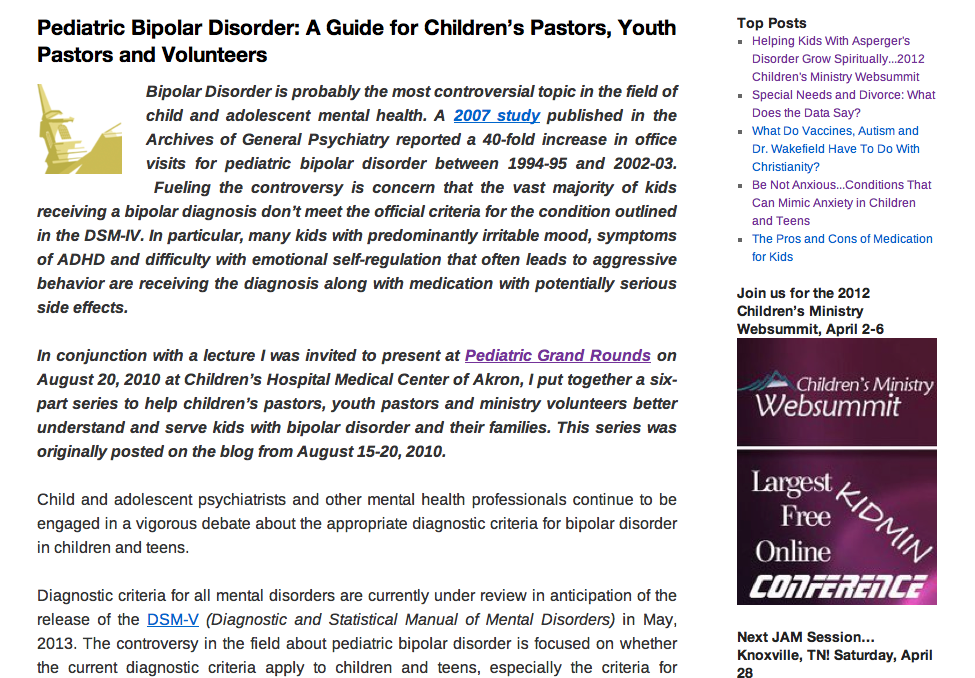
New Resource Page on Pediatric Bipolar Disorder

We now have a new resource page on the blog for church staff, volunteers and parents looking for information about spiritual development and strategies for inclusion at church for kids with bipolar disorder.

Our page, Pediatric Bipolar Disorder: A Guide for Children’s Pastors, Youth Pastors and Volunteers, contains the content from a six-part blog series featured here in August 2010 on pediatric bipolar disorder, a link to a video of a Grand Rounds lecture I gave at Children’s Hospital Medical Center of Akron on the topic during the same month, and links to helpful information from the American Academy of Child and Adolescent Psychiatry (AACAP), the National Institute of Mental Health, the Balanced Mind Foundation, and a Parents’ Medication Guide jointly developed by AACAP and the American Psychiatric Association.

Please feel free to share this resource with church leaders, parents and family members with interest in understanding more about helping kids and families affected by bipolar disorder.

Join me for the 2012 Children’s Ministry Websummit, available online, everywhere, free of charge, from April 2nd through April 6th. I’ll have a video presentation on the topic…Square Pegs and Round Holes: Helping Kids With Asperger’s Disorder and Social Disabilities Grow Spiritually. I’ll be joining many leading  speakers in the field of children’s ministry. Register here for the 2012 Children’s Ministry Websummit!

Posted in Bipolar Disorder, Key Ministry, Resources | Tagged , , , , , , | Leave a comment

Helping Kids With Asperger’s Disorder Grow Spiritually…2012 Children’s Ministry Websummit

I’m pleased to announce that I’ve been invited to be a presenter at this year’s Children’s Ministry Websummit, to be available free of charge, online, everywhere from April 2nd through April 7th. I’ll have a video presentation on the topic…Square Pegs and Round Holes: Helping Kids With Asperger’s Disorder and Social Disabilities Grow Spiritually.

Kids with Asperger’s Disorder and other social disabilities are all too often “square pegs in round holes” when it comes to children’s ministry. In this presentation, I’ll review the challenges to church attendance and participation resulting from Asperger’s Disorder, discuss how family ministry approaches can help spur spiritual growth in kids with social disabilities and share tips for children’s pastors, church staff and volunteers for successfully including kids who struggle socially in your ministry environments.

Beginning next Sunday, we’ll launch a Spring blog series on this topic to accompany my presentation for the Websummit. The presentation and blog series will also serve to kick off a month of special content in April for Autism Awareness Month.

The Children’s Ministry Websummit is produced by Jeremy Collins and his team at Pajama Conference, the same group that hosted last Fall’s Inclusion Fusion Special Needs Ministry Websummit. For those of you who registered for last year’s Websummit, the organizers have instituted some improvements modeled after Inclusion Fusion.

Every presentation will be available “on-demand” at any time during the conference. You’ll be able to watch my presentation, as well as any of the other fine presentations on the schedule whenever you’d like during the Websummit. We’ll have opportunities for interactive sessions. The one element of the conference that’s not changing is your cost of participation. Nada. Zero. Free. Just the way we like it. Your support of Pajama Conference through purchases of the Inclusion Fusion DVD Box Set helps support free ministry training, including the Children’s Ministry Websummit.

Check out the roster of speakers already committed to the Websummit…new speakers are being added daily. Register here for the 2012 Children’s Ministry Websummit!

Posted in Autism, Key Ministry, Training Events | Tagged , , , , , , , , | 1 Comment

Resources for Churches on Mental Illness

I’m thankful that Barb Dittrich graciously invited me as her guest for last week’s Special Needs Ministry TweetChat on the topic “Families Touched by Mental Illness…The Impact at Church.” We had a great discussion. If you missed it, the transcript from the TweetChat can be obtained through this link to the SNAPPIN’ Ministries Facebook page.

The discussion last Thursday night reflected the great interest in helping churches minister more effectively with kids and families impacted by mental illness. Key Ministry was launched nearly ten years ago out of the recognition that kids with serious emotional, behavioral, developmental or neurologic conditions and their families were far less likely to be actively involved in the ministries of a local church when compared to their friends and neighbors.

Barb invited me to share some resources that might be of help to church staff, pastors and volunteers who desire to minister more effectively to families impacted by mental illness. Here are five organizations worth checking out…

American Academy of Child and Adolescent Psychiatry (AACAP)…I’ve been a member of the American Academy of Child and Adolescent Psychiatry (AACAP) for over twenty years. The Academy is the world’s premiere scientific and advocacy organization in the field of child and adolescent mental health. Having served as Chair of the Academy’s Private Practice Committee, President of  the Northeast Ohio Society of Child and Adolescent Psychiatry, and  a member of the Program Committee, I can attest to the credibility and scientific integrity of the Academy’s conferences, publications and resources.

AACAP has developed a series of resource centers that can be an invaluable tool to ministry leaders and volunteers serving families of children with mental health issues. Each AACAP Resource Center contains consumer-friendly definitions, answers to frequently asked questions, clinical resources, expert videos, and abstracts from the JAACAP,Scientific Proceedings and Facts for Families relevant to each disorder. The AACAP resource centers provide a one-stop shop for staff, volunteers and parents in search of a better understanding of common mental health conditions that pose obstacles to church participation and spiritual development. The resources are current, highly credible and available free of charge.

Mental Health Grace Alliance…Mental Health Grace Alliance is a faith-based, non-profit organization created to promote understanding in the church and provide assistance and support to individuals living with mental illness and their families. The organization assists individuals and families affected by mental illness through Christ-centered counseling and support and uses a comprehensive (holistic) approach to equip individuals and families with biblical and clinical understanding and practical tools to navigate the health care system and daily life. They facilitate Christ-centered support groups, called Grace Groups, for both those living with a mental illness and their loved ones (presently in CA, FL, MA, TN, TX). They also provide training seminars and resources for churches and faith-based organizations to help leaders and professionals understand the balance between the clinical and spiritual aspects of mental illness and recovery.

National Alliance on Mental Illness (NAMI): NAMI is the nation’s largest grassroots mental health organization dedicated to building better lives for the millions of Americans affected by mental illness. NAMI advocates for access to services, treatment, supports and research. NAMI offers a Child and Adolescent Action Center, along with FaithNet. FaithNet is dedicated to providing and promoting the creation and exchange of information, tools and other resources which will help NAMI members and friends educate faith communities about mental illness

National Institute of Mental Health (NIMH): NIMH is the world’s largest scientific organization dedicated to research to facilitate better understanding and treatment of mental illness. Their website is a treasure trove of information and statistics on specific mental illnesses. For those interested in going “straight to the source” for information, NIMH’s parent organization, the National Institutes of Health (NIH) offers online access to the National Library of Medicine, with more than 21 million citations for biomedical literature from MEDLINE, life science journals, and online books. Citations may include links to full-text content from PubMed Central and publisher web sites.

Finally, I’ll mention my own organization, Key Ministry. Our mission is to help churches more effectively minister to families touched by disabilities, but our traditional focus has been on “hidden disabilities,” significant emotional, behavioral, developmental or neurologic disorders lacking outwardly apparent physical symptoms. Most of our resources are housed on the blog I write for the ministry, Church4EveryChild. We’ve developed series on the impact of ADHD, anxiety and bipolar disorder on spiritual development in kids, along with a series on including kids at church at risk of aggressive behavior, will be developing a video training library including presentations on mental health-related topics through our Inclusion Fusion website as well as through Kidmin Coaching and downloadable presentations available through Slideshare. All of our training, consultation, resources and support are made available to churches everywhere free of charge. Please feel free to contact us through our website or our Facebook page if we may be of help.

This post was originally published on March 12, 2012 for Ministry Moments, the blog of SNAPPIN’ Ministries.

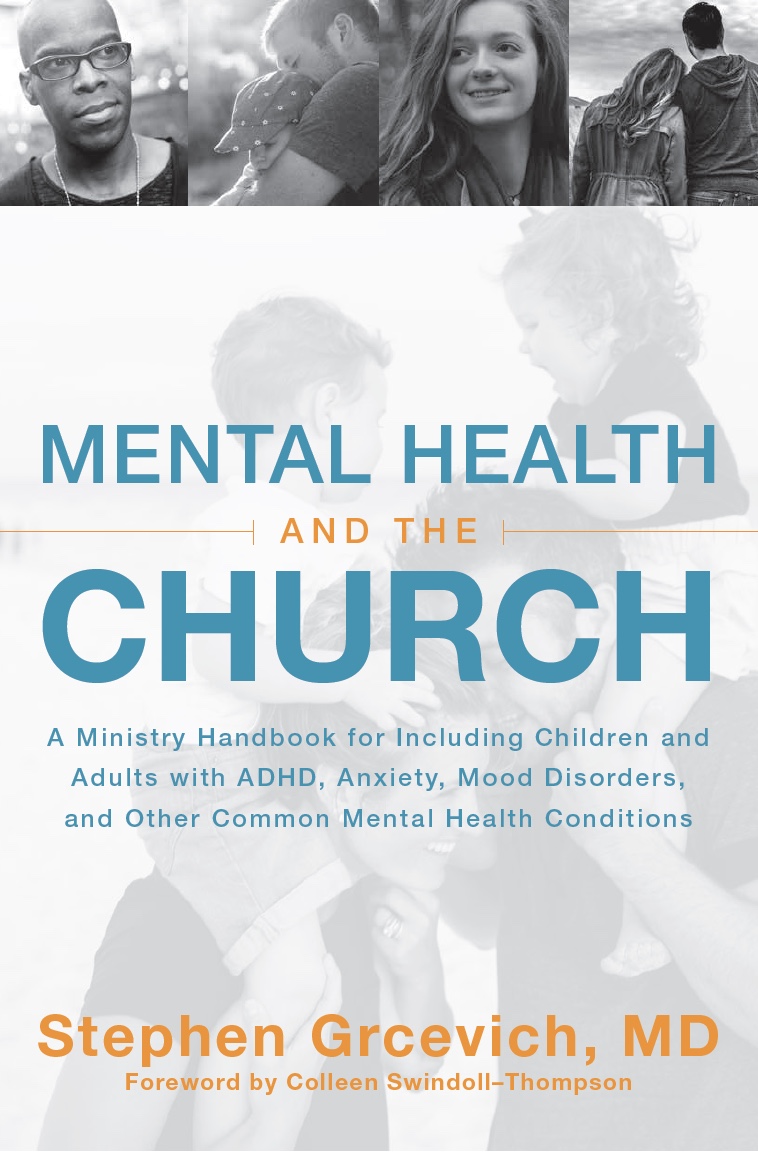
Stephen Grcevich, MD serves as President of Key Ministry, an organization providing free training, consultation and resources to churches seeking to minister to families of children with disabilities. 

Dr. Grcevich is a graduate of Northeast Ohio Medical University (NEOMED) and trained at the Cleveland Clinic and Case Western Reserve University. He currently teaches in the divisions of Child and Adolescent Psychiatry at two medical schools, leads a private practice group in suburban Cleveland, and continues to be involved in research evaluating the safety and effectiveness of medications prescribed to children for ADHD, anxiety and depression.

Dr. Grcevich was named “Psychiatrist of the Year” in 1998 by the Ohio Chapter of the National Alliance for Mental Illness (NAMI) and received the NAMI Exemplary Psychiatrist Award at the 1999 American Psychiatric Association Annual Meeting in Washington, DC. He has been married for 23 years to his wife, Denise, and has two daughters, Leah (16) and Mira (12). 

Posted in Key Ministry, Resources | Tagged , , , , , , , , , , , | Leave a comment

Rhett Smith…Final Thoughts

We’re grateful for Rhett Smith’s willingness to share so freely in this extended interview on the impact of anxiety upon spiritual development. Rhett is the author of the new book, The Anxious Christian: Can God Use Your Anxiety for Good?For more on Rhett, click here for his biography and a video introduction to his new book.

In the conclusion of our interview with Rhett, he discusses the possible role of electronic ministry in serving those who don’t currently attend church as a result of anxiety, and shares his most important takeaway point for church leaders ministering to children and adults with anxiety.

SG: You’ve written extensively about the use of new media in ministry. How do you foresee churches using electronic ministry to better serve the needs of youth and adults with anxiety?

RS: This is a real interesting question because I haven’t really thought much of it from that perspective. I’ve done some ministry with LifeChurch.tv (www.lifechurch.tv) in the past, and they are essentially the leaders in the online space. My friend Tony Steward was their first online pastor, and the first person I know of to hold that position. Now lots of churches are starting to do that. I’m wrestling with how we live as an embodied community in the flesh, but also take advantage of all the online tools that are out there. I think that a person could perpetuate their anxiety in unhealthy ways by relying on online tools, or by only watching services online from their home. But again, that could be a great entry point to get connected to a faith community when a person may never step foot in a church. So maybe the new media tools are a good way to lower the initial carries and as we do that, we need to think of creative ways to use the tools that allow people to come out of hiding or the shame they feel, and enter not only to online community, but in person, face-to-face community. I see the tools helping aid people with anxiety, but not as the ends in and of themselves. They are rather the means to help us come alongside people with anxiety. This is a huge issue in the church, and I am at the point where I can be swayed in several different directions. I use tons of tools online and they are amazing. I met some of my best friends in Dallas on Twitter and FB and my blog when we moved here. But I desired to move offline and meet up with them for coffee and lunch. So the tools were the catalyst that helped me connect and face my anxiety and move towards a face to face in person connection. But they weren’t the ends in themselves. I still use the tools to connect with my friends online, but I also meet with them in person. They aid and benefit each other.

I could envision a scenario where a kid might be socially anxious and have a hard time coming to church or attending a more intimate setting like youth group. As the pastor, rather than trying to just get them to show up to events. I might begin a journey of chatting on FB with them because that is a much easier medium for people who are anxious to communicate on. The more and more I chat with that kid, the more and more they hopefully feel safe, and trusting of me. As we build that trust and relationship I may ask to meet him for lunch. And as we meet more regularly for lunch, I may ask him to meet me up at church one day, etc. etc. It’s a slow progression and we have to be patient. Discipleship doesn’t happen overnight, and neither does this.

On the flip side, I think it’s important that I also state that social media and technology use is also a great source of anxiety for many people. There is lots of research being done on the rewiring of our brains through the use of technology, and how our open lives on Facebook have created a sense of anxiety in kids as they look at their friend’s lives online, and wonder why their lives aren’t like that. I have worked with kids in counseling who become anxious because they aren’t invited to all the parties that their friends are invited to, and they see all the photos on Facebook. I know of girls who struggle with anxiety and eating disorders because they feel like their body image doesn’t match up with the ones they see online. So technology can create anxiety, and we can feel it when we aren’t constantly plugged in as well. So as we use technology to help people who are anxious, I think we have to ask the right questions regarding how we use it and why we use it.

I think that social media can be a great platform for people to talk about anxiety, and to have a more open discussion on the issue. My own hope is that my book, and the discussions that occur online can help open the topic, and help eliminate some of the stigmas we have about anxiety. So technology could be a great front line tool for us to look at the issue and discuss it.

SG: What’s the most important takeaway for church leaders seeking to minister more effectively with persons who struggle with anxiety?

The most important takeaway I believe is this. We are all anxious. We all will and do experience anxiety. Anxiety is part of our human condition. With that being said, I believe that God uses our anxiety as a tool to help us grow. It’s a catalyst that keeps us from getting stuck, as it propels us to continually follow God. I think church leaders could best help others by reframing anxiety as a positive aspect in our lives when we pay attention to it and respond properly to it. ‘What is God saying to you in your anxiety’ is a great question in my mind. As church leaders we just have to do a better job of pastorally caring for people…that takes time…that takes relationship. Something many church leaders don’t have or don’t make time for.

Rhett’s new book, The Anxious Christian: Can God Use Your Anxiety for Good? is available in paperback and Kindle editions through Amazon.com. You can read his blog at www.rhettsmith.com.

Last Summer’s blog series examining the impact of anxiety upon spiritual development in kids, along with additional resources to better understand the impact of anxiety disorders in children and adolescents may be accessed here.

Posted in Anxiety Disorders, Inclusion, Strategies | Tagged , , , , , , , , , | 3 Comments

Rhonda Martin…Nurturing Spiritual Growth in Kids With Anxiety

Rhett Smith’s outstanding interview on his new book, The Anxious Christian, has generated lots of interest in the topic of anxiety and church. In the process of compiling resources pertaining to spiritual development and anxiety, I came across this interview that Katie Wetherbee conducted with Rhonda Martin for the 2011 Inclusion Fusion Special Needs Ministry Web Summit.

In this interview, Rhonda discusses the unique spiritual needs of children who have Obsessive Compulsive Disorder, Generalized Anxiety Disorder Social Phobia and Post- Traumatic Stress Disorder. Katie and Rhonda cover identification, accommodations and unique spiritual issues for each manifestation of anxiety from the church nursery to the high school youth group.

Rhonda is a Licensed Professional Clinical Counselor who works in private practice with preschoolers, children, adolescents and adults at Akron Family Institute in Green, Ohio, specializing in work with children who have OCD and other anxiety disorders. She serves as a member of the Board of Directors of Key Ministry, and serves as a volunteer trainer for the ministry.

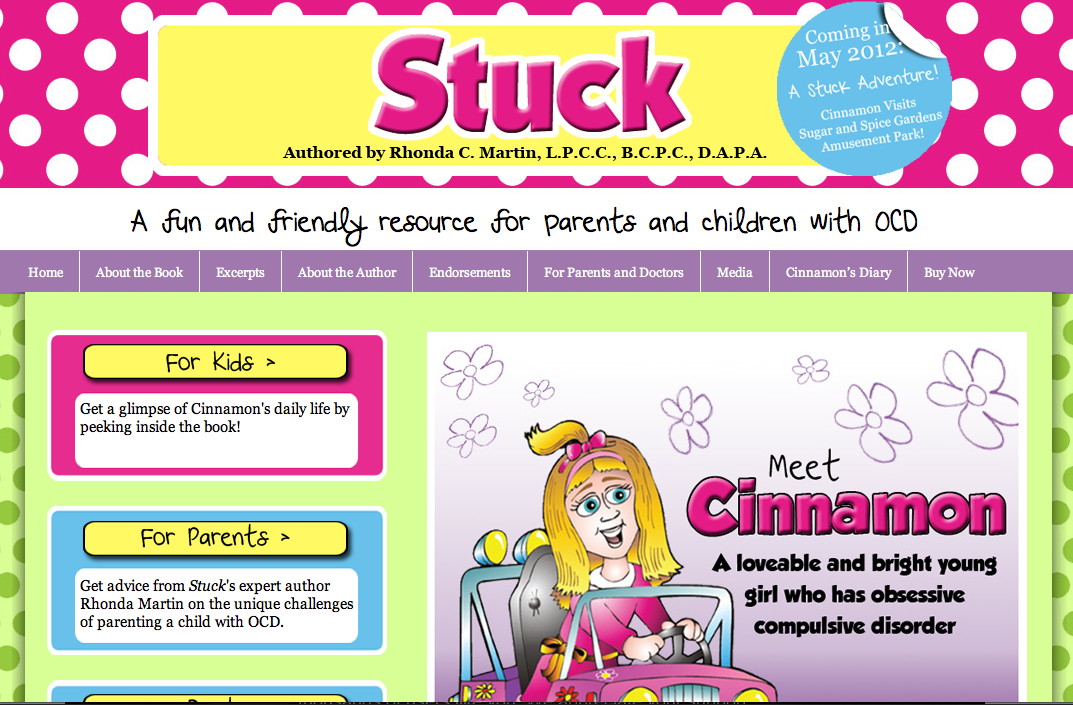
Rhonda is the author of Stuck, a best-selling children’s book describing the life of Cinnamon, a young girl with OCD, as well as OCD in Kids…a website developed for children with Obsessive-Compulsive Disorder (OCD), their parents and and treating professionals. as a companion to the book.

Here’s the interview with Rhonda and Katie…

Last Summer’s blog series examining the impact of anxiety upon spiritual development in kids, along with additional resources to better understand the impact of anxiety disorders in children and adolescents may be accessed here.

Posted in Anxiety Disorders, Hidden Disabilities, Inclusion, Inclusion Fusion, Key Ministry | Tagged , , , , , , , , , , , | Leave a comment

Rhett Smith…Inclusive Ministry Environments for Kids and Adults With Anxiety

Today’s interview segment with Rhett Smith is the perfect discussion starter for tonight’s Special Needs Ministry TweetChat on the impact of mental illness at church. In Part Four of our interview with Rhett, he shares ideas for pastors, church staff and volunteers for making church a more welcoming place for children and adults with anxiety.

Rhett is the author of the new book, The Anxious Christian: Can God Use Your Anxiety for Good?For more on Rhett, click here for his biography and a video introduction to his new book. Here are links to Part OnePart Two and Part Three of the series.

SG: What recommendations would you make to pastors and church staff members who want to create welcoming and inclusive ministry environments for kids and adults who struggle with anxiety?

RS: I think this begins by first education pastors and church staff members. For example, I knew that I was somewhat introverted, but I didn’t realize the exclusion that many introverts feel in a church until I read Adam McHugh’s book. So that was an education for me. And I wish I had read that book before I began pastoring because I think I would have made more intentional space introverted type people than I did. So educating people because I thin there needs to be a paradigm shift in our thinking.  As we educate pastors and church staff members we have to help equip them to have hearts, eyes, ears, minds, souls, etc. to see people who are struggling with anxiety. Because we can educate all we want, but if we don’t help them see people differently, and get below the surface of what is going on, then all the reading won’t help.

I would train leaders to create spaces and groups and communities in churches where anxious people are welcome. To do this I might eliminate things that might make a person anxious. Like getting up front to give a testimony. I might not require small group participation. But here is the catch…..lots of people face their anxiety by getting up front at some point and sharing their testimony (perhaps about anxiety), and small group connection is a good source of help for people who are anxious. But I think we eliminate immediate barriers and as anxious people become more comfortable in a setting, we implement stuff that helps them grow and face their anxiousness.

I think it’s probably a lot to ask a church to change a lot of stuff to make an anxious person feel welcomed. So I think we have to rely on individuals and ministries to come alongside people and minister to them. I also think, as I said above, some faith communities probably lend themselves better to people who are anxious. And so we might have to help direct people to places and churches that aren’t ones we participate in and help them find a place where they can be all that God has created them to be.

One time when I was in grade school at VBS I was called upon to read. And I couldn’t read…I stuttered my way through it. Clearly the teacher knew this. Why didn’t they pull me aside to see what was going on? Why didn’t they ask if I wanted to read at all? I think there are some things we can do better like noticing a kid who is anxious, and coming alongside of them and just asking them how we can better help them navigate life, church community, etc.?

And as I ramble on this question I’m faced with the fact that this is a hard question to answer. I would start with just dealing with the stigma of anxiety in the faith community. The stigma that allows many people to judge other’s faith because they are anxious. So we as a Church have to eradicate the stigma of anxiety, and if we can make progress there, than perhaps we will find people in the faith communities we participate in, helping those with anxiety in ways that we could not imagine. If we can even have an open discussion about anxiety…and if we can even get a few people at a time to rethink their view of anxiety….that is a win in my opinion. It’s slow, tedious work, but I believe it will make an impact.

Rhett’s new book, The Anxious Christian: Can God Use Your Anxiety for Good? is available in paperback and Kindle editions through Amazon.com. You can read his blog at www.rhettsmith.com.

Last Summer’s blog series examining the impact of anxiety upon spiritual development in kids, along with additional resources to better understand the impact of anxiety disorders in children and adolescents may be accessed here.

Posted in Anxiety Disorders, Families, Inclusion | Tagged , , , , , , , , , , , , | Leave a comment