
Should Disability Ministry Avoid Discussions of “Political” Issues?

We’re continuing to examine a series of Difficult Questions related to disability ministry over the course of the summer. Today, we’ll examine the question of if and when leaders involved with disability ministry should publicly discuss political issues. 

A fellow ministry leader recently inquired about Key Ministry’s policies on commentary regarding political issues. Can’t imagine why that topic came up recently!

First, to quote from a guy our ministry team greatly admires, the Kingdom we’re hoping to build is not one of this world. We’re seeking to contribute to the re-establishment of Jesus’ Kingdom by helping to connect churches, kids with disabilities and their families. Our agenda is decidedly non-political as most people define “politics.”

I’m also proud that in a time of incredible divisiveness in the U.S. (and the church) around matters of public policy that we have team members representing both major parties who can put aside political differences to work together for the common purpose of helping kids and families experience the love of Jesus Christ and the fellowship found in local churches.

At the same time, many of the people who serve on our team as either Board members, ministry staff or volunteers are involved with provision of direct service to kids with disabilities and their families, or are parents/family members of a child with a disability. Most of us are passionate in our advocacy for kids with disabilities. Given the extent to which access to needed medical, educational and social services is determined by elected officials on a national, state and local level, folks who do what we do are, sooner or later, likely to apply whatever influence we exercise to matters of public policy.

So…How should organizations involved with disability ministry respond when confronted with very controversial and divisive issues related to public policy? Here are a few thoughts:

Scripture clearly obligates us to submit to the laws and regulations imposed by legitimately established government. The IRS regulations addressing involvement of 501(c)(3) organizations in political campaigns are eminently clear…

Under the Internal Revenue Code, all section 501(c)(3) organizations are absolutely prohibited from directly or indirectly participating in, or intervening in, any political campaign on behalf of (or in opposition to) any candidate for elective public office.  The prohibition applies to all campaigns including campaigns at the federal, state and local level.  Violation of this prohibition may result in denial or revocation of tax-exempt status and the imposition of certain excise taxes.  Those section 501(c)(3) organizations that are private foundations are subject to additional restrictions that are not described in this fact sheet.

Our ministry organization is NEVER going to make an endorsement of any politician or political party. It’s clearly not appropriate for us to to so…we’d be violating God’s directives.

At the same time, we’re called as individual followers of Christ to be agents of redemption in EVERY area of life. We would be abandoning our responsibility to care for the sick and advocate for “the least of these” if we remain silent as our society (through the political process) allocates resources to meet competing needs. In exercising our advocacy as individuals, we’re obligated to conduct ourselves with grace and demonstrate diligence in sharing truth because our day-to-day witness is a reflection of Christ to others. But we are completely within our rights as individuals to exercise our rights as citizens to advocate within the political process. Again, from the IRS:

The political campaign intervention prohibition is not intended to restrict free expression on political matters by leaders of organizations speaking for themselves, as individuals.  Nor are leaders prohibited from speaking about important issues of public policy.  However, for their organizations to remain tax exempt under section 501(c)(3), leaders cannot make partisan comments in official organization publications or at official functions of the organization.  To avoid potential attribution of their comments outside of organization functions and publications, organization leaders who speak or write in their individual capacity are encouraged to clearly indicate that their comments are personal and not intended to represent the views of the organization.

If you come across my personal Facebook page or Twitter account or Linked In account, there’s a possibility you may find comments that are very political. You may encounter opinions from my colleagues on their personal pages or accounts espousing positions diametrically opposed to mine. But that’s the privilege…and the responsibility all of us bear as citizens. Through free speech and the free exchange of ideas we elect representatives and make policy decisions in the best interests of all of our people. Nowhere do leaders lose their individual rights or responsibilities by virtue of serving in a paid or volunteer position in a ministry organization as long as their opinions are personal.

Two final thoughts…The moral authority of Christ’s followers when carrying out Christ’s work has been EXTREMELY THREATENING to those in power from the time of Jesus’ ministry here on Earth. We shouldn’t be surprised when authorities act as they do when they perceive their influence or authority is threatened.

Finally, while God requires us to submit to legitimate authorities, we NEVER serve the purposes of God by violating the principles of God. I ran this post past the Executive Committee of our Board. Libby Peterson (a family ministry director and our VP) shared a great clarifying quote in response to this comment…

“Of all the principles of God you refer to at the end, the greatest of these is love. We can stand for principles we believe in without compromising our hearts of love toward those with whom we disagree…especially if we stick together and help each other in this way.”
If you’re planning to attend the North American Christian Convention (NACC) in Orlando from July 10-13, be sure to checkout Harmony Hensley’s presentation on Thursday, July 12th. Her topic will be Inclusion Ministry and Disability: Getting Outside the Box.
Posted in Advocacy, Controversies, Key Ministry | Tagged , , , , , , , , | 2 Comments

Top Posts and Coming Attractions

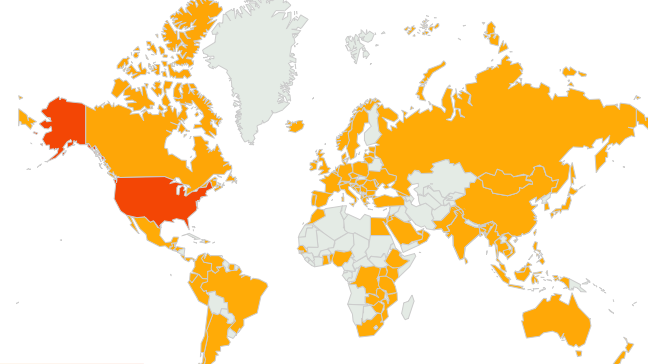
Thanks to everyone for your continued interest in our blog. Our readership this past quarter is up 232% compared to the second quarter of last year, and 266% compared to the first half of 2011. We continue to expand our worldwide following …since late February, our blog has been accessed by persons from 108 different countries, from every continent except Antarctica.

If you’re looking to catch up on your reading over the holiday, here are links to the five most-viewed posts during the last quarter:

Special Needs and Divorce: What Does the Data Say?

How Dads are Impacted When Kids Have Disabilities

Church, We’ve Got a Problem

The Words We Use Matter

The Pros and Cons of Medication for Kids

Over the remainder of the summer, we’ll be completing our series on Difficult Questions in Disability Ministry and presenting a series…Understanding Schizophrenia. We’ll also be introducing you to guest bloggers doing stuff you should know about, and beginning to tell you about what we have in store for Inclusion Fusion in November.

Help us get the word out! Please let any friends and interested church staff with interest in serving kids and families with disabilities know about the blog and the free training, resources, consultation and support available through Key Ministry. You can subscribe to the blog through the link on the right sidebar (pictured left).

Best Wishes for a great Fourth of July holiday!

If you’re planning to attend the North American Christian Convention (NACC) in Orlando from July 10-13, be sure to checkout Harmony Hensley’s presentation on Thursday, July 12th. Her topic will be Inclusion Ministry and Disability: Getting Outside the Box.
Posted in Resources | Tagged , , , , , , , , | Leave a comment

Approaching your child’s physician about medication for church activities

Today we’re going to look at the issue of medication at church for kids with ADHD from the perspective of the child’s treating physician. If I were serving as a children’s pastor or ministry volunteer and had a kid whose difficulty paying attention and maintaining self- control was creating disruption in the learning environment for other kids and discovered the child takes medication during the week to function in school but not on  weekends at church, I might be a little upset. Why wouldn’t the doctor tell the parents to give the medication to the child on Sundays or in the evening for church?

Maybe the physician felt uncomfortable asking about family religious practices? In our ultra-PC world, more and more physicians are likely to avoid any discussion of religious practices altogether for fear of offending parents.

The physician is so busy that they don’t have time to ask about church. For any of you who’ve been to the doctor in the last few years, you probably recognize that there’s less and less time available to share your concerns with your child’s physician. Families who depend upon managed care to cover the cost of their child’s treatment or families receiving care through large hospital systems may have enough time at a follow-up visit to discuss one aspect of their child’s treatment. I’ll vent on the topic of accessing service through our health care system at a future date.

The physician may not have the cultural competency to understand the importance of church in the life of the child’s family. I’m fascinated by some of the gaps in the range of culture academic physicians are exposed to, especially the lack of exposure to families from more conservative Protestant traditions. Docs tend to train in large, urban hospitals. Evangelicals tend to hang out in the suburbs. There was and issue of the journal Child and Adolescent Psychiatric Clinics of North America devoted to the issue of religion and spirituality a few years back in which there was an article entitled “Cultural Competency with Protestant Christians.” Let’s face it…there’s a really big difference in the values and attitudes of folks involved with the Church of Christ vs. folks in the United Church of Christ and between Presbyterians and Pentecostals. My specialty (child and adolescent psychiatry) includes a significant percentage of foreign medical graduates, many of whom were raised in countries where Christianity is far from the predominant religion. Bottom line: There’s a good possibility your child’s physician may come from a cultural or educational background in which they wouldn’t realize how important church is for some families.

The physician may recommend withholding medication on weekends to minimize the impact of side effects: It’s not uncommon for kids to have difficulty eating or fail to gain weight while taking medication for ADHD. That’s probably the most common reason physicians suggest to parents that they withhold medication on weekends. I won’t digress into a comprehensive review of the research on the long term effects of medication on growth, but it’s not something I frequently worry about with my patients.

The physician may not have the depth of understanding about ADHD that would lead them to individualize the child’s treatment for evening or weekend activities. As with any other field, some docs have a greater level of sophistication in understanding ADHD and the nuances of the medications used to treat it. Educated parents who have done their homework and make well-reasoned suggestions to their child’s physician often get what they want.

In a nutshell, it should be possible to find a solution for church for kids who benefit from medication at school. There are currently 23 different FDA-approved products to treat ADHD. 20 of the 23 approved medications are stimulant products. All of the stimulant products have in common one of two active ingredients. One family of stimulants has as  a base ingredient some type of amphetamine salt or prodrug (Adderall, Adderall XR, Dexedrine, Dexedrine Spansules, Procentra, Vyvanse). The other family of stimulants contains methylphenidate as a base ingredient (Ritalin, Concerta, Metadate, Focalin, Focalin XR, Daytrana). The differences between the products within a given family involve the form the medication comes in (pills, liquid, patch), how the drug is released into the body, and most importantly for this discussion, how long the medication lasts.

While these medications are highly effective (the odds that a kid will respond to a product from at least one of the two families of stimulants is around 90%), a slight majority of kids clearly respond better to products from one stimulant family or another. What this tells us is that kids who take an extended-release form of stimulant (8-12 hours or more) to get through school during the week will probably respond to a short-acting form of the same medication on weekends, or a short-acting booster to extend the duration of medication effects in the late afternoon or evening. For example, a kid who takes Concerta or Focalin XR (pictured left) during the week might take Ritalin or immediate-release Focalin (pictured below) on a Sunday morning to get about 4 hours worth of medication effects. A kid on Adderall XR or Vyvanse might take an immediate release Adderall to get 4-6 hours of effects on weekends. With late afternoon booster doses, the same principle would be true…the potential drawbacks being medication effects on appetite at dinner or delaying the onset of sleep. Some physicians will use booster doses in the late afternoon that are less potent than the equivalent long-acting stimulant medication in the evening to try to minimize side effects.

I’m not neglecting the three approved non-stimulant medications in this discussion (Strattera, Intuniv and Kapvay), but kids on non-stimulants are usually treated seven days/week and the question of whether to give medication on the weekend typically doesn’t usually become an issue. Non-stimulants are generally less effective than stimulants. One observation: Most of my patients on Strattera typically take medication twice daily (first thing in the morning and after school) because I’ve found the effects typically don’t last the entire day. Most of the manufacturer’s clinical trials with Strattera were conducted with medication administered twice daily. Bottom line: Kids who are prescribed Strattera and struggle with evening church activities may need a second dose after school.

We put together a sheet that parents can download and share with their child’s physician when they would like their child with ADHD to experience the benefits of medication for church activities. The purpose of the sheet is to help parents share their concerns about church activities with the child’s physician and provide them with the information they’ll need to make any necessary adjustments.

Download the form here: Medication Request for Church

Note to church staff and volunteers: Don’t share the existence of this form with parents who have not explicitly disclosed that their child takes prescribed medication for ADHD and expressed interest in using or adjusting medication for church. The use of prescription medication should not be a precondition for a child’s involvement in church activities.


If you’re planning to attend the North American Christian Convention (NACC) in Orlando from July 10-13, be sure to checkout Harmony Hensley’s presentation on Thursday, July 12th. Her topic will be Inclusion Ministry and Disability: Getting Outside the Box.

Originally published October 1-2 2010.

Posted in ADHD, Families, Parents, Resources | Tagged , , , , , , | Leave a comment

Is it OK for churches to NOT have an identified disability ministry?

No church will be able to do everything to reach families of kids with disabilities, but every church can do something.

When we launched Key Ministry over ten years ago, our team was very much of the mindset that assisting in the development of identifiable disability ministry programs was a desired outcome of ours. I was perusing the notes from one of our early strategic planning meetings in which we discussed the concept of developing criteria for “gold,” “silver” and “bronze” churches based upon the breadth and depth of services available to kids with disabilities and their families.

Several years into our ministry adventures, I was attending a disability ministry conference when several leaders from other ministry organizations were lamenting the lack of interest in launching new disability ministries, especially among the largest churches experiencing the most rapid growth. Many of these churches seemed to be the ones with great passion for reaching people with little or no connection to church…precisely our target population.

We have to be careful to not bash or blame churches for not being able to meet every single need of every single believer or “unchurched” family in the communities they serve. In the same way that each of us as individuals have been given different passions, gifts and talents to use in the service of God’s Kingdom, it would seem that different churches have been given unique missions and callings that complement one another in meeting the needs of the people. For lots of churches these days, the establishment of new “programs” to serve kids with disabilities and their families wouldn’t work in the organizational culture established by the church leadership. It would be presumptuous of us to think that we have a “one size fits all” solution for all churches.  There are also lots of churches that don’t “do programs” that offer great teaching and resources that families of kids with disabilities would enjoy. We’d certainly want to help make those connections. Our job is to partner with churches in developing strategies that will help them to connect with more kids and more families in ways consistent with the church’s culture.

We’re aware of churches that have stopped doing respite events but actively encourage families within the church to provide free, home-based respite care to families impacted by disabilities. Some churches lack a formal “disability” ministry but do great work in promoting involvement in special needs adoption or foster care. The expectation of having to establish a “program” is a potential deterrent to smaller churches with the mindset to care for those they come in contact with. When I think about families served through our practice, some of our most challenging kids who are able to attend church attend those with no formal disability ministry.

If the “win” occurs every time a kid with a disability and/or their family meaningfully connect with a local church, every church…not just those with established disability ministries…can always do a little bit more in the course of doing the ministry they do to promote “wins.”

One of the values our ministry espouses is being relational. While we’re happy to send you or your church resources or train you to establish a disability ministry, we’re also happy to offer Rebecca, Katie and Harmony (the three better looking team members on your left in the picture at the top of the blog) to churches of any size when a kid or a family comes through your doors presenting challenges you’ve never faced before.

Your church doesn’t have to have a disability ministry to “do” disability ministry.

Updated May 2, 2013

***********************************************************************************************************

Key Ministry’s mission is to help churches reach families affected by disability by providing FREE resources to pastors, volunteers, and individuals who wish to create an inclusive ministry environment. We have designed our Key Catalog to create fun opportunities for our ministry supporters to join in our mission through supporting a variety of gift options. Click here to check it out! For a sixty second summary of what Key Ministry does, watch the video below…


Posted in Hidden Disabilities, Inclusion, Key Ministry, Strategies | Tagged , , , , , | 2 Comments

Announcing Inclusion Fusion 2012!

I’m pleased to announce that Key Ministry’s Second Annual Inclusion Fusion Disability Ministry Web Summit has been scheduled for November 12-16, 2012.

Thanks to Jeremy Collins and his team at Pajama Conference, we’re planning to build upon last year’s inaugural Summit, during which 1,300+ pastors, ministry directors, volunteers and parents joined our featured speaker Chuck Swindoll and two dozen leaders from the disability ministry field for an extraordinarily successful FREE online learning and networking experience.

We’ll have much more to share in the weeks and months to come, but I can tell you…

Inclusion Fusion will again be offered free of charge…our goal is to attract as broad an audience as possible who are passionate about including kids with visible and hidden disabilities and their families in the life of the church.

You’ll see lots of new speakers this year sharing their experience and wisdom with church leaders and families on an ever-expanding range of topics of interest in the field of disability ministry.

We’re going to be intentional in creating as many ways as possible for participants and speakers to interact with one another in real time.

We will continue to have an open invitation for speakers wishing to participate in Inclusion Fusion. We’ll be inclusive of anyone who can meet the high standards our Program Committee sets for presentations accepted into the Web Summit.

For the time being, save the dates and we’ll let you know when we can begin to accept submissions to Inclusion Fusion as well as when you can begin to register for this year’s Web Summit.

For those of you who didn’t have the opportunity to join us last year, here’s a preview of what you might expect. I hope you enjoy this video of an interview between my Key Ministry teammates Rebecca Hamilton and Katie Wetherbee in which Katie addresses the topic of how to advocate for your child at church. Here’s the link for Katie’s Power Point handout that accompanied the presentation.

Pajama Conference is able to support FREE ministry training and conferences such as Inclusion Fusion through selling advertising on their websites and conference recordings. Your purchase of the videos from Inclusion Fusion will help to support the costs involved with producing Inclusion Fusion, but other valuable training events including the 2012 Children’s Ministry Web SummitClick here to order the complete 2011 Inclusion Fusion DVD collection!

Posted in Inclusion Fusion, Key Ministry | Tagged , , , , , , , , | Leave a comment

Key Ministry at the NACC and Group KidMin Conferences

We’re thrilled to announce that Key Ministry will be well-represented at two of the largest and best-known ministry conferences in 2012.

Harmony Hensley will be speaking at the North American Christian Convention (NACC) in Orlando on Thursday, July 12th. Harmony’s topic will be Inclusion Ministry and Disability: Getting Outside the Box. Here’s the description of Harmony’s talk:

Jesus made it clear in his ministry that he was sent for EVERYONE and that includes our friends affected by disability. Many churches are unaware of this mission field and are further intimidated at the thought of reaching this people group. Inclusion Ministry is easier than you think and in this workshop we will brainstorm some out of the box approaches to getting started. If you have a heart to create organic, systemic inclusion in the Body of Christ then this is the workshop for you! Participants will walk away with ministry tools and ideas to use right away!

Harmony’s presentation is sponsored by Christian Churches Disabilities Ministries, and is reportedly the first presentation on disability ministry at NACC in fifteen years.

Katie Wetherbee will be presenting a “Half-Track” session at the Group KidMin Conference, to be held in Chicago September 28-October 1. “Half-Tracks” are composed of two, two-hour sessions for a total of four hours focused on learning, discussion and application. Katie’s theme will be Special Needs-A Church For Every Child. Her first session is entitled Understanding Special Needs, while her second session will cover Strategies For Including Families With Special Needs. Here’s the summary of Katie’s “Half-Track” session:

Families affected by special needs are significantly less likely to attend church on a regular basis. This half-track will help you turn that around. Discover how common disabilities affect faith development and cause obstacles for church attendance. Delve into family dynamics and discuss ways to communicate effectively with parents of children with special needs. Practice easy-to-implement strategies for welcoming and teaching kids with special needs; behavior management, classroom culture and modifying curriculum.

Congratulations to Harmony and Katie for the honor of having been invited to present at two such prominent conferences! We’re excited by the opportunity to further disseminate Key Ministry’s free training, resources and support to new friends we’ll meet through those conferences for the purpose of helping churches to more effectively minister to kids with disabilities and their families.

Nice job, team!

Key Ministry’s mission is to help churches reach families affected by disability by providing FREE resources to pastors, volunteers, and individuals who wish to create an inclusive ministry environment.  We invite you to partner with us as we advance the Kingdom through our collaboration with the local and global church.  We have designed our Key Catalog to create fun opportunities for our ministry supporters to join in our mission.  The Key Catalog includes a variety of gift options for every budget.  A gift from the Key Catalog also makes for an amazing gift for a friend or loved one who is passionate about seeing the Body of Christ become more inclusive of people with disabilities.  Click here to check it out!

Posted in Training Events | Tagged , , , , , , , , , | Leave a comment

Key Ministry Contributes to New Resource From Christianity Today

Our team at Key Ministry is pleased to have been invited to contribute to a new resource developed for Special Needs Ministry volunteers by the folks at Christianity Today,  offered through their Building Church Leaders website.

Their Special Needs Volunteer Training Pack offers resources for orientation and basic training for volunteers serving in disability ministry. Our team contributed a sample special needs privacy covenant and a sample page of responsibilities for “buddies” serving in special needs ministry. Other contributors to the training pack include Shannon Dingle, Jackie Mills-Fernald and other leaders in the disability ministry field.

The cost of the training pack is $14.95 and the resource can be purchased here through the Building Church Leaders website.

Key Ministry’s mission is to help churches reach families affected by disability by providing FREE resources to pastors, volunteers, and individuals who wish to create an inclusive ministry environment.  We invite you to partner with us as we advance the Kingdom through our collaboration with the local and global church.  We have designed our Key Catalog to create fun opportunities for our ministry supporters to join in our mission.  The Key Catalog includes a variety of gift options for every budget.  A gift from the Key Catalog also makes for an amazing gift for a friend or loved one who is passionate about seeing the Body of Christ become more inclusive of people with disabilities.  Click here to check it out!

Posted in Resources | Tagged , , , , , , , | 1 Comment

Continuing a father’s legacy…

During my last conversation with my dad, we were working on a talk I was scheduled to deliver on stress management for a gathering of priests. Three days later he experienced the unique honor of serving the Lord right up to the moment of his last breath. He was delivering the eulogy for a neighbor who had attended an in-depth course  on the Bible he taught for Catholics at a nearby church.  The moment he completed the eulogy, he had a massive heart attack at the foot of the altar after stepping down from the pulpit and was home with the Lord immediately thereafter.

With the passing of time, I can see more and more parallels between my dad and myself in the idiosyncrasies we share (sensory issues with clothes…my dad always wore short-sleeved dress shirts because he didn’t like fabric covering his wrists, my total and complete disdain for neckties) as well as our passions. He loved to teach and had just accepted a position as a national speaker for a Christian businessman’s group when he began to develop significant health problems. He was an innovator…he was the founder of the second radio station in the U.S. licensed to a local high school (WKTL in Struthers, Ohio).

My dad was a “techie”…I have no doubt that if he were around today, he’d be calling me up to have breakfast every time something new of significance was available at our Apple Store. He became very passionate about Christianity around the time he turned 50. He served on the Board of a ministry in his hometown that was missional way before it was cool to be missional. In his last paid position (following his “retirement”) he was directing the development of a cable television channel for his local Catholic diocese.

He was in his 60s when he died and didn’t have the opportunity to witness the development of Key Ministry, but I have no doubt that he would be one of our most enthusiastic volunteers if he were still around today. I suspect he would be leading our Front Door online church initiative to reach more families impacted by disabilities through making resources available to churches with online campuses.

Mira ServingI believe my dad would be very pleased with the way our family has continued the spiritual legacy he helped establish for our family. My wife served faithfully as President of  Komen Northeast Ohio, enabling hundreds of poor women to have access to breast cancer screening and treatment they wouldn’t otherwise receive, and also served as President of the Junior League, as a board member of the organization supporting our CASA (court-appointed special advocates) advocates in our county, and on our school system’s Community Advisory Board. Our teenage daughters get up early on Sunday mornings to teach Sunday School to preschoolers in a church near our home.  The best Father’s Day present is the privilege of seeing our girls use their gifts and talents in the service of reestablishing Jesus’ Kingdom.

While my dad wasn’t around for as long as I would have hoped, we had the opportunity to work together on activities that helped advance the Gospel. But what about families who don’t know Jesus because of the social isolation and barriers to church participation that result when one or more children in the family experience a significant disability? Fathers are called to be spiritual leaders in their homes. Their leadership is especially critical when the needs of a child with a disability result in added stressors for the family. I’d be very happy this Father’s Day to know that spiritual legacies are being established in families across the U.S. and beyond because fathers of kids with disabilities who would not have otherwise experienced the opportunity to come to faith in Christ or grow in their faith had the opportunity to do so through the ministry of a local church.

Please feel free to share this post from last year on how fathers are impacted when kids have disabilities.

Updated June 14, 2014

***********************************************************************************************************

Front Door CrossWelcome to Front Door…Online church from Key Ministry. Here’s what we have in store during the week of June 15th:

Online worship services at 8:00 PM and 9:00 PM Sunday and Thursday, and at 9:00 PM Monday and Wednesday (all times Eastern): Robert Emmitt will have a special Father’s Day message to share, and we’ll share a short film…Catch from former Wizards of Waverly Place star Chris Henrie, and an interview Chris did with Nils Smith.  We also have helpful presentations scheduled throughout June from Jolene Philo, Dr. Cara Daily, Barb Dittrich, Shannon Dingle and Ben Conner. Check out Front Door this week and invite your friends!


Posted in Families, Inclusion, Parents, Stories | Tagged , , , , , , , , , , , | 4 Comments

If Not Special Needs Ministry, What Should We Call It?

We’re concluding a miniseries begun a week ago Tuesday on the question of whether we should abandon use of the term “Special Needs Ministry.” Thus far, we’ve made the argument that most kids with disabilities resulting in impediments to church participation and spiritual growth would not view themselves (or be viewed by their parents) as having “special needs.” We’ve pointed out the absence of any mutually agreed upon definition of the term “special needs.” We’ve discussed the importance of “people first” language and the risk that kids and families might be hurt or offended at the notion of being served by a “special needs ministry.” We’ll wrap up today by considering the pros and cons of alternative language to describe the ministry we help churches to offer.

When I consider alternatives to the use of the term “Special Needs Ministry,” two specific words come to mind…disability and inclusion. Let’s look at the advantages and disadvantages of both terms.

The definition of an individual with a disability is a person who has a mental or physical impairment that substantially limits one or more major life activities, a record of such impairment, or is regarded as having such impairment. So far, so good. I have NO problem making the argument that a kid with a mental or physical impairment that substantially limits their ability to pursue spiritual growth and fully participate in the ministry of a local church qualifies for having a disability.

Parents of kids who need support or assistance in school will also have an easier time seeing how their child might benefit from a “disability ministry” as opposed to a special needs ministry…kids are identified with learning disabilities in school. They need a qualifying diagnosis to receive a formal 504 (accommodation) plan. This terminology helps us to capture the broadest possible group of kids with emotional, behavioral or learning difficulties who might struggle in the types of environments they’re likely to encounter at church.

One downside to the term “disability ministry” is that we’re putting kids into a category of service based upon their weaknesses as opposed to their strengths. As Christians, we want to reinforce the concept to our kids that their identity is based upon who they are in Christ and not some internal or external characteristic that poses an impediment to their ability to become who they were created to be. Another downside is that many kids who need extra assistance at church have never actually been identified with a disability and have parents who would experience great hurt if someone from church suggested that their child had a condition qualifying as a disability.

In an earlier series, we discussed the importance of avoiding the use of diagnostic labels at church. If we use the term “disability ministry” we need to be very intentional in building flexibility into the ministry offered through churches so that kids who have difficulty functioning in age-appropriate church programming are able to get the assistance they need in the absence of any recognized disability. We also need to have the capacity to serve kids when necessary without their parents being aware that their child’s needs are being met through a “disability ministry.”

I also see advantages to the term “inclusion ministry.” Parents of kids with conditions that pose barriers to church participation and spiritual growth will identify with the term “inclusion” from school. Inclusion speaks to the desire common to parents of kids with disabilities for their children to have as many of the experiences that “typical” kids enjoy and, to as great a degree as possible, receive the same treatment as other kids. Many kids are exquisitely sensitive (especially during early adolescence) to being seen as “different” from their peers. Inclusion captures the sense that their needs will be met in the “least restrictive” approach possible. An additional advantage I see to “inclusion ministry” is that the concept might be an easier “sell” to senior leadership in churches that are reluctant from an operational standpoint to launch new “programs.” A strategy that is centered around “including” kids and families into the experiences and environments deemed essential to spiritual growth by church leadership is likely to be viewed more favorably than one that is seen as having the potential to competing with other initiatives for volunteers and financial resources.

So…what’s the downside to the term “inclusion ministry?” Do a Google search using the phrase “inclusion in the church” and you’ll find two primary alternative uses for the term altogether different in  meaning from welcoming persons with disabilities. “Inclusion” has been used to refer to a doctrine that teaches all men and women are saved regardless of faith or the lives they’ve led. The other alternative use applies to the practice in many mainline and Episcopal churches of welcoming and affirming individuals practicing an openly lesbian/gay/bisexual/transgender lifestyle into all aspects of the life of the church, including leadership positions.

All things considered, I would favor the terms disability ministry or disability inclusion to describe the ministry our team resources and supports in churches. My hope in initiating this discussion is to spark leaders in the church to see a bigger game. The population of families who have children with what we’ve traditionally referred to as “hidden disabilities” is enormously larger than the population who have children with the physical or intellectual disabilities that come to mind in association with the term special needs. Most children’s pastors have all they can handle to serve families of kids with special needs and our team makes a practice of meeting churches wherever they’re at. But I’ll continue to communicate in a manner that constantly reminds us of the need to address the obstacles that prevent kids with less visible disabilities and their families from fully participating in the life of the church.

Key Ministry’s mission is to help churches reach families affected by disability by providing FREE resources to pastors, volunteers, and individuals who wish to create an inclusive ministry environment.  We invite you to partner with us as we advance the Kingdom through our collaboration with the local and global church.  We have designed our Key Catalog to create fun opportunities for our ministry supporters to join in our mission.  The Key Catalog includes a variety of gift options for every budget.  A gift from the Key Catalog also makes for an amazing gift for a friend or loved one who is passionate about seeing the Body of Christ become more inclusive of people with disabilities.  Click here to check it out!

Posted in Advocacy, Controversies, Hidden Disabilities, Inclusion, Key Ministry, Strategies | Tagged , , , , , , | 1 Comment

Innovations: St. Gabriel’s Church…The “One Day Voyage” with Amanda Mooney

We’re delighted to welcome Amanda Mooney to the blog today. In addition to her service on the Key Ministry Board of Directors, Amanda has served on staff as the Principal of St. Gabriel’s Parish School of Religion (PSR) since 2008. In her staff position, Amanda oversees a team of 40 volunteers offering programming for 300 children in grades 1-5 on a weekly basis, along with a comprehensive Special Needs ministry serving members of the church of all ages.

This upcoming week, her team will host their third Annual “One Day Voyage,” a unique event in which they created an abbreviated version of Vacation Bible School designed to be compatible and comfortable for kids with disabilities and offer a respite experience for the families. This was made possible because of the partnership and training of her team by Key Ministry. Today, Amanda discusses her church’s experience with One Day Voyage.

C4EC: Can you tell us about St. Gabriel’s “One Day Voyage?”

AM: One Day Voyage is an afternoon designed to give children with varying abilities and their siblings an opportunity to participate at their own comfort level in an amazing parish program modeled after Vacation Bible School. Every child has a one on one teen buddy to ensure both safety and fun!

To help people know if this is right for them, we give a more specific description below:

One Day Voyage VBS is for children who:

  • Are at least 5 years of age
  • Are shy, nervous in large groups, are adverse to loud noises, have other fears or anxieties that may interfere with full participation in the week-long Vacation Bible School program 
  • Have a disability that makes a one day VBS experience preferable
  • Are the siblings of a child who needs this program
  • For any reason, would benefit from having a one-on-one buddy with them at all times
  • Would do better choosing the activities they want to participate in
  • Have a medical, emotional or behavioral issue that would make their participation in the week long Vacation Bible School difficult

C4EC: Why did your church decide to offer a one-day Vacation Bible School experience for kids with disabilities?

AM: One Day Voyage came about after hearing about Breathe Respite from Key Ministry. I wasn’t quite ready to take on that kind of project but loved the idea of creating a respite opportunity for parents of kids with special needs. We already have a very vibrant Vacation Bible School at our church and I really wanted this amazing program to reach as many children as possible.  St. Gabriel VBS runs almost entirely with teens- 160 teen volunteers to be exact- so I decided to tap into what we already were doing well! Our first year we simply asked the parents of the children in our special needs religious education program, along with extending the invitation to local schools and churches. Families of children we already knew were our biggest source of publicity as they passed the information on to other families they knew would be interested.

C4EC: How often do you see kids with disabilities struggle with standard Vacation Bible School programming?

AM: My own son, who has ADHD had struggled during VBS for 2 years before deciding, “it’s just not for me, mom.”  I am one of the coordinators of the program, so I was sad that a program I personally worked so hard to bring to so many of our church, wasn’t something that my son (then 8) could participate in without struggle and stress.  I knew there were other kids also, who, while completely mainstreamed at our Parish School, didn’t feel comfortable participating in one of our biggest Parish events.  Along with that, none of our children from our special needs program even thought about VBS being for them, which I knew was a problem.

Our volunteers-adults and teens-are amazing!  I knew if we were more deliberate in our invitation to children during our current VBS program, along with adding a “scaled down” version, our volunteers would do a great job helping everyone feel included and we would reach even more children and families.

C4EC: Has there been any consideration of adapting your curriculum to give kids with disabilities a week-long VBS experience?

AM: We have found that the draw of our One Day Voyage is that it is ONE day!  Many families have other camps, therapies, etc., going on and this is a perfect amount of time to be able to dedicate.  On the flip side, we do have children with special needs who participate in our week-long VBS.  Some have a one-on-one buddy and others do great with the original crew format-which is 8 children to 3 teen volunteers.  It really is all about looking at each participant as an individual, talking with the parents, training the teen volunteers and being FLEXIBLE!

What I have found is that it isn’t the curriculum that needs adapting, because VBS is a great hands on, fast moving program (we use Group, and love it!).  We focus our adaptations on the individual child.  Knowing them well enough to know when they may need to leave a station early because it has gotten to loud or skipping one station to stay in another one twice because that’s where they are most comfortable.  Again, FLEXIBILITY is the name of the game!

C4EC: What was your greatest surprise when offering the one-day experience in past years? 

AM: I had 2 great surprises during our first One Day Voyage.  The first was that, even more important than the event itself, was what offering it said to families.  It let them know that we cared about everyone in our Parish and community and that we wanted them to be with us!  They were so appreciative that we would offer something like this for no other reason than because we cared!

The other amazing thing that happened was that a huge number of volunteers (we had 3 times as many volunteers as participants our first year!) rallied around this project before they even knew what they were getting into!  This was a project that everyone instantly understood its’ importance and wanted to be a part of it.  Even after a long and tiring week-long program, our teens showed up on Saturday morning (I must admit I had my doubts they would come-we were all so tired!) and exceeded my expectations.  They didn’t just show up, they were enthusiastic and gave just as much joy and energy to this small group of kids as they did the 200 all week long.  The participants loved having a teen buddy to hang out with too!  Kids opened up in ways I had never seen-I knew most of these kids well-and it’s because they were with a teen who could relate to them and give them their undivided attention.

C4EC: What unique challenges to you encounter in serving kids with disabilities and their families in a Roman Catholic church?

When it comes to our One Day Voyage, there is no difference between what we provide in our Catholic church for kids with special needs and in any other Christian church.

I think the only significant difference is in preparation for receiving of the Sacraments-First Eucharist and First Reconciliation.  We of course are not doing that during VBS, but as a part of our school year program for kids with special needs.  It’s actually not as difficult as people may think because the Catechism of the Catholic Church is very clear about the basic requirements for children with special needs.  We work individually with each child and preparedness is decided upon by the catechist (teacher), the parent and the priest.  Open communication, teamwork and willingness to think “out of the box” are all key factors.

C4EC: How can other ministry leaders learn more about offering similar VBS experiences to families of kids with disabilities in the communities they serve?

AM: Key Ministry is a great resource for learning how to launch any type of program (either a one time event or an ongoing program).

We would also welcome you to come and see our One Day Voyage first hand!  Wed., June 20th from 2:00-4:30 PM at St. Gabriel Church.  We also invite you to spread the word and pass the registration form (found at www.st-gabriel.org) on to any families who may want to participate.  Registration has been extended-so join us today!

Key Ministry’s mission is to help churches reach families affected by disability by providing FREE resources to pastors, volunteers, and individuals who wish to create an inclusive ministry environment.  We invite you to partner with us as we advance the Kingdom through our collaboration with the local and global church.  We have designed our Key Catalog to create fun opportunities for our ministry supporters to join in our mission.  The Key Catalog includes a variety of gift options for every budget.  A gift from the Key Catalog also makes for an amazing gift for a friend or loved one who is passionate about seeing the Body of Christ become more inclusive of people with disabilities.  Click here to check it out!

Posted in Families, Inclusion, Key Ministry, Stories, Strategies | Tagged , , , , , , , , | 1 Comment