A look at our year in ministry…and what’s next


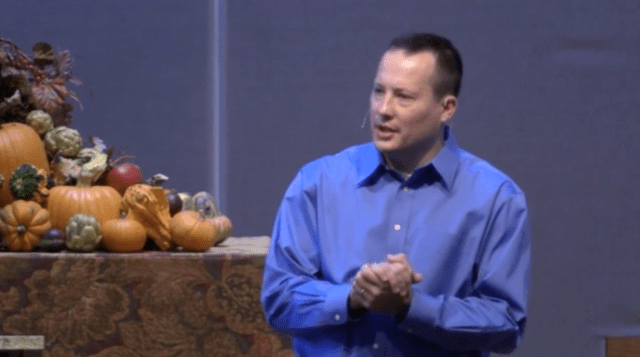
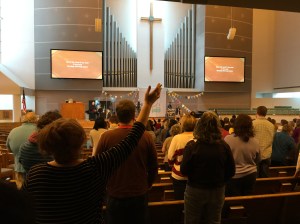
Key Ministry 2015 hi def

Key Ministry was launched in 2002 to help connect churches and families of kids with disabilities. We’ve had a unique interest in helping churches to better serve families of kids with mental illness, trauma and developmental disabilities. Historically, our focus has been on providing knowledge, innovation and support to churches. We’re now looking to create a place for families of kids with disabilities to find community, encouragement, resources and the opportunity to meaningfully connect with a supportive church near where they live.

Key plans to launch our family portal, Key Ministry for Families in early 2016. The portal will include…

A blog authored by twenty Christian parents raising kids with disabilities.

Online groups… Facebook communities (large groups built around common interests – diagnosis, education issues, adoption, etc.), Facebook groups (small to large, for adult education, book studies, Bible studies) and more intimate groups offered through videoconference-based technology.

Church connector… A volunteer-driven database (frequently updated by staff) to connect families who register for the site to local churches.

Video podcasts and training events

Online worship events including devotionals and teaching of specific interest to families impacted by disability.

Resource links… including church-based respite care, parent mentors, support for parents involved with adoption or foster care and educational videos to help parents better manage challenges of daily living when kids are impacted by common disabilities.

In order to launch Key Ministry for Families, we will need to increase our financial support for the ministry above current levels. We estimate during the first year that an additional $25,000 will be required to build the website, provide staff support for establishing and maintaining the church connector and online groups, support a continuous social media campaign to help families discover and make use of the site and to fund a pilot project using our Google Grant to help local churches connect with families impacted by disability in the communities they serve.

To reach people no one else in reaching, we have to try stuff no one else is trying. The 40,000 plus visitors per month visiting our blog suggests that the need is great. Join us as we seek to extend the love of Christ to families everywhere for whom a child with a disability has all too often been an insurmountable barrier to connecting with a local church.

Here’s how you can help…

  • Mail your gift to: Key Ministry, P.O. Box 26109, Cleveland, OH 44126
  • Securely text your gift to us through our Kindrid app: Text to (440) 337-4338, enter a dollar amount in the message of the text, and then hit “send.” The app will then take your secure credit card information. It was designed by the same guys who designed the Bible app for your phone.

Thanks so much for your prayer and support in the year ahead as we continue to seek to connect churches and families impacted by disability!

The Key Ministry team

Posted in Advocacy, Inclusion, Key Ministry, Strategies | Tagged , , , , , , , , , | 1 Comment

Do genes associated with ADHD and depression predispose to success?

shutterstock_21790060I’d like to share links to a couple of excellent articles that postulate specific advantages to genes associated with depression and ADHD in the formation of successful leaders.

The first article, The Upside of Depression was published in the New York Times Magazine in February, 2010. Genes associated with decreased serotonin activity in the brain have been linked to depression and anxiety. Recent studies have also shown increased activity in a region of the brain (ventrolateral prefrontal cortex) in patients with depression associated with the ability to maintain attention. As a result, people who are predisposed to obsessing or “ruminating” about specific problems may have a unique ability to marshal their attention for the purpose of analyzing and breaking down complex problems. To quote from the author…

But the reliance on the VLPFC doesn’t just lead us to fixate on our depressing situation; it also leads to an extremely analytical style of thinking. That’s because rumination is largely rooted in working memory, a kind of mental scratchpad that allows us to “work” with all the information stuck in consciousness. When people rely on working memory — and it doesn’t matter if they’re doing long division or contemplating a relationship gone wrong — they tend to think in a more deliberate fashion, breaking down their complex problems into their simpler parts.

The bad news is that this deliberate thought process is slow, tiresome and prone to distraction; the prefrontal cortex soon grows exhausted and gives out. Andrews and Thomson see depression as a way of bolstering our feeble analytical skills, making it easier to pay continuous attention to a difficult dilemma. The downcast mood and activation of the VLPFC are part of a “coordinated system” that, Andrews and Thomson say, exists “for the specific purpose of effectively analyzing the complex life problem that triggered the depression.” If depression didn’t exist — if we didn’t react to stress and trauma with endless ruminations — then we would be less likely to solve our predicaments. Wisdom isn’t cheap, and we pay for it with pain.

The second article, The Science of Success was featured in the Atlantic. Here’s the premise discussed in the article…an interesting thought for Christians in the adoption and foster care movements:

Most of us have genes that make us as hardy as dandelions: able to take root and survive almost anywhere. A few of us, however, are more like the orchid: fragile and fickle, but capable of blooming spectacularly if given greenhouse care. So holds a provocative new theory of genetics, which asserts that the very genes that give us the most trouble as a species, causing behaviors that are self-destructive and antisocial, also underlie humankind’s phenomenal adaptability and evolutionary success. With a bad environment and poor parenting, orchid children can end up depressed, drug-addicted, or in jail—but with the right environment and good parenting, they can grow up to be society’s most creative, successful, and happy people.

One final observation…In an earlier blog post, I observed that a disproportionate number of church leaders, especially senior pastors-met the criteria for having ADHD. In my practice, I see a lot of kids from a very exclusive private school for boys who are being treated for ADHD. I started questioning myself as to why I was diagnosing more kids with ADHD from this school compared to others in our area. The answer was readily apparent. Most of the boys had fathers (or mothers) who were entrepreneurs or senior leaders in their respective companies…after all, these are the families with the money to pay the $25,000 in annual tuition. The vast majority of the families had at least one parent who was treated for ADHD, or would have been treated today based upon difficulties they experienced growing up.

I recently came across an interesting study that provides the first direct genetic link between ADHD and entrepreneurial ability. And many people aren’t aware that one of our most revered Presidents took Dexedrine for ADHD while he was in office.

I’m not so sure about the impact of visible disabilities upon ability to perform effectively in leadership positions, but there’s interesting evidence to suggest that traits associated with hidden disabilities may be very adaptive for some leaders.

Photo: thatsmymop / Shutterstock.com 

***********************************************************************************************************

image_ChristmasFamilyKey Ministry’s Annual Fund helps to support free training, consultation and support for churches seeking to welcome, serve and include families of kids with disabilities, and allows us to provide this blog as a resource for over 40,000 visitors each month. Please keep our team in your prayers as we prepare for 2016 and consider a generous financial gift to support the ongoing work of our ministry team.

Posted in ADHD, Depression, Leadership, Mental Health | Tagged , , , , , , , , , | 2 Comments

Jeff Davidson…The five roles of a father of a child with special needs

Untitled design-2“Now what am I supposed to do?”

At some point, amidst the confusion, the anger, and the sense of helplessness, it’s the question every new special needs dad asks.

No one is ever prepared to be the father of a child with special needs.

I thought I was ready to be a dad. My own father had been a great role model in my life and I had many mentors and friends who had experienced the joys of fatherhood.

But I didn’t know anyone who was the dad of a child with profound special needs.

I wasn’t ready.

When my own son was born, I went into a tailspin of despair, blame, denial, anger, and confusion. I was lost. It’s no wonder we have an epidemic of dads walking out on their families in the special needs community.

A couple of years ago I began using the phrase “vacant dads” to describe a phenomenon occurring within the special needs community. An entire generation of children with special needs are being raised by moms and grandmothers.

Where are the dads?

More and more often, we are losing the dads of children with special needs within just a few years of diagnosis. But there are two types of vacant dads. One is the dad who walks out on his family and responsibilities, leaving his spouse to raise their child or children alone.

But there is another type of vacant dad. And he is just as dangerous and as likely to occur. That’s the dad who is still in the household, but he is not engaged, he’s not involved, and he’s not actively fulfilling his roles and responsibilities to his family.

He’s a vacant dad too. And he’s just as guilty as the dad who walks out on his family. He’s walked out as well, in every way but physically.

Spotting vacant dads is easy. I just have to look in the mirror and remind myself of what it was like for me when I first began this journey as a special-needs dad.

I never had the opportunity to be the dad I hoped I would become. But God is using this experience to shape me into the father he hoped I would become.

I believe God has mission in life for the special needs dad. God wants us to discover the five roles of a dad of an individual with special needs.

Warrior, protector, provider, encourager, and equipper.

The five-word definition of a special-needs dad. The five-word answer to the question “What is my role as a father of a child with special-needs?”

The five-word antidote to the epidemic of vacant dads plaguing the special-needs community.

The special needs dad is a Warrior. He fights for his family and child. He becomes his child’s advocate. He speaks for his child when his child cannot speak. He does not send his spouse in alone to battle for insurance, therapies, services, and inclusion. He leads the battle when necessary. He does not shirk from IEP meetings but embraces them as opportunities to fight for his child. He leads his family spiritually warring against evil using the weapons of prayer and his knees. He is actively engaged and involved with fighting for his family’s needs.

The special-needs dad is a Protector. He shields his family from harm by being the spiritual leader of his family. He also affirms his spouse, as they stand back-to-back, united in their cause. His constantly, every day, reminds his family that he is there to protect them from emotional and relational harm whenever possible, and to reaffirm them if it does happen. His family feels safe in their home, as he protects them from his own emotional outbursts, fears, desires, or worries. They have security in knowing dad is there and whole-heartedly committed to them as a family.

The special-needs dad is a Provider. I’m not necessary talking about financially. I’m also emphasizing providing a safe, loving environment as well. Creating a household where everyone’s emotional, spiritual, and relational needs are met and provided for in every aspect. He provides a relationship of trust, self-sacrifice, and service by daily laying down his own life for his family and children. He provides a loving, accepting, and supportive home life for his family. He provides leadership and stability to the family.

The special-needs dad is an Encourager. He realizes that his words have the power of life and death over his family, so every day he speaks life. He becomes his family member’s biggest cheerleader, refusing to say anything negative over or about them. He affirms, he believes, he declares, and he reminds them every day that their lives have significance. His speaks blessings over his wife and children, and claims God’s purpose and plan for their lives. He believes in their potential to change the world, just the way they are. He realizes his children will become whatever it is that he says about them, so he is diligent in his choice of words.

The special-needs dad is an Equipper. Everything he does equips his family to the best of his ability, to thrive as a special-needs family. Their needs far supersede any needs of his own. He lays down his own plans, goals, and dreams to serve and equip his family. He searches out opportunities to be engaged, involved, and passionately pursues time with his children. His family is equipped to do far more than just survive, they actually thrive.

Warrior, protector, provider, encourager, and equipper. 

Your strength will be most magnified by your surrender.

Your toughness will be displayed through your tenderness.

Your significance will be measured by your selflessness.

Your success will be determined by your sacrifice.

God has placed the special needs dad on a mission. Choose to accept it and you’ll find fulfillment and the purpose for your life.

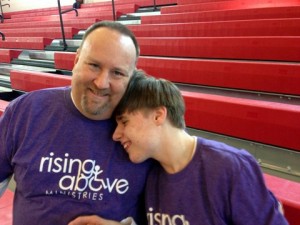
jeff-and-ja-300x225Jeff Davidson and his wife Becky started Rising Above Ministries when they realized the incredible gift and blessing their own son with special needs (Jon Alex) was to them. Jeff’s book, No More Peanut Butter Sandwiches, is available through Crosslink Publishing, Barnes and Noble and Amazon.

 ***********************************************************************************************************

shutterstock_105372080Key Ministry’s Annual Fund helps to support free training, consultation and support for churches seeking to welcome, serve and include families of kids with disabilities, and allows us to provide this blog as a resource for over 40,000 visitors each month. Please keep our team in your prayers as we prepare for 2016 and consider a generous financial gift to support the ongoing work of our ministry team.

Posted in Families, Parents, Strategies | Tagged , , , , , , , , , , , , , , , | 3 Comments

When prayers for healing go unanswered…

shutterstock_321587975Editor’s Note: Three weeks ago, I was sitting in church when Mike Vonderau (one of our teaching pastors at Bay Presbyterian) was discussing Matthew 8:14-17 in a discussion of Jesus’ power to heal. I was struck by this observation – that generated more comments than anything I’ve posted before on Facebook from church…

“The faith formula for healing…if you have enough faith, you’ll be healed…is absolutely wrong.”

We have lots of followers on this blog who have prayed fervently for healing… for themselves, for their kids, for their spouses or for their friends only to experience God’s silence. I put some questions to Mike that our readers have wrestled with…he was gracious to respond. Click on his picture at the end of the post to watch his entire message.

SG: Why do so many people in the church believe in the “faith formula?”…if you have enough faith, you’ll be healed, and if you aren’t healed, it’s because you don’t have enough faith.

MV: People are attracted to what I call the “faith formula” for a number of reasons, but I’d like to highlight two in particular. First, it plays on our desperation. If the faith formula is true, then healing is right at my finger-tips. Second, it challenges me to dig deeper and to try harder to be my own solution. Ultimately it focuses us on ourselves and not God, telling us that if we just try hard enough we can do it. People love to hear that message because then it appears I am in control of my own destiny and the source of my own salvation. Ironically, the faith formula doesn’t challenge us to trust God, it challenges us to trust ourselves.

shutterstock_344521991SG: We see many, many comments on our blog and Facebook page from folks who have prayed fervently for healing for themselves, or healing for a child or family member only for God to remain silent. As a pastor, how do you help them to maintain their confidence in the goodness of God when silence is His response?

MV: This is a really challenging one. When people are hurting like this its tempting to try to provide a rational explanation when what people really need is someone to walk alongside them through the pain and grief and hear them out. The conclusion I’ve landed on personally when I’ve not experienced the healing that I’ve asked and longed for, is that the Lord has the same words for me that he had for the Apostle Paul some 2,000 years ago: “My grace is sufficient for you, for my power is made perfect in your weakness.” I cling to those words.

SG: In your message, you shared that “it’s not the strength of the faith that we have, it’s the strength of the One in whom we have faith.” How should a faithful Christian who has been fervently praying for healing draw comfort from this?

MV: This again points to the fact that the emphasis is not on me and the strength of my faith and the quality of my prayers. The complete emphasis is on God who hears our prayers. It’s tempting to put our faith in faith or to put our faith in prayer because we can control those things to a certain degree. What’s important is to put our faith in God, who we can’t control, and to truly trust him come what may.

SG: In Philippians 4:6-7, Paul writes… “do not be anxious about anything, but in everything by prayer and supplication with thanksgiving let your requests be made known to God. And the peace of God, which surpasses all understanding, will guard your hearts and your minds in Christ Jesus.” How should a faithful Christian who prays for relief from anxiety or fear but continues to experience distress interpret this passage?

shutterstock_148518026MV: When we struggle with anxiety we need to remember that anxiety is the symptom and not the primary problem. Recurring anxiety is often caused by some deeply rooted thought patterns and beliefs often times related to some sort of emotional wounding. So, while our desire is to be free from anxiety our need is to be healed at a much deeper level and that is usually going to take time. And, in fact, most healing that Christians experience via prayer does not come instantly but gradually over time. But, in the midst of this we can be reassured that God is guarding our hearts and minds.

SG: In your message you talked about the idea that all healing is incomplete this side of heaven. What did you mean by that?

MV: I think this is a really important thought. Even when people receive healing from God, the healing is not complete and final. They’ll get sick again, one way or another, and eventually we all die. So, even though God does miraculous things every one of us we only experience incomplete healing. This has to do with the fact that the kingdom of God is here now but only in part and not in full. But the GOOD NEWS is that one day, when Jesus returns, the kingdom will come in fullness and all of us who trust in Jesus will experience complete and final healing.

Mike's Message

Mike Vonderau is an Associate Pastor at Bay Presbyterian Church in Bay Village, Ohio.

***********************************************************************************************************

IMG_0751Key Ministry’s Annual Fund helps to support free training, consultation and support for churches seeking to welcome, serve and include families of kids with disabilities, and allows us to provide this blog as a resource for over 40,000 visitors each month. Please keep our team in your prayers as we prepare for 2016 and consider a generous financial gift to support the ongoing work of our ministry team.

Posted in Controversies, Key Ministry, Resources | Tagged , , , , , , , , | 2 Comments

Christmas time challenges for kids with common mental health conditions

shutterstock_343761578Kids with common mental health conditions react to the holidays very differently than do adults. Today, we’ll look at three struggles common during Christmas break amongst the kids and families served by our practice and suggest practical strategies for parents and caregivers to minimize the impact of the holidays upon their kids.

Problem: Kids who are anxious and/or struggle with obsessive thinking don’t do well with down time over the Christmas break.

Solution: Busy is better!

This is the single biggest factor contributing to kids landing in our office during the Christmas season. Kids prone to sadness, irritability or obsessive thinking cope by distracting themselves with schoolwork or activities that occupy their minds while filling lots of time. When the normal school routine (accompanied by lots of homework and and extracurricular activities) comes to a screeching halt in late December, it’s not unusual for kids who dwell or ruminate on bothersome thoughts to become intensely more angry or irritable.

Parents of kids prone to perseveration, rumination or obsessive thinking can proactively address this problem by keeping their child or teen busy over the break. If they’re old enough, volunteer opportunities through churches and non-profits are plentiful at this time of year. Parents might consider making plans for family activities likely to keep their child mentally engaged…trips to art museums, science museums, the movies, concerts, plays and outdoor sports may all be welcome diversions.  This strategy may also be helpful during the first two weeks after school lets out for the summer, before camps open and summer-long activities begin.

Problem: Kids who struggle with emotional self-regulation, social anxiety or sensory processing often experience challenges at large gatherings with extended family during the Christmas season.

Solution: Parents must be careful to manage their expectations…and the expectations of family members when kids have neuropsychiatric conditions.

Some kids have more difficulty masking their disappointment over gifts than others. Emotional self-regulation is one of the executive functions that mature more slowly in kids with common mental health disorders. The picture with Santa isn’t worth it if your painfully shy kid is going to melt down at the prospect of sitting on his lap. A child with sensory issues may find the prospect of hugging Aunt Betty as downright aversive, even if she doesn’t smell of alcohol and cigarette smoke.

To the extent possible, the holidays represent an opportunity for parents to educate relatives about the nature of their child’s condition and interaction strategies likely to produce pleasant memories for all.

Problem: With the excitement of the season and changes in routine that occur during the Christmas season, many kids with common mental health conditions experience difficulty with self-control.

Solution: Parents and caregivers need to be very intentional in attempting to maintain some structure during a very busy holiday season.

As a general rule of thumb, kids who struggle with disruptive behavior disorders (ADHD, Oppositional Defiant Disorder) are capable of controlling their behavior and managing their emotions – but they need to devote much more mental effort to maintaining control than another child of the same age without the condition.

I’d define “structure” as clear and predictable rules, expectations and routines for task completion and interpersonal relationships. “Structure” allows kids to devote mental resources and energy to maintaining self-control instead of expending their available cognitive capacity processing the stimulation in their environment.

Let’s apply this concept to the holidays…For kids who struggle with self-control, their risk for disruptive behavior is reduced when they can fall back upon predictable and familiar routines. As the environment becomes increasingly chaotic and their daily schedule more disorganized and unpredictable, their capacity for maintaining self-control is diminished. Reestablishing routines as the resumption of school approaches is also important. Kids  often need a week or more to settle back into their school routines after two weeks of excitement and sleep deprivation.

image_ChristmasFamilyIn summary, three practical strategies will help many kids with common mental health conditions and their families to better experience the peace and joy associated with the Christmas season!

  • Busy is better for kids who think too much
  • Managing behavioral expectations for family gatherings outside the child’s usual routine
  • Intentionality in maintaining as much structure and routine as possible

***********************************************************************************************************

shutterstock_118324816Key Ministry has put together a resource page for pastors, church staff, volunteers and parents with interest in the subject of depression in children and teens. Available on the resource page are…

  • Links to all the posts from our recent blog series on depression
  • Links to other outstanding blog posts on the topic from leaders in the disability ministry community
  • Links to educational resources on the web, including excellent resources from the American Academy of Child and Adolescent Psychiatry (AACAP), a parent medication guide, and excellent information from Mental Health Grace Alliance.


Posted in ADHD, Anxiety Disorders, Families, Hidden Disabilities, Key Ministry, Strategies | Tagged , , , , , , , , , , , , | 3 Comments

Three simple words

Three Simple Words

Editor’s note: Jeff Davidson will be serving as our guest contributor to the blog in December, January and February. Jeff is the Founder and President/CEO of Rising Above Ministries, a national special needs ministry serving special needs families, and is a contributing author to Not Alone, Comfort in the Midst of Chaos, and The Mighty. Jeff, his wife Becky and his son (Jon Alex) live in Cookeville, Tennessee. When he is not writing and speaking, Jeff is passionate about University of Tennessee football. I look forward to having another male voice on the blog this winter. Here’s Jeff’s first contribution…

For many typical families, it truly is “the most wonderful time of the year,” as the song says.

But for many families impacted by disability, chronic illness, and special needs, it’s more like “the most dreadful time of the year.”

The holidays are here.

This is the time of the year that brings so much added stress, despair, and frustration to special needs families. Every day seems to bring yet another reminder of how different our lives are, and how every aspect of our lives is impacted by disability.

In the early years of our own family’s journey as special needs parents, I would find myself drafting a long litany of worries. 

“What if he has a meltdown in the middle of dinner?”

“What if his vocal stimming is so loud it disrupts all the conversation around him”

“What if we have to leave the house early in order to calm him down?”

“What if I have to explain the gluten free, dairy free diet to one more nosy aunt?”

“What if that other extended family member won’t quit staring?”

“What if he makes a mess while I attempt to feed him?”

Sometimes I would want to scream, “if you people only knew how hard it as for us to even be here today, you’d be a little more understanding!”

Perhaps the late Southern humorist Lewis Grizzard was right when he said that relatives were people you would want nothing to do with if it weren’t for the fact that you are related.

Eventually, I came to a startling revelation however, and it changed my whole attitude and perspective.

It was not my son’s behavior that caused my worries and anxiety. Rather, it was my fear of how others might be perceiving that behavior that was the source of my stress.

In other words, I was letting my emotions be determined and dictated by the reactions of those around me. The watershed moment for us came when we realized that people would take their cues from us and how we reacted to our circumstances.

We made the decision, the choice, to live our lives unapologetically and joyfully. We have been given this amazing gift to remind us of unconditional love, infinite grace, and the essence of the gospel in our lives.

Now I too am a Southern man. I was born in the South and have lived here all my forty-eight years. In the South, we have our own colloquialisms and ways of expressing things in language.

For example, we have refined the word “fixin’” in ways the English language could have never conceived.

“I’m fixin’ to go eat lunch”

“They were fixin’ to get ready to go the party.”

We say things that only another Southern might understand such as, “That dog will hunt,” or “I didn’t do nothing but piddle around all day.”

So my wife and I found our salvation, our relief, our moment of clarity, in three simple words that only resonate in the South.

Three simple words that hold the key to surviving the holidays as a special needs family. Heck, these three words will get you through any and all situations year-round as a special needs family.

You will no longer fear social situations or crowds. You will no longer fear restaurants, dinner tables, or waiting rooms. You will no longer live in fear of stares, looks, or disparaging comments.

You ready for the three words that will change your life?

“Jimmy crack corn…”

What in the world?

It’s a line from a popular minstrel from the 1840s which goes, “Jimmy crack corn, and I don’t care.” We often sang the song from which it is derived, “Blue Tail Fly” in elementary school music and chorus.

And there you have it. My wife and I will simply say under our breath, “JCC.”

As in, “Jimmy crack corn, I don’t care.”

Because I don’t care any more. This is our family. This is what we look like and how our son acts. I don’t have a problem with his autism or his cerebral palsy. If you do, well that’s your problem.

We won’t let the actions or reactions of those around us dictate our joy and our happiness as a family. We are going to live our lives fully, with as much grace as possible. We have much to offer to this world and we are not going to let you stop us from God’s purpose and plan for our lives.

“JCC.”
***********************************************************************************************************

jeff-and-ja-300x225Jeff Davidson is an author and pastor who enjoys speaking at churches, conferences, events and to groups, ministering to special needs families and individuals. Jeff and his wife Becky started Rising Above Ministries when they realized the incredible gift and blessing their own son with special needs (Jon Alex) was to them. Jeff’s book, No More Peanut Butter Sandwiches, is available through Crosslink Publishing, Barnes and Noble and Amazon.


Posted in Families, Parents, Strategies | Tagged , , , , , , , , , , | Leave a comment

Coming forward

shutterstock_226195513This past Sunday, Garnett Slatton (one of the teaching pastors at the church my family attends) was preaching from Luke 5:12-16 on the topic of healing. In this passage, Jesus extends his hand to touch a man with leprosy, heals him, and sends him (in accordance with passages in Leviticus) to a priest to be declared healed.

Every one of us, because of the Fall, have all this stuff inside that is broken. He stretched out His hand and He touched him. Jesus went right to the heart of his isolation, his emptiness and his brokenness, and He healed the whole person, not just the infection. A word could have healed his whole body, but his touch healed his heart. Jesus then sends him to the Temple, so that he could return to community.

He healed the man’s physical problems, his spiritual problems, his emotional problems, his social issues and his spiritual issues. He made this broken man whole again – whole.

He is concerned with healing the whole person, redeeming everything that was broken in the Fall- all of it. Jesus is not just a teacher, He is a healer.

At the end of the message, Garnett invited everyone in the church in need of healing to come forward to the front of the church for prayer.

We all need prayer ourselves…we’re just as broken and in need of healing as much as anyone else…let me trust you with my weakness, my need.

I have need of healing myself. I have for many years, suffered with chronic depression, I’ve been medicated for it for about ten years. It would have been a lot longer, but I hadn’t been really stubborn. It’s hard for me to sleep almost all the time,  I’m always tired, I always feel the spiritual opposition that someone in my role feels. I need you to pray for me. But now is not the time for me. Now is the time Jesus invites you to come. He invites you for your own needs. He invites you for the sake of others.

Garnett’s message can be accessed by clicking on his picture below…but I’d like you to hold off on that until you read all the way to the end.

Garnett

I didn’t go forward for prayer two weeks ago, nor did I go forward last week. That didn’t stop God from sending a signal that He was aware of my needs.

A couple approached me who I’d spoken with on a few occasions over the past year and said they felt led to pray for me. They laid their hands on me and proceeded to pray for, in order, three or four specific concerns that I had been wrestling with frequently over the last week. This was stuff that was contributing to less than restful nights…concerns that they would’ve had NO WAY OF KNOWING ABOUT from anything I’ve ever shared publicly. They prayed about stuff that I hadn’t discussed with anyone aside from my wife – and the Lord.  I guess God intended for me to be blessed even if I wasn’t going to come forward and ask for a blessing.

In Garnett’s message, he observed that prayer for healing often needs to be repeated and sustained over an extended period of time. I have a hard time setting aside my pride and my need to try to solve problems through my own abilities to ask other people to pray for me. The other challenge I have in asking others to pray for me is that the stuff I struggle with seems pretty trivial in the context of the challenges the families served by our practice face, and extremely trivial when compared to the challenges many of my colleagues in like-minded ministries find themselves wrestling with this Advent season.

I have great respect for Garnett. He and his family made great sacrifices in pursuing his ministry calling that I’m not sure I’d be able to make. But if he can lead by example, I can follow.

I need folks to pray for me.

I need folks to pray for me because it’s getting harder and harder to meet my emotional and financial responsibilities to my family while maintaining the level of excellence I’ve come to expect…and the families served by our practice demand from our practice. I don’t get to walk away from my job at 5:00 or 6:00 PM. Trying to sustain the level of service that families have come to expect – and demand takes so much mental energy that all too often I don’t have any left for my wife and family, much less other interests and people. I grew too tired to go to the early morning men’s Bible studies or fellowship groups in our area. I haven’t been much fun at times to be around…aside from watching sports on TV or reading about political stuff, I don’t have anything else to talk about. I can’t talk about what I do at work, except in the most general terms. I did watch a movie this year…once. And I did go to an Ohio State game a few weeks ago on my way home from a ministry conference.

Some might ask where I get the time or energy to write these blog posts or do the other things I do for Key Ministry. At times, the ministry has been a blessing in that the activity has served as a distraction from the sense that the best we can hope to do with our practice is to survive the changes in how healthcare is delivered. When we started our practice, we worked off the assumption that around 80% of our time would be spent with kids and families. Between paperwork, phone calls, e-mails, report writing and coordinating care, 50-60% of our time is now spent doing work we’re not paid for. Fewer and fewer families are able to pay for their actual visits with us, much less all the other stuff we do. I’m coming to realize that our families can’t find other places that offer what we do because there isn’t a business model that could sustain what we do in our region. I’d appreciate prayers for wisdom in knowing how we might continue to serve families with excellence while honoring the responsibilities God expects me to fill for my family.

Finally, I need folks to pray for God to send the right people with the right gifts and talents and passions to our ministry. Our team has been through several years of great transition as we’ve been wrestling with what God wants our ministry to become. We’ve been blessed with many talented trainers and writers and consultants. We need to identify the right people with the fund development and organizational skills necessary to sustain our ministry for as long as it is necessary.

Scroll back up and click on the picture of the good-looking guy with gray hair. Healing is a topic of great interest to most readers who regularly follow our blog. Many at my church were encouraged by Garnett’s teaching last week. I hope you will be too!

***********************************************************************************************************

shutterstock_118324816Key Ministry has put together a resource page for pastors, church staff, volunteers and parents with interest in the subject of depression in children and teens. Available on the resource page are…

  • Links to all the posts from our recent blog series on depression
  • Links to other outstanding blog posts on the topic from leaders in the disability ministry community
  • Links to educational resources on the web, including excellent resources from the American Academy of Child and Adolescent Psychiatry (AACAP), a parent medication guide, and excellent information from Mental Health Grace Alliance.


Posted in Depression, Key Ministry, Leadership, Mental Health | Tagged , , , , , , , | 4 Comments

Karen Jackson…A Personal Plea from an Autism Mom

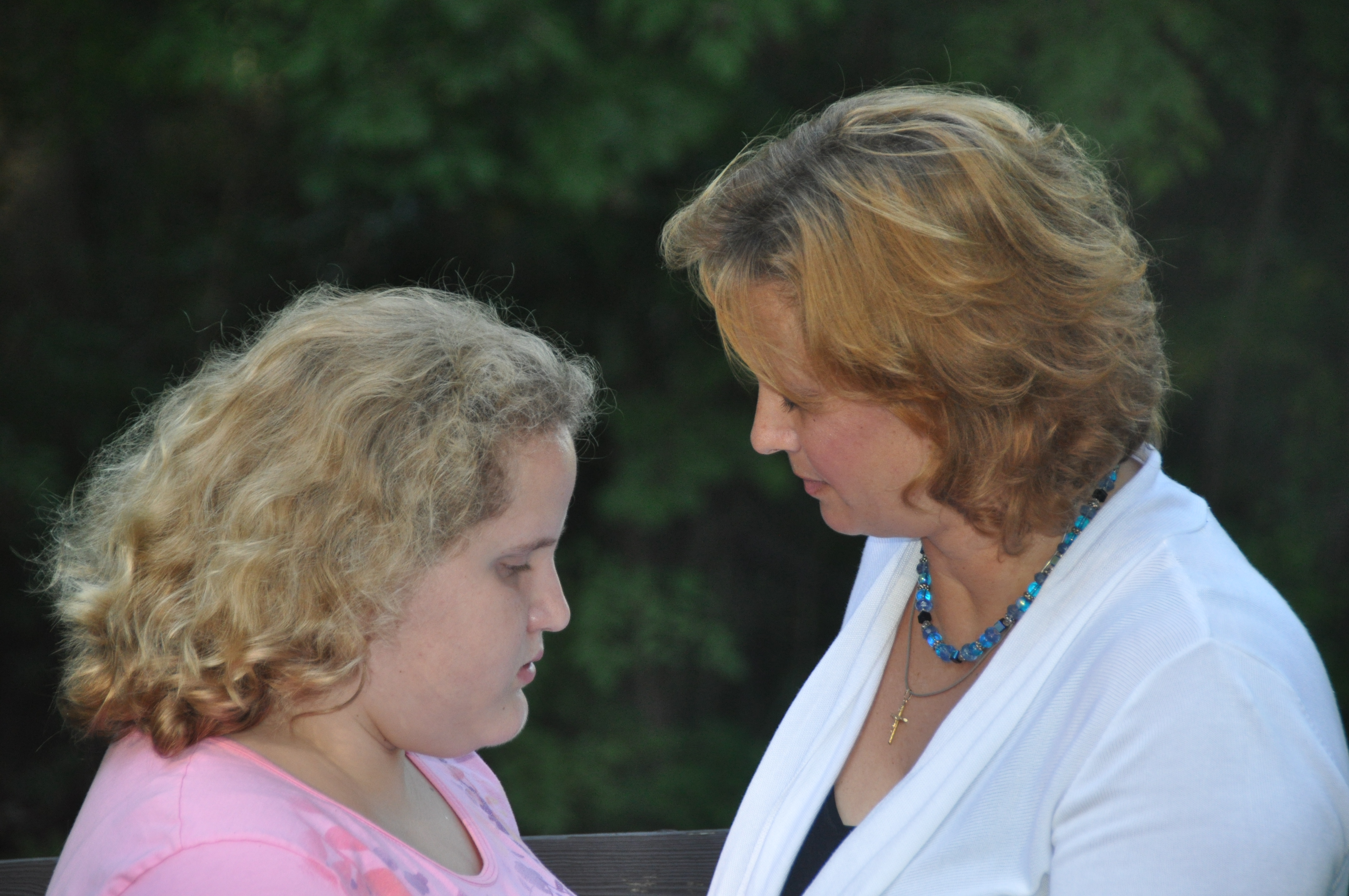
2014-09-23 19.53.04If you know me, you probably do not see me often without a smile or busily engaged with my family, school or FIN ministry. I work hard to be a good wife and mom, to be productive at school and to help others and to bring support and awareness about living with disability to the people in my circle.

What you do not see is that I struggle, too, more than I would like to admit. Even though I have incredible support from my husband, from Christian friends who pray for me regularly, from my support group Living in Holland and even from an awesome counselor at times, I still struggle. The challenges that can present themselves via autism are sometimes overwhelming and I want to run to my room and hide-to just give up for a while. (And I share this because I have done this before!)

In light of the many devastating stories I have heard locally and nationally, I want to make a special plea to those who are friends with or know a parent raising a child with a disability. Do not ignore signs of depression, even mild ones. Take the time to ask the friend or acquaintance how they are really doing and engage in careful listening.

I admit that, when people ask me this question, I often give the standard “Everything’s great!” response, not really sharing that maybe I was up all night with my daughter or that I am very concerned about a certain behavior. But once in a while, a friend stops me, looks me in the eye and asks, “How are you really doing?” and I open up a bit. If they offer some help or prayer, I am so grateful because I know that this is God reaching out to me, His love and comfort wrapped in a friend’s concern.

And so I continue my plea…reach out to those caregivers who seem to have it together. Do not assume that all is well. Take a moment to offer an encouraging word or offer some support. You may make their day…you could also save their life.

***********************************************************************************************************

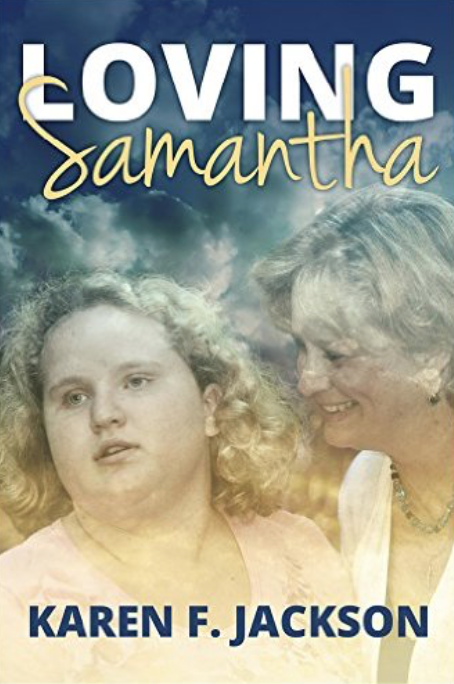
Loving SamanthaKaren Jackson serves as Executive Director of the Faith Inclusion Network of Hampton Roads. Her book, Loving Samantha, is a collection of faith-filled stories of life experiences raising Samantha, a beautiful, 17-year-old who happens to have autism and is available at Amazon. She invites readers to contact her at faithinclusionnetwork@gmail.com.

Posted in Autism, Depression, Families | Tagged , , , , , , , | Leave a comment

Clinging to Faith while Parenting Children with PTSD

shutterstock_214319938This post is the thirteenth and final article in Jolene Philo’s series about children with PTSD. The entire series can be accessed here. Though the first ten articles in this series focused exclusively on PTSD in children, the final three address issues common to parents raising traumatized kids. Today’s post looks at six truths that can help parents cling to their faith when the challenges of raising children with PTSD seem overwhelming.

Truth #1: Christians’ understanding mental health lags far behind their understanding of physical health.

Before the age of modern medicine, physical illnesses were often viewed by the church as evidence of a lack of faith, the consequence of sin, or as punishment from God. In all those cases, the best remedy was confession and prayer. Medical advances have changed that thinking in regards to physical health. But not so much for mental health matters. The general public, as well as the Christian public, is woefully unaware of the many brain-imaging and stress hormone studies that show how trauma changes both the brains and bodies of children. They are also unaware of the many effective treatments for PTSD in children. As parents we can advocate for our kids by educating others about advances in mental health.

Truth #2: PTSD in children is not punishment for their sins or yours.

Children do not cause their own PTSD by sinning. And unless parents have neglected or abused their children, their sin does not cause PTSD in children either. But families can easily lose sight of this truth when parenting kids with PTSD. Parents begin blaming themselves or their kids. Blame can snowball into self-guilt for parents and casting guilt on children. We must continually remind ourselves, our spouses, and our kids that childhood PTSD is the result of trauma they did not seek or cause.

Truth #3: People may not understand PTSD, but God does.

Philippians 2:8 says that because Jesus, the Son of God came to earth and put on flesh, he understands fully what it means to be human: And being found in human form, he humbled himself by becoming obedient to the point of death, even death on the cross. (ESV) Can you think of anything more traumatic than being innocent of any wrongdoing and still being crucified on a cross? Whatever your child with PTSD is enduring, Jesus knows. Whatever you are feeling as the parent of a child who has experienced trauma, God the Father knows.

Truth #4: PTSD is rooted in deception and banished by truth.

The brains of children and adults with PTSD are stuck in their trauma. When triggered, the traumatic event replays inside the brain as if it never ended. Effective PTSD treatment helps process the memory so it gets unstuck. Good therapy also helps people create a narrative of the traumatic event that has a beginning, middle, and end. Then the brain can believe the truth and be free of fear. The original trauma is over, and I am safe. As Jesus said in John 8:32, “…you will know the truth, and the truth will set you free.”

Truth #5: Never underestimate the power of persistent prayer.

Effective PTSD therapy depends on two things: finding the right treatment and a cooperative client. Sometimes parents work long and hard before the two components intersect. Sometimes, despite their best efforts, the two components never meet…at least not in a parent’s lifetime. But parents who pray consistently and persistently to the God who promises to hear and answer petitions that are in accordance with his will should take heart. God hears our petitions for the physical, mental, and spiritual healing of our children. We can trust him to answer them, if not in this world, then surely in the world to come.

Truth #6: God is always in control.

Just as God is in control of the lives of those with physical illnesses and disabilities, so he is in control over mental illness. What Jesus said in John 9:3 about the man blind from birth is true about traumatized children, too: “It was not that this man sinned, or his parents, but that the works of God might be displayed in him.”

Though we may not see it, God has a plan for the lives of our children. His plan is to display His works in them in his perfect time. The journey my husband and I have been on as parents of a child with PTSD often feels like we’re moving one step forward and two steps back. Even so, we have seen the work of God displayed over and over since we became parents in 1982. We expect to see it displayed over and over in years to come. Because our God specializes in taking difficult circumstances and using them to accomplish great good. God was in control when his Son hung on the cross. Surely he is in control of the lives of our traumatized children, too.

***********************************************************************************************************

JoleneGreenSweater.jpgDoes My Child Have PTSD? is designed for readers looking for answers about the puzzling, disturbing behaviors of childen in their care. With years of research and personal expererience, Jolene Philo provides critical information to help people understand causes, symptoms, prevention, and effective diagnosis, treatment, and care for any child struggling with PTSD. Available for order at Amazon.

Posted in Hidden Disabilities, PTSD, Resources, Stories | Tagged , , , , , , , | 1 Comment

4 Reasons Traumatized Kids Need Mentally Healthy Parents

shutterstock_7210075Thank you for stopping in to read the twelfth article in Jolene Philo’s series about PTSD in children. The first ten posts in this series focused exclusively on PTSD children. However last week’s post was about what parents can do to advocate effectively for traumatized children. This post continues in the same vein by examining why kids with PTSD need mentally healthy parents–a reality I first began to deal with after our son’s PTSD treatment in 2006.

One day, I was sitting in the waiting room of the clinic where our son was being treated for PTSD waiting to take him to lunch. One of the therapists strolled in and stood in front of me.

“Are things going okay?” I asked.

“Very well.” He nodded and held my gaze. “But what about you, Mom? How are you doing with all this?”

The question caught me off guard. Our son had been the one the surgeons, doctors, nurses, and x-ray techs wanted to know about since the day of his birth No one had ever asked about me. Or my husband.

“Me?” I stammered. “I’m fine. You’ve done so much for our son this week. I’ve never been better.”

“Really?” the therapist mused. “That’s interesting.”

Just then, our son came into the waiting room and the conversation ended. In the years since our encounter, I have mulled over that unexpected question many times. The mere asking of it somehow gave me permission to admit I’d experienced trauma as a mom. The more I thought about it, the more my tendency to avoid visiting people in the hospital made sense. I came to understood why my pulse quickened and my stomach knotted for years when my now-stable and responsible son called and said, “Hi, Mom.”

Eventually, through treatment and practice, I eventually learned to confront and process my experiences. As it turns out, recent research proves highlights several reasons why traumatized children need mentally healthy parents. Here are just a few.

Reason #1: Children of mothers with PTSD are at higher risk of developing PTSD. After the 2013 missile attacks in Israel, researchers found that the children of mothers who developed PTSD after the attacks were at much higher risk of developing PTSD than other children.

Reason #2: Parents diagnosed with depression are more likely to abuse their children. Another 2013 study asked mothers to complete a questionnaire about how often they abused their children, either physically or emotionally. Mothers diagnosed with both depression and PTSD were most likely to report abuse. But mothers diagnosed with only PTSD reported more abuse than those with only depression. Moms with any sort of mental illness reported abuse more often than did mentally healthy moms.

Reason #3: Children of depressed parents have a higher risk of developing PTSD. A 2014 Journal of Pediatrics study examined family members who had been in serious accidents together. In some cases, only the parent was injured, in others only the child, and sometimes both the parent and the child were injured. The study found that children whose parents were depressed after suffering severe injuries were at risk of developing PTSD even when the children weren’t injured.

Reason #4: Parents of Medically Fragile Kids Have a Higher Risk of Developing PTSD. In 2005, the Children’s Hospital of Philadelphia found that parents of kids with cancer exhibited many symptoms of post-traumatic stress disorder. In a New York Times online story, Laurie Tarkan summarized the results of several studies. Her review revealed that parents of NICU infants are at a higher risk of PTSD than parents of babies never in the NICU.

If you are raising a child with PTSD or other mental issues, you are probably dealing with your own trauma, too. You need to tend to your own mental health by practicing self-care. If your child is receiving mental health treatment, ask the therapist to include you in some of the sessions or to set up a separate appointment for you. If that won’t work, ask your child’s therapist, trusted friends, or your pastor for recommendations. You can also go to Psychology Today’s therapist locator and type in your city or zip code to get a listing of therapists near you. Go to their websites to learn more about them. Call and ask questions. Find out if the therapists are in your insurance network. Then call and make an appointment with one of them. If you go to the first appointment and the therapist doesn’t feel right, try someone else. And remember, you’re not seeking treatment just for yourself. Your kids need mentally healthy parents. You’re doing this for your kids.

***********************************************************************************************************

JoleneGreenSweater.jpgDoes My Child Have PTSD? is designed for readers looking for answers about the puzzling, disturbing behaviors of childen in their care. With years of research and personal expererience, Jolene Philo provides critical information to help people understand causes, symptoms, prevention, and effective diagnosis, treatment, and care for any child struggling with PTSD. Available for order at Amazon.

Posted in Depression, Families, Mental Health, Parents, PTSD | Tagged , , , , , , , , , , | 3 Comments