
Rhett Smith…Anxiety as a Barrier at Church

Anxiety is a classic example of a “hidden disability.” In the third segment of his current series, Rhett Smith discusses some not so obvious ways in which anxiety presents significant barriers to church attendance and engagement for kids as well as adults. Rhett is the author of the new book, The Anxious Christian: Can God Use Your Anxiety for Good?For more on Rhett, click here for his biography and a video introduction to his new book. Here are links to Part One and Part Two.

SG: You served for a number of years as a college pastor at Bel Air Presbyterian Church and more recently, you taught parenting classes at Highland Park Presbyterian Church. Do you see anxiety as a significant barrier to church attendance and participation for teens and young adults? What advice do you give parents when their kids struggle to attend worship services, participate in small groups or participate in retreats and special events because of anxiety? How would you help adults when anxiety becomes a barrier to them finding a church or becoming more involved at church?

RS: I’m not sure if I have ever really seen anxiety as a significant barrier for teens and young adults. But as you asked this question and I have thought more on it, I think it has, but in not ways that are always that obvious. I think one can have anxiety, but still comes to church. But anxiety will keep them from maybe doing things like getting baptized for fear of being up front. Or from taking a mission trip because of fear of the unknowns. Or fear on coming to a small group for fear of being asked about their faith and not knowing what to say. So I think that anxiety doesn’t necessarily act as an initial barrier to going to church, but will act as a greater barrier as more and more opportunities arise for them in church. Then they are faced with the decision to face their anxiety or not. But I know there are more extreme cases of anxiety, things like panic attacks, where one maybe can’t even get to church. Also, I owe a lot to Adam McHugh and his book Introverts in the Church on this topic. Great, great book and a must read for anyone in church….especially leadership. But I wonder how many people are introverted in nature and have a mild anxiety about participating in a very extroverted culture like church. So something like raising hands in worship, doing a crazy high school skit, shaking hands with someone new before church, or being in a small group can raise anxiety and be huge barriers for people in Jr. High, High School…..and really, all ages.

I was asked by a parent last Sunday about what advice I had for a kid who didn’t want to go through confirmation. Ultimately I didn’t have great advice. But what I told them was this. And this mainly comes from my youth pastors friends who are more seasoned in youth ministry than I am. My friend Neil Gatten in particular from La Casa de Cristo Lutheran Church helped me with this. Give your kids some freedom in their choices spiritually. If you don’t empower kids to make choices in life, then you haven’t set them up for success when they leave the nest. So it might look something like, “We expect/want you to go to church with us on Sunday, but it’s up to you if you want to go on Wednesday nights, or attend events?” I think that’s real important to give choice and freedom here. Also, I think when it comes to anxiety (and let’s assume we don’t know if anxiety is at the heart), we need to talk to our kids. Ask them why they don’t want to attend? What’s going on with them? Get below the surface. Ask them about their fears of being at church, or what they worry about. I told the mom who asked me about confirmation this. I told her that if I was faced with confirmation as a kid, I would have wanted to get confirmed. But I would have had so much anxiety about having to read catechism stuff out loud in my class that I would have done anything…..even rebelled to the point of getting kicked out of the class….to avoid the fear of having to read out loud and being embarrassed when I couldn’t, or when I stuttered. So maybe there are anxious reasons under our kids’ reasons for not wanting to participate in church. We need to figure out creative ways to explore those. And if we can’t, help find someone who can.

Since I believe we ultimately grow by facing our anxieties, I think that I would help an adult by SLOWLY, moving them towards opportunities that they desired to participate in, but had anxiety about. I also think I would find 1-2 people that they could confide in that would be a helpful community for them at church. That connection goes a long way in helping people face anxiety. I also would explore whether or not the community they were in was the right community for them. Putting commentary aside on our church shopping and want driven church culture, not every church is the right “fit” for us. If I’m someone who is anxious a lot, or more introverted per se, I may not feel a sense of belonging in a more charismatic church. I might want to explore faith in an Anglican community for example, or a community that practices more solitude, space and has liturgical practices that are more communal driven than individually driven. This could be a whole other book, but our temperament and the way God wired us may have us exploring a different faith community than the one we are currently in.

Ultimately, adults can better face their anxieties when they know they aren’t going to be judged, the shame is removed, and they have a community of people around them who support them and walk through life with them. Maybe as leaders in the church, we as well have to rethink how we approach, work with, and welcome people into our midst who are struggling with anxiety. It’s a two-way street.

I’ll be the featured guest on the Special Needs Ministry TweetChat on Thursday, March 8 at 9:00 PM Eastern, 8:00 PM Central. Topic: Families Touched by Mental Illness…The Impact at Church. Click here for more info.

Rhett’s new book, The Anxious Christian: Can God Use Your Anxiety for Good? is available in paperback and Kindle editions through Amazon.com. You can read his blog at www.rhettsmith.com.

Last Summer’s blog series examining the impact of anxiety upon spiritual development in kids, along with additional resources to better understand the impact of anxiety disorders in children and adolescents may be accessed here.

Posted in Anxiety Disorders, Inclusion, Key Ministry, Strategies | Tagged , , , , , , , , , , | 1 Comment

Rhett Smith…The Anxious Christian-Part Two

Sunday’s guest interview with Rhett Smith,  author of the new book, The Anxious Christian: Can God Use Your Anxiety for Good?, set a new daily record for page views. In Part Two, he shares how his personal experience of anxiety following his mother’s untimely death ultimately became a tool God used to help him mature spiritually. For more on Rhett, click here for his biography and a video introduction to his new book.

SG: In the book, you openly discussed your own personal struggles with anxiety as a child, following the loss of your mother. Looking back, how do you think your experience of anxiety hindered your spiritual development as an adolescent and as a young adult? How did your anxiety help you mature spiritually?

RS: Yes, I’m very open about the loss of my mom from breast cancer when I was 11 years old. She was diagnosed when I was six years old, so it was quite a long and anxious journey before she died. Her death was proceeded by the death of her mom (my grandmother) to breast cancer, and was followed by the death of her sister (my aunt) to breast cancer. Breast cancer runs in our family and has created a lot of anxiety, and continues to cause a lot of anxiety for newer generations.

I think that the anxiety hindered my spiritual development in several ways. One way is that I set up God as this God who punished people for something they did wrong. And so the way to appease God was to make bets with him and make him happy. My mom didn’t do anything wrong, but I thought that perhaps I did, and so maybe she died because I didn’t do something right. So I kept God at arm’s length, fearful of him, but I also needed him so I could make bets with him and try to appease him. It was very confusing, and I didn’t feel safe with God in the way that I think He desired for me.

I think that it also hindered my spiritual development in terms of my identity. If God really created me for a purpose, than I thought he must have really screwed up with me since I was now stuttering and unable to read after my mom’s death. I didn’t learn this till later, but death can create such trauma that it can lead to issues like stuttering. So I felt less than. I felt like God really couldn’t use me to do great things for him. So spiritually speaking, I just really wondered if God could use my life and that hindered my ability to really open myself up to be used by him.

Anxiety also hindered my spiritual development in that I was so anxious a lot, and fearful to stutter around others, that I tended to withdraw at times. That withdrawing left me feeling isolated, alone and abandoned. I don’t want to paint the wrong picture here. I had lots of friends and played sports and participated at church, but inside I felt alone and was in a withdrawn place mentally. So at a time in my life when I really needed to feel connected and invite people into that lonely space, I tended to keep people at a safe distance. That’s hard in adolescence, because that’s such an important time in life for connection and community.

Now here come the paradoxical shift for me. Anxiety helped me mature spiritually at some point because as I opened myself up to God I kept hearing him calling me to do things and participate in things that required me to face my own anxiety. So ultimately, the very anxiety that hindered me spiritually early in life, would later be the siren that beckoned me to follow hard after Him and face my fears. It came to me in several stages, but the real first moment was when I made a promise to God in prayer. I told him that if he gave me the opportunity to speak (face my greatest fear of stuttering in front of others), I would take it. And like two days later I got a call from my college chaplain’s office to preach at the Easter sunrise service. I immediately said no, but upon hanging up the phone, I realized that I had prayed for that opportunity earlier in the week. So on April 7, 1996, almost 20 years to the date after my mother’s death (April 20, 1986), I stood up in front of my college classmates and preached on resurrection. That was the day that God resurrected my anxiety. And that would continue after that and continues on today.

Rhett’s new book, The Anxious Christian: Can God Use Your Anxiety for Good? is available in paperback and Kindle editions through Amazon.com. You can read his blog at www.rhettsmith.com.

Last Summer’s blog series examining the impact of anxiety upon spiritual development in kids, along with additional resources to better understand the impact of anxiety disorders in children and adolescents may be accessed here.

Posted in Anxiety Disorders | Tagged , , , , , , , | Leave a comment

Special Needs Ministry TweetChat: Families Touched by Mental Illness…The Impact at Church

The transcript from the March 8th TweetChat can be obtained through this link to the SNAPPIN’ Ministries Facebook page:

Barb Dittrich has graciously invited me as her guest for this week’s Special Needs Ministry TweetChat, scheduled for Thursday, March 8 at 9:00 PM Eastern Time (8:00 PM Central). Our topic will be “Families Touched by Mental Illness…The Impact at Church.”

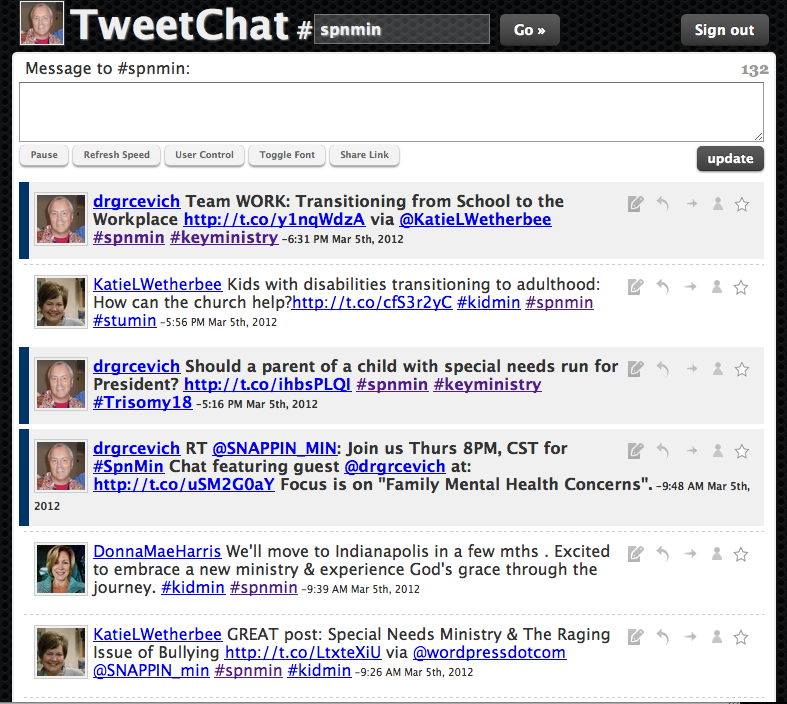
Here’s how to participate in this real-time group conversation:

First, you must have an established Twitter account.  If you don’t already have one, simply go to http://www.twitter.com and set a free account. When participating in the chat for the first time, click on the following link:

http://tweetchat.com/room/spnmin.

You will be prompted through an easy three-step process.

  1. When you click “Sign In”, you will then be asked to “Authorize an Application” through your Twitter account.  To attend, you will have to click the blue “Authorize App” button.
  2. Once you have done so, merely type in the name of the chat (hashtag) you wish to attend at the top of the page, and click go.  For our chat, type in spnmin.  Now you’re in the chat room!  But you’re not finished yet.
  3. To keep most current with the conversation, go to the upper left hand side of the screen and click on “Refresh Speed”.  Slide the tab down to 5 seconds.  This will keep you up-to-date with the scrolling conversation.  Remember, just like on Twitter, you are limited to only so many spaces for your comments…in this case 132 characters.  You don’t have to add the #spnmin hashtag after every post. TweetChat adds the hashtag automatically.

Invite interested friends and colleagues to join us for this week’s TweetChat!

Posted in Families, Inclusion, Key Ministry, Resources, Training Events | Tagged , , , , , , , , | Leave a comment

Rhett Smith…The Anxious Christian-Part One

Rhett Smith,  author of the new book, The Anxious Christian: Can God Use Your Anxiety for Good?begins his guest interview by discussing strategies and approaches with people who experience anxiety and attribute their symptoms to a lack of faith or a failure to practice their faith with diligence. For more on Rhett, click here for his biography and a video introduction to his new book.

SG: The title of your new book suggests you see ways in which God uses our anxiety for good. How do you address this concept with people who are prone to misinterpret ongoing anxiety symptoms as a reflection of inadequate faith or a lack of diligence in practicing spiritual disciplines, especially prayer?

RS: This is such a great question, and I wish I had one answer for it. But I’ve found that because anxiety seems to be unique to each person (how it manifests itself), I have to pay real close attention to the individual and the context of the situation. But I believe that the most important place to start in cases like this is with the Bible since most people come with preconceived ideas or notions about what the Bible says about anxiety. They’ve been told that the Bible says don’t be anxious (and that is true, but there is more to that), and that they just need to pray more, or have more faith. So I like to begin by looking at stories in the Bible since everyone connects with stories in our narrative driven culture. And in therapy we may unpack the story of Abraham and Isaac for example and explore the anxiety that is implicit in the text. Interestingly enough, it was reading Soren Kierkegaard’s work Fear and Trembling for the first time at 23 that I began to rethink the idea of anxiety and how it plays out in our faith. Kierkegaard’s entire book talks about Abraham and Isaac and the role of anxiety in the the text. Or we might explore the story of Noah and the anxiety that it must have experienced trying to build an ark in faith. Or the anxiety that Jacob felt when he first encountered his brother Esau for the first time after betraying him. Or we look at the life and ministry of Jesus, especially his journey to the cross and the anxiety in those scenes. I believe the Bible is implicit with anxiety and that is part of our condition as not only humans, but especially as followers of Christ. So there is a sense that I first try to help someone normalize their feelings of anxiety.

I also think that one of the things that keeps people mired in anxiety in an unhealthy way, and that keeps them from looking at it as an opportunity for growth is the idea of shame. When we judge people faith or spiritual life because of their anxiety, we ultimately push them into a place of shame. Shame drives people into hiding and not seeking and getting the help they need. I have been most helped by a counselor friend of mine Todd Sandel (www.lifegatecenter.com) when he distinguished between shame and guilt for me. Guilt is the belief that I have done something wrong, but I can be forgiven for it. I can make amends. Shame is the idea that I have done something wrong, therefore something is wrong with me. I’m a bad person. I want to help clients see anxiety as not a shame issue, and not a judgment of their character or identity.

I also like to point out to people that there is no command in the Bible that our spiritual life has to consist of a 45 minute Evangelical quiet time each morning. Or that their prayer life has to look this way and use these exact words. Rather there are lots of examples in the Bible of how people connected with God. It might have been through worship, or prayer, or retreating to quiet space, or using a model of prayer like the Lord’s Prayer. I try to free people up to experiment with options. I like the word experiment because it doesn’t imply a certain formula that needs to be followed and if not done correctly, you are wrong. Experiment implies the idea of trying out different things and seeing what works and what doesn’t work. And then having the freedom to keep experimenting or sticking with something for a while.

This is hard work to help people overcome the shame they have felt over the anxiety they have been carrying for a long time. So it takes time, but I think we can make progress as a Christian community if we can continue to uphold a different model, or way of thinking about anxiety than one has always had. It’s a process in my mind of helping someone re-imagine their anxiety.

Rhett’s new book, The Anxious Christian: Can God Use Your Anxiety for Good? is available in paperback and Kindle editions through Amazon.com. You can read his blog at www.rhettsmith.com.

Last Summer’s blog series examining the impact of anxiety upon spiritual development in kids, along with additional resources to better understand the impact of anxiety disorders in children and adolescents may be accessed here.

Posted in Anxiety Disorders | Tagged , , , , , , , , | 1 Comment

The Anxious Christian

I’m honored that Rhett Smith, the author of a very timely and thoughtful new book, The Anxious Christian: Can God Use Your Anxiety for Good? has agreed to be the subject of a three part guest interview that will be featured on the blog, beginning tomorrow.

Rhett is a Licensed Marriage and Family Therapist (MDiv, MSMFT, LMFT) at Auxano Counseling in Plano, TX and is on staff at The Hideaway Experience, a four-day marriage intensive in Amarillo, TX. He has been working in a variety of ministerial and counseling contexts since 1998 providing pastoral counseling and therapy to individuals, couples, families and groups. He served as the college pastor at Bel Air Presbyterian Church in Los Angeles from 2001-2008, and provided all the parenting classes for the parents of Highland Park Presbyterian Church in Dallas from 2008-2011. His areas of specialization include marriage and family, anxiety, adolescent & young adult transitions, social media and technology, spiritual direction, and pastors and their families.

In addition to being the author of The Anxious Christian, Rhett is a contributing online journalist to Youth Specialties and Fuller Youth Institute, as well as writing articles for Collide Magazine, Start Marriage Right, etc. He also co-authored Outspoken: Conversations on Church Communication and The New Media Frontier where he wrote on the topic of “New Media Ministry to the MySpace-Facebook Generation.

You can read his blog at www.rhettsmith.com.

Rhett earned his Master of Divinity and MS in Marital and Family Therapy degrees from Fuller Theological Seminary in Pasadena, CA. He is a member of the The American Association of Marriage and Family Therapists, The Texas Association for Marriage and Family Therapists, and The Dallas Association for Marriage and Family Therapy. He lives in Frisco, TX and enjoys traveling and spending time with his wife and two children. He is also an avid distance runner who is always training for the next race.

This video will give you a sense of the approach Rhett takes in helping his readers and the people he counsels to overcome their struggles with anxiety. I hope and trust that you’ll find this week’s series to be a blessing and will share the links with friends and family members who can benefit from his wisdom.

Posted in Anxiety Disorders, Spiritual Development | Tagged , , , , | 2 Comments

The Great Chasm

shutterstock_378990760

And besides, there is a great chasm separating us. No one can cross over to you from here, and no one can cross over to us from there.

Luke 16:26 (NLT)

Earlier this week, the Journal of Medical Ethics published a “thought-provoking” paper titled After-birth abortion: why should the baby live?  I’d encourage leaders in the disability ministry community to read the paper in its entirety. If we’re going to leverage influence in our society during a time of great upheaval, we have to fully understand the issues and conversations into which we must speak. Shannon Dingle wrote a thoughtful response to the paper in her blog yesterday.

I was equally troubled by a companion article written by Julian Savulescu, explaining why the Journal chose to publish the paper. I’ll comment on several excepts from his article…

As Editor of the Journal, I would like to defend its publication. The arguments presented, in fact, are largely not new and have been presented repeatedly in the academic literature and public fora by the most eminent philosophers and bioethicists in the world, including Peter Singer, Michael Tooley and John Harris in defence of infanticide, which the authors call after-birth abortion.

There’s a very good possibility that the “most eminent philosophers and bioethicists in the world” and those who publish and review the academic literature rarely come in contact with or develop friendships with people who share a traditional view of Christianity. The notion that some would take issue with the idea that infanticide is a “well-reasoned argument based upon widely accepted premises” might seem absurd to someone living and working in a culture in which they never experience people with divergent views.

However, the goal of the Journal of Medical Ethics is not to present the Truth or promote some one moral view. It is to present well reasoned argument based on widely accepted premises. The authors provocatively argue that there is no moral difference between a fetus and a newborn. Their capacities are relevantly similar. If abortion is permissible, infanticide should be permissible. The authors proceed logically from premises which many people accept to a conclusion that many of those people would reject.

In my experience, I’ve encountered very few people in academic medicine who would ascribe to the notion that “the Truth,” or any absolute standards of right and wrong exist. This is especially true within my medical specialty. I’ve shared the story before on this blog of attending a research review committee meeting at which the other attendees were astounded to discover the extent of my involvement in and commitment to a traditional Christian belief system. One person commented that it was the first time in thirty years in academic medicine that they’d ever worked with someone of my beliefs.

What is disturbing is not the arguments in this paper nor its publication in an ethics journal. It is the hostile, abusive, threatening responses that it has elicited. More than ever, proper academic discussion and freedom are under threat from fanatics opposed to the very values of a liberal society.

Those in positions of influence within the Christian community need to take great care to respond with grace when responding to articles such as this one. John Knight made the point in his blog post that we shouldn’t grant the authors greater credibility through the nature of our response. From personal experience, one way in which people in the academic community will seek to dismiss the arguments of those operating from a foundation of traditional values is to single out comments that suggest people who hold opposing views are simple-minded fanatics clinging to our religion. That’s a lot harder to do when the people making the arguments are respected friends and colleagues.

It’s very easy for those of us who are students of the Bible to observe what’s going on around us in the world and get scared. Time and time again, we see throughout Scripture the consequences when society abandons absolute standards of right and wrong and progresses to the point where everyone “does what is right in his own eyes.” I know I’m afraid…for my future, for my patients, for my family and for a world in which people who share the value system of the authors of papers such as these wield great influence. So…what should we do?

First, we as Christ-followers need to be intentional in cultivating our influence and relationships wherever God has positioned us. I can share from personal experience that the academic world does respect excellence. We need to reflect excellence in everything we do in order to establish our credibility within the centers of influence in our culture. Think Daniel in Babylon.

Second, we need to be prepared to defend our values and beliefs when opportunities arise. It doesn’t do us or the Kingdom any good if we only talk about right and wrong with people who are inclined to agree with us. We need to speak out…but  we also need to do the preparation necessary to follow Peter’s instructions:

Always be prepared to give an answer to everyone who asks you to give the reason for the hope that you have. But do this with gentleness and respect.

1 Peter 3:15 (NIV)

Finally, we have to fight smartWe are in a fight, whether we want to admit it or not. Having aligned ourself with Christ, we’ve become part of Jesus’ mission to re-establish his Kingdom on Earth. There’s a chasm that separates those of us who see the evil in practices derived from “well-reasoned argument based upon widely accepted premises” from those in platforms of influence who propagate ideas such as those described in the Journal of Medical Ethics. I’m going to make the argument in a future post that those of us in disability ministry have a unique, missional opportunity to bridge the chasm. This chasm is nothing like the chasm that will exist after Jesus comes back in victory. No one is bridging that gap.

Let me let you in on a little secret…the other side is waaaay more afraid of us than we are of them.

Posted in Controversies | Tagged , , , , , , , , , , , , | Leave a comment

Extra Day, Extra Dollar

If we’re going to help churches reach people no one else is reaching, we’re going to have to try stuff no one else is trying.

Thanks to the dedication of thousands of pastors, church staff, volunteers and families everywhere, we’re seeing a movement take shape that’s radically transforming the composition of our churches and attitudes in the church toward kids with disabilities and their families. I’m looking at a prospective agenda for our Wednesday morning team meeting that is making my head explode. Doors are swinging open everywhere. You’ll be hearing about some extraordinary opportunities our team members have to travel and teach in the weeks ahead, including presentations at major ministry conferences and at least one seminary. More churches will be launching respite outreaches, and we’ll have more tools at our disposal to train and resource those churches.

For this to work, and for us to continue to offer all of our training, consultation, resources and support for free, we need more people to step up in their willingness to share of their time, talent and treasure. The number of individual donors who support our ministry financially is relatively small, as is the number of churches providing ongoing financial support to the ministry. We’ve created a couple of new opportunities for individuals and churches to support the expansion of our ministry.

We were led to celebrate leap year with our first, one-day microgifting campaign… We’re calling the campaign “Extra Day, Extra Dollar.” We understand money is tight. We also recognize that many of the children and families who benefit from the resources we offer to churches don’t have extra money to contribute. But we want everyone to be able to contribute something to the work of Key Ministry, understanding that giving is an act of worship. Small contributions make a big difference.

  • If ten people give $1.00 each, we can adapt a teaching tool for a child with an intellectual disability.
  • Twenty-five $1.00 gifts cover the cost of a one-hour consultation to a local church.
  • Fifty $1.00 gifts provide a two-hour onsite observation at a church serving families touched by disabilities.
  • One hundred $1.00 gifts allow us to film a video training for a major online ministry conference.

Our other gifting opportunity for individuals and churches is our Key Catalog. Through our Key Catalog, you can choose to support inclusive Sunday morning ministries, sponsor  a new church for our Free Respite network, sponsor a JAM Session, sponsor Inclusion Fusion, support our presence at major ministry conferences or donate unused frequent flyer miles or hotel points to help support the costs of transporting our staff and volunteer trainers to churches and teaching opportunities.

Click here to contribute through our Key Catalog, or here to contribute through our website. One additional way you can help is by inviting friends to “like” our Facebook page. I’ll contribute $1.00 for every new “like” our Facebook page receives and $1.00 for every contribution received by Key Ministry on February 29th to a maximum of $500.00.

Thanks for your generous support of the work of Key Ministry!

Posted in Key Ministry | Tagged , , , , , , , , | Leave a comment

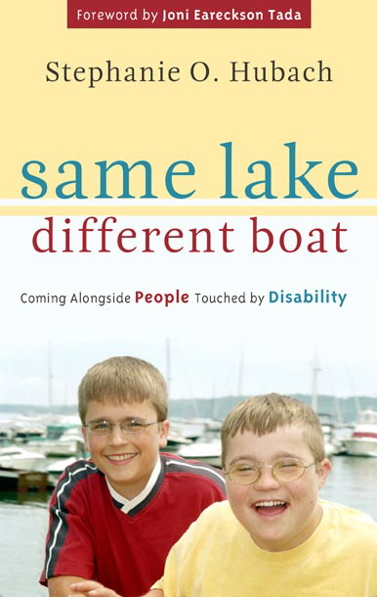
Same Lake, Different Boat: Final Thoughts by Stephanie Hubach

In the conclusion of her guest blog series, Same Lake, Different Boat Stephanie Hubach shares her vision for the church in ministering to persons with disabilities. Steph’s biography may be found here, along with Part OnePart Two and Part Three of the series.

C4EC: What is your vision for the church with regard to people with disabilities?

SH: My vision is that we would see the body of Christ made whole through the inclusion of all its members. The Church as it operates today is disabled. It is attempting to function without all of its intended parts. It’s important to note here that I don’t approach special needs ministry as a “disability rights movement.” Instead, I see it as a “benefit all of the body of Christ movement.”

When the Church operates as it was intended to, life improves for all of us. In order for this to be accomplished it means two things: First, going out to where people with disabilities are, since a disproportionate number of people with disabilities and their families are un-churched. As the parable of the banquet in the gospel of Luke says, we need to go out and “bring them in.” Second, for those who are already part of the covenant community in name, but not in practice, we need to make the church a hospitable place where genuine welcoming and belonging actually takes place. Many Christians with disabilities live on the fringes of congregation life, if they are able to attend church at all.

In addition, I hope the Church will capture the urgency of its mission to people with disabilities (and their families) as a Sanctity of Human Life issue. The Church has, in recent history, equated being pro-life with being anti-abortion. But it is so much more than that. It is being “for” the life of my neighbor. The lives of people with disabilities are already becoming increasingly at risk in our culture because of the devaluation of humanity coupled with our collective unwillingness to sacrifice for others. If the Church does not “get it” soon with regard to the enormity of this problem, it will be too late. If Christians are unwilling to enter into the challenges of people touched by disability when the going is relatively easy, we are fooling ourselves if we think we will step up to the plate when the going is tough.

C4EC: How do you think the Same Lake, Different Boat DVD series can be used by churches to make that vision a reality?

SH: My prayer is that Same Lake, Different Boat will be used by the Holy Spirit to raise awareness, educate congregations, promote discussion, and—most of all—soften hearts. Whether the DVD series functions as a resource for individual Teaching Elders, Ruling Elders, and Deacons—or whether small groups or women’s ministry groups in the congregation use it as a discussion tool to challenge themselves in the area of practical Christian living—it’s time for the Church to live out “Christianity with its sleeves rolled up,” as our PCA friend Joni Eareckson Tada says.

The DVD series is, of course, based on the book…with the added benefit that I expanded the content of the DVD series to reflect things I have learned since I wrote the book. Each DVD chapter begins with interview vignettes of ministry leaders, of individuals who have disabilities, and of family members. Following a 30 minute teaching segment, each chapter concludes with additional interviews that lead into discussion questions.

Steph’s newly released DVD series, Same Lake, Different Boat: Coming Alongside People Touched by Disability can be ordered here for the discounted price of $35.00. Her book that shares the same title as her DVD series is also available here at a discounted price of $7.50. She may be reached at stephnfred@dejazzd.com.

Posted in Inclusion, Resources | Tagged , , , | 2 Comments

The Shootings in Chardon

At this point, we don’t know a lot of facts about the kid who killed a student at Chardon High School this morning and shot four other teens. I have patients who were in the school this morning and two clinicians in our practice also work with agencies involved in the crisis response. Prayers for everyone involved…the family of the boy who was killed, the kids who were wounded and their families, kids and faculty in the school exposed to a trauma-inducing situation, the police, emergency responders and counselors on the scene would be very helpful.

Without knowing more about factors that led to this incident, here are a few thoughts about a situation that doesn’t make any sense.

The level of cruelty that kids heap upon one another has increased exponentially in the time I’ve been in practice.

I wish I could say “church kids” are notably kinder than their peers, but I can’t.

Families are experiencing more distress than I’ve ever seen in 25 years of practice.

We as parents are doing a very poor job of raising kids whose actions reflect the values we profess to hold and demonstrate the resilience to navigate a hostile culture.

I’ll probably have more to say about this last point later…but I think we as parents are going to have to take the lead in changing the culture because we can’t count on our politicians, our schools or our church leaders to do it for us.

Posted in Families, Uncategorized | Tagged , , , , , , | 3 Comments

Do Antidepressants Work?

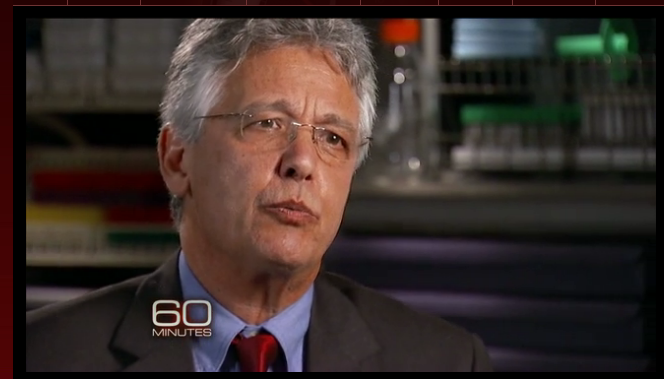
The CBS newsmagazine 60 Minutes offered a provocative segment featuring a Harvard scientist (Dr. Irving Kirsch) making the claim that medications commonly used to treat depression are effective, but for many, it’s not the active ingredient that’s making people feel better, but a placebo effect. Here’s a link to the 60 Minutes segment along with a link to the transcript of the segment…unfortunately, I couldn’t figure out a way to embed the CBS media player on WordPress:

The controversy as to whether antidepressants are effective has been simmering for many years in the psychiatric community, especially when it comes to using medication to treat depression in kids.

The vast majority of clinical trials of antidepressant medication for the treatment of depression in children and teens have failed to demonstrate a statistically significant difference between the response to medication vs. placebo pills. We used to think that kids responded differently to antidepressants than adults because of developmental differences in the activity of neurotransmitters, such as serotonin. It turns out there’s little difference between the response of these medications in adults to what we see in kids and teens. To explore this further, allow me to introduce you to the concept of effect size.

When a pharmaceutical company submits a drug to the FDA for marketing approval, they’re required to demonstrate in two separate clinical trials that the drug is better than nothing (placebo). As a clinician, I want to know how much better than nothing the drug is for the condition I’m seeking to treat. That’s where effect size comes in.

Zoloft_bottlesEffect size is a measure of the magnitude of the difference between the change from baseline seen with an active treatment compared to the change from baseline seen with placebo. Without going into the formula for calculating effect size (beyond the scope of this post), we usually end up with a ratio ranging from zero to one. When an effect size is below 0.20, the benefit of the treatment to an outside observer would be essentially imperceptible. An effect size of 0.50 suggests a moderate effect. Effect sizes of 0.80 and above suggest a robust effect. For the sake of comparison, here are some examples of effect sizes of treatments for ADHD:

Diets restricting artificial dyes and preservatives: 0.19

Omega-3 fatty acid supplementation: 0.36

Atomoxetine (Strattera): 0.60

Methylphenidate-based stimulants (Concerta, Focalin): 0.80

Amphetamine-based stimulants (Adderall, Adderall XR, Vyvanse): 0.93

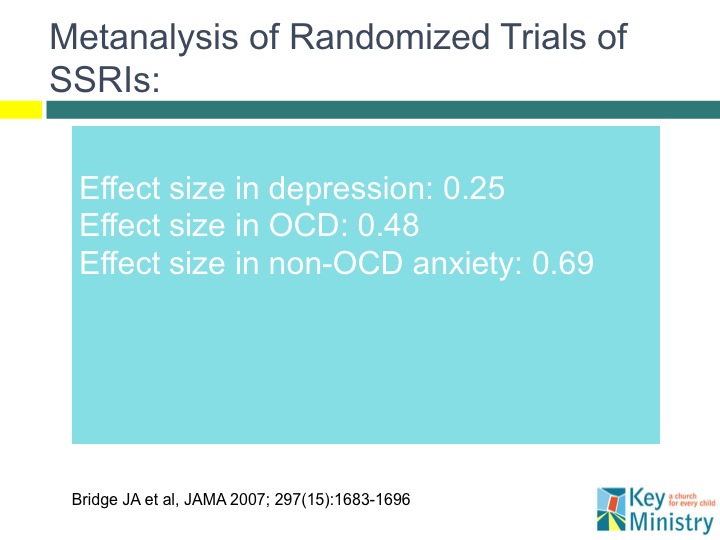
Check out the illustration below…This data is taken from an independent review commissioned by the FDA of all the placebo-controlled trials of serotonin reuptake inhibitors (SSRIs) and other second-generation antidepressants in children and teens. SSRIs are the most commonly used antidepressants…Prozac, Zoloft, Celexa, Lexapro, Paxil and Luvox are SSRIs:

It turns out that the antidepressants are reasonably effective anti-anxiety treatments in children and teens. SSRIs are moderately effective for Obsessive-Compulsive Disorder. The effect size of SSRIs for treating depression is relatively small.

Another way of looking at this issue is by considering another statistical concept, the number needed to treat (NNT). The NNT represents the average number of patients one would need to treat to be assured a positive response was due to the effect of medication as opposed to placebo. The NNT for antidepressants in kids when used to treat depression is 10. For OCD, the NNT is 6. For other anxiety disorders, the NNT is 3.

Here’s the meta-analysis of the research literature on antidepressants in adults that Dr. Kirsch made reference to in the 60 Minutes segment, authored by Dr. John Ioannidis. Quoting from the paper:

The meta-analysts found 74 eligible FDA-registered trials with 12,564 patients. Among them, a third (n = 26 trials [31%] with 3449 patients) had remained unpublished. The FDA had determined that half of the registered trials (38/74) had found statistically significant benefits for the antidepressant (“positive” trials). All but one of these trials had been published in journals. Conversely, of the other half trials (36/74) that were deemed to be “negative” by the FDA, one in three were published as “negative” results; another 11 trials were published, but the results were presented in such a way so as to seem “positive” and 22 “negative” trials were silenced and never appeared in the literature.

The meta-analysts studied the estimated effectiveness of these drugs when data were combined from the FDA records and when data were combined from the published literature. For all drugs, the published literature inflated the effect sizes. The inflation varied from 11% to 69% and it was 32% on average. The FDA data would suggest that these agents had small, modest benefits (standardized effect size [ES] = 0.31 on average). Conversely, for 4 of the 12 agents, if one were to perform unawares only a meta-analysis of the published data, the summary result would suggest clinically important effectiveness (ES>0.5). This was not true for any agent based on more complete FDA data.

Here are a couple of thoughts to consider…

The professional community, parents and families hold assumptions about the effectiveness of psychotropic medication, especially medication for depression, that are unrealistic based upon our understanding of the research literature.

It’s very possible (I’d argue it’s very likely) that adults and children who respond positively to antidepressants do so not because they’re experiencing a placebo response, but because we’re treating anxiety symptoms that frequently predispose, precipitate and perpetuate feelings of depression.

Updated June 7, 2016

***********************************************************************************************************

KM greenKey Ministry has assembled resources to help churches more effectively minister to children and adults with ADHD, anxiety disorders, Asperger’s Disorder, Bipolar Disorder, depression and trauma. Please share our resources with any pastors, church staff, volunteers or families looking to learn more about the influence these conditions can exert upon spiritual development in kids, and what churches can do to help!
Posted in Controversies, Depression, Mental Health | Tagged , , , , , , , , , , , | 3 Comments