What to do if you’re upset by the direction of our culture?

shutterstock_386627833 (1)

Joseph Sohm / Shutterstock.com

I have lots of friends who are afraid.

More and more, the reality is sinking in that Christians who seek to exercise their faith in every facet of life represent a small minority in America. Many of my brothers and sisters in Christ are at various points along the continuum of the five stages of grief in coming to grips with the extent to which we find ourselves facing the reality of life in a hostile culture.

The Bible teaches that our faith isn’t cheap…we’ll pay a price for our faith relationally and we can expect to suffer for being followers of Christ. Except we haven’t really believed it. We’re coming to see that we can’t expect our Constitution, politicians or political parties to protect us. But those of us who’ve read to the end of the Bible are compelled to recognize an inconvenient truth. No matter how hard we fight for our beliefs, a time will come when the society as we know it will inevitably collapse and great tribulation will come. While no one knows the time when this will occur, we know it will occur. I look forward to the time that Jesus returns to re-establish his kingdom on earth…I don’t look forward to the stuff that will precede his return!

shutterstock_232524382It’s unsettling to recognize that God’s story is not about us. Forces are at work that are much larger than ourselves. We recognize from reading Scripture that lots and lots of God’s people suffered throughout history. Millions of God’s people experienced untold suffering through 400 years of slavery in Egypt. Lots of innocent men, women and children (including the prophet Jeremiah) experienced the consequences when God allowed Babylon to lay siege to and conquer Jerusalem. One of the eleven original apostles who remained faithful to Jesus experienced a natural death, and Paul repeatedly experienced calamity and torture prior to enduring a martyr’s death.

The reality of living the Christian life in a postmodern culture is starting to sink in…

  • We struggle with the feeling of being powerless.
  • We dread the prospect of our faith being put to the test.
  • We’re grieved by the ugliness we see in a society that has increasingly abandoned God’s principles.
  • We fear for our kids having to live in the world that we’re leaving them.

How might we “fight the good fight” in the face of our fear and despair?
kaetana / Shutterstock.com

kaetana / Shutterstock.com

We need to embrace the calling God has given us to be “salt” and “light” in the time and cultural context in which he has placed us. Our engagement in the culture plays a vital role in protecting the most vulnerable…including persons with disabilities. We’re the pushback against the unintended consequences of radical notions of individual autonomy… including post-birth abortion and physician-assisted suicide of persons with depression or autism. Our attitudes and actions toward the marginalized of society…children who have been traumatized or abused, kids and adults with mental illness, persons with intellectual disabilities put the love of Christ on display and present a compelling argument to narratives about Christians and Christianity.

We need to ground ourselves in God’s Word so that we’re prepared to recognize his voice when he seeks to communicate with us and so we might communicate that truth with others when presented with the opportunity to do so. Scripture is the standard by which we might evaluate the teaching of leaders who themselves are vulnerable to the influences of the culture we share.

Finally, the best way to fight back when we fear for ourselves and fear for the culture is to be about the mission that Jesus left for us…the work of making disciples.

Before I formed you in the womb I knew you, and before you were born I consecrated you; I appointed you a prophet to the nations.

Jeremiah 1:5 (ESV)

We were made for a mission. We can live in a way that will turn heads in a culture becoming increasingly hostile to Christ and his message through making ourselves available to God to serve his purposes.

God is the potter and we are the clay. We don’t get to choose the times in which we live, but we get to choose how we will respond to the times in which we live.

You yourselves are all the endorsement we need. Your very lives are a letter that anyone can read by just looking at you. Christ himself wrote it—not with ink, but with God’s living Spirit; not chiseled into stone, but carved into human lives—and we publish it.

2 Corinthians 2:2-3 (MSG)

When you’re tempted to mourn the ways in which our culture is becoming more and more broken, consider how you want the letter of your life to read from this place and time.

Postscript: If you’re interested in using your gifts and talents to advance the mission of Key Ministry…promoting meaningful connection between churches and families of kids with disabilities for the purpose of making disciples of Jesus Christ…we’d love to hear from you! Have an idea for how you can help? Message us at steve@keyministry.org or laura@keyministry.org and let us know how you’re led.
Posted in Advocacy, Key Ministry, Leadership | Tagged , , , , , , , | 2 Comments

Needed: Spaces for foster & adoptive parents to say “me too”

12745467_839967346112601_8800042867883613651_n

In today’s post, Shannon shares her experiences from the Refresh Conference, held last weekend in Redmond, WA.

Sometimes it’s just too much.

To protect my darlings’ stories and to prevent the dam from releasing all my tears, sometimes it’s all just too much for words.

That’s why I’m so thankful for my people. People like you, who know enough bits and pieces of our daily fight for joy in the midst of the broken pieces of lives that together make up our family. People like you, whose eyes I catch across the church hall and who offer dear encouragement in a glance. People like you, who read my words and encourage me with comments and messages to sustain me along this path.

Thank you.

(Someday – though maybe not soon – we’ll be able to actually converse with words and not just glances, and I’ll get better about replying to emails.)

Last weekend, I traveled across the country to be with my people at a gathering of other foster and adoptive parents who share my heartbeat. There, I know someone else has held children as they’ve cried for a parent who disease stole from them, wiped sand and chalk from around the mouth of a little one who still forgets that she doesn’t need to fill her tummy with those things because food is readily available here, filled out medical forms that ask for histories we just don’t know, and surprised strangers by answering cries of “Mommy!” from a child who looks nothing like us.

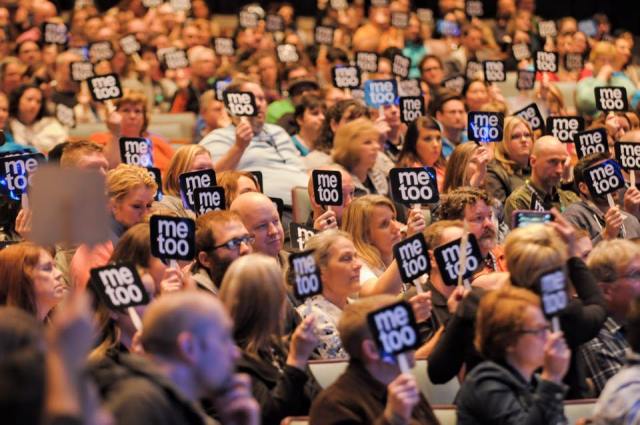
As we shared our stories, the theme “me too” was repeated again and again. We even had paddles with those words. As speakers shared their own experiences through the conference, the rest of us held up our signs as a show of belonging.

1937290_976407305782420_2685736183290854027_n

I had the honor of being one of those speakers, leading a session on parenting kids with HIV and other stigmatized conditions and sharing as part of a panel on transitioning from traditional to therapeutic parenting, both to packed rooms of parents eager to connect with one another.

Me too. You are not alone. We get it. I’ve been there too.

Together, we met God in the midst of the hard and real moments.

For I will satisfy the weary soul, and every languishing soul I will replenish. (Jeremiah 31:25)

Events like this don’t happen every week, though. The next Refresh Conference will be March 2017. Created For Care, a similar retreat I’ve attended for moms on the East Coast, happens each February and March. It’s a long year between events like these, though, and many of us can’t even make it every year. How can we find our “me too” communities right where we are?

  1. Churches, learn enough to be able to empathize with us. Here’s a series of posts that will give you a head start.
  2. Friends, show up and keep showing up. Our lives are messy. We know that. You know that. As a result, we’re often really bad at friendship. We need friends, but sometimes we suck at being friends. Please, don’t give up on us.
  3. Fellow foster and adoptive parents, be brave. We like to think of bravery as a heroic act, but that’s not what I’m talking about. I’m talking about the ordinary bravery of letting others know what we need. We can’t find our “me too” communities unless someone is willing to speak up and share their truth first. For the sake of our kids, we don’t want to carelessly broadcast all our family details for public consumption, but find a few safe people who have shown up enough to earn the right to hear your story. Then be that person whose ordinary bravery in sharing what you need gives others the permission to say “me too.” Those are your people. (They might not relate to all of your specifics, but the pain and struggle and commitment and exhaustion and love woven into what you have to say? They can relate to that, even if they don’t share your same experiences with fostering or adopting.)

I love my people, and I’m praying you’ll find yours. God never meant for us to do everything on our own. We’re created for community, and finding yours is worth the risk of being brave with your stories.

Someone else is waiting to respond “me too” to you, I guarantee.

In addition to serving as a Key Ministry Church Consultant, Shannon Dingle is a co-founder of the Access Ministry at Providence Baptist Church in Raleigh, NC.

12768400_10209296814284241_460359061419929381_o

***********************************************************************************************************

© 2014 Rebecca Keller PhotographyCheck out Shannon Dingle’s blog series on adoption, disability and the church. In the series, Shannon looked at the four different kinds of special needs in adoptive and foster families and shared five ways churches can love their adoptive and foster families. Shannon’s series is a must-read for any church considering adoption or foster care initiatives. Shannon’s series is available here.

Posted in Adoption, Advocacy, Families, Foster Care, Key Ministry, Resources | Tagged , , , , , , , , | 1 Comment

My Depression: no longer under lock and key

lock and keyEditor’s Note: We’re delighted to welcome Gillian Marchenko as our guest blogger this Spring. Her new book, Still Life; A Memoir of Living Fully with Depression publishes in May and her work has appeared in numerous publications including Chicago Parent, Today’s Christian Woman, Literary Mama, Thriving Family, and MomSense Magazine. Her first book, Sun Shine Down, was published in 2013. She lives near St. Louis with her husband Sergei and their four daughters. Connect with her at her Facebook page

I have a new book coming out in May called Still Life, a Memoir of Living Fully with Depression. People who know I am a writer sometimes ask me “What are you working on these days?” “A memoir about my major depressive disorder,” I say, and they usually look at me out of the corner of their eyes. Many don’t know what to say. Why would anyone want to write, or for that matter, read a book about mental illness, I decide they are thinking.

But I know why I wrote the book.

I wrote a book about my depression, an illness that in its entirety is usually a part of my life under lock and key, to defuse a bit of the ugliness that so easily entangles me.

But also, I wrote this book because the stigma about mental illness in our Christian circles is alive and well. How can a believer in Jesus have suicidal ideations? How can a Christian often feel no hope? What about fullness in Christ?

With Still Life, I am attempting to give myself a little more freedom in my battle and to let other Christians know that if they struggle with mental illness, they are not alone.

I have depression. So how can I glorify God with it? I think it is by opening up my safe and letting others see in.

Safes

Most of us have safes tucked deep within our hearts. It’s where painful parts of our stories hide, stuff we don’t necessarily want others to see: hurts, insecurities, jealousy, fear. For me, it is the illness of depression. A lot of our outward struggles stem from this hidden safe within us, and we end up spending whatever amount of energy we have for life hiding the safe, and trying to show others and ourselves that we are okay. We can do this. We don’t have struggles, or at least we don’t have struggles we want others to see.

One of the biggest problems with the church today is that too many of us show up on Sundays with our safes under lock and key. We hoard the hard parts of our lives because Christians are ‘supposed’ to be joyful and faithful. This is the most dangerous type of hoarding. If we can’t be honest with each other about what is in our safes, we will stunt our communion with one another and with God. Annie Dillard talks about this in regards to writing, but I think it is true for life, too:

“One of the things I know about writing is this: spend it all, shoot it, play it, lose it, all, right away, every time. Do not hoard what seems good for a later place in the book or for another book; give it, give it all, give it now. The impulse to save something good for a better place later is the signal to spend it now. Something more will arise for later, something better. These things fill from behind, from beneath, like well water. Similarly, the impulse to keep to yourself what you have learned is not only shameful, it is destructive. Anything you do not give freely and abundantly becomes lost to you. You open your safe and find ashes.”

Anything we do not give freely and abundantly becomes lost to us. I firmly believe this includes the dark parts of ourselves we’d rather not share. One day, we may open our safe and find ashes.

Why must we hide? Why must I hide? I am a Christian, a mother, a writer, a friend, a pastor’s wife, and a lot of times I hoard my secrets in a safe. Some days, my illness swallows me whole. I don’t know how to parent my kids. Prayer is hard. I think way more about the bottle of pills in my medicine cabinet than about Christ. I can’t get out of bed.

But let’s not miss the lessons here. The concepts of darkness and light are eternally connected. How can we know one without the other? And how can the light in us shine if we are preoccupied with keeping hidden in the dark? Did you know that Jesus is with you in your darkness? If you are his child, you are never alone, not even if you lock yourself up in a safe. Did you know that your darkness can lose some of its power? It can. It loses power when it is put in the light.

The light shines in the darkness, and the darkness has not overcome it.

John 1:5

I hope today we all can be brave enough to tell someone about the things under lock and key in our lives, to bow and talk to God about it, and to allow our lives to open up a bit more, for His glory, yes, but also for our sake, and for the sake of our universal church where far too many people show up on Sunday mornings under lock and key.

“I stand on the edge of a cliff in my own bedroom.”

***********************************************************************************************************

Gillian2014-26-Edit-1In Still Life,  Gillian Marchenko continues her description of depression: “I must keep still. Otherwise I will plunge to my death. ‘Please God, take this away,’ I pray when I can.”

For Gillian, “dealing with depression” means learning to accept and treat it as a physical illness. In these pages she describes her journey through various therapies and medications to find a way to live with depression. She faces down the guilt of a wife and mother of four, two with special needs. How can she care for her family when she can’t even get out of bed?

Her story is real and raw, not one of quick fixes. But hope remains as she discovers that living with depression is still life.

Still Life is available here for pre-order from IVP Press.

Posted in Depression, Key Ministry, Mental Health, Stories | Tagged , , , , , , , , , | 5 Comments

What about my career?

Image00008Editor’s Note: Today marks the conclusion of Jeff Davidson’s series, Facing the Elephants in the Room, in which he looks at the overwhelming, but unspoken challenges confronting parents of kids with special needs. Here’s Jeff…

What about my career? What about providing for my family? Shouldn’t that be my first and most important priority? Shouldn’t I have to make sacrifices about my time with my children so I can more effectively provide for their needs?

The Career Elephant:

I wear a lot of hats during a typical day. I feel like I’m wearing one hat and holding two more in my hand ready to switch hats in an instant.

I’m a father, a husband, a son, a friend, a writer, a speaker, a pastor, a leader of an organization, a community advocate, an elder in my church, a business owner, a home owner, and a volunteer.

My day begins in a whirlwind of emails, messages, thoughts, to-do lists, calls, and tasks. Now don’t get me wrong. I like feeling as if my life is teetering at the edge of chaos. I think I’m at my best when my life is just at its tipping point and in danger of slipping out of control. In an odd way, that’s my comfort zone.

Within itself, that is a dangerous place to live. I have another problem though, that when coupled with my hectic life, can sometimes be toxic. I’m really lousy at saying no.

shutterstock_363490085I’m very poor at declining some opportunities or invitations I should probably decline. I’m a self-admitted people pleaser and an approval addict. I struggle to set boundaries and intentionally schedule down time in my life. I often suffer the consequences.
I’m trying to be more proactive and thoughtful about my priorities these days. Before I ever had a ministry, an organization of my own, or the platform God has given me—I had a family. He gave me a family first and I need to do all I can to keep my family first.

Our son with cerebral palsy and autism definitely makes our life interesting. In the evenings I handle feeding Jon Alex his supper and then we are off to swing in his platform swing in his bedroom.

It’s dad’s time. We swing, I sing. Jon Alex is nonverbal. Doesn’t matter what I sing, he just craves that time and listening to me. For his entire life, he has enjoyed the times that we sing to him and over him.

On a typical night, I’ll sing a few children’s classics, some vintage U2 and other 1980s hits from my heyday, a couple of modern worship songs, the Tennessee fight song “Rocky Top” of course, and several made-up goofy songs of ours. Then I speak blessings over him, I recite scriptures over him, and I pray over him.

It’s not what we do together that’s important. It’s that I intentionally set aside a time where I am conveying that nothing else in the world matters right now but giving him my undivided attention, my whole heart, and my sole focus. I check my smartphone at the door.

It’s a holy moment. A God-breathed, God-ordained moment.

It’s my sanctuary where I go to meet the Spirit of God.

Until the other night. The other night I cheated on my son. I cheated on my son and had an affair with my ministry. I was an adulteress father.

Someone who I am helping walk through a difficult personal situation called for me in the middle of our dad time. I had to make the choice. Do I take the call, knowing it probably won’t be a quick one? Or do I continue on interacting with my son?

My friend needed a pastor. My son needed his dad. I made the wrong decision.

DavidsonThat night I sacrificed my son on the altar of ministry. In doing so, I implied to my son that there are other people, other things, and other tasks that are more important to me than he is as my son.
The choices we make every day have life-long lasting implications for our children. I chose poorly. I know what choice I will make next time.

Your job is very important. Your career is extremely important. Your role as a provider is vital to your family. But it’s just one part, one component of the five components of a special-needs dad. We must seek balance. We must learn to balance all five components—warrior, protector, provider, encourager, and equipper.

Once last warning about the elephants in the room. You must face them head-on with determination and strength. Your natural tendency will be to flee from them, to run to somewhere safe and pretend they don’t exist. You will be tempted to run and hide from the elephants. If you are not strong, you will find yourself in the cave of isolation.

Alone, scared, and afraid, you’ll hunker down in the cave. Some people never come out of the same cave I discovered upon our son’s diagnosis. The cave of despair and depression beckons, whispers, and taunts.

You may find yourself wanting to climb into the cave and lay on the cold, damp floor.

As a pastor and disability ministry leader, my faith is supposed to be planted in bed rock and unflappable.  But in the real world, my faith can be shaky and sways in the wind like everyone else.

“I do believe, but help me overcome my unbelief!” (Mark 9:24)

There is a moving story in scripture about the prophet Elijah. After a powerful miraculous showing of God’s power, when Elijah’s faith had called down fire from heaven to reveal God’s glory, Elijah found his faith weak and seemingly ineffective.

I get it Elijah. Me too sometimes. So Elijah retreated to a cave. I get that too Elijah. I’ve done a lot of spiritual spelunking myself.

In the midst of his depression and despair, God Himself showed up at the entrance to the cave and said to Elijah, “What are you doing here?” God always shows up in our caves looking for us. He has been doing search and rescue since the beginning of time.

He found Elijah.

He will find me.

He will find you.

He will whisper to your spirit, “What are you doing here?” Then He will light the path, take you by the hand, and show you the way out of the cave.

Because God’s grace is greater than our doubts. God’s grace is greater than our fears. And God’s hand stretches into the deepest recesses of our caves.

Many times throughout this experience as a special needs dad, you will not be able to visibly see God’s hand at work. But when you cannot see God’s hand, you must trust His heart. When you don’t think you can trust His actions, you must learn to trust His character.

God has placed the special needs dad on a mission. He calls you, He chooses you, He equips you, and He will sustain you. 

***********************************************************************************************************

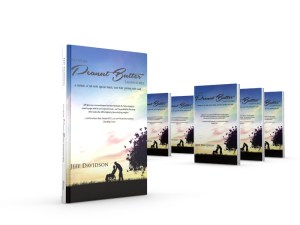
Davidson Book CoverJeff Davidson is an author and pastor who enjoys speaking at churches, conferences, events and to groups, ministering to special needs families and individuals. Jeff and his wife Becky started Rising Above Ministries when they realized the incredible gift and blessing their own son with special needs (Jon Alex) was to them. Jeff’s book, No More Peanut Butter Sandwiches, is available through Crosslink Publishing, Barnes and Noble and Amazon.

 

Posted in Families, Key Ministry, Parents, Special Needs Ministry | Tagged , , , , , , , , | 3 Comments

Whose dreams were they anyway?

shutterstock_171259895Editor’s Note: Here’s the next post in Jeff Davidson’s series… Facing the Elephants in the Room, in which he looks at the overwhelming, but unspoken challenges confronting parents of kids with special needs. Today, he examines the challenges presented by envy and jealousy.

We all have dreams and plans for what fatherhood will look like. We have expectations and visions for the activities we will engage in with our children. Then we watch those dreams slowly change, adapt, and even disappear when we parent children with special needs.

I have counseled so many dads who find it difficult to lay those dreams down. I find so many men who can’t even lay down their dreams and plans for their own lives when parenting s child with special needs requires it of them.

I have a friend whose own life is so wrapped up in his own interest that it has affected his relationships negatively with both his typical son and his son with special-needs. The typical son does not share his common interest with his dad and the son with special-needs lacks the capacity to care about it at all.

shutterstock_366806084This dad finds it impossible to relate, engage, or even interact with his kids because his dreams and plans for their lives were wrapped around his own obsession with what interests him.

Your dreams may have to change. Your dreams may be altered. Some of your dreams may even have to die. But whose dreams were they anyway? God has dreams and plans for our children too. We must vigorously pursue His dreams and plans with everything in us. Even if it means sacrificing our own dreams.

Every child has a destiny. Every child has a pre-destined path God lays out for their lives. That means we must surrender our own thoughts and opinions on what that destiny is, so that their lives (and ours) can be about His glory.

The Envy and Jealousy Elephants:

I wish I could tell you that once you encounter these two elephants for the first time, you will be OK after that. But that’s a lie. You are going to run into these two all along this journey as a special-needs dad.

Every time you watch someone else’s child do something yours cannot do you will encounter this elephant. Every time you watch someone else’s child achieves something your child will not achieve, you will encounter it again. There are no winners when you play the comparison game.

The only way to win is not play the game. This has been exasperated in recent years by the advent and proliferation of social media. Facebook, Instagram, Twitter—we are fast becoming a society that abuses social media for instant gratification and to elevate our own status.

shutterstock_370187171I tell parents all the time that they cannot compare their lives to the lives of their friends on social media. You have to remember that social media feeds are nothing more for many people than highlight reels. They often don’t reflect ordinary life, just the highlights.

One year we found ourselves creeping towards the dark side of depression after looking at seemingly endless photos on Facebook of other families traveling to the beach or to Disney World. So we decided that rather than mourn our own inability to do the same, we would fabricate a trip on Facebook. We photo-shopped pictures to create the illusion of our son at the pyramids, the Eiffel Tower, meeting the Queen of England, walking on the Great Wall of China, and a host of other sites around the world. We had so much fun with our fake trip around the world!

Our journeys as special-needs parents are uniquely different. They are much harder and far more frustrating than the journeys of typical families They are too different to be compared to the journeys of typical families. It’s so easy to get jealous and so easy to be envious. It’s unavoidable frankly.

But as I’ve mentioned, there is always a flip side. The choice is yours.

We have to remember that everything God does, He does to accomplish His purposes and to bring glory and honor to His name. Our struggles become His stage. Our trials become His triumphs. Our weaknesses reveal His strengths. Our responses show His glory.

The way we respond to our challenges in raising a child with special needs, the way we let God use our circumstances to accomplish His purposes, the way we react to the trials—they are all part of the way we tell our story. And the way we tell our story becomes the way we live His story.

God has given each of us a unique story when He created us. We cannot be envious or jealous of someone else’s story. We can’t try to live someone else’s story.

***********************************************************************************************************

IMG_8478Jeff Davidson is an author and pastor who enjoys speaking at churches, conferences, events and to groups, ministering to special needs families and individuals. Jeff and his wife Becky started Rising Above Ministries when they realized the incredible gift and blessing their own son with special needs (Jon Alex) was to them. Jeff’s book, No More Peanut Butter Sandwiches, is available through Crosslink Publishing, Barnes and Noble and Amazon.

 

Posted in Key Ministry | Tagged , , , , , , , , , , | 3 Comments

Preparing for when you will be made to care…

shutterstock_287259992

This book explains to American Christians that ignoring the culture around us will not rewind us back to some safer place in the past. More than that, the book is a catalyst for thinking through a path forward for the years to come. Read this book and ponder how we can leave an inheritance for our children of liberty and justice, for all.

Russell Moore

A couple of weeks ago, I was at my old med school interviewing prospective students when I used a few minutes after lunch to check out the construction on the campus. I wandered into the new main lecture hall and saw the title slide for a lecture on Reproductive Rights vs. Right of Conscience projected on the gigantic screen.

The “culture wars” seem distant for many. We’ve heard about the couple in Oregon who lost their home and business for refusing to bake a cake for a same-sex wedding, or the fire chief in Atlanta who lost his job for writing a Christian book quoting extensively from Romans 1, but for most people, the likelihood of losing one’s career or livelihood as a result of their faith would seem pretty remote.

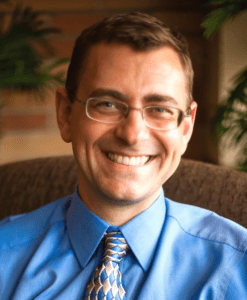
Erick Erickson

Erick Erickson

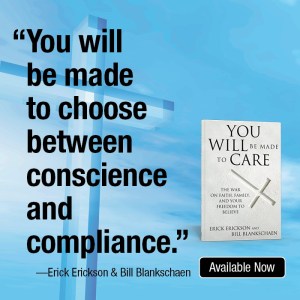
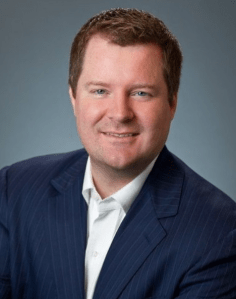
The prospect doesn’t seem so remote to Erick Erickson and Bill Blankschaen. Erick is a political commentator who hosts an early evening, drive time talk show in Atlanta while attending seminary during the day. Bill is a former pastor from our home area (he helped launch a Christian school that serves families from our practice) who now writes about faith, culture and church issues at Faith Walkers. Their new book, You Will Be Made to Care, provides an in-depth look at the cultural forces laying siege to the freedom of conscience that people of faith in America have long taken for granted and offers a clarion call to church leaders and individual Christians to prepare for the challenges to our faith that appear increasingly inevitable.

Christianity is, in this life, a religion of suffering. We have forgotten this truth in America. Put bluntly: if you do have a comfortable path through life with no fears at all of persecution, you probably are not a true Christian. The suffering may not be major. It may be an accumulation of small slights over time. It may be the loss of a friend or just the expulsion of your Christian group from your private school. But Christianity is a religion of suffering and persecution.

Bill Blankschaen

Bill Blankschaen

Throughout the first two-thirds of the book, Erick and Bill paint a very grim picture of the movement seeking to erode our right to free exercise of religion and freedom of conscience. They pull no punches in calling out cultural, political and religious leaders and organizations who have “chosen compromise over conscience, cautious silence instead of courageous speech and indifference rather than decisive action.” They intend to provide a dramatic wakeup call to those in the church who think they’ll avoid being impacted by the forces that have been unleashed within the culture.

The greatest value of the book lies in the final five chapters as they cast a vision for a “resurgent community” in which Christians live by a faith characterized by “doing what you sense to be true, often in spite of what you see, sense or feel.” Erick and Bill call us to “live what we believe to be true based on the revealed Word of God, especially in the face of the constant media barrage telling us that we are the bigoted extremists for refusing to convert to the secular religion.”

The question is not who’s on the right side of history, but who’s at the right hand of the Father?

700x700 Facebook Photo5Erick and Bill conclude by laying out a strategy for people of faith seeking to prepare for the challenging times that lie ahead. They emphasize the importance for each of us to surround ourselves with a community of fellow believers. They encourage us to become clear about what we believe, to reconnect with the history of our faith and to seek to discover how our faith applies to cultural issues. They implore us not just to call ourselves followers of Christ but to “do what he has called each of us to do,” to speak boldly, to surround ourselves with others who will call us out for hypocrisy and to confront our fears. They cast a vision for resurgent families characterized by faithful marriages, a focus on family unity and children taught to think critically in applying their faith to the culture. They paint a picture of resurgent churches that unite grace and truth in preaching the Gospel, teach the Word of God and prepare attendees for suffering and persecution. They encourage Christians to remain engaged in the exercise of their faith within the public square.

So…why am I so passionate about freedom of conscience and why are we talking about it on a disability ministry blog?

My personal life experience and my thirty years as a physician specializing in child and adolescent psychiatry convince me that God’s way works. A culture in which sexual liberty is permitted to take precedence over the free exercise of religion and individual autonomy over freedom of conscience is a culture in which many children and teens served by our practice and many kids and families served by our ministry will not fare well.

shutterstock_376469578The sexual revolution has not been kind to kids vulnerable to mental illness. Sexual activity during the teen years (both opposite sex and same sex activity) is associated with significantly increased odds of depression, suicidal ideation, and suicide attempts. We wouldn’t need to develop as many resources to support adoption and foster care ministry as we do if not for the collateral damage of broken relationships and traumatized kids from the pursuit of sexual freedom.

I fear that clinicians will be reluctant to treat teens who experience anxiety or mood issues while wrestling with conflicts between same-sex attraction and the teachings of their faith because of new laws outlawing the practice of “conversion therapy.

Some conditions are so politically charged in the current cultural environment that research to help kids in distress is becoming impossible. Most kids who exhibit gender non-conformity (variations in norms in gender role behavior such as toy preferences, rough and tumble play, aggression and playmate gender) don’t progress to gender discordance (a discrepancy between an individual’s biological sex and their personal sense of being male or female)…a good thing, since kids with gender discordance exhibit extraordinarily high rates of mental illness and suicidal behavior. Despite the enormous differences in outcomes between kids who progress from gender non-conformity to gender discordance versus those who don’t, one of the world’s top research clinics for kids with gender dysphoria was recently shut down because of accusations from activists that they were far too cautious about socially transitioning kids to live in accordance with their gender instead of their biological sex.

shutterstock_191114072The larger issue that will have far greater impact upon the disability ministry community is the impact the erosion of our freedom of conscience will have on the ability of committed Christians to work in the healthcare professions.

I’ve written extensively about the challenges looming ahead for healthcare professionals of faith as physician-assisted suicide has been legalized throughout Canada and in a handful of states, including California. Most would be surprised to discover that every U.S. medical school except for one has abandoned use of the traditional Hippocratic Oath because of its’ prohibitions against abortion and physician-assisted suicide.

I fully expect in the next 10-15 years to see more and more legislation in which the government will use the power to license healthcare professionals or rules governing reimbursement for medical services to mandate actions incompatible with the traditional understanding and practice of Christianity.

The teaching in my church this morning was on Matthew 5:13-16. We’re called by Jesus to be “salt” and “light” in the world. The power of Christ exercised through the influence of the people of Christ can transform the world. If we’re worried about the culture that we’re leaving behind for our kids and grandkids, we have a responsibility to allow God to transform our hearts so that we might use our influence as agents of transformation.

shutterstock_37966720We’re seeing what happens in the medical profession when the influence of the people called to be salt and light is absent from the culture. The Center for Medical Progress exposed Planned Parenthood staff negotiating the sale of body parts from aborted babies. I wrote here about a paper from the Journal of Medical Ethics on “post-birth abortion.” When individual autonomy is valued more highly than life itself, persons with disabilities are most vulnerable. We’re seeing that firsthand in the Netherlands when it comes to euthanasia of persons with mental illness.

What would I tell a Christian kid nowadays asking my advice about divulging their involvement in faith-based groups on a med school application? I’d encourage them to list their involvement on medical mission trips or service provided to marginalized people. I’d also want them to think about how they’d respond ten years from now when they finish their residency with $300,000 in educational debt if the law requires them to assist their patients in committing suicide as a condition for maintaining their medical license.

Erick and Bill have written a book that encourages all of us to prepare ourselves for a time coming very soon when we’ll face the prospect of paying a significant price for remaining true to the teaching of our faith. We had best be prepared.

***********************************************************************************************************

700x700 Preorder PackageYou Will Be Made To Care by Erick Erickson and Bill Blankschaen is available on Monday, February 22nd at Amazon, Barnes and Noble and Christian Book. Anyone who preorders the book is eligible for a bonus package including the first chapter of the book and more than 11 hours of in-depth interviews featuring Russell Moore, Ravi Zacharias, Kevin DeYoung and others.

Disclosure: I received an advanced reader’s copy of the manuscript to write this review, but I’ve purchased a copy of the final version of the book.

Posted in Advocacy, Controversies, Key Ministry | Tagged , , , , , , , , , , , , , , , | Leave a comment

The Day I Said, “I Quit!”

Sometimes I wanted to quit. One day I actually did!

I recall trying to teach Joey the colors red and white with towels I hung on the bathroom towel rack across from the toilet. While he sat to go to the bathroom, we would practice knowing his colors. NOT! For months and months I did this. For months he wasn’t potty trained (until after age 5, actually!) and he didn’t know his colors for a lot longer. So I quit the colors and stayed faithful to the potty training!

I don’t recall if it was days, months, or years later…..but there was Joey reaching for and touching the color circles on the game of TWISTER with his sisters. HE KNEW HIS COLORS! How did that happen? I don’t really know! But it wasn’t me, because I quit teaching him! Somewhere along the way he learned….without me!

pexels-photo-5

Read the rest at Not Alone today …

Posted in Autism, Key Ministry, Parents | Leave a comment

Am I to blame for this happening?

shutterstock_107777702Editor’s note: Here’s the fourth post in Jeff Davidson’s series… Facing the Elephants in the Room, in which he looks at the overwhelming, but unspoken challenges confronting parents of kids with special needs. Last week’s post, Special needs parents…Do you feel cheated? may be found here.

So why did this happen in the first place? Why was my child born with special needs? Did God do this to punish us? Are we to blame for this happening? Those are some of the questions that torment many special-needs dads.

The Blame Elephant

My wife and I wrestled with these questions for many months. Until one Scripture changed everything for us. Eleven words that changed our lives.

As he (Jesus) passed by, he saw a man blind from birth. And his disciples asked him, ‘Rabbi, who sinned, this man or his parents, that he was born blind?’ Jesus answered, ‘It was not that this man sinned, or his parents, but that the works of God might be displayed in him.

 John 9:1-3 (ESV)

The words leaped off the page at me, especially the last eleven words. “But that the works of God might be displayed in him.”

What the disciples were asking Jesus was essentially the same question I had been asking. It’s the same question deep inside that you have probably asked yourself. The disciples had encountered a man who had been born with a disability. He had been born blind.

Someone must be at blame right? It has to be someone’s fault. They, too, were searching for an explanation or someone to blame. Yet Jesus declares that this man had been born blind so that the works of God could be displayed in his life. Some translations even say “the power of God” or “glory of God.” Was it possible that my son’s special needs could really be part of God’s plan to display His works and power through my son’s life?

Is it possible that God wants to use your child’s life to bring glory and honor to His name? Does God really have a plan and a purpose for your child’s life? Did God really allow this because he intended to use our circumstances for His glory?

Is God really intending to take our suffering and redeem it to demonstrate His great power and works? How is that even possible?

shutterstock_321992786Are our children’s disabilities part of God’s plan to bring glory and honor to Him by somehow using his life in ways we cannot fathom or ever imagine? Would God allow something to happen because what He wants to accomplish through it is far greater and more significant to His purposes?

Confirmation can be found in Psalm 139 where David, speaking of God, writes:

For you formed my inward parts; you knitted me together in my mother’s womb. I praise you, for I am fearfully and wonderfully made. Wonderful are your works; my soul knows it very well.

My frame was not hidden from you, when I was being made in secret, intricately woven in the depths of the earth. Your eyes saw my unformed substance; in your book were written, every one of them, the days that were formed for me, when as yet there was none of them.

Psalms 139:13-16 (ESV)

shutterstock_366438608God has declared that our children are fearfully and wonderfully made just the way they are. And not only that, but God already knows what will become our children’s life stories. He had a plan for their lives.

When I first grasped this concept I was stunned. I grabbed a legal pad and wrote the phrase “Wonderfully made … created for a plan and a purpose … destined to glorify God.”

I decided that very day that those are the words I would choose to use in describing our son. The world would say that he was autistic or challenged, but I chose instead to say of him, “He is wonderfully made, created for a plan and a purpose, and destined to glorify God.”

God had declared it and I chose to believe it. Yes, he was still afflicted with his cerebral palsy, but God not only created him but He created my son in His own image. God was decreeing that he was wonderfully made and that God himself had determined the plan for all the days of his life and had written them down before Jon Alex was ever born.

The fact that our children have special needs or disabilities did not catch God by surprise. God did not get up off the sofa one day, go to the kitchen to get a drink, and come back surprised that you are a special-needs dad.

He didn’t slap his head and exclaim, “Whoa, when did that happen? I was just gone for a minute!”

To search for someone to blame implies your child with special needs was a mistake. But Scripture clearly implies this was no mistake. The sooner you realize this was not a mistake, but rather a gift from God, that perspective will change your life.

***********************************************************************************************************

IMG_8478Jeff Davidson is an author and pastor who enjoys speaking at churches, conferences, events and to groups, ministering to special needs families and individuals. Jeff and his wife Becky started Rising Above Ministries when they realized the incredible gift and blessing their own son with special needs (Jon Alex) was to them. Jeff’s book, No More Peanut Butter Sandwiches, is available through Crosslink Publishing, Barnes and Noble and Amazon.
 

Posted in Families, Intellectual Disabilities, Key Ministry, Parents, Special Needs Ministry | Tagged , , , , , , , , , | 1 Comment

What are the stats on adoption, trauma and disability?

shutterstock_202499932As I’ve been speaking at more conferences across the nation in the past year, I’ve met many of you. I love connecting face to face, but I know many of you will never get a chance to interact with our team face to face. That’s one reason we’re launching virtual special needs ministry roundtables.

That’s also why I’m sharing the lists of stats I used in presentations. First, I offered figures about the prevalence of disabilities and mental illness in the US. Then I followed up with a post listing research related to special needs in the church. And now it’s time to look at the intersection between adoption and disability.

In recent years, more churches are launching adoption and foster care ministries, and pastors are exhorting their members to be serious in their care for vulnerable children and families. I’m completely in favor of that! But I want us all to be wise to this reality, presented by the U.S. Census Bureau: “it appears that adoptive families are more likely than others to face the challenge of dealing with disabilities among their children.”

One important note about language: For the purposes of clarity, in this post I will use phrases like “adopted children” below. While the wording makes sense in this specific context, I am not modeling the normal, everyday language you should use in talking about families like mine. I just refer to my kids as my kids, not my biological children and then my adopted ones. Sometimes it is helpful to compare the population of children who were adopted or are fostered to the demographic of children growing up in their family of origin, particularly in summarizing current research, so that’s why I’m making the distinctions below. In the church, we live in the fine balance of welcoming all families without capitalizing on any differences while also being sensitive to some challenging realities faced by foster and adoptive families due to disability, grief, and trauma. In other words, my family wants to be accepted like any other family would be, but showing loving care to us involves being aware of our unique dynamics without defining us by them.

Based on US Census data from 2008[i] [ii],

  • 3% of children in US households joined their families by adoption.
  • 6% of children in adoptive placements in the U.S. have a disability, compared to 4.6% of other children.
  • 3% of children in adoptive placements in the U.S. have multiple disabilities (vs. 1.2% for others).
  • While these figures are still relatively small, they tell us that adopted children are 2-2.5 times more likely to have a disability or multiple disabilities than other kids.

According to the 2007 National Survey of Adoptive Parents,[iii]

  • shutterstock_164195839% of adopted children have special health care needs and 26% have moderate to severe health difficulties, as compared to 19% and 10% in the general population.
  • 9% of adopted children ages 2 and older have been ever diagnosed with depression, 26% with ADHD, and 15% with a behavioral/conduct disorder, compared to 4%, 10%, and 4% in the US population.
  • 12% of adopted children have ever been diagnosed with an attachment disorder.
  • Rates of mental health or attachment disorders among children adopted from foster care are higher than other groups of adoptees: ADHD 38%, behavioral/conduct disorders 25%, and attachment disorders 21%.
  • 11% of adoptive parents reported high levels of parental aggravation (based on parents’ ratings of difficulty caring for their child and feeling anger toward their child) compared to 6% of other parents, with the rates being the highest for parents who adopted from foster care (16%).
  • 3% of all adoptive parents, 5% of adoptive parents of children with special health care needs[iv], and 6% of adoptive parents from foster care state that they “probably would not” or “definitely would not” make the decision to adopt their child again. These numbers aren’t high, but they’re higher than we’re usually willing to admit in the church.
  • More than 1/3 of adopted children have utilized at least one rehabilitative service, such as family or crisis counseling, inpatient or outpatient mental health care, or drug or alcohol treatment.

Related to unexpected special needs & early childhood trauma,

  • shutterstock_364686716The US State Department says this about special needs adoption: “Many children who become available for intercountry adoption have special needs or identified medical conditions. Those needs and medical conditions can be challenging for a family that is not prepared. We urge you to carefully consider a child’s medical condition and special needs before accepting a referral.”[v]

Note: The rest of this list details research concerning childhood trauma. I think it’s important to note that while children in adoptive and foster placements are most likely to have experienced trauma than other kids, adverse childhood experiences (ACEs) happen to those from a variety of backgrounds.

  • One recent study showed that 61% of U.S. teens had been exposed to at least one potentially traumatic experience (PTE). 31% had experienced multiple PTEs, and 18.6% reported experiencing three or more PTEs.[vi]
  • According to the study cited above, for adults who experienced 4 or more Adverse Childhood Experiences (ACEs), researchers documented increased risks for panic reactions, depression, anxiety, hallucinations, sleep disturbances, severe obesity, substance abuse of all kinds, early sexual intercourse, promiscuity, sexual dissatisfaction, memory impairment, and anger management difficulties.
  • Toxic stress – that is, “strong, frequent, or prolonged activation of the body’s stress management system” from adverse events “that are chronic, uncontrollable, and/or experienced without children having access to support from caring adults” – can adversely affect brain development, chemical balances, and physiological responses to stress long after that stress has ended.
  • “In the extreme, such as in cases of severe, chronic abuse, especially during early, sensitive periods of brain development, the regions of the brain involved in fear, anxiety, and impulsive responses may overproduce neural connections while those regions dedicated to reasoning, planning, and behavioral control may produce fewer neural connections.” [vii]
  • Early childhood exposure to trauma can result in the following outcomes: “self-regulatory, attachment, anxiety, and affective disorders in infancy and childhood; addictions, aggression, social helplessness and eating disorders; dissociative, somatoform, cardiovascular, metabolic, and immunological disorders; sexual disorders in adolescence and adulthood; and revictimization,” the latter often the result of difficulty identifying or responding to danger cues.[viii]
  • In The Connected Child (a book I highly recommend), Dr. Purvis and her colleagues share that “disturbing behaviors – tantrums, hiding, hyperactivity, or aggressiveness – are often triggered by a child’s deep, primal fear. Youngsters… can be physically safe in their new adoptive home, but past traumas encoded within their brains are easily reactivated.”
  • GOOD NEWS: Some children are not as affected by trauma as others, and neuroplasticity – the brain’s ability to regenerate or create new pathways – may allow for some healing of that damage with positive experiences, including treatment, good nutrition, familial stability, and love.[ix]

The biggest takeaway for all three of the posts in this series?

Church, we have a great opportunity to show love! The need is great. Kids are hurting. Adults are too. Families are struggling. The first step in being able to help is understanding the need.

Jesus met people where they were, and so can we.

References:

[i] Americans with Disabilities. U.S. Census Bureau, 2010: http://www.census.gov/prod/2012pubs/p70-131.pdf

[ii] Adopted Children and Stepchildren: 2010. U.S. Census Bureau. https://www.census.gov/prod/2014pubs/p20-572.pdf

[iii] Adoption USA: A Chartbook Based On The 2007 National Survey of Adoptive Parents. US Department of Health and Human Services. Retrieved from http://aspe.hhs.gov/hsp/09/NSAP/chartbook/doc/chartbook.pdf

[iv] McKlindon, K. et al. (February 2011). Adopted Children with Special Health Care Needs. Adoption Advocate, a publication of the National Council For Adoption. No. 32. Retrieved from https://www.adoptioncouncil.org/images/stories/documents/ncfa_adoption_advocate_no32.pdf

[v]Intercountry Adoption, Bureau of Consular Affairs, US Department of State. Health Considerations. http://adoption.state.gov/adoption_process/how_to_adopt/health.php

[vi] McLaughlin, K.A. (2013). Trauma Exposure and Post-Traumatic Stress Disorder in a National Sample of Adolescents. Journal of the American Academy of Child & Adolescent Psychiatry. 52(8). 815-830.

[vii] National Scientific Council on the Developing Child. (2005/2014). Excessive Stress Disrupts the Architecture of the Developing Brain: Working Paper 3. Updated Edition. Retrieved from http://www.developingchild.harvard.edu

[viii] National Child Traumatic Stress Network. http://www.nctsnet.org/nctsn_assets/pdfs/edu_materials/ComplexTrauma_All.pdf

[ix] National Scientific Council on the Developing Child. (2005/2014). Excessive Stress Disrupts the Architecture of the Developing Brain: Working Paper 3. Updated Edition. Retrieved from http://www.developingchild.harvard.edu

In addition to serving as a Key Ministry Church Consultant, Shannon Dingle is a co-founder of the Access Ministry at Providence Baptist Church in Raleigh, NC.

***********************************************************************************************************

© 2014 Rebecca Keller PhotographyCheck out Shannon Dingle’s blog series on adoption, disability and the church. In the series, Shannon looked at the four different kinds of special needs in adoptive and foster families and shared five ways churches can love their adoptive and foster families. Shannon’s series is a must-read for any church considering adoption or foster care initiatives. Shannon’s series is available here.

Posted in Adoption, Families, Foster Care, Key Ministry, PTSD, Resources | Tagged , , , , , , , , , , , , , , | 3 Comments

We’re looking for churches to welcome families impacted by disability. HUNDREDS of churches…

shutterstock_187160096Around this time last year, three of our Board members made a proposal to use online church services as a strategy for connecting families with local churches when a suggestion was proposed. Folks on the Board were convicted about doing more to help  individuals and families who are without a church because of “special needs” or behavioral health issues to connect virtually with local churches where they might worship and build relationships with other Christ followers. What they proposed and our Board adopted was a plan for a new division of Key Ministry.

Key for Families will be coming to fruition early this Spring. With the help of our friends at the Creative Church Company, we’ll be building a digital platform from which we will be launching our outreach to families. What will our outreach to families look like?

Not Alone 2015A blog for families…Our Board members wanted to build our outreach through making available regular encouragement and support to families impacted by emotional, behavioral, developmental or physical disabilities. Accessing the resources of Not Alone was foundational to to our plan.

Not Alone was started by our friend and former colleague Mike Woods to help families impacted by disability to find faith and friendship for their journey. The content for the blog is generated by a team of seventeen Christian parents of kids with disabilities who are all published authors. Our team viewed Not Alone as the premier Christian site for parents of kids with disabilities, and we’re thrilled to have them come alongside us for this ministry adventure! Sandra Peoples, the current editor of the blog, will be leading our outreach to families.

shutterstock_175403000_renderedA place to discover resources…We’re part of a disability ministry movement made up of fabulous people and organizations. The sheer volume of content available online can be overwhelming to parents and families. We want to help families find other ministries and organizations offering free, church-based respite care, mentoring, support groups, Bible and book studies and online groups.

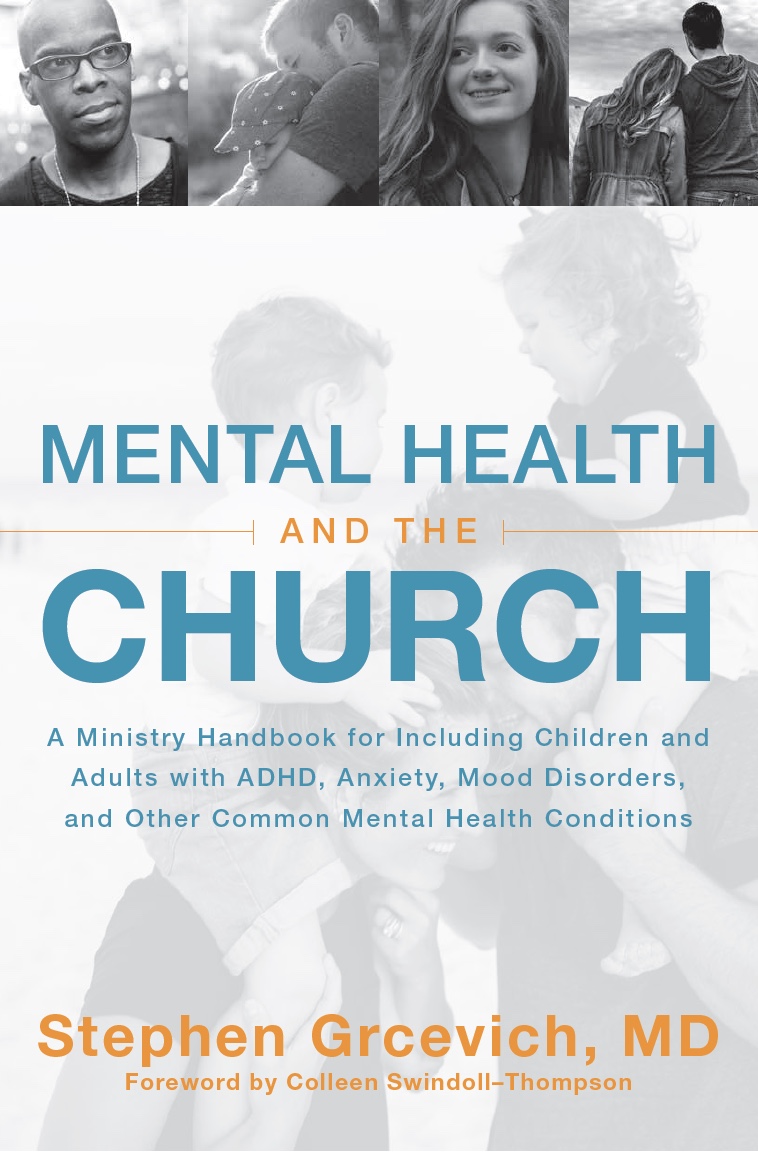
A place to connect…Families who register for the site (free of charge) will have the opportunity to join “communities” we’ll be establishing on Facebook with other families with whom they share something in common. Within these communities, families will have the opportunities to join book studies – often led by the authors of the books themselves, accompanied by opportunities to interact in real time through videoconferencing technology.  Some of the communities we plan to often include…

  • Pastors, church staff and spouses
  • Adoptive and foster parents
  • Parents of medically fragile kids
  • Trauma
  • Single parents
  • Autism/Asperger’s Disorder
  • Genetic syndromes
  • Mental health
  • ADHD

DavidsonOnline worship opportunities and devotionals…When we experimented in 2014 and 2015 with offering online church services, our Board concluded that it’s easy enough for families to find church online with teaching presented by the most gifted pastors in the world. If we’re to offer online devotionals or teaching, we need to develop content to address the unique challenges and needs experienced by families impacted by common disabilities.

Part of the plan for our family outreach is to offer worship services and preaching created uniquely for individuals and families wrestling with disability-related challenges. This part of the plan is temporarily on hold until we have the human and financial resources to offer content with excellence. Families will be able to connect with churches that pursue disability inclusion and offer online campuses and groups through our platform.

So…what does any of this have to do with the title of today’s post?

The reason why we’re doing all this is to create an online platform to help families connect with local churches so they might experience worship and fellowship in the physical presence of other Christ-followers. We seek to connect families with churches close to where they live. We need lots and lots of churches willing and prepared to welcome families impacted by disability. And that’s where you come in.

Sandra is putting together a database of churches that are intentional in welcoming and pursuing families affected by disability. PURE Ministries has assembled a list of churches on their website offering disability ministry. What’s different about the listing we’re putting together is that we don’t plan to make it publicly available (but will share with any disability ministry leader who requests it) but will use it to make online introductions (through e-mail, Facebook or videoconferencing) between families interested in connecting with a local church and ministry leaders connected with a local church. We think families are more likely to try out church if they’ve made a connection with a person in the church to help them have a great experience. We’ll also be devoting staff and volunteer time to keep the list current.

If your church is in any way intentional about welcoming and including families impacted by disability, we’d very much like to connect with you and offer your church as a resource to families from your area who come through our platform. We have an online form for you to complete if you’re interested in welcoming families looking to connect with a church. We’re pulling our list together now in advance of launching the new platform in April. Churches that register will be invited to videoconferences in advance of the launch where Sandra and I will share more of our strategy and offer previews of the platform.

We look forward to your church joining us in our Key for Families outreach!

***********************************************************************************************************

shutterstock_24510829Key Ministry is pleased to make available our FREE consultation service to pastors, church leaders and ministry volunteers. Got questions about launching a ministry that you can’t answer…here we are! Have a kid you’re struggling to serve? Contact us! Want to kick around a problem with someone who’s “been there and done that?” Click here to submit a request!

Posted in Advocacy, Inclusion, Key Ministry, Resources, Special Needs Ministry, Strategies | Tagged , , , , , , , , , , , | 6 Comments