I’ve had a serious case of writer’s block over this past week. It’s been a long and productive year. I’m very tired. I’ve also been struggling with a profound sense of disappointment… disappointment I’ve been carrying around for much of this year.
I was fortunate to have had the experience of an extraordinarily supportive church when inspired to develop Key Ministry. The desire to see ALL families connect with churches was a product of the experience that my family and I had with church. Our church was truly a gift. But I’ve also come to see that the experiences others have had with church haven’t been nearly as fulfilling.
God never wastes a hurt. I’m sure there’s a reason for my discomfort. I’m pondering the steps I might take personally and the steps our ministry team might take to model the change we desire to see in the year ahead. I thought I’d finish out the year through a series of blog posts touching on gifts that our team can “pay forward” to the churches and leaders we serve, so they in turn can help the families they serve to have an experience of church similar to mine. The first gift I’d like to touch on is the gift of opportunity.
If the church is to fulfill its’ mission, the unique gifts and talents of all Christ-followers must be put to use. I’ve encountered way too many people this past year who have felt called to meaningful service, only to experience experienced hurt and discouragement when pursuing their ministry interests under the auspices of their local church.
I certainly understand that many people approach church leaders wanting to start new ministries that don’t fit within their church’s ministry plan or strategic vision. They may not have an accurate assessment of their own gifts and talents. They may be “messy.” I know a little bit about messy people from my day job. Their speech and action at times may be hurtful. But God uses imperfect people every day to draw attention to His perfect Son and to unleash love to a hurting world. And it’s the role of leaders in the church to provide everyone with the opportunity to optimally use their gifts and talents in the service of reestablishing God’s Kingdom.
There are churches that view ministry as the exclusive privilege and purview of paid professionals who may or may not have had formal education in a seminary or institution of higher learning. Obviously, there are great benefits when leaders involved with sharing the Gospel and making disciples have a deep understanding of Scripture and training to effectively communicate God’s Word. But we as the church and the communities we serve lose out when we neglect the lifetime of experience many Christ followers have for reaching people no one else is reaching. Where in the New Testament does it state that only professional Christians get to do the work of the Kingdom? God’s purposes are often fulfilled through people lacking formal religious education. Take Peter and John, for example.
So what can we do to give the gift of opportunity this Christmas, and throughout the coming year?
Our team at Key Ministry is always looking for volunteers called to help local churches more effectively connect with families of kids with disabilities. We need folks with all types of gifts and talents. If you want to serve by supporting our ministry, or if you’re looking for help in finding your place to support the mission in your local church or community, contact us. Few things give me as much satisfaction as seeing new volunteers experience the opportunity to use their gifts and talents in Kingdom building.
We can be more intentional in providing opportunities for children and adults with disabilities and their families to serve meaningfully in our local churches. Serving is critical for spiritual growth. Laura Lee Wright gave a very nice talk on this topic during Inclusion Fusion.
Finally, one of the activities I’d like to pursue outside of Key Ministry during 2012 is to begin to establish a community of high-capacity Christ followers who have felt some calling to use their gifts and talents and experiences for Kingdom purposes who have been unable to receive the connections and support necessary to pursue their calling within their local churches.
ACCESS TO INCLUSION FUSION TALKS AND DOWNLOADS NOW EXTENDED THROUGH SATURDAY, DECEMBER 31st! Chuck Swindoll and more than twenty-five ministry leaders came together on November 3rd-7th as part of a Special Needs Ministry Web Summit for church staff, volunteers, family members and caregivers everywhere. Inclusion Fusion is a Key Ministry event, presented FREE OF CHARGE with the support of Pajama Conference. Register here for access to the video archives of the Summit!
Our friends at Pajama Conference (our partners and hosts for Inclusion Fusion) are making available a complete set of DVDs capturing all of the presentations from this year’s Special Needs Ministry Web Summit.
The 8-DVD set will be available for shipping on Thursday, December 15th for the very modest price of $49. This is an excellent gift to a church interested in starting or growing a ministry to persons with special needs, and will also be cherished by family members with a loved one experiencing a significant disability.
Included in the box set are presentations including…
Jeremy Collins: Using Social Media in Special Needs Ministry
Cara Daily: Autism Spectrum Disorders: Practical Tips for the Church
Shannon Dingle: Common Misperceptions About Disability Ministry and Disability, the Sanctity of Life and the Church
Barb Dittrich: Bathing in the Healing of Forgiveness
Pajama Conference is able to support FREE ministry training and conferences such as Inclusion Fusion through selling advertising on their websites and conference recordings. Your purchase of the videos from Inclusion Fusion will help to support the costs involved with producing Inclusion Fusion, but other valuable training events including the 2012 Children’s Ministry Web Summit and Youth Ministry Web Summit.
ACCESS TO INCLUSION FUSION TALKS AND DOWNLOADS NOW EXTENDED THROUGH SATURDAY, DECEMBER 31st! Chuck Swindoll and more than twenty-five ministry leaders came together on November 3rd-7th as part of a Special Needs Ministry Web Summit for church staff, volunteers, family members and caregivers everywhere. Inclusion Fusion is a Key Ministry event, presented FREE OF CHARGE with the support of Pajama Conference. Register here for access to the video archives of the Summit!
It’s both exciting and unsettling when God shoves you out of your comfort zone. That’s the tension of where our ministry team is at as we wind down 2011 and prepare for 2012. And I wouldn’t want us to be anywhere else. If I were 100% confident that our team had a strategy mapped out for the future that would guarantee our success in helping churches reach families affected by disabilities, we wouldn’t be dependent upon God’s involvement and presence in leading us forward. That’s a general leadership principle…If you or your organization can accomplish a task by relying upon your own talents and abilities, you’re not going to experience God’s blessing and presence in pursuing the task.
Looking ahead to 2012, our team’s primary strategic initiative the systems and people and funding in place to allow us to offer training, consultation, resources and support to churches throughout the U.S. and beyond with a relational presence. Christianity is about relationships as opposed to religion…and ultimately about our relationship with our Heavenly Father through His Son, Jesus Christ. We want churches undertaking ministry to families of kids with disabilities to have a person (or people) in their area who they can turn to for help and support…someone they can build a relationship with as they connect with and build relationships with families attracted by their ministry.
In order to accomplish this goal, we’re going to need to build a very broad and diverse base of volunteers and partner organizations to support the mission and put in place the systems and structures for them to be effective in their work. We also need to put in place the funding and prayer support to sustain our people in the work.
You’ll see our team working on a number of other projects and initiatives in the year ahead…deepening and expanding our relationships with like minded Christ-followers and ministry organizations, expanding our efforts in developing free, church-based respite networks, exploring strategic relationships with institutions of higher education, piloting internships and other types of practical ministry training, building upon the foundation for online training established this year through Inclusion Fusion, and hopefully, some pilot projects for supporting churches with online campuses to minister to families currently beyond the reach of a local church prepared to welcome and include them.
We’d love for you to join us in our ministry adventures. Just this week, we received an e-mail from a new friend with a vision for a wonderful ministry through her church in Missouri. Contact us if we can help support and resource your ministry vision. I can’t promise we’ll be able to respond immediately…but we can make sure we’re digging a large enough foundation to support the movement we can all build together.
ACCESS TO INCLUSION FUSION TALKS AND DOWNLOADS NOW EXTENDED THROUGH SATURDAY, DECEMBER 31st! Chuck Swindoll and more than twenty-five ministry leaders came together on November 3rd-7th as part of a Special Needs Ministry Web Summit for church staff, volunteers, family members and caregivers everywhere. Inclusion Fusion is a Key Ministry event, presented FREE OF CHARGE with the support of Pajama Conference. Register here for access to the video archives of the Summit!
Our Key Ministry staff and volunteer team has been richly blessed in 2011…more than we could have dared to ask or imagine!
Katie Wetherbee put together some statistics through early November in an effort to quantify the reach of our ministry efforts this past year…
1,032 pastors, church staff, volunteers and family members were registered for Inclusion Fusion, our first annual Special Needs Ministry Web Summit.
Through our Cincinnati, Des Moines and Cleveland JAM Sessions (intensive trainings for ministry leaders), we trained 50 ministry leaders representing 29 churches.
We did consultations with representatives of churches and/or families in eighteen states, including Ohio, Texas, Mississippi, Idaho, Iowa, Pennsylvania, New York, Colorado, Michigan, Wisconsin, North Carolina, Tennessee, Kentucky, Georgia, New Hampshire, Illinois, Virginia and Missouri.
Our Key Ring Binders (comprehensive resource for launching a special needs ministry in a local church) have been sent to over 100 ministry leaders in 21 states, England and South Africa.
Team members trained thousands through our participation in a number of major ministry conferences in 2011. We presented at the Orange Conference, Children’s Ministry Telesummit, McLean Accessibility Summit and the Cedarville Bioethics Conference/Joni and Friends Through The Roof Summit.
We’ve seen our networks of churches offering free respite in Northeast Ohio and greater Cincinnati continue to grow, and a new respite initiative launch in Northwest Pennsylvania.
We’ve had between 50,000-60,000 page views for our website and ministry blogs in the past year, and our Facebook page has been accessed by visitors from nineteen countries in the last four weeks. Our third distinctive ministry blog, A Reckless Pursuit, has launched within the last month.
Thanks to the support of individual donors, churches and family foundations, and the extraordinary generosity of our volunteer trainers with their time and talent, all of the training, consultation, resources and support offered by our Key Ministry team was provided completely free of charge to the churches we serve.
Our Board of Directors have been responsible stewards of the resources our donors have provided. We were able to provide all of the training and resources described above in 2011 with a budget of around $65,000.
We don’t ask for money very often. Our focus is on helping churches reach families affected by disabilities. I’ll be sharing in subsequent posts our plans for 2012, but one overriding goal for Key Ministry is to develop and pilot a model for placing trainers in major cities across the U.S. to support the churches we serve and build regional networks of churches providing free respite to families of kids with disabilities.
Please consider a year-end gift to the Key Ministry Annual Fund Campaign. Online contributions can be made through our ministry website. We are also seeking friends to serve as advocates for Key Ministry with the Missions Board or Stewardship Committee of their local churches. Please contact either myself at steve@keyministry.org, or Rebecca Hamilton at rebecca@keyministry.org if you’d like more information.
We’re also looking for volunteers willing to contribute of their time and talents to advancing the movement to include families of children and youth with disabilities with churches in their local communities. Want to help? Contact us.
We continue to be very appreciative of the prayer support we receive from friends of our ministry. We felt very “prayed-for” during the first morning of Inclusion Fusion when the servers were struggling to handle hundreds of leaders requesting video training all at once.
Last Friday night, I was privileged to spend nearly two hours praying for our like-minded friends around the country served by our ministry. The list of churches and ministries we’ve connected with was longer than I’d ever imagined. We’ve been richly blessed!
ACCESS TO INCLUSION FUSION TALKS AND DOWNLOADS NOW EXTENDED THROUGH SATURDAY, DECEMBER 31st! Chuck Swindoll and more than twenty-five ministry leaders came together on November 3rd-7th as part of a Special Needs Ministry Web Summit for church staff, volunteers, family members and caregivers everywhere. Inclusion Fusion is a Key Ministry event, presented FREE OF CHARGE with the support of Pajama Conference. Register here for access to the video archives of the Summit!
I thought the program presented a very unrealistic picture for prospective foster parents. At the beginning of the segment, several very cute kids spoke of negative experiences with multiple medications while in foster care and communicated the message that what they really needed (instead of medication) was someone to love them and talk to them. On a couple of occasions during the show, we’re given idyllic pictures of parents praying together with foster kids they’ve welcomed into their homes, with video of two young boys on the day their adoption was finalized. What caring adult with the time and the means wouldn’t want to rescue kids from the experiences described in the program…their experiences in their families of origin and their experiences with medication in the foster care system?
One rule of thumb in analyzing media stories, books and articles about kids and mental health…any content that presents controversial issues in a very black and white manner- all good vs. all bad-probably misrepresents the subject material. This program is no exception.
Before commenting further…a little bit about my professional background. I served as the Medical Director of the largest residential treatment center in Ohio for kids with severe emotional disturbances for my first six years out of child psychiatry training. In my next job, I served for six years as the Medical Director of a large, not for profit children’s mental health center where hundreds of kids in foster care in one of our state’s largest counties received treatment. At that time, the county served by the center was very forward-thinking in strategizing how to best serve kids with severe emotional or behavioral disturbances and sought to develop systems of care to meet the needs of as many children and youth as possible in the least restrictive environment possible.
With that said, here are some thoughts to ponder:
What are these kids doing that leads foster parents and case workers to take them to see a physician for medication? Many of the kids placed in foster care are very damaged as a result of physical abuse, sexual abuse and/or neglect. They frequently exhibit extreme behavior associated with post-traumatic stress symptoms or attachment problems. Let’s also keep in mind the genetic component of this…who would beat or molest or neglect their own child? Parents who struggle with anger management, self-control and/or substance abuse are more likely to have their kids taken away. You’ll have more children with serious mental illnesses in foster care because their parents had serious mental illnesses contributing to the circumstances that led to foster care.
At the agencies where I’ve worked, children and families had to be receiving other mental health services as a precondition for being referred to me. I can’t think of a mental health agency in our area that operates differently. Kids receiving medication at agencies contracted with Medicaid are most often referred by therapists or case managers. They’re not receiving medication to the exclusion of therapy.
Why were some of these foster kids in 26 placements? Because their behavior often became so extreme that the child could no longer care be cared for safely.
The irony of serving kids who have been severely neglected or abused is that the love and attention they crave often triggers the maladaptive patterns of behavior that result in removal from foster care placements. I’d see a recurring pattern among kids in our clinic…Our kids would do very well in their first 3-6 months in a new foster care placement-the “honeymoon” phase. The closer the kids would get to their new foster parents, the more anxious they’d become at the prospect of being abandoned by their new family. These subconscious or unconscious fears would lead to increasingly provocative patterns of unacceptable behavior that appeared calculated to “test” the willingness of the family to care for them. These behaviors frequently included pathological lying, inappropriate sexual behaviors, urinating or soiling in inappropriate places, suicidal threats or self injurious behaviors.
I remember one school-age boy many years ago who was in his eleventh foster placement, with a family living on a farm. He discovered $2,000 in cash that his foster mother had been saving in a secret location in their home. He chose to take the money outside on a very windy day and began throwing dollar bills in the air in response to his foster mother’s attempts to discipline him for breaking a house rule.
My referrals came from desperate requests by parents or case managers in search of solutions for unmanageable behaviors that threatened the child’s foster placement.
Not all mental health professionals are created equal. Compared to other medical specialties, there are vast differences in competency between psychiatrists and staggering differences in the quality of training and clinical competency of the people doing therapy.
Many of my younger colleagues in child psychiatry aren’t getting appropriate training in how to do thorough assessments that go beyond assigning diagnoses but explain WHY kids are experiencing symptoms and leads to logical conclusions about the full range of interventions and services that might be helpful. Some child psychiatrists do a fabulous job. Others are sloppy, take lots of short cuts, and choose to turn a blind eye to safety concerns associated with the medication they prescribe, especially weight gain and metabolic effects of second-generation antipsychotics.
As a general rule of thumb, physicians with the strongest commitment to maintaining a standard of care are, in my experience, less likely to accept the constraints on autonomy that result when one chooses to work in a mental health agency.
It’s the system. I’d argue that the mental health treatment kids receive in foster care is a harbinger of what everyone might expect in a publicly-funded health care system. Many of the therapists working in these centers are fresh out of training and stay only long enough to get the required supervised hours to practice independently. Because of the demand for psychiatric services, the social service administrators who run these agencies frequently limit the time psychiatrists can spend with kids and families.
Short-sighted budget cutbacks can pose barriers to kids receiving the best care. I was speaking with a colleague last month who works in a mental health center…he reported to me that Medicaid will no longer routinely pay for assessments lasting more than two hours. (In my office, most assessments of new patients require three hours or more.) Physicians frequently aren’t paid for the time involved in obtaining information from schools and other caregivers, coordinating with the child’s therapist or case manager, or making recommendations to the child’s social worker.
Docs are trained to DO something. Having done this for a living, I can see where some of my colleagues experience an enormous temptation to whip out the prescription pad when confronted with a kid from a psychosocial train wreck situation becomes a danger to themselves or other people in the home. Often there’s no designated case manager, the assigned therapist has nine months of experience and is utterly ineffective, three families are backed up in the waiting room and their next twenty minute opening for follow-up is in two months.
Physicians frequently encounter incredible pushback from therapists, schools and parents when tapering kids off their medication. Schools may be reluctant to provide supports for kids without medication that helps maintain self-control in school at the price of rages, tantrums and meltdowns outside of school. Parents are often afraid of kids becoming more violent or aggressive off medication, even when the use of such medication is associated with serious side effects. I suspect most psychiatrists have greater fear of being sued for suicidal or homicidal behavior following discontinuation of medication than fear of prescribing medication that might lead to such an outcome.
When kids in crisis get admitted to hospitals, the hospitals are under tremendous pressure to justify the need for treatment by adding or changing medications on a daily basis. Parents and caregivers are frequently confused when one doctor in a crisis situation insists that medication cocktails are absolutely necessary and an outpatient psychiatrist questions the need for such medication. Following a crisis, parents and physicians are often reluctant to stop medication initiated during the crisis.
Too many physicians fail to appreciate how medication can make children worse. The foster kids described in the 20/20 story don’t end up in research studies. They’re too messy.
Typically, the study designs required from drug companies seeking permission to market their products as safe and effective for children and teens exclude patients who have symptoms of more than one disorder. The negative effects of medication described in the story typically occur when a drug prescribed for one condition exacerbates symptoms of another condition…i.e., ADHD medication increasing irritability in kids with anxiety. Typically, most drugs are approved on the basis of short-term (4-12 week) studies that fail to adequately account for long-term health risks. In the case of the antipsychotic medication that produced the weight gain described in the story, most of the kids in the studies that led to FDA approval had been previously treated with other medications from the same family. As a result, the weight gain reported was FAR less than that experienced when the medication is prescribed to children and teens for the first time.
Compounding the lack of knowledge of negative effects of medication in children is the decision by the Federal Government to discontinue funding of clinical trials of commonly used medications in children in order to invest in basic science research on genetic and environmental risk factors for mental illness.
The treatment featured in the program is incredibly expensive and frequently unavailable. Residential centers such as the one depicted in the 20/20 story are incredibly expensive. A year of residential treatment could cost $100-200K per year. In some smaller counties, the cost of placing one child in such treatment might equal the cost of outpatient services for ALL of the other children in need in the county. When there’s money to pay for residential treatment, there may be waiting lists for beds. Kids may wait six to twelve months or longer for residential placement. While children are on waiting lists, social workers, therapists and parents are often begging physicians to try anything to keep kids safe and stable in placement after other treatments have failed.
My purpose in writing this is to help parents and churches go into foster care ministry with their eyes open. Foster care ministry is an incredibly noble calling. Lots of kids are on way too much medication with way too many side effects with problems for which medication is likely to be of little benefit. Unfortunately, the implication of the 20/20 report that loving parents and the absence of medication will generally lead to happy endings for kids in foster care with problems that led to psychiatric referrals is at the very least incredibly naive, and at worst, a deliberate misrepresentation of reality.
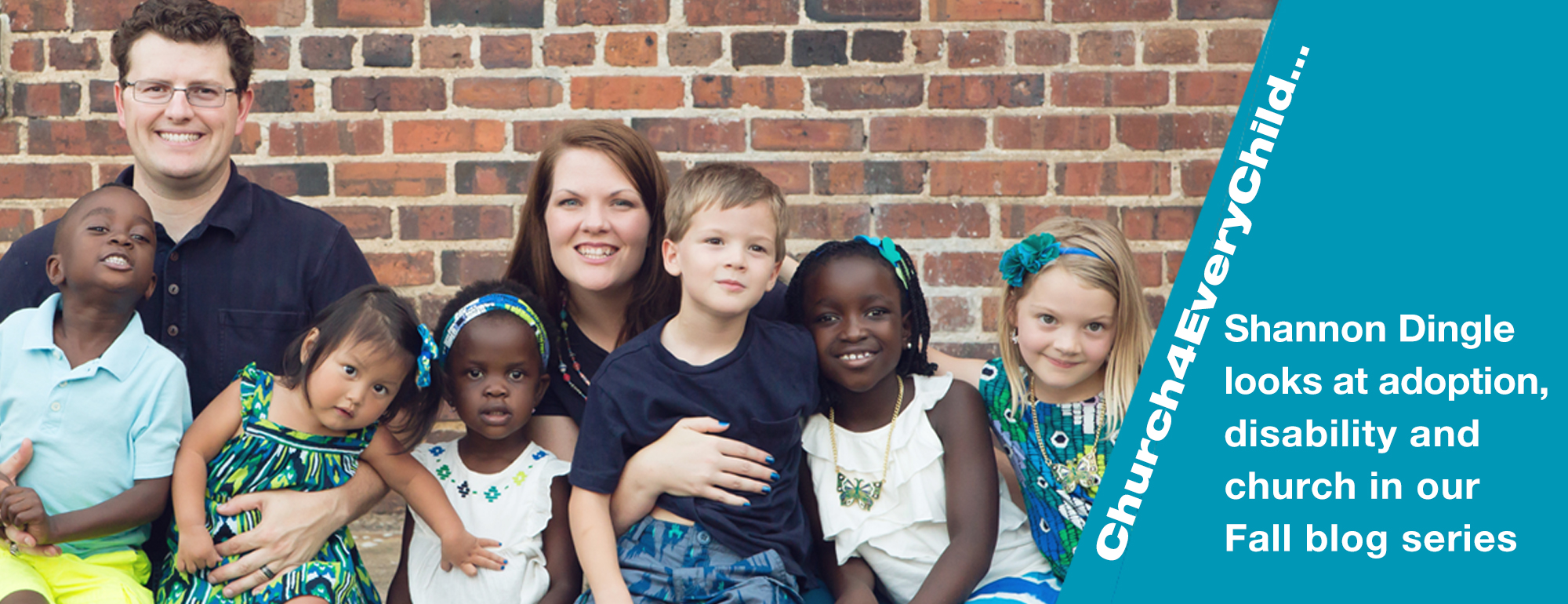
Check out Shannon Dingle’s blog series on adoption, disability and the church. In the series, Shannon looked at the four different kinds of special needs in adoptive and foster families and shared five ways churches can love their adoptive and foster families. Shannon’s series is a must-read for any church considering adoption or foster care initiatives. Shannon’s series is available here.
I’ve been invited to participate in a 24-hour prayer vigil taking place this evening through tomorrow evening at a nearby church served by our ministry. I’d be honored to pray for any specific needs or requests of anyone following our blog or served by the efforts of our Key Ministry team. I’d also be very pleased to offer praise and thanksgiving for the blessings experienced this past year by those touched through our ministry.
If you have specific praise or prayer requests you’d like to share, please feel free to share them in the “Comments” section underneath this post, on the Key Ministry Facebook page, or by sending me a direct message on Twitter to @drgrcevich. You can certainly e-mail any confidential requests to me at : steve@keyministry.org.
ACCESS TO INCLUSION FUSION TALKS AND DOWNLOADS NOW EXTENDED THROUGH SATURDAY, DECEMBER 31st! Chuck Swindoll and more than twenty-five ministry leaders came together on November 3rd-7th as part of a Special Needs Ministry Web Summit for church staff, volunteers, family members and caregivers everywhere. Inclusion Fusion is a Key Ministry event, presented FREE OF CHARGE with the support of Pajama Conference. Register here for access to the video archives of the Summit!
Churches planning ministry initiatives to serve kids in foster care need first to develop competency at serving kids with serious mental health issues and their families.
That’s the conclusion I’d draw in checking out this press release from the American Academy of Child and Adolescent Psychiatry. Here’s an excerpt:
Studies indicate that 60-85% of the children being served by the child welfare system meet criteria for a psychiatric diagnosis. Many of these children have had difficult early life experiences, including exposure to violence, abuse, trauma or neglect. Early detection and assessment of the mental health needs of these children is critical in order for them to receive necessary mental health interventions. However, despite their disproportionate mental health needs, most do not receive psychiatric care until their situation reaches a crisis point.
The context for the press release was to express the Academy’s support for efforts by the GAO (Government Accountability Office) to issue guidelines for monitoring the frequency with which kids in foster care (nearly all of whom are covered by Medicaid) are receiving psychiatric medication, especially antipsychotic medications that are frequently used “off-label” to treat severely aggressive behavior. In a nutshell, concerns have been raised about very expensive medication with potentially very serious short and long-term side effects serving as a substitute for nonexistent mental health services in many parts of the country.
If your church is planning an initiative to serve kids in foster care, have you considered the following questions:
If 60-85% of kids in foster care have significant mental health conditions, are you prepared to welcome those kids and teens into your existing children’s and youth ministry programming?
Are you prepared to provide for the child care needs of the families serving in foster care ministry so that those families can continue to maintain their current level of participation and involvement in your church?
Can you help the parents serving in foster care to identify and obtain competent and effective mental health treatment for the kids they’re serving, as well as the care and support the parents will need in managing the stressors to their marriages and family relationships resulting from their involvement in foster care ministry? Note: For more on this topic, see 20/20, Foster Kids and Medication.
Is this an area in which Key Ministry can be of support to your church? If so, what types of training or supports would be most helpful?
Key Ministry has assembled resources to help churches more effectively minister to children and adults with ADHD, anxiety disorders, Asperger’s Disorder, Bipolar Disorder, depression and trauma. Please share our resources with any pastors, church staff, volunteers or families looking to learn more about the influence these conditions can exert upon spiritual development in kids, and what churches can do to help!
I’d promised to follow up with all of you about our plans following Inclusion Fusion 2011, and to invite your input and suggestions. Here’s where we stand:
We will maintain free access to all of the content from this year’s conference on the Inclusion Fusion website through December 31st.
After December 31st, all of the videos will be available online through a new website that Jeremy Collins and the folks at Pajama Conference have developed…Kidmin Coaching. Presentations from Key Ministry staff and volunteers from this year’s Inclusion Fusion as well as the 2011 Children’s Ministry Telesummit will be available in the “free” area of Kidmin Coaching. Other presentations from this year’s conference will be available in the “premium” area of the site until next year’s conference. Following next year’s conference, all of those videos will be made available as part of the “free” content on the site.
We’ll also be maintaining the Inclusion Fusion conference site. After December 31, the content on the conference site will include all of the presentations from our Key Ministry team, along with select videos from this year’s conference that will be rotated throughout the year. As with the Kidmin Coaching site, all of the videos from this year’s conference will again be freely available following the completion of the 2012 conference.
Our long-term plan is for the Inclusion Fusion site to evolve into a FREE, online video training library that will reflect best practices for churches seeking to minister with children and adults with a broad range of special needs and their families.
In order to cover their costs of supporting Inclusion Fusion, the folks from Pajama Conference will be making available for sale a boxed set of DVDs containing all of the video presentations and downloads from the conference. Boxed sets will be available through the Inclusion Fusion website as well as the Pajama Conference website. The price of the complete set of conference videos will be $49. The boxed set will make a great gift for churches desirous of a resource for training staff and volunteers, as well as for families caring for a child or adult with special needs. We’ll be announcing the process for obtaining the DVD sets from our friends at Pajama Conference later this week.
Inclusion Fusion 2012 has been tentatively scheduled for November 8-12. Between now and then, we’re planning a series of presentations on topics of interest in special needs ministry under the Inclusion Fusion banner. We’re exploring the possibility of doing several live events in the coming year, and looking at ways of creating more opportunities for interaction between conference participants and our presenters.
We continue to be open to your suggestions on topics and presenters you’d like to see included in next year’s conference or special interest mini-conferences throughout the course of next year…please share your ideas in the “Comments” section of the blog below.
We would like to continue to offer our thanks and appreciation to Jeremy Collins and his team at Pajama Conference for allowing us to make these resources available to churches, pastors, volunteers, families and caregivers.
ACCESS TO INCLUSION FUSION TALKS AND DOWNLOADS NOW EXTENDED THROUGH SATURDAY, DECEMBER 31st! Chuck Swindoll and more than twenty-five ministry leaders came together on November 3rd-7th as part of a Special Needs Ministry Web Summit for church staff, volunteers, family members and caregivers everywhere. Inclusion Fusion is a Key Ministry event, presented FREE OF CHARGE with the support of Pajama Conference. Register here for access to the video archives of the Summit!
What I most appreciated from a physician’s perspective about Different Dream Parenting is conveyed in the book’s subtitle…A practical guide to raising a child with special needs.
I have a somewhat skewed patient population. More often than not, the kids and families I see with complex mental health (plus/minus medical) issues are over the initial shock of having received a diagnosis of a disabling condition. Nevertheless, the emotions experienced by the parents of kids I treat are often very raw. Fear can be overwhelming. A significant portion of my job involves helping parents to make sound decisions in the heat of the moment in the interest of serving the needs of their child.
Jolene Philo’s book is an invaluable help to parents and caregivers seeking to do their very best to serve their child with special needs. Her book can serve as an “adjunct left brain” when the emotions and decisions parents need to process become too much to handle.
Jolene and her husband have been there. Their son (Alan) was flown hours from their home for emergency surgery to address a life-threatening birth defect several hours after he was born, and subsequently experienced a lengthy and painful course of treatment involving six additional surgeries over a period of 15 years. The Philos found themselves in a strange city with a very sick child and little comfort or support.
In the book, Jolene taps into her 25 years of experience as an educator, her experience of serving on staff at a local church as Director of Discipleship and Assimilation and her experience as the parent of a child with special needs to craft a resource to help parents integrate the practical and spiritual concerns they struggle with on a daily basis. She very methodically helps parents by directing them to useful resources for coping with their child’s initial diagnosis and navigating the world of hospitals and medical professionals while juggling the demands of everyday life. She also helps parents address the challenges of advocating for the needs of their children as they grow older, as well as their more “typical” siblings. At the same time, she offers wisdom and guidance to parents in navigating the spiritual challenges that commonly occur when raising a child with special needs.
Jolene has managed to assemble a book that is as useful to a parent of a child being treated for cancer in the intensive care ward of a tertiary care pediatric hospital as it is to a parent sitting in my office whose child has just been diagnosed with an autism spectrum disorder. Different Dream Parenting is a great Christmas gift for any parent or caregiver of a child with special medical or mental health needs. Click here to order Different Dream Parenting.
ACCESS TO INCLUSION FUSION TALKS AND DOWNLOADS NOW EXTENDED THROUGH SATURDAY, DECEMBER 3rd! Chuck Swindoll and more than twenty-five ministry leaders came together on November 3rd-7th as part of a Special Needs Ministry Web Summit for church staff, volunteers, family members and caregivers everywhere. Inclusion Fusion is a Key Ministry event, presented FREE OF CHARGE with the support of Pajama Conference. Register here for access to the video archives of the Summit!
Our team at Key Ministry (and me personally) have lots to be thankful for in 2011! In the last ten days, we had our major Board meeting for the year and an opportunity to plan ahead in earnest for 2012. In the process of working on our Annual Report, I decided to develop a list of the top ten ministry-related blessings we’ve experienced in the past year. This was a great exercise-I had a very hard time choosing just ten. God’s been exceedingly gracious to us over the past year! Here goes…
The opportunity to serve an unbelievable ministry team. I’ve never seen so many gifted and talented people come together with a single-mindedness, setting aside personal pride or ambition to rally around a common goal as I have with this group. We have a great core staff team…Rebecca, Katie, and in 2012, Harmony. God’s going to use them to lead some remarkable initiatives in the years ahead. A great Board. If you did Inclusion Fusion, you saw our Board on display. Libby Peterson, Rhonda Martin, Cara Daily and Amanda Mooney all served as presenters in addition to myself and our staff. Stephen Burks is a filmmaker and a Principal in a video production company that shot much of the video training for the conference. Inclusion Fusion wouldn’t have been possible without the tireless efforts of Stephen and his team. Several others (Dave McKee, Diane Adamec and Joe Sontich) serve outside the spotlight, but contribute vision for the future of Key Ministry along with wisdom in the present.
Generous donors. I’ve seen so many people struggle when ministry gets mixed up with the need to make money. It’s a gift to be able to give this ministry away to churches free of charge because of the generosity of so many people with their time, talent and treasure.
The ability to see the fruits of our work. It’s a blast to get the e-mails and reports of the stuff that’s happening in terms of families connecting with the churches we’ve served. Within the last month, I had a kid come to my practice BECAUSE they reconnected with a church we serve. I love hearing about new respite initiatives as they launch. Katie’s going to be introducing you very soon to a special guy she’s yet to meet in person who is building a very cool ministry 2,000 miles away from our home base.
The opportunity to serve with so many great people with other ministries and organizations. We’ve had the privilege of meeting many like-minded brothers and sisters in Christ this past year who are passionate about seeing kids and adults with disabilities along with their families come to know Jesus and grow in faith through the ministry of local churches. Many of them helped us put together Inclusion Fusion. Jeremy Collins of Bethel House Media and Pajama Conference deserves special thanks and recognition for Inclusion Fusion. Jeremy is passionate about making available low-cost/ free training available to church staff and volunteers everywhere through the Internet.
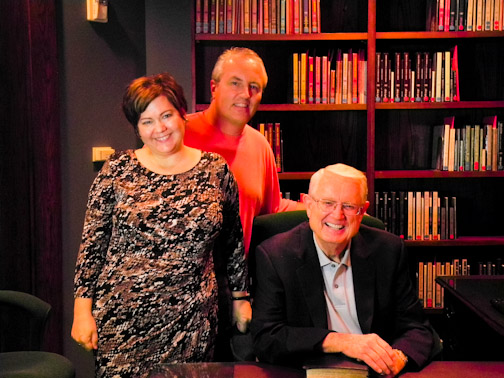
The Swindoll family. They were remarkably gracious in coming beside us for the first year of Inclusion Fusion, and were willing to lend the reputation of their ministry to the cause of increasing awareness of the needs of families touched by disabilities in the church. Our experience with Chuck, Cynthia, Colleen and their family helped restore my confidence in leaders of great influence in the church.
The “thorn in our side”. We’ve had an ongoing challenge to our ministry throughout the past year that God has used to make us better, both as individuals and as a team. I’m grateful for challenges that have forced us to “raise our game” and examine our motives.
The people of Bay Presbyterian Church. I’m grateful to have been sent from a church that views ministry as a privilege and a responsibility owned by all of the people of the church, and demonstrated the willingness to devote the church’s “best and brightest” in support of a very junior elder’s idea that families of kids with disabilities represented an enormous outreach opportunity for churches everywhere. I’m hopeful that our ministry efforts will bear much fruit in response to the confidence shown in us by BPC.
An incredibly supportive family. My wife and girls sacrifice in order to afford me the time and energy to be part of Key Ministry.
The opportunity to be involved in work with lasting significance. We have not just the incredible privilege to have a relationship with Jesus Christ, but the opportunity to be part of His plan in re-establishing His Kingdom here on Earth. I have the opportunity to do work of significance in my role as a physician. The work God does through Key Ministry will have eternal significance. It’s not too hard to get out of bed in the morning with an opportunity such as this.
I’m also grateful for the encouragement of Key Ministry’s friends and supporters everywhere. Happy Thanksgiving!
ACCESS TO INCLUSION FUSION TALKS AND DOWNLOADS NOW EXTENDED THROUGH SATURDAY, DECEMBER 3rd! Chuck Swindoll and more than twenty-five ministry leaders came together on November 3rd-7th as part of a Special Needs Ministry Web Summit for church staff, volunteers, family members and caregivers everywhere. Inclusion Fusion is a Key Ministry event, presented FREE OF CHARGE with the support of Pajama Conference. Register here for access to the video archives of the Summit!

 I’ve had a serious case of writer’s block over this past week. It’s been a long and productive year. I’m very tired. I’ve also been struggling with a profound sense of disappointment… disappointment I’ve been carrying around for much of this year.
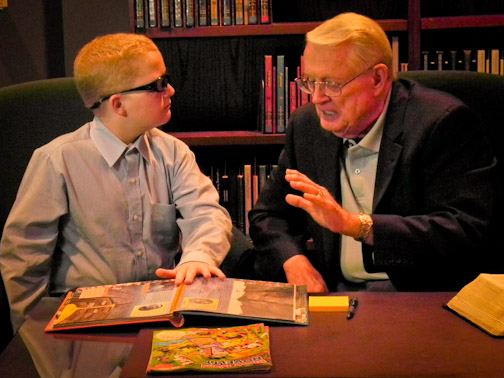 ACCESS TO INCLUSION FUSION TALKS AND DOWNLOADS NOW EXTENDED THROUGH SATURDAY, DECEMBER 31st! Chuck Swindoll and more than twenty-five ministry leaders came together on November 3rd-7th as part of a Special Needs Ministry Web Summit for church staff, volunteers, family members and caregivers everywhere. Inclusion Fusion is a Key Ministry event, presented FREE OF CHARGE with the support of Pajama Conference. Register here for access to the video archives of the Summit!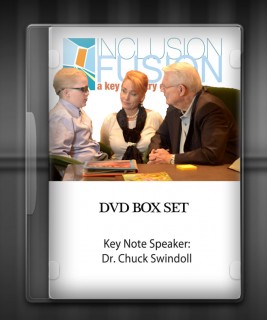
















 Church4EveryChild