Preparing to fight the good fight

shutterstock_54752770

Finally, brothers, whatever is true, whatever is honorable, whatever is just, whatever is pure, whatever is lovely, whatever is commendable, if there is any excellence, if there is anything worthy of praise, think about these things. What you have learned and received and heard and seen in me—practice these things, and the God of peace will be with you.

Philippians 4:8-9 (ESV)

I’m struggling with the feeling of being powerlessness as the culture around me changes in ways that will make life much more difficult and painful for my children and my children’s children, and result in a last chapter of my life very different from anything I’d imagined.

We’ve lived in a country where up until now, most of our fellow citizens have at least paid lip service to the message of the Gospel, shared a common understanding of right and wrong rooted in Judao-Christian teaching and tradition. American citizens have experienced historically unprecedented freedom not just of worship, but freedom to live out one’s public life in accordance with their faith.

I’ve heard from many friends in recent weeks who share my fears that our way of life is rapidly disappearing. A palpable sense of desperation is in the air as many realize that no political solution is forthcoming. At the same time, fear of the future doesn’t make for a good witness. When Christians try to defend the indefensible out of fear for the future – even though our fears are very legitimate, the reputation of Christianity as a whole becomes tarnished and the credibility of our witness becomes compromised.

Authentic Christianity is both difficult and divisive. Jesus himself said  it would be.

Do you think that I have come to give peace on earth? No, I tell you, but rather division. For from now on in one house there will be five divided, three against two and two against three. They will be divided, father against son and son against father, mother against daughter and daughter against mother, mother-in-law against her daughter-in-law and daughter-in-law against mother-in-law.”

Luke 12:51-53 (ESV)

As Christians, we find ourselves (as Jesus predicted) on the unpopular side of some very divisive issues. Leaders of political, economic and educational systems have made an implicit bargain with the people. Under the guise of “diversity” or “tolerance” the institutions of society agree to protect the people from unwelcome intrusions upon conscience in exchange for their support.

For when Gentiles, who do not have the law, by nature do what the law requires, they are a law to themselves, even though they do not have the law. They show that the work of the law is written on their hearts, while their conscience also bears witness, and their conflicting thoughts accuse or even excuse them on that day when, according to my gospel, God judges the secrets of men by Christ Jesus.

Romans 2:14-16 (ESV)

Scripture teaches us that we’re born with an innate sense of right and wrong, or as Paul put it… “the work of the law is written on their hearts.” Living out the Christian life represents an assault upon our modern culture. And there will be consequences for those who threaten our newly established cultural consensus. You will be made to care. I don’t envision “persecution” coming to our country in the sense that Christians in other parts of the world face imprisonment, torture or death for practicing their faith, but I do think many of us will face some very uncomfortable decisions in the years ahead.

Anyone who works for an organization that receives significant funding from the government (education, health care, social services, state and local government) will likely face pressure to endorse practices and behaviors in conflict with traditional Christian teaching. Faith-based hospitals that refuse to perform abortions will be threatened with catastrophic losses of funding. Adoption agencies with moral reservations about placing children in non-traditional families will be shut down. Persons in occupations that require licensure will be expected to comply with the new cultural norms.  I fear that my daughter who will be applying to medical school next year won’t be able to practice medicine ten years from now if physician-assisted suicide becomes a “right” in the U.S., as has occurred in Canada and she refuses to participate.

Woe to those who call evil good
and good evil,
who put darkness for light
and light for darkness,
who put bitter for sweet
and sweet for bitter!

Isaiah 5:20 (ESV)

As a leader of a ministry organization that helps churches serve families of kids with disabilities, I find myself wondering why would families without a strong faith in Christ WANT to be part of church, given the trends in the culture? They’re already fighting a fight they didn’t ask for as parents of a child with a disability. Who would voluntarily join a church when living in accordance with the teachings of that church (if the church’s theology is more traditional/orthodox) will likely result in more social isolation, and the possibility of economic hardship? They WON’T…unless they see an irresistible quality in the lives of the Christians with whom they come in contact.

How shall we prepare now to fight the good fight in the years ahead when we’ll likely pay a price for practicing our faith?shutterstock_271791929

We’ll need to be more purposeful and intentional about pursuing and maintaining Christian community. We’ll need one another more than ever as the pressures to conform to the expectations of the culture become more intense. Our kids will need to know that there are other kids and families who believe what they believe and that they’re not alone. From a practical standpoint, we’ll need to be better networked with one another and look after one another in educational and business as if we’re members of a cultural minority -because we will be in many professions. To be the “salt” in the culture, we’ll need to do a very good job of maintaining our “saltiness.”

Consider the witness you wish to present in a culture hostile to God. Want a role model for how to respond in a hostile environment? Consider Daniel. He remained faithful to God when he had every reason in the world to compromise. The combination of his personal integrity and the excellence of his service to the king led him to a position of great influence. Daniel also attracted lots of unwanted attention because of his insistence upon living out his faith when doing so violated the laws of his country. His faith was such that he was willing to trust in God for his protection even when the dangers were great.

Live out the Gospel. I happen to believe a great way of doing so is by caring for and advocating on behalf of persons with disabilities, especially children. When culture rejects God’s law, the most vulnerable among us will be at the greatest risk. Just last month, the first report of physician-assisted suicide of a minor under the law permitting the practice in Belgium. In the Netherlands, physicians have been killing babies with severe disabilities for years, even though the practice is illegal there in children under the age of 12, and sufficiently emboldened to publish their protocol for doing so in the New England Journal of Medicine.

In the early days of the church, Christianity made an impression upon the people of the Roman Empire through the selflessness with which Christ followers cared for destitute or disabled children who had been abandoned by their parents and attended to the sick at great personal risk during the plagues that ravaged the empire. We find ourselves surrounded by casualties of a culture war. We fight back by…

  • Caring for the children who find themselves in the foster care system as a result of trauma, abuse and neglect.
  • Teaching the kids who aren’t well-served by our current educational system – including kids with special education needs.
  • Pursuing truth, honor, justice, purity, beauty and excellence.

We’re called to be witnesses to truth in a time when our culture is collectively exchanging the truth of God’s Word for a lie.

Game on!

In those days there was no king in Israel. Everyone did what was right in his own eyes.

Judges 21:25 (ESV)

***********************************************************************************************************

OutsideIn_horizontalSAVE THE DATE! Key Ministry is pleased to partner with Outside In Ministries to offer Mental Health Ministry in the Local Churcha one-day conference for pastors, ministry leaders and faithful Christians seeking to take the next steps in helping their churches welcome, serve and disciple children, adults and families impacted by mental illness. The conference will take place on Saturday, November 19th, from 8:30 AM – 1:00 PM at Ironbridge Baptist Church in Chester (suburban Richmond), Virginia. Tickets are currently available here.

Hope to see you on November 19th!

Posted in Key Ministry, Leadership | Tagged , , , , , , , , , , | 3 Comments

Ten ways for churches to serve families impacted by mental illness

shutterstock_92779615

“Small things done with great love will change the world.”

Those words are carved above the entrance to the main campus of Vineyard Cincinnati, a church that does an extraordinary job of sharing the love of Christ with the people of their surrounding community and region. They also represent an important strategy for connecting with families who may be skeptical about Jesus because of negative experiences with Christians or church.

If we’re to impact individuals and families affected by mental illness currently outside the church, we first have to get better at meeting the practical needs of families impacted by mental illness who already have some connection to the church. Put yourself in the shoes of someone struggling with mental illness or the burden of being a caregiver to someone with mental illness. Imagine the reaction of someone in the church desperate for care and support who feels overlooked while the church pours into others!

At the same time, we need to be intentional in our efforts to enter into relationships with those in our community – with or without mental illness who lack a relationship with Jesus and a church community. Our ministry colleague and former teammate Mike Woods frequently reminds us of the importance of “outwardly-focused inclusion.” Given the social isolation that families of children with mental illness and trauma often experience, we can’t wait for them to come to us – we need to be intentional about going to them.

I’d like to share ten suggestions for churches seeking to serve kids, teens and adults with mental illness and their families…

  • Intercessory prayer: How often have you heard your pastor or another pastor pray for people impacted by mental illness during a worship service? Regularly scheduled public prayer is a powerful strategy for affirming attendees struggling with mental illness and conveying a sense of welcome to visitors.
  • Casseroles: Every church that I’ve attended church in my adult life had some type of ministry to provide food to families following the birth of a baby or during an illness. Would your church make sure that a family with a child in the hospital has something to eat? What if their child is in a psychiatric hospital? 
  • Hospital visits: In many churches a pastor or member of the pastoral care team will seek to visits members/attendees in the hospital or another extended or long-term care facility. Would a child or teen in a psychiatric or residential treatment facility get a visit from the children’s or student pastor? What about the adult child of a church member admitted to a state-operated psychiatric hospital?
  • Counseling: Many adults or kids with anxiety disorders or depression could very much benefit from counseling but are unable to afford it. A local church that makes available excellent counseling services for low or no cost helps to address a very pressing need.
  • Community: Persons with mental illness and their family members frequently lack support. Many churches offer Stephen Ministers or confidential caregivers to support hurting people. Some offer Biblically-based peer support groups, including Fresh Hope and Celebrate Recovery,  or “Grace Groups” offered through Mental Health Grace Alliance that provide educational materials, skills and tools to specifically work to improve mental health wellness and recovery.
  • Compassion: Many churches have a benevolence or “deacon’s fund” to provide financial assistance to persons with pressing financial needs. Churches may consider supporting families with no other way of addressing short-term mental health needs – one-time consultations, prescription refills, transportation needs or child care for parents in need of treatment.
  • Respite care: Our team has found that church-based respite events for families of kids with special emotional, behavioral, developmental or healthcare needs is greatly appreciated by parents who often struggle to find affordable childcare and represents an effective outreach strategy that often leads to attendance at weekend worship services. rEcess from 99 Balloons and Buddy Break from Nathaniel’s Hope are two outstanding ministries that train churches to offer respite outreach.
  • Mental health-focused worship services: Many churches will designate a specific weekend as a “Disability Ministry” or “Special Needs Ministry” Sunday. In our home area, we’re seeing churches host worship specifically for families with identified special needs. Why not host a worship service with a mental health-specific theme with appropriate worship music and teaching promoted to families of kids and adults with mental illness who lack a church home?
  • Referral services: Many families don’t know where to turn when mental illness strikes. Churches can provide a valuable service by directing those in search of mental health services to practitioners and agencies equipped to meet their needs.
  • Prison/homeless ministry: You’ve likely never considered your church’s homeless ministry or prison ministry as components of your mental health outreach. One in five homeless persons are characterized by the Substance Abuse and Mental Health Services Administration (SAMSHA) as having “severe mental illness.” According to statistics from the U.S. Department of Justice, approximately, 24% of jail inmates, 15% of state prisoners, and 10% of federal prisoners reported at least one symptom of a psychotic disorder. Local jail inmates had the highest rate of symptoms of a mental health disorder (60%), followed by State (49%), and Federal prisoners (40%). How can your church better support the mental health needs of persons you serve through these ministries?

shutterstock_370082543

What good is it, my brothers, if someone says he has faith but does not have works? Can that faith save him? If a brother or sister is poorly clothed and lacking in daily food, and one of you says to them, “Go in peace, be warmed and filled,” without giving them the things needed for the body, what good is that? So also faith by itself, if it does not have works, is dead.

James 2:14-17 (ESV)

***********************************************************************************************************

OutsideIn_horizontalSAVE THE DATE! Key Ministry is pleased to partner with Outside In Ministries to offer Mental Health Ministry in the Local Churcha one-day conference for pastors, ministry leaders and faithful Christians seeking to take the next steps in helping their churches welcome, serve and disciple children, adults and families impacted by mental illness. The conference will take place on Saturday, November 19th, from 8:30 AM – 1:00 PM at Ironbridge Baptist Church in Chester (suburban Richmond), Virginia. Tickets are currently available here.

Hope to see you on November 19th!

Posted in Advocacy, Key Ministry, Mental Health, Strategies | Tagged , , , , , , | 3 Comments

Disability Inclusion on Mission Trips

untitled-2Inclusion is one of the top buzz words in the disability community. Extensive research has been done on inclusion, countless articles have been written and everyone seems to have an opinion on appropriate levels of inclusion in schools. I think we can all agree that there are clear benefits to inclusion.

In the church world, the conversation on inclusion almost always is centered on children and the world of children’s ministry. Obviously, there are more possibilities for inclusion outside of children’s ministry.

Many in the church world are waking up to the fact that children with disabilities don’t stay children forever. Special needs ministries often struggle to keep children engaged when they grow older. We must continually look for more opportunities for inclusion as our friends age.

Have you ever heard someone say, “They may be 20 years old, but have the mental ability of a 5 year old.” Too much emphasis is placed upon cognitive ability and social and emotional needs often get ignored. This mentality not only stifles people with disabilities from achieving what God wants them to do, but also puts up roadblocks to meaningful inclusion opportunities.

At First Christian Church in Canton, OH we took the conversation of inclusion to a whole new level. For the past few years we have been talking about a philosophical switch in our approach to disability ministry. The conversation is about moving beyond just doing disability ministry “for” or “to” people with disabilities. We realized that this approach made our friends the objects of our ministry and that was never our intent. We wanted to move beyond that and become a place where we do disability ministry “with” people with disabilities. They are our ministry partners as our brothers and sisters in Christ. Ultimately we simply want to empower our friends to “do” ministry.

We finally saw this play out in a very unique way through my friend, Nick. Nick is a young adult in our Hidden Treasures Sunday morning adult class. Nick was going through a difficult time last December. He found himself stuck in depression. After weeks of counseling I challenged Nick to go into the worship service and to simply pray. I asked him to pray that God would help him discover what he could do that would be positive. Nick was so consumed by negatives in his life at the time. After the worship service that Sunday, Nick’s entire countenance had changed. He was no longer slumped over and dragging about. He was completely upbeat and wore a smile on his face as he approached me. He could barely contain himself as he told me that God had answered his prayer. He felt convicted that God wanted him to plan a mission trip.

A mission trip planned by and for people with disabilities was exactly what we were hoping for as we were making our philosophical switch. Note that it was not something anyone from my leadership team came up with. It was an idea that was birthed by God through our friend Nick.

untitled-5

Mission trips are incredible experiences that have the ability to accelerate spiritual growth. Persons with disabilities rarely go on mission trips – a typical experience that should be made available to “all people.”

We wanted to see inclusion work here too, so 9 months of planning started after that conversation with Nick. Trust me – along the way I had all the reasons why it couldn’t work bouncing around in my mind. Who gets to go? What are we going to do? What about medications? Am I going to be able to get consent from families or guardians? What about traveling out of state? What if we had an emergency? How are our friends going to be able to raise the money necessary? And the questions kept coming.

During our planning stages we were blessed to find Dutton Farm, The House of Providence, and Woodside Bible Church. All three ministries are located close together in Michigan. All three ministries also shared our same philosophical approach to Disability Ministry and were excited to play a part in our trip.

Along the way God answered all of our questions. On August 25-28 we went on our first-ever Disability Ministry Mission Trip. God was faithful to Nick. God spoke to Nick. Nick listened and acted in obedience to God. Because of his obedience, God blessed our little adventure.

So inclusion is even possible on mission trips!

If you’d like to see some of the highlights from our trip check out our video…

In addition to his work for Key Ministry, Ryan Wolfe serves full-time in the position he has held since 2010 as Developmental Disabilities Pastor at First Christian Church in Canton, Ohio. At First Christian, Ryan has developed a faith-based day program & employment program for adults with developmental disabilities. First Christian Church also hosts respite events, an annual prom, Sunday morning ministries for both children & adults, a volunteer guardianship program, and more to support persons with disabilities.
***********************************************************************************************************

shutterstock_138372947Know a family impacted by disability in need of help finding a local church? Encourage them to register for Key for Families. We can help connect families with local churches prepared to offer faith, friendship and support, while providing them with encouragement though our Facebook communities. Refer a friend today!

Posted in Advocacy, Intellectual Disabilities, Special Needs Ministry, Stories, Strategies | Tagged , , , , , , | Leave a comment

ADHD, suicide, African-American boys…and how churches might help

shutterstock_30354046A study published yesterday in Pediatrics examined all reported deaths by suicide of children between the ages of 5-14 in a 17 state area between the years 2003-2012. The study authors (from Ohio State University, Johns Hopkins University and the National Institute of Mental Health) report startling differences between the mental health histories  and ethnicity of children of elementary school age (age 11 and under) who commit suicide versus those of early adolescents (ages 12-14) who took their own lives.

Among the key findings of the study…

Males constituted 85% of completed suicides in the elementary school age population, versus 70% of early adolescents.

36.8% of suicides among the elementary school age population involved African-Americans, versus 11.6% in the early adolescent population.

Elementary school age kids whose mental health history was known were significantly more likely to have been diagnosed with ADHD (59.3% vs 29.0%), die by hanging, suffocation or strangulation (80.5% vs 64.1%) and to have experienced relationship problems with a family member or friend (60.3% vs 46.0%) than early adolescent decedents.

Elementary school age decedents were significantly less likely to have been diagnosed with depression or dysthymia (33.3% vs 65.6%), leave a suicide note (7.7% vs 30.2%), use a firearm (13.8% vs 29.5%) or report a problem with a boyfriend or girlfriend (0.0% vs 16.0%) when compared with early adolescents.

So…what should we make of the study findings?

Parents, teachers and healthcare practitioners have been very focused on screening for symptoms of depression in identifying kids who may be at heightened risk of suicide and in need of mental health intervention. Impulsivity is also an important risk factor for suicide in kids. In school age children, impulsivity may be a more important risk factor for suicide than depression.

Is the stigma against treatment of mental illness generally, and treatment of ADHD specifically a contributing factor to the difference in rates of completed suicide among African-American children and other ethnic groups? This review article summarizes the research on diagnosis and treatment of ADHD in African Americans. One systematic review found that African American children showed more ADHD symptoms than did white children but were diagnosed less often, possibly related to parental beliefs about ADHD and poorer access to treatment.  Compared with white children, African-American children were significantly less likely to receive an ADHD diagnosis from kindergarten to eighth grade and were less likely to be using medication than were white children diagnosed with ADHD.

The authors of the study suggest interventions to help promote interpersonal problem-solving skill development and building positive emotional and interpersonal skills early in childhood as possible suicide prevention strategies in children of elementary school age. I’d suggest another strategy with a strong evidence basis.

John Bartkowski published this article in Social Science Research examining the impact of family religious practices on child development, examining data from the Early Childhood Longitudinal Study. He found that kids whose parents regularly attended religious services talked with their kids about religion were rated by both parents and teachers as having better self-control, social skills and approaches to learning than kids with non-religious parents. Here are a few key excerpts from his study…

The findings that emerge from the present investigation are robust and quite clear. The religious attendance of parents (individually) and couples (together) generally has a positive effect on child development. When measured as parents’ worship service attendance (essentially, caregivers’ integration within religious networks), religion is good for kids.

These findings, when examined in concert with the generally robust effects of religious homogamy, suggest that a couple’s shared faith commitments are a noteworthy asset for healthy child development. With regard to religious homogamy and child development, it can be said that parents’ attendance has a multiplicative effect not reducible to either mothers’ attendance or fathers’ attendance. Put differently, it is not simply generic homogamy (couple similarity regardless of religiosity) but rather the amount of religion (e.g., stocks of ‘‘religious capital’’) that a couple can jointly import into the family that bolsters child outcomes, particularly for child performance outside the home.

In many of the developmental domains featured here, the children who are doing the best are in households where both parents attend worship services frequently. In fact, the effects of parents’ religious attendance are stronger and more persistent than those related to the family’s religious environment, thereby underscoring the importance of parental integration (and, likely, children’s integration) in religious networks for steering youngsters toward positive developmental outcomes. Consistent with the adage that ‘‘it takes a village to raise a child,’’ it is likely that the network closure provided by congregations (that is, interaction and instruction provided to youngsters by non-parental adults who reinforce parental values) is a vital part of promoting pro-social outcomes in children.

While suicide among children of elementary school-age children is far less common than suicide among teens (rates are thirty times lower among children ages 11 and under compared to rates in 12-17 year olds), suicide still represents one of the top ten causes of death in that age group.

Here are a couple of thoughts on how pastors and children’s ministry leaders might help…

Churches in general should consider how they might reach out to families in their communities of kids who struggle with self-control. Kids who attend church with parents who attend church are likely to have significantly better developmental outcomes, and kids and parents benefit greatly from the influence of others in the church. In particular, churches that minister with African-American families might consider how they might play a role in overcoming the stigma regarding mental health care and kids, and embrace the opportunity to welcome kids likely to experience extra benefits from being part of a family of faith.

shutterstock_220924132

***********************************************************************************************************

shutterstock_126776312Check out Key Ministry’s resources for church leaders and families on ADHD. Readers will discover our blog series on ADHD and spiritual development and discover video presentations and websites for deepening understanding about the most commonly diagnosed mental health condition in kids. Click here to learn more.

Posted in ADHD, Depression, Hidden Disabilities, Key Ministry, Mental Health | Tagged , , , , , , , , , , | Leave a comment

Celebrating Shannon

img_0858Shannon shared the news that she’s transitioning off our ministry team with readers of her personal blog this past week.

Our team is grateful for the time Shannon served with us. She’s a unique figure in the disability ministry movement in that she brings such a broad range of experience to her advocacy. She’s worked with at-risk kids as a special education teacher, served as a special needs ministry director at a large church, is a parent of a biological child and three adopted children with identified disabilities, and has personal experience of disability from rheumatoid arthritis, trauma and mental illness. She’s been extraordinarily productive while managing to keep lots of balls in the air.

Shannon has served as a passionate and capable champion for a number of important causes in the church…special needs ministry, adoption, foster care, mental illness, trauma and children who are HIV positive. She’s has a gift of being able to write about painful and difficult subjects in a manner that leaves readers feeling that someone truly understands their experiences. She’s truthful and transparent. She’s willing to speak into topics that others are reluctant to touch.

One of our goals as an organization at the time Shannon was hired was to develop resources for churches seeking to support adoptive and foster families. We’d struggled with getting churches to appreciate the need for ministry supports for children and teens with mental illness and trauma, and research and experience suggested that the need for supports would be most readily apparent to churches promoting adoption or foster care ministry. We couldn’t have asked for a better person to develop resources for adoptive and foster families than Shannon.

We encourage our readers who followed Shannon’s posts here to bookmark her new website and blog and to follow her on Facebook and Twitter, because God writes the best stories.

Shannon…Thanks for your invaluable contributions to the work of Key Ministry over the last couple of years! We’re honored to have served with you and look forward to the contributions you’ll make to the disability ministry movement for many years to come!

C4EC adoption series image 3 - Version 2

***********************************************************************************************************

thegirlsCheck out Shannon Dingle’s blog series on adoption, disability and the church. In the series, Shannon looked at the four different kinds of special needs in adoptive and foster families and shared five ways churches can love their adoptive and foster families. Shannon’s series is a must-read for any church considering adoption or foster care initiatives. The series is available here.

Posted in Advocacy, Hidden Disabilities, Key Ministry | Tagged , , , , , , , | Leave a comment

Lamenting the Life We Had Hoped For…Wendy Heyn

shutterstock_250550104We were delighted to bring home our second child, Liam. He seemed to be a healthy baby boy. We thought he was perfect: 10 fingers, 10 toes, and startling blue eyes just like his big sister, Sophia.

As the months went by, I began to notice that Liam was not developing like his sister had – or like any of the other babies that I knew. My very first realization of this came when I took him for his six-week pictures – a stress-filled experience that took two tries and yielded only one or two halfway decent photos. I remember driving home and wondering why, when Sophia was that same age, we had been able to get her to concentrate on me and end up with so many great photos, whereas with Liam, not only was he fussy, but we could not even get him to look at me or a toy long enough to take a good photo. That experience left me with a sick feeling in my stomach and a nagging worry.  Time passed and Liam grew, but he didn’t meet milestones.  He didn’t roll over or sit up during his first year of life.  He didn’t learn to crawl, walk, or run.

As it became apparent that something was amiss, we began to search for answers. We visited every specialist I could think of. Our pediatrician thought that I was overreacting and that Liam would eventually catch up and be just fine.   After all, every baby develops on his or her own time schedule. Despite his assurances, I was calling every medical professional that I could find. I had to find out what was going on with my son. We spent hours in doctors’ offices (in addition to the hours we were spending in therapies) and underwent many tests requiring sedations, blood draws, you name it. We left no stone unturned.

wendy-heynFinally, one afternoon our world was tipped on its’ side with a phone call.  Liam’s pediatrician read me a diagnosis that I had never heard before, MECP2 Duplication syndrome.  He went on to say that what Liam had made him severely cognitively disabled, would give him great physical challenges, and would extremely decrease his life expectancy. I had never allowed myself to consider that Liam had something so severe and that he might have something that couldn’t be fixed.  As if Liam’s diagnosis weren’t enough, I also learned that I carried the duplicated gene.  It felt like our dreams for our beautiful Liam were shattered and on top of that, what about the family that we had planned and hoped for? What about more siblings for Sophia? Would she never have a typical brother or sister whom she could play with, fight with, and confide in? How would we take care of Liam? How would this affect Sophia? The questions in my mind were endless.  I was shocked, rattled and devastated.

That shock and devastation has numbed over the years.  It has been replaced by a lingering sadness and a fierce love for our son just as he is. As the years have gone on we have certainly faced life-altering challenges and daily struggles.  We have learned all sorts of medical things that we never knew (or wanted to know!).  Liam’s kind and gentle nature have encouraged everyone he meets. He has taught us about a deeper love for others.  His very needs and existence encourage us in a closer relationship with our God. We have enjoyed friendships with teams of professionals who have loved our boy and taught him and us so much.  We have seen that sibling relationships of every kind are beautiful, fulfilling, aggravating at times, and worthwhile.

While we have learned and grown and loved our boy, it has not been without an aching heart.  We still lament the life that we hoped for. We are sad for all of the things that Liam misses out and all of the medical challenges that he faces. The day to day caring for Liam and the difficulties of aquiring help along the way can make us bone weary.  This special needs road is not an easy one.  Yet we know that even in this unexpected life of ours, God’s grace abounds.  He heals, restores, comforts and strengthens. He is a God who saves.

“He who did not spare his own Son, but gave him up for us all–how will he not also, along with him, graciously give us all things?” (Romans 8:32)

We are so thankful when God allows us to see glimpses of his restorative and comforting hand here on earth. These are the moments that give us courage to go on.  They remind us that God is before us and behind us and on every side.

515iy2yfxnl-_sx322_bo1204203200_My book is a collection of stories about moms who have faced unexpected and difficult things in life with a child who has special needs.  Show Me Your Mighty Hand  uses challenges faced by Mary, Jesus’ mom.  She faced difficult and unexpected things and God’s faithfulness to her can be an example of God’s faithfulness to every mother.

As you read the stories in the book, I hope that you are encouraged by God’s presence and promises in the lives of each of these moms.   I want your eyes to be opened to his presence in your life, your child’s life, and your family’s life.  I pray that reading these stories encourages you to trust God’s plans even when you don’t understand them.

Wendy Heyn taught early elementary students in Christian schools for ten years before staying home with her three children. Her experience as mom to Liam, who has MECP2 duplication syndrome qualified her to write Show Me Your Mighty Hand, available through Northwestern Publishing House.
***********************************************************************************************************

shutterstock_138372947Know a family impacted by disability in need of help finding a local church? Encourage them to register for Key for Families. We can help connect families with local churches prepared to offer faith, friendship and support, while providing them with encouragement though our Facebook communities. Refer a friend today!

Posted in Parents, Special Needs Ministry, Stories | Tagged , , , , , | Leave a comment

Church, we can’t not know about adoption and special needs!

shutterstock_343320251“Wow.”

I think that was the only word either of us uttered until we were back in the car. Then I turned to Melinda and put into words what I’d been hiding in the corners of my soul:

“Sometimes I wish I didn’t know. I know ignorance isn’t best, but knowing so much about injustice? Sometimes it hurts too much.”

The documentary we had just watched was about global educational inequities for girls, but my words echoed what I was learning about orphans and widows and poverty and disability in the wake of our recent adoption of a little girl with cerebral palsy from Taiwan. I was realizing I hadn’t yet left behind my elementary school petulance: “This. Is. Not. Fair.”

 I didn’t know then why God needed to be opening my eyes.

I didn’t know He was working to bring three more children into our family, darlings who had already experienced more than their fair share of unfairness in such few years of life.

I didn’t know I’d be speaking at national conferences and writing to wide audiences to open their eyes too, so that churches might understand how to love families like mine well.

I didn’t know one of our children whisper, “you no beat me?” with big eyes trained on me each time she made a mistake in her first six months with us.

I didn’t know that listening well to those whose lived experiences were different than mine would be the only possible preparation for the first time my child would be told “go back to Africa” on the playground.

I didn’t know we would lose friends who were more comfortable with their fear than with learning about our child’s HIV and the ways it doesn’t pose any risks to other kids.

I didn’t know how much it would sting to hear well-meaning adults talk about how lucky our kids were, when I know that they’ve lost far too much – their family, their country, their native language, their culture – to be considered lucky if we stopped to think before we spoke.

shutterstock_93524326

I didn’t know that I needed to know the stories of injustice because I would be welcoming the stories in, tucking the story-bearers into bed, and weeping over them once they fell asleep because they had forgotten how to weep for themselves.

And?

Our church community didn’t know what we would need, but they said yes with us: yes to loving through the brokenness, yes to being faithful to the ones (me included) who need to learn to trust once again, yes to a bit more chaos in our row during worship, yes to choosing to do good for young ones for whom others hadn’t always chosen good in their recent past.

Yes, adoption has beauty but it is a beauty born of brokenness. It is an arrest, trial, bloody walk, crucifixion, earthquake, deep mourning, dark Saturday, and fear of “what next?” before a Sunday resurrection.

As we (rightly) encourage family reunification efforts first and then foster care and/or adoption in our churches, let us be careful not to rush to Easter Sunday stories while forgetting the darkness preceding them.

As we examine the greatest needs for adoption around the world, children with special needs are the most likely to be overlooked, the most likely to age out of the system – here or abroad – without a family, and the most likely to be preyed upon by those who known that no one is keeping watch over these children, adolescents, and teens in the ways I keep watch over my six little ones. Some of their disabilities are like those we already know well, like Down syndrome or cerebral palsy. But others? Trauma that sometimes looks like ADD or acting out. Neurological deficits from neglect. Sensory sensitivity from not receiving a loving touch for days, months, or even years. Institutional autism from never learning how to have typical social interactions. PTSD more severe than most combat soldiers. Feeding challenges like hoarding, stealing, gorging, or gagging from living with food insecurity and malnutrition. Sexual precociousness from sins committed against these innocents, as no one else knew, cared, or offered protection. Persistent lying as a defense or a habit or a disconnect from truth for so long that honesty feels unsafe.

shutterstock_430295140

Church, when you encourage families to say yes to foster care and adoption, how are you willing to change so that you can continue to say yes to these families after the children have entered their homes?

If you’re stumped by the last question, please know that we at Key Ministry would love to help! We offer free consultations to churches considering these sorts of questions. Go here to get started!

***********************************************************************************************************

Dingles SpringCheck out Shannon Dingle’s blog series on adoption, disability and the church. In the series, Shannon looked at the four different kinds of special needs in adoptive and foster families and shared five ways churches can love their adoptive and foster families. Shannon’s series is a must-read for any church considering adoption or foster care initiatives. Shannon’s series is available here.

Posted in Adoption, Inclusion, Key Ministry | Tagged , , , , , , , | Leave a comment

On losing my pastor

garnettMy pastor announced his resignation yesterday. I’ll miss him greatly.

Garnett Slatton is quite unlike anyone I’ve ever come across in ministry. He’s achieved great success at the highest levels of his profession – in finance, as the president of an NBA team and as a professor in the School of Business at Vanderbilt University. I have a different quality of respect for him as a result of his accomplishments outside of the church, but even more so for the faith he and his wife demonstrated in walking away from the comforts he had achieved in the middle of his career to pursue God’s call to attend seminary.

He is an exemplary leader in the way he models humility. Other pastors and leaders would view our church as very successful. Under Garnett’s leadership, the church accomplished all of the nine priorities he was charged with upon his arrival eight years ago. He had lots to be proud of…but I never once saw him take any credit for the impact of our church’s ministry. I was struck by the way he introduced himself at the beginning of his sermons… “Hi, I’m Garnett and I’m one of the pastors here.”

13709948_1092005944208162_8002062096886167558_nHe is visionary in identifying opportunities for ministry collaboration that meet the heartfelt, practical needs of the people of our city and region while making God famous. Only someone with Garnett’s entrepreneurial gifts and leadership ability would have recognized the opportunity in purchasing an entire church campus in the heart of the city of Cleveland for the purpose of launching a hub for church planting, alternative education, international missions, urban renewal, community development, the arts, and transitional care for homeless veterans, operated in partnership with 20 other churches and non-profit organizations.
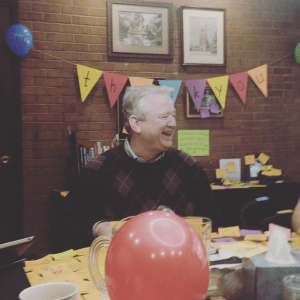
Garnett is a very gifted teacher. He communication style speaks to visitors new to the faith while challenging those who are very familiar with the Bible. He reminds me of Tim Keller in his ability to present the truths of the Gospel to very bright people skeptical about Christ or Christianity.

My experiences as a psychiatrist, as someone who has served in leadership positions in a number of non-profits and as a ministry leader has led me to observe that relational challenges frequently occur when an organization is filled with highly gifted and passionate leaders. Especially in a church or ministry. For persons who serve on staff or in key volunteer position in a local church, their work represents an ongoing act of worship, and their coworkers often represent their personal and spiritual support networks. Some conflict is probably inevitable when strong leaders have the courage to share their organizations with other strong leaders. And even though the conflict is often difficult and painful, God sometimes uses conflict to advance the Gospel. See Acts 15:36-41 and the story of Paul, Barnabas and John Mark for an example.

It’s probably time for my pastor to move on to his next assignment. Far too often, losing a pastor means losing much more. We see churches with vibrant special needs or disability ministries let go of those ministries when staff or volunteers move on or when new pastors arrive who prioritize other areas of ministry. Churches in transition often have fewer resources (finances and volunteers) to invest in service or outreach. The presence of a stable and familiar church community is of great comfort for those enduring the storms of life-a state that pretty much characterizes the state of families our ministry resources churches to serve.

I don’t like it when God makes me uncomfortable. My church has been extraordinarily supportive of the work of this ministry. More importantly for me, Garnett and his predecessor (Hu Auburn) established a culture in which the people of the church are resourced and empowered for ministry and the role of staff is to offer their experience and resources to members and attendees with vision for ministry and a passion to serve. I’ve come to appreciate how rare it is to encounter church leaders secure enough in their roles to share the opportunity to “do” ministry with others, and it’s a little unsettling to think of how difficult it might be for my church to find a leader on the outside comfortable with such a ministry culture.

From a leadership perspective, what I most appreciate about Garnett is the way in which he made the other people around him better. He left our church with two pastors who do a fabulous job of teaching in the context of their unique gifts and talents, and an extremely capable team of ministry leaders. He laid the foundation for an organization that will continue to do great work for the Kingdom after he moves on.

My hope lies in Jesus, and not in any person or organization. At the same time, it’s hard to see a pastor move on whose teaching resonated with my extremely intelligent but somewhat introverted teenage daughter who isn’t into the stuff that appeals to her same-age peers attending high school ministry. It’s hard to see a pastor move on with great sensitivity to the struggles of individuals and families impacted by mental illness. It’s hard to see a pastor move on who still had much to give to our city and our region. It’s especially hard to see a pastor move on who served as an exemplary role model for translating professional accomplishment to ministry excellence because there are so few to choose from.

And we know that for those who love God all things work together for good, for those who are called according to his purpose.

Romans 8:28 (ESV)

There is consolation in the knowledge that all things do work together for good in the Kingdom. Some church and its’ surrounding community have an incredible blessing on the way.

garnett-thank-youGarnett and Michelle…thanks for having the faith to leave a comfortable life behind to pursue a call to ministry. Thanks for your faithfulness in leaving behind the sun and warmth of the South for the cold and snowy shores of Lake Erie. And thanks for the sacrifices you made over the past eight years for the benefit of my family and the families of our church. We’ve been richly blessed.

For an example of Garnett’s teaching, here’s his message from this past Easter Sunday… 

***********************************************************************************************************

shutterstock_138372947Know a family impacted by disability in need of help finding a local church? Encourage them to register for Key for Families. We can help connect families with local churches prepared to offer faith, friendship and support, while providing them with encouragement though our Facebook communities. Refer a friend today!

Posted in Key Ministry, Leadership | Tagged , , , , | 3 Comments

Five reasons limiting electronics is harder for kids with mental health conditions

shutterstock_158688710I was reading a very helpful little book this past week written by children’s ministry leader, tech guru and entrepreneur Matt McKeeParent Chat – The Technology Talk for Every Family. Matt’s book is especially useful for parents of school age entering a time when kids begin to demand access to smartphones and tablets that are becoming ever more central to the social world of “tweens” and young teens with each passing year. He shares great ideas for setting up a plan proactively to protect kids from the adverse effects of technology. I encourage parents, as well as pastors and children’s/family ministry leaders to check out the book “before the horse leaves the barn,” as is too often the case by the time the kids turn up in my office.

51Rai9Gzj5L._SX311_BO1,204,203,200_Outside of questions related to diagnosis,prognosis and medication, I probably get more questions as a child psychiatrist from parents seeking guidance as to how to limit their child’s exposure to technology. In particular, I get lots of questions around managing the behavioral responses from kids when their use of electronic devices starts intruding upon academic performance, family life and sleep.

Well-meaning parents often experience blowback from kids served by a practice like ours entirely out of proportion to any restrictions they seek to impose on technology. I’d like to share five possible explanations for the extreme emotional reactions kids with common mental health conditions often manifest when parents limit access to smartphones, computers, tablets and gaming systems.

  • Electronics often serve as a social lifeline for kids with anxiety. A number of years ago, our practice participated in a treatment study involving kids with anxiety or depression. I began to consider how technology might be useful in ministry with kids with anxiety when I came across a profile of a kid enrolled in our study with Social Anxiety Disorder who had 609 Facebook “friends.” We had another kid with social anxiety in the study who was sending 13,000 texts/month while managing to use zero minutes of talk time. Children or teens with social anxiety often struggle greatly to answer the phone, arrange “play dates” or to request services over the phone…ordering a pizza, or asking a classmate about a homework assignment.
  • Texting and messaging technology frequently helps level the playing field for kids who struggle with social communication. Kids with autism, Asperger’s Disorder and other social communication disorders frequently struggle with language pragmatics…interpreting cues from body language, facial expression, tone and inflection of voice. Texting and messaging tends to minimize their social disadvantages relative to peers because many non-verbal components of communication are off the table. Texting and messaging also offer the advantage of giving kids who are awkward in social situations more time to consider their responses than they experience when face to face with peers.
  • Electronics often represent the principal coping mechanism for kids who struggle with obsessive thinkingChildren and teens with Obsessive-Compulsive Disorder (characterized by the presence of unpleasant, intrusive, repetitive thoughts) often seek out nearly continuous mental stimulation in order to distract themselves from their mental distress. They’ll often cope reasonably well during the school day because of the nearly non-stop cognitive stimulation from listening to teachers, taking notes, completing work and interacting with peers. They often experience the most distress during down time at home, during vacations or at bedtime when they have less activity to distract them from their intrusive thoughts. Their tablets and smartphones are often used to fill every available moment of inactivity.

I had an opportunity to experience this firsthand during a home visit this past week with a kid I’ve seen for years with severe OCD. The child needed to use the bathroom partway through the visit, and after a period of fifteen or so minutes elapsed, the father thought he needed to intervene when he noticed that the iPad also went to the bathroom. The child’s profanity-laced tirade that ensued when the father tried to take the iPad away was qualitatively different than anything I’d ever seen in our office before, and persisted for at least thirty minutes afterward. Kids who haven’t identified and mastered other strategies to distract themselves from or block out their obsessive thoughts often become extremely dependent upon technology as a coping mechanism.

  • Electronics are a primary escape for kids with academic difficulties. Imagine yourself going to a job every day where you struggle to meet the expectations in your assigned role and find yourselves surrounded by peers who are frequently commended in public for meeting or exceeding expectations. Imagine that your family participates in and receives a written copy of your quarterly performance reviews. Imagine that after spending your day at this job for which you feel incompetent or inadequate, you’re expected to do two or three hours of work each night that reminds you of all the negative thoughts and feelings you harbored about yourself all day long. Wouldn’t you try to find an escape? Video games, YouTube, texting and social media represent that escape every night for kids with academic or social difficulties in school.

shutterstock_72951517

  • Gaming represents an opportunity to achieve mastery for kids who aren’t especially gifted athletically, academically or artistically. Kids with common mental health conditions are more likely to experience academic difficulties. They are less likely to have the motor coordination to be successful athletically compared to their peers. They may lack the fine motor coordination to excel as an artist or as a musician. Where do they hang their hat and experience success when compared to their peers? A disproportionate number of patients I’ve had who struggled to control the time they spent in gaming are kids for whom gaming represents the only area of their lives where they regularly outperform their peers. I also have far more patients who are gamers with unrealistic expectations of making their avocation into a profession than I have athletes who are convinced their future lies in the NBA or the NFL. Kids will react with unforeseen anger and hostility when parents try to limit access to the one activity from which they obtain a sense of competence and self-confidence.

I’m not saying that parents should back down in the face of extreme emotional reactions from their kids when they seek to place limits on access to smartphones, tablets, gaming systems and other forms of electronics. I am suggesting that parents consider why their child’s reactions to being parented in their use of technology are so extreme and to consider how they might address the why that fuels their apparent addiction to their electronic toys.

***********************************************************************************************************

shutterstock_138372947Know a family impacted by disability in need of help finding a local church? Encourage them to register for Key for Families. We can help connect families with local churches prepared to offer faith, friendship and support, while providing them with encouragement though our Facebook communities. Refer a friend today!

Posted in Anxiety Disorders, Controversies, Families, Key Ministry, Mental Health | Tagged , , , , , , , , , , , , , , | 1 Comment

Mental Health Ministry…So What?

shutterstock_234301618Editor’s note: Catherine Boyle from OutsideIn Ministries continues her series describing her church’s process in establishing a mental health inclusion ministry. Today, she looks at the impact intentional mental health ministry on all of the people in a local church. Click here and here for earlier installments in Catherine’s series.

Readers are encouraged to save the date for Saturday, November 19th when Dr. Steve Grcevich from Key Ministry will be joining Catherine and her team at Ironbridge Baptist Church in suburban Richmond, VA for a conference to celebrate the launch of their ministry. Registration info will be coming soon.

In the mental health ministry that’s underway at ironbridge.org, there are lots of things we’re doing: looking at documented needs within our geographic community and within our church body, making decisions about training and securing the right resources to provide the needed training.  More details on that in the final paragraph below.

But the harder question, the one we wrestle with fairly often, is ‘So What?’ If we determine training needs and find the trainers and programs, if we set up a coping skills class for parents of kids with mental illness, if we establish support groups, will the newfound support break down the stigma? Will the methods and skills delivered in coping skills class become habit, or just head knowledge? Even with offering training and talking openly about mental health issues, will mental illness continue to be viewed as an ‘us vs. them’ problem?

These are fair questions. Truth is, mental health ministry will only have lasting impact if it is delivered and provided with love. Not mandated by the church leaders, but loving as a way of life of the broader faith community. Not the fluffy Hallmark© kind of love, but true agape – deep, personal, sacrificial.

Through the lens of mental health issues, here are a few modified verses from 1 Corinthians 13:

If a depressed person joins my small group, I will be patient, I will be kind. If an outcast kid in youth group acts weird, I will not seek my own clique, I won’t be provoked to irritation by their behavior, I won’t take into account the socially wrong thing he said. I won’t rejoice in the unrighteousness of those awkward people being cast out of my group, but rejoice with the truth that Jesus loves the one I find unlikable.

Ouch. Sacrifice and serving someone I don’t really like doesn’t sound like very much fun. But it sounds and looks and tastes and smells like the kind of ministry Jesus did. And it’s what He calls His followers to do. Love beyond your own ability to love. Love like that is impossible without the Holy Spirit operating through you.

More 1 Corinthians 13:

When my understanding of mental illness was small, child-like, I reasoned like a child: odd behavior has to be sin. When my understanding of mental illness and neurological differences grew through factual information, I did away with my childish interpretations, and though I still have a dim understanding of mental illness, at least I now understand more clearly, while my Lord fully knows my own flaws and frailties.

More than anything, mental health ministry is about your church community, as a whole, getting the concept that people with mental health issues aren’t problems to be solved, they are people to be loved.

The people most likely to provide that kind of deep, personal, sacrificial love to those who don’t fit neatly into our programs are the ones who have been wounded by mental illness, their own or that of someone they love.

shutterstock_218928490

One thing we’re working on that has been shown to be effective for other education topics: the power of stories.  Ask the wounded ones to share their experiences.  As theologian Henri Nouwen said of his own depression and why he wrote about it, “What is most personal might be more universal.”

If those who have experienced and lived with mental illness are willing, videotape their stories, so the beneficial and instructional aspects of their stories can be shared repeatedly. The professional mental health community has learned the great value that comes from engaging people with lived mental health experience in helping others navigate their own illnesses and recovery. Within the church community, we can learn from those with lived experience what has been helpful (or harmful) in allowing them to see their mental illness as part of the human condition and the journey of faith.

A 2014 survey of church attenders revealed that 65% of family members in a household of someone with acute mental illness want the local church to talk more openly about mental illness, so that the topic is not so ‘taboo.’ Only 2 in 5 of church-attending people with mental illness surveyed said their church has helped them think through and live out their faith in the context of mental illness. Sharing the stories of those with lived experience is one way to deepen church community and connection, begin breaking down the stigma, and begin delivering support to those suffering silently.

Here’s a link to the mental health ministry implementation outline at Ironbridge. We’re working through the third stage right now; we’re setting up training, working on consistent communications about mental health across the church body; we’re figuring out how to coordinate meeting practical needs.  More details on each of these in the months to come.

***********************************************************************************************************

shutterstock_291556127Key Ministry encourages our readers to check out the resources we’ve developed to help pastors, church leaders, volunteers and families on mental health-related topics, including series on the impact of ADHD, anxiety and Asperger’s Disorder on spiritual development in kids, depression in children and teens, pediatric bipolar disorder, and ten strategies for promoting mental health inclusion at church.
 

Posted in Inclusion, Key Ministry, Mental Health, Strategies | Tagged , , , , , , | Leave a comment