
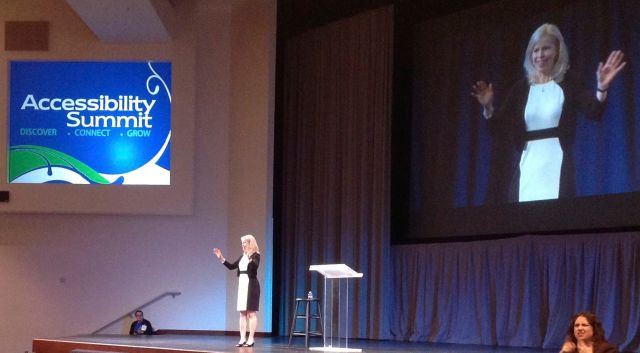
Editor’s note: Shannon Dingle and Ryan Wolfe are representing Key Ministry the 2016 Accessibility Summit this coming Friday and Saturday at McLean Bible Church in McLean, VA. Shannon shares today from her first experience at the Summit five years ago…
Ryan Wolfe and I are headed to McLean Bible Church this weekend to speak on behalf of Key Ministry. This upcoming trip has me thinking back to my first Accessibility Summit five years ago. That year, I attended a session titled Built to Last – Sustaining a Disability Ministry. It was a panel discussion featuring four directors for special needs ministry at different churches. While I gained several great takeaways from it, these points from Connie Hutchinson from First Evangelical Free Church of Fullerton, CA resonated with me then and still do now. (The points, bolded and italicized, are hers; the commentary on each comes from me.)
Disability ministry is…
- …not a numbers-driven ministry. Connie pointed out that it’s not about how many families with special needs come to your church. It’s about being a welcoming place, reaching out to your community, and serving those who come. Another way of wording this is found in my church’s core beliefs, the emphasis on faithfulness over fruitfulness. We’re called to be faithful; God is the one who brings forth the fruit.
- …not cost-effective. We’re not just talking about money here. The human cost in terms of volunteers needed is higher in special needs ministry than in other ministries.
- …long-lasting. It’s a lifetime commitment. A lot of churches only have special needs ministry programs for children, maybe even youth. But you know what? Those children and youth grow up. The adult special needs ministry at our church began at the result of one of our kids growing up and her family stepping forward to create a meaningful and welcoming place in our church for her and others. (And you don’t need to wait until the children with special needs at your church grow up; there are adults with disabilities in your community already!)
- …a mission field. People with disabilities are less likely to attend worship services, Bible studies, and other church activities than those without disabilities. People with autism are more likely to be atheists and more likely to reject organized religion. More statistics and their sources can be found here. If you want to share the good news of Christ with all people, then this is a good place to start!
- …relationship-driven rather than program-driven. This is true of any ministry. However, special needs ministry requires it more so than others, at least in my experience. When I was a youth ministry leader, it was possible to run all our weekly programming without getting to know students well. That wouldn’t be effective ministry, but I’ve seen it happen before. In special needs ministry, though, it’s about the individual not the disability or the program.
And, finally, I would add one more: It’s worth it.
***********************************************************************************************************
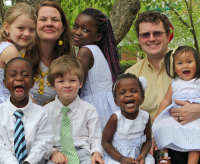 Check out Shannon Dingle’s blog series on adoption, disability and the church. In the series, Shannon looked at the four different kinds of special needs in adoptive and foster families and shared five ways churches can love their adoptive and foster families. Shannon’s series is a must-read for any church considering adoption or foster care initiatives. Shannon’s series is available here.
 Editor’s note: Michael Leaser is our special guest blogger today. Michael is with Faith Street Films and served as the executive producer of Wildflower, a recent theatrical release that explores the topic of post-traumatic stress from a decidedly Christian perspective. We’re pleased to help introduce the film to a larger audience. Here’s Michael…
 Last week, Faith Street Films and Cave Pictures released the film,
  The film’s producers are partnering with Key Ministry and other mental health organizations to help bring awareness to these issues and to help lead individuals struggling with mental illness and trauma, along with their loved ones, to the resources and assistance they need to lead as full and healthy a life as possible. At
 Key Ministry encourages our readers to check out the resources we’ve developed to help pastors, church leaders, volunteers and families to better understand the nature of
 Go back to the basics. I am often preoccupied with battling negative thoughts in my head and attempting to live minute by minute with throbbing pain. How does one live ten minutes at a time? I had no idea, so I decided to go back to the basics of my life. Set a timer and take a shower. Make the bed and brush my teeth. Go outside and take a walk around the block even if I hate every second of it. For someone with depression, simple activities can be incredibly difficult. Doing something basic for a short time pushes us into the future whether we like it or not, and surprisingly, it may provide a little relief from our guilt of not doing anything at all.
 Make lists. If your brain (like mine) is often cloudy and you are stumped as to what you should do, make a list of options for the morning, or for ten minute increments, or for any other time of the day you might be able to tackle. Write down specific activities. I find it also helps to write down a few of my favorite Bible verses and other pieces of advice I’ve received from my therapist so if my anxiety rises too high before I can catch it, or if my depression trips me into a new pothole, I can pull out my lists and either read something over and over while doing some deep breathing or to attempt to do instead of think.
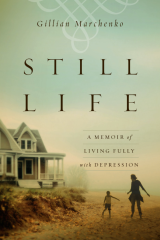 For Gillian Marchenko, “dealing with depression” means learning to accept and treat it as a physical illness. In
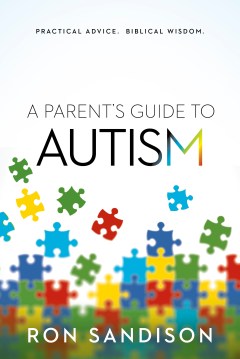
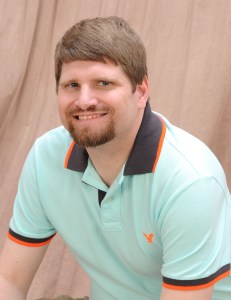 Ron Sandison works full time in the medical field and is a professor of theology at Destiny School of Ministry. He is an advisory board member of Autism Society Faith Initiative of Autism Society of America. Ron has published articles in Autism Speaks, Autism Society of America, Autism File Magazine, Autism Parenting Magazine, Not Alone, the Mighty, the Detroit News, the Oakland Press, and many more. He is frequently invited to speak at colleges, conferences, autism centers, and churches.
  Key Ministry has developed many resources for pastors, church staff members, volunteers and families interested in supporting kids with autism spectrum disorders. We encourage you to share this listing freely with any church or any family that would find the resources helpful.
 Emily Colson…Becoming still
 A Success Story From My Church
 Asperger’s Disorder and Spiritual Development
 Sandra Peoples from our Key Ministry team has a wonderful article in Christianity Today in honor of Autism Awareness Month in which she discusses the challenges her family faced when their son (James) was diagnosed with an autism spectrum disorder, how the church in which her husband served as senior pastor rallied around their family, and how the response of the church to families of kids with special needs is changing. Check out Sandra’s article,
  What do you think the most common cause of premature death is among adults of typical or high intelligence with autism spectrum disorders? It’s suicide.
 They’re more likely to experience social isolation and lack social supports. In the fall of 2014, we shared
  Become advocates for better research into specific treatments for mental health conditions that commonly occur among persons with autism spectrum disorders. Persons with autism often have lower response rates and more adverse effects from treatments for common mental health conditions compared to the general population.
 Carlyle King (pictured at right) is a friend of our ministry who
  Sandra Peoples from our Key Ministry team has a wonderful article in Christianity Today in honor of Autism Awareness Month in which she discusses the challenges her family faced when their son (James) was diagnosed with an autism spectrum disorder, how the church in which her husband served as senior pastor rallied around their family, and how the response of the church to families of kids with special needs is changing. Check out Sandra’s article,
 If you attend a small church doing (or wanting to do) special-needs ministry, we’re doing a round-table discussion just for you on April 20th, co-led by myself,
 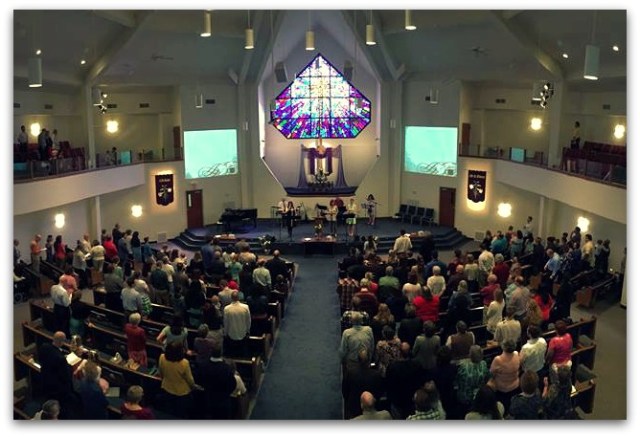 Editor’s note: Today’s post from Gillian Marchenko is co-authored by Gillian’s husband (Sergei), a pastor for eleven years and husband to a wife with major depressive disorder for over a decade.
 A Christian with ADHD may be very good at scanning the environment for trends and ideas. I suspect that many Christians active in the blogosphere have some ADHD traits. The capacity to be spot new and interesting ideas is very beneficial for visionary leaders. Why would we be surprised if it turned out that a high percentage of key opinion leaders in the church turned out to have ADHD?
 Key Ministry depends upon your financial contributions so we might continue to offer free training, consultation and support to churches seeking to welcome, serve and include families of kids with disabilities. Please keep our team in your prayers as we prepare to launch our new resources for families of kids with disabilities and
  The Centers for Disease Control (CDC) released
  Assist parents who are struggling with their own mental health issues to find help. One area in which most churches can do a better job, particularly within their children’s ministries is to check on kids and parents who have been regular attenders who disappear for weeks or months. Kids who are irregular attenders may have parents with conditions contributing to their attendance pattern.


 Church4EveryChild