
Depression…Challenges in serving kids with an episodic disability

Sad boyThis is Part Six in our Winter 2013 blog series Understanding Depression in Kids and Teens…A Primer for Pastors, Church Staff and Christian Parents. Today, we’ll discuss one of the challenges in thinking about depression as a disability…the reality that for many kids and adults, depression tends to come and go over time. We’ll also talk about what a church staff member or volunteer might observe if a child or teen is experiencing depression.

Two big challenges that our team has faced in training church staff and volunteers in the concept of “hidden disabilities” involve our mental models of what constitutes a disability. One concept we’ve written of previously in this blog involve conditions that are disabling in some environments but not others. For example, separation anxiety in a school-age child might not be an impediment to church attendance in a Roman Catholic church where kids are expected to sit through the Mass with their families, but very well could be a barrier in a non-denominational church where kids proceed to a different area of the church campus for age-appropriate programming.

The other unique challenge involves conditions that can be very disabling during acute episodes, but partially or completely resolve either in response to effective treatment or spontaneously of their own accord. Mood disorders, including depression and manic episodes in a person with bipolar disorder are probably the two most common chronic conditions I see in children and adolescents that manifest episodically.

ID-100105034I’d certainly argue that depression constitutes a significant disability because it represents a mental disorder responsible for substantial limitations in major life activities. What’s different about depression from the perspective of inclusion at church is that in churches with established disability ministries, the staff and volunteers leading those ministries probably have no history with the child or their family unless other comorbid conditions that frequently accompany depression required accommodations in the past. The first people in a church likely to suspect a problem will be the youth pastor or a small group leader when they notice an often abrupt change in the pattern of involvement of a teen suffering from depression. Unlike the other conditions we’ve discussed since launching the blog, in the absence of another mental health condition or a parent with a disability, I’d hypothesize kids with depression wouldn’t be any less likely to start attending church…they’ll have difficulty staying involved with church once symptomatic.

What are some signs a pastor, group leader or volunteer might notice that would lead them to question whether a kid might be suffering from depression in a church setting? Keep in mind that these signs are not exclusive to depression and may be explained by a variety of medical, psychological or environmental conditions…

  • Abrupt withdrawal from ministry programming they attended regularly and enjoyed
  • Significant changes in weight in a relatively short time
  • A marked increase in feelings of worthlessness or guilt 
  • Expressions of suicidal thinking or self-destructive behavior

We’ll address the issue of seeking help for depression later on in the series, but it’s not the purview of a church staff member or volunteer to make a diagnosis of depression after observing a child or teen unless they have performed a formal assessment within the scope of their training or licensure. It is appropriate to pastors or volunteers to accurately and truthfully share observations with parents consistent with an emotionally  “safe” ministry environment in which confidentiality rights are respected. It is appropriate to make a phone call or send an e-mail or a text to a student and/or their parents when they abruptly discontinue an ongoing ministry involvement to inquire if they’re OK and to identify ways in which the church may be supportive.

A brief statement on confidentiality…I tell kids in my office that everything they say to me stays confidential with two exceptions…if they have recurrent thoughts of suicide or a specific plan to commit suicide, or a plan to kill or seriously hurt someone else, I’m obligated to tell their parents and take immediate steps to protect them or others as the situation necessitates. If I discover they’re being physically or sexually abused or neglected, I’m obligated to tell their county officials.

Laws on confidentiality and duty to report vary by state to state…it’s important that pastors and church staff become familiar with the legal requirements and precedents in their home state. In Ohio (my home state), pastors and church staff have the same legal responsibility as educators and licensed health professionals to report suspected abuse.

With minors, acting in good faith, I’m going to err on the side of protecting the child.

Photos courtesy of  freedigitalphotos.net

***********************************************************************************************************

Key Ministry’s mission is to help churches reach families affected by disability by providing FREE resources to pastors, volunteers, and individuals who wish to create an inclusive ministry environment. We have designed our Key Catalog to create fun opportunities for our ministry supporters to join in our mission through supporting a variety of gift options. Click here to check it out! For a sixty second summary of what Key Ministry does, watch the video below…

Posted in Controversies, Depression, Hidden Disabilities, Inclusion, Key Ministry, Mental Health | Tagged , , , , , , , , , , | 1 Comment

Are they really depressed, or do they have something else?

ID-10072756This is Part Five in our Winter 2013 blog series Understanding Depression in Kids and Teens…A Primer for Pastors, Church Staff and Christian Parents. Today, we’ll look at some other conditions that are often mistaken for depression in children and teens.

One of the challenges I face as a clinician when a family comes to our practice because they suspect their child is depressed is teasing out all of the other possible explanations  for why their child might appear depressed. I can figure out pretty quickly whether a child would meet enough of the criteria on a checkoff list to qualify for a depression diagnosis. The time-consuming part of the process involves systematically ruling in or ruling out all of the other conditions that can mimic depression.

Here’s a list of some common conditions that produce symptoms that can be mistaken for depression…

Anxiety disorders/OCD: In an earlier post, we touched on the debate on the question of whether Generalized Anxiety Disorder and Major Depression are different disorders, given the overlap of symptoms between the two conditions. Symptoms of generalized anxiety include restlessness, fatigue, difficulty with concentration, irritability, muscle tension and sleep disturbance. As many as 75% of teens with OCD will experience an episode of depression by the time they turn 18, presumably related to the internal distress associated with persistent obsessive thinking.

Bipolar disorder: By definition, an individual with depression who at any time in their life has experienced a distinct period of abnormally and persistently elevated, expansive or irritable mood lasting at least a week accompanied by at least three of the following symptoms (four if the mood state is predominantly irritable) has bipolar disorder…grandiosity or inflated self-esteem, decreased need for sleep, more talkative or pressured speech, flight of ideas, distractibility, increases in goal-directed activity (including sexual behavior) or psychomotor agitation, and excessive involvement involvement in pleasurable activities involving potentially harmful consequences. The distinction is important because medication used to treat depression has great potential to precipitate manic symptoms in kids and adults with bipolar disorder.

ADHD: Kids with untreated ADHD will often experience frustration, disappointment and family conflict associated with their inability to perform academically at a level consistent with what would be expected on the basis of intelligence. Difficulties with impulse control and difficulties self-regulating emotions frequently contribute to peer conflict and social isolation. As kids with ADHD get older, they are more likely to experience difficulties with sleep onset. They often present to our practice with sadness, discouragement, irritability and hopelessness, complaining of difficulties with concentration and fatigue.

Learning disabilities: See comments about ADHD…frustration and discouragement resulting from inability to meet academic expectations or the loss of self confidence associated with spending excessive time and energy on academic tasks that peers complete with relative ease often manifest as sadness and hopelessness.

Substance Use disorders: While substance use frequently occurs among teens with depression who seek to “self-medicate” their mood, in others, ongoing use of alcohol, marijuana, prescription medication and other illicit substances can produce symptoms of depression when depression was not a pre-existing condition.

Adjustment disorder: Kids or teens who present with depressed mood, tearfulness or feelings of hopelessness within three months of the onset of an acute stressor but fall short of meeting full criteria for Major Depression are more appropriately classified as having an adjustment disorder with depressed mood.

Bereavement: Following the death of a parent, grandparent, sibling or loved one, kids/teens often experience symptoms that may be indistinguishable from depression. We would consider treating them if their symptoms produce moderate to severe functional impairment, if they become psychotic, if they have active suicidal thoughts or plans, or if symptoms become prolonged…typically, uncomplicated bereavement resolves within 6-12 months.

Personality disorders (Borderline Personality Disorder): Teens and young adults with Borderline Personality often present with prominent suicidal ideation or self-injurious behavior accompanied by a pattern of emotional instability, identity disturbance, chronic feelings of emptiness, significant fears of abandonment and potentially damaging impulsive behavior.

Chronic medical conditions: Depressive symptoms are often seen in kids with hypothyroidism, anemia, lupus, diabetes, epilepsy, or in kids being treated for cancer.

Medication: Kids receiving steroid preparations and contraceptives can experience depressed mood as a medication side effect. Stimulant medication and antipsychotics can also produce or exacerbate depressed mood in children and teens.

The take-home point is that diagnosing depression in a child or teen requires a considerable degree of thoughtfulness, and a thorough understanding of why a child is chronically sad or irritable is essential to developing a sound treatment plan.

Photos courtesy of  freedigitalphotos.net

***********************************************************************************************************

Key Ministry’s mission is to help churches reach families affected by disability by providing FREE resources to pastors, volunteers, and individuals who wish to create an inclusive ministry environment. We have designed our Key Catalog to create fun opportunities for our ministry supporters to join in our mission through supporting a variety of gift options. Click here to check it out! For a sixty second summary of what Key Ministry does, watch the video below…

Posted in ADHD, Anxiety Disorders, Bipolar Disorder, Depression, Hidden Disabilities, Key Ministry, Mental Health | Tagged , , , , , , , , , , , , , , , , , | 2 Comments

Understanding Depression and Comorbidity in Children and Teens

ID-100105042This is Part Four in our Winter 2013 blog series Understanding Depression in Kids and Teens…A Primer for Pastors, Church Staff and Christian Parents. Today, we’ll look at the phenomena we refer to as “comorbidity”… the propensity for other mental health disorders to be present concomitantly with depression.

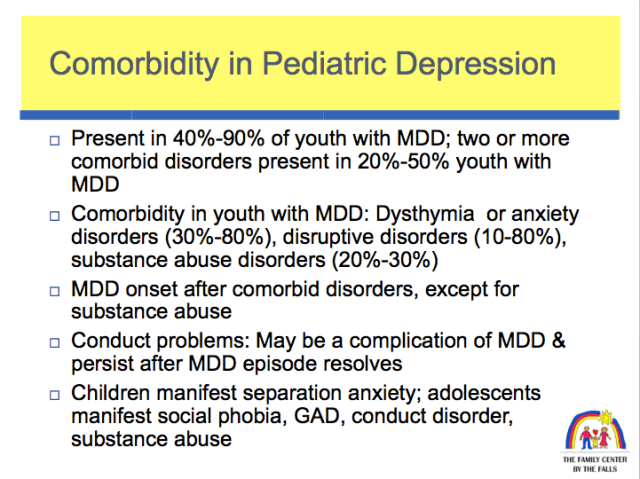
Children and youth who meet criteria for a full-fledged episode of Major Depression are especially prone to comorbid mental health disorders. Depending upon the practice setting, as many as 90% of kids with depression have at least one comorbid condition, while 50% experience two or more conditions.

In my practice setting, the vast majority of kids seen with depression typically present with a history of pre-existing anxiety disorders, especially Obsessive-Compulsive Disorder and Generalized Anxiety Disorder. By some estimates, as many as 75% of kids seen in research settings for OCD will develop at least one episode of Major Depression by the time they turn 18. One might speculate that the unrelenting, intrusive thoughts experienced by kids who obsess may predispose, precipitate or perpetuate to depressive symptoms. Statistically speaking, anxiety disorders are the most common comorbid condition seen among kids with depression. Children with depression commonly experience symptoms of separation anxiety concurrently with depression…social anxiety and generalized anxiety are more common in teens.

Sad boyThere was considerable debate leading up to the DSM-5 about the relationship between anxiety and depression. Here’s a link to a summary of the debate at an NIH-sponsored conference on the topic. Most of those present took the view that the two disorders are closely related, and took the view that the differences between the two were relatively trivial, and might be accounted for by the different time durations required for each. Later in this series, we’ll review data suggesting that commonly used antidepressants are far more effective treatments for anxiety in children and teens than they are for depression.

Next on the list of comorbid conditions seen in depression are disruptive behavior disorders…ADHD, Oppositional Defiant Disorder and Conduct Disorder. I typically make a point of screening every kid I see in whom I suspect depression for ADHD. In our practice, we commonly experience kids coming to us with a well-defined episode of depression (often in high school) preceded by a fairly long history of functional impairment consistent with undiagnosed and untreated ADHD. It’s not hard to imagine that kids with a long history of the academic, social and family difficulties associated with ADHD would be predisposed to issues with depression. It’s important to note that kids with depression may experience many difficulties associated with ADHD (poor attention, concentration, low motivation, agitation and difficulties with task completion) as symptoms of the depression itself…we don’t consider them to have a comorbid condition. It’s when the symptoms of ADHD predate the symptoms of depression that we consider the possibility that two conditions are present. These situations are often very complex, and are the types of situations (IMHO) that are best left for those of us who specialize in child and adolescent psychiatry.

Finally, self-medication with drugs or alcohol is a common phenomena among youth with depression. Again, teasing out the direct effects of substances upon mood from a pre-existing mood disorder can be quite challenging. Experts will often find themselves unable to make the distinction until the youth has experienced a extended period of abstinence from substances.

In general, most comorbid conditions seen in kids with depression emerge prior to the onset of depressive symptoms, while substance abuse issues frequently occur after the emergence of depression…presumably from attempts to “self-medicate” through illicit substance use.

Here’s a summary slide listing some of the most important concepts related to other mental health conditions that frequently occur concomitantly with depression…

Comorbidity

Photos courtesy of  freedigitalphotos.net

An outstanding resource for church staff and volunteers is the American Academy of Child and Adolescent Psychiatry’s Depression Resource Center. The center includes answers to frequently asked questions, downloads for families, a video presentation from Dr. Graham Emslie (one of the world’s leading experts in pediatric depression) as well as clinical resources, rating scales and scientific information.

***********************************************************************************************************

Key Ministry’s mission is to help churches reach families affected by disability by providing FREE resources to pastors, volunteers, and individuals who wish to create an inclusive ministry environment. We have designed our Key Catalog to create fun opportunities for our ministry supporters to join in our mission through supporting a variety of gift options. Click here to check it out! For a sixty second summary of what Key Ministry does, watch the video below…
Posted in ADHD, Anxiety Disorders, Depression, Hidden Disabilities, Key Ministry, Resources | Tagged , , , , , , , | Leave a comment

Kids and Depression…What Does the Data Say?

ID-100105041This is Part Three in our Winter 2013 blog series Understanding Depression in Kids and Teens…A Primer for Pastors, Church Staff and Christian Parents. Today, we’ll look at the research data describing the impact of depressive disorders on children and teens.

Depression by gender, age

  • In prepubescent children, rates of depression are roughly equal in boys and girls. During adolescence, the prevalence of depression explodes…teens are four times more likely to experience depression when compared to school-age children, and adolescent girls are roughly twice as likely to meet criteria for a major depressive episode compared to boys.
  • Roughly one out of nine children and teens in the U.S. will experience depression by the time they turn eighteen. Another 5-10% of teens will experience an extended period of depressed mood that falls short of meeting the full criteria diagnostic criteria for major depression. The prevalence of depression in youth peaks at age 16.

Depression lifetime prevalence

Prevalence of depression ages 12-17

  • The Substance Abuse and Mental Health Services Administration (SAMHSA) examines the national prevalence of depression each year through the National Survey on Drug Use and Health (NSDUH). Recent surveys have suggested that the prevalence of depression in teens has been relatively stable…at any given point in time, approximately 8% of U.S. kids between the ages of 12-17 are experiencing symptoms of depression.
  • Each successive generation since 1940 has been demonstrated to be at increased risk of developing depression, and with each successive generation, the onset of symptoms of depression occurs at an earlier age.
  • Depending upon the source of referral, anywhere from 40-90% of children and youth with depression meet criteria for at least one other psychiatric disorder, and according to some reports, 50% meet criteria for two or more psychiatric disorders in addition to depression.
  • The mean duration of a depressive episode among kids referred for treatment is eight months, while the mean duration of all depressive episodes among kids in the community ranges from one to two months.
  • 70% of children and teens with depression will experience a recurrence of symptoms within five years of their first episode.
  • Kids with greater genetic susceptibility to depression also appear to be more sensitive to adverse environmental effects.
  • Suicidal thinking and behavior is very common among youth with depression. Approximately 60% of teens diagnosed with depression will experience thoughts of suicide…30% have made one or more suicide attempts.

Photos courtesy of  freedigitalphotos.net

Graphics from the National Institute of Mental Health

Today’s recommended resource…Many of the statistics quoted in this post were derived from the American Academy of Child and Adolescent Psychiatry’s Practice Parameter for the Diagnosis and Treatment of Children and Adolescents With Depressive Disorders. The Practice Parameter is an excellent summation of the current standard of care for the treatment of children and teens with depression and also provides a comprehensive review of research findings that support current practices.

***********************************************************************************************************

Key CatalogOur Key Ministry team is very much in need of your support if we are to continue to provide free training, consultation and resources to churches. Please consider either an online donation or a sponsorship from the Key Catalog. You can sponsor anything from an on-site consultation at a local church, the addition of a new site for church-based respite care, to a “JAM Session” to help multiple churches launch special needs ministries in your metropolitan area. Click the icon on the left to explore the Key Catalog!

Posted in Depression, Key Ministry, Mental Health, Resources | Tagged , , , , , , , , , , , , | 1 Comment

What do kids and teens with depression look like?

ID-10013676This is Part Two in our Winter 2013 blog series Understanding Depression in Kids and Teens…A Primer for Pastors, Church Staff and Christian Parents. Today, we’ll help readers develop a mental picture of what they might notice in a child or teen experiencing an episode of Major Depression.

Yesterday, I made a point of emphasizing the difference between sadness and depression. Sadness is an emotion, depression is a mood state. A good analogy to think about is that sadness is like the weather outside at any given time, while mood is more descriptive of the climate. Last Sunday, it was 62 degrees outside when my wife and I left the house for church. That’s a highly unusual situation on the second Sunday in January living in the teeth of Northeast Ohio’s “snow belt.” That’s very similar to what we see with kids with depression. While they may experience fleeting moments of joy or happiness, one of the cardinal features of depression is that kids or teens with the condition are sad or unhappy most of the time, most every day, with a minimum duration of symptoms of at least two weeks.

When kids experience depressed mood as a direct result of an identifiable stressor in the past three months without meeting full criteria for a major depressive episode (typically, they lack the physical signs and symptoms associated with depression), we classify their symptoms as an Adjustment Disorder with Depressed Mood as opposed to Major Depression. Some common examples would include a child’s response to a parent’s illness, a family move related to job relocation or for teens, a breakup with a boyfriend or girlfriend. These reactions tend to be time-limited (by definition, no longer than six months), represent a level of distress in excess of what is typical for the stressor and result in significant social or academic impairment.

ID-100105041The other cardinal feature of depression is anhedonia…a markedly diminished interest in, or ability to obtain pleasure from previously enjoyable activities. Things that are normally fun for kids aren’t fun anymore. Some red flags for a youth pastor would include a kid who regularly attend church missing more than two consecutive Sundays, disappearing from small group, or turning down the opportunity to go on a retreat after having enjoyed them before absent a clear scheduling conflict. A parent might notice their child isolating themselves, becoming more withdrawn, not wanting to do things with friends, not exhibiting their usual excitement for vacation or a trip to a water or amusement park. An adult with depression might experience anhedonia as a markedly diminished sex drive. In order to meet the criteria for Major Depression, kids have to have at least two weeks of depressed mood and/or anhedonia.

Other symptoms parents or church staff might notice…

  • Significant changes in eating habits or weight (+/- 5% of baseline body weight). Kids experiencing depression often lose significant amounts of weight without attempting to diet. Kids with seasonal depression may gain weight…think of a bear in hibernation. Note: Weight loss is a common side effect of stimulant medications used to treat ADHD, while weight gain is a very common side effect of antipsychotic and antidepressant medication given to kids. Kids and teens may be very sensitive to questions about weight as body image concerns are a common target for bullies.
  • Significant changes in sleep patterns…either insomnia or hypersomnia. Kids with ADHD and anxiety typically have difficulty falling asleep. Kids with depression typically have difficulties staying asleep. It’s not unusual for kids with depression to present to our practice with middle insomnia (being awake for extended periods in the middle of the night) or terminal insomnia (waking up too early in the morning on a regular basis without getting back to sleep). I’m more inclined to recommend medication or medication plus therapy when kids experience middle or terminal insomnia along with depressed mood.
  • Significant changes in motor activity, readily observable by others. Kids who were never before fidgety, restless or hyperactive may become so when depressed…they may also experience these symptoms as a side effect of antidepressant medication. Kids who were very physically active before becoming depressed may become markedly less active during an episode of depression.
  • A marked decrease in energy or daily/near daily complaints of fatigue.
  • Excessive feelings of worthlessness or inappropriate guilt nearly every day…these symptoms are also common among kids with specific anxiety disorders.
  • Significantly diminished ability to think or concentrate. Kids with “comorbid” ADHD often have longstanding difficulties with focus or concentration that predate their depressive episodes, but may experience a change from their already diminished ability to concentrate when they develop symptoms of depression. The teen who has always been highly organized who abruptly experiences problems with work completion or organization or experiences a precipitous drop in grades should be screened for depression.
  • Recurrent thoughts of death or suicidal thinking/behavior. Note…cutting or self-injury is not necessarily indicative of suicidal behavior, and has (unfortunately) become a common strategy for school-age children and teens attempting to self-manage anxiety.

When compared to adults, children with depression may be more likely to experience temper tantrums, irritability, low frustration tolerance, physical complaints and/or social withdrawal. They are less likely to experience delusional thoughts or attempt suicide compared to teens and adults with depression.

Here’s a summary slide comparing differences in how depression may present in children versus teenagers…

Depression 1

Photos courtesy of  freedigitalphotos.net

Today’s recommended resource…As part of their Depression Resource Center, the American Academy of Child and Adolescent Psychiatry has a webpage addressing frequently asked questions about depression.

***********************************************************************************************************

Key CatalogOur Key Ministry team is very much in need of your support if we are to continue to provide free training, consultation and resources to churches. Please consider either an online donation or a sponsorship from the Key Catalog. You can sponsor anything from an on-site consultation at a local church, the addition of a new site for church-based respite care, to a “JAM Session” to help multiple churches launch special needs ministries in your metropolitan area. Click the icon on the left to explore the Key Catalog!


Posted in Depression, Families, Key Ministry, Mental Health, Resources | Tagged , , , , , , , , , , | 1 Comment

Depression…Definitions matter

Sad boyThis is the first post in our Winter 2013 blog series Understanding Depression in Kids and Teens…A Primer for Pastors, Church Staff and Christian Parents. Today, we’ll introduce the criteria for what constitutes “depression” and discuss the importance of using the proper language with kids and teens in order to identify who might need help and increase the likelihood kids and families will get the most appropriate help.

Kids…and far too many professionals use the terms “sad” and “depressed” interchangeably. Sadness is emotional distress in response to loss, frustration, disappointment or sorrow. Depression is a medical syndrome of which ongoing sadness is one symptom. As a child and adolescent psychiatrist, when I use the term “depression,” I’m usually referring to the condition described in the DSM as Major Depressive Disorder. The diagnostic criteria for depression in children and teens are the same as in adults and are listed below…

A. Five (or more) of the following symptoms have been present during the same 2-week period and represent a change from previous functioning; at least one of the symptoms is either (1) depressed mood or (2) loss of interest or pleasure.

Note:  Do note include symptoms that are clearly due to a general medical condition, or mood-incongruent delusions or hallucinations. 


(1) depressed mood most of the day, nearly every day, as indicated by either subjective report (e.g., feels sad or empty) or observation made by others (e.g., appears tearful). Note: In children and adolescents, can be irritable mood. 


(2) markedly diminished interest or pleasure in all, or almost all, activities most of the day, nearly every day (as indicated by either subjective account or observation made by others)


(3) significant weight loss when not dieting or weight gain (e.g., a change of more than 5% of body weight in a month), or decrease or increase in appetite nearly every day. Note: In children, consider failure to make expected weight gains. 


(4) insomnia or hypersomnia nearly every day


(5) psychomotor agitation or retardation nearly every day (observable by others, not merely subjective feelings of restlessness or being slowed down)


(6) fatigue or loss of energy nearly every day


(7) feelings of worthlessness or excessive or inappropriate guilt (which may be delusional) nearly every day (not merely self-reproach or guilt about being sick)


(8) diminished ability to think or concentrate, or indecisiveness, nearly every day (either by subjective account or as observed by others)


(9) recurrent thoughts of death (not just fear of dying), recurrent suicidal ideation without a specific plan, or a suicide attempt or a specific plan for committing suicide

B. The symptoms do not meet criteria for a Mixed Episode. (Criteria met for both a manic episode as well as a Major Depressive Episode) 


C. The symptoms cause clinically significant distress or impairment in social, occupational, or other important areas of functioning. 


D. The symptoms are not due to the direct physiological effects of a substance (e.g., a drug of abuse, a medication) or a general medical condition (e.g., hypothyroidism). 


E. The symptoms are not better accounted for by Bereavement, i.e., after the loss of a loved one, the symptoms persist for longer than 2 months or are characterized by marked functional impairment, morbid preoccupation with worthlessness, suicidal ideation, psychotic symptoms, or psychomotor retardation.

ID-100105042My point in outlining the diagnostic criteria is that in our very broken and dysfunctional systems of medical/mental health care, harried primary care physicians who are often expected to treat 40-50 patients per day or psychiatrists expected to treat four patients per hour may latch onto the word “depression” without fully considering whether kids or teens they’re seeing actually meet the criteria for the medical syndrome described as Major Depression. There are lots of other medical and mental health conditions associated with signs and symptoms that overlap the criteria for Major Depression. Having been involved in federally funded research examining the safety of antidepressant medication in kids and teens, I’m of the opinion that the prevalence of depression in the pediatric population may be overestimated. More on that later.

The purpose of this series will be to help pastors, church staff, volunteers and Christian parents improve their ability to recognize the signs and symptoms of depression and children and teens and help them to most effectively support kids with depression and their families. Here’s a tentative outline of some of the topics we’ll be covering in the series…

  • Pediatric Depression…Statistics
  • What does a child/teen with depression look like?
  • What causes kids to become depressed?
  • Are they really depressed, or do they have something else?
  • Is an episodic disability still a disability?
  • What if Mom is depressed?
  • Finding help
  • Cognitive-behavioral therapy
  • How helpful is medication?
  • Should I give my child medication if they’ve been diagnosed with depression?
  • What can the church do to help families impacted by depression?
  • Tying it all together

Throughout the series, I’ll share links to helpful publications or resources for pastors, church staff and parents to share with families of kids who may be struggling with depression. Today, I’ll recommend this link to the National Institute of Mental Health’s webpage on depression in children and adolescents.

Photos courtesy of  freedigitalphotos.net

***********************************************************************************************************

Key CatalogOur Key Ministry team is very much in need of your support if we are to continue to provide free training, consultation and resources to churches. Please consider either an online donation or a sponsorship from the Key Catalog. You can sponsor anything from an on-site consultation at a local church, the addition of a new site for church-based respite care, to a “JAM Session” to help multiple churches launch special needs ministries in your metropolitan area. Click the icon on the right to explore the Key Catalog!

Posted in Depression, Families, Resources | Tagged , , , , , , , , , , , | Leave a comment

What we have in store for 2013…

C4ECThanks to our readers for your support, comments and interest in Church4EveryChild in 2012! This blog, together with Katie Wetherbee’s and Harmony Hensley’s blog and our Key Ministry website represent our main tools for getting the word out about all of the free products, services and events we provide for churches seeking to welcome, serve and include kids with disabilities and their families.

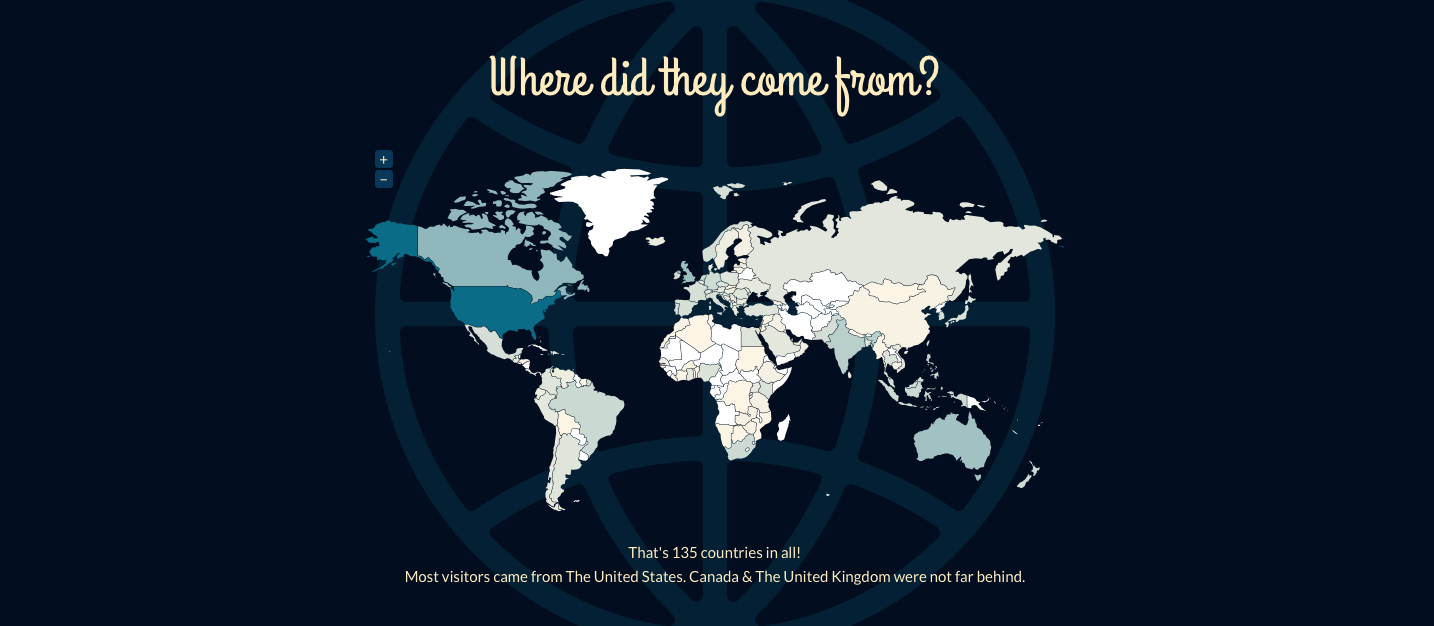
We had between 45,000-46,000 “page views” in 2012, representing a 128% increase in activity vs. 2011. We increased our readership every month versus the same time period in 2011 and experienced record readership in December, traditionally a slow time of year.  While we had never truly thought of Key Ministry as an international organization, the following statistic was very gratifying and is an indication of the worldwide interest within the church for the ministry we offer…

Where did they come from?So…what do we have planned for 2013?

One of my goals when we launched the blog in 2010 was to develop a comprehensive library of resources for church staff and volunteers working with kids with the full range of common emotional, behavioral and developmental disorders I see among kids served in our practice. We hope to complete that goal by the end of 2013.

We’ll start next week by looking in-depth at the topic of depression in children and adolescents. We’ll look at some of the signs and symptoms of depression, discuss some of the concomitant problems frequently experienced by kids who have depression, review some of the ways in which depression negatively impacts kids in their intellectual, social and spiritual development, and talk about ways in which church staff and parents can best support kids and teens suffering from depression.

In March and April, we’ll look at the topic of Reactive Attachment Disorder in the context of challenges faced by churches in supporting families who are serving kids in the foster care system and families who intentionally adopt children identified with special needs.

In May and June, we’ll walk through the DSM-5, the guidebook used by psychiatrists and other professionals to diagnose children and adults with mental health, learning and developmental disorders. We’ll review changes in the DSM most likely to impact children and adults served by the church, and look at ways in which the church can most effectively serve families impacted by mental illness.

We’ll follow our summer series up by looking at the topic of early-onset Schizophrenia. Depending upon how much ground we’re able to cover in our series on Reactive Attachment Disorder, we may cover the topic of trauma in that series, or as a stand-alone series later in the year. We’ll finish 2013 out with a primer for parents, pastors, church staff and volunteers focused upon understanding the pros and cons of psychotropic medication in children and teens.

Supplementing the series described above, we plan to invite lots of guest bloggers from across the movement of Christ-honoring churches seeking to welcome kids with disabilities and their families, as well as re-publish some classic posts for readers who are new to the blog. All told, you’ll see new and original content from me at least twice a week over the course of the year.

I very much appreciate folks sharing content through social media (Facebook, Linked In, Google Plus, Twitter and Pinterest). For Facebook in particular, sharing content and commenting on posts increases the likelihood that those who “subscribe” to our Key Ministry Facebook page will actually see the content we post online. You can subscribe to the blog by entering your e-mail in the box at the top of the right sidebar.

Thanks again for your interest in the blog and your interest in Key Ministry! If you have a question or a topic you’d like to see addressed on the blog, feel free to leave your suggestions in the “Comments” section below.

***********************************************************************************************************

Key CatalogOur Key Ministry team is very much in need of your support if we are to continue to provide free training, consultation and resources to churches. Please consider either an online donation or a sponsorship from the Key Catalog. You can sponsor anything from an on-site consultation at a local church, the addition of a new site for church-based respite care, to a “JAM Session” to help multiple churches launch special needs ministries in your metropolitan area. Click the icon on the right to explore the Key Catalog!

Posted in Key Ministry | Tagged , , , , , , | Leave a comment

Road Trip…to the 2013 McLean Bible Church Accessibility Summit

Key Ministry Core Team 2012Our Key Ministry team will be hitting the road for our East Coast friends to be part of the 2013 Accessibility Summit, hosted by Jackie Mills-Fernald and her team from McLean Bible Church in suburban Washington D.C. on April 19th-20th.

This year’s Summit features Emily Colson (daughter of Chuck) As an artist, author, and speaker, Emily is passionate about inspiring others to persevere through their challenges and appreciate life’s gifts. In her book Dancing with Max, she and her late father, share the struggle and beauty of life with Max, Emily’s son with autism. Also featured is Clay Dyera professional bass fisherman who has overcome seemingly insurmountable odds, having been born without legs or a left arm and only a partial right arm.

Our crew will be offering these presentations…

On Friday evening, Katie Wetherbee will be teaming up with Amy Kendall, Disability Coordinator from Saddleback Church in California to present Comfort and Joy: Creating a Classroom Culture That Could Change the Kingdom.

Also on Friday evening, Harmony Hensley will be presenting on the topic of Volunteer Recruitment and Retention.

On Saturday, I’ll have the opportunity to share on the topic of Supporting Children and Teens who Struggle With Anxiety. Rebecca Hamilton will be participating as part of the panel in a discussion…Respite-The Gift of Time, led by Jackie Mills-Fernald and including Sib Nafziger Charles and Cameron Doolittle.

Accessibility Summit 2013 In addition to our crew, other friends of Key Ministry who’ll be presenting at the Summit include Joe and Cindi Ferrini, Barb Dittrich, Jolene Philo and Barb Newman.

Hope to see lots of old friends and meet many new friends at the McLean Accessibility Summit…April 19-20th at McLean Bible Church in McLean, VA.

***********************************************************************************************************

Key CatalogOur Key Ministry team is very much in need of your support if we are to continue to provide free training, consultation and resources to churches. Please consider either an online donation or a sponsorship from the Key Catalog. You can sponsor anything from an on-site consultation at a local church, the addition of a new site for church-based respite care, to a “JAM Session” to help multiple churches launch special needs ministries in your metropolitan area. Click the icon on the right to explore the Key Catalog!

Posted in Anxiety Disorders, Key Ministry, Resources, Training Events | Tagged , , , , , , , , , , , , , , , , , | 1 Comment

What our families experience…The “Bad Kid Fort”

Bad Kid FortKids with hidden disabilities and their families are among our modern-day lepers. They suffer the pain of isolation from their peers. Similar to Biblical times, there are many who believe their conditions exist through some fault of their own. In the 15th century B.C., lepers were viewed as object lessons of the powerful impact of sin on a person’s life. Today, all too many people are quick to blame conditions such as Asperger’s Disorder and ADHD on poor parenting, video games or an indulgent society. In a culture where we are so careful to avoid offending anyone, it’s still socially acceptable to embarrass or humiliate kids with less obvious disabilities.

Our practice serves a number of kids and families from the city where the story I’m about to share took place. Parkersburg is a very nice community in northern West Virginia. I’ve been invited to lecture there on a number of occasions. The people I’ve met seem very pleasant. Like many small towns in the Bible Belt, Parkersburg has difficulty attracting highly trained children’s mental health professionals. As a result, the schools in this area haven’t had the benefit of a lot of professional input when a child presents with complicated emotional, behavioral or learning issues. Parents drive nearly three hours one way to come to see us or to see specialists in Pittsburgh when they need more specialized help.

A father of a boy with Asperger’s Disorder from that area sent me the link to this story from yesterday’s Parkersburg News and Sentinel

PARKERSBURG – Wood County parents are pushing school officials for accountability after they claim their son was humiliated by a teacher.

Beth Dean and Jeff Richards, parents of 15-year-old Caleb Richards, allege their son was humiliated by a Parkersburg High social studies teacher who put the teenager in a box during class. Dean and Richards said their son has Asperger’s Syndrome, which is being managed with medication, an IEP (individualized education program) and a behavior plan.

The parents claim last month Caleb Richards’ history teacher was having trouble dealing with his behavior in the classroom.

“Instead of sending him out of the room or any other myriad of options, she fashioned a large cardboard box and placed the box around his seat, completely enclosing him, in front of 30 of his peers,” Dean said.

Dean alleges the teacher wrote “bad kid fort” on the outside of the box while he was in it. She has a picture of the alleged fort on her Facebook page. It was sent to her by a student who saw it the hallway and snapped a photo.

According to Dean, Caleb Richards was left in the box for approximately 15 minutes.

Dean said in a meeting with school officials last week that school officials downplayed the incident.

Here’s a video from the local news station in which Caleb’s parents share their story…

Caleb's Mom

Imagine what it’s like for Caleb and his family living in this community. Wouldn’t it be great if there were churches in Parkersburg (and cities like Parkersburg) wanting to pursue families like Caleb’s? What type of message would our faith-based schools send if teachers and staff acquired the training to welcome and effectively educate kids like Caleb? Would that be a powerful expression of the Gospel?

Parkersburg HSOur team at Key Ministry has very limited resources to support travel. But this is the type of community where churches of different denominations, working together, could make a big difference for families with kids like Caleb. If this blog post gets back to church leaders in and around Parkersburg, I’d be interested in starting a dialogue around how our crew could support churches in the area wanting to share the love of Christ with families like Caleb’s.

***********************************************************************************************************

Key CatalogOur Key Ministry team is very much in need of your support if we are to continue to provide free training, consultation and resources to churches. Please consider either an online donation or a sponsorship from the Key Catalog. You can sponsor anything from an on-site consultation at a local church, the addition of a new site for church-based respite care, to a “JAM Session” to help multiple churches launch special needs ministries in your metropolitan area. Click the icon on the right to explore the Key Catalog!

Posted in Key Ministry | Tagged , , , , , , , , , | 7 Comments

Reminding myself that we’re winning the war

KM PictureIt’s been a couple of weeks since I wrote something original for the blog. This particular holiday season was exhausting…kids and teens with anxiety don’t do well over breaks because they have too much time to obsess and worry without the busyness of school as a distraction.

It’s also been a trying time because our year-end Annual Fund campaign for Key Ministry fell far short of expectations and far short of what we’d budgeted. I’ll be spending my afternoon with a couple of our Board members making some very difficult decisions about what we need to cut. Most of our budget pays for people. We don’t want to provide resources without relationship…Rebecca, Katie and Harmony all do an excellent job serving churches seeking to welcome kids with disabilities and their families. We need MORE of their time…not less. In any event, I’d very much appreciate your prayers…for wisdom for our leadership, and for God to provide the financial resources we need to carry out the mission He has for our team.

On the infrequent occasions that I’ve been available recently to hang out online, I’m reminded of the incredible progress the disability ministry movement is having in influencing churches to become more intentional in welcoming kids and families with a wide range of conditions who weren’t previously able to “do” church.

In addition to all of the neat things we hope to do in the next year, some of our friends have made significant headway in developing resources and influence in the church…

  • Marie Kuck from Nathaniel’s Hope is doing a preconference training at next week’s Children’s Pastors Conference in Orlando together with Craig Johnson.
  • Many of our friends from the world of disability ministry are launching a new website today to provide faith-based encouragement and support for parents raising kids with special needs. Check out Not Alone.
  • Organizations such as 99 Balloons are building church-based respite care networks serving families in Arkansas, Texas, Oklahoma, Louisiana and Missouri.

Most of the disability ministry leaders I know are tired, underfunded and apprehensive about the future…like most of the families we serve. But the progress being made by the disability movement is unmistakable and real. It’s gratifying to see the ways in which God is mobilizing our colleagues to do great things on behalf of His Kingdom!

***********************************************************************************************************

Key CatalogOur Key Ministry team is very much in need of your support if we are to continue to provide free training, consultation and resources to churches. Please consider either an online donation or a sponsorship from the Key Catalog. You can sponsor anything from an on-site consultation at a local church, the addition of a new site for church-based respite care, to a “JAM Session” to help multiple churches launch special needs ministries in your metropolitan area. Click the icon on the right to explore the Key Catalog!


Posted in Inclusion, Key Ministry, Resources | Tagged , , , , , , | 1 Comment