Nice recognition for Key Ministry…and some of our friends!

Top 100 Children's Ministry Blogs

Top 100 Children’s Ministry Blogs

Thanks to Tony Kummer and his crew at Ministry to Children for recognizing Church4EveryChild as one of the Top 100 Children’s Ministry Blogs (#15) for 2013!

Nearly four years ago, our Board and ministry team became very intentional in our efforts to build connections and influence within the children’s ministry community. Our blog was among three with a specific focus on disability or special needs ministry to be ranked among the top 15! This recognition is an additional indication that our efforts are addressing real needs among the pastors, church staff and volunteers serving kids and families.

cropped-pittsburghtrip3Katie Wetherbee was serving on our team at the time as our Director of Training. Katie’s blog (#10), Diving for Pearls, was recognized among the top ten children’s ministry blogs. The focus of Katie’s blog is helping children with special needs thrive at home, school and church. Katie continues to do great work as a special needs ministry consultant, through the training events she leads at the Group Kidmin Conference and is hard at work on an upcoming book on special needs ministry with Jolene Philo.

Some other blogs on the list that may be of interest to friends in both the disability ministry community and the children’s ministry community…

Amy DolanLemon Lime Kids (#29) is authored by Amy Dolan, the former Executive Director of Children’s Ministries for the Willow Creek Association.  Amy currently leads Curriculum Strategy for What’s in the Bible?, directs the What Matters Now in Children’s Ministry project and serves as a frequent contributor to Children’s Ministry Magazine. She leads a children’s ministry consulting company that focuses on the growth and development of children’s programs within churches and not-for-profit organizations. Our former colleague Katie Wetherbee has recently teamed up with Amy to offer a special needs ministry consulting service to churches.

BrownBGTwitter-237x300Wayne Stocks launched Divorce Ministry 4 Kids (#51) in August of 2011 to equip churches and children’s workers in those churches to more effectively and compassionately minister to children of divorce. The ministry is an outgrowth of his work in children’s ministry with kids who have been negatively impacted by divorce. Wayne and his team seek to:

  • Teach people about the effects of divorce on children;
  • Equip those who work with children to serve these kids more effectively;
  • Call the church to serve, support and minister to these children and their families, and
  • Serve children of divorce and their families as the hands and feet of Jesus Christ.

DinglesShannon Dingle was busy in 2013. Her special needs ministry blog, The Works of God Displayed (#74) took a back seat to her family’s remarkable adoption journey, chronicled at Dinglefest. Shannon and her husband (Lee) serve as coordinators of Access Ministry, the special needs ministry of Providence Baptist Church in Raleigh, North Carolina.

The complete list of the top 100 Children’s Ministry blogs may be found here.

***********************************************************************************************************

IMG_0209-2Can you help us to help churches pursue kids with disabilities and their families? For this year’s Key Ministry Online Campaign, we’re asking our friends not for money, but to share our Facebook page with others who share interest in our mission. We’re nearly 60% of the way to our goal of 5,000 “likes”! Here’s more on how you can help.

Posted in Key Ministry, Resources | Tagged , , , , , , , , , , , , , | Leave a comment

Do not lose heart…

WandaWanda Parker is is a highly respected  leader who serves as President/CEO of Kidtrek,  a reproducible, church-based ministry that empowers adult leaders to work innovatively with at-risk kids. Wanda was kind enough to leave the following message on our Facebook wall the other day…

“Reading through your Facebook page and the other posts I thought this song might minister to parents and others. I don’t understand what your families must go through, however God has walked me through a life of continuous pain from different sources. This song has truly ministered to me and helped me to refocuse the purpose of it all”.

There’s some really cool audio around halfway through this song from John Piper’s message, “Do Not Lose Heart”

There are a lot of hurting people this Christmas. The song and the message are a great comfort. Thanks Wanda!

If anyone would appreciate prayer this Christmas from our crew at Key Ministry, please feel free to share below in the comments section…

Posted in Families, Key Ministry | Tagged , , , | Leave a comment

Key Ministry 2013…by the numbers

Slide1 Slide2 Slide3 Slide4 Slide5 Slide6 Slide7 Slide8 Slide9
***********************************************************************************************************

IMG_0209-2Can you help us to help churches pursue kids with disabilities and their families? For this year’s Key Ministry Online Campaign, we’re asking our friends not for money, but to share our ministry’s Facebook page with others who share interest in our mission. We’re over halfway to our goal of 5,000 “likes”! Forward this post to your friends, ask them to “like” our Facebook page, and share it with others who wish to see more families of kids with mental illness, trauma or developmental disabilities welcomed and included at church.

Posted in Advocacy, Autism, Families, Inclusion, Inclusion Fusion, Key Ministry, Resources | Tagged , , , , , , , , | Leave a comment

Drug company marketing ISN’T the cause of the ADHD epidemic

ad_monsterThis past Sunday, the New York Times ran a lengthy feature article that created quite the stir in our professional community. The article, titled The Selling of Attention Deficit Disorder, spelled out in great detail the marketing practices the pharmaceutical industry has employed over the last twenty years in promoting the use of medications in kids and adults primarily indicated for ADHD, with a focus on the strategies of the company (Shire) that has been the market leader in ADHD for the past ten years.

There’s a study coming out in the January issue of the Journal of the American Academy of Child and Adolescent Psychiatry (JAACAP) that reinforces the extent to which ADHD diagnosis is truly reaching epidemic proportions. Here’s a portion of the abstract

Results

In 2011, 11% of children/adolescents aged 4 to 17 years had ever received an ADHD diagnosis (6.4 million children). Among those with a history of ADHD diagnosis, 83% were reported as currently having ADHD (8.8%); 69% of children with current ADHD were taking medication for ADHD (6.1%, 3.5 million children). A parent-reported history of ADHD increased by 42% from 2003 to 2011. Prevalence of a history of ADHD, current ADHD, medicated ADHD, and moderate/severe ADHD increased significantly from 2007 estimates. Prevalence of medicated ADHD increased by 28% from 2007 to 2011.

Conclusions

Approximately 2 million more U.S. children/adolescents aged 4 to 17 years had been diagnosed with ADHD in 2011, compared to 2003. More than two-thirds of those with current ADHD were taking medication for treatment in 2011. This suggests an increasing burden of ADHD on the U.S. health care system. Efforts to further understand ADHD diagnostic and treatment patterns are warranted.

The journal editors ran a commentary by Dr. John Walkup (head of child psychiatry at Cornell) to accompany the study. Quoting from Dr. Walkup…

ADHD PrevalenceIf the CDC’s data are consistent with other epidemiologic studies and the prevalence of treated ADHD is less than the current prevalence of ADHD, why is there such concern about overdiagnosis and overtreatment of ADHD? Several factors drive this reaction. First, the change in rates of diagnosis and treatment are emphasized, rather than the proportion of cases in the community who are diagnosed and treated. The CDC’s report of a 42% increase in diagnosis in less than a decade and a 28% increase in treatment in 4 years sounds shocking. However, when considering the similarity between the current diagnostic and treatment rates and community-based prevalence rates, the issue is much more clear—the CDC data suggest that we are getting to a point when children with ADHD in the United States may actually be getting an opportunity for a diagnostic assessment and appropriate evidence-based treatment.

What Dr. Walkup didn’t address in his commentary is the question of why so many of our kids are struggling to function in school, at home, in peer relationships and in community activities to the extent that parents sense the need to seek out professional help.

Allow me to point out the elephant in the living room…

Square Peg Round HoleI’ve seen 55 kids so far this month in our practice with an ADHD diagnosis. For ten of the 55, problems with impulse control or behavior are a primary focus of treatment. For 55 out of 55, educational struggles are a primary focus of treatment. Is the ADHD epidemic really a product of drug company marketing, or is it a result of our culture and our educational system imposing expectations upon a large segment of our child and teen population that they’re not developmentally prepared to meet? Perhaps a classic case of pounding square pegs into round holes?

Let’s start with the educational system. We need to consider the possibility that the demands and expectations of the environments where our kids and teens spend much of the time are a big part of the problem and question whether we need to rethink our expectations for academic productivity and the design of the learning environments where our kids spend much of their day.

Here’s an interesting review article examining the research literature on homework. The article quotes a study in which 80% of U.S. teachers see homework as a tool for teaching organizational skills. But at what age should we expect kids to be able to master organizational skills? In our area, it’s not at all unusual to see first graders with planners. Has anyone asked… Is it a good idea for first graders to have planners? First graders should go to school, learn to read, learn their math facts, have recess, come home, play in the snow with their friends and read with their parents before they go to bed. Their brains aren’t yet wired for multitasking.  Another difference between the U.S. and other countries is the extent to which homework is used to determine grades. In one study, 82% of U.S. teachers graded homework vs. 14% in Japan and 6% in Germany. What happens to kids who are outliers in the sense that they require more time to generate the expected volume of academic product compared to their peers? What happens to family life when harried parents and stressed out kids are at one another’s throats as a result of homework expectations?

I was speaking earlier this week to to a special educator in a very prestigious school system who has referred families to our practice. She told me to expect another wave of referrals shortly because of the sheer number of kids struggling to master the content of the new curriculum imposed by our state. While some parents receive lots of support from their local schools when their kids struggle academically and require educational assessment and specialized intervention, other families all too frequently encounter resistance. When  parents don’t know where else to turn, they turn to the pediatrician, or sometimes, a specialty practice like ours.

ElephantsHere’s the other elephant in the living room…We elect the folks in Washington, the state legislators and the local school board members who decide upon the expectations for our kids in school and the environments in which they will learn. Are our elected representatives giving us what we want…and are lots of kids with relative weaknesses in attention, focus, drive and organizational skills getting steamrollered in the process?

As the father of a high school senior waist-deep in the college application process and a clinician who sees several hundred kids over the course of a year, the pressures our kids are under to be academically successful are exponentially different than those my generation experienced. The first difference is that our kids are competing against peers from throughout the world for positions in the most highly regarded schools. When I was a senior, a recruiter from Harvard walked into my high school’s guidance department and offered to provide half the cost of attending for four years on the spot…if I applied there today with the grades and test scores I had in 1979, someone in the admissions office would hit the “delete” button on my application. I didn’t have a “coach” to prepare me for my SATs…I got up on the designated Saturday morning and took the test.

The other difference is that many parents are very afraid of what the future holds for their kids. Membership in an increasingly narrow societal elite defined by educational accomplishment is seen to offer a measure of security in uncertain times. I don’t find it at all surprising that increasing numbers of parents are seeking to identify any and all potential obstacles to their child’s academic success, especially when kids have a condition that results in difficulty functioning in the environments that hold the key to “success” in our culture.

I think the rise in the prevalence of ADHD treatment has far more to do with what we as parents desire for our children and the ways in which our educational environments pose obstacles to the future success of those kids with relative weaknesses in attention, focus, organizational skills, motivation and speed of processing new information than it reflects the effectiveness of drug company marketing strategies.

What’s really important for our kids to be successful in life, and how can we best support our kids in becoming who they were created to be?

Disclosures: I’ve done no promotional speaking for pharmaceutical companies in the last seven plus years. 100% of honoraria I received for pharmaceutical industry consulting in 2008 and 2009 were contributed to Key Ministry (no consulting since 2010). All research funding our practice has received since 2007 related to ADHD was derived from the National Institute of Mental Health through our practice’s participation in the CAPTN (Child and Adolescent Psychiatry Trials Network) Network, in partnership with Duke University. I was involved in research, consulting and speaking on behalf of Richwood (later Shire) Pharmaceuticals from 1997-2006.

***********************************************************************************************************

ADHD Series LogoKey Ministry offers a resource center on ADHD, including helpful links, video and a blog series on the impact of ADHD upon spiritual development in kids and teens. Check it out today and share the link with others caring for children and youth with ADHD.

Posted in ADHD, Advocacy, Controversies, Families, Key Ministry | Tagged , , , , , , , , , , | 3 Comments

Christmas struggles for kids with mental health issues

image_ChristmasFamilyFor a long time, folks assumed that our child and adolescent mental health practice would be extremely busy during the Christmas season. The struggles many adults experience with depression and loneliness at this time of the year have been very well-documented. Believe it or not, until the last five years, our pace in the office tended to slow considerably during the Christmas season.

Kids with common mental health conditions react to the holidays very differently than do adults.  Today, we’ll look at three struggles common during Christmas break among the kids and families we serve, and suggest practical strategies for parents to minimize the impact of the holidays upon their children.

Problem: Kids who are anxious and/or struggle with obsessive thinking don’t do well with down time over the Christmas break.

Solution: Busy is better!

This is the single biggest factor that contributed to our Christmas season becoming a busy time of the year in our office. Kids who are prone to sadness or irritability as a result of obsessive thinking often cope by distracting themselves with schoolwork or activities demanding lots of time. When the normal school routine (accompanied by lots of homework and and extracurricular activities) comes to a screeching halt in late December, it’s not unusual for kids who dwell too much on bothersome or distressing thoughts to become intensely more sad or angry or irritable.

Parents of kids who obsess too much can proactively address this problem by arranging opportunities for their child or teen to stay busy over the break. If they’re old enough, volunteer opportunities through churches and non-profits are plentiful at this time of year. Parents might consider making plans for family activities likely to keep their child engaged…trips to art museums, science museums, the movies, concerts, plays and outdoor sports may all be welcome diversions.  The other time of year when planned trips or activities may be helpful is the first two weeks after school lets out for the summer, before the schedule of camps and summer-long activities kicks in.

Problem: Kids who struggle with emotional self-regulation, social anxiety or sensory processing often experience challenges at gatherings with extended family, or other activities associated with the Christmas season.

Solution: Parents must be careful to manage their expectations…and the expectations of family members when kids have neuropsychiatric conditions.

Some kids have more difficulty masking their disappointment over gifts than others. Emotional self-regulation is one of the executive functions that mature more slowly in kids with common mental health disorders. The picture with Santa isn’t worth it if your painfully shy kid is going to melt down at the prospect of sitting on Santa’s lap. A child with sensory issues may find the prospect of hugging Aunt Betty as downright aversive, even if she doesn’t smell of alcohol and cigarette smoke.

To the extent possible, the holidays do represent an opportunity for parents to educate relatives about the conditions their children experience, along with interaction strategies likely to result in pleasant memories for all.

Problem: With the excitement of the season and changes in routine that occur during the Christmas season, many kids with common mental illnesses experience difficulty with self-control.

Solution: Parents and caregivers need to be very intentional in attempting to maintain some structure during a very busy holiday season.

As a general rule of thumb, kids who struggle with common mental health conditions are capable of controlling their behavior and managing their emotions ways-it just requires much more mental effort for them to do so than for another child of the same age.  I’d define “structure” as clear and predictable rules, expectations and routines for task completion and interpersonal relationships. “Structure” allows kids to devote cognitive resources and energy to the task at hand as opposed to expending mental effort navigating the immediate demands of their environment.

Let’s apply this concept to the holidays…For kids who struggle with self-control, their risk for disruptive behavior is generally reduced during predictable and familiar routines. As the environment becomes more chaotic, noisy, disorganized and unpredictable, their resources for maintaining self-control become more limited.

I’ll also reinforce the importance of re-establishing routines as the resumption of school approaches. It’s not at all unusual for kids to need a week or more to settle back into their school routines after two weeks of excitement and sleep deprivation.

***********************************************************************************************************

IMG_0209-2Can you help us to help churches pursue kids with disabilities and their families? For this year’s Key Ministry Online Campaign, we’re asking our friends not for money, but to share our ministry’s Facebook page with others who share interest in our mission. We’re over halfway to our goal of 5,000 “likes”! Here’s more on how you can help.

Posted in ADHD, Anxiety Disorders, Depression, Families, Key Ministry, Resources, Strategies | Tagged , , , , , , , , , , , | Leave a comment

Nurturing spiritual growth in kids with anxiety…Inclusion Fusion Library

Christmas break tends to be a very busy time of year in our practice. In particular, kids with anxiety tend to have a difficult time coping with the Christmas season. It seemed to be a good time to feature the interview Katie Wetherbee conducted with Rhonda Martin for the 2011 Inclusion Fusion Web Summit.

In this interview, Rhonda discusses the unique spiritual needs of children who have Obsessive Compulsive Disorder, Generalized Anxiety Disorder Social Phobia and Post- Traumatic Stress Disorder. Katie and Rhonda cover identification, accommodations and unique spiritual issues for each manifestation of anxiety from the church nursery to the high school youth group.

Rhonda is a Licensed Professional Clinical Counselor who works in private practice with preschoolers, children, adolescents and adults at Akron Family Institute in Green, Ohio, specializing in work with children who have OCD and other anxiety disorders. She serves as a member of the Board of Directors of Key Ministry, and serves as a volunteer trainer for the ministry.

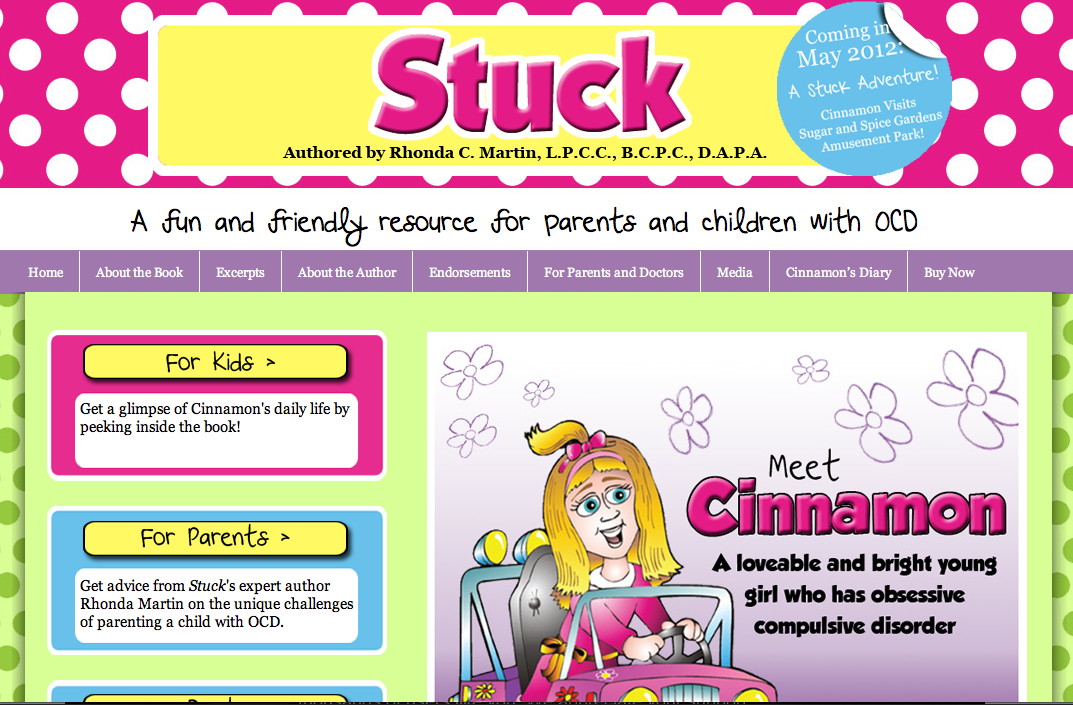
Rhonda is the author of Stuck, a best-selling children’s book describing the life of Cinnamon, a young girl with OCD, as well as OCD in Kids…a website developed for children with Obsessive-Compulsive Disorder (OCD), their parents and and treating professionals. as a companion to the book.

Here’s the interview with Rhonda and Katie…

Our blog series examining the impact of anxiety upon spiritual development in kids, along with additional resources to better understand the impact of anxiety disorders in children and adolescents may be accessed here.

***********************************************************************************************************

cropped-key-ministry-door.pngOur Key Ministry website is a resource through which church staff, volunteers, family members and caregivers can register for upcoming training events, request access to our library of downloadable ministry resources, contact our staff with training or consultation requests, access the content of our official ministry blog, or contribute their time, talent and treasure to the expansion of God’s Kingdom through the work of Key Ministry. In addition to our downloadable resources, those who register for our resource kit can view any presentation from our Inclusion Fusion Disability Ministry Web Summits “on-demand”. All of these resources are made available free of charge. Check out our website today!

Posted in Anxiety Disorders, Hidden Disabilities, Inclusion Fusion, Key Ministry, Mental Health, Spiritual Development | Tagged , , , , , , , , , , , | Leave a comment

Another good family experiences tragedy…

Hunter FamilyPlease pray for Joel and Becky Hunter, their daughter in-law, grandchildren, and extended family. Pastor Hunter’s son Isaac was found dead on Tuesday of an apparent suicide. He leaves behind his wife and three children.

Our team had the opportunity to train at Northland on two separate occasions. I had the honor of meeting Pastor Hunter when I joined our team for an event at the church, and heard him teach on several occasions while traveling to Florida on vacation. His church developed a remarkable disability ministry thanks to the contributions of Laura Lee Wright and many others.

os-isaac-hunter-summit-church-scandal-20121129-001Isaac Hunter’s tragic death was the second such incident in the last nine months to impact the family of a senior leader from a church that champions the inclusion of kids and families with disabilities. Last April, Rick and Kay Warren from Saddleback Church experienced the loss of their son Matthew from suicide.

As was the case with the Warren family, we can be grateful that Isaac knew and loved Jesus. Here’s a passage from a statement from Northland’s worship pastor Vernon Rainwater…

By now you may have heard that Pastor Joel and Becky’s son Isaac Hunter died today. All of us are grieving for the Hunter family, and we will deeply miss Isaac. Words cannot express the sorrow we’re feeling.

We love this family and are so grateful for the impact they have had on each of our lives. I have loved Isaac since he was a child, and I know this … Isaac loved Jesus. And we are assured of his continuing relationship with Christ now in heaven (Romans 8:38-39).

I’m thinking the same thoughts I had following Matthew Warren’s death…

  • Growing up in a family with deep faith in God or professing faith in Christ is no guarantee of being spared of the pain and suffering of mental illness.
  • Suicide kills three times more 15-24 year olds than cancer, yet we don’t see football players wearing special gear or referees with pink flags drawing attention to the cause. According to the Centers for Disease Control, suicide is the third leading cause of death in the U.S. among persons ages 10-24, and the second leading cause of death (behind only motor vehicle accidents) in 25-34 year olds. Kids and young adults die from mental illness, and sometimes the best psychiatrists and therapists can’t do much about it.
  • Given what we know about the lethality of mental illness in teens and young adults, it is absolutely essential for the church to make every possible effort to introduce those at risk to Jesus Christ and invite them to be part of a family of faith (like the community that exists at Northland and Saddleback). I’d pray that the people of Northland Church, along with the people of Summit Church (where Isaac at one time served on staff) …to honor Isaac’s memory by radically expanding their efforts to share the love of Christ with persons impacted by mental illness and their families.

***********************************************************************************************************

Key Ministry’s mission is to help churches reach families affected by disability by providing FREE resources to pastors, volunteers, and individuals who wish to create an inclusive ministry environment. For a sixty second summary of what Key Ministry does, watch the video below…

Posted in Families, Mental Health | Tagged , , , , , , , , | 1 Comment

Pursuing those who Jesus loves…Key Ministry 2.0

MV5BODQ1NjIwNjg0MF5BMl5BanBnXkFtZTcwODM3ODMzMw@@._V1_SX640_SY720_For the Son of Man came to seek and to save the lost.

Luke 19:10 (ESV)

But God shows his love for us in that while we were still sinners, Christ died for us.

Romans 5:8 (ESV)

Behold, you shall call a nation that you do not know, and a nation that did not know you shall run to you, because of the Lord your God, and of the Holy One of Israel, for he has glorified you.

Isaiah 55:5-6 (ESV)

In my line of work, I talk to lots of teens. One of the desires of most teens is for someone to see them as they really are and pursue them for who they are.

God pursues us. We can’t find him on our own. He continues in this day and age to pursue all of us.

At this time of year, our focus is very much on Christmas and the Christmas story. Jesus came to Earth to “dwell among us” and to die for us in order to make it possible for us to be with Him forever.

I’ve spoken or corresponded with two ministry leaders during this past week looking for help in convincing other leaders that online technology can and will have a meaningful role in helping families of kids with disabilities to experience Christian community. To many, our plans for an online campus to connect churches with families impacted by disability seem (for lack of a better term) crazy. But if we’re crazy, it’s a good kind of crazy.

After all, if God would send his Son to be born in a manger into a humble family in first century Palestine in pursuit of us, why would it represent such a great leap to think He would want to use the technology of the day to continue His pursuit of each and every one of us?

Kids with disabilities, their siblings, and their families generally don’t experience the sense of being pursued. They’re not the first ones picked for teams on the playground. They’re not the kids who get invited to sleepovers or “play dates”. They’re not the recipients of the increasingly grandiose (and public) invitations to attend the prom. We’re going to help churches pursue them…and allow them to experience what it’s like to be pursued.

One place where kids with disabilities and their families are available to be pursued is on the Internet. We’ll pursue parents by offering respite care. We’ll pursue teens through inviting them to worship online…and give them the tools to pursue their friends. It’s not so crazy. We’ll invite their parents to worship services and small groups and Bible studies online…and then invite them to worship in the physical presence of other Christ-followers.

What we really do at Key Ministry is offer churches tools to pursue kids with disabilities and their families.

In pondering this, a certain iconic scene from a movie of my generation came to mind. Lloyd Dobler (played by John Cusack) was using technology to pursue the girl of his dreams (Diane Court, played by Ione Skye). John used the technology of his time to assist him in his pursuit. Here’s the trailer for Say Anything.

***********************************************************************************************************

IMG_0209-2Can you help us to help churches pursue kids with disabilities and their families? For this year’s Key Ministry Online Campaign, we’re asking our friends not for money, but to share our ministry’s Facebook page with others who share interest in our mission. Here’s more on how you can help.
Posted in Inclusion, Key Ministry, Leadership, Strategies | Tagged , , , , , , | 6 Comments

Growing up with a sibling with special needs…Inclusion Fusion Library

DSCN7850Today, we’re going to share a video from our youngest Inclusion Fusion presenters that includes some very honest and profound observations about the impact of disability on the family.

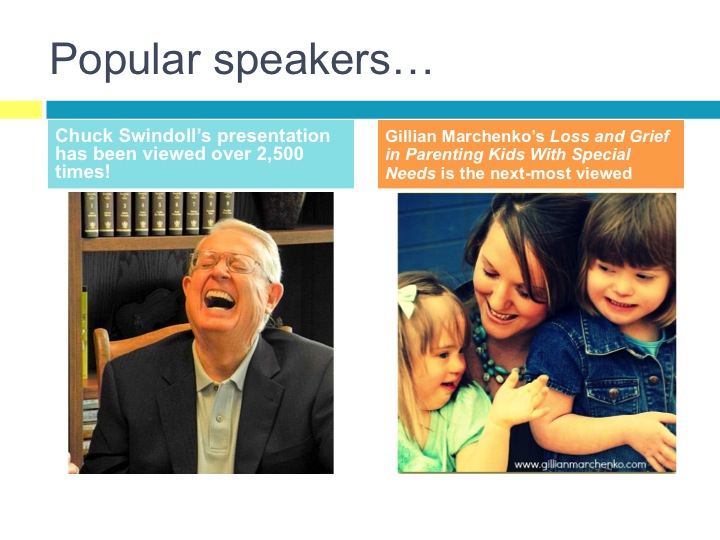
When we were in Texas two years ago filming Inclusion Fusion 2011, Colleen Swindoll-Thompson asked her adult children to speak on the challenges siblings experience when a brother or sister experiences a disability. Siblings are often forgotten, judged, misunderstood, and suffer many challenges. Colleen’s children (Ashley, Austin and Cody) shared their experiences growing up with a brother with significant special needs. Their presentation, Does Anyone See Me? Attending to the Silent Sufferers (an interview facilitated by Katie Wetherbee) is a remarkable resource addressing an issue all too often overlooked in the church, as well as in the larger disability community.

At the time of this interview, Ashley, Austin and Cody’s brother (Jonathan) was 14 years old and had been diagnosed with autism spectrum disorder. He experiences intellectual, speech, language and motor impairments, along with anxiety associated with his autism. Jonathan had also been diagnosed with Tourette’s Disorder, traumatic brain injury and Post-Traumatic Stress Disorder.

Here’s the interview…

***********************************************************************************************************

Colleen InterviewCheck out Steve’s recent interview with Colleen Swindoll-Thompson on  The Mission Field Next Door…Serving Kids with Mental Health Disorders and Their FamiliesIn the interview, Colleen and Steve had the opportunity to discuss the challenges families face in attending church when kids have mental illnesses.  They explored strategies for churches seeking to radically expand disability outreach beyond the traditional “special needs” population, and considered why “special needs” ministries may not meet the needs of families impacted by mental illness.  Here’s a link to Colleen’s blog post where the interview may be viewed in its’ entirety.

Posted in Families, Inclusion Fusion, Key Ministry, Resources, Stories | Tagged , , , , , , , , | 2 Comments

What we want for Christmas…and it won’t cost you any money!

IMG_0209-2There’s something that each and every one of our Facebook friends and blog followers can give to our team at Key Ministry that we can guarantee we’ll like…and it’s not the new MacBook Pro with retina display that we’re hoping for from Santa!

We have big, hairy audacious plans for 2014…including the return of Inclusion Fusion as a monthly symposium, lots of online training training opportunities, and a platform for connecting families of kids with disabilities to churches in their home regions through online worship services. And you can be a HUGE help!

The online software package that we’re purchasing to support our internet-based ministry initiatives fully integrates with Facebook. You’ll be able to log in to Inclusion Fusion events, ministry trainings, and online worship services and church activities through your Facebook account, chat in real time with other conference attendees and worshipers, and invite friends to join events in real time without leaving the training or worship service.

Here’s where you come in…for our ministry initiatives to be impactful, we need to be able to get the word out to as many church staff, volunteers and family members as possible through Facebook. The more “likes” we receive for our Facebook page, the greater our ability will be to recruit new churches to ministry trainings, and the easier (and more economical) it will be to connect families with churches equipped to help them worship in the physical presence of other Christ followers. Allow me to share a brief lesson in how Facebook’s business model works, and how your help will be invaluable.

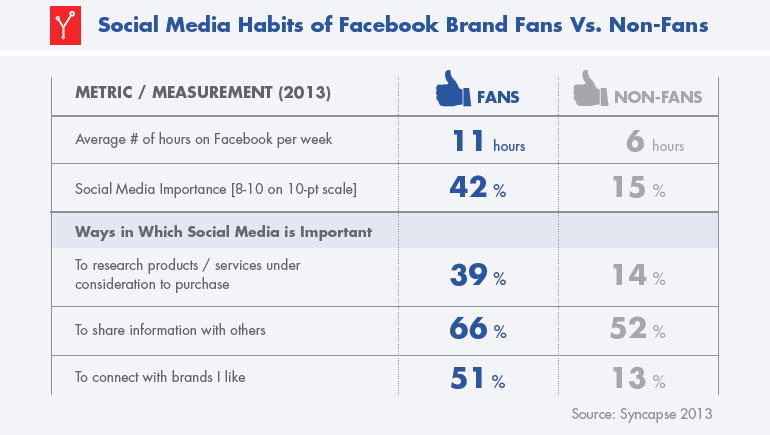
When you “like” our Key Ministry page, a number of factors determine whether you see our status updates…the links and resources that we post to our page. You’ll typically “see” only a small percentage of the content your friends and organizations you like post in any given day. Facebook prioritizes what you see by using a complex algorithm that emphasizes “popular” posts…items that generates lots of comments or “likes”, and items that are frequently shared by users, or clicked on by individual users. For example, in the month of November, a typical follower of our site “saw” our content in their Facebook feed approximately 7% of the time “organically”. Organizations have to buy advertising through Facebook if they want to guarantee a high percentage of followers receive their content.

Here’s why “likes” from ministry leaders, volunteers and families impacted by disability are so important to us…we can save lots of money through very precisely targeting our advertising dollars to audiences most likely to benefit.

For example, let’s say a church in suburban Cleveland starts using our online platform to make available online worship to teens who don’t attend church due to an anxiety disorder or difficulties with social communication. The more Facebook fans we have in Cleveland zip codes, the easier it is for us to effectively target families of kids who might acclimate with youth leaders and peers through online worship to the point where they could begin attending church “live and in-person” where the worship service is taking place.

The more we grow our audience, the easier it is to attract speakers/trainers to volunteer their time and talent for events like Inclusion Fusion, the more likely it is that our staff and volunteers will be offered speaking and teaching opportunities where we can help churches reach out to families impacted by disabilities and the more desirable we become to potential sponsors so that we can continue to offer our training events free of charge to pastors, church staff, volunteers and families.

Facebook FansCan you help us? At this point in our ministry development, Facebook fans may be a more valuable gift to us than cash contributions. Experts debate the value of Facebook fans, but recent estimates report a single fan may be worth up to $174 to a retailer. We can’t put a price on the value of inviting a family of a child with mental illness, trauma or a developmental disability to connect with their larger family in Christ through the ministry of a local church, but every “like” helps us expand the impact of Key Ministry for the Kingdom! Through our Online Appeal, our friends with limited financial resources can make a large contribution through inviting pastors, church leaders and friends facing similar challenges related to disability to “like” our ministry.

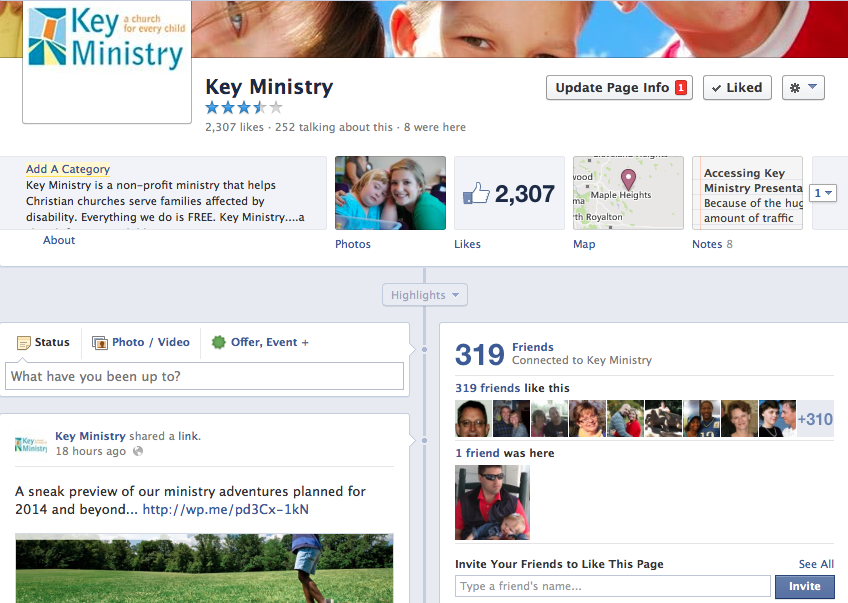
Here’s a step-by-step guide to invite your friends on Facebook to “like” Key Ministry…you may want to print this post first if you’re not familiar with the nuances of Facebook.

Go to our Key Ministry page on Facebook

KM Screenshot 2

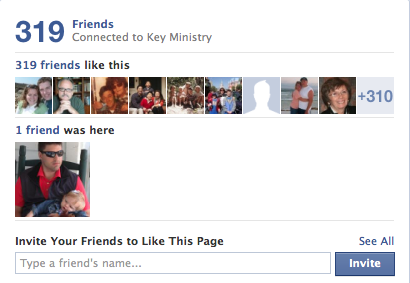
InviteJust below the heading in the right hand column, you’ll see a box indicating how many of your friends also “like” Key Ministry and a box that says “Invite Your Friends to Like This” (demonstrated in the image at right)

See allJust above the blue invite box, you’ll see in blue type a link…”See All” (pictured at right)…click on that link.

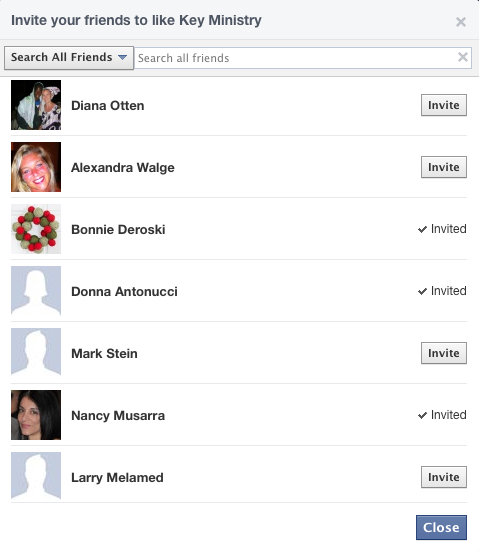
Search all FriendsA list will appear on the screen of all your Facebook friends. You can then page down through your list of friends and click the “Invite” button next to the name of friends who might be interested in Key Ministry’s mission or resources. Editor’s note…I’ve already invited most of my friends…that’s why a number of these names are marked “invited” in the picture. Hit the blue “Close” button on the bottom right when you’ve completed the task.

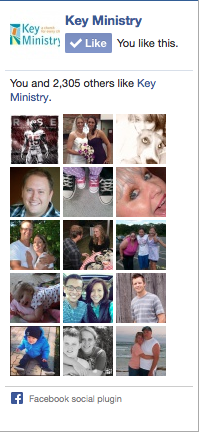
Facebook likesYou can also “like” Key Ministry by sharing this blog with friends and suggesting they click the blue “Like” button  in the Key Ministry widget in the right sidebar of the blog page (see right):

Finally, if it’s easier for you to contribute financially than through sharing our Facebook page with others, you can help us by sponsoring the advertising that allows us to disseminate our content and resources to a much larger audience. You can sponsor advertising for a blog post or ministry resource. A gift of $10 allows more than 2,000 additional people to receive notice of a specific ministry resource or event, and results in nearly thirteen additional people “liking” our page. A gift of $50 allows us to disseminate resources to over 10,000 people and generates an additional 64 “likes” for our page.

To make a charitable donation to Key Ministry, click this link and you’ll be taken to a page on our website where you can make a secure contribution using with your credit card or your PayPal account.

Our goal from our Online Appeal is to reach 5,000 Facebook fans by the end of December…and our goal next year is to double our Facebook fan base every six months.

Thanks so much for your contributions of time, talent, treasure and your ongoing prayers on behalf of our mission at Key Ministry.

Posted in Key Ministry, Resources, Strategies | Tagged , , , , , , , , | Leave a comment